


Global Deep Learning in Computer Vision Market Segmentation, By Hardware (Central Processing Unit (CPU), Graphics Processing Unit (GPU), and Others), Solutions (Hardware, Software, and Services), Application (Image recognition, Voice recognition, and Others), End-User (Automotive, Healthcare, and Others) - Industry Trends and Forecast to 2033
Что такое глобальное глубокое обучение на рынке компьютерного зрения и темпы роста
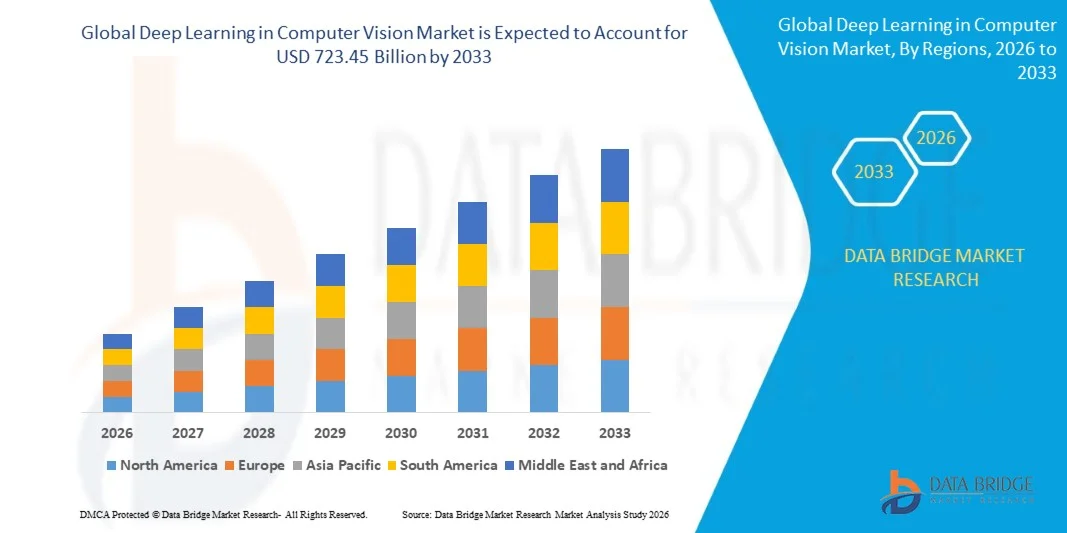
- Согласно анализу Data Bridge Market Research, глобальное глубокое обучение по размеру рынка компьютерного зрения было оценено как наиболее эффективное.32,68 млрд долларов в 2025 годуОжидается, что он достигнет723,45 млрд долларов США к 2033 году, вCAGR 55,65%в течение прогнозируемого периода
- Обширные улучшения в быстром хранении информации являются жизненно важным фактором, способствующим росту рынка, а также увеличению вычислительной мощности и параллелизации, и растущая потребность в проверке качества и автоматизации станет основным фактором, стимулирующим рост рынка.
- Кроме того, глубокое обучение и технические достижения в области аппаратного и программного обеспечения и растущее внедрение системы 3D-инспекции по сравнению с обычными системами инспекции являются факторами, которые еще больше усугубят рыночную стоимость.
Размер рынка и прогноз
- Глобальная рыночная стоимость (2025):32,68 млрд долларов
- Ожидаемая рыночная стоимость (2033):723,45 млрд долларов
- Прогноз CAGR (2026–2033): 55.65%
Каковы основные выводы глубокого обучения на рынке компьютерного зрения
- Отсутствие технических знаний и недостаточная осведомленность пользователей о быстро меняющихся технологиях компьютерного зрения являются сдерживающим фактором для рынка. Тот факт, что большинству организаций может не хватать соответствующих ресурсов и вычислительных мощностей для обработки огромного количества визуальных данных, что также может препятствовать общему росту рынка в течение прогнозируемого периода.
- В дополнение к этому, рост технологических достижений и модернизация, по оценкам, создадут новые возможности для роста рынка в течение прогнозируемого периода. С другой стороны, недостатки, связанные с хранением облачных данных, такие как утечки данных, кража данных и недоступность облачных данных, становятся все более распространенными, что может привести к проблемам для рынка.
- Северная Америка доминировала на рынке глубокого обучения в области компьютерного зрения с долей дохода 41,09% в 2025 году, чему способствовал сильный рост инфраструктуры ИИ, облачных вычислений, полупроводниковых инноваций и передовых исследований и разработок в области компьютерного зрения в США и Канаде.
- Ожидается, что Азиатско-Тихоокеанский регион зарегистрирует самый быстрый CAGR в 9,23% с 2026 по 2033 год, что обусловлено быстрым ростом внедрения ИИ, расширением полупроводников, интеллектуальными производственными экосистемами, развертыванием 5G и растущим использованием интеллектуальных систем видения в Китае, Японии, Индии, Южной Корее и Юго-Восточной Азии.
- Сегмент графического процессора (GPU) доминировал на рынке с долей 48,6% в 2025 году, поскольку графические процессоры остаются предпочтительной аппаратной архитектурой для обучения и развертывания моделей видения глубокого обучения.
Сфера охвата и глубокое обучение в сегментации рынка компьютерного зрения
|
Атрибуты |
Глубокое обучение в области компьютерного зрения Key Market Insights |
|
Сегменты покрыты |
|
|
Страны, охваченные |
Северная Америка
Европа
Азиатско-Тихоокеанский регион
Ближний Восток и Африка
Южная Америка
|
|
Ключевые игроки рынка |
|
|
Рыночные возможности |
|
|
Информационные наборы данных с добавленной стоимостью |
В дополнение к информации о рыночных сценариях, таких как рыночная стоимость, темпы роста, сегментация, географическое покрытие и основные игроки, рыночные отчеты, курируемые Data Bridge Market Research, также включают углубленный экспертный анализ, анализ цен, анализ доли бренда, опрос потребителей, анализ демографии, анализ цепочки поставок, анализ цепочки создания стоимости, обзор сырья / расходных материалов, критерии выбора поставщиков, анализ PESTLE, анализ Porter и нормативную базу. |
Каковы основные тенденции в глубоком обучении на рынке компьютерного зрения
"Увеличение перехода к визуальному интеллекту с искусственным интеллектом в реальном времени и системам видения на основе края"
- Глубокое обучение на рынке компьютерного зрения свидетельствует о сильном внедрении систем распознавания изображений, обнаружения объектов, распознавания лиц, видеоаналитики и обработки зрения в реальном времени в таких отраслях, как автомобилестроение, здравоохранение, розничная торговля, безопасность и производство.
- Компании внедряют передовые камеры ИИ, встроенные процессоры зрения и облачные интегрированные модели глубокого обучения, которые предлагают более быстрый вывод, меньшую задержку и совместимость с современными системами разработки ИИ.
- Растущий спрос на экономичные, масштабируемые и в режиме реального времени решения для визуального интеллекта стимулирует использование интеллектуальных городов, промышленной автоматизации, автономных транспортных средств и медицинских приложений для визуализации.
- Например, такие компании, как Microsoft, IBM, Clarifai Inc. и Synopsys Inc. расширяют свои возможности глубокого обучения с помощью передовых платформ компьютерного зрения, AI API и ускорителей нейронных сетей.
- Растущая потребность в быстрой обработке изображений, обнаружении дефектов, аналитике наблюдения и автономном принятии решений ускоряет переход к пограничным и облачным системам зрения.
- По мере того, как цифровые экосистемы станут более управляемыми ИИ и визуально сложными, глубокое обучение в области компьютерного зрения останется жизненно важным для автоматизации, прогнозной аналитики и интеллектуальной интерпретации изображений.
Каковы ключевые драйверы глубокого обучения на рынке компьютерного зрения
- Растущий спрос на точные, масштабируемые и реальные решения для анализа изображений для поддержки распознавания лиц, отслеживания объектов, промышленной инспекции и медицинской диагностики стимулирует рост рынка.
- Например, в 2025 году ведущие компании, такие как Microsoft, IBM и Clarifai, расширили свои платформы искусственного интеллекта для поддержки более высоких скоростей обработки, усовершенствованного обучения модели и гибких интерфейсов развертывания.
- Растущее внедрение IoT-устройств, интеллектуальных камер, автономных транспортных средств, робототехники и интеллектуальных систем наблюдения повышает спрос в США, Европе и Азиатско-Тихоокеанском регионе.
- Достижения в области обработки графических процессоров, периферийных чипов ИИ, архитектур нейронных сетей и инфраструктуры облачных вычислений укрепили скорость, портативность и эффективность.
- Растущее использование чипов ИИ, робототехники с поддержкой компьютерного зрения, умной розничной аналитики и систем промышленной автоматизации создает сильный спрос на передовые решения для глубокого обучения.
- Ожидается, что благодаря устойчивым инвестициям в исследования и разработки в области искусственного интеллекта, полупроводниковые инновации и интеллектуальную инфраструктуру автоматизации рынок станет свидетелем сильного долгосрочного роста.
Какой фактор препятствует росту глубокого обучения на рынке компьютерного зрения
- Высокие затраты, связанные с премиальными графическими процессорами, ускорителями ИИ, обучением модели глубокого обучения и крупномасштабной инфраструктурой развертывания, ограничивают внедрение среди МСП и академических учреждений.
- Например, в течение 2024-2025 годов колебания цен на полупроводники, дефицит графических процессоров и более длительные сроки внедрения оборудования увеличили затраты на развертывание решений для нескольких глобальных поставщиков.
- Сложность в обучении и оптимизации глубоких нейронных сетей, наборов данных изображений и систем вывода в реальном времени увеличивает потребность в квалифицированных инженерах и специализированных экспертных знаниях.
- Ограниченная осведомленность на развивающихся рынках о возможностях модели видения ИИ, передовой практике развертывания и процессах аннотации данных замедляет внедрение.
- Конкуренция со стороны традиционных систем машинного зрения, программного обеспечения для обработки изображений на основе правил и инструментов ИИ с открытым исходным кодом создает ценовое давление и снижает дифференциацию продуктов.
- Для решения этих проблем компании сосредотачиваются на оптимизированных по стоимости моделях ИИ, облачной аналитике, учебных ресурсах и более сильной интеграции программного обеспечения для повышения глобального внедрения глубокого обучения в решениях для компьютерного зрения.
Как сегментируется глубокое обучение на рынке компьютерного зрения
Рынок сегментирован на основеаппаратное обеспечение, решения, приложение и конечный пользователь.
• С помощью Hardware
На основе аппаратного обеспечения рынок глубокого обучения в области компьютерного зрения сегментирован в центральный процессор (CPU), графический процессор (GPU) и другие. Сегмент графического процессора (GPU) доминировал на рынке с долей 48,6% в 2025 году, поскольку графические процессоры остаются предпочтительной аппаратной архитектурой для обучения и развертывания моделей глубокого обучения. Их высокая способность параллельной обработки поддерживает распознавание изображений в реальном времени, обнаружение объектов, видеоаналитику и обучение нейронных сетей в таких отраслях, как автомобилестроение, здравоохранение и производство. GPU широко используются в центрах обработки данных ИИ, устройствах краевого зрения, системах наблюдения и автономных платформах вождения из-за их скорости, масштабируемости и совместимости с основными фреймворками глубокого обучения.
Ожидается, что сегмент процессоров будет расти самыми быстрыми темпами с 2026 по 2033 год, что обусловлено увеличением развертывания в периферийных устройствах, встраиваемых системах с низким энергопотреблением и рабочих нагрузках корпоративного ИИ. Достижения в области многоядерной обработки и оптимизированных для ИИ чипсетов еще больше ускоряют внедрение.
• По решениям
На основе решений рынок сегментирован на аппаратное обеспечение, программное обеспечение и услуги. Сегмент программного обеспечения доминировал на рынке с долей в 42,3% в 2025 году, чему способствовал растущий спрос на платформы искусственного интеллекта, инструменты обучения модели, программное обеспечение для обработки изображений и облачные аналитические решения. Программные решения играют важную роль в распознавании лиц, медицинской диагностике изображений, промышленном осмотре и автономных навигационных системах. Их гибкость, масштабируемость и непрерывная интеграция с ИИ-фреймворками, такими как TensorFlow и PyTorch, делают их необходимыми для внедрения на предприятиях.
Сегмент услуг, по прогнозам, будет расти самыми быстрыми темпами с 2026 по 2033 год, что обусловлено растущим спросом на консалтинг в области ИИ, развертывание моделей, управляемые услуги и интеграцию пользовательских решений. Растущая зависимость предприятия от сторонних экспертных знаний в области ИИ и вспомогательных услуг значительно расширяет этот сегмент.
• Подача заявки
На основе приложения рынок сегментирован на распознавание изображений, распознавание голоса и другие. Сегмент распознавания изображений доминировал на рынке с долей 45,8% в 2025 году, что обусловлено широким использованием в распознавании лиц, обнаружении объектов, медицинской визуализации, промышленной автоматизации, розничной аналитике и надзоре за безопасностью. Модели глубокого обучения все чаще используются для классификации изображений в режиме реального времени, обнаружения аномалий и приложений визуального поиска, поддерживая сильный рост сегмента.
Ожидается, что сегмент распознавания голоса будет расти на самом быстром CAGR с 2026 по 2033 год, чему способствует растущее использование в помощниках ИИ, мультимодальных системах, автомобильных голосовых интерфейсах и автоматизации здравоохранения. Интеграция голосового и визуального ИИ способствует дальнейшему расширению сегмента.
• Конечный пользователь
На базе конечного пользователя рынок глубокого обучения в области компьютерного зрения сегментирован на автомобильный, медицинский и другие. Автомобильный сегмент доминировал на рынке с долей 39,7% в 2025 году, что обусловлено растущим внедрением систем ADAS, автономных транспортных средств, мониторинга водителя, распознавания трафика и систем безопасности в транспортных средствах. Решения ИИ на основе видения имеют решающее значение для обнаружения полосы движения, распознавания препятствий и помощи при вождении в режиме реального времени.
Ожидается, что сегмент здравоохранения будет расти самыми быстрыми темпами с 2026 по 2033 год, чему способствует растущее развертывание в медицинской диагностике, радиологической визуализации, автоматизации патологии и системах мониторинга пациентов. Растущие инвестиции в инфраструктуру здравоохранения на основе ИИ продолжают ускорять внедрение.
В каком регионе самая большая доля глубокого обучения на рынке компьютерного зрения
- Северная Америка доминировала на рынке глубокого обучения в области компьютерного зрения с долей дохода 41,09% в 2025 году, чему способствовал сильный рост инфраструктуры ИИ, облачных вычислений, полупроводниковых инноваций и передовых исследований и разработок в области компьютерного зрения в США и Канаде. Высокое внедрение систем наблюдения на основе ИИ, автономных транспортных средств, интеллектуальных медицинских изображений и решений промышленной автоматизации продолжает стимулировать спрос на платформы глубокого обучения на предприятиях, научно-исследовательских институтах и технологических компаниях.
- Ведущие компании в Северной Америке внедряют передовые платформы ИИ-видения, передовые процессоры ИИ, программное обеспечение для анализа изображений и облачные платформы глубокого обучения, укрепляя технологическое преимущество региона. Постоянные инвестиции в чипы искусственного интеллекта, инфраструктуру графических процессоров, автономную мобильность и приложения для умных городов способствуют долгосрочному расширению рынка.
- Высокая концентрация инженерных талантов, сильные экосистемы стартапов и устойчивые инвестиции в передовое развитие ИИ еще больше укрепляют лидерство на региональном рынке.
Глубокое обучение в США в Computer Vision Market Insight
США являются крупнейшим донором в Северной Америке, поддерживаемым сильными исследованиями и разработками в области искусственного интеллекта, быстрым внедрением интеллектуальных решений для визуализации и широким использованием технологий компьютерного зрения в автомобильной, медицинской, розничной торговле, обороне, телекоммуникациях и промышленной автоматизации. Растущее развитие ускорителей ИИ, автономных систем вождения, платформ распознавания лиц и интеллектуальных сетей наблюдения усиливает спрос на глубокое обучение в решениях компьютерного зрения, способных делать выводы в реальном времени и высокоточный анализ изображений. Присутствие крупных технологических фирм, лабораторий ИИ и сильных стартап-экосистем, поддерживаемых венчурными компаниями, еще больше стимулирует рост рынка.
Глубокое обучение в Канаде на рынке компьютерного зрения
Канада вносит значительный вклад в региональный рост, обусловленный расширением исследовательских кластеров ИИ, растущим внедрением систем машинного зрения и растущими инвестициями в медицинские изображения, телекоммуникации и интеллектуальные производственные исследования и разработки. Университеты и инновационные лаборатории все чаще используют решения глубокого обучения для медицинской диагностики, робототехники и промышленных инспекций. Поддерживаемые правительством инновационные программы в области искусственного интеллекта и наличие квалифицированной рабочей силы усиливают принятие рынка по всей стране.
Азиатско-Тихоокеанское глубокое обучение на рынке компьютерного зрения
Ожидается, что Азиатско-Тихоокеанский регион зарегистрирует самый быстрый CAGR в 9,23% с 2026 по 2033 год, что обусловлено быстрым ростом внедрения ИИ, расширением полупроводников, интеллектуальными производственными экосистемами, развертыванием 5G и растущим использованием интеллектуальных систем видения в Китае, Японии, Индии, Южной Корее и Юго-Восточной Азии. Высокообъемное производство потребительской электроники, интеллектуальных устройств, автомобильных систем ADAS и промышленных роботов увеличивает спрос на передовые инструменты распознавания изображений и искусственного интеллекта. Рост аппаратного обеспечения ИИ, периферийных вычислений, умной розничной торговли и цифровой инфраструктуры продолжает ускорять потребность в аналитике видения в реальном времени в инженерных и корпоративных приложениях.
Глубокое обучение в Китае на рынке компьютерного зрения
Китай является крупнейшим вкладчиком в Азиатско-Тихоокеанский регион из-за огромных инвестиций в чипы ИИ, полупроводниковые фабы, инфраструктуру наблюдения и проекты умных городов. Растущее развитие высокоскоростных систем визуальной аналитики, автономных мобильных платформ и промышленных решений ИИ стимулирует высокий спрос на рынке. Местные производственные мощности и конкурентоспособные цены еще больше расширяют внутренний и экспортный рынок.
Глубокое обучение в Японии на рынке компьютерного зрения
Япония демонстрирует устойчивый рост, поддерживаемый передовой инфраструктурой робототехники, автомобильной электроникой, промышленной автоматизацией и высокоточными системами визуализации здравоохранения. Сильное внимание к высококачественным инструментам искусственного интеллекта и надежности системы стимулирует принятие премиальных решений для глубокого обучения.
Глубокое обучение в Индии на рынке компьютерного зрения
Индия становится крупным центром роста, движимым расширением стартап-активности ИИ, инициативами цифровой трансформации, развитием умных городов и оцифровкой здравоохранения. Растущий спрос на ИИ, основанный на видении, в розничной аналитике, диагностике здравоохранения, автомобильной безопасности и наблюдении способствует внедрению по всей стране.
Глубокое обучение в Южной Корее на рынке компьютерного зрения
Южная Корея вносит значительный вклад благодаря высокому спросу на серверы ИИ, интеллектуальные дисплеи, системы автомобильного зрения и интеллектуальные устройства с поддержкой 5G. Технологические инновации, лидерство в области полупроводников и растущие цифровые экосистемы поддерживают устойчивый рост рынка.
Каковы ведущие компании в области глубокого обучения на рынке компьютерного зрения
Глубокое обучение в индустрии компьютерного зрения в первую очередь возглавляют хорошо зарекомендовавшие себя компании, в том числе:
- Accenture (Ирландия)
- IBM India Pvt Ltd (США)
- Circle Internet Services, Inc. (США)
- Атласский (Австралия)
- Bitrise (США)
- CloudBees, Inc. (США)
- Flexagon LLC. (США)
- Infostretch Corporation (США)
- JetBrains s.r.o (Чехия)
- Кайнос (Великобритания)
- Micro Focus (Великобритания)
- MVTEC Software GmbH (Германия)
- Clarifai Inc. (США)
- Тордивел А.С. (Норвегия)
- SICK AG (Германия)
- JAI A/S (Дания)
- CEVA Inc. (США)
- Synopsys Inc. (США)
- Microsoft (США)
- Кукла (США)
- Red Hat, Inc. (США)
- Spirent Communications (Великобритания)
- VMware, Inc. (США)
SKU-
Получите онлайн-доступ к отчету на первой в мире облачной платформе рыночной аналитики

- Интерактивная панель анализа данных
- Панель анализа компании для возможностей с высоким потенциалом роста
- Доступ аналитика-исследователя для настройки и запросов
- Анализ конкурентов с помощью интерактивной панели
- Последние новости, обновления и анализ тенденций
- Используйте возможности сравнительного анализа для комплексного отслеживания конкурентов
Методология исследования
Сбор данных и анализ базового года выполняются с использованием модулей сбора данных с большими размерами выборки. Этап включает получение рыночной информации или связанных данных из различных источников и стратегий. Он включает изучение и планирование всех данных, полученных из прошлого заранее. Он также охватывает изучение несоответствий информации, наблюдаемых в различных источниках информации. Рыночные данные анализируются и оцениваются с использованием статистических и последовательных моделей рынка. Кроме того, анализ доли рынка и анализ ключевых тенденций являются основными факторами успеха в отчете о рынке. Чтобы узнать больше, пожалуйста, запросите звонок аналитика или оставьте свой запрос.
Ключевой методологией исследования, используемой исследовательской группой DBMR, является триангуляция данных, которая включает в себя интеллектуальный анализ данных, анализ влияния переменных данных на рынок и первичную (отраслевую экспертную) проверку. Модели данных включают сетку позиционирования поставщиков, анализ временной линии рынка, обзор рынка и руководство, сетку позиционирования компании, патентный анализ, анализ цен, анализ доли рынка компании, стандарты измерения, глобальный и региональный анализ и анализ доли поставщика. Чтобы узнать больше о методологии исследования, отправьте запрос, чтобы поговорить с нашими отраслевыми экспертами.
Доступна настройка
Data Bridge Market Research является лидером в области передовых формативных исследований. Мы гордимся тем, что предоставляем нашим существующим и новым клиентам данные и анализ, которые соответствуют и подходят их целям. Отчет можно настроить, включив в него анализ ценовых тенденций целевых брендов, понимание рынка для дополнительных стран (запросите список стран), данные о результатах клинических испытаний, обзор литературы, обновленный анализ рынка и продуктовой базы. Анализ рынка целевых конкурентов можно проанализировать от анализа на основе технологий до стратегий портфеля рынка. Мы можем добавить столько конкурентов, о которых вам нужны данные в нужном вам формате и стиле данных. Наша команда аналитиков также может предоставить вам данные в сырых файлах Excel, сводных таблицах (книга фактов) или помочь вам в создании презентаций из наборов данных, доступных в отчете.











