


Global Demulsifier Market Segmentation, By Type (Oil Soluble and Water Soluble), Application (Sludge Oil Treatment, Lubricant Manufacturing, Crude Oil, Petro Refineries and Oil Based Power Plants)- Industry Trends and Forecast to 2033
Каков размер рынка и темпы роста
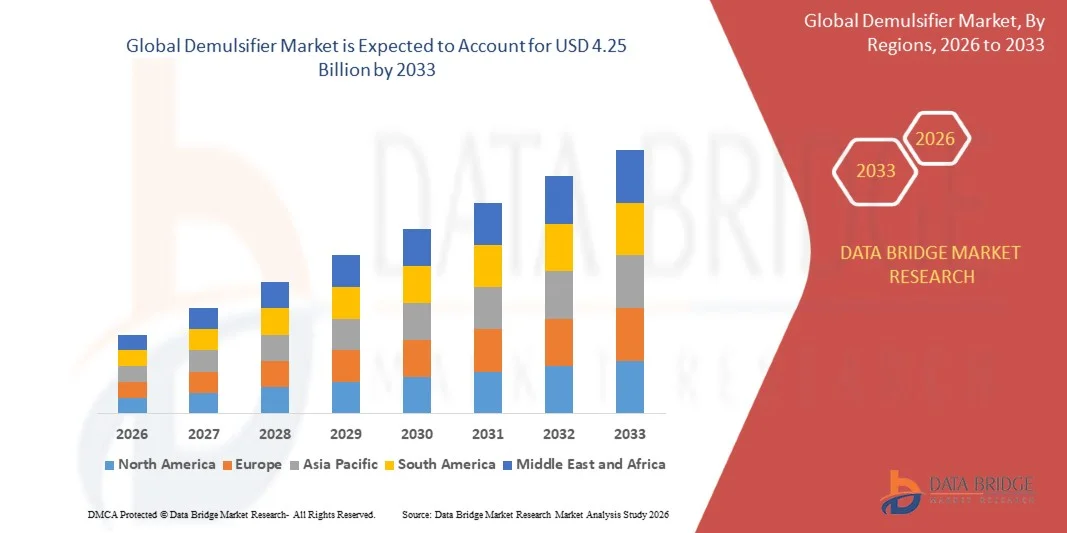
- Согласно анализу рынка Data Bridge Market Research, размер мирового рынка демульгаторов был оценен как3,07 млрд долларов США в 2025 годуОжидается, что он достигнет4,25 млрд долларов к 2033 году, вCAGR 4,15%в течение прогнозируемого периода
- Рост рынка в значительной степени обусловлен растущим спросом на сырую нефть и нефтепродукты в сочетании с необходимостью эффективного разделения нефти и воды в операциях вверх и вниз по течению.
- Растущие инвестиции в разведку и добычу нефти, особенно в Северной Америке и на Ближнем Востоке, стимулируют спрос на передовые химикаты-демульгаторы.
Размер рынка и прогноз
Глобальная рыночная стоимость (2025):3,07 млрд долларов
Ожидаемая рыночная стоимость (2033):$4,25 млрд.
Прогноз CAGR (2026–2033):4.15%
Каковы основные выводы рынка демульгаторов
- Рынок переживает значительный рост из-за роста добычи сырой нефти, увеличения сложности сырой нефти и необходимости усовершенствованных методов извлечения нефти, которые полагаются на эффективную демульсификацию.
- Жесткие экологические нормы и необходимость сокращения загрязнения сточных вод стимулируют внедрение высокоэффективных демульгаторов для нефтегазовых операций.
- Северная Америка доминировала на рынке демульгаторов с самой большой долей доходов в 2025 году, обусловленной наличием хорошо зарекомендовавшей себя нефтяной и газовой промышленности, высокой добычей сырой нефти и растущим спросом на эффективное разделение нефти и воды в операциях вверх по течению и вниз по течению.
- Ожидается, что в Азиатско-Тихоокеанском регионе будут наблюдаться самые высокие темпы роста в мире.демульгаторрынок, обусловленный увеличением добычи сырой нефти, индустриализацией, правительственными инициативами, способствующими устойчивой переработке, и растущим спросом на передовые химические решения на нефтеперерабатывающих заводах и нефтяных электростанциях
- Сегмент Oil Soluble занимал самую большую долю рынка в 2025 году, чему способствовало его широкое использование в процессах разделения и переработки сырой нефти. Нефтерастворимые демульгаторы являются предпочтительными из-за их высокой эффективности в разрушении стабильных эмульсий, совместимости с различными сортами сырой нефти и способности сокращать время обработки, что делает их популярным выбором в операциях вверх и вниз по течению.
Сфера охвата и сегментация рынка демульгаторов
|
Атрибуты |
Демульгатор Key Market Insights |
|
Сегменты покрыты |
|
|
Страны, охваченные |
Северная Америка
Европа
Азиатско-Тихоокеанский регион
Ближний Восток и Африка
Южная Америка
|
|
Ключевые игроки рынка |
BASF SE (Германия) |
|
Рыночные возможности |
Растущий спрос на передовые нефтепромысловые химикаты и эффективное разделение нефти и воды |
|
Информационные наборы данных с добавленной стоимостью |
В дополнение к информации о рыночных сценариях, таких как рыночная стоимость, темпы роста, сегментация, географическое покрытие и основные игроки, рыночные отчеты, курируемые Data Bridge Market Research, также включают анализ экспорта импорта, обзор производственных мощностей, анализ потребления продукции, анализ ценового тренда, сценарий изменения климата, анализ цепочки поставок, анализ цепочки создания стоимости, обзор сырья / расходных материалов, критерии выбора поставщиков, анализ PESTLE, анализ Porter и нормативную базу. |
Каковы основные тенденции на рынке демульгаторов
Растущий спрос на эффективное разделение нефти и воды и передовые нефтепромысловые химикаты
Растущее внимание к оптимизации разделения сырой нефти и воды значительно формирует рынок демульгаторов, поскольку операторы нефти и газа все чаще предпочитают высокоэффективные химические решения, которые повышают эффективность процесса. Демульгаторы набирают обороты из-за их способности улучшать коэффициенты разделения, снижать стабильность эмульсии и снижать эксплуатационные расходы, поощряя внедрение в приложениях вверх по течению, посередине и вниз по течению.
Растущая осведомленность об эффективности процессов, соблюдении экологических требований и устойчивости ускорила спрос на демульгаторы для переработки сырой нефти, операций НПЗ и очистки сточных вод. Операторы активно ищут решения, которые минимизируют потребление химических веществ, максимизируя урожайность и надежность процесса, побуждая производителей разрабатывать передовые составы.
Отраслевые тенденции в отношении энергоэффективных и экономически эффективных операций влияют на решения о покупке, при этом компании подчеркивают превосходную производительность, экологически чистые формулировки и соответствие нормативным требованиям. Эти факторы помогают брендам дифференцировать свою продукцию и укреплять доверие к операторам нефтяных месторождений, а также способствуют внедрению специальных и высокопроизводительных химикатов-демульгаторов.
Например, в 2024 году Halliburton в США и Baker Hughes в Великобритании расширили свои портфели демульгаторов для улучшения процессов разделения сырой нефти и управления водными ресурсами. Эти запуски были введены в ответ на растущий спрос на эффективные и экологически ответственные решения с развертыванием на глобальных нефтяных месторождениях и нефтеперерабатывающих заводах.
В то время как спрос на демульгаторы растет, устойчивое расширение рынка зависит от непрерывных НИОКР, экономически эффективного производства и поддержания производительности при различных составах сырой нефти. Производители сосредоточены на повышении эффективности разработки, надежности цепочки поставок и разработке инновационных решений, которые уравновешивают стоимость, качество и соответствие требованиям окружающей среды.
Демульгатор динамики рынка
водитель
Растущее предпочтение передового разделения нефти и воды и высокоэффективных химических веществ
Растущий спрос на эффективную и быструю сепарацию сырой нефти и воды является основным фактором для рынка демульгаторов. Операторы нефтяных месторождений все чаще заменяют обычные сепарационные химикаты современными демульгаторами для повышения эффективности процесса, сокращения простоев и соблюдения экологических норм. Эта тенденция также подталкивает исследования в новых поверхностно-активных веществ и полимерных демульгаторов, поддерживая инновации продукта.
Расширение применения в области добычи сырой нефти, операций НПЗ и очистки сточных вод влияет на рост рынка. Демульгаторы помогают повысить эффективность разделения, снизить потребление химических веществ и снизить эксплуатационные расходы, что позволяет операторам соответствовать нормативным требованиям и целям обработки. Растущее внимание к устойчивости и экологической ответственности еще больше усиливает эту тенденцию.
Нефтегазовые компании активно продвигают высокоэффективные решения для демульгаторов посредством НИОКР, технической поддержки и стратегического сотрудничества. Эти усилия поддерживаются растущим акцентом на сокращение использования химических веществ, энергопотребления и воздействия на окружающую среду, поощряя принятие различных операций на нефтяных месторождениях.
Например, в 2023 году Schlumberger в США и Chevron в Австралии сообщили об увеличении внедрения передовых демульгаторов в операциях вверх по течению и в середине течений. Это расширение последовало за более высоким спросом на эффективные решения для разделения, обеспечивая операционную эффективность и оптимизацию затрат. Обе компании также подчеркнули экологическое соответствие и устойчивость в оперативных кампаниях по укреплению доверия заинтересованных сторон.
Хотя растущая операционная эффективность и устойчивые тенденции поддерживают рост рынка, более широкое внедрение зависит от оптимизации затрат, доступности сырья и адаптируемости к различным типам сырой нефти. Инвестиции в технологии разработки, эффективность цепочки поставок и техническую поддержку будут иметь решающее значение для удовлетворения глобального спроса и сохранения конкурентных преимуществ.
Сдержанность/вызов
«Высокая стоимость и техническая сложность по сравнению с обычными методами разделения»
Относительно более высокая стоимость современных демульгаторов по сравнению с традиционными методами разделения остается ключевой проблемой, ограничивая внедрение среди операторов, чувствительных к затратам. Более высокие затраты на сырье и сложные процессы разработки способствуют повышению цен
Осведомленность операторов и технический опыт остаются неравномерными, особенно в развивающихся нефтедобывающих регионах, где все еще наблюдается внедрение высокоэффективных демульгаторов. Ограниченное понимание функциональных преимуществ ограничивает поглощение и замедляет инновации на этих рынках.
Проблемы цепочки поставок и обработки также влияют на рост рынка, поскольку демульгаторы требуют надлежащего хранения, обработки и дозирования для поддержания производительности. Логистические сложности и совместимость с различными свойствами сырой нефти увеличивают эксплуатационные соображения для операторов.
Например, в 2024 году операторы нефтяных месторождений в Юго-Восточной Азии сообщили о более медленном внедрении современных демульгаторов из-за высоких затрат, ограниченной осведомленности о преимуществах и технических требованиях к обработке. Это также привело к тому, что некоторые нефтеперерабатывающие заводы полагались на традиционные методы, несмотря на недостатки эффективности.
Преодоление этих проблем потребует экономически эффективного производства, расширения распределительных сетей и целенаправленной подготовки операторов. Сотрудничество с поставщиками нефтесервисных услуг, техническими консультантами и регулирующими органами может помочь раскрыть долгосрочный потенциал роста мирового рынка демульгаторов. Разработка надежных, адаптируемых и экономически эффективных формул будет иметь ключевое значение для широкого распространения.
Как сегментируется рынок демульгаторов
Рынок сегментирован на основе типа и применения.
• По типу
По типу мировой рынок демульгаторов сегментирован на нефтерастворимый и водорастворимый. Сегмент Oil Soluble занимал самую большую долю рынка в 2025 году, чему способствовало его широкое использование в процессах разделения и переработки сырой нефти. Растворимые в масле демульгаторы являются предпочтительными из-за их высокой эффективности при разрушении стабильных эмульсий, совместимости с различными сортами сырой нефти и способности сокращать время обработки, что делает их популярным выбором в операциях вверх и вниз по течению.
Ожидается, что в сегменте водорастворимых материалов будут наблюдаться самые быстрые темпы роста с 2026 по 2033 год, что обусловлено растущим внедрением в очистку сточных вод, рекуперацию осадков и применение на нефтяных электростанциях. Водорастворимые демульгаторы ценятся за их простоту обращения, эффективную дисперсию в водных средах и пригодность для экологически регулируемых процессов, повышающих эксплуатационную эффективность и соответствие.
• Подача заявки
На основе применения рынок сегментирован на очистку осадков, производство смазочных материалов, сырую нефть, нефтеперерабатывающие заводы и нефтяные электростанции. Сегмент сырой нефти занимал самую большую долю рынка в 2025 году, чему способствовал растущий спрос на эффективное разделение нефти и воды в операциях вверх по течению и вниз по течению. Демульгаторы улучшают качество сырой нефти, снижают стабильность эмульсии и снижают потребление химических веществ, что способствует широкому распространению.
Ожидается, что в сегменте переработки осадков будут наблюдаться самые быстрые темпы роста с 2026 по 2033 год, что обусловлено ростом промышленных и экологических норм для управления отходами. Эффективная демульсификация при переработке ила улучшает извлечение нефти, уменьшает загрязнение окружающей среды и поддерживает устойчивые операции, поощряя внедрение на нефтеперерабатывающих заводах, нефтехимических заводах и промышленных объектах.
В каком регионе находится наибольшая доля рынка демульгаторов
Северная Америка доминировала на рынке демульгаторов с самой большой долей доходов в 2025 году, обусловленной наличием хорошо зарекомендовавшей себя нефтяной и газовой промышленности, высокой добычей сырой нефти и растущим спросом на эффективное разделение нефти и воды в операциях вверх по течению и вниз по течению.
Операторы в регионе высоко ценят передовые составы демульгаторов за их эффективность в разрушении стабильных эмульсий, сокращении потребления химических веществ и улучшении качества сырой нефти, обеспечении бесперебойных нефтеперерабатывающих и нефтехимических операций
Это широкое внедрение дополнительно поддерживается передовой инфраструктурой, технологическим опытом и нормативными требованиями соответствия, устанавливая демульгаторы в качестве основных химических веществ для операций на нефтяных месторождениях и процессов нефтеперерабатывающих заводов.
Американский демульгатор Market Insight
Рынок демульгаторов США занял самую большую долю доходов в 2025 году в Северной Америке, чему способствовали рост добычи сырой нефти, обширная разведка месторождений и растущая сложность типов сырой нефти. Компании отдают приоритет высокопроизводительным химическим решениям для повышения эффективности разделения, минимизации простоев и соблюдения строгих экологических стандартов. Растущий акцент на устойчивость и оптимизацию процессов способствует дальнейшему росту рынка, при этом операторы все чаще используют передовые водо- и нефтерастворимые демульгаторы для приложений вверх и вниз по течению.
Европейский демульгатор Market Insight
Ожидается, что на европейском рынке демульгаторов будут наблюдаться самые быстрые темпы роста с 2026 по 2033 год, в основном благодаря строгим экологическим нормам, необходимости эффективного разделения сырой нефти и растущему принятию передовых химических составов. Страны региона сосредоточены на повышении эффективности нефтеперерабатывающих заводов и сокращении загрязнения сточных вод, что способствует внедрению высокоэффективных демульгаторов. Рост также поддерживается инвестициями в нефтепромысловые технологии и модернизацию существующей инфраструктуры.
Великобритания Demulsifier Market Insight
Ожидается, что рынок демульгаторов в Великобритании будет расти с 2026 по 2033 год, что обусловлено необходимостью усиления разделения нефти и воды на нефтеперерабатывающих заводах, нефтехимических объектах и очистке осадков. Внедрение передовых химикатов демульгатора поощряется требованиями к соблюдению экологических требований, целями эффективности процессов и акцентом страны на устойчивые и безопасные нефтяные операции.
Немецкое исследование рынка
Ожидается, что рынок демульгаторов Германии будет заметно расти с 2026 по 2033 год, чему способствуют технологические достижения в области химических составов и растущий акцент на экологически чистые решения в переработке сырой нефти. Хорошо развитая нефтеперерабатывающая инфраструктура Германии, акцент на оптимизацию процессов и соблюдение нормативных требований способствуют внедрению демульгаторов, особенно в нефтеперерабатывающих и промышленных операциях, где эффективное разделение и экологическая ответственность имеют решающее значение.
Азиатско-Тихоокеанский демульгатор Market Insight
Ожидается, что на Азиатско-Тихоокеанском рынке демульгаторов будут наблюдаться самые быстрые темпы роста с 2026 по 2033 год, обусловленные ростом добычи сырой нефти, увеличением нефтехимической деятельности и индустриализацией в таких странах, как Китай, Индия и Япония. Правительственные инициативы по содействию более чистой переработке и устойчивым операциям на нефтяных месторождениях также поддерживают принятие. Кроме того, APAC становится производственным центром для демульгаторов химических веществ, улучшая доступность, доступность и доступ к передовым составам по всему региону.
Японский демульгатор Market Insight
Ожидается, что японский рынок демульгаторов будет значительно расти с 2026 по 2033 год из-за акцента страны на промышленной эффективности, соблюдении экологических норм и внедрении передовых технологий нефтепромысловой химии. Высокие эксплуатационные стандарты на нефтеперерабатывающих заводах и нефтяных электростанциях стимулируют спрос на водорастворимые и нефтерастворимые демульгаторы, а интеграция с современными системами переработки повышает производительность и устойчивость.
Китайский демульгатор Market Insight
Китайский рынок демульгаторов составил самую большую долю доходов в Азиатско-Тихоокеанском регионе в 2025 году, что объясняется расширением добычи сырой нефти в стране, быстрой индустриализацией и высоким внедрением химических решений на нефтеперерабатывающих заводах и нефтепромысловых операциях. Стремление к эффективному разделению нефти и воды, строгие экологические правила и доступность экономически эффективных демульгаторов от отечественных производителей являются ключевыми факторами, стимулирующими рост рынка в приложениях вверх по течению, в середине и вниз по течению.
Каковы основные компании на рынке демульгаторов
Отрасль Demulsifier в основном возглавляется хорошо зарекомендовавшими себя компаниями, в том числе:
•BASF SE (Германия)
Croda International plc (Великобритания)
Schlumberger Limited (США)
•EMEC (США)
• Ecolab (США)
• Halliburton (США)
•Моментальный (США)
Direct N-Pakt LLC (США)
Дорф Кеталь (Индия)
NovaStar LP (США)
MCC Chemicals (Китай)
Oil Technics Limited (Великобритания)
• SI Group (США)
Baker Hughes Company (США)
• Akzo Nobel N.V. (Нидерланды)
•Aurorachem (США)
Chemiphase Ltd. (Великобритания)
• Clariant (Швейцария)
Dow (США)
Impact Chemical Technologies, Inc. (США)
Huntsman International LLC (США)
Каковы последние события на рынке демульгаторов
- В июне 2023 года Clariant Oil Services представила новый продукт-демульгатор PHASETREAT WET, направленный на усиление разделения нефти и воды в нефтегазовых операциях. Разработка направлена на обеспечение экологически чистых и эффективных решений, которые отвечают более строгим нормативным стандартам. Продукт предназначен для снижения эксплуатационных расходов, упрощения логистики и снижения рисков безопасности при обработке. Повышая эффективность разделения и устойчивость, PHASETREAT WET, как ожидается, укрепит внедрение передовых демульгаторов в операциях вверх и вниз по течению, что положительно повлияет на мировой рынок.
SKU-
Получите онлайн-доступ к отчету на первой в мире облачной платформе рыночной аналитики

- Интерактивная панель анализа данных
- Панель анализа компании для возможностей с высоким потенциалом роста
- Доступ аналитика-исследователя для настройки и запросов
- Анализ конкурентов с помощью интерактивной панели
- Последние новости, обновления и анализ тенденций
- Используйте возможности сравнительного анализа для комплексного отслеживания конкурентов
Методология исследования
Сбор данных и анализ базового года выполняются с использованием модулей сбора данных с большими размерами выборки. Этап включает получение рыночной информации или связанных данных из различных источников и стратегий. Он включает изучение и планирование всех данных, полученных из прошлого заранее. Он также охватывает изучение несоответствий информации, наблюдаемых в различных источниках информации. Рыночные данные анализируются и оцениваются с использованием статистических и последовательных моделей рынка. Кроме того, анализ доли рынка и анализ ключевых тенденций являются основными факторами успеха в отчете о рынке. Чтобы узнать больше, пожалуйста, запросите звонок аналитика или оставьте свой запрос.
Ключевой методологией исследования, используемой исследовательской группой DBMR, является триангуляция данных, которая включает в себя интеллектуальный анализ данных, анализ влияния переменных данных на рынок и первичную (отраслевую экспертную) проверку. Модели данных включают сетку позиционирования поставщиков, анализ временной линии рынка, обзор рынка и руководство, сетку позиционирования компании, патентный анализ, анализ цен, анализ доли рынка компании, стандарты измерения, глобальный и региональный анализ и анализ доли поставщика. Чтобы узнать больше о методологии исследования, отправьте запрос, чтобы поговорить с нашими отраслевыми экспертами.
Доступна настройка
Data Bridge Market Research является лидером в области передовых формативных исследований. Мы гордимся тем, что предоставляем нашим существующим и новым клиентам данные и анализ, которые соответствуют и подходят их целям. Отчет можно настроить, включив в него анализ ценовых тенденций целевых брендов, понимание рынка для дополнительных стран (запросите список стран), данные о результатах клинических испытаний, обзор литературы, обновленный анализ рынка и продуктовой базы. Анализ рынка целевых конкурентов можно проанализировать от анализа на основе технологий до стратегий портфеля рынка. Мы можем добавить столько конкурентов, о которых вам нужны данные в нужном вам формате и стиле данных. Наша команда аналитиков также может предоставить вам данные в сырых файлах Excel, сводных таблицах (книга фактов) или помочь вам в создании презентаций из наборов данных, доступных в отчете.











