Global Diphtheria Market Segmentation, By Type (Diphtheria, Skin Diphtheria, and Others), Diagnosis (Physical Examination, Throat Culture, and Others), Treatment (Antibiotics, Antitoxin, and Others), Route of Administration (Oral, Parenteral, and Others), End-Users (Hospitals, Homecare, Specialty Clinics, and Others), Distribution Channel (Hospital Pharmacy, Online Pharmacy, and Retail Pharmacy)- Industry Trends and Forecast to 2033
Каков размер рынка дифтерии и темпы роста
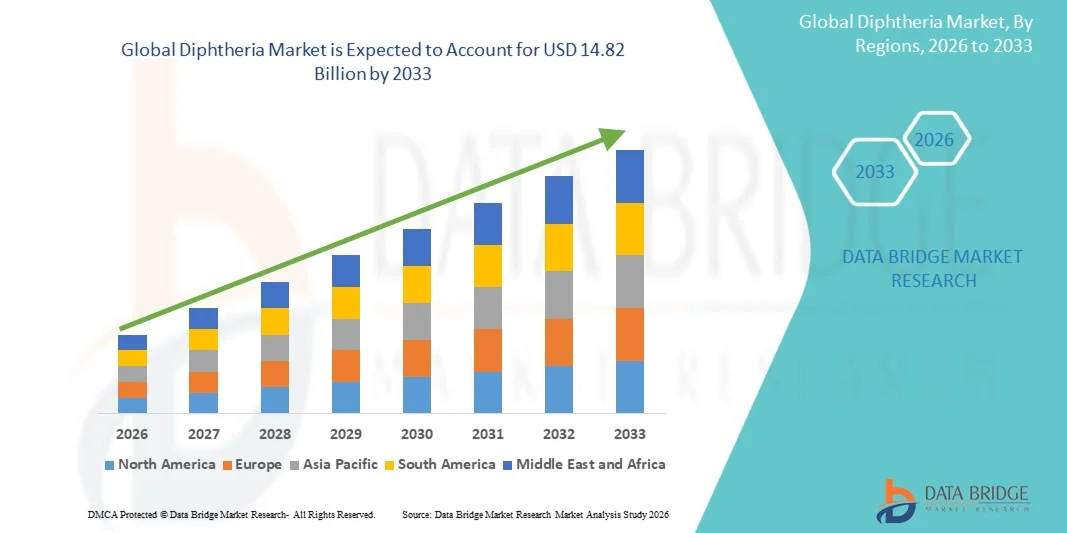
- По данным Data Bridge Market Research Analysis Объем мирового рынка дифтерии оценивается в9,66 млрд долларов в 2025 годуОжидается, что он достигнет14,82 млрд долларов к 2033 году, вCAGR 5,50%в течение прогнозируемого периода
- Рост рынка в значительной степени подпитывается растущим вниманием к программам иммунизации, правительственным инициативам по вакцинации и кампаниям общественного здравоохранения, направленным на предотвращение возрождения дифтерии как в развитых, так и в развивающихся регионах.
- Кроме того, растущие инвестиции в разработку вакцин, улучшение инфраструктуры здравоохранения и повышение осведомленности о профилактике инфекционных заболеваний усиливают внедрение вакцин против дифтерии и антитоксинов, особенно в педиатрических группах населения и группах высокого риска. Эти факторы ускоряют спрос на решения для профилактики и лечения дифтерии, тем самым значительно поддерживая рост отрасли.
Размер рынка и прогноз
Глобальная рыночная стоимость (2025):$9,66 млрд.
Ожидаемая рыночная стоимость (2033):$14,82 млрд.
Прогноз CAGR (2026–2033):5.50%
Каковы основные выводы рынка дифтерии
- Дифтерия, острое бактериальное инфекционное заболевание, вызванное Corynebacterium diphtheriae, в основном управляется с помощью сочетания подходов к диагностике и лечению.антибиотикииграет центральную роль в устранении бактериальной инфекции и предотвращении передачи, наряду с поддерживающим уходом и введением антитоксинов в клинической практике
- Растущий акцент на раннюю диагностику, быструю антибактериальную терапию и эффективное управление болезнями является основным драйвером рынка дифтерии, поддерживаемого улучшенным доступом к здравоохранению, более сильными системами эпиднадзора за заболеваниями и инициативами общественного здравоохранения, направленными на снижение заболеваемости и смертности, связанных с инфекционными вспышками.
- Северная Америка доминировала на рынке дифтерии со значительной долей выручки в 38,1% в 2025 году, поддерживаемой передовой инфраструктурой здравоохранения, хорошо зарекомендовавшими себя протоколами лечения и высокой доступностью антибиотиков и антитоксинов, при этом США поддерживали стандартизированные клинические рекомендации по лечению подозреваемых и подтвержденных случаев.
- Ожидается, что Азиатско-Тихоокеанский регион станет самым быстрорастущим регионом на рынке дифтерии в течение прогнозируемого периода из-за роста расходов на здравоохранение, повышения осведомленности о инфекционных заболеваниях и расширения доступа к антибиотикам и диагностическим услугам в развивающихся странах.
- Сегмент антибиотиков доминировал на рынке дифтерии с существенной долей рынка 46,7% в 2025 году, что обусловлено его критической ролью в качестве лечения первой линии для искоренения дифтерии коринебактерий, предотвращения осложнений и ограничения распространения заболеваний, что делает его важным компонентом стандартных протоколов управления дифтерией.
Сфера охвата и сегментация рынка дифтерии
|
Атрибуты |
Дифтерия ключевые рыночные идеи |
|
Сегменты покрыты |
|
|
Страны, охваченные |
Северная Америка
Европа
Азиатско-Тихоокеанский регион
Ближний Восток и Африка
Южная Америка
|
|
Ключевые игроки рынка |
|
|
Рыночные возможности |
|
|
Информационные наборы данных с добавленной стоимостью |
|
Каковы основные тенденции на рынке дифтерии
«Укрепление программ иммунизации и интеграции вакцин»
- Значительной и ускоряющейся тенденцией на мировом рынке дифтерии является укрепление и расширение программ рутинной иммунизации, включая комбинированные вакцины, такие как DTP и DTaP, которые все чаще интегрируются в национальные графики здравоохранения для улучшения охвата и соответствия.
- Например, комбинированные вакцины широко применяются в педиатрических графиках иммунизации во многих странах, обеспечивая защиту от дифтерии наряду с столбняком и коклюшем в одной дозе.
- Расширение охвата иммунизацией как городского, так и сельского населения усиливает профилактику заболеваний, в то время как скоординированные усилия правительств и организаций здравоохранения улучшают доступность вакцин и логистику холодной цепи для поддержания эффективности.
- Интеграция вакцинации против дифтерии в более широкие инициативы в области общественного здравоохранения и программы иммунизации матерей позволяет централизованно и рационализировать оказание профилактической помощи, улучшая общий иммунитет населения.
- Растущие инвестиции в производство вакцин и прогресс в разработке многовалентных вакцин также способствуют повышению уровня иммунизации и повышению надежности поставок в регионах.
- Эта тенденция к расширенным, интегрированным и профилактическим стратегиям здравоохранения меняет ожидания по борьбе с инфекционными заболеваниями, при этом организации все больше сосредотачиваются на иммунизации с высоким покрытием и соблюдении бустерной дозы.
- Спрос на решения для профилактики и лечения дифтерии неуклонно растет как в развивающихся, так и в развитых регионах, поскольку системы здравоохранения уделяют приоритетное внимание профилактическим подходам для снижения риска вспышек.
Динамика рынка дифтерии
водитель
«Повышение внимания к охвату иммунизацией и контролю за инфекционными заболеваниями»
- Растущий акцент на расширение охвата иммунизацией и укрепление инициатив общественного здравоохранения по борьбе с инфекционными заболеваниями является важным фактором для глобального рынка дифтерии.
- Например, в апреле 2025 года различные национальные органы здравоохранения активизировали усилия по иммунизации и активизировали кампании по вакцинации для улучшения защиты от дифтерии среди детей и уязвимых групп населения.
- Поскольку правительства и организации здравоохранения уделяют приоритетное внимание профилактическому здравоохранению, вакцины от дифтерии и антитоксины становятся важными компонентами систем регулярного и экстренного медицинского реагирования.
- Кроме того, повышение осведомленности о заболеваниях, предупреждаемых с помощью вакцин, и улучшение инфраструктуры здравоохранения способствуют более широкому внедрению программ иммунизации и своевременной диагностике и лечению.
- Удобство комбинированных вакцин, а также структурированные графики вакцинации и информационно-пропагандистские программы в области общественного здравоохранения являются ключевым фактором, способствующим принятию мер по профилактике дифтерии как в жилых, так и в институциональных медицинских учреждениях.
- Расширение финансирования со стороны глобальных организаций здравоохранения и партнерских отношений с местными органами власти оказывают дальнейшую поддержку широкомасштабным кампаниям вакцинации и усилиям по искоренению болезней.
- Растущая согласованность между глобальными организациями здравоохранения и национальными стратегиями иммунизации также способствует расширению усилий по борьбе с дифтерией и росту рынка.
Сдержанность/вызов
«Ограниченная осведомленность в регионах с низким доходом и зависимостью от холодных цепей»
- Опасения, связанные с ограниченной осведомленностью о преимуществах вакцинации и недостаточным доступом к здравоохранению в малообеспеченных и отдаленных регионах, представляют собой серьезную проблему для более широкого проникновения на рынок дифтерии.
- Например, пробелы в охвате иммунизацией и материально-технические трудности в сельских районах способствовали периодическим вспышкам среди недостаточно иммунизированных групп населения.
- Для решения этих проблем требуется надежная инфраструктура холодильной цепи, последовательное предоставление вакцин и эффективная коммуникация в области общественного здравоохранения для обеспечения эффективности и доступности вакцин.
- Кроме того, зависимость от контролируемых температурных режимов хранения и транспортировки вакцин повышает операционную сложность и затраты, особенно в регионах с ограниченной инфраструктурой.
- Ограниченная доступность медицинских кадров и неравномерное распределение диагностических учреждений еще больше препятствуют раннему выявлению и своевременному лечению в недостаточно обслуживаемых регионах.
- Нерешительность в отношении вакцин в некоторых общинах также способствует неоптимальным показателям иммунизации, замедляя прогресс в достижении полного контроля над заболеваниями.
- В то время как глобальные инициативы работают над улучшением распределительных сетей, неравенство в ресурсах и финансировании здравоохранения по-прежнему препятствует равномерному охвату вакцинацией.
- Преодоление этих барьеров за счет улучшения инфраструктуры здравоохранения, целенаправленных кампаний по повышению осведомленности и укрепления систем цепочки поставок будет иметь жизненно важное значение для устойчивого роста рынка.
Как сегментируется рынок дифтерии
Рынок сегментирован на основе типа, диагностики, лечения, пути введения, конечных пользователей и канала распределения.
- По типу
Исходя из типа, рынок дифтерии сегментирован на дифтерию, дифтерию кожи и другие. Сегмент дифтерии доминировал на рынке с наибольшей долей рынка в 2025 году, что обусловлено его более высокой распространенностью как наиболее клинически значимой и широко распространенной формы заболевания, поражающей дыхательную систему. Эта форма требует немедленного медицинского вмешательства, включая антибиотики и антитоксинную терапию, что способствует ее высокому спросу во всех медицинских учреждениях. Кроме того, стандартные диагностические протоколы и стратегии вакцинации в первую очередь предназначены для профилактики и лечения респираторной дифтерии, что еще больше усиливает ее доминирование. Более высокий риск осложнений и смертности, связанных с респираторной дифтерией, также приводит к более широкому использованию и приоритетному лечению. Активное включение в программы иммунизации и клинические рекомендации поддерживает постоянное внимание к этому сегменту.
Ожидается, что в сегменте дифтерии кожи будут наблюдаться самые быстрые темпы роста с 2026 по 2033 год, что обусловлено растущим признанием кожных инфекций, особенно в тропических и слаборазвитых регионах. Случаи дифтерии кожи часто связаны с плохими гигиеническими условиями и ограниченным доступом к медицинскому обслуживанию, что приводит к постепенному росту диагностики по мере улучшения осведомленности. Расширенные диагностические возможности и системы наблюдения позволяют лучше выявлять случаи недыхательной дифтерии. Кроме того, растущая пропаганда здравоохранения в сельских районах и недостаточно обслуживаемых группах населения способствует более широкому выявлению и лечению дифтерии кожи. Сегмент также получает выгоду от расширения доступа к антибиотикам и улучшения инициатив в области общественного здравоохранения, направленных на борьбу с инфекционными заболеваниями кожи.
- По диагнозу
На основании диагноза рынок дифтерии сегментирован на физическое обследование, культуру горла и другие. Сегмент физического обследования доминировал на рынке с наибольшей долей в 2025 году, что обусловлено его ролью в качестве первого шага в клинической оценке, где выявляются видимые симптомы, такие как образование псевдомембраны и воспаление горла. Физический осмотр позволяет медицинским работникам инициировать немедленные решения о лечении до лабораторного подтверждения, что имеет решающее значение для лечения подозреваемых случаев дифтерии. Его широкое использование в первичной медико-санитарной помощи и чрезвычайных ситуациях значительно способствует его доминированию. Метод является экономически эффективным, легкодоступным и не требует специализированной лабораторной инфраструктуры, что делает его пригодным как для развитых, так и для развивающихся регионов. Он часто используется в сочетании с историей болезни пациента для начального клинического лечения.
Ожидается, что в сегменте культуры горла будут наблюдаться самые высокие темпы роста с 2026 по 2033 год, что обусловлено растущим спросом на точные и подтверждающие методы диагностики. Культура горла остается золотым стандартом для выявления Corynebacterium diphtheriae, обеспечивая точную диагностику и соответствующее планирование лечения. Растущие инвестиции в лабораторную инфраструктуру и диагностические технологии улучшают доступ к тестированию на основе культуры. Повышение осведомленности среди поставщиков медицинских услуг о важности лабораторного подтверждения еще больше способствует усыновлению. Кроме того, расширение централизованных диагностических лабораторий и усовершенствованные системы транспортировки образцов облегчают своевременные и надежные результаты испытаний, особенно в городских медицинских учреждениях.
- Лечение
На основе лечения рынок дифтерии сегментирован на антибиотики, антитоксины и другие. Сегмент антибиотиков доминировал на рынке с наибольшей долей 46,7% в 2025 году, что обусловлено его критической ролью в качестве лечения первой линии для устранения бактериальной инфекции и предотвращения передачи. Антибиотики, такие как пенициллин и эритромицин, широко используются как в подтвержденных, так и в подозреваемых случаях для снижения бактериальной нагрузки и ограничения осложнений. Широкая доступность, доступность и включение в стандартные рекомендации по лечению способствуют их доминированию. Антибиотики также необходимы в сочетании с антитоксинной терапией, образуя основу протоколов лечения дифтерии. Постоянный спрос в больницах и клиниках еще больше укрепляет лидирующие позиции этого сегмента.
Ожидается, что в сегменте антитоксинов будут наблюдаться самые быстрые темпы роста с 2026 по 2033 год, обусловленные его важной ролью в нейтрализации дифтерийного токсина и предотвращении тяжелых осложнений. Повышение осведомленности среди медицинских работников о раннем введении антитоксина в подозрительных случаях способствует его принятию. Правительства и глобальные организации здравоохранения также укрепляют запасы и каналы распространения антитоксина дифтерии для эффективного управления вспышками. Ограниченные источники производства и высокая клиническая значимость стимулируют инвестиции в устойчивость цепочки поставок. Растущая частота вспышек в недостаточно иммунизированных регионах также способствует росту спроса на антитоксинную терапию в качестве критического экстренного вмешательства.
- По маршруту администрации
На основе пути введения рынок дифтерии сегментирован на оральный, парентеральный и другие. Парентеральный сегмент доминировал на рынке с самой большой долей в 2025 году, чему способствовало широкое использование инъекционных антибиотиков и антитоксинов для быстрого и эффективного лечения. Парентеральное введение обеспечивает более быстрое всасывание препарата и немедленное терапевтическое действие, что имеет решающее значение в тяжелых случаях дифтерии. Это предпочтительный путь в условиях больницы, где пациенты нуждаются в срочной помощи и тщательном мониторинге. Наличие внутривенных и внутримышечных препаратов еще больше поддерживает его доминирование. Медицинские работники предпочитают парентеральные пути для критически больных пациентов, чтобы обеспечить оптимальные клинические результаты.
Ожидается, что в сегменте ротовой полости будут наблюдаться самые быстрые темпы роста с 2026 по 2033 год, обусловленные увеличением использования пероральных антибиотиков в легких и умеренных случаях. Устное введение обеспечивает большее удобство, улучшенное соответствие пациентов и снижение требований к госпитализации. Расширение доступа к здравоохранению в отдаленных районах и растущее предпочтение домашнего ухода способствуют принятию пероральных методов лечения. Кроме того, достижения в разработке антибиотиков и схемах дозирования повышают эффективность вариантов перорального лечения. Сегмент также получает преимущества в плане затрат и простоты администрирования, особенно в условиях ограниченности ресурсов.
- конечными пользователями
На базе конечных пользователей рынок дифтерии сегментирован на больницы, домашнюю помощь, специализированные клиники и другие. Сегмент больниц доминировал на рынке с наибольшей долей в 2025 году, что обусловлено потребностью в специализированной помощи, экстренном лечении и наличием передовой диагностической и терапевтической инфраструктуры. Больницы служат основным пунктом ухода за тяжелыми случаями дифтерии, требующими введения антитоксинов, внутривенных антибиотиков и постоянного мониторинга. Наличие квалифицированных специалистов в области здравоохранения и подразделений критической помощи способствует эффективному лечению заболеваний. Высокий приток пациентов и централизованные протоколы лечения также способствуют доминированию больницы. Больницы также играют ключевую роль в управлении вспышками и отчетности, укрепляя свое центральное положение на рынке.
Ожидается, что в сегменте услуг по уходу на дому будут наблюдаться самые быстрые темпы роста с 2026 по 2033 год, что обусловлено растущим предпочтением амбулаторной помощи и удаленного мониторинга пациентов в легких случаях. Достижения в моделях доставки медицинских услуг и наличие пероральных антибиотиков позволяют проводить лечение за пределами традиционных больничных учреждений. Рост расходов на здравоохранение и необходимость снижения бремени больниц стимулируют решения по уходу на дому. Кроме того, улучшение информированности пациентов и телемедицинская поддержка облегчают последующий уход и мониторинг в домашних условиях. Сегмент также поддерживается растущим внедрением децентрализованных медицинских услуг как на развитых, так и на развивающихся рынках.
- Дистрибьюторский канал
На основе канала дистрибуции рынок дифтерии сегментирован в больничную аптеку, онлайн-аптеку и розничную аптеку. Сегмент больничных аптек доминировал на рынке с самой большой долей в 2025 году, что обусловлено прямыми поставками критически важных лекарств, таких как антибиотики и антитоксины в больничных условиях. Госпитальные аптеки обеспечивают немедленную доступность жизненно важных лекарств, необходимых для срочного лечения случаев дифтерии. Интеграция с протоколами лечения в больницах и тесная координация с медицинскими работниками способствуют его доминированию. Способность управлять запасами для неотложной помощи и ситуаций вспышки еще больше укрепляет этот сегмент. Больничные аптеки остаются основным каналом для введения парентерального лечения и контролируемых лекарств.
Ожидается, что в сегменте онлайн-аптек будут наблюдаться самые быстрые темпы роста с 2026 по 2033 год, обусловленные растущей цифровизацией медицинских услуг и растущими предпочтениями потребителей в отношении удобного доступа к лекарствам. Онлайн-платформы позволяют легко заказать, доставить домой и получить доступ к широкому спектру антибиотиков и вспомогательных лекарств. Растущее проникновение интернета и использование смартфонов еще больше ускоряют внедрение. Интеграция электронных рецептов и телемедицины также способствует росту онлайн-аптек. Сегмент набирает обороты в городских районах, где удобство и экономия времени высоко ценятся, способствуя его быстрому расширению.
В каком регионе находится наибольшая доля рынка дифтерии
- Северная Америка доминировала на рынке дифтерии со значительной долей выручки в 38,1% в 2025 году, поддерживаемой передовой инфраструктурой здравоохранения, устоявшимися протоколами лечения и высокой доступностью антибиотиков и антитоксинов.
- Потребители и поставщики медицинских услуг в регионе высоко ценят наличие передовых диагностических учреждений, стандартизированных протоколов лечения и широкий доступ к антибиотикам и антитоксинам для эффективного лечения заболеваний.
- Это широкое распространение также поддерживается надежными инициативами в области общественного здравоохранения, высокими расходами на здравоохранение и скоординированными системами эпиднадзора за заболеваниями, устанавливающими профилактику и лечение дифтерии в качестве хорошо интегрированного компонента контроля за инфекционными заболеваниями как в жилых, так и в институциональных медицинских учреждениях.
Американский рынок дифтерии Insight
Американский рынок дифтерии занял значительную долю в Северной Америке в 2025 году, чему способствовали высокоструктурированная система иммунизации, сильная инфраструктура здравоохранения и широко распространенная осведомленность о заболеваниях, предупреждаемых с помощью вакцин. Потребители и поставщики медицинских услуг в стране отдают приоритет рутинным графикам вакцинации, включая комбинированные вакцины, содержащие дифтерию, такие как DTaP и Tdap. Наличие современных диагностических средств позволяет своевременно выявлять и эффективно управлять предполагаемыми случаями, а установленные протоколы лечения обеспечивают своевременное введение антибиотиков и дифтерийного антитоксина. Кроме того, высокие расходы на здравоохранение, легкий доступ к медицинским услугам и скоординированные системы эпиднадзора за болезнями способствуют поддержанию низкой заболеваемости при сохранении постоянного спроса на профилактические и терапевтические решения.
Европейский рынок дифтерии
Европейский рынок дифтерии, по прогнозам, будет расширяться на устойчивой CAGR в течение прогнозируемого периода, в основном благодаря сильным национальным программам иммунизации и строгим правилам общественного здравоохранения, направленным на поддержание высокого охвата вакцинацией. Регион пользуется хорошо развитыми системами здравоохранения, всеобщим доступом к здравоохранению и структурированными графиками вакцинации, которые обеспечивают широкое применение комбинированных вакцин, содержащих дифтерию. Повышение осведомленности о профилактике инфекционных заболеваний, наряду с правительственными кампаниями, поддерживает устойчивый спрос. В Европе также наблюдается последовательное внедрение диагностических и лечебных решений в больницах и специализированных клиниках, особенно в управлении импортными случаями и предотвращении локальных вспышек.
Британский рынок дифтерии Insight
Ожидается, что в течение прогнозируемого периода рынок дифтерии в Великобритании будет расти на умеренном CAGR, что обусловлено сильными инициативами в области общественного здравоохранения в рамках национальной программы иммунизации и постоянным акцентом на рутинные прививки детей. Система здравоохранения страны обеспечивает высокую доступность вакцин, антибиотиков и диагностических услуг через инфраструктуру общественного здравоохранения. Повышение осведомленности среди родителей и поставщиков медицинских услуг о бустерных дозах и профилактике инфекционных заболеваний способствует дальнейшему росту рынка. Кроме того, эффективные системы мониторинга заболеваний и поддерживаемые правительством кампании вакцинации способствуют поддержанию низкого уровня заболеваемости при сохранении постоянного спроса на профилактические и терапевтические решения.
Германия Diphtheria Market Insight
Ожидается, что в течение прогнозируемого периода рынок дифтерии в Германии будет расширяться на стабильном уровне, чему будет способствовать высокий охват вакцинацией, развитая инфраструктура здравоохранения и сильная нормативная база, поддерживающая борьбу с инфекционными заболеваниями. Германия уделяет значительное внимание профилактическому здравоохранению, широко применяя комбинированные вакцины в плановых программах иммунизации. Хорошо налаженные лабораторные сети и диагностические возможности страны позволяют проводить раннее выявление и эффективное лечение предполагаемых случаев заболевания. Кроме того, повышение осведомленности о вакцинации взрослых и требованиях к иммунизации, связанных с поездками, способствует устойчивому спросу на медицинские услуги, связанные с дифтерией.
Азиатско-Тихоокеанский рынок дифтерии
Рынок дифтерии в Азиатско-Тихоокеанском регионе будет расти на самом быстром CAGR в 6,8% в течение прогнозируемого периода с 2026 по 2033 год, чему способствуют крупные базы населения, расширение программ иммунизации и улучшение инфраструктуры здравоохранения в таких странах, как Китай, Япония и Индия. Растущее внимание региона к инициативам в области общественного здравоохранения и проводимым правительством прививкам значительно расширяет охват вакцинацией. Быстрая урбанизация, рост расходов на здравоохранение и повышение осведомленности об инфекционных заболеваниях еще больше ускоряют освоение рынка. Кроме того, международное сотрудничество и поддержка со стороны глобальных организаций здравоохранения укрепляют усилия по иммунизации и улучшают доступ к вакцинам, диагностике и вариантам лечения как в городских, так и в сельских районах.
Японский рынок дифтерии
Японский рынок дифтерии набирает обороты благодаря сильной системе здравоохранения, высоким показателям иммунизации и акценту на профилактическую помощь. Широко применяются обычные программы вакцинации детей и бустерные дозы для взрослых, что способствует низким показателям заболеваемости. Передовая диагностическая инфраструктура страны позволяет на ранней стадии выявлять и эффективно управлять инфекционными заболеваниями. Кроме того, стареющее население Японии увеличивает потребность в вакцинации и своевременном медицинском вмешательстве для поддержания уровня иммунитета. Интеграция цифровых систем здравоохранения и строгий регулирующий надзор также поддерживают постоянный доступ к вакцинам и решениям для лечения в медицинских учреждениях.
Индийский рынок дифтерии
Индийский рынок дифтерии составил значительную долю в Азиатско-Тихоокеанском регионе в 2025 году, что объясняется большим населением страны, текущими инициативами по иммунизации и государственными программами общественного здравоохранения, такими как Универсальная программа иммунизации (UIP). Повышение осведомленности о предотвратимых вакцинами заболеваниях наряду с расширением инфраструктуры здравоохранения способствует повышению охвата вакцинацией в городских и сельских районах. Доступность доступных вакцин и растущий доступ к центрам первичной медико-санитарной помощи являются ключевыми факторами, поддерживающими рост рынка. Кроме того, усилия по укреплению логистики холодильных цепей и улучшению информационно-пропагандистской работы в недостаточно обслуживаемых районах помогают повысить показатели иммунизации и снизить бремя болезней по всей стране.
Каковы основные компании на рынке дифтерии
Индустрия дифтерии в основном возглавляется хорошо зарекомендовавшими себя компаниями, в том числе:
- Merck Sharp & Dohme LLC(США)
- Санофи(Франция)
- GSK plc (Великобритания
- Институт сыворотки Индии Pvt Ltd(Индия)
- Panacea Biotec Ltd(Индия)
- Meiji Holdings Co., Ltd. (Япония)
- Biological E. Limited (Индия)
- PT Bio Farma (Индонезия)
- BB-NCIPD Ltd (Болгария)
- Stablepharma Ltd (Великобритания)
- Pfizer Inc. (США)
- Секирус (Австралия)
- Bharat Biotech International Ltd (Индия)
- Адиммунная корпорация (Тайвань)
- GC Biopharma (Южная Корея)
- Instituto Butantan (Бразилия)
- Dynavax Technologies Corporation (США)
- VaxProtect Pharma (Индия)
- Вакцины ImmuniTec (Индия)
- ProtectHealth Solutions (Индия)
Каковы последние события на мировом рынке дифтерии
- В августе 2025 года органы здравоохранения в Газиабаде, Индия, запустили месячный курс вакцинации против столбняка-дифтерии (TD), нацеленный на детей старше 10 лет в ответ на рост случаев дифтерии и смертности, расширяя иммунизацию за пределы традиционной возрастной группы до пяти лет для улучшения охвата.
- В августе 2025 года Всемирная организация здравоохранения (ВОЗ) сообщила о продолжающихся вспышках дифтерии в нескольких африканских странах, включая Гвинею и Южную Африку, подчеркнув низкий охват иммунизацией и срочные потребности в расширенных усилиях по вакцинации и клинических ресурсах для борьбы с распространением заболевания.
- В июле 2025 года ВОЗ и ЮНИСЕФ сообщили о незначительном улучшении показателей глобальной вакцинации детей, отметив, что еще один миллион детей завершили серию критических трех доз вакцины DTP (которая защищает от дифтерии) по сравнению с предыдущим годом, а также подчеркнули текущие проблемы в охвате невакцинированных детей.
- В мае 2024 года в рамках усилий «Большого улова» Сирийская Арабская Республика начала широкомасштабную кампанию вакцинации детей, которые пропустили плановую иммунизацию, развернув медицинских работников и вакцинаторов для скрининга и иммунизации детей с вакцинами, содержащими дифтерию, для сокращения пробелов в иммунитете.
- В апреле 2023 года глобальные партнеры в области здравоохранения, включая ВОЗ, ЮНИСЕФ, Gavi и Фонд Билла и Мелинды Гейтс, запустили инициативу «Большой улов» для повышения охвата вакцинацией детей, потерянных во время пандемии COVID-19, с целью защиты миллионов детей от болезней, предотвращаемых вакцинацией, включая дифтерию, путем восстановления услуг иммунизации во всем мире.
SKU-
Получите онлайн-доступ к отчету на первой в мире облачной платформе рыночной аналитики
- Интерактивная панель анализа данных
- Панель анализа компании для возможностей с высоким потенциалом роста
- Доступ аналитика-исследователя для настройки и запросов
- Анализ конкурентов с помощью интерактивной панели
- Последние новости, обновления и анализ тенденций
- Используйте возможности сравнительного анализа для комплексного отслеживания конкурентов
Методология исследования
Сбор данных и анализ базового года выполняются с использованием модулей сбора данных с большими размерами выборки. Этап включает получение рыночной информации или связанных данных из различных источников и стратегий. Он включает изучение и планирование всех данных, полученных из прошлого заранее. Он также охватывает изучение несоответствий информации, наблюдаемых в различных источниках информации. Рыночные данные анализируются и оцениваются с использованием статистических и последовательных моделей рынка. Кроме того, анализ доли рынка и анализ ключевых тенденций являются основными факторами успеха в отчете о рынке. Чтобы узнать больше, пожалуйста, запросите звонок аналитика или оставьте свой запрос.
Ключевой методологией исследования, используемой исследовательской группой DBMR, является триангуляция данных, которая включает в себя интеллектуальный анализ данных, анализ влияния переменных данных на рынок и первичную (отраслевую экспертную) проверку. Модели данных включают сетку позиционирования поставщиков, анализ временной линии рынка, обзор рынка и руководство, сетку позиционирования компании, патентный анализ, анализ цен, анализ доли рынка компании, стандарты измерения, глобальный и региональный анализ и анализ доли поставщика. Чтобы узнать больше о методологии исследования, отправьте запрос, чтобы поговорить с нашими отраслевыми экспертами.
Доступна настройка
Data Bridge Market Research является лидером в области передовых формативных исследований. Мы гордимся тем, что предоставляем нашим существующим и новым клиентам данные и анализ, которые соответствуют и подходят их целям. Отчет можно настроить, включив в него анализ ценовых тенденций целевых брендов, понимание рынка для дополнительных стран (запросите список стран), данные о результатах клинических испытаний, обзор литературы, обновленный анализ рынка и продуктовой базы. Анализ рынка целевых конкурентов можно проанализировать от анализа на основе технологий до стратегий портфеля рынка. Мы можем добавить столько конкурентов, о которых вам нужны данные в нужном вам формате и стиле данных. Наша команда аналитиков также может предоставить вам данные в сырых файлах Excel, сводных таблицах (книга фактов) или помочь вам в создании презентаций из наборов данных, доступных в отчете.