



Global Electrical House (E-House) Market Segmentation, By Voltage (Medium Voltage Electrical House (E-House) and Low Voltage Electrical House (E-House)), Type (Fixed and Mobile Substation), Application (Mining Industries, Oil and Gas Industry, and Metal Industry), Component (Switchgear, Transformer, Bus Bar, Variable Frequency Drive, Power Management System, Heating, Ventilation, and Air Conditioning (HVAC), and Other Auxiliary Systems) - Industry Trends and Forecast to 2033
Каков размер рынка электрического дома и темпы роста
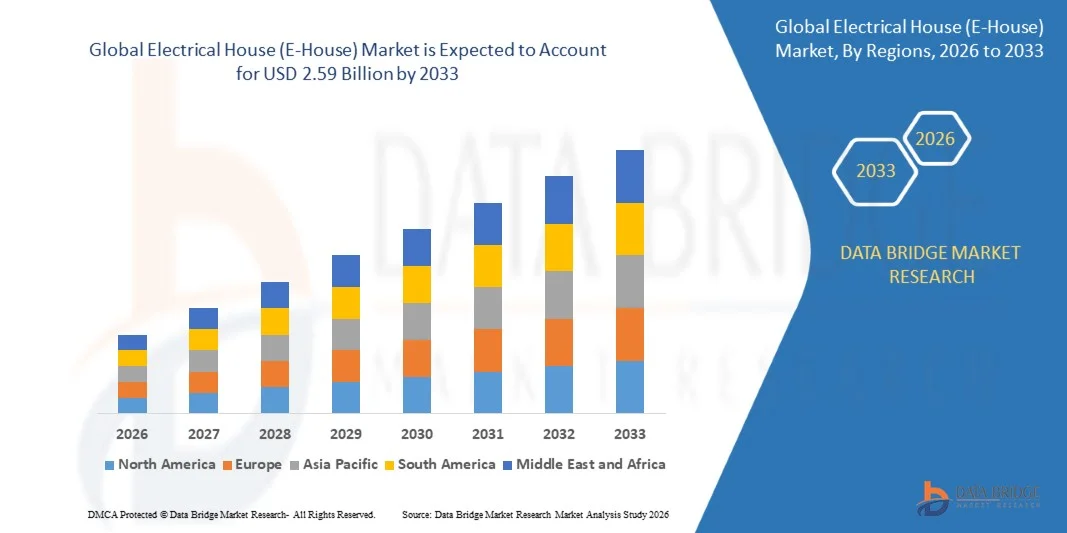
- Согласно анализу Data Bridge Market Research, глобальный объем рынка электрических домов (E-House) был оценен в два раза.1,48 млрд долларов в 2025 годуОжидается, что он достигнет$2,59 млрд к 2033 году, вCAGR 7,25%в течение прогнозируемого периода
- Рост рынка в значительной степени обусловлен растущей индустриализацией, расширением добычи полезных ископаемых, нефти и газа и операций по переработке металлов, которые создают растущий спрос на модульные сборные решения для распределения электроэнергии. Потребность в быстром развертывании, масштабируемом управлении электроэнергией и надежном распределении энергии значительно стимулирует внедрение E-House во многих секторах.
- Кроме того, растущие инвестиции в возобновляемые источники энергии, инфраструктурные проекты и удаленные промышленные объекты делают электродом предпочтительным решением для эффективного и гибкого распределения электроэнергии. Эти факторы ускоряют развертывание как стационарных, так и мобильных электронных домов, тем самым способствуя устойчивому росту рынка.
Каковы основные выводы рынка электрического дома (E-House)
- Электрический дом (E-House) - это сборные модульные электрические корпуса, которые объединяют такие компоненты, как распределительные устройства, трансформаторы, шины, приводы с переменной частотой, системы управления питанием и системы HVAC. Они предоставляют решения plug-and-play для промышленных, коммунальных и возобновляемых источников энергии, повышая операционную эффективность, безопасность и надежность.
- Растущий спрос на электрический дом (E-House) в первую очередь обусловлен потребностью в компактных, предварительно собранных электрических системах, которые сокращают время строительства на месте, обеспечивают соблюдение стандартов безопасности и поддерживают оптимизацию энергопотребления. Кроме того, растущее внедрение цифрового мониторинга, управления с помощью IoT и энергетических систем на основе ИИ еще больше повышает ценность решений E-House.
- Азиатско-Тихоокеанский регион доминирует на рынке электрических домов с долей воколо 35% в 2025 году в связи с быстрой индустриализацией, растущим развитием инфраструктуры и растущими инвестициями в горнодобывающую, нефтегазовую и металлообрабатывающую отрасли;
- Ожидается, что в течение прогнозируемого периода Северная Америка станет самым быстрорастущим регионом на рынке электромобилей из-за увеличения инвестиций в промышленную автоматизацию, модернизацию энергетической инфраструктуры и модульные энергетические решения для горнодобывающей, нефтегазовой и обрабатывающей промышленности.
- Сегмент мобильных подстанций доминировал на рынке с долей рынка 49% в 2025 году из-за высокого спроса на удаленные промышленные объекты, горнодобывающие операции и развертывание на основе проектов, где требуются гибкие и быстро развертываемые энергетические решения. Эти подстанции обеспечивают легкую транспортировку, быструю установку и надежную производительность в сложных условиях окружающей среды, что делает их необходимыми для временного или динамического распределения энергии.
Область охвата и сегментация рынка электрических домов (E-House)
|
Атрибуты |
Электрический дом (E-House) - ключевые идеи рынка |
|
Сегменты покрыты |
|
|
Страны, охваченные |
Северная Америка
Европа
Азиатско-Тихоокеанский регион
Ближний Восток и Африка
Южная Америка
|
|
Ключевые игроки рынка |
|
|
Рыночные возможности |
|
|
Информационные наборы данных с добавленной стоимостью |
В дополнение к рыночным идеям, таким как рыночная стоимость, темпы роста, сегменты рынка, географический охват, игроки рынка и рыночный сценарий, отчет о рынке, курируемый командой Data Bridge Market Research, включает углубленный экспертный анализ, анализ импорта / экспорта, анализ цен, анализ потребления продукции и анализ пестле. |
Какова основная тенденция на рынке электрических домов
«Растущее внедрение модульных и сборных энергетических решений»
- Существенной тенденцией на рынке электрических домов является растущее внедрение модульных и сборных энергетических решений, что обусловлено необходимостью быстрого развертывания, гибкой конфигурации и компактной интеграции электрических систем в промышленном и коммунальном секторах. Эта тенденция позиционирует E-Houses как важные решения для временного или удаленного распределения энергии и управления приложениями.
- Например, Schneider Electric и Siemens поставляют сборные электрические дома, которые используются для энергетических подстанций, промышленной автоматизации и интеграции возобновляемых источников энергии. Эти решения обеспечивают более быструю установку, снижают требования к труду на месте и обеспечивают стандартизированные меры безопасности и контроля.
- Тенденция к модернизации интеллектуальных сетей и расширению использования возобновляемых источников энергии побуждает коммунальных и промышленных операторов внедрять электрический дом (E-House) для распределенной генерации, управления микросетями и автоматизации подстанций. Эти модульные системы позволяют масштабируемое управление мощностью при одновременном снижении строительных сложностей на месте.
- Промышленные сектора, такие как нефть и газ, добыча полезных ископаемых и производство, все чаще используют электронный дом для централизации систем распределения и управления электроэнергией в опасных или отдаленных местах. Эти решения повышают эксплуатационную безопасность, облегчают обслуживание и уменьшают потребность в постоянной инфраструктуре.
- Электрический дом (E-House) отдает предпочтение временным проектам или проектам быстрого реагирования, в которых обычные сроки строительства являются непомерными. Развертывание на объектах аварийного восстановления, крупномасштабных мероприятиях или строительных площадках подчеркивает их гибкость и эффективность работы.
- На рынке наблюдается большой интерес к интегрированным решениям Electrical House (E-House), объединяющим системы питания, управления и автоматизации, где предварительно разработанные конструкции ускоряют сроки реализации проекта и повышают надежность системы. Это принятие укрепляет роль электронных домов как важнейшего фактора эффективного использования промышленной и коммунальной энергии.
Динамика рынка электрического дома (E-House)
водитель
«Повышение индустриализации и развития инфраструктуры»
- Растущая индустриализация и масштабные инфраструктурные проекты стимулируют спрос на электрические дома, поскольку они обеспечивают модульные, надежные и масштабируемые электрические решения, которые могут быть быстро развернуты в различных секторах. Это промышленное расширение требует компактных и интегрированных энергетических решений для эффективного управления распределенными системами энергетики и автоматизации.
- Например, АББ предоставляет сборный электродом (электронный дом) для инфраструктурных проектов, включая электрификацию железных дорог и промышленные предприятия, что позволяет быстрее вводить в эксплуатацию и обеспечивать стабильную производительность. Эти системы снижают сложность сборки на местах и обеспечивают стандартизированные эксплуатационные протоколы.
- Рост установок возобновляемой энергии, таких как солнечные и ветряные электростанции, увеличивает потребность в сборном электродоме (E-House) для инверторных станций, распределительных устройств и диспетчерских. Эти решения упрощают развертывание на географически распределенных объектах и повышают надежность управления электропитанием.
- Урбанизация и инициативы «умного города» создают более высокий спрос на модульные электрические решения в сфере коммунальных услуг, транспорта и управления зданиями. Электрический дом (E-House) предлагает компактную интеграцию для систем мониторинга, учета и распределения.
- Продолжающееся глобальное расширение промышленной инфраструктуры усиливает этот драйвер, поскольку электронные дома становятся неотъемлемой частью эффективного, гибкого и быстрого развертывания систем электропитания и управления.
Сдержанность/вызов
«Высокие первоначальные затраты на инвестиции и кастомизацию»
- Рынок электрических домов сталкивается с проблемами из-за высоких первоначальных капитальных затрат и стоимости разработки индивидуальных решений для удовлетворения конкретных требований к месту, окружающей среде и эксплуатации. Эти финансовые барьеры могут ограничить принятие, особенно для малых и средних проектов.
- Например, такие компании, как Eaton и Schneider Electric, предлагают настраиваемые конфигурации E-House с интегрированными системами питания и управления, где специализированные инженерные и производственные процессы увеличивают стоимость проекта. Такая настройка необходима для соответствия техническим стандартам и стандартам безопасности, но увеличивает общие инвестиции.
- Потребность в проектировании, транспортной логистике и сборке на месте способствует более высоким первоначальным затратам и длительному планированию проекта. Это может задержать ROI для новых развертываний.
- Расходы на техническое обслуживание и управление жизненным циклом специализированных компонентов также увеличивают общую стоимость владения. Электронные дома требуют квалифицированного персонала для эксплуатации и обслуживания интегрированных электрических систем и систем автоматизации.
- Рынок по-прежнему сталкивается с ограничениями, связанными с уравновешиванием потребностей в персонализации с экономической эффективностью, поскольку покупатели взвешивают преимущества быстрого развертывания против значительных первоначальных инвестиций. Эти финансовые и технические проблемы в совокупности выступают в качестве ключевых барьеров для более быстрого принятия решений E-House.
Как сегментируется рынок электрических домов
Рынок сегментирован на основе напряжения, типа, приложения и компонента.
• По напряжению
На основе напряжения рынок электрического дома (E-House) сегментирован на электродом среднего напряжения (E-House) и электродом низкого напряжения (E-House). Сегмент электродомов со средним напряжением доминировал на крупнейшей доле рынка в 2025 году, чему способствовало его широкое использование в тяжелых промышленных операциях, таких как добыча полезных ископаемых, нефть и газ, а также распределение электроэнергии, где требуется обработка электроэнергии большой емкости. Отрасли предпочитают электродомы среднего напряжения из-за их способности поддерживать крупномасштабное оборудование, обеспечивать надежность работы и уменьшать потери мощности на больших расстояниях. Эти системы также предлагают комплексные решения для защиты и управления, что делает их пригодными для сложных промышленных условий, требующих постоянного и стабильного электроснабжения. Увеличение инвестиций в инфраструктурные и энергетические проекты еще больше усиливает спрос на решения среднего напряжения в развивающихся и развитых регионах.
Ожидается, что в сегменте электрических домов с низким напряжением будут наблюдаться самые быстрые темпы роста с 2026 по 2033 год, чему способствует растущее внедрение в коммерческие объекты, малые предприятия и проекты в области возобновляемых источников энергии. Электронные дома с низким напряжением предпочтительны из-за их экономичности, компактной конструкции и простоты установки в приложениях с умеренными требованиями к мощности. Растущее внимание к децентрализованным энергетическим системам и инфраструктуре интеллектуальных сетей ускоряет их развертывание в распределенных энергетических сетях. Их гибкость и более низкие требования к техническому обслуживанию также способствуют более широкому внедрению в городскую инфраструктуру и коммунальные услуги.
• По типу
По типу рынок Электродома (E-House) сегментирован на стационарную и мобильную подстанцию. Сегмент мобильных подстанций доминировал на 49% рынка в 2025 году, что обусловлено высоким спросом на удаленные промышленные объекты, горнодобывающие операции и развертывание на основе проектов, где требуются гибкие и быстро развертываемые энергетические решения. Эти подстанции обеспечивают легкую транспортировку, быструю установку и надежную производительность в сложных условиях окружающей среды, что делает их необходимыми для временных или динамических потребностей в распределении энергии. Их модульная конструкция и совместимость с различными промышленными приложениями способствуют широкому распространению в регионах, инвестирующих в развитие инфраструктуры и энергетические проекты.
Ожидается, что сегмент стационарных подстанций станет самым быстрым CAGR с 2026 по 2033 год, чему будет способствовать увеличение инвестиций в долгосрочную промышленную инфраструктуру, проекты в области возобновляемых источников энергии и коммунальные сети, требующие стабильных и постоянных решений по распределению электроэнергии. Фиксированные подстанции обеспечивают высокую эксплуатационную надежность, передовые системы управления и бесшовную интеграцию с существующими электрическими сетями, что делает их пригодными для крупномасштабных промышленных объектов и энергоемких операций. Растущий спрос на постоянное электроснабжение, повышенные стандарты безопасности и эффективное управление энергопотреблением ускоряет внедрение стационарных подстанций в коммерческом и промышленном секторах.
• Подача заявки
На основе применения рынок Электрического дома (E-House) сегментирован на горнодобывающую промышленность, нефтегазовую промышленность и металлургическую промышленность. Сегмент нефтегазовой промышленности доминировал на крупнейшей доле рынка в 2025 году, что обусловлено критической потребностью в надежном и безопасном распределении электроэнергии в операциях вверх по течению, в середине и вниз по течению. Электронные дома широко используются на морских платформах, нефтеперерабатывающих заводах и перерабатывающих предприятиях, где суровые условия окружающей среды требуют надежных и закрытых электрических систем. Эти решения помогают минимизировать время простоя, повысить эффективность работы и обеспечить соблюдение стандартов безопасности. Постоянное расширение деятельности по разведке нефти и газа способствует дальнейшему росту этого сегмента.
Ожидается, что в сегменте горнодобывающей промышленности будут наблюдаться самые быстрые темпы роста с 2026 по 2033 год, что обусловлено ростом горнодобывающей деятельности и необходимостью эффективных энергетических решений в отдаленных и сложных районах. Электронные дома обеспечивают компактные и модульные системы распределения электроэнергии, которые могут быть легко развернуты на шахтах, поддерживая тяжелую технику и системы автоматизации. Растущий спрос на полезные ископаемые и металлы в различных отраслях промышленности стимулирует инвестиции в горнодобывающую инфраструктуру, тем самым стимулируя внедрение электронных домов. Их способность выдерживать суровые условия окружающей среды и обеспечивать бесперебойное электроснабжение повышает их значимость в горнодобывающей промышленности.
• по компонентам
На основе комплектующих рынок электродома (E-House) сегментирован на распределительные устройства, трансформаторы, шины,переменная частота приводаСистема управления питанием, отопление, вентиляция и кондиционирование воздуха (HVAC) и другие вспомогательные системы. Сегмент распределительных устройств доминировал на крупнейшей доле рынка в 2025 году, что обусловлено его важной ролью в контроле, защите и изоляции электрооборудования в электронных домах. Системы коммутаторов обеспечивают эксплуатационную безопасность, предотвращают электрические неисправности и обеспечивают эффективное распределение мощности на промышленных объектах. Повышение внимания к стандартам надежности и безопасности сетей еще больше стимулирует спрос на передовые решения для распределительных устройств. Их интеграция с цифровыми системами мониторинга также повышает производительность и снижает операционные риски.
Ожидается, что в сегменте систем управления электроэнергией будет самый быстрый CAGR с 2026 по 2033 год, что обусловлено растущей потребностью в эффективном мониторинге, оптимизации и автоматизации в промышленных операциях. Системы управления энергопотреблением позволяют анализировать данные в режиме реального времени, балансировать нагрузку и прогнозировать техническое обслуживание, повышая общую энергоэффективность и снижая эксплуатационные расходы. Растущее внедрение технологий интеллектуальных сетей и цифровая трансформация в промышленных секторах ускоряет спрос на эти системы. Их способность повышать эффективность принятия решений и обеспечивать эффективное использование энергетических ресурсов в значительной степени способствует их быстрому росту.
В каком регионе находится наибольшая доля рынка электрических домов
- Азиатско-Тихоокеанский регион доминировал на рынке электромобилей (E-House) с самой большой долей доходов около 35% в 2025 году, что обусловлено быстрой индустриализацией, растущим развитием инфраструктуры и растущими инвестициями в горнодобывающую, нефтегазовую и металлообрабатывающую отрасли.
- Экономически эффективная производственная экосистема региона, растущее внедрение модульных энергетических решений и расширение проектов в области возобновляемых источников энергии ускоряют рост рынка.
- Благоприятная государственная политика, наличие квалифицированной рабочей силы и все большее внимание к надежным и масштабируемым системам распределения электроэнергии способствуют более широкому внедрению электронных домов в промышленных секторах.
Китайский электрический дом (E-House) Market Insight
Китай занимал самую большую долю на рынке электродомов в Азиатско-Тихоокеанском регионе в 2025 году благодаря своей сильной промышленной базе, обширным горнодобывающим и производственным операциям и лидерству в проектах энергетической инфраструктуры. Акцент страны на расширении сетей распределения электроэнергии, наряду с поддерживающими правительственными инициативами по промышленной электрификации, стимулирует рыночный спрос. Кроме того, растущая потребность в модульных и сборных электрических решениях для крупномасштабных проектов еще больше усиливает расширение рынка.
Индия Электрический дом (E-House) Market Insight
Индия является свидетелем самого быстрого роста в Азиатско-Тихоокеанском регионе, подпитываемого увеличением промышленных инвестиций, расширением горнодобывающих операций и ростом развития энергетической инфраструктуры. Государственные программы, такие как Национальная миссия по электромобильности и инициативы по промышленному коридору, стимулируют спрос на модульные электронные дома. Кроме того, растущее внедрение надежных, предварительно собранных энергетических решений на удаленных объектах проектов и в производственных центрах ускоряет проникновение на рынок.
Европейский электрический дом (E-House) Market Insight
Рынок электрических домов в Европе постоянно расширяется благодаря строгим правилам безопасности, высокому спросу на надежные и стандартизированные системы распределения электроэнергии и инвестициям в устойчивую энергетику и промышленную автоматизацию. В регионе особое внимание уделяется эффективности системы, соблюдению экологических стандартов и интеграции с передовыми технологиями мониторинга. Расширение использования модульных и сборных электронных домов для энергоемких отраслей промышленности еще больше усиливает рост рынка.
Немецкий электрический дом (E-House) Market Insight
Рынок Германии обусловлен развитой промышленной инфраструктурой, акцентом на высокоточное производство и приверженностью энергоэффективным решениям. Накопленный в стране инженерный опыт, надежные сети НИОКР и инвестиции в промышленную электрификацию способствуют инновациям в решениях E-House. Спрос особенно высок в таких секторах, как автомобилестроение, химическая промышленность и энергетика, требующие надежных и масштабируемых систем распределения электроэнергии.
Электрический дом (E-House) Market Insight
Рынок Великобритании поддерживается современными промышленными объектами, проектами в области возобновляемых источников энергии и растущим внедрением модульных и мобильных энергетических решений. Растущее внимание к промышленной автоматизации, надежности энергоснабжения и быстрому развертыванию электрических систем для строительных и горнодобывающих объектов способствует внедрению электронного дома. Сотрудничество между инжиниринговыми фирмами и поставщиками энергетических решений еще больше укрепляет развитие рынка.
Электрический дом в Северной Америке (E-House) Market Insight
Прогнозируется, что Северная Америка будет расти самыми быстрыми темпами с 2026 по 2033 год, что обусловлено увеличением инвестиций в промышленную автоматизацию, модернизацию энергетической инфраструктуры и модульные энергетические решения для горнодобывающей, нефтегазовой и обрабатывающей промышленности. Растущий спрос на сборные, масштабируемые и мобильные электронные дома для временных и постоянных установок ускоряет внедрение. Интеграция передовых технологий, соблюдение нормативных требований и растущий объем промышленных проектов еще больше способствуют росту рынка.
Американский электрический дом (E-House) Market Insight
На долю США приходится наибольшая доля на рынке Северной Америки в 2025 году, подкрепленная обширной промышленной базой, значительными инвестициями в энергетическую инфраструктуру и растущими энергоемкими проектами. Ориентация страны на модульные и мобильные энергетические решения, интеграцию возобновляемых источников энергии и надежные распределительные сети способствует внедрению E-House. Присутствие ведущих поставщиков энергетических решений, сильные возможности исследований и разработок и акцент на операционной эффективности еще больше укрепляют лидирующие позиции США в регионе.
Какие компании занимают ведущие позиции на рынке электрических домов
Индустрия «Электрический дом» (E-House) в основном управляется хорошо зарекомендовавшими себя компаниями, в том числе:
- ИКВОРД, С.Л.(Испания)
- Electroinnova Instalaciones y Maintenimientos SL
- WEG (Бразилия)
- TGOOD Global Ltd.(Китай)
- Группа Matelec(Испания)
- Группа АКТИФ (Турция)
- PME Power Solutions(Индия)
- EKOSinergy (Испания)
- эфесец(Португалия)
- Siemens (Германия)
- Atlas Electric, Inc. (США)
- Elgin Power Solutions (США)
- ABB (Швейцария)
- Schneider Electric (Франция)
- Итон (Ирландия)
- General Electric (США)
- CG (Индия)
- MEIDENSHA CORPORATION (Япония)
- Powell Industries (США)
Каковы последние события на мировом рынке электрических домов
- В августе 2025 года Schneider Electric объявила о партнерстве с ведущей компанией по возобновляемым источникам энергии для разработки интегрированных решений E-House, предназначенных для применения солнечной энергии. Это сотрудничество укрепляет позиции Schneider Electric в растущем сегменте возобновляемых источников энергии, предлагая индивидуальные, устойчивые энергетические решения. Удовлетворяя растущий спрос на чистую энергетическую инфраструктуру, компания повышает свое конкурентное преимущество и расширяет свою рыночную актуальность как в промышленных, так и в возобновляемых источниках энергии.
- В июле 2025 года General Electric завершила приобретение технологического стартапа, специализирующегося на системах управления энергией на основе ИИ. Это приобретение позволяет General Electric интегрировать передовые возможности ИИ в свои решения E-House, значительно повышая операционную эффективность, управление энергопотреблением и прогнозное обслуживание. Этот шаг позволяет компании дифференцировать свои предложения на рынке, все больше ориентируясь на интеллектуальные, интеллектуальные и автоматизированные системы распределения электроэнергии.
- В феврале 2025 года Siemens AG объявила о расширении своего модульного производства E-House во Франкфурте, Германия. Модернизированный объект позволяет Siemens ускорить производство сборных средне- и высоковольтных электронных домов, что позволяет быстро развертывать промышленные, коммунальные и возобновляемые источники энергии. Эта стратегическая инвестиция направлена на удовлетворение глобального спроса на гибкие решения в области подключаемой и игровой мощности и укрепляет лидерство Siemens в модульных электрических распределительных системах.
- В 2024 году CR Technology Systems представила полностью мобильную платформу E-House с контейнерным дизайном и подключаемыми электрическими компонентами. Это нововведение сокращает время установки на нефтегазовых и горнодобывающих объектах более чем на 30%, повышая операционную эффективность и гибкость проекта. CR Technology Systems является ключевым поставщиком решений для быстрого развертывания в удаленных и сложных промышленных условиях.
- В 2023 году ABB запустила модульное интеллектуальное решение E-House, объединяющее передовые системы UPS, мониторинг с поддержкой IoT и энергоэффективный HVAC. Это решение способствует быстрому развертыванию возобновляемых источников энергии и промышленных проектов, улучшению управления энергопотреблением, надежности системы и операционной устойчивости. Предложение ABB укрепляет свое присутствие на рынке модульных электронных домов и удовлетворяет растущий спрос на интеллектуальную, адаптируемую энергетическую инфраструктуру во всем мире.
SKU-
Получите онлайн-доступ к отчету на первой в мире облачной платформе рыночной аналитики

- Интерактивная панель анализа данных
- Панель анализа компании для возможностей с высоким потенциалом роста
- Доступ аналитика-исследователя для настройки и запросов
- Анализ конкурентов с помощью интерактивной панели
- Последние новости, обновления и анализ тенденций
- Используйте возможности сравнительного анализа для комплексного отслеживания конкурентов
Методология исследования
Сбор данных и анализ базового года выполняются с использованием модулей сбора данных с большими размерами выборки. Этап включает получение рыночной информации или связанных данных из различных источников и стратегий. Он включает изучение и планирование всех данных, полученных из прошлого заранее. Он также охватывает изучение несоответствий информации, наблюдаемых в различных источниках информации. Рыночные данные анализируются и оцениваются с использованием статистических и последовательных моделей рынка. Кроме того, анализ доли рынка и анализ ключевых тенденций являются основными факторами успеха в отчете о рынке. Чтобы узнать больше, пожалуйста, запросите звонок аналитика или оставьте свой запрос.
Ключевой методологией исследования, используемой исследовательской группой DBMR, является триангуляция данных, которая включает в себя интеллектуальный анализ данных, анализ влияния переменных данных на рынок и первичную (отраслевую экспертную) проверку. Модели данных включают сетку позиционирования поставщиков, анализ временной линии рынка, обзор рынка и руководство, сетку позиционирования компании, патентный анализ, анализ цен, анализ доли рынка компании, стандарты измерения, глобальный и региональный анализ и анализ доли поставщика. Чтобы узнать больше о методологии исследования, отправьте запрос, чтобы поговорить с нашими отраслевыми экспертами.
Доступна настройка
Data Bridge Market Research является лидером в области передовых формативных исследований. Мы гордимся тем, что предоставляем нашим существующим и новым клиентам данные и анализ, которые соответствуют и подходят их целям. Отчет можно настроить, включив в него анализ ценовых тенденций целевых брендов, понимание рынка для дополнительных стран (запросите список стран), данные о результатах клинических испытаний, обзор литературы, обновленный анализ рынка и продуктовой базы. Анализ рынка целевых конкурентов можно проанализировать от анализа на основе технологий до стратегий портфеля рынка. Мы можем добавить столько конкурентов, о которых вам нужны данные в нужном вам формате и стиле данных. Наша команда аналитиков также может предоставить вам данные в сырых файлах Excel, сводных таблицах (книга фактов) или помочь вам в создании презентаций из наборов данных, доступных в отчете.











