Global Edema Treatment Market Segmentation, By Type (Peripheral Edema, Pedal Edema, Lymphedema, Pulmonary Edema, Cerebral Edema, Macular Edema, and Others), Treatment (Diuretic, Anti-allergic, Blood Thinners, and Others), Route of Administration (Oral, Parenteral, and Others), End-Users (Hospitals, Homecare, Specialty Clinics, and Others), Distribution Channel (Hospital Pharmacy, Online Pharmacy, and Retail Pharmacy)- Industry Trends and Forecast to 2033
Каков размер рынка лечения отеков и темпы роста
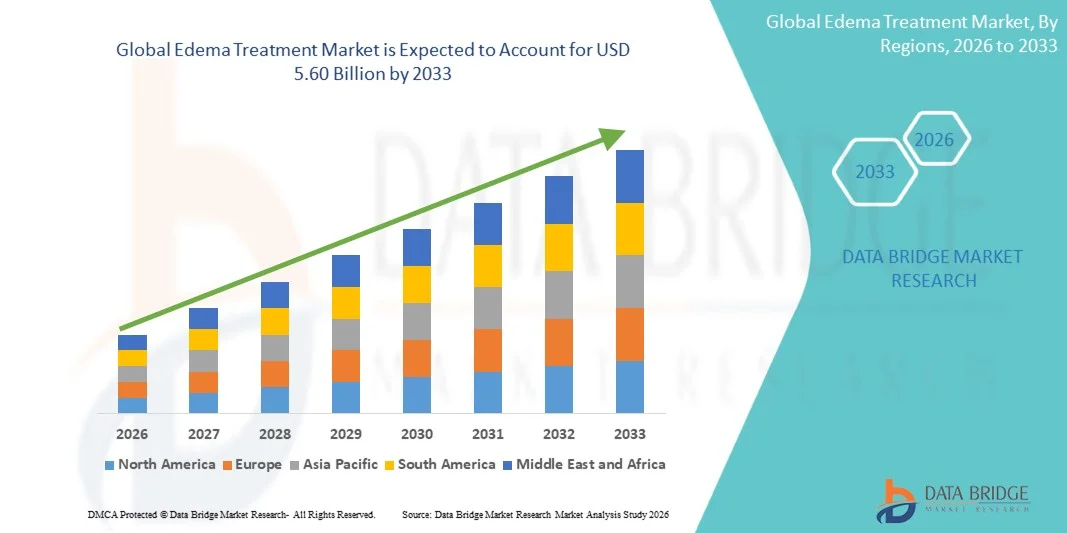
- По данным Data Bridge Market Research Analysis Объем мирового рынка лечения отеков оценили в3,14 млрд долларов в 2025 годуОжидается, что он достигнет5,60 млрд долларов к 2033 году, вCAGR 7.50%в течение прогнозируемого периода
- Рост рынка в значительной степени подпитывается увеличением частоты хронических заболеваний, связанных с задержкой жидкости, инновациями в методах лечения (включая диуретики, разжижители крови и компрессионную терапию), а также повышением осведомленности среди поставщиков медицинских услуг и пациентов, что приводит к более широкому принятию эффективных решений по борьбе с отеками в клинических условиях.
- Кроме того, государственные и частные инвестиции в клинические исследования новых методов лечения отеков, расширение гериатрической популяции, уязвимой к отекам, и улучшение медицинских учреждений в развивающихся регионах поддерживают расширение рынка, устанавливая комплексные варианты лечения как локализованных, так и системных отеков.
Размер рынка и прогноз
- Глобальная рыночная стоимость (2025)USD 3,14 млрд.
- Ожидаемая рыночная стоимость (2033)$ 5,60 млрд.
- Прогноз CAGR (2026–2033): 7.50%
Анализ рынка лечения отека
- Лечение отеков, включающее фармакологические методы лечения, такие как диуретики, антиаллергические препараты, разжижающие кровь и другие терапевтические вмешательства, становится все более важным в управлении расстройствами задержки жидкости как в острых, так и в хронических клинических условиях, улучшая результаты лечения пациентов и общее качество жизни.
- Растущий спрос на лечение отеков в первую очередь обусловлен растущей распространенностью хронических заболеваний, таких как сердечная недостаточность.болезнь почекцирроз печени и лимфедема в сочетании с повышением осведомленности среди медицинских работников и пациентов о раннем вмешательстве и эффективных стратегиях управления
- Северная Америка доминировала на рынке лечения отеков с самой большой долей дохода в 39,5% в 2025 году, что объясняется передовой инфраструктурой здравоохранения, высокими расходами на здравоохранение, сильной политикой возмещения расходов и хорошо зарекомендовавшей себя фармацевтической промышленностью. В США наблюдается существенное внедрение инновационных методов лечения, направленных на отек, особенно в управлении периферическим и легочным отеком.
- Ожидается, что Азиатско-Тихоокеанский регион станет самым быстрорастущим регионом на рынке лечения отеков в течение прогнозируемого периода, чему будет способствовать рост заболеваемости хроническими заболеваниями, расширение инфраструктуры здравоохранения, повышение осведомленности о вариантах лечения отеков и улучшение доступа к здравоохранению в развивающихся странах.
- Сегмент периферических отеков доминировал на рынке лечения отеков с долей рынка 31,2% в 2025 году, что обусловлено его высокой распространенностью среди пациентов с сердечно-сосудистыми и почечными заболеваниями.
Область охвата и сегментация рынка лечения отеков
|
Атрибуты |
Лечение отеков Ключевые идеи рынка |
|
Сегменты покрыты |
|
|
Страны, охваченные |
Северная Америка
Европа
Азиатско-Тихоокеанский регион
Ближний Восток и Африка
Южная Америка
|
|
Ключевые игроки рынка |
|
|
Рыночные возможности |
|
|
Информационные наборы данных с добавленной стоимостью |
В дополнение к информации о рыночных сценариях, таких как рыночная стоимость, темпы роста, сегментация, географический охват и основные игроки, рыночные отчеты, курируемые Data Bridge Market Research, также включают углубленный экспертный анализ, эпидемиологию пациентов, анализ трубопроводов, анализ цен и нормативную базу. |
Каковы основные тенденции на рынке лечения отека
«Достижения в целевой и персонализированной терапии»
- Значительной и ускоряющейся тенденцией на мировом рынке лечения отека является разработка целевых методов лечения для конкретных типов отека, таких как лимфедема, отек легких и отек желтого пятна, повышение эффективности лечения и результатов лечения пациентов.
- Например, недавние инновации в терапии лимфедемы включают носимые устройства сжатия, которые обеспечивают персонализированные уровни давления, улучшают лимфатический дренаж и уменьшают дискомфорт для хронических пациентов.
- Интеграция цифрового мониторинга с лечением отеков позволяет удаленно отслеживать задержку жидкости, приверженность и эффективность терапии, позволяя клиницистам корректировать схемы на основе данных пациентов в режиме реального времени.
- Например, мобильные приложения в сочетании с интеллектуальными носимыми датчиками могут предупреждать пациентов и поставщиков медицинских услуг об аномальном отеке, поддерживая раннее вмешательство и снижая показатели госпитализации.
- Растущие исследования в новых лекарственных препаратах, таких как диуретики с устойчивым высвобождением и противовоспалительные средства, улучшают терапевтические результаты при минимизации побочных эффектов
- Эта тенденция к персонализированному, ориентированному на данные и ориентированному на пациента лечению отека меняет стандарты лечения, побуждая фармацевтические и медицинские компании сосредоточиться на прецизионной терапии.
- Спрос на лечение отеков, включающее расширенный мониторинг, индивидуальное дозирование лекарств и комплексные терапевтические решения, быстро растет как в больницах, так и в амбулаторных условиях, поскольку пациенты и поставщики все чаще отдают приоритет эффективности и качеству жизни.
Динамика рынка лечения отеков
водитель
«Повышение распространенности хронических заболеваний и старение населения»
- Растущая частота сердечно-сосудистых, почечных и печеночных расстройств в сочетании с растущей гериатрической популяцией является значительным фактором повышенного спроса на лечение отеков.
- Например, в 2025 году фармацевтические компании представили новые комбинированные диуретики, предназначенные для пациентов с сердечной недостаточностью и хроническими заболеваниями почек, нацеленные как на удержание жидкости, так и на баланс электролитов.
- Поскольку медицинские работники сосредоточены на ранней диагностике и вмешательстве, лечение отеков предлагает улучшенное управление задержкой жидкости, снижение осложнений и улучшение результатов лечения пациентов.
- Например, амбулаторные клиники все чаще назначают комплексные планы терапии, сочетающие фармакологические и компрессионные методы лечения для эффективного управления периферическим и педальным отеком.
- Кроме того, расширение доступа к здравоохранению в развивающихся регионах и повышение осведомленности о вариантах лечения отеков делают эффективные методы лечения более широко распространенными.
- Увеличение инвестиций в клинические испытания и НИОКР фармацевтическими компаниями ускоряет запуск лечения отеков следующего поколения
- Например, компании оценивают новые антифибротические и лимфатические агенты для лечения лимфедемы и отека легких, создавая новые рыночные возможности.
- Технологическая интеграция, такая как носимые устройства мониторинга отеков, повышает приверженность пациентов и персонализацию терапии. Например, больницы внедряют сенсорные системы сжатия, которые отслеживают отек и автоматически регулируют терапевтическое давление, улучшая соответствие пациентов.
Сдержанность/вызов
«Побочные эффекты и ограничения доступа»
- Опасения относительно потенциальных побочных эффектов фармакологической терапии, включая дисбаланс электролитов и аллергические реакции, представляют собой серьезную проблему для более широкого проникновения на рынок.
- Например, диуретики, хотя и эффективны, могут привести к обезвоживанию или нарушениям электролита, если их не контролировать должным образом, что заставляет некоторых пациентов колебаться в продолжении лечения.
- Ограниченный доступ к специализированным методам лечения в сельских или слаборазвитых регионах ограничивает принятие передовых решений для лечения отеков.
- Например, пациенты в районах с низким уровнем дохода могут иметь ограниченную доступность компрессионных устройств или целевых методов лечения, в основном полагаясь на общие диуретики с менее персонализированной эффективностью.
- Обеспечение приверженности пациентов, мониторинг побочных реакций и расширение справедливого доступа к терапии имеют решающее значение для поддержания роста рынка. Например, разрабатываются программы по оказанию помощи больницам и инициативы в области телемедицины в целях повышения эффективности лечения и преодоления географических и социально-экономических барьеров.
- Высокая стоимость передовых методов лечения, особенно в частных системах здравоохранения, может ограничить охват пациентов и замедлить проникновение на рынок в чувствительных к цене регионах. Например, носимые компрессионные устройства и новые комбинированные препараты часто поставляются с премиальными ценами, что делает их менее доступными в развивающихся странах.
- Регуляторные проблемы и задержка одобрения новых методов лечения отеков в некоторых регионах могут препятствовать расширению рынка.
- Например, задержки в одобрении клинических испытаний или одобрении возмещения могут замедлить запуск инновационных методов лечения, ограничив своевременный доступ пациентов.
Сфера охвата рынка лечения отека
Рынок сегментирован на основе типа, лечения, пути введения, конечного пользователя и канала распределения.
- По типу
На основе типа рынок лечения отеков сегментирован на периферический отек, отек педали, лимфедему, отек легких, отек головного мозга, отек желтого пятна и другие. Сегмент периферических отеков доминировал на рынке с самой большой долей дохода в 31,2% в 2025 году, что обусловлено его высокой распространенностью среди пациентов с сердечно-сосудистыми и почечными расстройствами. Периферический отек часто требует постоянного мониторинга и фармакологического управления, что создает устойчивый спрос на диуретики и комбинированную терапию. Клиницисты предпочитают установленные протоколы лечения периферического отека из-за предсказуемых результатов и эффективности в снижении задержки жидкости. Сегмент выигрывает от широкой осведомленности среди поставщиков медицинских услуг и пациентов, обеспечивая сильное внедрение в больницах, специализированных клиниках и учреждениях по уходу на дому. Кроме того, продолжающиеся исследования и разработки и новые разрешения на лекарства для лечения периферического отека еще больше поддерживают его доминирование. В сегменте также наблюдается стабильный рост благодаря интеграции с цифровыми инструментами мониторинга пациентов, которые повышают приверженность терапии и эффективность лечения.
Ожидается, что в сегменте лимфедемы будет наблюдаться самый быстрый рост на 9,1% с 2026 по 2029 год, чему способствует повышение осведомленности о лимфатических расстройствах и растущий спрос на персонализированные методы лечения.Лечение лимфедемыК ним относятся компрессионные устройства, физиотерапия и новые фармакологические варианты, которые набирают обороты как в больницах, так и в учреждениях по уходу на дому. Растущее гериатрическое население, пациенты после рака и расширение инфраструктуры здравоохранения в странах с развивающейся экономикой являются ключевыми факторами роста. Кроме того, технологическая интеграция, такая как носимые устройства мониторинга, поддерживает отслеживание отеков конечностей в режиме реального времени, повышая соответствие пациентов. Увеличение инвестиций в исследования и разработки для целевой терапии лимфедемы привлекает новых игроков на рынок. Рост сегмента также поддерживается информационными кампаниями и расширением страхового покрытия в нескольких регионах.
- Лечение
На основе лечения рынок лечения отеков сегментирован на диуретики, антиаллергические, разбавители крови и другие. Сегмент диуретиков доминировал на рынке с наибольшей долей 42,7% в 2025 году, что обусловлено их установленной клинической эффективностью в управлении удержанием жидкости и уменьшением отеков. Диуретики широко назначаются при таких состояниях, как сердечная недостаточность, заболевания почек и печеночные расстройства, что делает их краеугольным камнем управления отеками. Сегмент выигрывает от четко определенных протоколов дозирования, простоты администрирования и широкого внедрения в больницах, домашних условиях и специализированных клиниках. Фармацевтические компании продолжают внедрять инновации в комбинированную терапию и препараты с устойчивым высвобождением, усиливая терапевтическое воздействие диуретиков. Кроме того, диуретики являются экономически эффективными по сравнению с новыми или специализированными методами лечения, что повышает их доступность в развивающихся регионах. Их доказанная безопасность и предсказуемые результаты гарантируют, что диуретики остаются предпочтительным выбором для врачей, страдающих как острым, так и хроническим отеком.
Ожидается, что сегмент Blood Thinners станет свидетелем самого быстрого CAGR с 2026 по 2029 год, чему способствует растущая распространенность отеков, связанных с тромбоэмболическими расстройствами. Разбавители крови, такие как антикоагулянты, все чаще используются у пациентов с отеком легких или головного мозга для предотвращения осложнений от сосудистых блокировок. Растущая осведомленность среди медицинских работников о двойных преимуществах снижения отека и смягчения сердечно-сосудистых рисков приводит к принятию. Технологические достижения в области мониторинга и протоколов дозирования снижают риск побочных эффектов, поощряя более широкое использование. Кроме того, расширение популяций пациентов в стареющих обществах и учреждениях послеоперационного ухода поддерживает рост этого сегмента. Разбавители крови также набирают обороты в специализированных клиниках и амбулаторной помощи, способствуя быстрому росту рынка.
- По маршруту администрации
На основе пути введения рынок лечения отеков сегментирован на оральный, парентеральный и другие. Оральный сегмент доминировал на рынке с долей 61,3% в 2025 году, благодаря удобству, простоте самоуправления и установленной эффективности пероральной фармакологической терапии. Пероральные препараты, такие как диуретики и противоаллергические препараты, широко используются в больницах, домашних условиях и амбулаторных условиях. Пациенты предпочитают пероральное введение для лечения хронического отека, потому что это уменьшает посещения больницы и улучшает приверженность. Сегмент поддерживается непрерывными инновациями продукта, включая комбинированные таблетки и составы с устойчивым высвобождением. Устное администрирование также выигрывает от глобальных путей одобрения регулирующих органов, которые облегчают выход на рынок и распределение. Высокое предпочтение врача пероральным препаратам и знакомство с пациентами обеспечивают доминирование этого пути.
Ожидается, что сегмент Parenteral станет свидетелем самого быстрого CAGR с 2026 по 2029 год, что обусловлено увеличением использования в лечении острых отеков в больницах и тяжелых случаях. Парентеральное введение позволяет быстрое снижение жидкости и точный контроль над терапевтическими эффектами, что делает его подходящим для легочного, церебрального и макулярного отека. Технологические достижения в инфузионных системах и повышение безопасности рецептуры еще больше ускорили внедрение. Родительские процедуры особенно предпочтительны в отделениях интенсивной терапии, отделениях неотложной помощи и специализированных клиниках. Растущая инфраструктура больниц на развивающихся рынках также способствует быстрому росту сегмента. Сегмент выигрывает от интеграции с инструментами клинического мониторинга, которые оптимизируют дозирование и улучшают результаты лечения пациентов.
- конечным пользователем
На базе конечного пользователя рынок лечения отеков сегментирован на больницы, домашнюю помощь, специализированные клиники и другие. Сегмент госпиталей доминировал на рынке с наибольшей долей 55,6% в 2025 году из-за высокой заболеваемости острыми и хроническими отеками, требующими интенсивного мониторинга и лечения. Больницы предоставляют комплексную помощь с доступом к фармакологической, парентеральной и специализированной терапии. Сегмент выигрывает от присутствия обученных медицинских работников, передовых диагностических инструментов и структурированных протоколов лечения. Больницы также способствуют клиническим испытаниям и внедрению новых методов лечения, что еще больше укрепляет их рыночные позиции. Пациенты с тяжелым отеком часто полагаются на больничную помощь для быстрого облегчения симптомов и оптимизации терапии. Кроме того, доминирование сегмента поддерживается государственными и частными инвестициями в здравоохранение, улучшающими инфраструктуру больниц.
Ожидается, что сегмент Homecare станет свидетелем самого быстрого CAGR с 2026 по 2029 год, что обусловлено растущим спросом на удобные решения для лечения отека на дому. Услуги по уходу на дому включают соблюдение пероральных лекарств, компрессионную терапию, носимые устройства мониторинга и поддержку телемедицины. Повышение осведомленности пациентов и лиц, осуществляющих уход, о раннем вмешательстве и постоянном мониторинге способствует росту сегмента. Технологические достижения в носимых и интеллектуальных устройствах позволяют удаленно отслеживать отек, задержку жидкости и эффективность терапии. Расширение страхового покрытия для услуг по уходу на дому в нескольких регионах также способствует усыновлению. Сегмент также обусловлен предпочтением пациента комфорту, сокращением посещений больниц и индивидуальными планами ухода.
- Дистрибьюторский канал
На основе канала распространения рынок лечения отеков сегментирован в больничную аптеку, онлайн-аптеку и розничную аптеку. Сегмент Hospital Pharmacy доминировал на рынке с наибольшей долей выручки в 48,9% в 2025 году, что обусловлено удобством прямого доступа к назначенным методам лечения и интеграцией с протоколами лечения в больницах. Больничные аптеки обеспечивают доступность как фармакологического, так и специализированного лечения отеков. Сегмент выигрывает от обученных фармацевтов, которые обеспечивают руководство пациентом и контролируют соблюдение терапии. Больницы также способствуют эффективности цепочки поставок лекарств с высоким спросом, обеспечивая бесперебойный доступ. Доминирование сегмента усиливается за счет интеграции больничных аптек с системами клинического мониторинга и назначения рецептов. Пациенты с тяжелым или хроническим отеком часто полагаются на больничные аптеки для своевременного заполнения лекарств и консультирования.
Сегмент онлайн-аптек, как ожидается, станет свидетелем самого быстрого CAGR с 2026 по 2029 год, чему способствуют растущее внедрение цифровых технологий, проникновение электронной коммерции и предпочтение пациентов для доставки лекарств на дом. Онлайн-аптеки предоставляют доступ к пероральным, антиаллергическим и специальным лекарствам от отека с удобством и усмотрением. Рост поддерживается телемедицинскими услугами, поставками лекарств на основе подписки и программами удаленного мониторинга пациентов. Растущее использование смартфонов и проникновение интернета, особенно в странах с развивающейся экономикой, ускоряют внедрение. Пациенты и лица, осуществляющие уход, ценят простоту заказа, доставки на порог и обновления в режиме реального времени о доступности лекарств. Онлайн-аптеки также расширяют партнерские отношения с поставщиками медицинских услуг для повышения приверженности терапии и поддержки пациентов.
Региональный анализ рынка лечения отека
- Северная Америка доминировала на рынке лечения отеков с самой большой долей дохода в 39,5% в 2025 году, что объясняется передовой инфраструктурой здравоохранения, высокими расходами на здравоохранение, сильной политикой возмещения расходов и хорошо зарекомендовавшей себя фармацевтической промышленностью.
- Пациенты и поставщики медицинских услуг в регионе высоко ценят установленные протоколы лечения, передовые фармакологические методы лечения и комплексные решения для мониторинга, которые улучшают клинические результаты и поддерживают эффективное лечение как острых, так и хронических случаев отека.
- Это широкое внедрение дополнительно поддерживается сильными расходами на здравоохранение, хорошо развитыми сетями больниц и растущей осведомленностью об управлении отеками среди пациентов и лиц, осуществляющих уход, устанавливая эффективное лечение отеков в качестве стандарта ухода в больницах, специализированных клиниках и учреждениях по уходу на дому.
Американский рынок лечения отека Insight
Рынок лечения отеков в США занял самую большую долю дохода в 82% в 2025 году в Северной Америке, чему способствовала высокая распространенность сердечно-сосудистых, почечных и печеночных расстройств, требующих передового управления удержанием жидкости. Пациенты и медицинские работники все чаще отдают приоритет эффективным, основанным на фактических данных методам лечения, включая диуретики, разбавители крови и противоаллергические препараты. Растущая тенденция ухода на дому и амбулаторного лечения отеков в сочетании с широким распространением устройств удаленного мониторинга способствует дальнейшему росту рынка. Более того, растущая интеграция цифровых инструментов здравоохранения для отслеживания приверженности пациентов и результатов терапии значительно способствует расширению рынка.
Европейский рынок лечения отеков Insight
Ожидается, что европейский рынок лечения отеков будет расширяться при существенном CAGR в течение прогнозируемого периода, в первую очередь благодаря передовой инфраструктуре здравоохранения, благоприятной политике возмещения и растущему внедрению персонализированных методов лечения. Повышение осведомленности об управлении хроническими отеками и распространенности старения населения способствует более широкому использованию фармакологических и нефармакологических вмешательств. Европейские пациенты и поставщики медицинских услуг привлекаются к лечению, которое улучшает качество жизни и уменьшает количество госпитализаций. Регион переживает значительный рост в больницах, специализированных клиниках и службах по уходу на дому, причем методы лечения отеков включены как в новые протоколы лечения, так и в текущие программы ухода за пациентами.
Великобритания Edema Treatment Market Insight
Ожидается, что рынок лечения отеков в Великобритании будет расти с заметным CAGR в течение прогнозируемого периода, что обусловлено увеличением частоты сердечной недостаточности, заболеваний почек и лимфедемы, а также растущим вниманием к профилактической помощи. Кроме того, опасения по поводу осложнений от нелеченного отека побуждают как больницы, так и поставщиков услуг по уходу на дому принимать комплексные терапевтические решения. Ожидается, что хорошо налаженная инфраструктура здравоохранения Великобритании в сочетании с надежным страховым покрытием и клиническими рекомендациями продолжит стимулировать рост рынка. Цифровые инструменты мониторинга пациентов и программы телездравоохранения также поддерживают внедрение, позволяя дистанционное управление и улучшенное соблюдение.
Германия Edema Treatment Market Insight
Ожидается, что в течение прогнозируемого периода рынок лечения отеков в Германии будет расширяться на значительном CAGR, чему будет способствовать повышение осведомленности о хроническом лечении отеков и растущий спрос на инновационные методы лечения. Сильная система здравоохранения Германии, высокий опыт врачей и акцент на профилактической и персонализированной медицине способствуют внедрению в больницах и специализированных клиниках. Интеграция мониторинга цифровой терапии и ухода, ориентированного на пациента, становится все более распространенной, при этом пациенты и поставщики услуг предпочитают лечение, которое сочетает в себе эффективность, безопасность и удобство. Кроме того, продолжающиеся клинические исследования и наличие передовых фармакологических и компрессионных методов лечения поддерживают рост рынка.
Азиатско-Тихоокеанский рынок лечения отека
Рынок лечения отеков в Азиатско-Тихоокеанском регионе будет расти на самом быстром CAGR 8,3% в течение прогнозируемого периода с 2026 по 2029 год, что обусловлено увеличением распространенности хронических заболеваний, ростом гериатрического населения и расширением инфраструктуры здравоохранения в таких странах, как Китай, Япония и Индия. Растущая осведомленность региона о раннем вмешательстве и профилактическом здравоохранении способствует внедрению лечения отеков в больницах, специализированных клиниках и домашнем уходе. Кроме того, правительственные инициативы, поддерживающие цифровой мониторинг здоровья и телемедицину, позволяют улучшить управление пациентами. Расширение среднего класса в странах с развивающейся экономикой и увеличение расходов на здравоохранение также ускоряют проникновение на рынок и доступность эффективных методов лечения.
Японский рынок лечения отеков
Японский рынок лечения отеков набирает обороты из-за высокой распространенности в стране сердечно-сосудистых и почечных расстройств, старения населения и сильного акцента на профилактическое здравоохранение. Пациенты и врачи все чаще применяют передовые методы лечения в сочетании с дистанционным мониторингом для эффективного управления хроническим отеком. Интеграция лечения отеков с телемедициной и программами по уходу на дому способствует дальнейшему росту. Кроме того, акцент Японии на инновациях в фармацевтике и медицинских устройствах поддерживает разработку решений для лечения пациентов, подходящих как для жилых, так и для больниц.
Индийский рынок лечения отека Insight
На индийский рынок лечения отеков приходится наибольшая доля доходов в Азиатско-Тихоокеанском регионе в 2025 году, что объясняется быстрой урбанизацией, ростом распространенности заболеваний, связанных с образом жизни, и расширением доступа к здравоохранению. Индия становится свидетелем растущего внедрения пероральных препаратов, компрессионной терапии и телемедицинских решений для лечения отека на дому. Стремление к цифровым инициативам в области здравоохранения в сочетании с доступными вариантами лечения и большим количеством пациентов продвигает рынок. Сильные возможности отечественного фармацевтического производства и повышение осведомленности среди пациентов и поставщиков являются ключевыми факторами, способствующими внедрению методов лечения отеков в больницах, специализированных клиниках и учреждениях по уходу на дому.
Каковы лучшие компании на рынке лечения отеков
Индустрия лечения отеков в основном возглавляется хорошо зарекомендовавшими себя компаниями, в том числе:
- Pfizer Inc.(США)
- F. Hoffmann-La Roche Ltd (Швейцария)
- GSK plc (Великобритания)
- Bayer AG (Германия)
- Hikma Pharmaceuticals PLC(Великобритания)
- Sun Pharmaceutical Industries Ltd (Индия)
- Novartis AG (Швейцария)
- Teva Pharmaceutical Industries Ltd (Израиль)
- Aurobindo Pharma Ltd (Индия)
- Dr. Reddy’s Laboratories Ltd.(Индия)
- Cipla Ltd (Индия)
- Lupin Ltd (Индия)
- Zydus Lifesciences Ltd (Индия)
- Glenmark Pharmaceuticals Ltd (Индия)
- Torrent Pharmaceuticals Ltd (Индия)
- Wockhardt Ltd (Индия)
- Natco Pharma Ltd (Индия)
- Biocon Ltd (Индия)
- Viatris Inc (США)
- Sandoz International GmbH (Германия)
Каковы последние события на мировом рынке лечения отека
- В октябре 2025 года Управление по контролю за продуктами и лекарствами США (FDA) одобрило Lasix® ONYU, новую комбинацию лекарственных средств для лечения отеков из-за перегрузки жидкости у взрослых пациентов с хронической сердечной недостаточностью, что позволяет отдельным пациентам получать лечение подкожно дома, а не только в больницах, значительно расширяя варианты лечения отека на дому.
- В июле 2024 года новое исследование хронического отека нижних конечностей выявило новые альтернативные методы лечения, такие как экзогенная стимуляция икроножных мышц, инъекции альбумина в высоких дозах и аппаратный лимфатический дренаж на основе отрицательного давления (NPLD), иллюстрируя расширение клинического исследования за пределами традиционных диуретиков и компрессии, сигнализируя более широкий терапевтический интерес к подтипам отека.
- В марте 2024 года целевые инновации в области доставки при макулярном отеке, связанном с увеитом, продолжали набирать клиническую тягу, при этом Xipere® (триамцинолон ацетонид) был признан передовым супрахороидальным лечением, обеспечивающим более точную терапию макулярного отека и улучшение результатов для пострадавших пациентов, усиливая важность новых путей введения в лечении отеков.
- В марте 2023 года клинические выводы и обзоры по управлению отеками сообщили о современных данных о проблемах лечения, таких как диуретическая резистентность и механистическое понимание накопления жидкости, предлагая новые терапевтические цели и направляя врачей к более индивидуальным подходам управления для пациентов с отеком.
- В октябре 2021 года FDA одобрило XIPERETM (триамцинолон ацетонид инъекционной суспензии) для лечения макулярного отека, связанного с увеитом, отметив прорыв в качестве первой терапии, направленной на супрахороидальное пространство для этого состояния, представляя значительный прогресс в офтальмологической помощи, связанной с отеком.
SKU-
Получите онлайн-доступ к отчету на первой в мире облачной платформе рыночной аналитики
- Интерактивная панель анализа данных
- Панель анализа компании для возможностей с высоким потенциалом роста
- Доступ аналитика-исследователя для настройки и запросов
- Анализ конкурентов с помощью интерактивной панели
- Последние новости, обновления и анализ тенденций
- Используйте возможности сравнительного анализа для комплексного отслеживания конкурентов
Методология исследования
Сбор данных и анализ базового года выполняются с использованием модулей сбора данных с большими размерами выборки. Этап включает получение рыночной информации или связанных данных из различных источников и стратегий. Он включает изучение и планирование всех данных, полученных из прошлого заранее. Он также охватывает изучение несоответствий информации, наблюдаемых в различных источниках информации. Рыночные данные анализируются и оцениваются с использованием статистических и последовательных моделей рынка. Кроме того, анализ доли рынка и анализ ключевых тенденций являются основными факторами успеха в отчете о рынке. Чтобы узнать больше, пожалуйста, запросите звонок аналитика или оставьте свой запрос.
Ключевой методологией исследования, используемой исследовательской группой DBMR, является триангуляция данных, которая включает в себя интеллектуальный анализ данных, анализ влияния переменных данных на рынок и первичную (отраслевую экспертную) проверку. Модели данных включают сетку позиционирования поставщиков, анализ временной линии рынка, обзор рынка и руководство, сетку позиционирования компании, патентный анализ, анализ цен, анализ доли рынка компании, стандарты измерения, глобальный и региональный анализ и анализ доли поставщика. Чтобы узнать больше о методологии исследования, отправьте запрос, чтобы поговорить с нашими отраслевыми экспертами.
Доступна настройка
Data Bridge Market Research является лидером в области передовых формативных исследований. Мы гордимся тем, что предоставляем нашим существующим и новым клиентам данные и анализ, которые соответствуют и подходят их целям. Отчет можно настроить, включив в него анализ ценовых тенденций целевых брендов, понимание рынка для дополнительных стран (запросите список стран), данные о результатах клинических испытаний, обзор литературы, обновленный анализ рынка и продуктовой базы. Анализ рынка целевых конкурентов можно проанализировать от анализа на основе технологий до стратегий портфеля рынка. Мы можем добавить столько конкурентов, о которых вам нужны данные в нужном вам формате и стиле данных. Наша команда аналитиков также может предоставить вам данные в сырых файлах Excel, сводных таблицах (книга фактов) или помочь вам в создании презентаций из наборов данных, доступных в отчете.