


Global Endoscopic Vessel Harvesting Market Segmentation, By Product (EVH Systems, Endoscopes, and Accessories), Usability (Disposable and Reusable), Vessel Type (Saphenous Vein and Radial Artery), Technique (Closed Tunnel and Open Tunnel), Application (Coronary Artery Disease (CAD) and Peripheral Artery Diseases (PAD)) - Industry Trends and Forecast to 2033
Endoscopic Vessel Harvesting Market Size
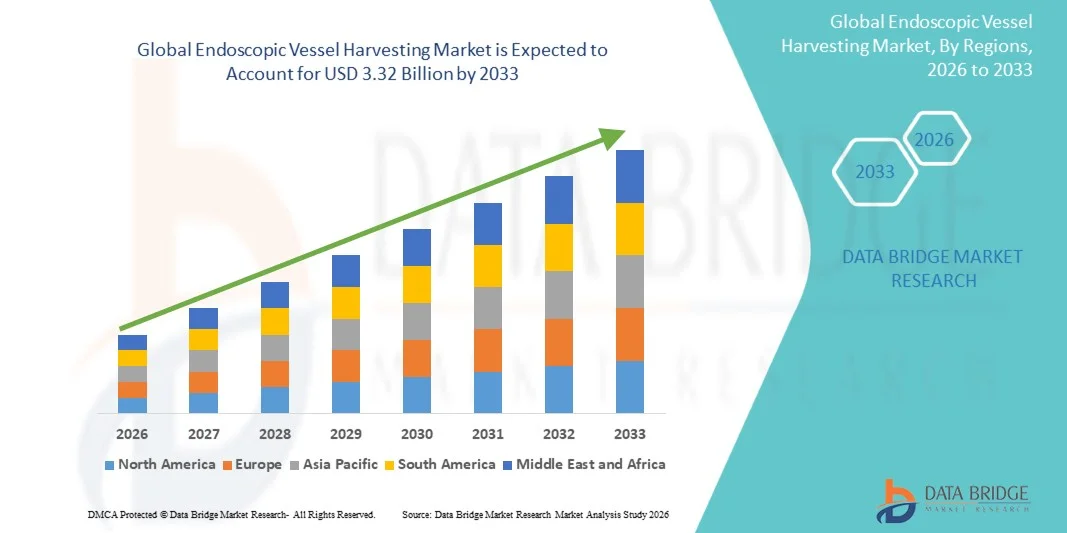
- The global endoscopic vessel harvesting market size was valued at USD 2.48 billion in 2025 and is expected to reach USD 3.32 billion by 2033, at a CAGR of 3.75% during the forecast period
- The market growth is largely fueled by the increasing prevalence of cardiovascular diseases, rising number of coronary artery bypass grafting (CABG) procedures, and growing adoption of minimally invasive surgical techniques across healthcare facilities
- Furthermore, increasing focus on improved surgical outcomes, reduced postoperative complications, and faster patient recovery is establishing endoscopic vessel harvesting as a preferred technique in modern cardiac surgeries. These converging factors are accelerating the uptake of Endoscopic Vessel Harvesting solutions, thereby significantly boosting the industry's growth
Endoscopic Vessel Harvesting Market Analysis
- Endoscopic vessel harvesting solutions, enabling minimally invasive extraction of blood vessels for procedures such as coronary artery bypass grafting (CABG), are increasingly vital components of modern surgical practices due to their ability to reduce complications, minimize scarring, and improve patient recovery outcomes
- The escalating demand for endoscopic vessel harvesting is primarily driven by the rising prevalence of cardiovascular diseases, increasing preference for minimally invasive procedures, and advancements in surgical technologies enhancing precision and efficiency
- North America dominated the endoscopic vessel harvesting market with the largest revenue share of approximately 40.00% in 2025, supported by advanced healthcare infrastructure, high volume of cardiac surgeries, and strong adoption of minimally invasive techniques, with the U.S. leading the regional market
- Asia-Pacific is expected to be the fastest-growing region in the endoscopic vessel harvesting market during the forecast period, with a projected CAGR driven by increasing healthcare investments, growing awareness of advanced surgical procedures, and rising patient population in countries such as China and India
- The disposable segment dominated with a revenue share of 61% in 2025, driven by hygiene, sterility, and infection control priorities in surgical procedures
Report Scope and Endoscopic Vessel Harvesting Market Segmentation
|
Attributes |
Endoscopic Vessel Harvesting Key Market Insights |
|
Segments Covered |
|
|
Countries Covered |
North America
Europe
Asia-Pacific
Middle East and Africa
South America
|
|
Key Market Players |
• Medtronic (Ireland) |
|
Market Opportunities |
|
|
Value Added Data Infosets |
In addition to the insights on market scenarios such as market value, growth rate, segmentation, geographical coverage, and major players, the market reports curated by the Data Bridge Market Research also include in-depth expert analysis, patient epidemiology, pipeline analysis, pricing analysis, and regulatory framework. |
Endoscopic Vessel Harvesting Market Trends
“Technological Advancements in Minimally Invasive Surgical Procedures”
- A significant and accelerating trend in the global endoscopic vessel harvesting market is the growing adoption of minimally invasive surgical techniques aimed at improving patient outcomes and reducing post-operative complications. These advancements are significantly enhancing procedural efficiency, precision, and recovery time in cardiovascular surgeries
- For instance, leading companies such as Getinge AB and Terumo Corporation are continuously developing advanced endoscopic vessel harvesting systems that enable surgeons to perform procedures with smaller incisions, reduced trauma, and improved visualization, thereby enhancing clinical outcomes
- The integration of high-definition imaging and enhanced visualization technologies in endoscopic systems is allowing surgeons to achieve greater accuracy during vessel harvesting procedures, minimizing the risk of complications and improving graft quality
- Furthermore, the increasing preference for minimally invasive coronary artery bypass grafting (CABG) procedures is driving the demand for endoscopic vessel harvesting systems, as they offer reduced pain, lower infection rates, and faster recovery compared to traditional open techniques
- The rising focus on patient-centric care and improved surgical efficiency is encouraging healthcare providers to adopt technologically advanced solutions that streamline surgical workflows and reduce hospital stays
- This trend towards innovation and precision-driven surgical tools is reshaping cardiovascular treatment approaches, leading to increased investments in research and development by key market players
- Consequently, the demand for advanced endoscopic vessel harvesting systems is growing steadily across hospitals and specialized cardiac centers, supporting overall market expansion
Endoscopic Vessel Harvesting Market Dynamics
Driver
“Growing Need Due to Rising Cardiovascular Diseases and Surgical Demand”
- The increasing prevalence of cardiovascular diseases worldwide, coupled with the rising number of coronary artery bypass grafting procedures, is a significant driver for the growth of the Endoscopic Vessel Harvesting market
- For instance, according to global health estimates, cardiovascular diseases remain one of the leading causes of mortality, prompting healthcare systems to expand surgical capacities and adopt advanced harvesting techniques to improve patient outcomes
- As the aging population continues to grow, there is a higher incidence of heart-related conditions requiring surgical intervention, thereby increasing the demand for efficient and minimally invasive vessel harvesting solutions
- Furthermore, the growing awareness among healthcare professionals regarding the benefits of endoscopic techniques, including reduced scarring and faster recovery, is contributing to their increased adoption
- The expansion of healthcare infrastructure and the availability of skilled surgeons trained in minimally invasive procedures are further supporting market growth
- In addition, favorable reimbursement policies in developed regions and increasing healthcare expenditure in emerging economies are encouraging the adoption of advanced surgical technologies
Restraint/Challenge
“High Costs and Limited Accessibility of Advanced Surgical Systems”
- The high cost associated with advanced endoscopic vessel harvesting systems and related surgical equipment remains a significant challenge for widespread adoption, particularly in developing regions
- For instance, the initial investment required for acquiring specialized endoscopic systems and training healthcare professionals can be substantial, limiting their accessibility in smaller hospitals and resource-constrained settings
- The requirement for highly skilled surgeons and specialized training to perform endoscopic procedures can also act as a barrier, as not all healthcare facilities have access to adequately trained personnel
- In addition, concerns regarding procedural complexity and the learning curve associated with advanced endoscopic techniques may hinder adoption among some practitioners
- Limited awareness and slower adoption of minimally invasive surgical methods in certain regions further restrict market growth potential
- Addressing these challenges through cost optimization, training programs, and increased awareness initiatives will be crucial for expanding the adoption of endoscopic vessel harvesting systems and ensuring sustained market growth
Endoscopic Vessel Harvesting Market Scope
The market is segmented on the basis of Product, Usability, Vessel Type, Technique, and Application.
• By Product
On the basis of product, the Endoscopic Vessel Harvesting market is segmented into EVH Systems, Endoscopes, and Accessories. The EVH systems segment dominated the market with a revenue share of 52.3% in 2025, driven by its critical role in minimally invasive vessel harvesting for coronary and peripheral artery bypass surgeries. Hospitals and cardiac centers prefer EVH systems due to their precision, efficiency, and reduced patient recovery time. The segment benefits from high adoption in developed markets where advanced cardiac procedures are routine. EVH systems are increasingly integrated with imaging and robotic platforms for enhanced accuracy. Rising prevalence of coronary artery disease (CAD) and peripheral artery disease (PAD) is fueling demand. Technological advancements improving ergonomics and visualization are supporting growth. Training programs for surgeons and growing awareness of minimally invasive techniques are further driving adoption. The segment also benefits from high repeat usage and procedural standardization. Hospitals and specialty cardiac centers continue to invest in EVH systems for patient safety and improved clinical outcomes. Government and private healthcare initiatives promoting minimally invasive surgeries further reinforce market dominance.
The endoscopes segment is expected to witness the fastest CAGR of 11.4% from 2026 to 2033, driven by increasing demand for high-resolution imaging and better intraoperative visualization during vessel harvesting. Endoscopes provide real-time guidance, reducing procedural risks and improving patient outcomes. Rising adoption of robotic-assisted cardiac surgeries is also supporting growth. Technological innovations such as flexible, high-definition, and fiber-optic endoscopes enhance usability. The segment benefits from replacement demand and upgrades in existing EVH systems. Increased focus on reducing post-surgical complications is encouraging hospitals to invest in advanced endoscopes. Growth in emerging markets due to rising cardiac procedures is further propelling adoption. Training initiatives and awareness programs for minimally invasive techniques are supporting growth. Endoscopes are also increasingly used in research and academic hospitals for procedural improvements. Hospitals, specialty cardiac centers, and ambulatory surgical centers contribute to segment expansion.
• By Usability
On the basis of usability, the market is segmented into disposable and reusable products. The disposable segment dominated with a revenue share of 61% in 2025, driven by hygiene, sterility, and infection control priorities in surgical procedures. Hospitals and cardiac centers prefer disposable EVH instruments to minimize cross-contamination risk. Disposable systems ensure consistent performance and reduce the need for complex sterilization processes. High adoption in high-volume cardiac centers supports segment growth. Increasing surgical volume for CAD and PAD procedures reinforces demand. The segment benefits from government regulations promoting single-use medical devices in certain regions. Disposable systems simplify logistics and reduce operational downtime. Rising awareness of patient safety and post-operative infection reduction drives adoption. Reimbursement policies in developed markets support usage. Technological improvements in ergonomics and usability further enhance preference for disposables.
The reusable segment is expected to witness the fastest CAGR of 10.2% from 2026 to 2033, fueled by cost-efficiency, sustainability, and adoption in hospitals with high surgical throughput. Reusable systems reduce per-procedure costs in high-volume centers. Advancements in sterilization protocols and durable instrument design enhance adoption. Specialty cardiac centers in emerging markets increasingly prefer reusable systems to manage costs. Training programs and surgical expertise for handling reusable instruments support growth. Integration with imaging and robotic systems enhances procedural accuracy. Hospitals with robust sterilization infrastructure are driving the adoption curve. Environmental concerns and regulatory support for safe reuse also contribute to segment expansion.
• By Vessel Type
On the basis of vessel type, the market is segmented into saphenous vein and radial artery. The saphenous vein segment dominated the market with a revenue share of 57.5% in 2025, driven by its widespread use in coronary artery bypass grafting (CABG) procedures. Saphenous veins are preferred due to length, accessibility, and established clinical outcomes. The segment benefits from extensive surgeon experience and procedural familiarity. Hospitals and cardiac centers invest in optimized EVH tools for saphenous vein harvesting. Minimally invasive harvesting reduces post-operative complications and hospital stays. Technological integration with visualization systems enhances precision. Increasing CAD prevalence and rising CABG surgeries fuel demand. Reimbursement coverage for vein harvesting procedures further drives adoption. Research initiatives improving vein preservation and patency support market growth.
The radial artery segment is expected to witness the fastest CAGR of 12.1% from 2026 to 2033, fueled by increased awareness of better long-term graft patency and reduced complications. Radial arteries are gaining preference in CABG surgeries and peripheral bypass procedures. Surgeons increasingly adopt radial arteries for patients with higher comorbidities. Technological advancements in harvesting instruments tailored for radial arteries support growth. Hospitals and specialty cardiac centers focus on minimally invasive radial artery harvesting to improve patient outcomes. Rising adoption in emerging markets due to procedural efficiency contributes to growth. Segment expansion is further supported by training initiatives and clinical guidelines promoting radial artery usage.
• By Technique
On the basis of technique, the Endoscopic Vessel Harvesting market is segmented into closed tunnel and open tunnel methods. The closed tunnel technique dominated with a revenue share of 54.2% in 2025, driven by its minimally invasive advantages, smaller incision sizes, and faster patient recovery. Hospitals and specialty cardiac centers prefer closed tunnel methods for improved cosmetic outcomes, reduced post-operative pain, and lower infection risk. Clinical studies validating safety and efficacy support widespread adoption. The technique is increasingly integrated with endoscopic and robotic platforms, enhancing precision and surgeon control. High patient demand for minimally invasive procedures encourages investment in training programs. Hospitals benefit from reduced hospital stay durations, cost savings, and improved patient satisfaction. Technological improvements in closed tunnel instruments further strengthen preference. Rising awareness among patients and clinicians about advanced surgical outcomes drives growth. Government initiatives promoting minimally invasive cardiac care contribute to adoption. Adoption is particularly high in North America and Europe, where infrastructure supports advanced techniques.
The open tunnel technique segment is expected to witness the fastest CAGR of 9.8% from 2026 to 2033, driven by its procedural simplicity and suitability in hospitals with limited infrastructure. Open tunnel methods remain relevant in smaller centers and for surgeons accustomed to traditional approaches. The technique requires fewer specialized instruments, lowering operational costs. Adoption is rising in emerging regions due to budget constraints and limited access to robotic or advanced endoscopic platforms. Open tunnel harvesting remains effective for both saphenous vein and radial artery procedures. The segment benefits from growing cardiovascular surgical volume in developing countries. Hospitals seeking cost-effective alternatives while maintaining procedural safety support adoption. Training initiatives continue to enhance surgeon proficiency in open tunnel methods. Demand is further boosted by the need for rapid procedural turnaround in high-volume centers. Technological improvements in instruments for open tunnel harvesting also support growth.
• By Application
On the basis of application, the market is segmented into coronary artery disease (CAD) and peripheral artery disease (PAD). The CAD segment dominated with a revenue share of 68% in 2025, driven by high prevalence of CAD and the corresponding increase in coronary artery bypass grafting (CABG) procedures. Hospitals prioritize EVH to improve graft patency and reduce post-operative complications. Minimally invasive harvesting reduces hospital stays and accelerates patient recovery. Integration with imaging systems and robotic platforms enhances surgical precision. Aging populations, rising cardiovascular disease awareness, and increasing CAD patient volumes fuel demand. Technological advancements in EVH instruments improve procedural efficiency. Hospitals and cardiac centers continue to invest in training programs for surgeons. Reimbursement coverage for CABG procedures further supports adoption. Patient preference for minimally invasive surgeries contributes to market growth.
The PAD segment is expected to witness the fastest CAGR of 11.7% from 2026 to 2033, driven by increasing peripheral bypass surgeries and rising prevalence of PAD globally. Hospitals and specialty vascular centers are adopting minimally invasive EVH techniques for radial and saphenous artery harvesting. Advanced instruments allow precision in bypass procedures, reducing complications and improving long-term outcomes. Emerging markets are witnessing faster adoption due to growing PAD awareness. Technological innovations tailored for PAD procedures support the segment’s growth. Hospitals benefit from reduced procedure times and improved patient outcomes. Training initiatives for vascular surgeons enhance adoption rates. The segment is also supported by increasing government and private healthcare investments.
Endoscopic Vessel Harvesting Market Regional Analysis
- North America dominated the endoscopic vessel harvesting market with the largest revenue share of approximately 40.00% in 2025, supported by advanced healthcare infrastructure, a high volume of cardiac surgeries, and strong adoption of minimally invasive techniques. The U.S. led the regional market, driven by well-established hospitals, specialized cardiac centers, and widespread availability of skilled surgeons
- The region’s market growth is further supported by increasing investments in healthcare technologies, awareness of patient-centric surgical solutions, and the demand for improved procedural efficiency and reduced recovery times
- High healthcare expenditure, well-developed medical training programs, and the presence of leading global manufacturers of endoscopic surgical systems are key factors maintaining North America’s dominant position in the market
U.S. Endoscopic Vessel Harvesting Market Insight
The U.S. endoscopic vessel harvesting market accounted for the largest revenue share within North America in 2025, driven by the rapid adoption of minimally invasive coronary artery bypass procedures and the growing focus on improving patient outcomes. Increasing awareness of advanced surgical techniques, coupled with the high prevalence of cardiovascular diseases, is supporting the demand for endoscopic vessel harvesting systems. Furthermore, government initiatives promoting cardiac care, investments in modern surgical infrastructure, and the availability of skilled cardiac surgeons are key contributors to the U.S. market’s growth.
Europe Endoscopic Vessel Harvesting Market Insight
The Europe endoscopic vessel harvesting market is projected to grow at a substantial CAGR during the forecast period, fueled by the rising incidence of cardiovascular diseases and the adoption of minimally invasive cardiac procedures. Countries such as Germany, the U.K., and France are witnessing strong demand for endoscopic vessel harvesting systems due to increasing surgical volumes, advancements in hospital infrastructure, and a preference for patient-centric treatment approaches. The emphasis on procedural efficiency, reduced hospital stays, and lower post-operative complications is driving market adoption across hospitals and specialized cardiac centers.
U.K. Endoscopic Vessel Harvesting Market Insight
The U.K. endoscopic vessel harvesting market is expected to grow steadily during the forecast period, driven by the increasing number of cardiac surgeries and the adoption of minimally invasive surgical techniques. Growing awareness among healthcare professionals regarding the benefits of endoscopic vessel harvesting, including improved graft quality and faster patient recovery, is supporting market expansion. In addition, government support for advanced healthcare technologies and investments in surgical training programs further bolster the U.K. market.
Germany Endoscopic Vessel Harvesting Market Insight
The Germany endoscopic vessel harvesting market is anticipated to witness significant growth during the forecast period. Factors such as a well-established healthcare system, high surgical volumes, and a strong focus on technological innovation in cardiac procedures are driving demand. Hospitals and specialized cardiac centers are increasingly adopting endoscopic vessel harvesting systems to improve surgical precision, minimize complications, and enhance patient outcomes.
Asia-Pacific Endoscopic Vessel Harvesting Market Insight
The Asia-Pacific endoscopic vessel harvesting market is expected to grow at the fastest CAGR during the forecast period, driven by increasing healthcare investments, rising awareness of advanced surgical procedures, and a growing patient population in countries such as China and India. Rapid urbanization, improving healthcare infrastructure, and expansion of specialized cardiac centers are key factors supporting market growth. Furthermore, the rising prevalence of cardiovascular diseases in the region is driving demand for minimally invasive procedures and advanced surgical systems.
Japan Endoscopic Vessel Harvesting Market Insight
The Japan endoscopic vessel harvesting market is gaining momentum due to a technologically advanced healthcare system, increasing demand for minimally invasive cardiac procedures, and a high patient focus on improved post-operative outcomes. Investments in modern surgical facilities and advanced cardiac care infrastructure are supporting the adoption of endoscopic vessel harvesting systems in both hospitals and specialized cardiac centers.
China Endoscopic Vessel Harvesting Market Insight
The China endoscopic vessel harvesting market accounted for the largest revenue share in Asia-Pacific in 2025, driven by a growing patient population, rapid urbanization, and rising healthcare expenditure. The increasing prevalence of cardiovascular diseases, expansion of hospital infrastructure, and government initiatives promoting advanced cardiac care are key growth factors. In addition, strong domestic manufacturers and improved accessibility of endoscopic surgical systems are further contributing to the market’s expansion.
Endoscopic Vessel Harvesting Market Share
The Endoscopic Vessel Harvesting industry is primarily led by well-established companies, including:
• Medtronic (Ireland)
• Terumo Corporation (Japan)
• Getinge (Germany)
• Edwards Lifesciences (U.S.)
• CryoLife, Inc. (U.S.)
• Lifeline Scientific (U.S.)
• Aesculap (Germany)
• Abbott Laboratories (U.S.)
• B. Braun Melsungen AG (Germany)
• Cook Medical (U.S.)
• EndoMed (Germany)
• Vitalitec (U.S.)
• LivaNova (Italy)
• Teleflex Incorporated (U.S.)
• Medistim ASA (Norway)
• KLS Martin Group (Germany)
• St. Jude Medical (U.S.)
Latest Developments in Global Endoscopic Vessel Harvesting Market
- In March 2024, Getinge AB received U.S. FDA 510(k) clearance for its Vasoview Hemopro 3 Endoscopic Vessel Harvesting System, designed to enhance vessel harvesting efficiency with improved ergonomics, smoke evacuation, and energy control—strengthening its position in minimally invasive cardiovascular surgery
- In November 2024, the U.S. Food and Drug Administration (FDA) issued a Class I recall for certain VasoView HemoPro 1 and 1.5 endoscopic vessel harvesting systems by Getinge/Maquet Cardiovascular due to risks of silicone detachment that could cause serious injury, highlighting critical safety and compliance developments in the EVH device space
- In July 2025, Getinge/Maquet sent updated Instructions for Use for its VasoView HemoPro 2 EVH systems to customers as part of an urgent medical device correction aimed at addressing risks related to bent heater wires and silicone peeling, reinforcing ongoing safety management initiatives for EVH devices
- In April 2025, industry reports noted that Medtronic launched a next‑generation endoscopic vessel harvesting device in the United States with enhanced imaging and ergonomic features to improve precision and safety during minimally invasive cardiac surgeries
- In June 2025, Terumo Corporation introduced a fully integrated EVH system combining vessel harvesting with automated tissue management to reduce operative time and improve clinical outcomes, reflecting continued innovation in EVH technology
- In August 2025, Abbott received FDA clearance for a new disposable EVH device featuring enhanced vessel visualization and real‑time feedback aimed at improving procedural safety for coronary artery bypass grafting (CABG) applications
- In July 2025, Nipro Corporation unveiled a new endoscopic vessel harvesting device in Japan designed for both cardiac and peripheral bypass procedures, emphasizing user‑friendly handling and reduced procedural invasiveness
- In August 2025, Terumo Japan expanded its EVH product offerings with a high‑definition imaging system integrated with harvesting tools, enabling better visualization during minimally invasive vessel harvesting procedures
SKU-
Получите онлайн-доступ к отчету на первой в мире облачной платформе рыночной аналитики

- Интерактивная панель анализа данных
- Панель анализа компании для возможностей с высоким потенциалом роста
- Доступ аналитика-исследователя для настройки и запросов
- Анализ конкурентов с помощью интерактивной панели
- Последние новости, обновления и анализ тенденций
- Используйте возможности сравнительного анализа для комплексного отслеживания конкурентов
Методология исследования
Сбор данных и анализ базового года выполняются с использованием модулей сбора данных с большими размерами выборки. Этап включает получение рыночной информации или связанных данных из различных источников и стратегий. Он включает изучение и планирование всех данных, полученных из прошлого заранее. Он также охватывает изучение несоответствий информации, наблюдаемых в различных источниках информации. Рыночные данные анализируются и оцениваются с использованием статистических и последовательных моделей рынка. Кроме того, анализ доли рынка и анализ ключевых тенденций являются основными факторами успеха в отчете о рынке. Чтобы узнать больше, пожалуйста, запросите звонок аналитика или оставьте свой запрос.
Ключевой методологией исследования, используемой исследовательской группой DBMR, является триангуляция данных, которая включает в себя интеллектуальный анализ данных, анализ влияния переменных данных на рынок и первичную (отраслевую экспертную) проверку. Модели данных включают сетку позиционирования поставщиков, анализ временной линии рынка, обзор рынка и руководство, сетку позиционирования компании, патентный анализ, анализ цен, анализ доли рынка компании, стандарты измерения, глобальный и региональный анализ и анализ доли поставщика. Чтобы узнать больше о методологии исследования, отправьте запрос, чтобы поговорить с нашими отраслевыми экспертами.
Доступна настройка
Data Bridge Market Research является лидером в области передовых формативных исследований. Мы гордимся тем, что предоставляем нашим существующим и новым клиентам данные и анализ, которые соответствуют и подходят их целям. Отчет можно настроить, включив в него анализ ценовых тенденций целевых брендов, понимание рынка для дополнительных стран (запросите список стран), данные о результатах клинических испытаний, обзор литературы, обновленный анализ рынка и продуктовой базы. Анализ рынка целевых конкурентов можно проанализировать от анализа на основе технологий до стратегий портфеля рынка. Мы можем добавить столько конкурентов, о которых вам нужны данные в нужном вам формате и стиле данных. Наша команда аналитиков также может предоставить вам данные в сырых файлах Excel, сводных таблицах (книга фактов) или помочь вам в создании презентаций из наборов данных, доступных в отчете.











