


Global Epoxidized Soybean Oil Market Segmentation, By Raw Material (Soybean Oil, Formic Acid, Acetic Acid, and Hydrogen Peroxide), Application (Revenue Pocket Matrix, Plasticizers, Pigment Dispersion Agents, Flavors and Fragrances, Functional Fluids, Ultraviolet Cure Applications, and Fuel Additives), End Use (Food and Beverages, Agriculture, Healthcare and Pharmaceuticals, Construction, Adhesives and Sealants, Coatings, and Others) - Industry Trends and Forecast to 2033
Каковы размеры и темпы роста рынка соевых бобов
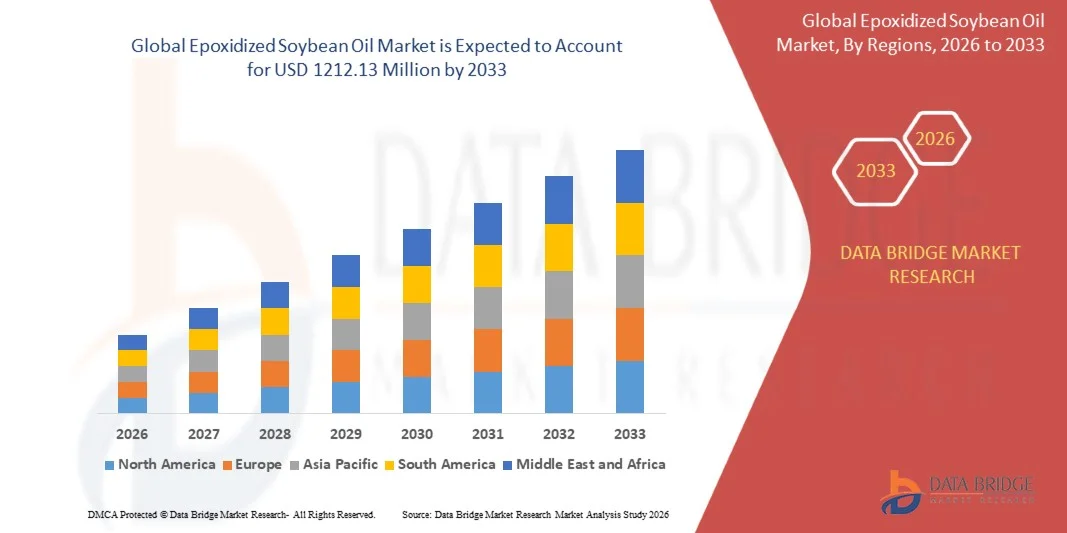
- Согласно анализу Data Bridge Market Research, глобальный объем рынка эпоксидизированного соевого масла был оценен в два раза.732,41 млн долларов США в 2025 годуОжидается, что он достигнет1212,13 млн долларов США к 2033 году, вCAGR 6,50%в течение прогнозируемого периода
- Рост рынка в значительной степени обусловлен растущим внедрением био- и устойчивых пластификаторов в ПВХ, покрытиях, клеях и упаковочных приложениях, что обусловлено растущим нормативным акцентом на экологически чистые и нетоксичные материалы.
- Кроме того, растущий спрос на высокоэффективные добавки, которые повышают термическую стабильность, гибкость и долговечность в промышленных и потребительских приложениях, создает эпоксидированное соевое масло в качестве предпочтительного решения на биологической основе. Эти факторы ускоряют внедрение ESBO в строительном, упаковочном и специализированном химическом секторах, тем самым значительно повышая рост отрасли.
Размер рынка и прогноз
Глобальная рыночная стоимость (2025):732,41 млн. долларов США
Ожидаемая рыночная стоимость (2033):USD 1212,13 млн.
Прогноз CAGR (2026–2033):6.50%
Каковы основные выводы рынка эпоксидированной сои
- Эпоксидированное соевое масло, служащее нетоксичным пластификатором, стабилизатором и функциональной добавкой, становится все более важным в продуктах из ПВХ, покрытиях, клеях и других промышленных применениях из-за его биологического происхождения, преимуществ производительности и соответствия нормативным требованиям.
- Растущий спрос на ESBO в первую очередь подпитывается растущим предпочтением устойчивых добавок, растущей строительной и упаковочной деятельностью и потребностью в более безопасных альтернативах пластификаторам на основе фталатов, позиционируя ESBO как критически важный компонент в современных промышленных рецептурах.
- Северная Америка доминировала на рынке эпоксидизированного соевого масла с долей вОколо 35% в 2025 году из-за высокого спроса на строительство, обработку ПВХ и биопластификаторы
- Ожидается, что Азиатско-Тихоокеанский регион станет самым быстрорастущим регионом на рынке эпоксидированного соевого масла в течение прогнозируемого периода из-за быстрой урбанизации, расширения строительной деятельности и роста индустриализации в таких странах, как Китай, Япония и Индия.
- Сегмент соевого масла доминировал на рынке с долей рынка 52,5% в 2025 году из-за его естественного изобилия, экономической эффективности и пригодности для крупномасштабных процессов эпоксидирования. Производители предпочитают соевое масло из-за его благоприятного профиля жирных кислот, что обеспечивает высокое содержание оксирана и превосходную производительность в качестве пластификатора и стабилизатора. Его совместимость с различными промышленными приложениями, такими как стабилизация ПВХ, покрытия и клеи, еще больше укрепляет позиции на рынке.
Сфера охвата и сегментация рынка соевых бобов
|
Атрибуты |
Эпоксидированное соевое масло - ключевые рыночные идеи |
|
Сегменты покрыты |
|
|
Страны, охваченные |
Северная Америка
Европа
Азиатско-Тихоокеанский регион
Ближний Восток и Африка
Южная Америка
|
|
Ключевые игроки рынка |
|
|
Рыночные возможности |
|
|
Информационные наборы данных с добавленной стоимостью |
В дополнение к информации о рыночных сценариях, таких как рыночная стоимость, темпы роста, сегментация, географическое покрытие и основные игроки, рыночные отчеты, курируемые Data Bridge Market Research, также включают анализ экспорта импорта, обзор производственных мощностей, анализ потребления продукции, анализ ценового тренда, сценарий изменения климата, анализ цепочки поставок, анализ цепочки создания стоимости, обзор сырья / расходных материалов, критерии выбора поставщиков, анализ PESTLE, анализ Porter и нормативную базу. |
Каковы основные тенденции на рынке эпоксидированной сои
«Растущее внедрение био- и устойчивых пластификаторов»
- Ключевой тенденцией на рынке эпоксидированного соевого масла (ESBO) является растущее предпочтение био- и устойчивых пластификаторов, обусловленное повышением нормативного давления для сокращения использования фталатов в ПВХ и других полимерных приложениях. Этот сдвиг продвигает эпоксидированное соевое масло в качестве экологически чистой альтернативы, которая обеспечивает низкую токсичность, биоразлагаемость и совместимость с высокоэффективными полимерными системами.
- Например, Arkema и ADM поставляют эпоксидированное соевое масло, которое широко используется в гибких составах ПВХ для кабелей, пленок и покрытий. Эти продукты помогают производителям достигать целей устойчивого развития, сохраняя при этом механическую производительность и термическую стабильность.
- Спрос на экологически чистые добавки в строительном, упаковочном и автомобильном секторах растет, поскольку компании стремятся повысить безопасность продукции и соблюдение нормативных требований. Это позиционирование эпоксидированного соевого масла в качестве предпочтительного выбора для применений, требующих высокой долговечности и снижения воздействия на окружающую среду.
- Отрасли, специализирующиеся на электрических и электронных приложениях, включают эпоксидированное соевое масло в изоляцию кабеля, проволочные покрытия и пластиковые корпуса, извлекая выгоду из его стабилизирующих свойств и нетоксичного профиля. Эта тенденция поддерживает более широкое внедрение биопластификаторов в чувствительных приложениях, где безопасность человека и соблюдение экологических норм имеют решающее значение.
- Сегменты упаковки для пищевых продуктов и здравоохранения все чаще используют эпоксидированное соевое масло для гибких материалов из ПВХ из-за его неиммиграционного характера и нормативных утверждений, ускоряя инновации в безопасных упаковочных решениях. Это расширяет роль ESBO в приложениях, которые требуют как производительности, так и соответствия.
- Рынок стал свидетелем сильного внедрения в покрытия и клеи, где эпоксидированное соевое масло улучшает гибкость, термическую стабильность и химическую стойкость, укрепляя свои позиции в качестве устойчивой высокоэффективной добавки в нескольких промышленных применениях.
Динамика рынка соевого масла
водитель
«Рост спроса на высокоэффективные добавки в ПВХ и покрытиях»
- Растущая потребность в высокоэффективных добавках в ПВХ, покрытиях и полимерах стимулирует рост рынка эпоксидированного соевого масла. Эти добавки повышают термическую стабильность, гибкость и перерабатываемость продуктов, уменьшая зависимость от традиционных пластификаторов на основе фталатов.
- Например, Cargill и ADM обеспечивают эпоксидированное соевое масло, которое широко используется в гибком ПВХ для напольных покрытий, кабелей и упаковочных материалов, что позволяет производителям производить прочные и совместимые продукты. Доступность универсальных эпоксидированных марок соевого масла поддерживает специальную настройку для повышения производительности продукта
- Повышение осведомленности об экологической устойчивости и строгие нормативные стандарты мотивируют производителей заменять вредные пластификаторы эпоксидированным соевым маслом, усиливая рыночный спрос. Его совместимость с другими биодобавками также способствует включению полимерных составов.
- Автомобильная и строительная отрасли все чаще используют эпоксидированное соевое масло для компонентов интерьера на основе ПВХ, оконных профилей и гибких пленок, извлекая выгоду из повышения долговечности и сокращения выбросов. Эта тенденция усиливает эпоксидированное соевое масло в качестве важной добавки для высокоэффективных и экологически чистых материалов.
- Растущая тенденция к экологически чистым строительным материалам и устойчивому дизайну продуктов продолжает поддерживать использование ESBO, позиционируя его как важный фактор для экологически обоснованной разработки продуктов.
Сдержанность/вызов
«Волатильность в ценах и поставках сырья»
- Рынок эпоксидированного соевого масла сталкивается с проблемами, связанными с колебаниями цен на соевое масло и доступностью предложения, которые напрямую влияют на производственные затраты и рентабельность. Зависимость от сельскохозяйственного сырья подвергает производителей сезонным колебаниям, погодным условиям и динамике мирового товарного рынка.
- Например, ADM и Cargill сообщают о периодическом увеличении затрат из-за волатильности рынка соевых бобов, что влияет на стратегии ценообразования и контракты на поставку. Эта неопределенность может препятствовать стабильному производству и ограничивать долгосрочное планирование рынка.
- Ограниченная мощность переработки в отдельных регионах создает ограничения поставок, влияющие на своевременную доступность высококачественного эпоксидированного соевого масла для промышленного применения. Производители должны сбалансировать поставки сырья с эффективностью производства для обеспечения стабильного предложения на рынке.
- Динамика мировой торговли, включая экспортные ограничения или тарифы на соевое масло, усложняет цепочку поставок эпоксидированной соевой нефти, потенциально влияя на международное распределение. Компании должны разработать диверсифицированные стратегии поиска, чтобы снизить риск и сохранить присутствие на рынке.
- Задача обеспечения стабильного качества и производительности в условиях переменного сырья остается критической, поскольку колебания состава жирных кислот могут повлиять на функциональность продукта. Это заставляет производителей инвестировать в контроль качества и устойчивость цепочки поставок для удовлетворения растущего промышленного спроса.
Как сегментируется рынок эпоксидированной сои
Рынок сегментируется на основе сырья, применения и конечного использования.
• Сырой материал
На основе сырья рынок эпоксидированного соевого масла сегментируется на соевое масло, муравьиную кислоту, уксусную кислоту и перекись водорода. Сегмент соевого масла доминировал на рынке с самой большой долей выручки в 52,5% в 2025 году, что обусловлено его естественным изобилием, экономической эффективностью и пригодностью для крупномасштабных процессов эпоксидирования. Производители предпочитают соевое масло из-за его благоприятного профиля жирных кислот, что обеспечивает высокое содержание оксирана и превосходную производительность в качестве пластификатора и стабилизатора. Его совместимость с различными промышленными приложениями, такими как стабилизация ПВХ, покрытия и клеи, еще больше укрепляет позиции на рынке. Растущая тенденция к биологическому и устойчивому сырью также усиливает предпочтение соевого масла перед синтетическими альтернативами.
Сегмент перекиси водорода, как ожидается, станет свидетелем самого быстрого роста с 2026 по 2033 год, чему способствует растущее внедрение экологически чистых процессов эпоксидирования и более чистых методов производства. Перекись водорода обеспечивает более устойчивый путь эпоксидации без хлора, который согласуется с растущим глобальным акцентом на зеленую химию и соблюдение экологических норм. Его эффективная кинетика реакции и более низкое образование опасных побочных продуктов делают его привлекательным для передовых промышленных применений, включая пищевые и фармацевтические ESBO. Компании, специализирующиеся на устойчивом развитии и соблюдении нормативных требований, все чаще инвестируют в процессы на основе перекиси водорода для удовлетворения этих требований.
• Подача заявки
На основе применения рынок Epoxidized Soybean Oil сегментирован в доходную карманную матрицу, пластификаторы, пигментные дисперсионные агенты, ароматизаторы и ароматизаторы, функциональные жидкости, ультрафиолетовые лечебные приложения и топливные добавки. Сегмент пластификаторов доминировал на рынке в 2025 году, чему способствовало широкое использование ESBO в качестве нетоксичного высокоэффективного пластификатора в ПВХ и других полимерах. ESBO повышает гибкость, термическую стабильность и долговечность полимерных продуктов при сохранении низкого воздействия на окружающую среду. Его спрос подкрепляется нормативными ограничениями на пластификаторы на основе фталатов, побуждая производителей использовать ESBO для более безопасных и устойчивых альтернатив. Сегмент также выигрывает от интеграции в автомобильные, строительные и упаковочные приложения, где производительность и соответствие требованиям имеют решающее значение.
Ожидается, что сегмент применения ультрафиолетового отверждения будет наблюдать самый быстрый рост с 2026 по 2033 год, обусловленный растущим внедрением ESBO в УФ-отверждаемые покрытия, чернила и клеи. ESBO повышает эффективность сшивания, адгезию и гибкость в системах с УФ-отверждением, сохраняя при этом учетные данные устойчивости на биологической основе. Отрасли, такие как электроника, упаковка и печать, все чаще принимают УФ-отверждаемые составы для сокращения выбросов ЛОС и повышения производительности, повышая спрос на ESBO. Его совместимость с гибридными составами и способность улучшать химическую стойкость и механические свойства еще больше ускоряют рост.
• Конец использования
На основе конечного использования рынок эпоксидированного соевого масла сегментируется на продукты питания и напитки, сельское хозяйство, здравоохранение и фармацевтику, строительство, клеи и герметики, покрытия и другие. Сегмент строительства доминировал на рынке в 2025 году, чему способствовало широкое использование ESBO в трубах на основе ПВХ, напольных покрытий, сайдинга и оконных профилей. Его роль в качестве высокопроизводительного стабилизатора и пластификатора обеспечивает долгосрочную долговечность, термическую стабильность и соответствие экологическим нормам. ESBO также поддерживает растущий спрос на устойчивые строительные материалы в жилых и коммерческих проектах. Доминирование сегмента подкрепляется крупномасштабными строительными проектами в странах с развивающейся экономикой и потребностью в био-ориентированных, экологически чистых решениях.
Ожидается, что сегмент здравоохранения и фармацевтики будет наблюдать самый быстрый рост с 2026 по 2033 год, чему способствует увеличение использования ESBO в медицинских продуктах из ПВХ, фармацевтической упаковке и функциональных жидкостях. Его нетоксичные биологические свойства делают его пригодным для применения там, где безопасность человека и соблюдение нормативных требований имеют решающее значение. Растущие инвестиции в инфраструктуру здравоохранения, более строгие стандарты безопасности и растущий спрос на устойчивые упаковочные решения способствуют ускоренному внедрению. Кроме того, совместимость ESBO с процессами стерилизации и гибкий дизайн продукта повышает его привлекательность в этом быстрорастущем сегменте.
В каком регионе находится наибольшая доля рынка соевого масла
- Северная Америка доминировала на рынке эпоксидированного соевого масла с самой большой долей доходов около 35% в 2025 году, что обусловлено высоким спросом на строительство, переработку ПВХ и биопластификаторы.
- Производители в регионе все чаще принимают ESBO из-за его нетоксичных, экологически чистых свойств и соответствия нормативным требованиям строгим экологическим стандартам. Рост рынка также поддерживается растущей осведомленностью об устойчивых материалах, растущем промышленном производстве и предпочтением высокопроизводительных стабилизаторов в ПВХ-приложениях.
- Принятие ESBO в покрытиях, клеях и функциональных жидкостях повышает его полезность в нескольких секторах конечного использования, что делает его предпочтительной биодобавкой в Северной Америке.
Американский рынок соевого масла Insight
Рынок эпоксидированного соевого масла в США занял самую большую долю доходов в Северной Америке в 2025 году, чему способствовало широкое использование труб из ПВХ, напольных покрытий и оконных профилей. Увеличение инвестиций в устойчивые строительные материалы и упаковочные материалы для пищевых продуктов стимулирует спрос. Компании отдают приоритет биодобавкам для соответствия нормативным стандартам и снижения зависимости от пластификаторов на основе фталатов. Растущее внедрение промышленных покрытий, клеев и герметиков наряду с растущей осведомленностью об экологической безопасности еще больше способствует расширению рынка. Интеграция эпоксидированного соевого масла в несколько промышленных рецептур повышает производительность продукта при сохранении устойчивости, укрепляя свое лидерство на рынке в США.
Европа вытеснила рынок соевого масла
Европейский рынок эпоксидизированного соевого масла, по прогнозам, будет расширяться при существенном CAGR в течение прогнозируемого периода, что обусловлено строгими экологическими нормами и растущим спросом на экологически чистые стабилизаторы ПВХ. Быстрая урбанизация и растущее предпочтение экологически чистых строительных материалов способствуют освоению рынка. Европейские производители сосредоточены на интеграции биодобавок в покрытия, клеи и пластмассовые составы в соответствии с REACH и другими химическими правилами. Увеличение промышленного применения в жилых, коммерческих и инфраструктурных проектах способствует увеличению потребления эпоксидизированного соевого масла по всему региону. Спрос на высокоэффективные нетоксичные пластификаторы в упаковке пищевых продуктов и потребительских товарах также способствует росту рынка в Европе.
Британский рынок соевого масла Insight
Ожидается, что в течение прогнозируемого периода рынок эпоксидированного соевого масла в Великобритании будет расти с заметным CAGR, что обусловлено растущим внедрением в строительство, упаковку и промышленные покрытия. Повышение осведомленности об окружающей среде и соблюдение нормативных требований поощряют использование биопластификаторов. Производители в Великобритании интегрируют эпоксидированное соевое масло в ПВХ, клеи и герметики для повышения долговечности и снижения токсичных выбросов. Растущие инвестиции в проекты зеленого строительства и устойчивое производство еще больше стимулируют спрос. Предпочтение высококачественных, безопасных и универсальных добавок позиционирует эпоксидированное соевое масло в качестве предпочтительного раствора на рынке Великобритании.
Германия проанализировала рынок соевого масла
Ожидается, что рынок эпоксидированного соевого масла в Германии будет расширяться на значительном CAGR, чему будет способствовать сильный акцент на устойчивость, возобновляемые ресурсы и экологически чистые добавки. Промышленные сектора, такие как строительство, автомобилестроение и пищевая упаковка, все чаще используют эпоксидированное соевое масло для соответствия строгим экологическим стандартам. Акцент Германии на инновации и контроль качества поддерживает высокоэффективные применения эпоксидированного соевого масла в стабилизации ПВХ, покрытиях и клеях. Растущий спрос на нетоксичные биодобавки в жилых и коммерческих проектах способствует расширению рынка. Компании используют функциональные преимущества ESBO для соблюдения нормативных требований, одновременно повышая долговечность и безопасность продукции.
Азиатско-тихоокеанский рынок соевых бобов Insight
Рынок эпоксидизированного соевого масла в Азиатско-Тихоокеанском регионе будет расти самыми быстрыми темпами в период с 2026 по 2033 год, что обусловлено быстрой урбанизацией, расширением строительной деятельности и ростом индустриализации в таких странах, как Китай, Япония и Индия. Растущее внедрение в регионе био- и устойчивых материалов повышает спрос на ПВХ-обработку, покрытия и упаковку. Правительственные инициативы по продвижению зеленого производства и экологической безопасности поддерживают использование эпоксидированного соевого масла. Наличие крупномасштабного производства ПВХ и отраслей, расположенных ниже по течению, в APAC повышает доступность и доступность, что еще больше ускоряет внедрение. Повышение осведомленности о нетоксичных пластификаторах в продуктах питания, здравоохранении и потребительских приложениях также способствует быстрому росту рынка.
Япония проанализировала рынок соевого масла
Японский рынок эпоксидированного соевого масла набирает обороты благодаря сильному акценту на устойчивость, высококачественное производство и передовые методы строительства. Растущее внедрение биодобавок в продукты из ПВХ, покрытия и клеи стимулирует рост. Японские производители сосредоточены на экологически безопасном, высокопроизводительном эпоксидированном соевом масле, чтобы соответствовать нормативным стандартам и ожиданиям потребителей. Спрос также поддерживается интеллектуальными промышленными процессами и инновациями в функциональных жидкостях, упаковке и специальных химических веществах. Приверженность Японии устойчивым материалам в жилом, коммерческом и промышленном секторах усиливает расширение рынка.
Китай проанализировал рынок соевого масла
Китайский рынок эпоксидизированного соевого масла составил самую большую долю доходов в Азиатско-Тихоокеанском регионе в 2025 году, что объясняется быстрой урбанизацией, расширением промышленного производства и ростом населения среднего класса. Высокий спрос на трубы из ПВХ, напольные покрытия, оконные профили и упаковочные материалы для пищевых продуктов стимулирует рост рынка. Акцент Китая на биопластификаторы, обусловленный соблюдением нормативных требований и экологическими инициативами, поддерживает широкомасштабное внедрение. Отечественные производители выпускают экономически эффективные и высокоэффективные растворы эпоксидированного соевого масла для нескольких секторов конечного использования. Стремление страны к устойчивой и экологически чистой промышленной практике еще больше укрепляет перспективы рынка.
Каковы основные компании на рынке эпоксидированной сои
Эпоксидированную соевую нефтяную промышленность в основном возглавляют хорошо зарекомендовавшие себя компании, в том числе:
- CHS Inc.(США)
- Корпорация Ферро(США)
- Аркема(Франция)
- Галата Химические вещества(Индия)
- Guangzhou Xinjinlong Chemical Additives Co., Ltd. (Китай)
- Маквелл (Индия)
- Harima Chemicals Group, Inc.
- Hallstar (США)
- Shandong Longkou Longda Chemical Co., Ltd. (Китай)
- FuJian ZhiShang Biomass Materials Co., Ltd. (Китай)
- DuPont (США)
- AM Stabilizers Corporation (США)
- Chang Chun Group (Тайвань)
- NAN YA PLASTICS CORPORATION (Тайвань)
- Hebei Jingu Plasticizer Co., Ltd. (Китай)
- Akzo Nobel N.V. (Нидерланды)
Каковы последние события на рынке эпоксидированной сои
- В сентябре 2025 года BASF представила новый ассортимент эпоксидированных соевых нефтепродуктов, специально разработанных для применения в высокопроизводительных покрытиях, включая промышленные и архитектурные сектора. Этот запуск направлен на удовлетворение растущего спроса на устойчивые биодобавки, которые обеспечивают долговечность и соответствие нормативным требованиям. Расширяя применимость ESBO за пределами традиционных применений пластификаторов, BASF укрепляет свои конкурентные позиции на специализированных рынках. Разработка также поддерживает более широкое внедрение экологически чистых решений в строительном и промышленном секторах, расширяя присутствие бренда и проникновение на рынок.
- В августе 2025 года Cargill сформировала стратегическое партнерство с ведущей агротехнологической компанией для совместной разработки передовых биоматериалов, уделяя особое внимание повышению устойчивости и функциональной эффективности эпоксидированных производных соевого масла. Ожидается, что это сотрудничество ускорит внедрение инноваций в составы ESBO для пищевых, промышленных и специальных применений. Объединив технологический опыт и возможности цепочек поставок, Cargill стремится увеличить принятие продукции при одновременном соблюдении растущих нормативных и экологических стандартов. Партнерство укрепляет лидерство Cargill на рынке и позиционирует его для использования новых возможностей в области устойчивых добавок.
- В марте 2022 года Hairma Chemicals расширила свою глобальную дистрибьюторскую сеть и улучшила инфраструктуру, логистику и поддержку клиентов, чтобы лучше обслуживать рынок эпоксидированного соевого масла. Эти инвестиции укрепили его операционную эффективность, увеличили охват рынка и улучшили реакцию на требования клиентов. Стратегическая экспансия также повысила конкурентоспособность Hairma на ключевых международных рынках, поддерживая рост выручки и укрепляя ее позиции в качестве надежного поставщика ESBO.
- В январе 2022 года Shandong Longkou Longda Chemical Industry Co., Ltd. сосредоточилась на исследованиях и разработках по созданию инновационных эпоксидированных составов соевого масла с улучшенной устойчивостью и производительностью. Сотрудничая с академическими учреждениями и промышленными партнерами, компания продвигает технологические инновации, обеспечивая улучшенную функциональность продукта в области ПВХ, покрытий и пластификаторов. Этот подход укрепил его рыночную актуальность и открыл возможности в ценных, экологически сознательных сегментах.
- В феврале 2021 года CHS Inc. использовала свой опыт в производстве соевого масла для расширения своего присутствия в секторе эпоксидированного соевого масла. Инвестиции в современные производственные мощности и оптимизацию процессов повысили эффективность, качество продукции и надежность поставок. Этот стратегический шаг позволил CHS увеличить долю рынка, удовлетворить растущий промышленный спрос и укрепить свои позиции в качестве ключевого игрока в био-присадочных решениях.
SKU-
Получите онлайн-доступ к отчету на первой в мире облачной платформе рыночной аналитики

- Интерактивная панель анализа данных
- Панель анализа компании для возможностей с высоким потенциалом роста
- Доступ аналитика-исследователя для настройки и запросов
- Анализ конкурентов с помощью интерактивной панели
- Последние новости, обновления и анализ тенденций
- Используйте возможности сравнительного анализа для комплексного отслеживания конкурентов
Методология исследования
Сбор данных и анализ базового года выполняются с использованием модулей сбора данных с большими размерами выборки. Этап включает получение рыночной информации или связанных данных из различных источников и стратегий. Он включает изучение и планирование всех данных, полученных из прошлого заранее. Он также охватывает изучение несоответствий информации, наблюдаемых в различных источниках информации. Рыночные данные анализируются и оцениваются с использованием статистических и последовательных моделей рынка. Кроме того, анализ доли рынка и анализ ключевых тенденций являются основными факторами успеха в отчете о рынке. Чтобы узнать больше, пожалуйста, запросите звонок аналитика или оставьте свой запрос.
Ключевой методологией исследования, используемой исследовательской группой DBMR, является триангуляция данных, которая включает в себя интеллектуальный анализ данных, анализ влияния переменных данных на рынок и первичную (отраслевую экспертную) проверку. Модели данных включают сетку позиционирования поставщиков, анализ временной линии рынка, обзор рынка и руководство, сетку позиционирования компании, патентный анализ, анализ цен, анализ доли рынка компании, стандарты измерения, глобальный и региональный анализ и анализ доли поставщика. Чтобы узнать больше о методологии исследования, отправьте запрос, чтобы поговорить с нашими отраслевыми экспертами.
Доступна настройка
Data Bridge Market Research является лидером в области передовых формативных исследований. Мы гордимся тем, что предоставляем нашим существующим и новым клиентам данные и анализ, которые соответствуют и подходят их целям. Отчет можно настроить, включив в него анализ ценовых тенденций целевых брендов, понимание рынка для дополнительных стран (запросите список стран), данные о результатах клинических испытаний, обзор литературы, обновленный анализ рынка и продуктовой базы. Анализ рынка целевых конкурентов можно проанализировать от анализа на основе технологий до стратегий портфеля рынка. Мы можем добавить столько конкурентов, о которых вам нужны данные в нужном вам формате и стиле данных. Наша команда аналитиков также может предоставить вам данные в сырых файлах Excel, сводных таблицах (книга фактов) или помочь вам в создании презентаций из наборов данных, доступных в отчете.











