



Global Healthcare/Medical Simulation Market Segmentation, By Product (Anatomical Models, Web-Based Simulation, Medical Simulation Software, and Simulation Training Services), End User (Academic Institutes, Hospitals, Military Organizations, and Other) - Industry Trends and Forecast to 2033
Каков размер рынка здравоохранения / медицинского моделирования и темпы роста
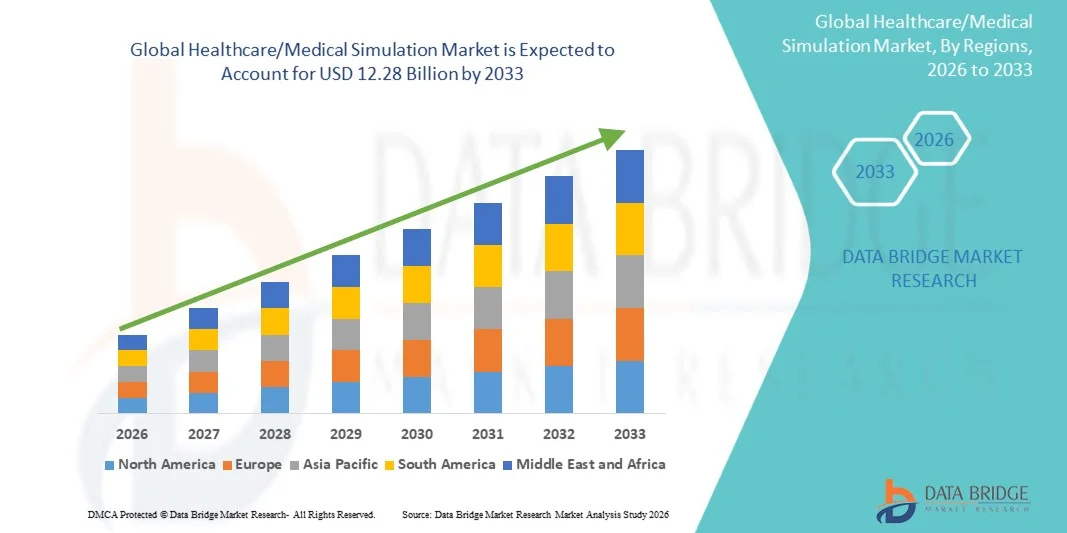
- Согласно анализу рынка Data Bridge Market Research, глобальный размер рынка медицинского моделирования был оценен как3,88 млрд долларов в 2025 годуОжидается, что он достигнет12,28 млрд долларов к 2033 году, вCAGR 15,50%в течение прогнозируемого периода
- Рост рынка в значительной степени обусловлен растущим внедрением передовых технологий обучения, растущим спросом на квалифицированных медицинских работников и растущим акцентом на безопасность пациентов и клиническое обучение в медицинских учреждениях.
- Кроме того, растущая потребность в реалистичных, безрисковых учебных средах, наряду с достижениями в технологиях моделирования и растущей интеграцией цифровых инструментов в медицинском образовании, создает решения для медицинского / медицинского моделирования в качестве основных компонентов современного обучения в области здравоохранения. Эти факторы ускоряют внедрение этих решений, тем самым значительно повышая рост отрасли.
Размер рынка и прогноз:
- Размер рынка (2025):$3,88 млрд.
- Прогнозируемый размер рынка (2033):$12,28 млрд.
- CAGR (2026-2033):15.50%
Как анализируется рынок медицинского моделирования
- Решения в области здравоохранения / медицинского моделирования, предлагающие передовые учебные платформы для клинического образования и развития навыков, становятся все более важными компонентами современных систем здравоохранения благодаря их способности обеспечивать реалистичные, безрисковые условия обучения и улучшать результаты безопасности пациентов.
- Растущий спрос на медицинскую симуляцию в первую очередь подпитывается растущей потребностью в квалифицированных медицинских работниках, растущим вниманием к безопасности пациентов и растущим внедрением обучения на основе моделирования в медицинском образовании и больницах.
- Северная Америка доминировала на рынке медицинского / медицинского моделирования с самой большой долей доходов примерно 37,2% в 2025 году, поддерживаемой передовой инфраструктурой здравоохранения, сильным присутствием поставщиков моделирования и широким внедрением инновационных технологий обучения.
- Ожидается, что Азиатско-Тихоокеанский регион станет самым быстрорастущим регионом на рынке медицинского / медицинского моделирования в течение прогнозируемого периода с прогнозируемым CAGR 10,1%, что обусловлено увеличением инвестиций в здравоохранение, расширением медицинского образования и растущей осведомленностью об обучении на основе моделирования в таких странах, как Китай и Индия.
- Сегмент программного обеспечения для медицинского моделирования доминировал на крупнейшей доле рынка в 41,6% в 2025 году, чему способствовало растущее внедрение цифровых учебных платформ и виртуальных учебных сред в образовании в области здравоохранения.
Сфера охвата и здравоохранение / сегментация рынка медицинского моделирования
|
Атрибуты |
Здравоохранение / Медицинская симуляция Ключевые идеи рынка |
|
Сегменты покрыты |
|
|
Страны, охваченные |
Северная Америка
Европа
Азиатско-Тихоокеанский регион
Ближний Восток и Африка
Южная Америка
|
|
Ключевые игроки рынка |
Simulab Corporation (США) |
|
Рыночные возможности |
|
|
Информационные наборы данных с добавленной стоимостью |
В дополнение к информации о рыночных сценариях, таких как рыночная стоимость, темпы роста, сегментация, географическое покрытие и основные игроки, рыночные отчеты, курируемые Data Bridge Market Research, также включают углубленный экспертный анализ, эпидемиологию пациентов, анализ трубопроводов, анализ цен и нормативную базу. |
Каковы тенденции рынка медицинской и медицинской симуляции
Расширение применения передовых технологий моделирования в медицинской подготовке
- Значительной и ускоряющейся тенденцией на мировом рынке медицинского / медицинского моделирования является растущее внедрение передовых технологий моделирования, включая манекены высокой точности, виртуальную реальность (VR) и дополненную реальность (AR), для улучшения клинической подготовки и результатов образования. Эта тенденция трансформирует традиционные методы обучения, предоставляя иммерсивную и безрисковую среду обучения для медицинских работников.
- Например, в 2024 году CAE Healthcare расширила свой портфель высокоточных симуляторов пациентов и решений для иммерсивного обучения, что позволило медицинским учреждениям проводить реалистичное обучение на основе сценариев для оказания критической помощи, реагирования на чрезвычайные ситуации и хирургических процедур.
- Растущий акцент на безопасность пациентов и сокращение медицинских ошибок стимулирует спрос на обучение на основе моделирования в больницах и академических учреждениях.
- Моделирующие технологии позволяют специалистам здравоохранения многократно практиковать сложные процедуры без риска для безопасности пациентов, тем самым повышая клиническую компетентность и уверенность.
- Кроме того, интеграция VR и AR в платформы моделирования повышает реалистичность сценариев обучения, позволяя лучше визуализировать и понимать анатомию и процедуры человека.
- Растущее внедрение минимально инвазивных операций также увеличивает потребность в передовых инструментах моделирования для эффективной подготовки хирургов.
- Академические учреждения все чаще включают обучение на основе моделирования в свои учебные программы для повышения качества медицинского образования.
- Растет спрос на межпрофессиональную подготовку, где моделирование позволяет совместное обучение между различными дисциплинами здравоохранения.
- Кроме того, технологические достижения делают системы моделирования более доступными и экономически эффективными для более широкого круга поставщиков медицинских услуг.
- Эта тенденция к эмпирическому и технологическому обучению значительно меняет ландшафт образования и обучения в области здравоохранения.
Что такое динамика рынка медицинской и медицинской симуляции
водитель
«Растущий спрос на квалифицированных медицинских работников и инициативы по безопасности пациентов»
- Растущий спрос на высококвалифицированных медицинских работников, наряду с сильным акцентом на безопасность пациентов и качественный уход, является основным драйвером роста рынка медицинского / медицинского моделирования.
- Например, в 2025 году Всемирная организация здравоохранения подчеркнула важность обучения на основе моделирования в укреплении возможностей медицинских работников и сокращении клинических ошибок, особенно в медицинских процедурах высокого риска.
- Медицинские работники все чаще внедряют обучение на основе моделирования, чтобы медицинские работники были хорошо подготовлены к сложным клиническим ситуациям.
- Растущая заболеваемость хроническими заболеваниями и растущее число хирургических процедур еще больше увеличивают потребность в квалифицированном медицинском персонале.
- Обучение симуляции помогает улучшить навыки принятия решений, клиническую точность и командную работу среди медицинских работников
- Правительства и организации здравоохранения инвестируют в инфраструктуру обучения для повышения квалификации рабочей силы и результатов лечения пациентов.
- Растущее внимание к аккредитации и соблюдению нормативных требований также способствует принятию стандартизированных программ обучения моделированию.
- Кроме того, оценки на основе моделирования широко используются для оценки клинических навыков и уровня компетентности.
- Растущая осведомленность о преимуществах практического, эмпирического обучения способствует дальнейшему росту рынка.
- В целом, необходимость улучшения качества медицинской помощи и снижения медицинских ошибок значительно повышает спрос на медицинские имитационные решения.
Сдержанность/вызов
"Высокая стоимость систем моделирования и ограниченная доступность"
- Высокая стоимость, связанная с передовыми системами медицинского моделирования и ограниченной доступностью в некоторых регионах, создает значительные проблемы для роста рынка.
- Например, по данным Общества моделирования в здравоохранении, внедрение высокоточных симуляционных лабораторий требует значительных капиталовложений в оборудование, инфраструктуру и обучение, что может стать препятствием для небольших учреждений.
- Продвинутые симуляторы, VR-платформы и интегрированные системы обучения часто связаны с высокими первоначальными затратами на обслуживание.
- Ограниченная доступность квалифицированных инструкторов и технического персонала также может препятствовать эффективному использованию технологий моделирования.
- В развивающихся регионах бюджетные ограничения и отсутствие инфраструктуры ограничивают внедрение передовых имитационных решений.
- Кроме того, интеграция обучения симуляции в существующие медицинские учебные программы может быть сложной задачей для учреждений с ограниченными ресурсами.
- Быстрые темпы технического прогресса также могут привести к частым обновлениям, увеличивая общие затраты.
- Сопротивление внедрению новых методов обучения среди некоторых специалистов может еще больше замедлить рост рынка.
- Кроме того, стандартизация учебных программ, основанных на моделировании, по-прежнему остается проблемой.
- Решение этих проблем с помощью экономически эффективных решений, программ обучения и увеличения инвестиций в инфраструктуру образования в области здравоохранения будет иметь решающее значение для устойчивого роста рынка.
Что такое рынок медицинской и медицинской симуляции
Рынок сегментирован на основе продукта и конечного потребителя.
• По продукту
На основе продукта рынок медицинского моделирования сегментирован на анатомические модели, веб-моделирование, программное обеспечение для медицинского моделирования и услуги по обучению симуляции. Сегмент программного обеспечения для медицинского моделирования доминировал на крупнейшей доле рынка в 41,6% в 2025 году, чему способствовало растущее внедрение цифровых учебных платформ и виртуальных учебных сред в образовании в области здравоохранения. Программное обеспечение для моделирования обеспечивает реалистичное обучение на основе сценариев, позволяя медицинским работникам практиковать сложные процедуры без риска для пациентов. Сегмент выигрывает от достижений вискусственный интеллектДополненная реальность (AR) и виртуальная реальность (VR), которые повышают точность обучения и погружения. Растущий спрос на стандартизированные и повторяемые учебные модули еще больше способствует внедрению. Больницы и академические учреждения все чаще инвестируют в программное обеспечение для моделирования, чтобы улучшить клинические результаты и уменьшить медицинские ошибки. Кроме того, переход к дистанционному и онлайн-обучению ускоряет спрос на программное обеспечение. Интеграция с электронными медицинскими записями и аналитикой в режиме реального времени повышает эффективность обучения. Сильная поддержка со стороны правительственных инициатив, способствующих цифровому образованию в области здравоохранения, также способствует росту. Масштабируемость и экономичность программных решений по сравнению с физическими моделями еще больше усиливают их доминирование. Повышение внимания к безопасности пациентов и обучению на основе компетенций продолжает стимулировать расширение сегмента.
Ожидается, что в сегменте веб-симуляции будет наблюдаться самый быстрый CAGR в 13,2% с 2026 по 2033 год, что обусловлено быстрым внедрением облачных платформ и решений дистанционного обучения. Веб-моделирование обеспечивает легкую доступность и гибкость, позволяя пользователям получать доступ к учебным модулям из любого места. Растущее проникновение высокоскоростного интернета и цифровой инфраструктуры поддерживает рост сегмента. Эти решения устраняют необходимость в дорогостоящем оборудовании, что делает их экономически эффективными для учреждений. Растущий спрос на непрерывное медицинское образование и развитие навыков еще больше подпитывает принятие. Веб-платформы также поддерживают обновления в реальном времени и совместное обучение, повышая вовлеченность пользователей. Пандемия COVID-19 ускорила переход к онлайн-обучению, которое продолжает влиять на тенденции рынка. Технологические достижения в области интерактивного моделирования и геймификации улучшают результаты обучения. Развивающиеся рынки демонстрируют сильное внедрение из-за доступности и масштабируемости. Партнерские отношения между поставщиками технологий и учреждениями здравоохранения еще больше стимулируют рост.
• Конечный пользователь
На основе конечного пользователя рынок медицинского моделирования сегментирован на академические институты, больницы, военные организации и другие. Сегмент академических институтов доминировал на рынке с долей выручки 45,3% в 2025 году, что обусловлено растущим внедрением обучения на основе моделирования в медицинских и сестринских программах. Учебные заведения внедряют технологии моделирования для предоставления практического опыта студентам в контролируемой и безопасной среде. Сегмент выигрывает от растущего спроса на квалифицированных медицинских работников и необходимости стандартизированных методов обучения. Правительства и регулирующие органы поощряют интеграцию моделирования в медицинское образование для повышения уровня компетентности. Академические институты вкладывают значительные средства в имитационные лаборатории и передовое учебное оборудование. Доступность финансирования и грантов для образовательной инфраструктуры также способствует росту. Обучение на основе моделирования помогает студентам развивать навыки принятия клинических решений и критического мышления. Увеличение зачисления студентов в программы здравоохранения еще больше повышает спрос. Сотрудничество между университетами и поставщиками симуляторов способствует внедрению технологий. Сосредоточение внимания на сокращении ошибок в обучении и повышении безопасности пациентов продолжает способствовать доминированию сегмента.
Ожидается, что в сегменте больниц самый быстрый CAGR составит 12,5% с 2026 по 2033 год, что обусловлено растущей потребностью в непрерывной профессиональной подготовке и повышении квалификации среди медицинского персонала. Больницы все чаще используют инструменты моделирования для обучения реагированию на чрезвычайные ситуации, хирургическим процедурам и управлению уходом за пациентами. Сегмент выигрывает от растущей сложности медицинских процедур и необходимости минимизировать клинические ошибки. Моделирование обучения позволяет медицинским работникам практиковать процедуры высокого риска без ущерба для безопасности пациентов. Повышение внимания к стандартам качества и аккредитации также способствует принятию. Больницы инвестируют в передовые технологии моделирования для повышения эффективности персонала и результатов лечения пациентов. Интеграция моделирования с данными пациентов в режиме реального времени повышает эффективность обучения. Растущая осведомленность о преимуществах обучения на основе моделирования еще больше способствует росту. Развивающиеся медицинские учреждения внедряют моделирование для стандартизации практики обучения. Технологические достижения и увеличение расходов на здравоохранение являются ключевыми факторами расширения сегмента.
В каком регионе самая большая доля Медицинское моделирование / Medical Simulation Рынок
-
Северная Америка доминировала на рынке медицинского / медицинского моделирования с самой большой долей дохода около 37,2% в 2025 году, поддерживаемой передовой инфраструктурой здравоохранения, сильным присутствием поставщиков моделирования и широким внедрением инновационных технологий обучения в больницах, академических учреждениях и исследовательских центрах.
-
Регион выигрывает от высоких инвестиций в медицинское образование и непрерывную профессиональную подготовку, где обучение на основе моделирования все более предпочтительно для улучшения клинических навыков, безопасности пациентов и процедурной точности без реальных рисков.
- Это широкое внедрение еще больше усиливается благоприятными правительственными инициативами, хорошо зарекомендовавшими себя механизмами возмещения расходов и присутствием ведущих игроков отрасли, что делает моделирование здравоохранения критически важным компонентом современной медицинской подготовки и принятия клинических решений.
Американский рынок медицинской симуляции Insight
Рынок медицинской и медицинской симуляции в США занял самую большую долю доходов в Северной Америке в 2025 году, чему способствовало широкое внедрение передовых технологий моделирования в медицинских школах, больницах и военных учебных программах. Сильное внимание страны к безопасности пациентов, сокращению медицинских ошибок и стандартизированной клинической подготовке значительно стимулирует внедрение тренажеров высокой точности и виртуальных платформ обучения. Кроме того, увеличение инвестиций в исследования и разработки, наряду с интеграцией моделирования в программы сертификации и непрерывного образования, продолжают стимулировать отрасль здравоохранения / медицинского моделирования в США.
Европейское здравоохранение/Медицинское моделирование
Прогнозируется, что рынок медицинского моделирования в Европе будет расширяться при существенном CAGR в течение прогнозируемого периода, в первую очередь благодаря растущему акценту на улучшение качества здравоохранения и результатов лечения пациентов. В регионе наблюдается все более широкое внедрение обучения на основе моделирования в рамках медицинских учебных программ и программ обучения в больницах. Кроме того, благоприятная нормативно-правовая база и растущие инвестиции в инфраструктуру здравоохранения способствуют внедрению передовых технологий моделирования в различных странах Европы.
Медицинское моделирование / Medical Simulation Market Insight
Ожидается, что в течение прогнозируемого периода рынок медицинского/медицинского моделирования в Великобритании будет расти на примечательном уровне CAGR, чему будет способствовать сильный акцент страны на повышении стандартов клинической подготовки и сокращении медицинских ошибок. Растущее внедрение моделирования в сестринском и медицинском образовании, а также поддерживаемые правительством инициативы по обучению, способствуют росту рынка. Кроме того, наличие хорошо зарекомендовавших себя учреждений здравоохранения и учебных центров еще больше ускоряет интеграцию технологий моделирования.
Германия Healthcare/Medical Simulation Market Insight
Ожидается, что в течение прогнозируемого периода рынок медицинского / медицинского моделирования в Германии будет расширяться на значительном CAGR, чему способствует передовая система здравоохранения страны и акцент на технологических инновациях. Германия все чаще использует инструменты моделирования для хирургического обучения, практики реагирования на чрезвычайные ситуации и сценариев управления пациентами. Растущий спрос на эффективные и стандартизированные методы обучения наряду с сильной институциональной поддержкой вносит значительный вклад в расширение рынка.
Азиатско-Тихоокеанское здравоохранение/Медицинское моделирование
Ожидается, что Азиатско-тихоокеанский рынок медицинского / медицинского моделирования будет самым быстрорастущим регионом в течение прогнозируемого периода, с прогнозируемым CAGR в 10,1%, что обусловлено увеличением инвестиций в здравоохранение, расширением медицинского образования и растущей осведомленностью об обучении на основе моделирования в таких странах, как Китай и Индия. Быстрые улучшения в инфраструктуре здравоохранения, наряду с растущим спросом на квалифицированных медицинских работников, ускоряют внедрение технологий моделирования в регионе. Кроме того, государственные инициативы по модернизации систем здравоохранения и повышению качества обучения играют решающую роль в росте рынка.
Японский рынок медицинской симуляции Insight
Рынок медицинского моделирования в Японии набирает обороты благодаря передовому технологическому ландшафту страны и сильному акценту на точность медицинского обучения. В университетах и больницах растет внедрение обучения на основе моделирования для улучшения клинических компетенций и результатов лечения пациентов. Кроме того, старение населения Японии стимулирует потребность в высококвалифицированных медицинских работниках, что еще больше способствует росту технологий моделирования в стране.
Китайское здравоохранение / Медицинское моделирование
Китайский рынок медицинского моделирования составил значительную долю доходов рынка в Азиатско-Тихоокеанском регионе в 2025 году, что объясняется быстрым развитием инфраструктуры здравоохранения и увеличением инвестиций в медицинское образование и обучение. В стране наблюдается растущее внедрение технологий моделирования в больницах и академических учреждениях для повышения клинических навыков и повышения безопасности пациентов. Правительственные инициативы по укреплению систем здравоохранения наряду с повышением осведомленности о методологиях повышения квалификации являются ключевыми факторами, стимулирующими развитие рынка в Китае.
Какова доля рынка медицинского моделирования
Индустрия медицинского моделирования в основном возглавляется хорошо зарекомендовавшими себя компаниями, в том числе:
•Simulab Corporation (США)
•Gaumard Scientific (США)
Limbs & Things Ltd. (Великобритания)
• Kyoto Kagaku Co., Ltd. (Япония)
Mentice AB (Швеция)
Хирургическая наука Швеция AB (Швеция)
Medical Simulation Corporation (США)
•VirtaMed AG (Швейцария)
Интеллектуальная ультразвуковая группа (Великобритания)
OSSimTech (Канада)
• SimX (США)
•BioDigital (США)
Inovus Medical (Великобритания)
Улучшение здравоохранения (США)
Карманная медсестра (США)
i-Human Patients, Inc. (США)
• Взаимодействие тела (Португалия)
Каковы последние достижения на мировом рынке медицинского моделирования
- В январе 2024 года Laerdal Medical объявила о запуске своего материнского симулятора MamaAnne, предназначенного для улучшения обучения для управления чрезвычайными ситуациями матери, такими как послеродовое кровоизлияние. Симулятор усиливает реализм в акушерской подготовке и поддерживает медицинских работников в улучшении результатов лечения пациентов, отражая растущий акцент на симуляционном образовании в области ухода за матерью.
- В июне 2025 года отраслевой анализ выявил быструю интеграцию веб-платформ моделирования и инструментов цифрового обучения в образовании в области здравоохранения, что позволило бы использовать масштабируемые и экономически эффективные решения для обучения. Эта разработка отражает переход к дистанционным и основанным на компетенциях учебным моделям, повышая доступность и эффективность медицинского моделирования.
- В январе 2026 года CAE Healthcare объявила о запуске своего последнего симулятора HPS Human Patient Simulator с моделированием физиологии на основе ИИ для углубленного обучения критической помощи. Система повышает реалистичность, моделируя сложные реакции пациентов и редкие клинические сценарии, демонстрируя растущую роль искусственного интеллекта в технологиях медицинского моделирования следующего поколения.
SKU-
Получите онлайн-доступ к отчету на первой в мире облачной платформе рыночной аналитики

- Интерактивная панель анализа данных
- Панель анализа компании для возможностей с высоким потенциалом роста
- Доступ аналитика-исследователя для настройки и запросов
- Анализ конкурентов с помощью интерактивной панели
- Последние новости, обновления и анализ тенденций
- Используйте возможности сравнительного анализа для комплексного отслеживания конкурентов
Методология исследования
Сбор данных и анализ базового года выполняются с использованием модулей сбора данных с большими размерами выборки. Этап включает получение рыночной информации или связанных данных из различных источников и стратегий. Он включает изучение и планирование всех данных, полученных из прошлого заранее. Он также охватывает изучение несоответствий информации, наблюдаемых в различных источниках информации. Рыночные данные анализируются и оцениваются с использованием статистических и последовательных моделей рынка. Кроме того, анализ доли рынка и анализ ключевых тенденций являются основными факторами успеха в отчете о рынке. Чтобы узнать больше, пожалуйста, запросите звонок аналитика или оставьте свой запрос.
Ключевой методологией исследования, используемой исследовательской группой DBMR, является триангуляция данных, которая включает в себя интеллектуальный анализ данных, анализ влияния переменных данных на рынок и первичную (отраслевую экспертную) проверку. Модели данных включают сетку позиционирования поставщиков, анализ временной линии рынка, обзор рынка и руководство, сетку позиционирования компании, патентный анализ, анализ цен, анализ доли рынка компании, стандарты измерения, глобальный и региональный анализ и анализ доли поставщика. Чтобы узнать больше о методологии исследования, отправьте запрос, чтобы поговорить с нашими отраслевыми экспертами.
Доступна настройка
Data Bridge Market Research является лидером в области передовых формативных исследований. Мы гордимся тем, что предоставляем нашим существующим и новым клиентам данные и анализ, которые соответствуют и подходят их целям. Отчет можно настроить, включив в него анализ ценовых тенденций целевых брендов, понимание рынка для дополнительных стран (запросите список стран), данные о результатах клинических испытаний, обзор литературы, обновленный анализ рынка и продуктовой базы. Анализ рынка целевых конкурентов можно проанализировать от анализа на основе технологий до стратегий портфеля рынка. Мы можем добавить столько конкурентов, о которых вам нужны данные в нужном вам формате и стиле данных. Наша команда аналитиков также может предоставить вам данные в сырых файлах Excel, сводных таблицах (книга фактов) или помочь вам в создании презентаций из наборов данных, доступных в отчете.











