Global Hepatitis E Market Segmentation, By Drug Class (Antiviral Drugs, Interferons, and Others), Route of Administration (Oral, Parenteral, and Others), End-Users (Hospitals, Homecare, Specialty Clinics, and Others), Distribution Channel (Hospital Pharmacy, Online Pharmacy, and Retail Pharmacy)- Industry Trends and Forecast to 2033
Каков размер рынка гепатита Е и темпы роста
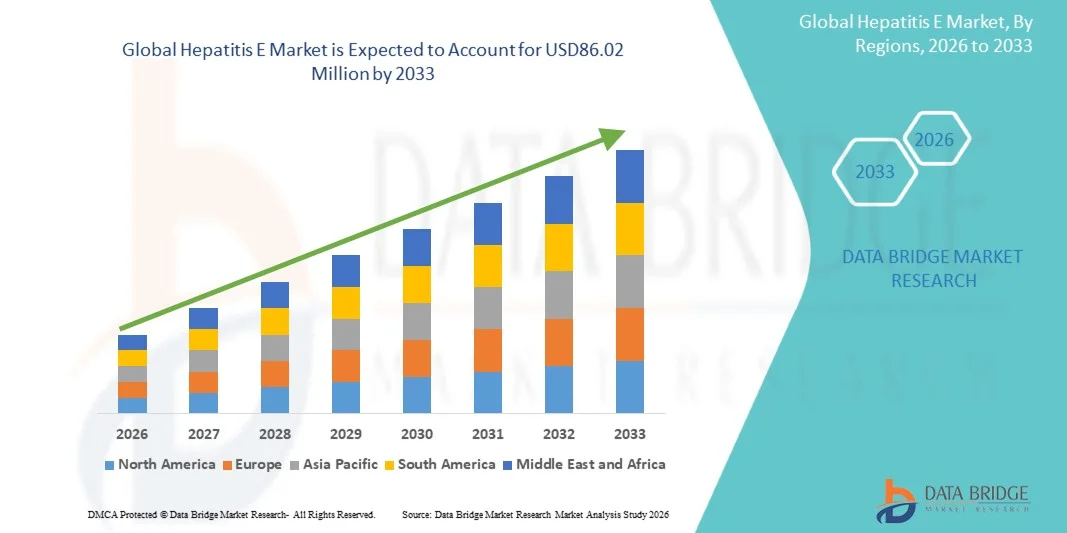
- Согласно анализу Data Bridge Market Research, глобальный размер рынка гепатита Е был оценен как$59,12 млн. в 2025 годуОжидается, что он достигнет86,02 млн долларов США к 2033 году, вCAGR 4,8%в течение прогнозируемого периода
- Рост рынка в значительной степени обусловлен увеличением распространенности инфекций гепатита Е, особенно в развивающихся регионах, а также растущим внедрением передовых технологий диагностического тестирования и улучшенных систем эпиднадзора за заболеваниями.
- Кроме того, повышение осведомленности о заболеваниях, передаваемых через воду, расширение инфраструктуры здравоохранения и продолжающиеся усилия по разработке вакцин и профилактическим мерам здравоохранения делают диагностику гепатита Е важнейшим компонентом лечения.инфекционные заболеванияуправление. Эти факторы ускоряют спрос на решения, связанные с гепатитом Е, тем самым значительно стимулируя рост рынка.
Размер рынка и прогноз
Глобальная рыночная стоимость (2025):$ 59,12 млн.
Ожидаемая рыночная стоимость (2033):$86,02 млн.
Прогноз CAGR (2026–2033):4.8%
Каковы основные выводы рынка гепатита Е
- Гепатит Е, инфекция печени, вызванная вирусом гепатита Е (ВГЭ) и в основном передаваемая через загрязненную воду, остается серьезной проблемой общественного здравоохранения, особенно в развивающихся регионах, что приводит к необходимости эффективных терапевтических вариантов и поддерживающего лечения.
- Растущий спрос на рынке гепатита Е в первую очередь подпитывается ростом заболеваемости инфекциями, передаваемыми через воду, повышением осведомленности о вирусном гепатите и растущим использованием вируса.Противовирусные препаратыи терапии на основе интерферона для лечения заболеваний
- Северная Америка доминировала на рынке гепатита Е с самой большой долей доходов в 38,5% в 2025 году, характеризующейся передовой инфраструктурой здравоохранения, более высокими показателями диагностики и отчетности и сильными инвестициями в исследования инфекционных заболеваний, причем в США наблюдается повышенное клиническое внимание к гепатиту Е, особенно среди населения с ослабленным иммунитетом.
- Ожидается, что Азиатско-Тихоокеанский регион станет самым быстрорастущим регионом на рынке гепатита Е в течение прогнозируемого периода из-за увеличения распространенности заболеваний, улучшения доступа к здравоохранению и роста правительственных инициатив по борьбе с инфекциями, передаваемыми через воду.
- Сегмент противовирусных препаратов доминировал на рынке гепатита Е с наибольшей долей 45,2% в 2025 году, что обусловлено их эффективностью в лечении тяжелых и хронических случаев, а также растущим клиническим внедрением.
Сфера охвата и сегментация рынка гепатита Е
|
Атрибуты |
Гепатит E Ключевые идеи рынка |
|
Сегменты покрыты |
|
|
Страны, охваченные |
Северная Америка
Европа
Азиатско-Тихоокеанский регион
Ближний Восток и Африка
Южная Америка
|
|
Ключевые игроки рынка |
|
|
Рыночные возможности |
|
|
Информационные наборы данных с добавленной стоимостью |
В дополнение к информации о рыночных сценариях, таких как рыночная стоимость, темпы роста, сегментация, географический охват и основные игроки, рыночные отчеты, курируемые Data Bridge Market Research, также включают углубленный экспертный анализ, эпидемиологию пациентов, анализ трубопроводов, анализ цен и нормативную базу. |
Каковы основные тенденции на рынке гепатита Е
«Повышение внимания к разработке вакцин и профилактическому здравоохранению»
- Значительной и ускоряющейся тенденцией на мировом рынке гепатита Е является усиление внимания к разработке вакцин и стратегий профилактического здравоохранения, особенно в регионах с высокой распространенностью заболеваний и ограниченной инфраструктурой санитарии. Этот сдвиг значительно усиливает усилия по борьбе с болезнями и долгосрочной профилактике.
- Например, вакцина HEV 239 (Хеколин), разработанная и коммерциализированная в Китае, продемонстрировала высокую эффективность в предотвращении инфекции гепатита Е и оценивается для более широкого внедрения в эндемичных регионах. Аналогичным образом, текущие клинические исследования изучают новые кандидаты на вакцины для расширения глобальной доступности.
- Растущий акцент на профилактическом здравоохранении позволяет осуществлять стратегии раннего вмешательства, такие как программы иммунизации и кампании по информированию общественности о здоровье. Например, органы здравоохранения все активнее пропагандируют методы вакцинации и гигиены для снижения уровня инфицирования, особенно среди групп высокого риска.
- Интеграция профилактики гепатита Е в более широкие программы борьбы с инфекционными заболеваниями облегчает скоординированные ответные меры в области здравоохранения. Благодаря централизованным инициативам в области общественного здравоохранения правительства могут управлять гепатитом Е наряду с другими вирусными инфекциями, улучшая общий мониторинг заболеваний и эффективность реагирования.
- Эта тенденция к проактивной профилактике заболеваний и иммунизации коренным образом меняет подходы общественного здравоохранения к гепатиту Е. Следовательно, компании и исследовательские учреждения сосредоточены на расширении доступности вакцин и улучшении доступа в недостаточно обслуживаемых регионах.
- Спрос на вакцины против гепатита Е и профилактические решения неуклонно растет в развивающихся и развитых регионах, поскольку системы здравоохранения все чаще отдают приоритет профилактике заболеваний и управлению здоровьем населения.
- Растущее внедрение технологий молекулярной диагностики и решений для тестирования в пунктах оказания медицинской помощи расширяет возможности раннего выявления, способствуя улучшению эпиднадзора за заболеваниями и своевременным стратегиям вмешательства.
Динамика рынка гепатита Е
водитель
«Рост потребностей в связи с ростом заболеваемости и инициатив в области общественного здравоохранения»
- Растущая распространенность инфекций гепатита Е, особенно в регионах с плохой санитарией, в сочетании с расширением инициатив в области общественного здравоохранения, является значительным фактором повышенного спроса на лечение гепатита Е и профилактические решения.
- Например, в марте 2024 года Всемирная организация здравоохранения подчеркнула необходимость совершенствования мер эпиднадзора и контроля за гепатитом Е в эндемичных регионах, призвав правительства укреплять рамки диагностики и профилактики. Ожидается, что такие стратегии глобальных организаций здравоохранения будут стимулировать рост рынка в прогнозируемый период.
- По мере повышения осведомленности о передаче гепатита Е и осложнениях медицинские работники сосредотачиваются на ранней диагностике и эффективном управлении, поощряя использование противовирусной терапии и поддерживающего лечения.
- Кроме того, растущие инвестиции в инфраструктуру здравоохранения и программы борьбы с инфекционными заболеваниями поддерживают внедрение передовых подходов к лечению и профилактике, особенно в странах с развивающейся экономикой.
- Доступность пероральных противовирусных препаратов, улучшение доступа пациентов к медицинским учреждениям и проводимые правительством кампании по повышению осведомленности являются ключевыми факторами, способствующими принятию решений по лечению гепатита Е среди пострадавших групп населения. Растущее внимание к сокращению заболеваний, передаваемых через воду, и улучшению санитарии также способствует росту рынка.
- Растущее международное финансирование и поддержка со стороны глобальных организаций здравоохранения позволяют осуществлять крупномасштабные программы профилактики и борьбы с гепатитом, особенно в странах с низким и средним уровнем дохода.
- Растущий акцент на здоровье матери и ребенка увеличивает скрининг и лечение инфекций гепатита Е, особенно из-за более высоких рисков, связанных с беременностью, тем самым стимулируя спрос на эффективные варианты лечения.
Сдержанность/вызов
«Ограниченные варианты лечения и регуляторные барьеры»
- Отсутствие широко одобренной специфической противовирусной терапии гепатита Е, наряду с проблемами регулирования и одобрения, создает значительный барьер для расширения рынка. Поскольку варианты лечения остаются ограниченными, поставщики медицинских услуг часто полагаются на поддерживающую помощь, ограничивая потенциал роста рынка.
- Например, отсутствие одобренных во всем мире вакцин за пределами отдельных регионов ограничивает широкомасштабные усилия по иммунизации, создавая диспропорции в профилактике заболеваний и борьбе с ними в разных регионах.
- Решение этих проблем путем расширения исследований и разработок, согласования нормативных требований и клинических испытаний имеет решающее значение для расширения доступности лечения. Компании и исследовательские учреждения инвестируют в новые противовирусные препараты и вакцины для удовлетворения неудовлетворенных потребностей. Кроме того, ограниченная осведомленность в определенных регионах и недостаточная диагностика случаев гепатита Е могут препятствовать своевременному лечению и вмешательству.
- В то время как инфраструктура здравоохранения улучшается, в регионах с низким уровнем дохода сохраняются пробелы в доступе к диагностическим и лечебным услугам, что влияет на общие результаты лечения заболеваний.
- Преодоление этих проблем за счет увеличения инвестиций в исследования, улучшения механизмов регулирования и расширения инициатив в области общественного здравоохранения будет иметь жизненно важное значение для устойчивого роста рынка.
- Ограниченные коммерческие стимулы для фармацевтических компаний из-за более высокой распространенности заболевания в регионах с низким уровнем дохода могут ограничить масштабные инвестиции и замедлить инновации на этом рынке.
- Логистические проблемы в области распространения вакцин и управления холодовыми цепями в отдаленных и недостаточно обслуживаемых районах еще больше препятствуют эффективной реализации профилактических программ.
Как сегментируется рынок гепатита Е
Рынок сегментирован на основе класса лекарств, маршрута введения, конечных пользователей и канала распределения.
- Класс наркотиков
На основе класса препаратов рынок гепатита Е сегментирован на противовирусные препараты, интерфероны и другие. Сегмент противовирусных препаратов доминировал на рынке с самой большой долей рынка в 45,2% в 2025 году, что обусловлено их эффективностью в лечении тяжелых и хронических инфекций гепатита Е, особенно среди пациентов с ослабленным иммунитетом. Эти препараты широко предпочтительны из-за их целенаправленного действия против репликации вируса и увеличения клинического применения в больницах. Кроме того, продолжающиеся исследования и использование некоторых противовирусных препаратов вне маркировки еще больше укрепили свои позиции на рынке. Наличие пероральных противовирусных препаратов и их интеграция в протоколы лечения также способствуют их доминированию. Растущее предпочтение врача фармакологическому вмешательству в сложных случаях еще больше поддерживает рост сегмента.
Ожидается, что в сегменте интерферонов будут наблюдаться самые быстрые темпы роста в течение прогнозируемого периода, чему способствуют их иммуномодулирующие эффекты и расширение исследований в области лечения гепатита Е, особенно в хронических случаях. Интерфероны усиливают иммунный ответ организма против вирусных инфекций, что делает их жизнеспособным вариантом в конкретных группах пациентов. Растущие клинические испытания и исследовательские инициативы, направленные на расширение их терапевтического применения, еще больше повышают спрос. Кроме того, повышение осведомленности среди медицинских работников об их потенциальных преимуществах способствует усыновлению. Сегмент также набирает обороты благодаря достижениям в области биопрепаратов и улучшенных технологий приготовления.
- По маршруту администрации
На основе пути введения рынок гепатита Е сегментирован на оральный, парентеральный и другие. Оральный сегмент доминировал на рынке с самой большой долей рынка в 2025 году, что обусловлено удобством, простотой администрирования и высоким уровнем соблюдения требований пациентов. Пероральные препараты широко предпочтительны в амбулаторных условиях и для долгосрочного лечения из-за их неинвазивного характера. Наличие противовирусных препаратов в пероральной форме еще больше укрепляет позиции этого сегмента. Кроме того, снижение потребности в надзоре за здравоохранением и снижение административных расходов способствуют его широкому распространению. Повышение внимания к подходам лечения, ориентированным на пациента, также поддерживает доминирование оральной терапии.
Ожидается, что в течение прогнозируемого периода в парентеральном сегменте будут наблюдаться самые быстрые темпы роста, обусловленные его эффективностью в тяжелых случаях, требующих немедленной и контролируемой доставки лекарств. Парентеральное введение обеспечивает быстрое начало действия и более высокую биодоступность, что делает его подходящим для госпитализированных пациентов. Растущее число госпитализаций, связанных с острыми осложнениями гепатита Е, способствует росту сегмента. Кроме того, достижения в области инъекционных биопрепаратов и интерфероновой терапии способствуют более широкому внедрению. Сегмент также выигрывает от улучшения инфраструктуры здравоохранения и доступа к лечению в больницах.
- конечными пользователями
На базе конечных пользователей рынок гепатита Е сегментирован на больницы, домашнюю помощь, специализированные клиники и другие. Сегмент больниц доминировал на рынке с самой большой долей доходов рынка в 2025 году, что обусловлено большим объемом госпитализаций пациентов для диагностики и лечения инфекций гепатита Е. Больницы предлагают передовые диагностические учреждения, квалифицированных медицинских работников и доступ к широкому спектру вариантов лечения, что делает их основным пунктом ухода. Наличие специализированных отделений по инфекционным заболеваниям дополнительно поддерживает их доминирование. Кроме того, увеличение госпитализации в тяжелых случаях и случаях высокого риска в значительной степени способствует получению доходов. Государственные инвестиции в инфраструктуру больниц также играют ключевую роль в поддержании роста сегмента.
Ожидается, что в сегменте ухода на дому будут наблюдаться самые быстрые темпы роста в течение прогнозируемого периода, что обусловлено растущим предпочтением лечения и мониторинга на дому, особенно для пациентов с легкими и выздоравливающими заболеваниями. Решения по уходу за домом обеспечивают экономическую эффективность и удобство, снижая нагрузку на больничные учреждения. Наличие пероральных препаратов и удаленных медицинских услуг поддерживает эту тенденцию. Кроме того, развитие телемедицины и цифровых медицинских платформ позволяет эффективно управлять пациентами за пределами традиционных медицинских учреждений. Растущая осведомленность о самообслуживании и лечении заболеваний способствует дальнейшему развитию этого сегмента.
- Дистрибьюторский канал
На основе канала распространения рынок гепатита Е сегментирован в больничную аптеку, онлайн-аптеку и розничную аптеку. Сегмент больничных аптек доминировал на рынке с самой большой долей рынка в 2025 году, что обусловлено прямыми поставками лекарств госпитализированным пациентам и сильной интеграцией с системами клинической помощи. Больничные аптеки обеспечивают доступность основных лекарственных средств, особенно в острых и тяжелых случаях, требующих немедленного лечения. Зависимость от больничных методов лечения также поддерживает доминирование этого сегмента. Кроме того, соблюдение нормативных требований и контролируемое распространение наркотиков способствуют его широкому использованию. Увеличение числа госпитализаций по поводу инфекционных заболеваний также стимулирует спрос в этом сегменте.
Ожидается, что в сегменте онлайн-аптек будут наблюдаться самые быстрые темпы роста в течение прогнозируемого периода, обусловленные растущим внедрением платформ электронной коммерции и растущим спросом на удобные варианты покупки лекарств. Онлайн-аптеки предлагают легкий доступ к лекарствам, конкурентоспособным ценам и услугам доставки на дом, повышая удобство пациентов. Растущее проникновение цифровых технологий и использование Интернета еще больше ускоряет эту тенденцию. Кроме того, переход к дистанционному здравоохранению и телеконсалтингу поддерживает онлайн-продажи лекарств. Расширение нормативно-правовой поддержки электронных ферм в нескольких регионах также способствует росту сегмента.
В каком регионе находится наибольшая доля рынка гепатита Е
- Северная Америка доминировала на рынке гепатита Е с самой большой долей дохода 38,5% в 2025 году, характеризующейся передовой инфраструктурой здравоохранения, более высокими показателями диагностики и отчетности и сильными инвестициями в исследования инфекционных заболеваний.
- Медицинские работники в регионе уделяют первоочередное внимание раннему выявлению, эффективному лечению заболеваний и доступу к передовым вариантам лечения, включая противовирусные препараты и поддерживающую помощь для групп высокого риска.
- Это широкое распространение также поддерживается сильными правительственными инициативами, надежными научно-исследовательскими и опытно-конструкторскими работами и наличием хорошо зарекомендовавших себя систем здравоохранения, устанавливающих решения по борьбе с гепатитом Е в качестве важнейшего компонента борьбы с инфекционными заболеваниями как в клинических, так и в медицинских учреждениях.
Гепатит E Market Insight в США
Американский рынок гепатита Е занял самую большую долю доходов в Северной Америке в 2025 году, чему способствовали передовые диагностические возможности и повышение осведомленности об инфекционных заболеваниях. Медицинские работники все чаще отдают приоритет раннему выявлению и лечению гепатита Е, особенно среди групп населения с ослабленным иммунитетом, таких как реципиенты трансплантата. Растущее внимание к надзору за общественным здравоохранением в сочетании с устойчивым спросом на противовирусную терапию и поддерживающую терапию еще больше продвигает рынок. Кроме того, увеличение инвестиций в исследования инфекционных заболеваний, наличие сложной лабораторной инфраструктуры и усовершенствованные системы отчетности вносят значительный вклад в расширение рынка. Наличие ведущих научно-исследовательских институтов и высокие расходы на здравоохранение еще больше укрепляют рост рынка.
Европейское исследование рынка гепатита Е
Европейский рынок гепатита Е, по прогнозам, будет расширяться при существенном CAGR в течение прогнозируемого периода, в основном за счет повышения осведомленности и улучшения систем эпиднадзора за вирусными инфекциями. Увеличение расходов на здравоохранение в сочетании со спросом на точные диагностические решения способствует принятию методов лечения гепатита Е. Европейские системы здравоохранения также сосредоточены на профилактических мерах, включая мониторинг безопасности пищевых продуктов и стратегии раннего вмешательства. Регион переживает устойчивый рост в больничных и клинических условиях, а управление гепатитом Е становится неотъемлемой частью программ борьбы с инфекционными заболеваниями. Кроме того, поддерживаемые правительством инициативы по скринингу и нормативная поддержка способствуют развитию рынка.
Британский гепатит E Market Insight
Ожидается, что рынок гепатита Е в Великобритании в течение прогнозируемого периода будет расти с заметным CAGR, что обусловлено повышением осведомленности о вирусном гепатите и сильным акцентом на раннюю диагностику и лечение. Кроме того, проблемы, связанные с инфекциями пищевого и водного происхождения, побуждают медицинских работников улучшать методы скрининга, особенно в группах высокого риска. Ожидается, что хорошо налаженная инфраструктура здравоохранения Великобритании, наряду с ее акцентом на инициативы в области общественного здравоохранения и эпиднадзора за болезнями, будет продолжать стимулировать рост рынка. Растущее внедрение передовых диагностических технологий и растущие правительственные инициативы способствуют расширению рынка.
Германия Hepatitis E Market Insight
Ожидается, что в течение прогнозируемого периода рынок гепатита Е в Германии будет расширяться при значительном CAGR, чему будет способствовать повышение осведомленности об инфекционных заболеваниях и спрос на передовые диагностические и лечебные решения. Хорошо развитая инфраструктура здравоохранения Германии в сочетании с ее акцентом на исследования и инновации способствует принятию стратегий управления гепатитом Е. Интеграция тестирования на гепатит Е в рутинную диагностику также становится все более распространенной, особенно в больничных лабораториях. Кроме того, сильная нормативно-правовая база и увеличение инвестиций в здравоохранение способствуют принятию эффективных решений в области лечения.
Азиатско-Тихоокеанский рынок гепатита Е
Азиатско-Тихоокеанский рынок гепатита Е будет расти самыми быстрыми темпами в течение прогнозируемого периода с 2026 по 2033 год, что обусловлено высокой распространенностью заболеваний, увеличением населения и улучшением доступа к здравоохранению в таких странах, как Китай, Япония и Индия. Растущее внимание региона к борьбе с инфекционными заболеваниями, поддерживаемое правительственными инициативами, способствующими санитарии, доступу к чистой воде и программам вакцинации, стимулирует спрос на лечение гепатита Е. Кроме того, по мере того, как APAC продолжает укреплять свою инфраструктуру здравоохранения, доступность диагностических и терапевтических решений расширяется. Повышение осведомленности о заболеваниях, передаваемых через воду, и увеличение инвестиций в программы общественного здравоохранения также вносят значительный вклад в рост рынка.
Японский гепатит E Market Insight
Японский рынок гепатита Е набирает обороты благодаря передовой системе здравоохранения страны, старению населения и повышению внимания к лечению инфекционных заболеваний. Японский рынок уделяет большое внимание ранней диагностике и эффективному лечению, а внедрение решений для лечения гепатита Е обусловлено улучшением методов скрининга и технологическими достижениями. Интеграция передовых диагностических технологий, таких как молекулярное тестирование, способствует росту. Кроме того, сильные исследовательские возможности Японии и государственная поддержка инноваций в области здравоохранения, вероятно, будут стимулировать спрос на новые подходы к лечению и профилактике как в клиническом, так и в общественном здравоохранении.
Индийский гепатит E Market Insight
На индийский рынок гепатита Е пришлась самая большая доля доходов рынка в Азиатско-Тихоокеанском регионе в 2025 году, что объясняется высоким бременем болезней в стране, быстрым ростом населения и повышением осведомленности о инфекциях, передаваемых через воду. Индия представляет собой значительный рынок для лечения гепатита Е, с растущим спросом в больницах и программах общественного здравоохранения. Стремление к улучшению санитарии через правительственные инициативы, расширение инфраструктуры здравоохранения и увеличение расходов на здравоохранение являются ключевыми факторами, стимулирующими рост. Кроме того, расширение доступа к недорогим вариантам диагностики и лечения наряду с усилиями по усилению эпиднадзора за болезнями еще больше стимулирует рынок в Индии.
Какие компании являются ведущими на рынке гепатита Е
Отрасль Hepatitis E в основном возглавляется хорошо зарекомендовавшими себя компаниями, в том числе:
- Xiamen Innovax Biotech Co., Ltd.(Китай)
- GSK plc(Великобритания)
- Merck & Co., Inc.(США)
- Компания Pfizer Inc(США)
- Санофи(Франция)
- Takeda Pharmaceutical Company Limited (Япония)
- Эбботт (США)
- F. Hoffmann-La Roche Ltd (Швейцария)
- Siemens Healthineers AG (Германия)
- Bio-Rad Laboratories, Inc. (США)
- DiaSorin S.p.A. (Италия)
- QIAGEN (Нидерланды)
- Thermo Fisher Scientific Inc. (США)
- Danaher Corporation (США)
- PerkinElmer, Inc. (США)
- BD (США)
- Грифолс, С.А. (Испания)
- Dr. Reddy's Laboratories Ltd. (Индия)
- URIHK Pharma Private Limited (Индия)
Каковы последние события на мировом рынке гепатита Е
- В январе 2026 года лаборатория доктора Редди объявила о запуске своей новой рекомбинантной вакцины против гепатита Е, Hevaxin, в Индии, предназначенной для активной иммунизации против инфекции вируса гепатита Е (HEV) у взрослых в возрасте 18-65 лет. Вакцина продемонстрировала длительный иммунитет и сильный профиль безопасности в клинических оценках. Этот запуск знаменует собой важную веху, поскольку он удовлетворяет основные неудовлетворенные медицинские потребности и поддерживает национальные программы борьбы с гепатитом в регионе с высокой нагрузкой.
- В августе 2025 года Urihk Pharmaceuticals ввела вакцину против гепатита Е в Индии, что стало одним из первых коммерческих проектов, направленных на укрепление инфраструктуры профилактического здравоохранения. Запуск отражает растущее внимание промышленности к доступности вакцин в развивающихся странах, где распространенность гепатита Е высока из-за проблем с санитарией. Ожидается, что это позволит расширить охват иммунизацией и значительно снизить бремя болезней.
- В апреле 2025 года Всемирная организация здравоохранения расширила свою стратегию реагирования на гепатит Е, включив вакцину против гепатита Е в механизм реагирования на вспышки. Этот шаг направлен на улучшение глобального доступа к вакцинам, особенно во время чрезвычайных ситуаций, таких как вспышки в уязвимых регионах. В нем подчеркивается растущая институциональная поддержка вакцинации в качестве ключевой профилактической меры при лечении гепатита Е.
- В январе 2025 года исследователи сообщили о результатах в журнале The Lancet Infectious Diseases, указывающих на то, что вакцинация против гепатита Е может оставаться эффективной при сниженном режиме двух доз вместо традиционного трехдозного графика. Этот прогресс имеет потенциал для улучшения соблюдения требований пациентов, снижения затрат на вакцинацию и ускорения крупномасштабных программ иммунизации, особенно в условиях ограниченных ресурсов.
- В январе 2025 года исследование, опубликованное в The Lancet Infectious Diseases, сообщило, что двухдозный режим вакцины против геколина (HEV 239) был очень эффективным в борьбе со вспышками гепатита Е, даже в условиях высокого риска и ограниченных ресурсов. Полученные результаты продемонстрировали сильную защиту после двух доз, улучшив возможность проведения кампаний массовой иммунизации и реагирования на чрезвычайные ситуации.
SKU-
Получите онлайн-доступ к отчету на первой в мире облачной платформе рыночной аналитики
- Интерактивная панель анализа данных
- Панель анализа компании для возможностей с высоким потенциалом роста
- Доступ аналитика-исследователя для настройки и запросов
- Анализ конкурентов с помощью интерактивной панели
- Последние новости, обновления и анализ тенденций
- Используйте возможности сравнительного анализа для комплексного отслеживания конкурентов
Методология исследования
Сбор данных и анализ базового года выполняются с использованием модулей сбора данных с большими размерами выборки. Этап включает получение рыночной информации или связанных данных из различных источников и стратегий. Он включает изучение и планирование всех данных, полученных из прошлого заранее. Он также охватывает изучение несоответствий информации, наблюдаемых в различных источниках информации. Рыночные данные анализируются и оцениваются с использованием статистических и последовательных моделей рынка. Кроме того, анализ доли рынка и анализ ключевых тенденций являются основными факторами успеха в отчете о рынке. Чтобы узнать больше, пожалуйста, запросите звонок аналитика или оставьте свой запрос.
Ключевой методологией исследования, используемой исследовательской группой DBMR, является триангуляция данных, которая включает в себя интеллектуальный анализ данных, анализ влияния переменных данных на рынок и первичную (отраслевую экспертную) проверку. Модели данных включают сетку позиционирования поставщиков, анализ временной линии рынка, обзор рынка и руководство, сетку позиционирования компании, патентный анализ, анализ цен, анализ доли рынка компании, стандарты измерения, глобальный и региональный анализ и анализ доли поставщика. Чтобы узнать больше о методологии исследования, отправьте запрос, чтобы поговорить с нашими отраслевыми экспертами.
Доступна настройка
Data Bridge Market Research является лидером в области передовых формативных исследований. Мы гордимся тем, что предоставляем нашим существующим и новым клиентам данные и анализ, которые соответствуют и подходят их целям. Отчет можно настроить, включив в него анализ ценовых тенденций целевых брендов, понимание рынка для дополнительных стран (запросите список стран), данные о результатах клинических испытаний, обзор литературы, обновленный анализ рынка и продуктовой базы. Анализ рынка целевых конкурентов можно проанализировать от анализа на основе технологий до стратегий портфеля рынка. Мы можем добавить столько конкурентов, о которых вам нужны данные в нужном вам формате и стиле данных. Наша команда аналитиков также может предоставить вам данные в сырых файлах Excel, сводных таблицах (книга фактов) или помочь вам в создании презентаций из наборов данных, доступных в отчете.