



Сегментация мирового рынка молекулярного тестирования на дому по типам тестов (тестирование на инфекционные заболевания, онкологию, генетическое тестирование, лечение хронических заболеваний, репродуктивное здоровье, благополучие и образ жизни и другие), продукту (наборы, реагенты и расходные материалы, инструменты/устройства, программное обеспечение и услуги), типу образца (слюна, кровь, моча, мазки из носа и другие), технологии (методы на основе полимеразной цепной реакции (ПЦР), секвенирование следующего поколения (NGS), технология изотермической амплификации нуклеиновых кислот (INAAT), микрочипы, технологии на основе CRISPR и другие), каналу распространения (интернет-аптеки/платформы электронной коммерции, розничные аптеки, больничные аптеки, прямые продажи потребителю (DTC) и другие) — тенденции отрасли и прогноз до 2032 г.
Размер рынка молекулярного тестирования на дому
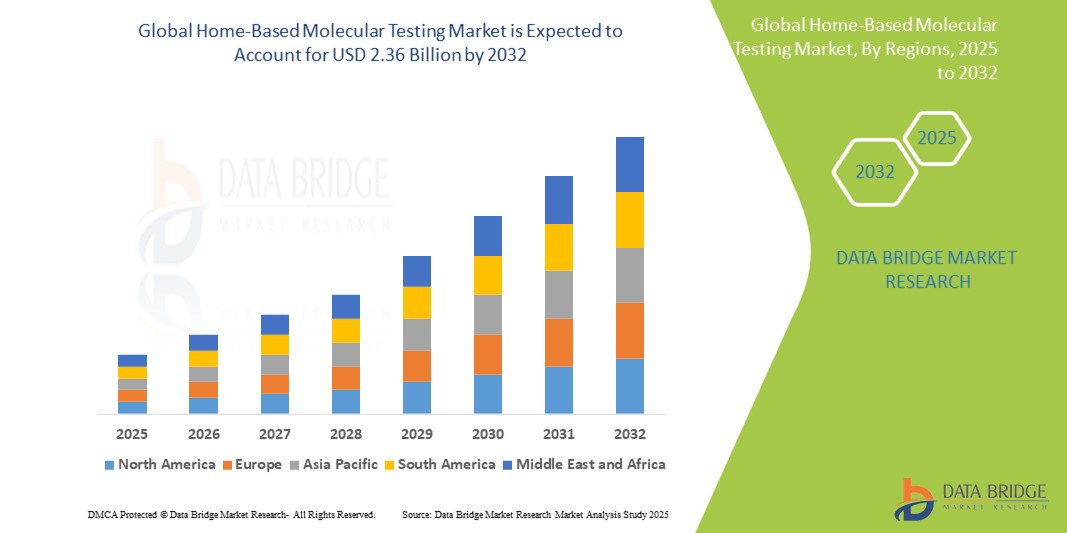
- Объем мирового рынка молекулярного тестирования в домашних условиях оценивался в 1,18 млрд долларов США в 2024 году и, как ожидается , достигнет 2,36 млрд долларов США к 2032 году при среднегодовом темпе роста 9,10% в прогнозируемый период.
- Рост рынка во многом обусловлен растущей распространенностью хронических заболеваний, инфекционных заболеваний и растущей осведомленностью потребителей о персонализированной медицине. Это растущее осознание своего здоровья и потребность в проактивном управлении здоровьем обуславливают спрос на удобные и доступные диагностические инструменты, тем самым стимулируя расширение рынка
- Кроме того, достижения в области технологий молекулярной биологии и разработка удобных для пользователя наборов для тестирования повышают точность диагностики, скорость и комфорт для пациента. Эти инновации, в сочетании с растущим принятием услуг телемедицины, ускоряют внедрение решений для молекулярного тестирования на дому, внося значительный вклад в рост мирового рынка
Анализ рынка молекулярного тестирования на дому
- Рост рынка молекулярного тестирования на дому во многом обусловлен растущей распространенностью инфекционных заболеваний, хронических состояний, требующих регулярного мониторинга (таких как диабет и сердечно-сосудистые заболевания), а также растущим предпочтением потребителей удобным, частным и доступным диагностическим решениям. Этот сдвиг в сторону ориентированного на пациента здравоохранения и проактивного управления здоровьем является основным фактором
- Кроме того, значительные достижения в технологиях молекулярной диагностики, включая ПЦР и секвенирование нового поколения (NGS), наряду с разработкой удобных для пользователя наборов для самостоятельного сбора образцов и цифровых медицинских платформ, повышают надежность и простоту домашнего тестирования. Эти инновации ускоряют внедрение решений для молекулярного тестирования на дому, внося значительный вклад в расширение рынка
- North America dominates the home-based molecular testing market with a substantial revenue share, estimated at around 39.2% in 2024. This is driven by advanced healthcare infrastructure, high awareness and adoption rates of preventative health measures, significant investments in R&D, and favorable reimbursement policies for molecular diagnostics
- Asia-Pacific is expected to be the fastest-growing region in the home-based molecular testing market during the forecast period, with a CAGR of 7.2% from 2025 to 2032. This growth is fueled by rising disposable incomes, rapid urbanization, expanding healthcare access, increasing health awareness, and growing government initiatives promoting early disease detection in populous countries such as China and India
- The kits segment dominates the home-based molecular testing market with a market share of 61.3% in 2024. This is due to their essential and recurring use in every test performed, cost-effectiveness, extensive application across infectious diseases, oncology, and genetic diagnostics, and continuous innovation in assay development ensuring consistent demand
Report Scope and Home-Based Molecular Testing Market Segmentation
|
Attributes |
Home-Based Molecular Testing Key Market Insights |
|
Segments Covered |
|
|
Countries Covered |
North America
Europe
Asia-Pacific
Middle East and Africa
South America
|
|
Key Market Players |
|
|
Market Opportunities |
|
|
Value Added Data Infosets |
In addition to the insights on market scenarios such as market value, growth rate, segmentation, geographical coverage, and major players, the market reports curated by the Data Bridge Market Research also include in-depth expert analysis, pricing analysis, brand share analysis, consumer survey, demography analysis, supply chain analysis, value chain analysis, raw material/consumables overview, vendor selection criteria, PESTLE Analysis, Porter Analysis, and regulatory framework. |
Home-Based Molecular Testing Market Trends
“The Evolving Landscape of Home-Based Molecular Testing”
- A significant and accelerating trend in the global home-based molecular testing market is the increasing consumer demand for convenient, private, and accessible health solutions, particularly for routine monitoring and early disease detection. This rising preference is fueled by the desire to avoid clinic visits, manage personal health proactively, and receive timely results, thereby integrating diagnostic capabilities directly into daily life
- For instance, the development of user-friendly sample collection methods (such as saliva and nasal swabs) and rapid analytical technologies is seamlessly integrating into self-testing paradigms, offering more precise and effective diagnostic solutions. These advanced assays, such as PCR-based tests for infectious diseases or genetic predisposition screenings, are reshaping the market by empowering individuals to take a more active role in their health management
- Growing awareness among patients and healthcare professionals regarding the benefits of early diagnosis and personalized health insights is enabling broader adoption and driving demand for advanced home-based molecular testing. This increased understanding facilitates more intelligent health pathways, leading to better patient outcomes and empowering individuals with actionable health data. Furthermore, the expansion of clinical validations for home-use diagnostics is creating new opportunities for industry players to bring more effective and reliable options to market
- The increasing geriatric population is a key demographic factor amplifying market demand, as older adults often prefer the convenience and reduced mobility burden of home-based molecular testing for managing chronic conditions and monitoring health. This demographic shift necessitates the development of accessible and easy-to-use testing suitable for an aging patient base
- The seamless integration of new molecular diagnostic innovations with telehealth platforms and digital health ecosystems facilitates a more centralized and comprehensive approach to patient care. Through a multidisciplinary approach, healthcare providers can interpret results remotely, offer personalized advice, and manage follow-up, creating a unified and effective diagnostic and management experience
Home-Based Molecular Testing Market Dynamics
Driver
“Growing Demand for Personalized Health and Accessible Diagnostics”
- The increasing demand for proactive health management and personalized medicine among individuals worldwide, coupled with the accelerating advancements in molecular diagnostic technologies, is a significant driver for the heightened demand for home-based molecular testing solutions. Consumers are increasingly seeking convenient and private ways to understand their health status from home
- For instance, the development of rapid, accurate, and user-friendly molecular assays for infectious diseases (such as respiratory viruses) and genetic screenings has highlighted advancements in understanding individual health profiles. Such advancements in home-based molecular testing development by diagnostic companies are expected to drive the home-based molecular testing industry growth in the forecast period
- As patients become more aware of the benefits of early disease detection and personalized insights into their predispositions, home-based molecular testing options offer advanced features such as highly sensitive pathogen detection, genetic risk assessment, and long-term health monitoring, providing a compelling upgrade over traditional, often inconvenient, lab-based diagnostics
- Furthermore, the growing adoption of telehealth services and the desire for improved patient empowerment are making novel home-based molecular testing classes an integral component of comprehensive health management regimens, offering seamless integration with existing digital health platforms and remote care models
- The convenience of self-collection, quick turnaround times for results, and the ability to manage health through more effective, personalized health interventions are key factors propelling the adoption of home-based molecular testing solutions in home care settings. The trend towards consumer-centric healthcare and the increasing availability of affordable, user-friendly home-based molecular testing options further contribute to market growth
Restraint/Challenge
“Concerns Regarding Regulatory Clarity, Data Privacy, and Test Accuracy”
- Concerns surrounding the evolving regulatory landscape and the need for standardized oversight of home-based molecular testing systems, particularly for direct-to-consumer offerings, pose a significant challenge to broader market penetration. As these home-based molecular testing solutions rely on complex analytical processes and often provide sensitive health information, regulatory inconsistencies raise anxieties among potential consumers about the reliability and validity of their results
- For instance, reports regarding the varying accuracy claims of some at-home tests and the lack of stringent validation protocols have made some healthcare providers and payers hesitant to adopt widespread use of these advanced home-based molecular testing solutions, especially without clear clinical utility or follow-up pathways
- Addressing these concerns through robust regulatory frameworks, transparent data privacy policies, and the development of clear guidelines for test validation is crucial for building consumer trust and broader market acceptance. Companies in the home-based molecular testing space emphasize their commitment to data security and clinical validation in their marketing to reassure potential buyers. In addition, the relatively limited awareness of how to interpret complex molecular test results and the need for professional genetic counseling can be a barrier to informed patient action
- While prices for some home-based molecular testing categories are gradually decreasing, the perceived complexity or the need for professional interpretation can still hinder widespread adoption, especially for those who do not see an immediate need for the advanced insights offered
Home-Based Molecular Testing Market Scope
The home-based molecular testing market is segmented into test types, product, sample type, technology and distribution channel.
• By Test Types
On the basis of test types, the home-based molecular testing market is segmented into infectious diseases, oncology testing, genetic testing, chronic disease management, reproductive health, wellness & lifestyle, and others. The infectious diseases segment captured the largest market revenue share of 36.4% in 2024, driven by increasing demand for rapid at-home diagnostics for conditions such as COVID-19, influenza, and respiratory syncytial virus (RSV). The growing emphasis on preventing disease spread and minimizing healthcare system burdens has bolstered usage of these kits.
The genetic testing segment is projected to witness the fastest CAGR of 18.6% from 2025 to 2032, fueled by heightened consumer interest in ancestry, hereditary risk assessment, and personalized medicine. Rising awareness, cost reductions, and integration with digital health platforms are also boosting demand for genetic self-testing.
• By Product
On the basis of product, the home-based molecular testing market is categorized into kits, reagents & consumables, instruments/devices, and software & services. Kits held the largest market share of 61.3% in 2024, as they form the core component of home-based molecular diagnostics, offering convenience, ease of use, and quick results. The proliferation of multiplexed testing kits for multiple conditions further strengthens this segment.
The software & services segment is expected to register the fastest CAGR of 19.2% from 2025 to 2032, driven by the growing integration of AI-powered analytics, mobile apps, cloud-based result tracking, and telemedicine platforms that enhance the utility and user experience of home testing.
• By Sample Type
On the basis of sample type, the home-based molecular testing market is segmented into saliva, blood, urine, nasal swabs, and others. Saliva-based testing led with the highest revenue share of 33.7% in 2024, due to its non-invasive nature, ease of self-collection, and growing use in genetic, infectious, and lifestyle-related tests.
The blood-based sample segment is forecasted to grow at the fastest CAGR of 16.4% from 2025 to 2032, as technological advancements now enable accurate finger-prick blood tests for chronic disease monitoring, hormone analysis, and metabolic assessments.
• By Technology
On the basis of technology, the home-based molecular testing market is segmented into PCR-based methods, next-generation sequencing (NGS), isothermal nucleic acid amplification technology (INAAT), microarrays, CRISPR-based technologies, and others. PCR-based methods dominated the market with a revenue share of 39.5% in 2024, due to their high sensitivity, specificity, and established role in detecting viral and bacterial infections at home.
The CRISPR-based technologies segment is expected to expand at the fastest CAGR of 20.3% from 2025 to 2032, owing to their emerging role in precise, low-cost molecular diagnostics and expanding applicability across various test types, especially for infectious and genetic diseases.
• By Distribution Channel
On the basis of distribution channel, the home-based molecular testing market is segmented into online pharmacies/e-commerce platforms, retail pharmacies, hospital pharmacies, direct-to-consumer (DTC) sales, and others. Online pharmacies/e-commerce platforms accounted for the largest market share of 38.2% in 2024, supported by the growing trend of digital health, contactless delivery, and access to a wide range of self-testing kits from home.
The direct-to-consumer (DTC) sales channel is projected to grow at the fastest CAGR of 17.5% from 2025 to 2032, driven by consumer demand for privacy, convenience, and empowerment in managing personal health outside traditional healthcare settings.
Home-Based Molecular Testing Market Regional Analysis
- North America dominates the home-based molecular testing market with a substantial revenue share, estimated at 39.2% of the global molecular diagnostics market in 2024. This leadership is primarily driven by its technologically advanced healthcare infrastructure, high consumer awareness regarding personalized medicine and preventive health, and substantial healthcare expenditures supporting innovative diagnostic solutions.
- Consumers and healthcare providers in the region highly value access to cutting-edge diagnostic technologies and patient-centric healthcare services. This includes a strong inclination towards at-home testing solutions that offer convenience and privacy for managing various health conditions, from infectious diseases to genetic screening.
- This widespread adoption is further supported by high disposable incomes, increasing demand for early disease detection, and the strong presence of key market players actively developing and launching innovative home-based molecular testing products. Robust regulatory frameworks and significant investments in research and development also contribute to the region's leading position, establishing North America as a favored hub for both diagnostic innovation and widespread consumer uptake of home-based molecular testing solutions.
U.S. Home-Based Molecular Testing Market Insight
The U.S. home-based molecular testing market captured the largest revenue share of 39.4% in 2024 within North America. This dominance is primarily fueled by a technologically advanced healthcare infrastructure, high consumer adoption of self-care and preventive health solutions, and significant investments in research and development within the region. Consumers and healthcare providers in the U.S. highly value access to advanced diagnostic capabilities, particularly for infectious disease surveillance, genetic screening, and chronic disease monitoring. The well-established reimbursement landscape and a strong presence of key market players actively developing and launching innovative home-based molecular testing solutions further propel the industry. Moreover, increasing awareness campaigns and patient empowerment initiatives are significantly contributing to the market's expansion.
Europe Home-Based Molecular Testing Market Insight
The Europe home-based molecular testing market is projected to expand at a substantial CAGR throughout the forecast period. This growth is primarily driven by the increasing prevalence of various infectious and chronic diseases, coupled with an aging population that increasingly seeks convenient healthcare solutions. The rising focus on patient quality of life and improved diagnostic capabilities, particularly for point-of-care and at-home applications, are fostering the adoption of advanced home-based molecular testing. European healthcare systems are also emphasizing decentralized testing to reduce hospital burden, leading to greater acceptance of innovative home-based molecular testing solutions. The region is experiencing significant growth across various diagnostic areas, with new molecular diagnostic assays being integrated into standard healthcare protocols.
U.K. Home-Based Molecular Testing Market Insight
The U.K. home-based molecular testing market is anticipated to grow at a noteworthy CAGR during the forecast period. This growth is driven by the increasing demand for rapid diagnostics, a strong emphasis on improved patient outcomes within the National Health Service (NHS), and the rising prevalence of chronic conditions requiring continuous monitoring. In addition, growing awareness of the benefits of early and convenient diagnosis is encouraging both patients and healthcare providers to explore advanced home-based molecular testing options. The U.K.'s robust diagnostic research landscape, alongside its accessible healthcare infrastructure that supports decentralized testing, is expected to continue to stimulate home-based molecular testing market growth.
Germany Home-Based Molecular Testing Market Insight
The Germany home-based molecular testing market is expected to expand at a considerable CAGR during the forecast period. This is fueled by increasing awareness of complex health conditions and the demand for effective, well-tolerated diagnostic solutions that offer convenience. Germany’s well-developed healthcare system, combined with its emphasis on innovation and high-quality patient care, promotes the adoption of advanced home-based molecular testing therapies, particularly in specialist clinics and homecare settings. The integration of novel molecular diagnostic platforms, including PCR-based and next-generation sequencing technologies, is becoming increasingly prevalent, with a strong preference for secure, patient-focused solutions aligning with local consumer expectations.
Asia-Pacific Home-Based Molecular Testing Market Insight
Рынок домашнего молекулярного тестирования в Азиатско-Тихоокеанском регионе, как ожидается, будет расти с самым быстрым среднегодовым темпом роста в 7,2% в период с 2025 по 2032 год. Этот быстрый рост обусловлен ростом распространенности заболеваний (инфекционных заболеваний, хронических состояний), ростом располагаемых доходов и улучшением доступа к здравоохранению в таких странах, как Китай, Япония и Индия. Растущее понимание в регионе профилактического здравоохранения и ранней диагностики, поддерживаемое правительственными инициативами по содействию общественному здравоохранению, стимулирует принятие решений для домашнего молекулярного тестирования. Кроме того, по мере расширения возможностей диагностического производства в Азиатско-Тихоокеанском регионе, доступность и доступность вариантов домашнего молекулярного тестирования охватывают более широкую потребительскую базу.
Обзор рынка домашнего молекулярного тестирования в Японии
Японский рынок молекулярного тестирования на дому набирает обороты из-за стареющего населения страны, высоких расходов на здравоохранение и высокого спроса на передовые медицинские решения, которые облегчают уход на дому. Японский рынок уделяет большое внимание решению хронических состояний и мониторингу инфекционных заболеваний, а принятие молекулярного тестирования на дому обусловлено растущей частотой этих проблем со здоровьем. Интеграция новых технологий молекулярной диагностики, таких как передовые методы ПЦР и секвенирования, стимулирует рост. Более того, активная научно-исследовательская деятельность Японии, вероятно, подстегнет спрос на более эффективные и специализированные решения для диагностического доступа как в клиническом, так и в домашнем секторе ухода.
Обзор рынка молекулярного тестирования на дому в Китае
На китайский рынок молекулярного тестирования на дому пришлось значительная доля выручки рынка в Азиатско-Тихоокеанском регионе в 2024 году, составив 8,9% мирового рынка молекулярной диагностики. Это объясняется расширением среднего класса страны, быстрой урбанизацией и растущим бременем инфекционных заболеваний и хронических состояний. Китай является крупным рынком для диагностических продуктов, и молекулярное тестирование на дому становится все более популярным в удовлетворении распространенных потребностей мониторинга здоровья. Стремление к улучшению доступа к здравоохранению и наличие передовых вариантов молекулярного тестирования на дому, наряду с сильными отечественными производителями и растущим биофармацевтическим сектором, являются ключевыми факторами, продвигающими рынок в Китае.
Доля рынка молекулярного тестирования на дому
Индустрия молекулярного тестирования в домашних условиях представлена в основном хорошо зарекомендовавшими себя компаниями, среди которых:
- Эбботт (США)
- F. Hoffmann-La Roche Ltd. (Швейцария)
- Thermo Fisher Scientific Inc. (США)
- QIAGEN (Нидерланды)
- БИОМЕРЬЕ (Франция)
- Корпорация Danaher (США)
- БД (США)
- Siemens Healthineers AG (Германия)
- Hologic, Inc. (США)
- Illumina, Inc. (США)
- Корпорация QuidelOrtho (США)
- Bio-Rad Laboratories, Inc. (США)
- DiaSorin SpA (Италия)
- Myriad Genetics, Inc. (США)
- Корпорация точных наук (США)
- Molbio Diagnostics Limited (Индия)
- Mylab Discovery Solutions Pvt. Ltd. (Индия)
- Labcorp (США)
Последние разработки на мировом рынке домашнего молекулярного тестирования
- В мае 2024 года Sherlock Biosciences начала клинические испытания безрецептурного быстрого молекулярного теста, предназначенного для выявления инфекций, передающихся половым путем (ИППП), таких как хламидиоз и гонорея. Этот инновационный тест на основе CRISPR нацелен на получение результатов в течение 30 минут, что повышает доступность и конфиденциальность для пользователей. Компания планирует запустить тест к середине 2025 года, что станет значительным шагом вперед в диагностике ИППП в домашних условиях.
- В 2024 году Управление передовых биомедицинских исследований и разработок (BARDA) объединилось с Sherlock Biosciences для разработки молекулярного теста для домашнего использования, способного обнаруживать и дифференцировать вирусы SARS-CoV-2, гриппа A и гриппа B. Используя технологию изотермической амплификации, этот тест представляет собой шаг вперед в мультиплексной домашней диагностике респираторных заболеваний.
- В 2024 году Управление по контролю за продуктами и лекарствами США (FDA) выдало разрешение на экстренное использование (EUA) для некоторых молекулярных тестов ОТ-ПЦР, разработанных лабораториями для обнаружения SARS-CoV-2. Эти тесты предназначены для использования в рамках программы серийного тестирования, что повышает доступность молекулярной диагностики на дому во время пандемии COVID-19.
SKU-
Получите онлайн-доступ к отчету на первой в мире облачной платформе рыночной аналитики

- Интерактивная панель анализа данных
- Панель анализа компании для возможностей с высоким потенциалом роста
- Доступ аналитика-исследователя для настройки и запросов
- Анализ конкурентов с помощью интерактивной панели
- Последние новости, обновления и анализ тенденций
- Используйте возможности сравнительного анализа для комплексного отслеживания конкурентов
Методология исследования
Сбор данных и анализ базового года выполняются с использованием модулей сбора данных с большими размерами выборки. Этап включает получение рыночной информации или связанных данных из различных источников и стратегий. Он включает изучение и планирование всех данных, полученных из прошлого заранее. Он также охватывает изучение несоответствий информации, наблюдаемых в различных источниках информации. Рыночные данные анализируются и оцениваются с использованием статистических и последовательных моделей рынка. Кроме того, анализ доли рынка и анализ ключевых тенденций являются основными факторами успеха в отчете о рынке. Чтобы узнать больше, пожалуйста, запросите звонок аналитика или оставьте свой запрос.
Ключевой методологией исследования, используемой исследовательской группой DBMR, является триангуляция данных, которая включает в себя интеллектуальный анализ данных, анализ влияния переменных данных на рынок и первичную (отраслевую экспертную) проверку. Модели данных включают сетку позиционирования поставщиков, анализ временной линии рынка, обзор рынка и руководство, сетку позиционирования компании, патентный анализ, анализ цен, анализ доли рынка компании, стандарты измерения, глобальный и региональный анализ и анализ доли поставщика. Чтобы узнать больше о методологии исследования, отправьте запрос, чтобы поговорить с нашими отраслевыми экспертами.
Доступна настройка
Data Bridge Market Research является лидером в области передовых формативных исследований. Мы гордимся тем, что предоставляем нашим существующим и новым клиентам данные и анализ, которые соответствуют и подходят их целям. Отчет можно настроить, включив в него анализ ценовых тенденций целевых брендов, понимание рынка для дополнительных стран (запросите список стран), данные о результатах клинических испытаний, обзор литературы, обновленный анализ рынка и продуктовой базы. Анализ рынка целевых конкурентов можно проанализировать от анализа на основе технологий до стратегий портфеля рынка. Мы можем добавить столько конкурентов, о которых вам нужны данные в нужном вам формате и стиле данных. Наша команда аналитиков также может предоставить вам данные в сырых файлах Excel, сводных таблицах (книга фактов) или помочь вам в создании презентаций из наборов данных, доступных в отчете.











