Global Hormonal Infertility Market Segmentation, By Gland (Hypothalamus, Ovaries, Pituitary Gland, and Others), Hormones (Luteinizing Hormone, Kisspeptin, and Others), Diseases (Polycystic Ovary Syndrome, Pituitary Tumors, Diabetes, Menopause, Cushing’s Syndrome, STDs, Polyps & Fibroids, and Others), Diagnosis (Ultrasound, Blood & Urine Tests, Hysterosalpingography, Ovarian Reserve Testing, and Others), Treatment (Medication, Surgery, Assisted Reproductive Technology, and Others), Route of Administration (Oral, Parenteral, Implants, and Others), End-Users (Hospitals, Homecare, Specialty Clinics, and Others), Distribution Channel (Hospital Pharmacy, Online Pharmacy, and Retail Pharmacy) - Industry Trends and Forecast to 2033
Каков размер рынка гормонального бесплодия и темпы роста
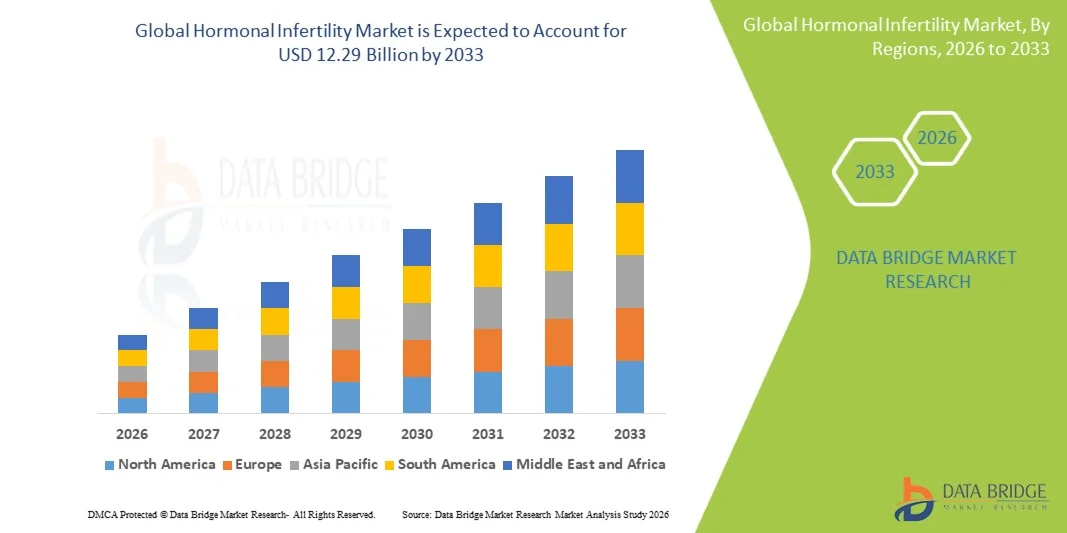
- Согласно анализу Data Bridge Market Research, глобальный размер рынка гормонального бесплодия был оценен как8,32 млрд долларов в 2025 годуОжидается, что он достигнет12,29 млрд долларов к 2033 году, вCAGR 5.00%в течение прогнозируемого периода
- Рост рынка в значительной степени подпитывается растущей распространенностью гормональных расстройств, влияющих на фертильность, таких как синдром поликистозных яичников (СПКЯ), дисфункция щитовидной железы и гиперпролактинемия, наряду с ростом показателей бесплодия во всем мире, что приводит к увеличению спроса на диагностические и терапевтические решения в репродуктивном здравоохранении.
- Кроме того, растущая осведомленность о здоровье фертильности, достижения в гормональной терапии и растущее внедрение вспомогательных репродуктивных технологий (АРТ) устанавливают гормональное лечение бесплодия в качестве важнейшего компонента управления фертильностью. Эти сходящиеся факторы ускоряют освоение решений для гормонального бесплодия, тем самым значительно повышая рост отрасли.
Размер рынка и прогноз
- Глобальная рыночная стоимость (2025):$8,32 млрд.
- Ожидаемая рыночная стоимость (2033):12,29 млрд долларов
- Прогноз CAGR (2026–2033):5.00%
Каковы основные выводы рынка гормонального бесплодия
- Решения для лечения гормонального бесплодия, включая гормональную терапию, индукцию овуляции ивспомогательный репродуктивныйподдержка становится все более жизненно важными компонентами современных систем репродуктивного здравоохранения из-за их эффективности в регулировании гормональных дисбалансов и улучшении результатов зачатия как в клинических, так и в условиях лечения бесплодия.
- Растущий спрос на решения для гормонального бесплодия в первую очередь подпитывается ростом распространенности бесплодия, увеличением гормональных расстройств, таких как СПКЯ и дисфункция щитовидной железы, задержкой беременности, изменениями образа жизни и растущей осведомленностью о репродуктивном здоровье и лечении бесплодия.
- Северная Америка доминировала на рынке гормонального бесплодия с самой большой долей дохода в 39,0% в 2025 году, чему способствовала развитая инфраструктура лечения бесплодия, высокая осведомленность о репродуктивном здоровье, сильное присутствие клиник бесплодия и широкое внедрение вспомогательных репродуктивных технологий в США.
- Ожидается, что Азиатско-Тихоокеанский регион станет самым быстрорастущим регионом на рынке гормонального бесплодия в течение прогнозируемого периода из-за роста показателей бесплодия, увеличения расходов на здравоохранение, улучшения доступа к лечению бесплодия и растущей осведомленности о решениях в области репродуктивного здоровья.
- Сегмент лютеинизирующих гормонов занимал самую большую долю рынка в 52,1% в 2025 году, что обусловлено его критической ролью в регулировании овуляции и репродуктивного цикла. Тестирование ЛГ широко используется в диагностике бесплодия и отслеживании овуляции
Сфера охвата и сегментация рынка гормонального бесплодия
|
Атрибуты |
Гормональное бесплодие Ключевое понимание рынка |
|
Сегменты покрыты |
|
|
Страны, охваченные |
Северная Америка
Европа
Азиатско-Тихоокеанский регион
Ближний Восток и Африка
Южная Америка
|
|
Ключевые игроки рынка |
|
|
Рыночные возможности |
|
|
Информационные наборы данных с добавленной стоимостью |
В дополнение к информации о рыночных сценариях, таких как рыночная стоимость, темпы роста, сегментация, географическое покрытие и основные игроки, рыночные отчеты, курируемые Data Bridge Market Research, также включают углубленный экспертный анализ, эпидемиологию пациентов, анализ трубопроводов, анализ цен и нормативную базу. |
Каковы основные тенденции на рынке гормонального бесплодия
"Достижения в персонализированном гормональном и фертильном лечении"
- Значительной и ускоряющейся тенденцией на мировом рынке гормонального бесплодия является быстрый переход к персонализированной и точной терапии бесплодия, поддерживаемый достижениями в репродуктивной эндокринологии, гормональной диагностике и планировании лечения пациентов.
- Например, все более широкое использование комплексных панелей профилирования гормонов, таких как тестирование AMH (антимюллеровский гормон) и многогормональный скрининг фертильности у женщин, проходящих оценку бесплодия, позволяет клиницистам лучше оценивать резерв яичников и разрабатывать индивидуальные протоколы лечения.
- Интеграция передовых репродуктивных технологий и оценок фертильности, основанных на данных, повышает точность диагностики и повышает эффективность лечения в случаях гормонального бесплодия.
- Растущая осведомленность пациентов о таких состояниях, как:синдром поликистозных яичников(СПКЯ), дисбаланс щитовидной железы и расстройства лютеиновой фазы еще больше поощряют раннюю диагностику и своевременное медицинское вмешательство
- Этот продолжающийся переход к индивидуальным стратегиям лечения значительно улучшает клинические результаты и меняет современные методы лечения бесплодия.
Динамика рынка гормонального бесплодия
водитель
"Растущая распространенность гормональных расстройств и тенденции задержки родительства"
- Растущая частота гормональных расстройств, таких как СПКЯ, дисфункция щитовидной железы и повышенный уровень пролактина, является основным фактором, стимулирующим спрос на рынке гормонального бесплодия как в развитых, так и в развивающихся регионах.
- Например, растущее число женщин в городском населении диагностируется с СПКЯ в более раннем возрасте из-за улучшенных программ скрининга и рутинных гинекологических осмотров, что приводит к более широкому принятию методов лечения гормонального бесплодия, таких как терапия индукции овуляции.
- Кроме того, изменения образа жизни, включая повышенный уровень стресса, сидячее поведение, ожирение и отсроченные решения по планированию семьи, в значительной степени способствуют росту случаев бесплодия во всем мире.
- Расширение доступа к клиникам по лечению бесплодия и повышение осведомленности о репродуктивном здоровье способствуют дальнейшему внедрению ранней диагностики и лечения.
- Расширение специализированных служб репродуктивного здоровья также играет ключевую роль в стимулировании роста рынка.
Сдержанность/вызов
"Высокое бремя затрат и ограниченные показатели успеха лечения бесплодия"
- Растущая частота гормональных расстройств, таких как СПКЯ, дисфункция щитовидной железы и повышенный уровень пролактина, является основным фактором, стимулирующим спрос на рынке гормонального бесплодия как в развитых, так и в развивающихся регионах.
- Например, растущее число женщин в городском населении диагностируется с СПКЯ в более раннем возрасте из-за улучшенных программ скрининга и рутинных гинекологических осмотров, что приводит к более широкому принятию методов лечения гормонального бесплодия, таких как терапия индукции овуляции.
- Кроме того, изменения образа жизни, включая повышенный уровень стресса, сидячее поведение, ожирение и отсроченные решения по планированию семьи, в значительной степени способствуют росту случаев бесплодия во всем мире.
- Расширение доступа к клиникам по лечению бесплодия и повышение осведомленности о репродуктивном здоровье способствуют дальнейшему внедрению ранней диагностики и лечения.
- Расширение специализированных служб репродуктивного здоровья также играет ключевую роль в стимулировании роста рынка.
Как сегментируется рынок гормонального бесплодия
Рынок сегментирован на основе желез, гормонов, заболеваний, диагностики, лечения, пути введения, конечных пользователей и канала распределения.
• Гландия
На основе железы рынок гормонального бесплодия сегментирован на гипоталамус, яичники, гипофиз и другие. Сегмент яичников доминировал на крупнейшей доле рынка около 46,8% в 2025 году, что обусловлено высокой распространенностью овуляторной дисфункции и расстройств, таких как СПКЯ, влияющих на женскую фертильность. Гормональный дисбаланс, связанный с яичниками, является одной из наиболее распространенных причин бесплодия во всем мире. Повышение осведомленности о ранней диагностике дисфункции яичников поддерживает спрос. Растущее внедрение гормональных методов лечения бесплодия еще больше укрепляет рост рынка. Достижения в репродуктивной эндокринологии улучшают результаты лечения. Расширение клиник по лечению бесплодия и диагностических центров повышает доступность. Растущее внимание к репродуктивному здоровью женщин способствует доминированию на рынке. Непрерывные исследования и разработки в оценке функции яичников улучшают клиническую точность. Поддерживающие политики здравоохранения для лечения бесплодия увеличивают охват пациентов. Увеличение связанных с образом жизни гормональных расстройств еще больше ускоряет спрос. Расширение использования вспомогательных репродуктивных технологий поддерживает лечение расстройств яичников. Растущая распространенность эндокринного дисбаланса еще больше усиливает доминирование сегмента.
Ожидается, что сегмент гипоталамуса будет наблюдать самый быстрый CAGR около 8,4% с 2026 по 2033 год, что обусловлено ростом случаев функциональной гипоталамической аменореи, связанной со стрессом и изменениями образа жизни. Улучшенные диагностические возможности при центральных гормональных нарушениях поддерживают раннее выявление. Расширение исследований в области нейроэндокринной регуляции способствует развитию лечения. Повышение осведомленности о репродуктивном взаимодействии мозг-гормон поддерживает клиническое принятие. Растущее внимание к бесплодию, вызванному стрессом, еще больше стимулирует рост сегмента. Расширение финансирования эндокринологических исследований укрепляет инновационный конвейер. Растущее внедрение персонализированной гормональной терапии улучшает точность лечения. Повышение осведомленности о связи психического здоровья и бесплодия повышает показатели диагностики. Растущая доступность передовых гормональных анализов поддерживает расширение рынка. Растущие расстройства образа жизни среди молодого населения еще больше ускоряют спрос. Повышение осведомленности врача о гипоталамической дисфункции улучшает пути лечения.
• По гормонам
На основе гормонов рынок гормонального бесплодия сегментирован на лютеинизирующий гормон, поцелуйпептин и другие. Сегмент лютеинизирующих гормонов занимал самую большую долю рынка в 52,1% в 2025 году, что обусловлено его критической ролью в регулировании овуляции и репродуктивного цикла. Тестирование ЛГ широко используется в диагностике бесплодия и отслеживании овуляции. Увеличение использования гормональных анализов в оценке фертильности поддерживает спрос. Растущая распространенность овуляторных расстройств еще больше стимулирует усыновление. Растущее использование вспомогательных репродуктивных технологий увеличивает зависимость от мониторинга ЛГ. Расширение клинической осведомленности об эндокринном дисбалансе способствует росту рынка. Улучшенные диагностические наборы повышают точность и доступность. Растущая интеграция гормональных панелей в клиниках фертильности еще больше повышает спрос. Увеличение профилактического скрининга рождаемости поддерживает раннюю диагностику. Расширение информационно-просветительских кампаний по вопросам репродуктивного здоровья способствует повышению показателей тестирования. Растущий спрос на комплекты для мониторинга рождаемости поддерживает внедрение. Увеличение расходов на охрану репродуктивного здоровья способствует расширению рынка.
Ожидается, что сегмент цесипептина будет наблюдать самый быстрый CAGR около 9,3% с 2026 по 2033 год, что обусловлено новыми исследованиями его роли в инициировании высвобождения репродуктивных гормонов. Растущие клинические испытания, направленные на терапию на основе поцелуев, поддерживают инновации. Увеличение внимания к новым биомаркерам бесплодия ускоряет принятие. Расширение исследований репродуктивной эндокринологии улучшает терапевтический потенциал. Рост инвестиций в гормональную терапию следующего поколения еще больше усиливает рост. Расширение сотрудничества между биотехнологическими фирмами и научно-исследовательскими институтами стимулирует развитие. Растущее внимание к нейроэндокринным сигнальным путям усиливает клинический интерес. Растущий спрос на передовые решения для фертильности поддерживает инновации. Расширение производства экспериментальных препаратов для лечения бесплодия укрепляет перспективы на будущее. Увеличение финансирования научных исследований способствует открытию.
• По болезням
На основе заболеваний рынок гормонального бесплодия сегментирован на синдром поликистозных яичников, опухоли гипофиза, диабет, менопаузу, синдром Кушинга, ЗППП, полипы и фибромы и другие. Сегмент синдрома поликистозных яичников доминировал на крупнейшей доле рынка около 38,6% в 2025 году, что обусловлено его высокой глобальной распространенностью и сильной ассоциацией с гормональным дисбалансом и бесплодием. СПКЯ является одной из ведущих причин ановуляции у женщин репродуктивного возраста. Увеличение сидячего образа жизни и уровня ожирения способствуют росту случаев. Растущая осведомленность и ранние программы скрининга улучшают показатели диагностики. Расширение доступности гормональной терапии поддерживает принятие лечения. Рост посещений клиник по лечению бесплодия усиливает спрос на рынке. Постоянные достижения в управлении эндокринными расстройствами улучшают результаты. Повышение внимания общественного здравоохранения к проблемам фертильности женщин способствует скринингу. Расширение использования ультразвука и гормонального тестирования поддерживает раннее выявление. Рост метаболических нарушений еще больше подпитывает распространенность. Улучшенные клинические рекомендации по управлению СПКЯ усиливают принятие лечения. Расширение кампаний по повышению осведомленности о репродуктивном здоровье способствует повышению показателей диагностики.
Ожидается, что сегмент синдрома Кушинга будет наблюдать самый быстрый CAGR около 8,9% с 2026 по 2033 год, что обусловлено улучшением диагностической визуализации и возможностей гормонального тестирования. Растущее признание факторов бесплодия, связанных с надпочечниками, поддерживает рост. Расширение клинических исследований репродуктивной дисфункции, связанной с кортизолом, улучшает варианты лечения. Повышение осведомленности среди врачей о эндокринных связях бесплодия улучшает показатели диагностики. Растущая доступность целевых методов лечения поддерживает управление. Увеличение скрининга на эндокринное расстройство в больницах еще больше ускоряет рост. Достижения в эндокринной диагностике улучшают раннее выявление. Растущее применение специализированных гормональных тестов повышает точность. Расширение осведомленности о редких причинах бесплодия способствует идентификации. Увеличение финансирования исследований нарушений надпочечников стимулирует инновации.
• Диагностика
На основе диагностики рынок гормонального бесплодия сегментируется на ультразвук, анализы крови и мочи, гистеросалпингографию, тестирование резерва яичников и другие. Сегмент анализов крови и мочи занимал самую большую долю рынка в размере около 44,7% в 2025 году, чему способствовало их широкое использование в оценке гормонального уровня и скрининге фертильности. Эти тесты являются экономически эффективными и очень доступными в медицинских учреждениях. Увеличение рутинных оценок рождаемости повышает спрос. Растущее внедрение гормональных панелей в диагностических лабораториях способствует росту рынка. Повышение осведомленности о раннем выявлении бесплодия еще больше усиливает использование. Расширение клинической инфраструктуры улучшает доступность тестов. Расширение использования профилактических обследований репродуктивного здоровья способствует усыновлению. Растущий спрос на быстрые методы диагностики стимулирует их использование. Расширение лабораторных сетей в странах с развивающейся экономикой расширяет доступ. Растущее предпочтение врачей неинвазивному тестированию усиливает принятие. Увеличение страхового покрытия для диагностических тестов поддерживает поглощение. Растущие кампании по повышению осведомленности о здоровье фертильности улучшают показатели скрининга.
Ожидается, что в сегменте тестирования резерва яичников самый быстрый CAGR составит около 9,1% с 2026 по 2033 год, что обусловлено растущим спросом на передовые инструменты оценки фертильности. Растущие тенденции материнского возраста повышают потребность в прогнозировании рождаемости. Растущее использование тестирования AMH и оценки количества антральных фолликулов поддерживает принятие. Расширение процедур ЭКО еще больше стимулирует спрос. Растущее предпочтение персонализированного планирования рождаемости усиливает рост сегмента. Повышение осведомленности о репродуктивном старении поддерживает раннее тестирование. Расширение тенденций сохранения фертильности стимулирует принятие. Растущее внимание к оценке качества яйцеклеток увеличивает клиническое использование. Рост спроса со стороны центров ЭКО усиливает проникновение на рынок. Увеличение технологических достижений в диагностике фертильности повышает точность.
• Лечение
На основе лечения рынок гормонального бесплодия сегментируется на лекарства, хирургию, вспомогательные репродуктивные технологии и другие. Сегмент вспомогательных репродуктивных технологий доминировал на рынке с наибольшей долей выручки около 49,3% в 2025 году, что было обусловлено ростом показателей успеха процедур ЭКО и ИКСИ. Увеличение распространенности бесплодия повышает спрос на услуги АРТ. Растущие достижения в культуре эмбрионов и генетическом скрининге улучшают результаты. Расширение инфраструктуры клиник по лечению бесплодия способствует доступности. Рост задержки беременности увеличивает зависимость от АРТ. В некоторых регионах дальнейшее развитие получает политика возмещения расходов. Повышение осведомленности об успешности ЭКО обнадеживает пациентов. Расширение фертильного туризма повышает глобальный спрос. Растущее использование методов замораживания эмбрионов улучшает гибкость лечения. Растущие клинические инновации в репродуктивных технологиях укрепляют показатели успеха. Растущее число центров рождаемости повышает доступность. Растущее внедрение минимально инвазивных процедур поддерживает предпочтения пациентов.
Ожидается, что в сегменте лекарств будет наблюдаться самый быстрый CAGR - около 8,6% с 2026 по 2033 год, что обусловлено увеличением использования гормональной терапии и препаратов, вызывающих овуляцию. Растущее предпочтение неинвазивных методов лечения способствует росту. Расширение доступности генерических препаратов для лечения бесплодия повышает доступность. Увеличение раннего внедрения лечения бесплодия повышает спрос. Растущие показатели назначения рецептов в учреждениях первичной медико-санитарной помощи еще больше усиливают использование. Повышение осведомленности о методах гормональной регуляции поддерживает поглощение. Расширение доступа к амбулаторному лечению повышает удобство. Увеличение НИОКР в препаратах для лечения бесплодия повышает эффективность. Растущее использование комбинированной гормональной терапии повышает результаты. Растущее внимание к персонализированным лекарствам усиливает усыновление.
• По маршруту администрации
На основе пути введения рынок гормонального бесплодия сегментирован на оральный, парентеральный, имплантаты и другие. Сегмент устных маршрутов занимал самую большую долю на рынке в размере около 41,9% в 2025 году, что обусловлено удобством и высоким уровнем соблюдения требований пациентов. Оральные гормональные препараты широко назначаются для индукции овуляции и эндокринной регуляции. Увеличение амбулаторного лечения бесплодия поддерживает спрос. Расширение доступности через розничные и онлайн-аптеки улучшает доступ. Растущее предпочтение самоуправляемой терапии способствует принятию. Повышение осведомленности о доступности лекарственных средств для лечения бесплодия способствует их принятию. Повышение доступности устных рецептур усиливает использование. Расширение рецептов первичной медико-санитарной помощи увеличивает охват. Растущее предпочтение пациента безболезненному введению поддерживает рост. Растущее использование в раннем лечении бесплодия повышает спрос. Увеличение доступности дженериков улучшает доступность.
Ожидается, что в парентеральном сегменте самый быстрый CAGR составит около 7,8% с 2026 по 2033 год, что обусловлено высокой эффективностью инъекционной гормональной терапии в контролируемых методах лечения бесплодия. Расширение использования протоколов ЭКО способствует росту. Растущее клиническое предпочтение точной дозировки гормонов способствует усыновлению. Расширение процедур клиники фертильности усиливает спрос. Растущее использование в современных репродуктивных методах лечения еще больше ускоряет рост сегмента. Расширение администрации больниц поддерживает использование. Растущий спрос на гормональную терапию с контролируемым высвобождением повышает эффективность. Расширение использования в циклах вспомогательного размножения улучшает результаты. Растущее предпочтение врача инъекционным гормонам усиливает усыновление. Увеличение показателей успеха в циклах ЭКО поддерживает спрос.
• Конечными пользователями
На базе конечных пользователей рынок гормонального бесплодия сегментирован на больницы, домашнюю помощь, специализированные клиники и другие. Сегмент больниц доминировал на крупнейшей рыночной доле доходов около 51,6% в 2025 году, что обусловлено высоким притоком пациентов для диагностики, хирургического лечения и лечения бесплодия. Больницы предлагают передовые диагностические средства визуализации и репродуктивную эндокринологию. Растущие случаи гормональных нарушений, влияющих на фертильность, увеличивают прием. Наличие квалифицированных специалистов в области репродуктивной медицины улучшает результаты лечения. Увеличение инвестиций в инфраструктуру здравоохранения способствует доминированию на рынке. Расширение государственных инициатив в области здравоохранения улучшает доступ. Растущие случаи направления из первичной медико-санитарной помощи способствуют посещению больниц. Повышение осведомленности о лечении бесплодия увеличивает зависимость от больницы. Продвинутая лабораторная интеграция повышает эффективность диагностики. Расширение инфраструктуры лечения бесплодия повышает потенциал обслуживания. Увеличение страхового покрытия для лечения бесплодия поддерживает использование больниц.
Ожидается, что в сегменте специализированных клиник самый быстрый CAGR составит около 8,1% с 2026 по 2033 год, что обусловлено растущим предпочтением целенаправленного ухода за рождаемостью и амбулаторных процедур. Расширение центров ЭКО и бесплодия поддерживает рост. Растущий спрос на персонализированное репродуктивное лечение способствует усыновлению. Растущая осведомленность о минимально инвазивных процедурах поддерживает амбулаторную помощь. Растущее удобство специализированных клиник улучшает предпочтения пациентов. Расширение городской инфраструктуры рождаемости способствует расширению доступа. Увеличение показателей успеха в специализированных клиниках повышает доверие. Растущий медицинский туризм для лечения бесплодия поддерживает расширение. Рост доступности по сравнению с больницами стимулирует спрос. Расширение доступности передовых репродуктивных технологий повышает результативность.
• Распределительный канал
На основе канала распространения рынок гормонального бесплодия сегментирован в больничную аптеку, онлайн-аптеку и розничную аптеку. В сегменте розничных аптек в 2025 году доля выручки на рынке составила около 46,2%, что обусловлено легким доступом к рецептурной фертильности и гормональным препаратам. Сильные аптечные сети обеспечивают широкую доступность. Растущий спрос на добавки для фертильности и гормональные регуляторы поддерживает продажи. Растущая доступность дженериков повышает доступность. Растущие амбулаторные рецепты увеличивают розничную дистрибуцию. Расширение розничных сетей здравоохранения способствует повышению доступности. Повышение осведомленности о гормональном лечении улучшает потребление наркотиков. Растущие модели назначения врачей поддерживают продажи аптек. Расширение проникновения сельской аптеки улучшает доступ. Растущий спрос на внебиржевые продукты поддержки рождаемости стимулирует рост. Увеличение хронического управления бесплодием усиливает спрос.
Ожидается, что сегмент онлайн-аптек будет наблюдать самый быстрый CAGR около 9,0% с 2026 по 2033 год, что обусловлено внедрением цифрового здравоохранения и ростом проникновения электронной коммерции. Пациенты предпочитают онлайн-платформы для удобства и сдержанных покупок. Растущая интеграция телемедицины еще больше усиливает рецепты. Расширение доступа в Интернет способствует росту цифровой аптеки. Конкурентные цены и преимущества доставки на дом привлекают потребителей. Увеличение проникновения смартфонов усиливает принятие. Растущее доверие к платформам электронной аптеки увеличивает их использование. Растущие цифровые платежные системы поддерживают транзакции. Расширение цифровизации здравоохранения улучшает доступность. Повышение осведомленности о доступности онлайн-медицины стимулирует рост.
В каком регионе находится наибольшая доля рынка гормонального бесплодия
- Северная Америка доминировала на рынке гормонального бесплодия с самой большой долей дохода в 39,0% в 2025 году, чему способствовала развитая инфраструктура лечения бесплодия, высокая осведомленность о репродуктивном здоровье, сильное присутствие клиник бесплодия и широкое внедрение вспомогательных репродуктивных технологий в США.
- Пациенты в регионе получают выгоду от ранней диагностики гормональных нарушений, легкого доступа к специализированным эндокринологам и экспертам по фертильности, а также широкого внедрения передовых вариантов лечения, таких как ЭКО и гормональная терапия.
- Это широкое внедрение также поддерживается благоприятной политикой возмещения расходов, высокими расходами на здравоохранение и высокой доступностью передовых учреждений репродуктивного здравоохранения, что делает Северную Америку ведущим регионом в принятии лечения бесплодия.
Рынок гормонального бесплодия США Insight
Рынок гормонального бесплодия в США занял самую большую долю доходов в Северной Америке в 2025 году, что обусловлено высокой распространенностью случаев бесплодия, связанных с гормональным дисбалансом, и широким доступом к передовым услугам репродуктивного здравоохранения. Пациенты все чаще выбирают вспомогательные репродуктивные технологии, такие как ЭКО, ВМС и гормональная терапия, благодаря улучшению показателей успеха и технологических достижений. Растущее присутствие специализированных клиник по лечению бесплодия наряду с повышением осведомленности о репродуктивном здоровье способствует дальнейшему росту рынка. Кроме того, постоянные инновации в методах переноса эмбрионов и методах сохранения фертильности улучшают результаты лечения.
Европейское исследование рынка гормонального бесплодия
Прогнозируется, что европейский рынок гормонального бесплодия будет расширяться при существенном CAGR в течение прогнозируемого периода, что обусловлено ростом случаев бесплодия, связанных с гормональными нарушениями и задержкой беременности. Повышение осведомленности о репродуктивном здоровье и сильные системы общественного здравоохранения поддерживают раннюю диагностику и принятие лечения. В странах региона растет спрос на лечение бесплодия, такое как ЭКО и гормональная терапия. Кроме того, поддержка государственных структур здравоохранения и улучшение доступа к клиникам по лечению бесплодия способствуют расширению рынка.
Британский рынок гормонального бесплодия Insight
Ожидается, что рынок гормонального бесплодия в Великобритании будет расти на стабильном CAGR в течение прогнозируемого периода, чему будет способствовать рост показателей бесплодия и увеличение спроса на вспомогательные репродуктивные методы лечения. Пациенты все чаще ищут раннее медицинское вмешательство при гормональных нарушениях, влияющих на результаты фертильности. Наличие хорошо зарекомендовавших себя центров фертильности и систем государственной поддержки здравоохранения повышает доступность лечения. Кроме того, растущая осведомленность о репродуктивном здоровье побуждает больше людей выбирать клиническую оценку фертильности.
Германия Рынок гормонального бесплодия Insight
Ожидается, что в течение прогнозируемого периода рынок гормонального бесплодия в Германии будет расширяться на значительном CAGR, что обусловлено передовой инфраструктурой здравоохранения и сильным акцентом на репродуктивную медицину. Повышение осведомленности о гормональных нарушениях, таких как СПКЯ и связанное с щитовидной железой бесплодие, способствует более высоким показателям диагностики. Акцент Германии на прецизионной медицине и передовых методах лечения бесплодия еще больше улучшает результаты лечения пациентов. Кроме того, наличие квалифицированных специалистов по фертильности и хорошо развитых клинических учреждений способствует росту рынка.
Азиатско-Тихоокеанский рынок гормонального бесплодия
Ожидается, что Азиатско-Тихоокеанский рынок гормонального бесплодия станет самым быстрорастущим регионом на рынке гормонального бесплодия в течение прогнозируемого периода из-за роста показателей бесплодия, увеличения расходов на здравоохранение, улучшения доступа к лечению бесплодия и растущей осведомленности о решениях в области репродуктивного здоровья. Быстрая урбанизация, изменение образа жизни и тенденции задержки беременности в таких странах, как Китай, Индия и Япония, также способствуют росту спроса на лечение бесплодия. Правительственные инициативы по улучшению материнского здоровья и расширению инфраструктуры по уходу за рождаемостью также способствуют расширению рынка в регионе.
Японский рынок гормонального бесплодия
Японский рынок гормонального бесплодия набирает обороты благодаря повышению осведомленности о репродуктивном здоровье и растущем старении населения. Растущие случаи гормонального дисбаланса, связанного с бесплодием, стимулируют спрос на передовые методы лечения бесплодия. Сильная инфраструктура здравоохранения страны и раннее внедрение вспомогательных репродуктивных технологий способствуют росту рынка. Кроме того, улучшение доступа к специализированным клиникам по лечению бесплодия улучшает результаты лечения.
Китайский рынок гормонального бесплодия
Китайский рынок гормонального бесплодия составил самую большую долю доходов в Азиатско-Тихоокеанском регионе в 2025 году, поддерживаемую большим количеством пациентов, ростом показателей бесплодия и расширением инфраструктуры здравоохранения. Повышение осведомленности о репродуктивном здоровье и растущая доступность центров лечения бесплодия способствуют более широкому внедрению гормональной терапии бесплодия. Кроме того, быстрая урбанизация, изменение образа жизни и государственная поддержка развития здравоохранения еще больше укрепляют рост рынка.
Каковы основные компании на рынке гормонального бесплодия
Индустрия гормонального бесплодия в основном возглавляется хорошо известными компаниями, в том числе:
- Merck & Co., Inc. (США)
- Ferring Pharmaceuticals (Швейцария)
- Bayer AG (Германия)
- Novartis AG (Швейцария)
- Pfizer Inc. (США)
- Санофи С.А. (Франция)
- AbbVie Inc. (США)
- Teva Pharmaceutical Industries Ltd (Израиль)
- Sun Pharmaceutical Industries Ltd. (Индия)
- Cipla Ltd. (Индия)
- Dr. Reddy's Laboratories Ltd. (Индия)
- Lupin Limited (Индия)
- Organon & Co. (США)
- Vitrolife AB (Швеция)
- CooperSurgical Inc. (США)
- Bayer Zydus Pharma (Индия)
- Endo International plc (Ирландия)
- Merck KGaA (Германия)
Каковы последние события на рынке гормонального бесплодия
- В июне 2021 года FDA США одобрило Follistim AQ Cartridge, расширило обновления показаний и продолжило использование в контролируемых протоколах стимуляции яичников, укрепив его роль в лечении бесплодия на основе гормонов для вспомогательных репродуктивных технологий. Это способствовало улучшению управления ответом яичников в циклах ЭКО.
- В августе 2022 года Organon объявила о продолжении глобального развертывания своего портфеля средств для лечения бесплодия, включая гормональные методы лечения бесплодия, такие как Пурегон (фоллитропин бета), расширение доступа к методам лечения на основе гонадотропина, используемым при ЭКО и индукции овуляции. Это расширение укрепило позиции Organon в области охраны здоровья женщин и репродуктивной эндокринологии.
- В ноябре 2022 года Ferring Pharmaceuticals представила обновленные клинические данные по Rekovelle (дельта фоллитропина) на крупных конференциях по репродуктивной медицине, продемонстрировав улучшенные индивидуальные результаты дозирования при контролируемой стимуляции яичников для пациентов с ЭКО. Это подчеркнуло достижения в точной гормональной терапии.
- В марте 2023 года Merck (MSD за пределами США и Канады) расширила доступность Gonal-f (фоллитропин альфа) в нескольких регионах, поддерживая более широкий доступ к рекомбинантному фолликулостимулирующим гормонам, используемым в протоколах лечения гормонального бесплодия. Это помогло улучшить глобальный доступ к лечению бесплодия.
- В сентябре 2024 года CooperSurgical объявила о расширении своего портфеля продуктов для репродуктивного здоровья, включая продукты поддержки гормонального бесплодия и связанные с ЭКО эндокринные решения, укрепляя свою глобальную экосистему вспомогательного воспроизводства. Это отражает растущую интеграцию гормональной терапии с передовыми репродуктивными технологиями.
SKU-
Получите онлайн-доступ к отчету на первой в мире облачной платформе рыночной аналитики
- Интерактивная панель анализа данных
- Панель анализа компании для возможностей с высоким потенциалом роста
- Доступ аналитика-исследователя для настройки и запросов
- Анализ конкурентов с помощью интерактивной панели
- Последние новости, обновления и анализ тенденций
- Используйте возможности сравнительного анализа для комплексного отслеживания конкурентов
Методология исследования
Сбор данных и анализ базового года выполняются с использованием модулей сбора данных с большими размерами выборки. Этап включает получение рыночной информации или связанных данных из различных источников и стратегий. Он включает изучение и планирование всех данных, полученных из прошлого заранее. Он также охватывает изучение несоответствий информации, наблюдаемых в различных источниках информации. Рыночные данные анализируются и оцениваются с использованием статистических и последовательных моделей рынка. Кроме того, анализ доли рынка и анализ ключевых тенденций являются основными факторами успеха в отчете о рынке. Чтобы узнать больше, пожалуйста, запросите звонок аналитика или оставьте свой запрос.
Ключевой методологией исследования, используемой исследовательской группой DBMR, является триангуляция данных, которая включает в себя интеллектуальный анализ данных, анализ влияния переменных данных на рынок и первичную (отраслевую экспертную) проверку. Модели данных включают сетку позиционирования поставщиков, анализ временной линии рынка, обзор рынка и руководство, сетку позиционирования компании, патентный анализ, анализ цен, анализ доли рынка компании, стандарты измерения, глобальный и региональный анализ и анализ доли поставщика. Чтобы узнать больше о методологии исследования, отправьте запрос, чтобы поговорить с нашими отраслевыми экспертами.
Доступна настройка
Data Bridge Market Research является лидером в области передовых формативных исследований. Мы гордимся тем, что предоставляем нашим существующим и новым клиентам данные и анализ, которые соответствуют и подходят их целям. Отчет можно настроить, включив в него анализ ценовых тенденций целевых брендов, понимание рынка для дополнительных стран (запросите список стран), данные о результатах клинических испытаний, обзор литературы, обновленный анализ рынка и продуктовой базы. Анализ рынка целевых конкурентов можно проанализировать от анализа на основе технологий до стратегий портфеля рынка. Мы можем добавить столько конкурентов, о которых вам нужны данные в нужном вам формате и стиле данных. Наша команда аналитиков также может предоставить вам данные в сырых файлах Excel, сводных таблицах (книга фактов) или помочь вам в создании презентаций из наборов данных, доступных в отчете.