


Global Idiopathic Thrombocytopenic Purpura (Immune Thrombocytopenic Purpura) Treatment Drugs Market Segmentation By Type (Acute ITP, Chronic ITP, Others), Treatment (Medication, Surgery, Others), Route of Administration (Oral, Parenteral, Others), End-Users (Hospitals, Homecare, Specialty Clinics, Others), Distribution Channel (Hospital Pharmacy, Online Pharmacy, Retail Pharmacy)- Industry Trends and Forecast to 2033
Что такое идиопатическая тромбоцитопеническая пурпура (иммунная тромбоцитопеническая пурпура) размер рынка лекарственных средств и темпы роста
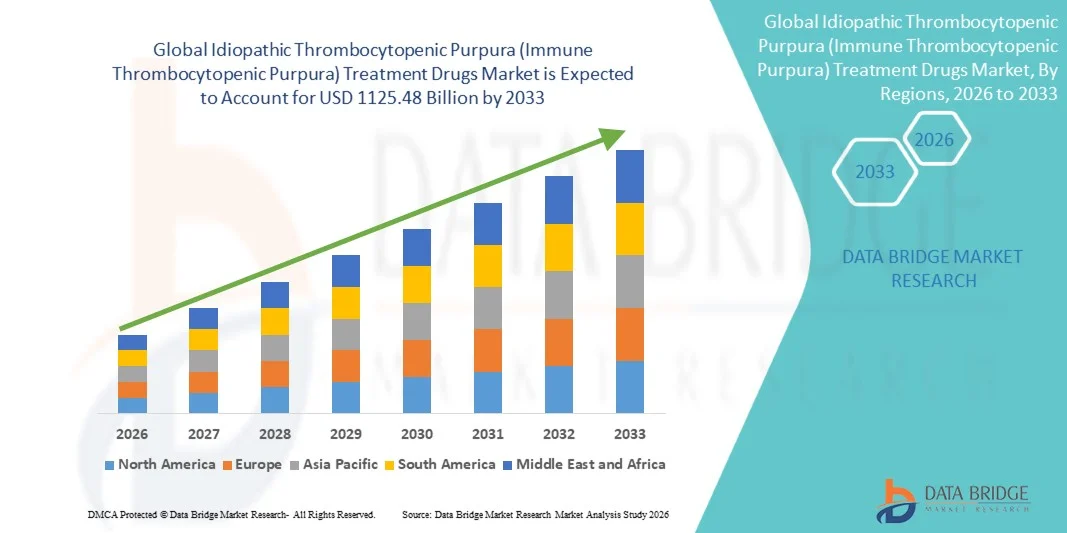
- Мировой объем рынка идиопатических тромбоцитопенических пурпур (иммунная тромбоцитопеническая пурпура) лекарственных средств был оценен в706,14 млрд долларов США в 2025 годуОжидается, что он достигнет1125,48 млрд долларов США к 2033 году, вCAGR 6.00%в течение прогнозируемого периода
- Рост рынка в значительной степени подпитывается растущей распространенностью аутоиммунных расстройств, таких как идиопатические тромбоцитопенические пурпуры, повышение осведомленности и ранняя диагностика, а также достижения в целевых методах лечения и вариантах лечения в медицинских учреждениях.
- Кроме того, растущее внедрение новых подходов к лечению, включая кортикостероиды, иммуноглобулины и агонисты рецепторов тромбопоэтина, наряду с увеличением расходов на здравоохранение, ускоряет поглощение идиопатической тромбоцитопенической пурпуры. Решения для лекарственных препаратов, тем самым значительно повышая рост отрасли
Размер рынка и прогноз
- Глобальная рыночная стоимость (2025):706,14 млрд. долларов США
- Ожидаемая рыночная стоимость (2033):$1125,48 млрд.
- Прогноз CAGR (2026-2033):6.00%
Каковы основные выводы рынка лекарственных средств для лечения идиопатической тромбоцитопенической пурпуры (иммунная тромбоцитопеническая пурпура)
- Идиопатические препараты для лечения тромбоцитопенической пурпуры (иммунная тромбоцитопеническая пурпура), используемые для управления низким количеством тромбоцитов и предотвращения осложнений кровотечения, становятся все более важными в современном здравоохранении из-за их эффективности в улучшении результатов лечения пациентов и управлении хроническими аутоиммунными состояниями.
- Растущий спрос на препараты для лечения идиопатической тромбоцитопенной пурпуры (иммунная тромбоцитопеническая пурпура) в первую очередь подпитывается растущей распространенностью аутоиммунных расстройств, повышением уровня осведомленности и диагностики и растущим принятием передовых терапевтических вариантов, таких как агонисты рецепторов тромбопоэтина и иммунотерапия.
- Северная Америка доминировала на рынке идиопатических тромбоцитопенных пурпур (иммунная тромбоцитопенная пурпура) с самой большой долей дохода в 42,7% в 2025 году, что обусловлено сильной инфраструктурой здравоохранения, высоким внедрением передовых методов лечения и присутствием ключевых фармацевтических игроков, причем США вносят значительный вклад в рост рынка.
- Ожидается, что Азиатско-Тихоокеанский регион станет самым быстрорастущим регионом на рынке лекарственных средств для лечения идиопатической тромбоцитопенной пурпуры (иммунная тромбоцитопенная пурпура) в течение прогнозируемого периода, зарегистрировав CAGR, поддерживаемый увеличением расходов на здравоохранение, улучшением доступа к лечению и повышением осведомленности в развивающихся странах.
- Сегмент медикаментов доминировал на крупнейшей доле рынка в 72,8% в 2025 году, что обусловлено его ролью в качестве первичного и первого подхода к лечению пациентов с ТПС.
Сфера охвата и идиопатическая тромбоцитопеническая пурпура (иммунная тромбоцитопеническая пурпура) Сегментация рынка лекарственных средств
|
Атрибуты |
Идиопатическая тромбоцитопеническая пурпура (иммунная тромбоцитопеническая пурпура) Лечебные препараты Ключевое понимание рынка |
|
Сегменты покрыты |
|
|
Страны, охваченные |
Северная Америка
Европа
Азиатско-Тихоокеанский регион
Ближний Восток и Африка
Южная Америка
|
|
Ключевые игроки рынка |
•Амген(США) |
|
Рыночные возможности |
|
|
Информационные наборы данных с добавленной стоимостью |
В дополнение к информации о рыночных сценариях, таких как рыночная стоимость, темпы роста, сегментация, географическое покрытие и основные игроки, рыночные отчеты, курируемые Data Bridge Market Research, также включают углубленный экспертный анализ, эпидемиологию пациентов, анализ трубопроводов, анализ цен и нормативную базу. |
Какова ключевая тенденция на рынке лекарственных средств для лечения идиопатической тромбоцитопенической пурпуры (иммунная тромбоцитопеническая пурпура)
"Растущее применение передовых и целевых методов лечения"
- Значительной и ускоряющейся тенденцией на мировом рынке препаратов для лечения идиопатической тромбоцитопенической пурпуры (иммунной тромбоцитопенической пурпуры) является растущий сдвиг в сторону передовых и целевых терапевтических подходов, которые сосредоточены на улучшении количества тромбоцитов при минимизации побочных эффектов.
- Эта тенденция отражает растущий акцент на точную медицину и стратегии лечения конкретных пациентов при гематологических расстройствах.
- Например, введение агонистов рецепторов тромбопоэтина, таких как элтромбопаг и ромиплостим, изменило результаты лечения, стимулируя производство тромбоцитов более эффективно по сравнению с традиционными методами лечения. Аналогичным образом, использование моноклональных антител, таких как ритуксимаб, предоставило альтернативные варианты лечения для пациентов, которые невосприимчивы к терапии первой линии.
- Интеграция новых биологических препаратов и целевых агентов позволяет клиницистам лучше управлять хроническими и рецидивирующими случаями, уменьшая зависимость от долгосрочного использования кортикостероидов. Эти методы лечения предлагают улучшенные профили безопасности и устойчивую эффективность, что делает их все более предпочтительными среди поставщиков медицинских услуг.
- Кроме того, продолжающиеся клинические исследования и разработка трубопроводов постоянно внедряют инновационные препараты-кандидаты, направленные на удовлетворение неудовлетворенных медицинских потребностей, включая методы лечения с улучшенными механизмами действия и снижением токсичности.
- Растущее внедрение комбинированной терапии, где для достижения синергетического эффекта используются несколько препаратов, также набирает обороты, что приводит к улучшению результатов лечения пациентов и длительным периодам ремиссии.
- Эта тенденция к более эффективным, ориентированным на пациента и инновационным решениям в области лечения меняет общий терапевтический ландшафт рынка. Фармацевтические компании вкладывают значительные средства в исследования и разработки, чтобы расширить свои портфели и укрепить свое присутствие на рынке.
- Спрос на современные лекарства для лечения растет как в развитых, так и в развивающихся регионах, что обусловлено ростом показателей диагностики и улучшением доступа к медицинским услугам.
Идиопатическая тромбоцитопеническая пурпура (иммунная тромбоцитопеническая пурпура) Динамика рынка лекарственных средств
водитель
«Рост распространенности аутоиммунных расстройств и увеличение показателей диагностики»
- Растущая распространенность аутоиммунных расстройств, включая иммунную тромбоцитопеническую пурпуру, является ключевым фактором, стимулирующим спрос на эффективные лекарства для лечения.
- Повышение осведомленности среди пациентов и медицинских работников значительно улучшило раннюю диагностику и начало лечения.
- Например, расширение программ скрининга и усовершенствованные диагностические технологии в больницах и специализированных клиниках позволили раннее выявление заболеваний тромбоцитов, тем самым повысив показатели принятия лечения. Кроме того, организации здравоохранения активно пропагандируют кампании по информированию пациентов о симптомах и доступных вариантах лечения.
- Растущая стареющая популяция, которая более восприимчива к аутоиммунным состояниям, также способствует росту пула пациентов, требующих долгосрочного терапевтического управления.
- Кроме того, развитие инфраструктуры здравоохранения и расширение специализированных гематологических центров улучшают доступ к лечению, особенно в развивающихся регионах.
- Растущая доступность полисов возмещения и страхового покрытия для передовых методов лечения также побуждает пациентов выбирать новые и более эффективные варианты лечения.
- Переход к персонализированной медицине и схемам лечения пациентов улучшает результаты лечения, тем самым стимулируя более широкое внедрение инновационных препаратов.
- В целом, сочетание растущего бремени болезней, улучшения диагностических возможностей и расширения доступа к здравоохранению значительно стимулирует рост рынка.
Сдержанность/вызов
"Высокая стоимость лечения и ограниченная доступность в развивающихся регионах"
- Высокая стоимость, связанная с передовыми лекарственными средствами для лечения, остается серьезной проблемой для широкого внедрения методов лечения на этом рынке. Биологические препараты и целевые методы лечения часто требуют значительных затрат на производство и разработку, что делает их дорогостоящими для пациентов без надлежащего страхового покрытия.
- Например, долгосрочное использование агонистов рецепторов тромбопоэтина и биологических методов лечения может наложить значительное финансовое бремя на пациентов, особенно в странах с низким и средним уровнем дохода, где финансирование здравоохранения ограничено. Кроме того, ограниченные рамки возмещения в некоторых регионах еще больше ограничивают доступ пациентов к этим методам лечения.
- Доступность вариантов лечения также неравномерна в разных регионах, а сельские и слаборазвитые районы сталкиваются с проблемами в доступе к специализированным медицинским учреждениям и квалифицированным специалистам.
- Кроме того, строгие нормативные требования и длительные процессы утверждения могут задержать внедрение новых методов лечения на рынок, что ограничивает своевременный доступ для нуждающихся пациентов.
- Риск побочных эффектов и изменчивость реакции пациента на определенные виды лечения также могут создавать колебания как среди пациентов, так и среди медицинских работников.
- Отсутствие осведомленности и неадекватная диагностическая инфраструктура в некоторых регионах по-прежнему препятствуют раннему выявлению и началу лечения, что негативно сказывается на росте рынка.
- Решение этих проблем за счет экономически эффективной разработки лекарств, улучшения механизмов возмещения расходов и расширения инфраструктуры здравоохранения будет иметь важное значение для обеспечения устойчивого роста и более широкой доступности вариантов лечения.
Как сегментируется рынок идиопатических тромбоцитопенных пурпур (иммунная тромбоцитопенная пурпура)
Рынок сегментирован на основе типа, лечения, пути введения, конечных пользователей и канала распределения.
• По типу
В зависимости от типа, идиопатическая тромбоцитопеническая пурпура (иммунная тромбоцитопеническая пурпура) Рынок лечебных препаратов сегментирован на острый ITP, хронический ITP и другие. Хронический сегмент ITP доминировал на рынке с наибольшей долей выручки в 61,4% в 2025 году, что обусловлено долгосрочным характером заболевания и необходимостью непрерывного лечения и мониторинга. Хронические пациенты с ИТФ часто требуют длительного применения кортикостероидов.иммуноглобулиныи агонисты рецепторов тромбопоэтина, что значительно увеличивает спрос на терапию. Медицинские работники отдают приоритет хроническому управлению ИТП из-за более высокого риска осложнений кровотечения и рецидива. Сегмент выигрывает от сильных клинических рекомендаций, поддерживающих долгосрочную терапию. Повышение осведомленности и улучшение показателей диагностики способствуют более высокой идентификации пациентов. Больницы и специализированные клиники в значительной степени сосредоточены на хронических случаях, усиливая доминирование сегмента. Наличие передовых биологических препаратов и целевых методов лечения еще больше повышает результаты лечения. Благоприятная политика возмещения расходов на лечение хронических заболеваний способствует росту. Рост распространенности аутоиммунных расстройств во всем мире также повышает спрос. Постоянные инвестиции в НИОКР и трубопроводные препараты расширяют возможности лечения. Улучшение приверженности пациентов к долгосрочной терапии также способствует расширению рынка.
Ожидается, что острый сегмент ITP будет наблюдать самый быстрый CAGR в 9,7% с 2026 по 2033 год, что обусловлено повышением осведомленности и ранней диагностикой случаев быстрого начала. Острый ITP более распространен среди педиатрических групп населения, требующих немедленного медицинского вмешательства и повышения краткосрочного спроса на лекарства. Растущее внимание к инфраструктуре детского здравоохранения поддерживает рост сегмента. Врачи все чаще принимают протоколы лечения быстрого реагирования для острых случаев. Достижения в области иммунотерапии и поддерживающего ухода улучшают показатели выздоровления пациентов. Расширение доступа к здравоохранению на развивающихся рынках еще больше ускоряет процесс внедрения. Правительственные инициативы, способствующие раннему выявлению заболеваний, способствуют расширению. Расширение программ скрининга и кампаний по повышению осведомленности также способствуют росту. Наличие вариантов лечения быстрого действия повышает проникновение сегмента. Больницы отдают приоритет управлению на ранней стадии, чтобы предотвратить прогрессирование заболевания. Улучшенные диагностические технологии позволяют быстрее выявлять острые случаи. Увеличение инвестиций в исследования аутоиммунных заболеваний еще больше стимулирует инновации.
• Лечение
На основе лечения рынок сегментирован на медикаментозное лечение, хирургию и другие. Сегмент лекарственных препаратов доминировал на рынке с самой большой долей выручки в 72,8% в 2025 году, что обусловлено его ролью в качестве первичного и первого подхода к лечению пациентов с ТПС. Общие лекарства включают кортикостероиды, IVIG и агонисты рецепторов тромбопоэтина, которые широко назначаются в больницах и клиниках. Лекарственное лечение является предпочтительным из-за его неинвазивного характера и эффективности в управлении количеством тромбоцитов. Сегмент выигрывает от сильного клинического принятия и стандартизированных протоколов лечения. Повышение доступности биологических препаратов и таргетной терапии еще больше укрепляет сегмент. Фармацевтические достижения улучшают профили эффективности и безопасности лекарств. Растущее предпочтение пациентов нехирургическому лечению поддерживает спрос. Доступность лекарств во всех системах здравоохранения также способствует росту. Растущие расходы на здравоохранение и страхование повышают доступность. Постоянные инновации и новые одобрения лекарств расширяют возможности лечения. Растущая распространенность ИТП во всем мире способствует дальнейшему расширению сегмента.
Ожидается, что сегмент хирургии будет наблюдать самый быстрый CAGR в 8,9% с 2026 по 2033 год, что обусловлено растущим внедрением процедур спленэктомии в рефрактерных и хронических случаях. Хирургическое вмешательство считается, когда пациенты не реагируют на фармакологическое лечение, поддерживая спрос на этот сегмент. Достижения в минимально инвазивных хирургических методах улучшают результаты лечения пациентов и сокращают время восстановления. Больницы с развитой инфраструктурой все чаще предлагают хирургические варианты. Растущая осведомленность медицинских работников о хирургических преимуществах способствует росту. Улучшенные системы послеоперационного ухода и мониторинга повышают безопасность пациентов. Увеличение инвестиций в инфраструктуру здравоохранения способствует внедрению. Растущий спрос на долгосрочные решения по борьбе с болезнями также стимулирует рост. Технологические достижения в хирургическом оборудовании повышают точность и эффективность. Расширение доступа к специализированной хирургической помощи на развивающихся рынках еще больше расширяет этот сегмент.
• По маршруту администрации
На основе пути администрирования рынок сегментирован на устный, парентеральный и другие. Сегмент парентеральной терапии доминировал на рынке с наибольшей долей выручки в 58,6% в 2025 году, чему способствовало широкое использование инъекционных методов лечения для быстрого и эффективного ответа на тромбоциты. Внутривенные иммуноглобулины и биологические препараты обычно вводятся парентеральными путями в больничных условиях. Этот путь обеспечивает немедленное всасывание лекарств и более быстрые терапевтические результаты, что делает его критическим в экстренных случаях. Больницы предпочитают парентеральное введение для лучшего контроля и мониторинга. Сегмент выигрывает от увеличения использования биологических препаратов и передовых методов лечения. Растущие госпитализации для лечения ITP поддерживают спрос. Сильное клиническое предпочтение инъекционных препаратов в тяжелых случаях еще больше укрепляет сегмент. Наличие подготовленных специалистов для управления также способствует росту. Расширение применения подкожных биопрепаратов расширяет сферу охвата сегмента.
Ожидается, что в пероральном сегменте будет наблюдаться самый быстрый CAGR в 10,3% с 2026 по 2033 год, что обусловлено растущим предпочтением пациентов удобным и неинвазивным вариантам лечения. Пероральные препараты улучшают соответствие пациентов и уменьшают зависимость от посещения больницы. Растущая доступность эффективных пероральных методов лечения поддерживает принятие. Фармацевтические компании сосредоточены на разработке передовых пероральных препаратов. Тенденции лечения на дому еще больше повышают спрос. Телемедицина и дистанционный мониторинг пациентов поддерживают рост сегмента. Повышение осведомленности пациентов о вариантах лечения полости рта способствует расширению. Экономическая эффективность пероральных препаратов по сравнению с инъекционными также является ключевым фактором. Растущий спрос на долгосрочные управленческие решения способствует дальнейшему росту.
• Конечными пользователями
На базе конечных пользователей рынок сегментирован на больницы, домашнюю помощь, специализированные клиники и другие. Сегмент больниц доминировал на рынке с долей выручки 54,2% в 2025 году, что обусловлено высоким объемом пациентов и наличием передовых лечебных учреждений. Больницы служат основными центрами диагностики, лечения и лечения случаев ИТП. Наличие квалифицированных медицинских работников обеспечивает эффективный уход за пациентами. Больницы предоставляют доступ к экстренным услугам и передовым методам лечения. Интеграция междисциплинарных групп по уходу улучшает результаты лечения. Растущие показатели госпитализации по аутоиммунным заболеваниям поддерживают рост. Сильная инфраструктура и доступность диагностических средств еще больше укрепляют сегмент. Государственное финансирование и инвестиции в здравоохранение также способствуют расширению.
Ожидается, что в сегменте услуг по уходу за домом будет наблюдаться самый быстрый CAGR в 10,8% с 2026 по 2033 год, что обусловлено растущим предпочтением домашнего лечения и удобства. Домашний уход снижает посещение больниц и связанные с этим расходы на здравоохранение, что делает его привлекательным вариантом для хронических пациентов. Растущая доступность пероральных и самоуправляемых методов лечения поддерживает рост. Интеграция телемедицины и технологии дистанционного мониторинга улучшают управление пациентами. Повышение осведомленности и программы обучения пациентов способствуют усыновлению. Растущее пожилое население и хроническое бремя болезней еще больше стимулируют спрос. Технологические достижения, обеспечивающие безопасное домашнее лечение, способствуют расширению. Правительственные инициативы по развитию домашнего здравоохранения также способствуют росту.
• Распределительный канал
На основе канала дистрибуции рынок сегментирован в больничную аптеку, онлайн-аптеку и розничную аптеку. Сегмент больничных аптек доминировал на рынке с наибольшей долей выручки в 48,9% в 2025 году, что обусловлено прямым доступом к лекарствам в больницах. Больницы обеспечивают наличие критических препаратов, необходимых для немедленного лечения. Сильные системы закупок и доминирование сегмента поддержки массовых закупок. Интеграция с протоколами лечения повышает эффективность. Больничные аптеки играют ключевую роль в управлении поставками стационарных лекарств. Увеличение числа госпитализаций поддерживает спрос.
Ожидается, что в сегменте онлайн-аптек будет наблюдаться самый быстрый CAGR в 11,5% с 2026 по 2033 год, что обусловлено растущей цифровизацией и удобством покупки лекарств в Интернете. Онлайн-платформы предлагают доставку на дом и конкурентоспособные цены. Растущее проникновение интернета и использование смартфонов поддерживают рост. Пациенты предпочитают онлайн-аптеки для хронических лекарств. Регулятивная поддержка электронных ферм способствует дальнейшему расширению. Растущее внедрение цифровых медицинских услуг также способствует росту сегмента.
В каком регионе находится наибольшая доля рынка идиопатических тромбоцитопенических пурпур (иммунная тромбоцитопеническая пурпура)
- Северная Америка доминировала на рынке лекарственных средств для лечения идиопатической тромбоцитопенной пурпуры (иммунная тромбоцитопенная пурпура) с самой большой долей дохода в 42,7% в 2025 году, что обусловлено сильной инфраструктурой здравоохранения, высоким внедрением передовых методов лечения и присутствием ключевых фармацевтических игроков в регионе.
- Регион пользуется хорошо зарекомендовавшими себя диагностическими возможностями, широким доступом к специалистам по гематологии и ранним внедрением инновационных биологических и целевых методов лечения, которые значительно способствуют улучшению результатов лечения пациентов.
- Это широко распространенное лидерство на рынке дополнительно поддерживается благоприятными рамками возмещения, увеличением клинической исследовательской деятельности и высоким уровнем осведомленности среди пациентов и поставщиков медицинских услуг, установлением лечебных препаратов в качестве предпочтительного терапевтического подхода в больницах и специализированных клиниках.
Идиопатическая тромбоцитопеническая пурпура (иммунная тромбоцитопеническая пурпура) США Проницательность рынка лекарственных средств
Американский рынок идиопатических тромбоцитопенных пурпур (иммунная тромбоцитопенная пурпура) завоевал самую большую долю доходов в Северной Америке, чему способствовало сильное присутствие ведущих биофармацевтических компаний и обширные клинические исследовательские программы. В стране по-прежнему наблюдается широкое внедрение передовых методов лечения, включая биологические препараты и агонисты рецепторов тромбопоэтина, поддерживаемые надежной инфраструктурой здравоохранения. Кроме того, повышение осведомленности об аутоиммунных расстройствах, наряду с ранней диагностикой и доступом к специализированным лечебным центрам, значительно стимулирует рост рынка. Расширение персонализированных подходов к медицине и продолжающиеся инициативы по разработке лекарств еще больше укрепляют позиции на рынке США.
Европейская идиопатическая тромбоцитопеническая пурпура (иммунная тромбоцитопеническая пурпура) исследование рынка лекарственных средств
Ожидается, что европейский рынок идиопатических тромбоцитопенных пурпур (иммунная тромбоцитопенная пурпура) лекарственных средств для лечения будет расширяться в течение прогнозируемого периода, главным образом благодаря хорошо зарекомендовавшим себя системам здравоохранения и растущему акценту на лечение редких заболеваний. Увеличение государственной поддержки, благоприятная политика возмещения расходов и увеличение инвестиций в исследования и разработки способствуют росту рынка. Кроме того, растущая распространенность аутоиммунных расстройств и наличие передовых вариантов лечения в разных странах поддерживают внедрение инновационных методов лечения. В регионе также наблюдается расширение сотрудничества между научно-исследовательскими учреждениями и фармацевтическими компаниями, что еще больше ускоряет прогресс в области лечения.
Идиопатическая тромбоцитопеническая пурпура (Immune Thrombocytopenic Purpura) - исследование рынка лекарственных средств
Ожидается, что рынок лекарственных средств для лечения идиопатической тромбоцитопении (иммунной тромбоцитопенной пурпуры) в Великобритании вырастет в течение прогнозируемого периода, чему будет способствовать повышение осведомленности об аутоиммунных заболеваниях и сильная поддержка со стороны систем общественного здравоохранения. Наличие структурированных путей лечения и доступа к передовым методам лечения через национальные программы здравоохранения в значительной степени способствуют расширению рынка. Кроме того, продолжающиеся клинические испытания и исследовательские инициативы, направленные на повышение эффективности лечения, еще больше способствуют росту. Растущее внимание к ранней диагностике и уходу за пациентами также способствует принятию лечения по всей стране.
Германия Идиопатическая тромбоцитопеническая пурпура (иммунная тромбоцитопеническая пурпура) Проницательность рынка лекарственных средств
Ожидается, что в течение прогнозируемого периода рынок лекарственных средств для лечения идиопатической тромбоцитопении (иммунной тромбоцитопенной пурпуры) в Германии будет расширяться при значительном CAGR, что обусловлено сильной инфраструктурой здравоохранения и высокими инвестициями в медицинские исследования. Акцент Германии на инновации и передовые терапевтические решения способствует принятию биопрепаратов и подходов к целенаправленному лечению. Страна также выигрывает от надежной нормативной базы и высоких расходов на здравоохранение, которые облегчают доступ к новым методам лечения. Кроме того, постоянному росту рынка способствуют повышение осведомленности и улучшение диагностических возможностей.
Азиатско-Тихоокеанская идиопатическая тромбоцитопеническая пурпура (иммунная тромбоцитопеническая пурпура) исследование рынка лекарственных средств
Ожидается, что в течение прогнозируемого периода рынок лекарственных средств для лечения идиопатической тромбоцитопении (иммунной тромбоцитопенной пурпуры) в Азиатско-Тихоокеанском регионе будет самым быстрорастущим регионом, что обусловлено увеличением расходов на здравоохранение, улучшением доступа к лечению и повышением осведомленности об аутоиммунных расстройствах в развивающихся странах. Быстрая урбанизация, расширение инфраструктуры здравоохранения и правительственные инициативы по укреплению систем здравоохранения способствуют дальнейшему росту рынка. Кроме того, растущая численность пациентов и все большее внимание к ранней диагностике и лечению создают значительные возможности для расширения рынка по всему региону.
Японская идиопатическая тромбоцитопеническая пурпура (иммунная тромбоцитопеническая пурпура) исследование рынка лекарственных средств
Японский рынок идиопатических тромбоцитопенных пурпур (иммунная тромбоцитопенная пурпура) набирает обороты благодаря передовой системе здравоохранения страны и сильному акценту на исследования и инновации. Наличие передовых вариантов лечения и высокая осведомленность среди медицинских работников способствуют более широкому внедрению целевых методов лечения. Кроме того, стареющее население Японии, которое более восприимчиво к аутоиммунным заболеваниям, стимулирует спрос на эффективные и долгосрочные решения для лечения. Постоянные достижения в области диагностических технологий и протоколов лечения способствуют дальнейшему росту рынка.
Китайская идиопатическая тромбоцитопеническая пурпура (иммунная тромбоцитопеническая пурпура) исследование рынка лекарственных средств
Китайский рынок идиопатических тромбоцитопенических пурпур (иммунная тромбоцитопеническая пурпура) составил значительную долю доходов рынка в Азиатско-Тихоокеанском регионе, что связано с большим количеством пациентов в стране и быстрым улучшением инфраструктуры здравоохранения. Увеличение правительственных инициатив по расширению доступа к здравоохранению наряду с ростом расходов на здравоохранение являются ключевыми факторами, стимулирующими рост рынка. В Китае также наблюдается растущее присутствие отечественных и международных фармацевтических компаний, что приводит к повышению доступности передовых вариантов лечения. Кроме того, повышение осведомленности об аутоиммунных расстройствах и расширение возможностей диагностики способствуют дальнейшему расширению рынка.
Каковы ведущие компании на рынке лекарственных средств для лечения идиопатической тромбоцитопении (иммунной тромбоцитопении)
Идиопатическая тромбоцитопеническая пурпура (иммунная тромбоцитопеническая пурпура) Индустрия лекарственных средств для лечения в основном возглавляется хорошо зарекомендовавшими себя компаниями, в том числе:
•Амген(США)
•Новарс(Швейцария)
• Рош (Швейцария)
•GlaxoSmithKline(Великобритания)
Pfizer (США)
•Бристоль-Майерс Сквибб(США)
•Санофи(Франция)
Takeda Pharmaceutical Company (Япония)
• AstraZeneca (Великобритания)
Johnson & Johnson (США)
• UCB (Бельгия)
• CSL Behring (Австралия)
Grifols (Испания)
Соби (Швеция)
Rigel Pharmaceuticals (США)
Dova Pharmaceuticals (США)
• Eisai Co., Ltd. (Япония)
• Биоген (США)
Teva Pharmaceutical Industries (Израиль)
Astellas Pharma (Япония)
Каковы последние события на мировом рынке лекарственных средств для лечения идиопатической тромбоцитопении (иммунной тромбоцитопении)
- В августе 2025 года Управление по контролю за продуктами и лекарствами США (FDA) одобрило Wayrilz (rilzabrutinib), разработанный Sanofi для лечения взрослых с стойкой или хронической иммунной тромбоцитопенией, у которых был недостаточный ответ на предыдущие методы лечения. Это одобрение ознаменовало первый ингибитор тирозинкиназы (BTK) Брутона для ITP, введя новый механизм, который нацелен на иммунные пути, ответственные за разрушение тромбоцитов.
- В июле 2025 года FDA США одобрило доптелет (аватромбопаг) для лечения педиатрических пациентов в возрасте от одного года и старше с постоянным или хроническим ITP, у которых был неадекватный ответ на предыдущую терапию. Это расширенное показание укрепило варианты лечения для молодых групп пациентов и подчеркнуло растущий акцент на педиатрической гематологической помощи.
- В августе 2025 года Sanofi объявила, что Wayrilz (rilzabrutinib) получил одобрение регулирующих органов в качестве первой в своем классе пероральной терапии для ITP, предназначенной для модуляции нескольких иммунных путей, участвующих в прогрессировании заболевания. Запуск подчеркивает растущие инновации в адресной иммунотерапии аутоиммунных заболеваний крови.
- В августе 2025 года клинические и нормативные обновления подтвердили, что рильзабрютиниб продемонстрировал значительное улучшение реакции тромбоцитов и снижение симптомов кровотечения в исследованиях III фазы, поддержав его утверждение и позиционируя его как ключевой прогресс в управлении ИТП.
- В августе 2025 года FDA США подчеркнуло, что рильзабрютиниб удовлетворяет неудовлетворенные потребности пациентов с постоянным или хроническим ИТФ, которые не реагируют на кортикостероиды или иммуноглобулиновую терапию, подчеркивая растущий спрос на таргетную терапию следующего поколения.
SKU-
Получите онлайн-доступ к отчету на первой в мире облачной платформе рыночной аналитики
- Интерактивная панель анализа данных
- Панель анализа компании для возможностей с высоким потенциалом роста
- Доступ аналитика-исследователя для настройки и запросов
- Анализ конкурентов с помощью интерактивной панели
- Последние новости, обновления и анализ тенденций
- Используйте возможности сравнительного анализа для комплексного отслеживания конкурентов
Методология исследования
Сбор данных и анализ базового года выполняются с использованием модулей сбора данных с большими размерами выборки. Этап включает получение рыночной информации или связанных данных из различных источников и стратегий. Он включает изучение и планирование всех данных, полученных из прошлого заранее. Он также охватывает изучение несоответствий информации, наблюдаемых в различных источниках информации. Рыночные данные анализируются и оцениваются с использованием статистических и последовательных моделей рынка. Кроме того, анализ доли рынка и анализ ключевых тенденций являются основными факторами успеха в отчете о рынке. Чтобы узнать больше, пожалуйста, запросите звонок аналитика или оставьте свой запрос.
Ключевой методологией исследования, используемой исследовательской группой DBMR, является триангуляция данных, которая включает в себя интеллектуальный анализ данных, анализ влияния переменных данных на рынок и первичную (отраслевую экспертную) проверку. Модели данных включают сетку позиционирования поставщиков, анализ временной линии рынка, обзор рынка и руководство, сетку позиционирования компании, патентный анализ, анализ цен, анализ доли рынка компании, стандарты измерения, глобальный и региональный анализ и анализ доли поставщика. Чтобы узнать больше о методологии исследования, отправьте запрос, чтобы поговорить с нашими отраслевыми экспертами.
Доступна настройка
Data Bridge Market Research является лидером в области передовых формативных исследований. Мы гордимся тем, что предоставляем нашим существующим и новым клиентам данные и анализ, которые соответствуют и подходят их целям. Отчет можно настроить, включив в него анализ ценовых тенденций целевых брендов, понимание рынка для дополнительных стран (запросите список стран), данные о результатах клинических испытаний, обзор литературы, обновленный анализ рынка и продуктовой базы. Анализ рынка целевых конкурентов можно проанализировать от анализа на основе технологий до стратегий портфеля рынка. Мы можем добавить столько конкурентов, о которых вам нужны данные в нужном вам формате и стиле данных. Наша команда аналитиков также может предоставить вам данные в сырых файлах Excel, сводных таблицах (книга фактов) или помочь вам в создании презентаций из наборов данных, доступных в отчете.











