



Сегментация глобального промышленного рынка WLAN по компонентам (аппаратное обеспечение, программное обеспечение и услуги), стандарту технологий (802.11a/b/g, 802.11n, 802.11ac (Wi-Fi 5), 802.11ax (Wi-Fi 6/6E) и 802.11be (Wi-Fi 7)), типу развертывания (на локальной основе, облачной и гибридной), приложению (коммуникация между машинами, инвентаризация и отслеживание активов, мобильность и связь рабочих, системы автоматизации и управления и другие), отрасли конечных пользователей (автомобильное, общее производство, нефть и газ, энергетика и коммунальные услуги и другие) - отраслевые тенденции и прогноз до 2033 года
Каков размер рынка WLAN и темпы роста
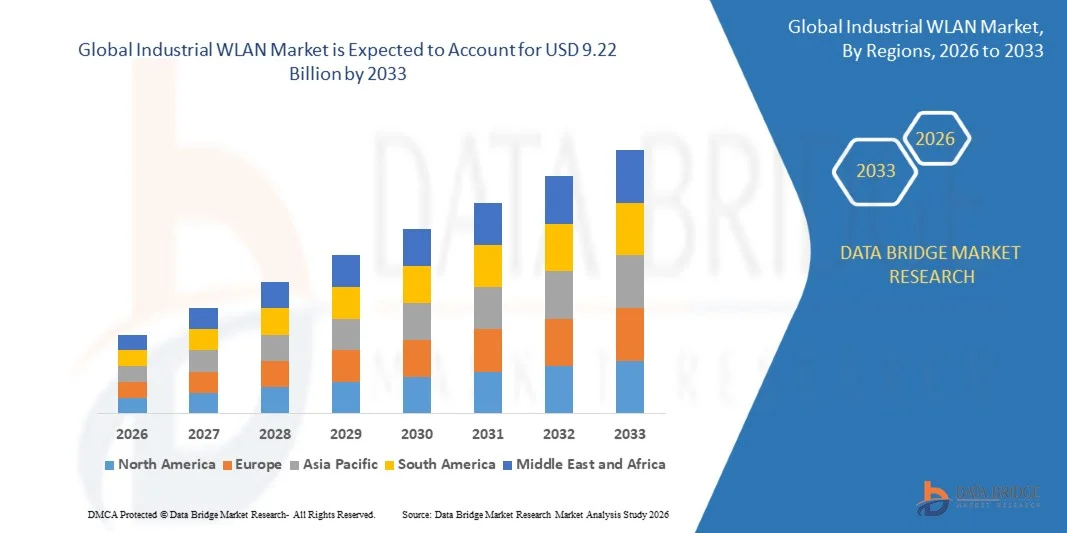
- Согласно анализу рынка Data Bridge Market Research, объем мирового промышленного рынка WLAN был оценен как4,72 млрд долларов в 2025 годуОжидается, что он достигнет9,22 млрд долларов к 2033 году, вCAGR 8,71%в течение прогнозируемого периода
- Рост рынка в значительной степени обусловлен ускорением внедрения промышленной автоматизации.Промышленный IoTИнициативы Индустрии 4.0, которые увеличивают потребность в надежной беспроводной связи с низкой задержкой и высокой пропускной способностью на производственных предприятиях, складах и в обрабатывающей промышленности
- Кроме того, растущий спрос на доступ к данным в режиме реального времени, бесшовное подключение машин и гибкую сетевую инфраструктуру для поддержки интеллектуальных заводов и цифровых операций усиливает внедрение решений Industrial WLAN, тем самым значительно повышая общий рост рынка.
Размер рынка и прогноз
- Глобальная рыночная стоимость (2025):$4,72 млрд.
- Ожидаемая рыночная стоимость (2033):$9,22 млрд.
- Прогноз CAGR (2026–2033):8.71%
Каковы основные тенденции на рынке промышленных WLAN
- Промышленные решения WLAN, обеспечивающие безопасную и высокопроизводительную беспроводную связь в суровых и критически важных средах, стали необходимыми для поддержки автоматизации, отслеживания активов, мобильности работников и связи между машинами на промышленных объектах.
- Растущая зависимость от беспроводных сетей в первую очередь подпитывается увеличением развертывания интеллектуальных производственных систем, повышенным вниманием к операционной эффективности и безопасности, а также необходимостью масштабируемого и безопасного подключения для поддержки передовых промышленных приложений.
- Азиатско-Тихоокеанский регион доминирует на промышленном рынке WLAN с долей 32,4%В 2025 году благодаря быстрой промышленной автоматизации, расширению производственных мощностей и широкомасштабному внедрению методов Индустрии 4.0 в странах с развивающейся экономикой
- Ожидается, что Северная Америка станет самым быстрорастущим регионом на промышленном рынке WLAN в течение прогнозируемого периода из-за быстрого внедрения передовой автоматизации, сильного присутствия промышленных развертываний IoT и растущей зависимости от беспроводной связи для критически важных операций.
- Сегмент оборудования доминировал на рынке с долей рынка 67% в 2025 году из-за высокого спроса на точки доступа промышленного класса, прочные маршрутизаторы, контроллеры и антенны на производственных предприятиях и в обрабатывающей промышленности. Промышленные среды требуют прочного высокопроизводительного сетевого оборудования, способного работать при экстремальных температурах, вибрации и электромагнитных помехах. Непрерывное расширение интеллектуальных заводов и проектов автоматизации Brownfield еще больше поддержали сильное внедрение аппаратного обеспечения.
Сфера охвата и отраслевая сегментация рынка WLAN
|
Атрибуты |
Индустриальная WLAN Key Market Insights |
|
Сегменты покрыты |
|
|
Страны, охваченные |
Северная Америка
Европа
Азиатско-Тихоокеанский регион
Ближний Восток и Африка
Южная Америка
|
|
Ключевые игроки рынка |
|
|
Рыночные возможности |
|
|
Информационные наборы данных с добавленной стоимостью |
В дополнение к рыночным идеям, таким как рыночная стоимость, темпы роста, сегменты рынка, географический охват, игроки рынка и рыночный сценарий, отчет о рынке, курируемый командой Data Bridge Market Research, включает углубленный экспертный анализ, анализ импорта / экспорта, анализ цен, анализ потребления продукции и анализ пестле. |
Каковы основные тенденции на рынке промышленных WLAN
Развитие Wi-Fi 6 и Wi-Fi 7 в промышленных условиях
- Основной тенденцией, формирующей промышленный рынок WLAN, является ускоренное внедрение технологий Wi-Fi 6 и Wi-Fi 7 для поддержки промышленных операций с высокой плотностью и задержкой. Эти стандарты следующего поколения обеспечивают улучшенную пропускную способность, детерминированную производительность и лучшую обработку устройств, которые имеют решающее значение для интеллектуальных заводов, автоматизированных складов и критически важных промышленных сетей.
- Например, Siemens активно интегрирует возможности Wi-Fi 6 в свой портфель промышленных сетей для поддержки подключенных производственных систем и промышленной связи в режиме реального времени. Эти развертывания повышают надежность и обеспечивают постоянную производительность для автоматизации, робототехники и промышленных приложений с интенсивным использованием данных.
- Переход к Wi-Fi 6 и Wi-Fi 7 позволяет предприятиям обрабатывать растущее число подключенных устройств, включая датчики, AGV и промышленных роботов, без ущерба для стабильности сети. Это особенно важно в условиях, когда проводная связь ограничивает операционную гибкость.
- Промышленные операторы все чаще отдают приоритет передовым стандартам WLAN, чтобы уменьшить задержку и улучшить синхронизацию между машинами и системами управления. Эти улучшения напрямую поддерживают точное производство и оптимизацию процессов в режиме реального времени.
- Промышленные настройки высокой плотности используют такие функции, как OFDMA и многопользовательское подключение, которые повышают эффективность спектра и минимизируют помехи. Это повышает производительность WLAN в сложных промышленных макетах.
- В целом, растущее развертывание Wi-Fi 6 и Wi-Fi 7 усиливает переход к полностью беспроводным, масштабируемым и готовым к будущему промышленным сетевым архитектурам в глобальных производственных и технологических отраслях.
Динамика промышленного рынка WLAN
водитель
Растущая реализация инициатив Индустрии 4.0 и Индустриального IoT
- Расширение реализации инициатив Industry 4.0 и Industrial IoT является ключевым драйвером промышленного рынка WLAN, поскольку отрасли все больше полагаются на беспроводные сети для обмена данными в режиме реального времени и интеллектуальной автоматизации. Industrial WLAN обеспечивает бесперебойную связь между машинами, датчиками и системами управления, поддерживая принятие решений на основе данных и прогнозные операции.
- Например, Bosch развернула промышленные решения WLAN на своих интеллектуальных заводах для поддержки подключенных производственных линий, машинного мониторинга и цифровых двойников. Эти беспроводные сети играют центральную роль в обеспечении сквозной видимости и операционной эффективности.
- Спрос на гибкие производственные системы подталкивает отрасли к принятию решений WLAN, которые позволяют быстро реконфигурировать производственные схемы без обширных кабелей. Эта гибкость необходима для массовой настройки и гибких производственных моделей.
- Производители все чаще инвестируют в беспроводную инфраструктуру для поддержки интеграции передовых аналитических систем, управляемых ИИ и облачных промышленных платформ. Эта зависимость от подключенных экосистем усиливает важность надежных промышленных решений WLAN.
- Растущий акцент на операционную эффективность, сокращение простоев и интеллект в режиме реального времени продолжает стимулировать устойчивый спрос на промышленную WLAN в качестве основополагающего компонента среды Industry 4.0.
Сдержанность/вызов
Проблемы сетевой безопасности и помех в сложных промышленных условиях
- Промышленный рынок WLAN сталкивается с проблемами, связанными с рисками сетевой безопасности и беспроводными помехами в сложных и суровых промышленных условиях. Промышленные объекты часто содержат тяжелые машины, металлические конструкции и электромагнитные помехи, которые могут нарушить качество и надежность беспроводного сигнала.
- Например, промышленные операторы, развертывающие сети WLAN на нефтегазовых объектах, должны соблюдать строгие требования безопасности для защиты критически важной инфраструктуры от киберугроз. Такие компании, как Fortinet, сосредоточены на интеграции функций безопасности промышленного уровня для снижения этих рисков, подчеркивая сложность защиты беспроводных сетей.
- Беспроводные помехи от перекрывающихся сетей, машин и внешних сигналов могут влиять на согласованность передачи данных, особенно на крупных промышленных предприятиях. Это создает проблемы в поддержании детерминированной производительности для чувствительных ко времени приложений.
- Промышленные среды также требуют высокой доступности сети, где любые сбои могут привести к простоям в работе и финансовым потерям. Баланс между безопасностью, производительностью и надежностью остается критической проблемой.
- В совокупности проблемы, связанные с угрозами кибербезопасности, управлением помехами и устойчивостью сети, продолжают сдерживать внедрение в определенных промышленных условиях, требуя передовых решений и опыта для преодоления этих ограничений.
Как сегментируется рынок WLAN
Рынок сегментирован на основе компонентов, технологического стандарта, типа развертывания, приложения и отрасли конечных пользователей.
• по компонентам
На основе компонента рынок промышленной WLAN сегментирован на аппаратное обеспечение, программное обеспечение и услуги. Сегмент оборудования доминировал на рынке с самой большой долей выручки в 67% в 2025 году, что обусловлено высоким спросом на точки доступа промышленного класса, прочные маршрутизаторы, контроллеры и антенны на производственных предприятиях и в обрабатывающей промышленности. Промышленные среды требуют прочного высокопроизводительного сетевого оборудования, способного работать при экстремальных температурах, вибрации и электромагнитных помехах. Непрерывное расширение интеллектуальных заводов и проектов автоматизации Brownfield еще больше способствовало внедрению аппаратного обеспечения.
Ожидается, что в сегменте программного обеспечения будет наблюдаться самый быстрый рост с 2026 по 2033 год, чему будет способствовать растущее внедрение централизованного управления сетью, мониторинга безопасности и аналитических платформ. Предприятия все чаще инвестируют в программное обеспечение WLAN для обеспечения видимости в реальном времени, прогнозного обслуживания и контроля доступа на основе политики в крупных промышленных кампусах. Растущие проблемы кибербезопасности и необходимость масштабируемой организации сети еще больше ускоряют спрос на программное обеспечение.
• Стандарт технологии
На основе технологического стандарта рынок сегментирован на 802.11a/b/g, 802.11n, 802.11ac (Wi-Fi 5), 802.11ax (Wi-Fi 6/6E) и 802.11be (Wi-Fi 7). Сегмент 802.11ac (Wi-Fi 5) обеспечил наибольшую долю выручки в 2025 году благодаря сбалансированной производительности, стабильной пропускной способности и широкой установленной базе на промышленных объектах. Многие предприятия по-прежнему полагаются на Wi-Fi 5 для критически важных операций из-за доказанной надежности и экономической эффективности.
Ожидается, что сегмент 802.11ax (Wi-Fi 6/6E) будет расти самыми быстрыми темпами в течение прогнозируемого периода, что обусловлено его способностью поддерживать высокую плотность устройства, низкую задержку и детерминированную производительность. Промышленные приложения, такие как робототехника, AGV и системы управления в реальном времени, все чаще требуют возможностей Wi-Fi 6 для обеспечения бесперебойной связи и минимальной потери пакетов.
• По типу развертывания
На основе типа развертывания рынок промышленной WLAN сегментирован на локальный, облачный и гибридный. В 2025 году локальный сегмент доминировал на рынке, поскольку отрасли отдают приоритет безопасности данных, низкой задержке и полному контролю над сетевой инфраструктурой. Критические производственные и энергетические операции часто предпочитают локальное развертывание WLAN для удовлетворения строгих нормативных требований, требований безопасности и времени безотказной работы.
По прогнозам, облачный сегмент будет демонстрировать самый быстрый рост с 2026 по 2033 год, чему будет способствовать растущее внедрение облачных платформ WLAN. Облачное развертывание позволяет осуществлять удаленный мониторинг, централизованную конфигурацию, более быстрое устранение неполадок и снижение эксплуатационной сложности на географически распределенных промышленных объектах. Растущее признание промышленного IoT и периферийных вычислений еще больше усиливает внедрение облачной WLAN.
• Подача заявки
На основе применения рынок сегментирован на связь между машинами, отслеживание запасов и активов, мобильность и связь работников, системы автоматизации и управления и другие. Автоматизация и системы управления представляют собой самую большую долю доходов в 2025 году, что обусловлено ростом использования беспроводных сетей для связи PLC, координации робототехники и мониторинга процессов в режиме реального времени. Промышленная WLAN играет важную роль в создании гибких, масштабируемых архитектур автоматизации на современных заводах.
Ожидается, что связь между машинами станет свидетелем самого быстрого роста за прогнозируемый период, чему будет способствовать расширение внедрения подключенных машин, датчиков и автономных систем. Увеличение внимания к профилактическому обслуживанию, обмену данными в режиме реального времени и цифровым двойникам ускоряет потребность в надежных решениях WLAN с низкой задержкой в приложениях M2M.
• Индустрия конечных пользователей
На основе индустрии конечных пользователей рынок Industrial WLAN сегментирован на автомобильное, общее производство, нефть и газ, энергетику и коммунальные услуги и другие. Общее производство доминировало на рынке в 2025 году благодаря широкому развертыванию беспроводных сетей на сборочных линиях, складах и процессах проверки качества. Переход к Индустрии 4.0 и интеллектуальным производственным средам продолжает стимулировать высокий спрос на WLAN в этом секторе.
Ожидается, что сегмент энергетики и коммунальных услуг будет расти самыми быстрыми темпами с 2026 по 2033 год, чему будет способствовать рост инвестиций в интеллектуальные сети, подстанции и инфраструктуру возобновляемых источников энергии. Industrial WLAN обеспечивает мониторинг в режиме реального времени, удаленное управление активами и безопасную связь между географически распределенными энергетическими активами, поддерживая операционную эффективность и надежность сети.
В каком регионе находится наибольшая доля рынка WLAN
- Азиатско-Тихоокеанский регион доминировал на промышленном рынке WLAN с самой большой долей выручки 32,4% в 2025 году, чему способствовала быстрая промышленная автоматизация, расширение производственных мощностей и широкомасштабное внедрение практики Industry 4.0 в странах с развивающейся экономикой.
- Сильный рост интеллектуальных заводов, растущее развертывание промышленных решений IoT и увеличение инвестиций в беспроводную инфраструктуру ускоряют внедрение промышленной WLAN на производственных предприятиях и складах.
- Наличие экономически эффективных производственных экосистем, квалифицированной технической рабочей силы и поддерживающих правительственных инициатив, способствующих цифровизации и интеллектуальному производству, вносят значительный вклад в расширение регионального рынка.
Китайский рынок WLAN Insight
Китай занимал самую большую долю на рынке Азиатско-Тихоокеанской промышленной сети WLAN в 2025 году, чему способствовало его доминирование в крупномасштабном производстве, производстве автомобилей и сборке электроники. Агрессивное продвижение страны к умным заводам в сочетании с существенными инвестициями в промышленную автоматизацию и беспроводные сети, интегрированные в 5G, стимулирует высокий спрос на надежные решения WLAN. Поддерживаемые правительством инициативы, направленные на цифровую трансформацию промышленности, еще больше укрепляют рост рынка.
Индустриальный рынок WLAN Insight
Индия является свидетелем самого быстрого роста в Азиатско-Тихоокеанском регионе, чему способствуют расширение производственных мощностей, растущее внедрение умной промышленной инфраструктуры и увеличение прямых иностранных инвестиций в технологии автоматизации. Государственные программы, способствующие развитию отечественного производства и цифровых промышленных экосистем, ускоряют развертывание WLAN на заводах и в логистических центрах. Растущий спрос со стороны автомобильного, общего производства и энергетического секторов еще больше способствует расширению рынка.
Индустриальный анализ рынка WLAN в Европе
Европейский рынок промышленных WLAN неуклонно расширяется, чему способствует сильный акцент на промышленной автоматизации, безопасности данных и передовых производственных стандартах. Ориентация региона на интеллектуальные производственные системы, профилактическое обслуживание и оперативный мониторинг в режиме реального времени все больше зависит от надежных решений беспроводных сетей. Строгое соблюдение нормативных требований и широкое внедрение передовых промышленных технологий продолжают стимулировать стабильный рост рынка.
Немецкий рынок WLAN Insight
Промышленный рынок WLAN в Германии обусловлен его лидерством в реализации Индустрии 4.0, сильной автомобильной производственной базой и передовыми инженерными возможностями. Акцент страны на подключенных заводах, робототехнике и мониторинге производства в режиме реального времени повышает спрос на высокопроизводительные промышленные системы WLAN. Сильное сотрудничество между поставщиками технологий и производственными предприятиями поддерживает непрерывные инновации и развертывание.
Промышленный WLAN Market Insight
Рынок Великобритании выигрывает от растущих инвестиций в интеллектуальное производство, автоматизацию логистики и модернизацию цифровой инфраструктуры. Растущее внедрение беспроводной связи на промышленных объектах в сочетании с растущим вниманием к операционной эффективности и кибербезопасности стимулирует спрос на WLAN. Правительственные инициативы, поддерживающие цифровую трансформацию в различных отраслях промышленности, способствуют устойчивому развитию рынка.
Промышленный рынок WLAN в Северной Америке
Прогнозируется, что Северная Америка будет расти самыми быстрыми темпами с 2026 по 2033 год, что обусловлено быстрым внедрением передовой автоматизации, сильным присутствием промышленных развертываний IoT и растущей зависимостью от беспроводной связи для критически важных операций. Ориентация региона на умные заводы, аналитику данных в режиме реального времени и устойчивую сетевую инфраструктуру ускоряет рост рынка. Рост инвестиций в промышленную цифровизацию в производственном и энергетическом секторах еще больше способствует расширению.
Индустриальный анализ рынка WLAN в США
На долю США пришлась наибольшая доля на рынке Северной Америки в 2025 году, чему способствовало широкое внедрение умного производства, высокие расходы на промышленную автоматизацию и передовая ИТ-инфраструктура. Присутствие крупных поставщиков технологий в сочетании с высоким спросом со стороны автомобильной, энергетической и общей обрабатывающей промышленности продолжает стимулировать развертывание WLAN. Постоянные инвестиции в промышленную кибербезопасность и беспроводные технологии нового поколения укрепляют лидирующие позиции страны.
Какие компании являются ведущими на рынке WLAN
Индустрия WLAN в основном возглавляется хорошо зарекомендовавшими себя компаниями, в том числе:
- Cisco Systems, Inc. (США)
- CommScope Inc. (США)
- D-Link Limited (Тайвань)
- Extreme Networks (США)
- Fortinet, Inc. (США)
- Hewlett Packard Enterprise Development LP (США)
- Huawei Technologies Co., Ltd. (Китай)
- Juniper Networks, Inc. (США)
- Ruckus Wireless (США)
- Siemens (Германия)
- Zebra Technologies Corporation (США)
- Belden Inc. (США)
- Moxa Inc. (Тайвань)
- Advantech Co., Ltd. (Тайвань)
- Allied Telesis, Inc. (Япония)
Каковы последние тенденции на рынке WLAN
- В ноябре 2025 года Zyxel Networks запустила свою первую беспроводную точку доступа промышленного уровня, BE5000 4-Stream WiFi 7 Dual-Radio NebulaFlex Pro IAP500BE, значительно укрепив рынок промышленной WLAN, решая проблемы подключения в суровых условиях внутри помещений. Запуск поддерживает растущий спрос на прочные, высокопроизводительные решения Wi-Fi 7 на складах, объектах технического обслуживания и промышленных предприятиях. Эта разработка подчеркивает сдвиг рынка в сторону инфраструктуры WLAN с искусственным интеллектом, облачным управлением и высокой производительностью для поддержки промышленной цифровой трансформации.
- В июне 2025 года Huawei в сотрудничестве с World WLAN Application Alliance и отраслевыми партнерами выпустила «Белую книгу по разработке и использованию сенсоров Wi-Fi CSI Sensing Development and Use Cases», расширив сферу промышленного WLAN от подключения до интеллектуального зондирования. Благодаря таким приложениям, как обнаружение промышленных вторжений и интеллектуальный мониторинг здравоохранения с помощью Wi-Fi CSI, эта инициатива повышает ценность сетей WLAN. Ожидается, что разработка ускорит внедрение передовых технологий WLAN в промышленных кампусах и критически важных средах.
- В феврале 2025 года Juniper Networks представила новые дополнения к своему портфелю проводного доступа с запуском коммутаторов серии EX4000, предназначенных для поддержки производительности Wi-Fi 7 и безопасности Zero Trust. Эта разработка укрепляет экосистему Industrial WLAN, обеспечивая высокую доступность, масштабируемость и безопасную проводную магистраль для плотного промышленного беспроводного развертывания. Это отражает растущее внимание предприятий к устойчивой и безопасной сетевой инфраструктуре для поддержки промышленных приложений WLAN следующего поколения.
- В августе 2024 года Cervoz объявила о запуске своего модуля Wi-Fi 6E MEC-WIFI-2142B-30, что поддерживает растущий промышленный спрос на высокоскоростную беспроводную связь с низкой задержкой. Модуль отвечает требованиям производства на основе IoT и интеллектуальных производственных сред, обеспечивая надежную производительность в расширенных диапазонах спектра. Этот запуск способствует более широкому внедрению Wi-Fi 6E в промышленные устройства и встроенные системы.
- В ноябре 2022 года Westermo расширила свой ассортимент Ibex с введением точек доступа Ibex-1310 и Ibex-1510 Wi-Fi 6, ориентированных на транспорт, промышленные транспортные средства и наружные приложения. Поддерживая высокую плотность устройств и повышенную производительность, эти точки доступа усилили внедрение промышленной WLAN в условиях, ориентированных на мобильность. Это событие подчеркнуло ранний импульс к Wi-Fi 6 в критически важных случаях использования промышленных сетей.
SKU-
Получите онлайн-доступ к отчету на первой в мире облачной платформе рыночной аналитики

- Интерактивная панель анализа данных
- Панель анализа компании для возможностей с высоким потенциалом роста
- Доступ аналитика-исследователя для настройки и запросов
- Анализ конкурентов с помощью интерактивной панели
- Последние новости, обновления и анализ тенденций
- Используйте возможности сравнительного анализа для комплексного отслеживания конкурентов
Методология исследования
Сбор данных и анализ базового года выполняются с использованием модулей сбора данных с большими размерами выборки. Этап включает получение рыночной информации или связанных данных из различных источников и стратегий. Он включает изучение и планирование всех данных, полученных из прошлого заранее. Он также охватывает изучение несоответствий информации, наблюдаемых в различных источниках информации. Рыночные данные анализируются и оцениваются с использованием статистических и последовательных моделей рынка. Кроме того, анализ доли рынка и анализ ключевых тенденций являются основными факторами успеха в отчете о рынке. Чтобы узнать больше, пожалуйста, запросите звонок аналитика или оставьте свой запрос.
Ключевой методологией исследования, используемой исследовательской группой DBMR, является триангуляция данных, которая включает в себя интеллектуальный анализ данных, анализ влияния переменных данных на рынок и первичную (отраслевую экспертную) проверку. Модели данных включают сетку позиционирования поставщиков, анализ временной линии рынка, обзор рынка и руководство, сетку позиционирования компании, патентный анализ, анализ цен, анализ доли рынка компании, стандарты измерения, глобальный и региональный анализ и анализ доли поставщика. Чтобы узнать больше о методологии исследования, отправьте запрос, чтобы поговорить с нашими отраслевыми экспертами.
Доступна настройка
Data Bridge Market Research является лидером в области передовых формативных исследований. Мы гордимся тем, что предоставляем нашим существующим и новым клиентам данные и анализ, которые соответствуют и подходят их целям. Отчет можно настроить, включив в него анализ ценовых тенденций целевых брендов, понимание рынка для дополнительных стран (запросите список стран), данные о результатах клинических испытаний, обзор литературы, обновленный анализ рынка и продуктовой базы. Анализ рынка целевых конкурентов можно проанализировать от анализа на основе технологий до стратегий портфеля рынка. Мы можем добавить столько конкурентов, о которых вам нужны данные в нужном вам формате и стиле данных. Наша команда аналитиков также может предоставить вам данные в сырых файлах Excel, сводных таблицах (книга фактов) или помочь вам в создании презентаций из наборов данных, доступных в отчете.











