Global Intestinal Ischemia Market Segmentation, By Type (Colon Ischemia, Chronic Mesenteric Artery Ischemia, and Others), Treatment Type (Medications and Surgery), Route of Administration (Oral, Parenteral, and Others), End-Users (Hospitals, Homecare, Speciality Centres, and Others), Distribution Channel (Hospital Pharmacy, Online Pharmacy, and Retail Pharmacy) - Industry Trends and Forecast to 2033
Каковы размеры и темпы роста рынка ишемии кишечника
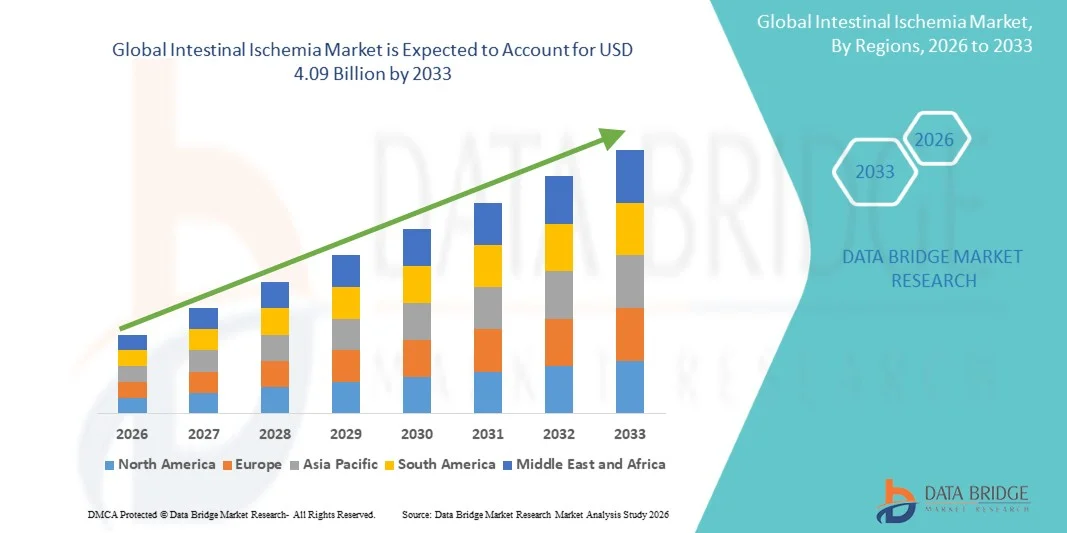
- Мировой объем рынка кишечной ишемии оценивается в2,31 млрд долларов в 2025 годуОжидается, что он достигнет4,09 млрд долларов к 2033 году, вCAGR 7,41%в течение прогнозируемого периода
- Рост рынка в значительной степени подпитывается растущей распространенностью желудочно-кишечных и сосудистых расстройств, а также ростом заболеваемости такими состояниями, какатеросклероз, сгустки крови и низкое кровяное давление, которые способствуют ишемии кишечника. Достижения в области диагностической визуализации и хирургических методов дополнительно поддерживают раннее выявление и эффективное управление.
- Кроме того, растущий спрос на своевременные, эффективные и ориентированные на пациента решения для лечения, включая хирургическое вмешательство, эндоваскулярные процедуры и поддерживающую терапию, устанавливает управление ишемией кишечника в качестве важнейшего компонента современного здравоохранения. Эти сходящиеся факторы ускоряют поглощение растворов ишемии кишечника, тем самым значительно стимулируя рост на мировом рынке.
Каковы основные выводы рынка ишемии кишечника
- Лечение ишемии кишечника и диагностические решения, включая методы визуализации, хирургические вмешательства и эндоваскулярные процедуры, становятся все более важными в современном здравоохранении из-за опасного для жизни характера состояния и необходимости быстрой диагностики и лечения. Достижения в области КТ-ангиографии и минимально инвазивных сосудистых процедур значительно улучшают результаты лечения пациентов.
- Растущий спрос на растворы ишемии кишечника в первую очередь подпитывается растущей распространенностью сердечно-сосудистых заболеваний, увеличением гериатрической популяции и растущей частотой факторов риска, таких как атеросклероз и тромбоз. Эти факторы способствуют принятию передовых диагностических и терапевтических подходов.
- Северная Америка доминировала на рынке ишемии кишечника, на долю которого в 2025 году приходилось около 39% мирового дохода, чему способствовала развитая инфраструктура здравоохранения, высокий уровень осведомленности и сильное внедрение минимально инвазивных процедур. США остаются ведущим донором в регионе
- Ожидается, что Азиатско-Тихоокеанский регион станет самым быстрорастущим регионом на рынке ишемии кишечника в течение прогнозируемого периода, с прогнозируемым CAGR 8,4%, что обусловлено улучшением доступа к здравоохранению, ростом расходов на здравоохранение и увеличением бремени болезней.
- Парентеральный сегмент доминировал на крупнейшей доле рынка в 61,5% в 2025 году, что обусловлено его эффективностью в условиях неотложной и неотложной помощи.
Сфера охвата иСегментация рынка ишемии кишечника
|
Атрибуты |
Кишечная ишемия Key Market Insights |
|
Сегменты покрыты |
|
|
Страны, охваченные |
Северная Америка
Европа
Азиатско-Тихоокеанский регион
Ближний Восток и Африка
Южная Америка
|
|
Ключевые игроки рынка |
|
|
Рыночные возможности |
|
|
Информационные наборы данных с добавленной стоимостью |
В дополнение к информации о рыночных сценариях, таких как рыночная стоимость, темпы роста, сегментация, географическое покрытие и основные игроки, рыночные отчеты, курируемые Data Bridge Market Research, также включают углубленный экспертный анализ, эпидемиологию пациентов, анализ трубопроводов, анализ цен и нормативную базу. |
Каковы основные тенденции на рынке ишемии кишечника
"Достижения в области ранней диагностики и минимально инвазивного лечения"
- Значительной и ускоряющейся тенденцией на мировом рынке ишемии кишечника является увеличение внимания к ранней диагностике и быстрому вмешательству для снижения заболеваемости и смертности, связанных с этим заболеванием. Повышение клинической осведомленности и улучшение диагностических инструментов играют решающую роль в своевременном выявлении заболеваний.
- Например, растущее внедрение передовых методов визуализации, таких как КТ-ангиография и доплеровское ультразвуковое исследование, позволяет быстрее и точнее идентифицировать нарушения кровотока кишечника, поддерживая раннее клиническое принятие решений.
- Технологические достижения в минимально инвазивных хирургических процедурах, включая эндоваскулярные вмешательства и катетерную терапию, улучшают результаты лечения пациентов и сокращают время восстановления по сравнению с традиционными открытыми операциями.
- Интеграция междисциплинарной помощи с участием гастроэнтерологов, сосудистых хирургов и специалистов по критической помощи повышает эффективность лечения и выживаемость пациентов.
- Эта тенденция к более быстрым, менее инвазивным и более точным подходам к лечению меняет стратегии клинического управления ишемией кишечника в системах здравоохранения.
- Спрос на передовые диагностические и лечебные решения растет во всем мире, особенно в регионах с улучшением инфраструктуры здравоохранения и повышением осведомленности о желудочно-кишечных сосудистых расстройствах.
Динамика рынка ишемии кишечника
Каковы основные драйверы рынка ишемии кишечника
«Рост заболеваемости сердечно-сосудистыми расстройствами и старение населения»
- Растущая распространенность сердечно-сосудистых заболеваний и связанных с ними факторов риска, таких как атеросклероз, является основным фактором для рынка ишемии кишечника, поскольку эти условия значительно увеличивают риск снижения кровотока кишечника.
- Например, растущее глобальное бремя сердечно-сосудистых заболеваний, особенно среди пожилых людей, привело к более высокой частоте случаев острой мезентериальной ишемии, требующих немедленного медицинского вмешательства.
- Старение населения более восприимчиво к сосудистым расстройствам, тем самым способствуя увеличению спроса на диагностику и лечение ишемии кишечника.
- Кроме того, факторы риска, связанные с образом жизни, такие как курение, ожирение и гипертония, также способствуют росту заболеваемости этим заболеванием.
- Повышение осведомленности в области здравоохранения и улучшение доступа к экстренным медицинским услугам способствуют ранней диагностике и лечению, что способствует дальнейшему росту рынка.
- Расширение инфраструктуры здравоохранения и наличие передовых вариантов лечения также способствуют растущему спросу на решения для лечения ишемии кишечника.
Сдержанность/вызов
"Высокие затраты на лечение и задержка диагностики"
- Одной из ключевых проблем на рынке ишемии кишечника является высокая стоимость, связанная с передовыми диагностическими процедурами и хирургическими процедурами, которые могут ограничить доступность в регионах с низким и средним уровнем дохода.
- Например, такие процедуры, как КТ-ангиография и эндоваскулярные вмешательства, могут быть недоступны в сельских или ограниченных ресурсами медицинских учреждениях, что приводит к задержке диагностики и увеличению частоты осложнений.
- Состояние часто сопровождается неспецифическими симптомами, что затрудняет раннюю диагностику и увеличивает риск тяжелых осложнений, если не лечить быстро.
- Ограниченная осведомленность пациентов и отсроченные посещения больниц еще больше усугубляют тяжесть заболевания и сложность лечения.
- Кроме того, потребность в специализированной медицинской экспертизе и учреждениях критической помощи создает проблемы в регионах с недостаточно развитыми системами здравоохранения.
- Решение этих проблем требует улучшения инфраструктуры здравоохранения, повышения осведомленности и более широкого доступа к экономически эффективным вариантам диагностики и лечения.
Как сегментируется рынок ишемии кишечника
Рынок сегментирован на основе типа, протокола связи, механизма разблокировки и приложения.
• По типу
По типу рынок ишемии кишечника сегментирован на ишемию толстой кишки, ишемию хронической брыжеечной артерии и другие. Сегмент ишемии толстой кишки доминировал на рынке с самой большой долей дохода в 46,8% в 2025 году, что обусловлено его более высокой распространенностью по сравнению с другими формами ишемии кишечника, особенно среди пожилых людей. Колонная ишемия обычно связана с уменьшением кровотока из-за атеросклероза, обезвоживания и гипотонии, что делает ее часто диагностируемым состоянием в клинических условиях. Больницы и специализированные центры сообщают о большем количестве госпитализаций, связанных с ишемией толстой кишки, поддерживая ее доминирование. Наличие хорошо установленных диагностических процедур, таких как колоноскопия и КТ, также способствует раннему выявлению и лечению. Врачи более знакомы с протоколами лечения ишемии толстой кишки, увеличивая скорость ее диагностики. Рост гериатрической популяции и сопутствующие заболевания, такие как сердечно-сосудистые заболевания, являются ключевыми факторами. Улучшение инфраструктуры здравоохранения на развивающихся рынках также способствует повышению показателей диагностики. Повышение осведомленности о желудочно-кишечных расстройствах поддерживает раннее вмешательство. Политика возмещения расходов на диагностические и лечебные процедуры еще больше укрепляет этот сегмент. Спрос на эффективные методы лечения продолжает расти. Сегмент также выигрывает от непрерывных клинических исследований и улучшенных терапевтических подходов.
Ожидается, что сегмент хронической ишемии брыжеечной артерии будет наблюдать самый быстрый CAGR в 7,9% с 2026 по 2033 год, что обусловлено повышением осведомленности и достижениями в технологиях диагностической визуализации. Улучшенное обнаружение с помощью ангиографии и передовых инструментов визуализации позволяет проводить раннюю диагностику хронических заболеваний. Растущая распространенность атеросклеротических заболеваний способствует увеличению случаев. Растущее внедрение минимально инвазивных хирургических процедур поддерживает показатели лечения. Медицинские работники сосредоточены на раннем вмешательстве для предотвращения тяжелых осложнений. Увеличение инвестиций в сосудистое здравоохранение стимулирует рост сегмента. Осведомленность пациентов о таких симптомах, как боль в животе и потеря веса, улучшает показатели диагностики. Технологические достижения в процедурах стентирования и реваскуляризации улучшают результаты. Расширение специализированных центров по уходу поддерживает доступность лечения. Развивающиеся рынки становятся свидетелями более широкого внедрения из-за лучшего доступа к здравоохранению. Правительственные инициативы, способствующие ранней диагностике, способствуют росту. В целом, улучшение клинических результатов и осведомленности ускоряют расширение сегмента.
• По типу лечения
На основе типа лечения рынок кишечной ишемии сегментирован на лекарства и хирургию. Сегмент медикаментов доминировал на крупнейшей доле рынка в 58,3% в 2025 году, что обусловлено его ролью в качестве лечения первой линии для легких и умеренных случаев. Лекарства, такие как антибиотики, антикоагулянты и сосудорасширяющие средства, широко назначаются для управления симптомами и предотвращения осложнений. Врачи предпочитают фармакологическое лечение в условиях ранней стадии, чтобы избежать инвазивных процедур. Сегмент выигрывает от легкой доступности и более низких затрат на лечение по сравнению с хирургией. Растущее предпочтение пациентов неинвазивным вариантам лечения также поддерживает спрос. Больницы и учреждения по уходу за домом часто назначают лекарства, что способствует более высокому принятию. Растущая осведомленность об управлении на ранней стадии приводит к росту ставок по рецептам. Фармацевтические достижения улучшают профили эффективности и безопасности лекарств. Поддержка возмещения расходов на лекарства повышает доступность. Рост заболеваемости желудочно-кишечными расстройствами способствует устойчивому спросу. Непрерывные исследования в области разработки лекарств расширяют возможности лечения. Сегмент остается доминирующим из-за его широкого клинического применения и эффективности.
Ожидается, что в сегменте хирургии самый быстрый CAGR составит 8,6% с 2026 по 2033 год, что обусловлено увеличением случаев тяжелой и острой ишемии кишечника, требующей немедленного вмешательства. Хирургические процедуры, такие как резекция кишечника и реваскуляризация, имеют решающее значение в угрожающих жизни условиях. Достижения в минимально инвазивных хирургических методах улучшают результаты лечения пациентов и время восстановления. Растущая доступность квалифицированных хирургов и развитая инфраструктура здравоохранения поддерживают рост сегмента. Повышение осведомленности о своевременном хирургическом вмешательстве снижает смертность. Больницы расширяют хирургические возможности для лечения сложных случаев. Технологические инновации, такие как роботизированные операции, повышают точность. Растущие расходы на здравоохранение обеспечивают доступ к передовым процедурам. Развивающиеся рынки становятся свидетелями более широкого внедрения из-за улучшения условий. Клинические рекомендации, подчеркивающие хирургическое вмешательство в тяжелых случаях, стимулируют рост. Улучшение послеоперационного ухода улучшает показатели выживаемости. В целом, увеличение критических случаев и улучшение показателей хирургического успеха способствуют расширению сегмента.
• По маршруту администрации
На основе пути введения рынок кишечной ишемии сегментирован на оральный, парентеральный и другие. Парентеральный сегмент доминировал на крупнейшем рынке с долей дохода 61,5% в 2025 году, что обусловлено его эффективностью в условиях неотложной и неотложной помощи. Парентеральное введение обеспечивает быструю доставку лекарств, что имеет решающее значение в опасных для жизни ишемических условиях. Больницы широко используют внутривенную терапию для немедленного лечения симптомов. Сегмент выигрывает от более высокой биодоступности и более быстрого терапевтического действия по сравнению с пероральными маршрутами. Отделы критической помощи в значительной степени полагаются на парентеральные препараты для тяжелых случаев. Увеличение числа госпитализаций по поводу острой ишемии поддерживает спрос. Врачи предпочитают парентеральные маршруты для пациентов, которые не могут принимать пероральные препараты. Технологические достижения в инфузионных системах повышают эффективность лечения. Растущая распространенность острых желудочно-кишечных заболеваний еще больше стимулирует усыновление. Поддержка возмещения расходов на лечение в больницах укрепляет этот сегмент. Расширение инфраструктуры здравоохранения способствует увеличению использования. В целом, потребность в быстром вмешательстве поддерживает доминирование сегмента.
Ожидается, что в устном сегменте самый быстрый CAGR составит 7,4% с 2026 по 2033 год, что обусловлено увеличением использования на этапах долгосрочного управления и восстановления. Пероральные препараты предпочтительнее для их удобства и простоты введения в домашних условиях. Растущее предпочтение пациентов неинвазивным вариантам лечения поддерживает рост. Фармацевтические достижения улучшают пероральные лекарственные препараты и эффективность. Повышение осведомленности о лечении хронических заболеваний способствует усыновлению. Тенденции в области ухода на дому и амбулаторного лечения стимулируют спрос. Экономическая эффективность пероральных препаратов по сравнению с лечением в больнице поддерживает расширение. Телемедицина и удаленный мониторинг облегчают назначение и соблюдение. Растущее гериатрическое население способствует более высокому использованию. На развивающихся рынках наблюдается рост доступности оральных наркотиков. Улучшение соблюдения пациентом улучшает результаты лечения. В целом, удобство и доступность являются ключевыми факторами роста для сегмента.
• Конечными пользователями
На базе конечных пользователей рынок кишечной ишемии сегментирован на больницы, домашнюю помощь, специализированные центры и другие. Сегмент больниц доминировал на рынке с самой большой долей выручки в 64,2% в 2025 году, что обусловлено большим объемом острых случаев, требующих немедленной медицинской помощи. Больницы оснащены передовыми диагностическими и лечебными учреждениями, что делает их основным местом оказания медицинской помощи. Наличие квалифицированных медицинских работников способствует эффективному управлению. Отделения неотложной помощи занимаются тяжелыми случаями ишемии, способствуя более высоким показателям приема. Увеличение инвестиций в инфраструктуру здравоохранения укрепляет возможности больниц. Передовые технологии визуализации обеспечивают точную диагностику. Хирургические процедуры преимущественно выполняются в больничных условиях. Политика возмещения ущерба благоприятствует лечению в больницах. Рост частоты желудочно-кишечных чрезвычайных ситуаций стимулирует приток пациентов. Больницы также поддерживают послеоперационный уход и мониторинг. Государственное финансирование и частные инвестиции повышают качество услуг. В целом, возможности комплексного ухода поддерживают доминирование в больницах.
Ожидается, что в сегменте услуг по уходу на дому самый быстрый CAGR составит 8,1% с 2026 по 2033 год, что обусловлено растущим предпочтением амбулаторной помощи и восстановления на дому. Пациенты выбирают лечение на дому, чтобы сократить пребывание в больнице и расходы. Достижения в области портативных медицинских устройств позволяют эффективно управлять домашним хозяйством. Телемедицинские службы оказывают поддержку дистанционному мониторингу и консультациям. Повышение осведомленности об управлении хроническими заболеваниями способствует усыновлению. Пожилые пациенты предпочитают уход на дому для комфорта и удобства. Поставщики медицинских услуг расширяют услуги по уходу на дому для удовлетворения спроса. Экономическая эффективность по сравнению с больничной помощью является ключевым фактором роста. Правительственные инициативы по расширению поддержки домашнего здравоохранения. Развивающиеся рынки становятся свидетелями более широкого внедрения из-за доступности. Улучшение результатов лечения пациентов с помощью постоянного мониторинга повышает доверие. В целом, удобство и технологическая поддержка ускоряют рост сегмента.
• Распределительный канал
На основе канала дистрибуции рынок Intestinal Ischemia сегментирован в больничную аптеку, онлайн-аптеку и розничную аптеку. Сегмент больничных аптек доминировал на крупнейшей доле рынка в 49,7% в 2025 году, чему способствовал большой объем рецептов, выданных в больницах. Пациенты, проходящие лечение ишемии кишечника, в основном получают лекарства непосредственно из больничных аптек. Наличие специализированных лекарственных средств и доминирование в обеспечении немедленного доступа. Больницы обеспечивают надлежащую дозировку и введение под медицинским наблюдением. Увеличение числа госпитализаций способствует увеличению продаж. Интеграция с протоколами лечения повышает эффективность. Покрытие расходов на лекарства, отпускаемые в больницах, поддерживает спрос. Растущая инфраструктура здравоохранения укрепляет распределительные сети. Врачи отдают предпочтение больничным аптекам для препаратов критической помощи. Доверие пациентов к госпитализации способствует дальнейшему усыновлению. Постоянные улучшения в цепочке поставок повышают доступность. В целом, централизованное распределение внутри больниц поддерживает доминирование.
Сегмент онлайн-аптек, как ожидается, продемонстрирует самый быстрый CAGR в 12,3% с 2026 по 2033 год, что обусловлено ростом цифровизации и проникновения электронной коммерции в здравоохранение. Пациенты все чаще выбирают онлайн-платформы из-за удобства и доставки. Растущее использование смартфонов и доступность Интернета поддерживают рост. Онлайн-аптеки предлагают конкурентные цены и скидки, привлекая потребителей. Интеграция с телемедицинскими платформами улучшает выполнение рецептов. Растущая осведомленность о цифровых медицинских услугах способствует принятию. Расширение логистических и цепочек поставок обеспечивает своевременную доставку. Развивающиеся рынки стали свидетелями быстрого внедрения онлайн-сервисов здравоохранения. Регулятивная поддержка электронных ферм улучшает проникновение на рынок. Услуги по подписке на лекарства набирают популярность. Улучшенная конфиденциальность и простота заказа способствуют предпочтениям. В целом, удобство и цифровая трансформация являются ключевыми факторами роста сегмента.
В каком регионе находится наибольшая доля рынка ишемии кишечника
- Северная Америка доминировала на рынке ишемии кишечника, составляя примерно 39% мирового дохода в 2025 году, при поддержке передовой инфраструктуры здравоохранения, высокого уровня осведомленности и сильного принятия минимально инвазивных процедур.
- Регион извлекает выгоду из хорошо зарекомендовавших себя систем экстренной помощи и наличия передовых диагностических технологий, позволяющих своевременно вмешиваться и улучшать результаты лечения пациентов.
- Рынок ишемии кишечника представляет собой самую большую долю в Северной Америке, что обусловлено высокими расходами на здравоохранение, сильными диагностическими возможностями и широким использованием передовых хирургических и эндоваскулярных методов лечения. Наличие специализированных медицинских учреждений и продолжающиеся клинические исследования способствуют дальнейшему росту рынка.
Американский рынок ишемии Insight
Американский рынок ишемии кишечника занял самую большую долю дохода в Северной Америке, что обусловлено увеличением заболеваемости сосудистыми расстройствами и сильной осведомленностью о ранней диагностике и лечении. Страна извлекает выгоду из высокоразвитой системы здравоохранения, быстрого внедрения минимально инвазивных процедур и наличия передовых технологий визуализации. Кроме того, благоприятная политика возмещения и постоянное совершенствование методов лечения способствуют расширению рынка.
Европейский рынок ишемии Intestinal Ischemia
Европейский рынок ишемии кишечника, по прогнозам, будет расширяться при существенном CAGR в течение прогнозируемого периода, в первую очередь за счет увеличения распространенности желудочно-кишечных и сосудистых расстройств, устоявшихся систем здравоохранения и растущего внедрения передовых диагностических и лечебных процедур. Государственная поддержка и растущие расходы на здравоохранение также способствуют росту рынка в регионе.
Великобритания Intestinal Ischemia Market Insight
Ожидается, что рынок ишемии кишечника в Великобритании будет расти в течение прогнозируемого периода, что обусловлено улучшением доступа к медицинским услугам и повышением осведомленности о ранней диагностике. Наличие сильной системы общественного здравоохранения и акцент на своевременное медицинское вмешательство способствуют развитию рынка.
Германия Intestinal Ischemia Market Insight
Ожидается, что в течение прогнозируемого периода рынок ишемии кишечника в Германии будет расширяться на значительном CAGR, чему будет способствовать развитая инфраструктура здравоохранения, сильный акцент на медицинские инновации и растущий спрос на минимально инвазивные подходы к лечению. Лидерство Германии в области медицинских технологий также поддерживает внедрение передовых процедур.
Азиатско-Тихоокеанский рынок ишемии Intestinal Ischemia Market Insight
Ожидается, что рынок кишечной ишемии в Азиатско-Тихоокеанском регионе будет самым быстрорастущим регионом в течение прогнозируемого периода с прогнозируемым CAGR в 8,4%, что обусловлено улучшением доступа к здравоохранению, ростом расходов на здравоохранение и увеличением бремени болезней. Расширение инфраструктуры здравоохранения и повышение осведомленности о желудочно-кишечных заболеваниях являются ключевыми факторами, способствующими региональному росту.
Японский рынок ишемии Intestinal Ischemia
Японский рынок ишемии кишечника набирает обороты благодаря передовым медицинским учреждениям, растущему пожилому населению и увеличению внимания к ранней диагностике и лечению сосудистых заболеваний. Технологические достижения в области диагностической визуализации еще больше способствуют росту рынка.
Китайский рынок ишемии Intestinal Ischemia
Китайский рынок ишемии кишечника обеспечил значительную долю доходов в Азиатско-Тихоокеанском регионе, чему способствовало расширение инфраструктуры здравоохранения, рост инвестиций в здравоохранение и повышение осведомленности о сосудистых и желудочно-кишечных заболеваниях. Правительственные инициативы и улучшение доступа к передовым вариантам лечения являются ключевыми факторами, способствующими росту рынка в стране.
Какие компании являются ведущими на рынке ишемии кишечника
Индустрия Intestinal Ischemia в основном возглавляется хорошо зарекомендовавшими себя компаниями, в том числе:
- Pfizer(США)
- Новарс(Швейцария)
- Санофи(Франция)
- Джонсон и Джонсон(США)
- Байер(Германия)
- GlaxoSmithKline (Великобритания)
- Abbott Laboratories (США)
- Fresenius Medical Care (Германия)
- Baxter International (США)
- B. Braun SE (Германия)
- Medtronic (Ирландия)
- Terumo Corporation (Япония)
- Бостонская научная корпорация (США)
- Cook Medical (США)
- Кардинальное здоровье (США)
- Nipro Corporation (Япония)
- Sun Pharma (Индия)
- Лаборатории доктора Редди (Индия)
- Ципла (Индия)
- Lupin Pharmaceuticals (Индия)
Каковы последние события на мировом рынке ишемии кишечника
- В августе 2021 года всеобъемлющий клинический обзор по ишемической болезни кишечника выявил достижения в ранней диагностике и лечении ишемии кишечника, подчеркнув улучшение результатов выживаемости за счет своевременного вмешательства и развития хирургических методов, что стало ключевым шагом в стандартизации протоколов лечения.
- В июне 2023 года клинические исследования и отчеты о здравоохранении показали растущее внедрение передовых технологий визуализации, таких как компьютерная томография (КТ) ангиография для ранней и точной диагностики ишемии кишечника, значительно улучшая показатели обнаружения и позволяя быстрее принимать терапевтические решения в острых случаях.
- В марте 2024 года продолжающиеся инициативы в области клинических исследований были сосредоточены на оценке качества жизни и долгосрочных результатах у пациентов с острой мезентериальной ишемией, что отражает переход к стратегиям мониторинга после лечения.
- В декабре 2025 года были зарегистрированы новые клинические исследования, посвященные идентификации биомаркеров и мониторингу прогрессирования заболевания при брыжеечной ишемии, что способствовало разработке более точных диагностических инструментов и персонализированных подходов к лечению.
SKU-
Получите онлайн-доступ к отчету на первой в мире облачной платформе рыночной аналитики
- Интерактивная панель анализа данных
- Панель анализа компании для возможностей с высоким потенциалом роста
- Доступ аналитика-исследователя для настройки и запросов
- Анализ конкурентов с помощью интерактивной панели
- Последние новости, обновления и анализ тенденций
- Используйте возможности сравнительного анализа для комплексного отслеживания конкурентов
Методология исследования
Сбор данных и анализ базового года выполняются с использованием модулей сбора данных с большими размерами выборки. Этап включает получение рыночной информации или связанных данных из различных источников и стратегий. Он включает изучение и планирование всех данных, полученных из прошлого заранее. Он также охватывает изучение несоответствий информации, наблюдаемых в различных источниках информации. Рыночные данные анализируются и оцениваются с использованием статистических и последовательных моделей рынка. Кроме того, анализ доли рынка и анализ ключевых тенденций являются основными факторами успеха в отчете о рынке. Чтобы узнать больше, пожалуйста, запросите звонок аналитика или оставьте свой запрос.
Ключевой методологией исследования, используемой исследовательской группой DBMR, является триангуляция данных, которая включает в себя интеллектуальный анализ данных, анализ влияния переменных данных на рынок и первичную (отраслевую экспертную) проверку. Модели данных включают сетку позиционирования поставщиков, анализ временной линии рынка, обзор рынка и руководство, сетку позиционирования компании, патентный анализ, анализ цен, анализ доли рынка компании, стандарты измерения, глобальный и региональный анализ и анализ доли поставщика. Чтобы узнать больше о методологии исследования, отправьте запрос, чтобы поговорить с нашими отраслевыми экспертами.
Доступна настройка
Data Bridge Market Research является лидером в области передовых формативных исследований. Мы гордимся тем, что предоставляем нашим существующим и новым клиентам данные и анализ, которые соответствуют и подходят их целям. Отчет можно настроить, включив в него анализ ценовых тенденций целевых брендов, понимание рынка для дополнительных стран (запросите список стран), данные о результатах клинических испытаний, обзор литературы, обновленный анализ рынка и продуктовой базы. Анализ рынка целевых конкурентов можно проанализировать от анализа на основе технологий до стратегий портфеля рынка. Мы можем добавить столько конкурентов, о которых вам нужны данные в нужном вам формате и стиле данных. Наша команда аналитиков также может предоставить вам данные в сырых файлах Excel, сводных таблицах (книга фактов) или помочь вам в создании презентаций из наборов данных, доступных в отчете.