


Global Long Chain Polyamide Market Segmentation, By Type (PA 11, PA 12, PA 610, PA 612, PA 410, PA 1010, PA 1012, and Others), Source (Artificially Made and Naturally Occuring), Form (Chips, Powder, and Others), Application (Engineering Plastics, Polyamide Fibers & Fabrics, Polyamide Films, Polyamide Adhesives, Coatings, and Others), End-Use (Electrical & Electronics, Healthcare, Industrial, Automotive, Consumer Goods, Packaging, Aerospace & Defense, Oil & Gas, Energy, and Others) -Industry Trends and Forecast to 2032
Long Chain Polyamide Market Analysis
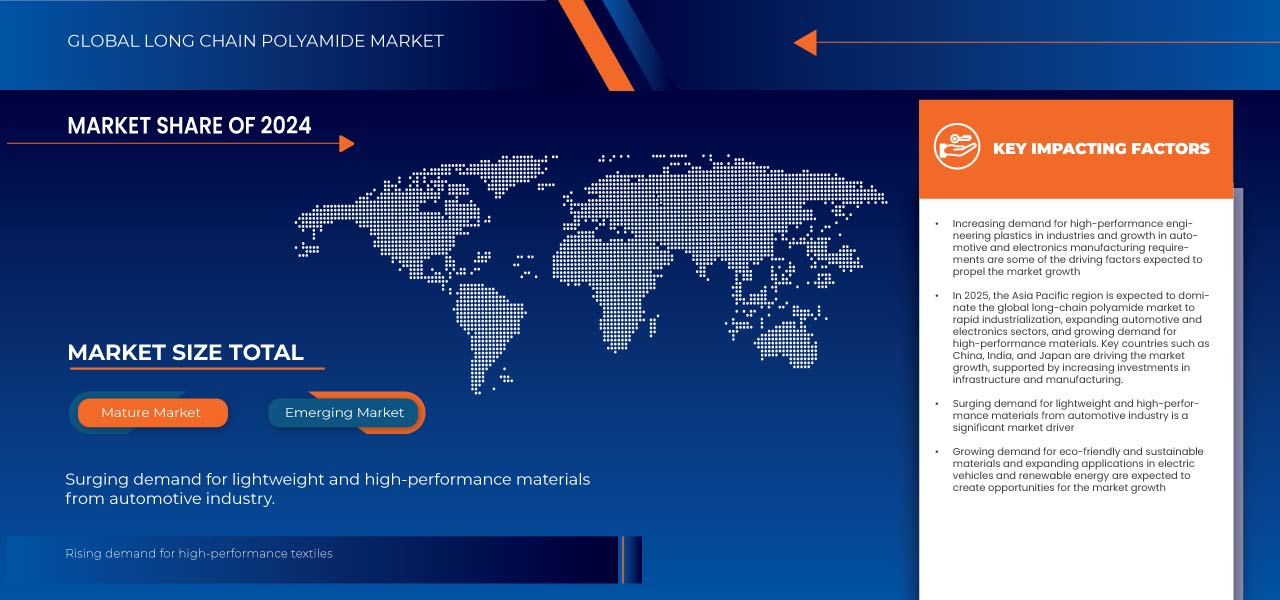
The long chain polyamide (LCPA) market is experiencing steady growth due to its widespread use in automotive, electrical, electronics, and industrial applications. These high-performance materials, characterized by superior thermal stability, chemical resistance, and mechanical properties, are increasingly replacing traditional metals and polymers. The automotive sector drives demand, with LCPA being used in fuel systems, connectors, and under-the-hood applications. In addition, growing electric vehicle production and the trend toward lightweight components further boost market prospects. Asia-Pacific leads in market share, driven by industrial expansion, while North America and Europe also contribute significantly due to technological advancements and sustainable material innovations.
Long Chain Polyamide Market Size
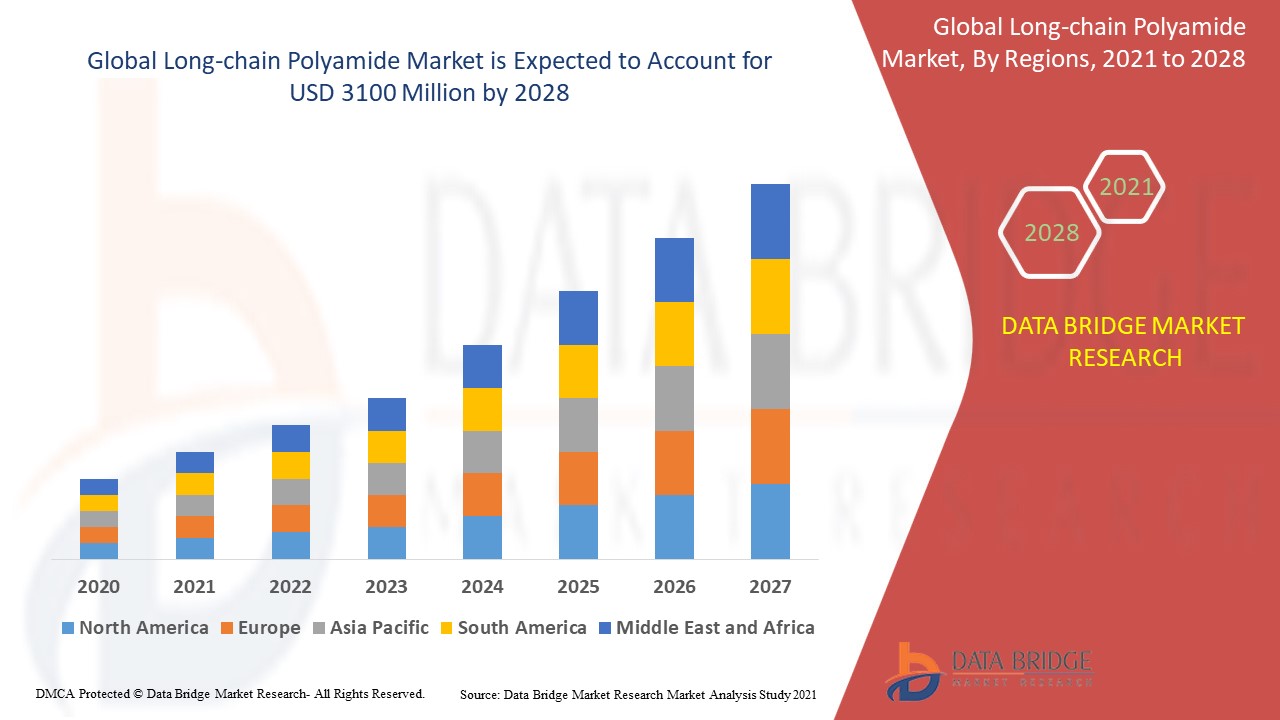
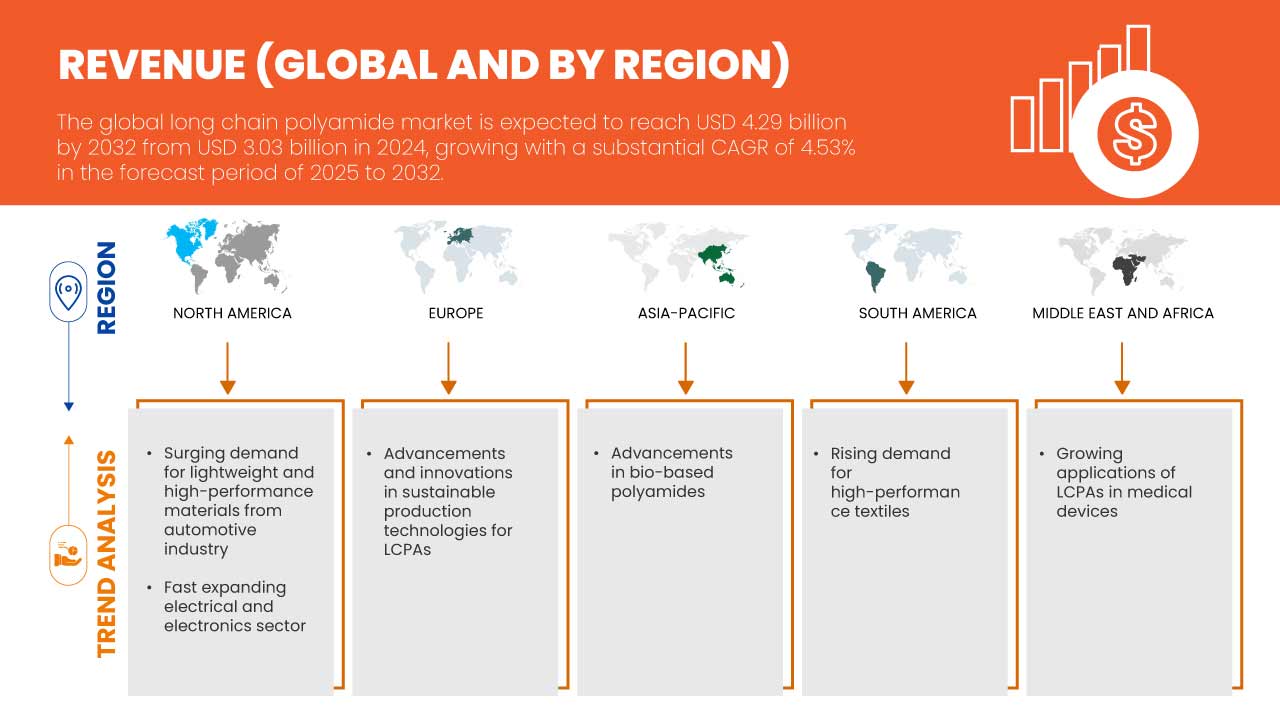
Global long chain polyamide market size was valued at USD 3.03 billion in 2024 and is projected to reach USD 4.29 billion by 2032, with a CAGR of 4.53% during the forecast period of 2024 to 2032. In addition to the insights on market scenarios such as market value, growth rate, segmentation, geographical coverage, and major players, the market reports curated by the Data Bridge Market Research also include import export analysis, production capacity overview, production consumption analysis, price trend analysis, climate change scenario, supply chain analysis, value chain analysis, raw material/consumables overview, vendor selection criteria, PESTLE Analysis, Porter Analysis, and regulatory framework.
Long Chain Polyamide Market
“Widespread Use in Automotive, Electrical, Electronics, And Industrial Applications”
Long Chain Polyamide (LCPA) is increasingly popular in automotive, electrical, electronics, and industrial applications due to its excellent thermal stability, mechanical strength, and chemical resistance. In the automotive industry, LCPA is used for lightweight components, fuel systems, connectors, and under-the-hood parts, contributing to improved fuel efficiency and vehicle performance. In electrical and electronics, LCPA’s insulating properties make it ideal for connectors, wires, and circuit boards. Its durability also benefits industrial applications, where LCPA is used in gears, bearings, and machinery parts. These attributes enable LCPA to replace traditional materials, driving efficiency and sustainability across diverse sectors.
Report Scope and Market Segmentation
|
Attributes |
Long Chain Polyamide Ingredients Key Market Insights |
|
Segments Covered |
|
|
Countries Covered |
China, India, Japan, South Korea, Thailand, Singapore, Indonesia, Australia & New Zealand, Philippines, Malaysia, Rest of Asia-Pacific, Germany, U.K., France, Italy, Spain, Russia, Switzerland, Turkey, Belgium, Netherlands, Luxemburg, Rest of Europe, U.S., Canada, Mexico, Saudi Arabia, Egypt, U.A.E., South Africa, Israel, Rest of Middle East and Africa, Brazil, Argentina, and Rest of South America |
|
Key Market Players |
LG Chem (South Korea), BASF (Germany), Arkema (France), Evonik Industries AG (Germany), DuPont (U.S.), Asahi Kasei Corporation (Japan), TORAY INDUSTRIES, INC. (Japan), MITSUI CHEMICALS AMERICA, INC. (Japan), KURARAY CO., LTD (Japan), Huntsman International LLC. (U.S.), Ascend Performance Materials (U.S.) Envalior (Germany) Domo Chemicals (Belgium), NYCOA (New York Chemicals) (U.S.), and Radici Partecipazioni SpA (Italy) |
|
Market Opportunities |
|
|
Value Added Data Infosets |
In addition to the insights on market scenarios such as market value, growth rate, segmentation, geographical coverage, and major players, the market reports curated by the Data Bridge Market Research also include import export analysis, production capacity overview, production consumption analysis, price trend analysis, climate change scenario, supply chain analysis, value chain analysis, raw material/consumables overview, vendor selection criteria, PESTLE Analysis, Porter Analysis, and regulatory framework. |
Long Chain Polyamide Market Definition
The Long Chain Polyamide (LCPA) market refers to the global industry focused on the production, distribution, and consumption of polyamide polymers with longer molecular chains, typically containing 12 or more carbon atoms. These high-performance materials are known for their superior thermal stability, chemical resistance, mechanical strength, and durability. LCPAs are used in a wide range of applications, including automotive, electrical, electronics, industrial, and consumer goods, where their strength and resilience in harsh environments are essential. The market is driven by demand for lightweight, durable, and sustainable materials that offer better performance compared to conventional polymers and metals.
Biochar Market Dynamics
Drivers
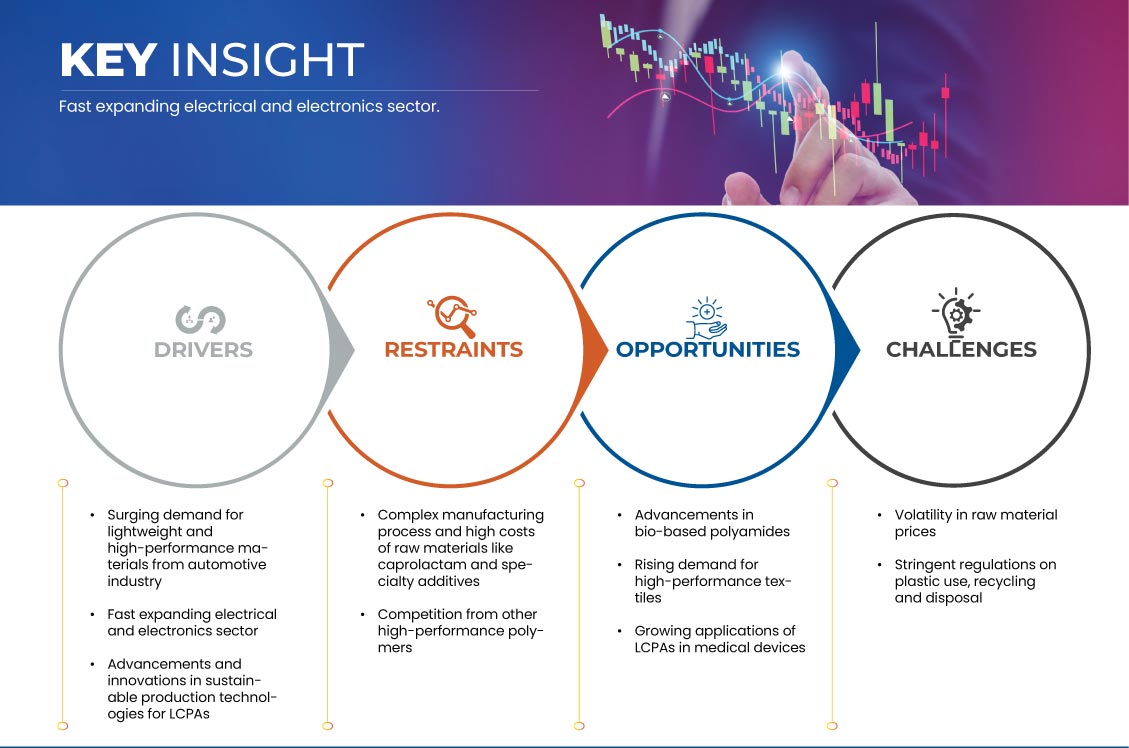
- Surging Demand For Lightweight And High-Performance Materials From Automotive Industry
The surging demand for lightweight and high-performance materials from the automotive industry is a significant driver of the global long-chain polyamide market. As automotive manufacturers increasingly focus on improving fuel efficiency, reducing emissions, and enhancing vehicle performance, the need for materials that are both lightweight and durable has escalated. Long-chain polyamides, with their exceptional strength-to-weight ratio, are ideal for these purposes, making them a preferred choice in various automotive applications.
Long-chain polyamides are used in the production of components such as engine parts, fuel lines, connectors, and electrical components. These materials not only reduce the overall weight of the vehicle but also provide the required strength and resistance to heat, chemicals, and wear, making them essential for modern automotive manufacturing. For example, in engine compartments, where components must withstand high temperatures and stress, long-chain polyamides offer superior thermal stability and mechanical strength compared to traditional materials.
Furthermore, the automotive industry’s shift toward electric vehicles (EVs) has also boosted the demand for high-performance polymers. EVs require lightweight materials to enhance battery efficiency and range, and long-chain polyamides, with their electrical insulating properties and robustness, are increasingly being integrated into the design of battery housings, connectors, and other crucial components.
- Fast Expanding Electrical And Electronics Sector
The fast-expanding electrical and electronics sector is a key driver for the global long-chain polyamide market. As technology advances and the demand for electronic devices and systems grows, there is an increasing need for materials that offer excellent thermal stability, electrical insulation, and mechanical strength. Long-chain polyamides, known for their high-performance characteristics, meet these requirements and are widely used in electrical and electronic applications.
Long-chain polyamides are particularly valued in the production of components like connectors, switches, circuit boards, insulators, and cables. These materials provide superior electrical insulation, which is critical for ensuring the safe and efficient operation of electronic devices. Their resistance to heat and chemicals makes them ideal for use in high-performance electronics, where components often operate at elevated temperatures or are exposed to harsh conditions.
The rise in consumer electronics, such as smartphones, wearables, and smart home devices, is fueling the demand for long-chain polyamides. In addition, the growth of the Internet of Things (IoT) and smart technology in industries such as healthcare, automotive, and telecommunications is further driving the need for advanced materials. Long-chain polyamides are increasingly used in the manufacturing of miniature electronic components, where space constraints and performance demands are critical.
Opportunities
- Advancements in Bio-Based Polyamides
Advancements in bio-based polyamides present a significant opportunity for the growth of the global long-chain polyamide (LCPA) market. As sustainability becomes an increasingly important focus across various industries, there is a growing demand for environmentally friendly alternatives to traditional petroleum-based polymers. Bio-based polyamides, which are derived from renewable resources like plant-based sugars, oils, and other biomass sources, offer an attractive solution to reduce reliance on fossil fuels while maintaining the high-performance characteristics that LCPAs are known for.
One of the key advantages of bio-based polyamides is their ability to reduce carbon emissions and energy consumption during production. By utilizing renewable raw materials, bio-based polyamides can help lower the environmental footprint of industries such as automotive, electronics, and textiles, which are major consumers of long-chain polyamides. This aligns with global efforts to transition to a circular economy and meet stricter environmental regulations, particularly in regions like Europe and North America.
Moreover, bio-based polyamides can appeal to the growing consumer preference for sustainable products. As more consumers and businesses prioritize eco-friendly solutions, the demand for bio-based alternatives to conventional plastics is on the rise. For example, bio-based polyamides are gaining traction in automotive applications, where the industry seeks lighter, more sustainable materials to improve fuel efficiency and reduce emissions. In addition, bio-based polyamides are being explored for use in electronics, where their high thermal stability and electrical insulating properties can be beneficial in green technologies.
- Rising Demand For High-Performance Textiles
The rising demand for high-performance textiles presents a significant opportunity for the growth of the global long-chain polyamide (LCPA) market. High-performance textiles, known for their durability, strength, and versatility, are increasingly sought after in various industries, including automotive, sportswear, medical, and industrial applications. Long-chain polyamides, due to their unique combination of mechanical strength, wear resistance, and thermal stability, are ideal materials for these high-performance fabrics.
In the automotive sector, for instance, LCPAs are used in the production of lightweight, durable textiles for car interiors, including seat covers, upholstery, and airbags. These materials provide the required toughness and resistance to harsh conditions such as high temperatures and UV exposure, enhancing the safety and longevity of automotive components. As automotive manufacturers continue to focus on producing more fuel-efficient vehicles with advanced features, the demand for high-performance textiles made from long-chain polyamides is expected to rise.
The sportswear and activewear market is another area where the demand for high-performance textiles is growing. LCPAs offer superior strength and elasticity, making them suitable for producing clothing and gear that require both durability and comfort, such as athletic uniforms, shoes, and protective gear. As consumers become more focused on high-quality, performance-enhancing products, long-chain polyamide-based textiles provide a competitive advantage for manufacturers in the activewear industry.
Restraints/Challenges
- Complex Manufacturing Process And High Costs Of Raw Materials Like Caprolactam And Specialty Additives
The complex manufacturing process and high costs of raw materials, such as caprolactam and specialty additives, present significant restraints to the growth of the global long-chain polyamide (LCPA) market. The production of LCPAs involves intricate processes that require specialized equipment and technology. These processes, including polymerization, condensation, and extrusion, demand high energy inputs and technical expertise, which can increase production costs. The complexity of manufacturing also makes scaling up production challenging, potentially limiting supply and further driving up costs.
One of the primary raw materials used in the production of long-chain polyamides is caprolactam, a key precursor in the synthesis of nylon. Caprolactam is derived from petroleum-based sources, and fluctuations in the prices of crude oil directly impact its cost. As global oil prices rise, so does the price of caprolactam, which, in turn, increases the overall cost of LCPA production. This price volatility poses a challenge for manufacturers, who must balance production costs with market prices to remain competitive.
In addition, specialty additives such as plasticizers, stabilizers, and flame retardants are often used to enhance the properties of long-chain polyamides. These additives are also costly and may contribute to the overall high cost of LCPA production. The reliance on these expensive materials further strains the economics of manufacturing, especially for industries seeking to keep costs low while maintaining high-performance standards.
- Volatility in Raw Material Prices
Volatility in raw material prices is a significant challenge for the global long-chain polyamide (LCPA) market. The production of LCPAs relies heavily on key raw materials such as caprolactam, a major precursor derived from petroleum-based sources, and specialty additives. The prices of these raw materials are subject to fluctuations due to various factors, including changes in global oil prices, supply chain disruptions, and geopolitical instability. As a result, manufacturers face uncertainty and cost pressures, which can impact profitability and market stability.
Caprolactam, which is a critical feedstock in the production of polyamides, is highly sensitive to changes in crude oil prices. Since it is derived from petroleum, any volatility in oil markets can lead to significant increases in the cost of caprolactam, which, in turn, raises the overall production cost of LCPAs. In addition, geopolitical events or natural disasters in key oil-producing regions can disrupt the supply chain, leading to shortages and further price increases.
The prices of specialty additives used to enhance the properties of LCPAs, such as flame retardants, stabilizers, and plasticizers, are also prone to fluctuations. These additives are often derived from specific chemical processes or sourced from limited suppliers, making them vulnerable to supply chain disruptions. The increased cost of these materials can add to the financial burden on manufacturers, particularly in industries that are price-sensitive or already facing intense competition.
Impact and Current Market Scenario of Raw Material Shortage and Shipping Delays
Data Bridge Market Research offers a high-level analysis of the market and delivers information by keeping in account the impact and current market environment of raw material shortage and shipping delays. This translates into assessing strategic possibilities, creating effective action plans, and assisting businesses in making important decisions.
Apart from the standard report, we also offer in-depth analysis of the procurement level from forecasted shipping delays, distributor mapping by region, commodity analysis, production analysis, price mapping trends, sourcing, category performance analysis, supply chain risk management solutions, advanced benchmarking, and other services for procurement and strategic support.
Expected Impact of Economic Slowdown on the Pricing and Availability of Products
When economic activity slows, industries begin to suffer. The forecasted effects of the economic downturn on the pricing and accessibility of the products are taken into account in the market insight reports and intelligence services provided by DBMR. With this, our clients can typically keep one step ahead of their competitors, project their sales and revenue, and estimate their profit and loss expenditures.
Global Long Chain Polyamide Market Scope
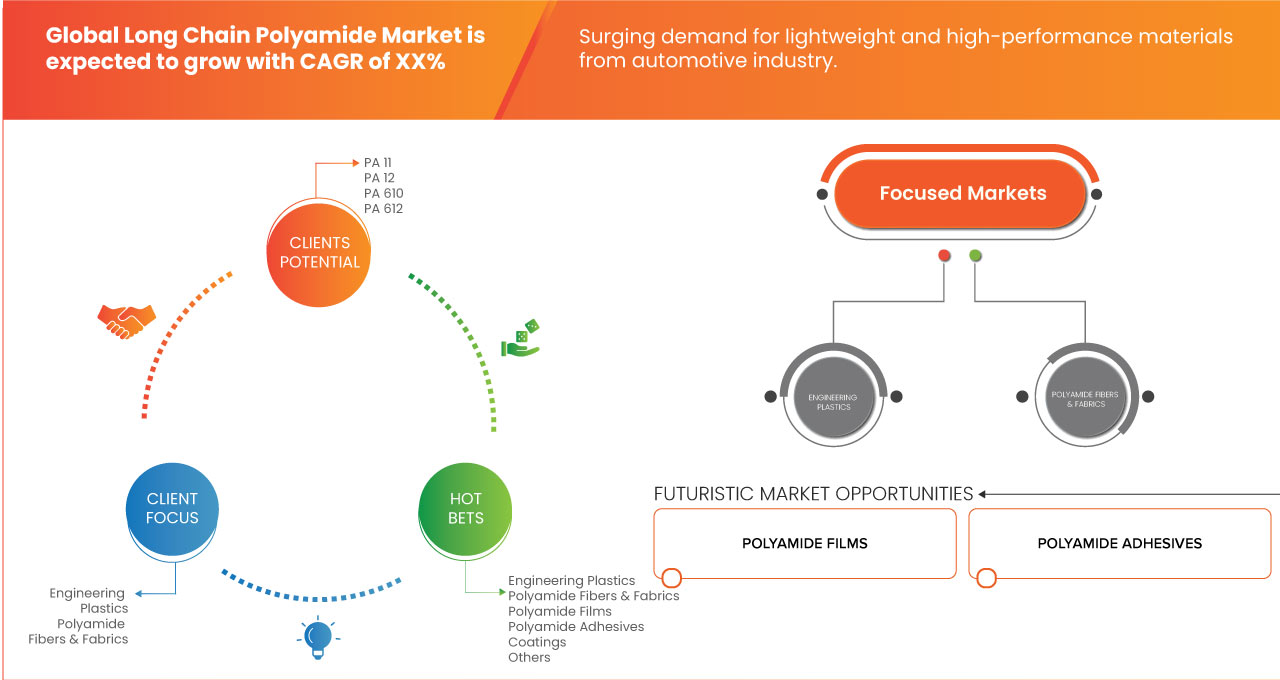
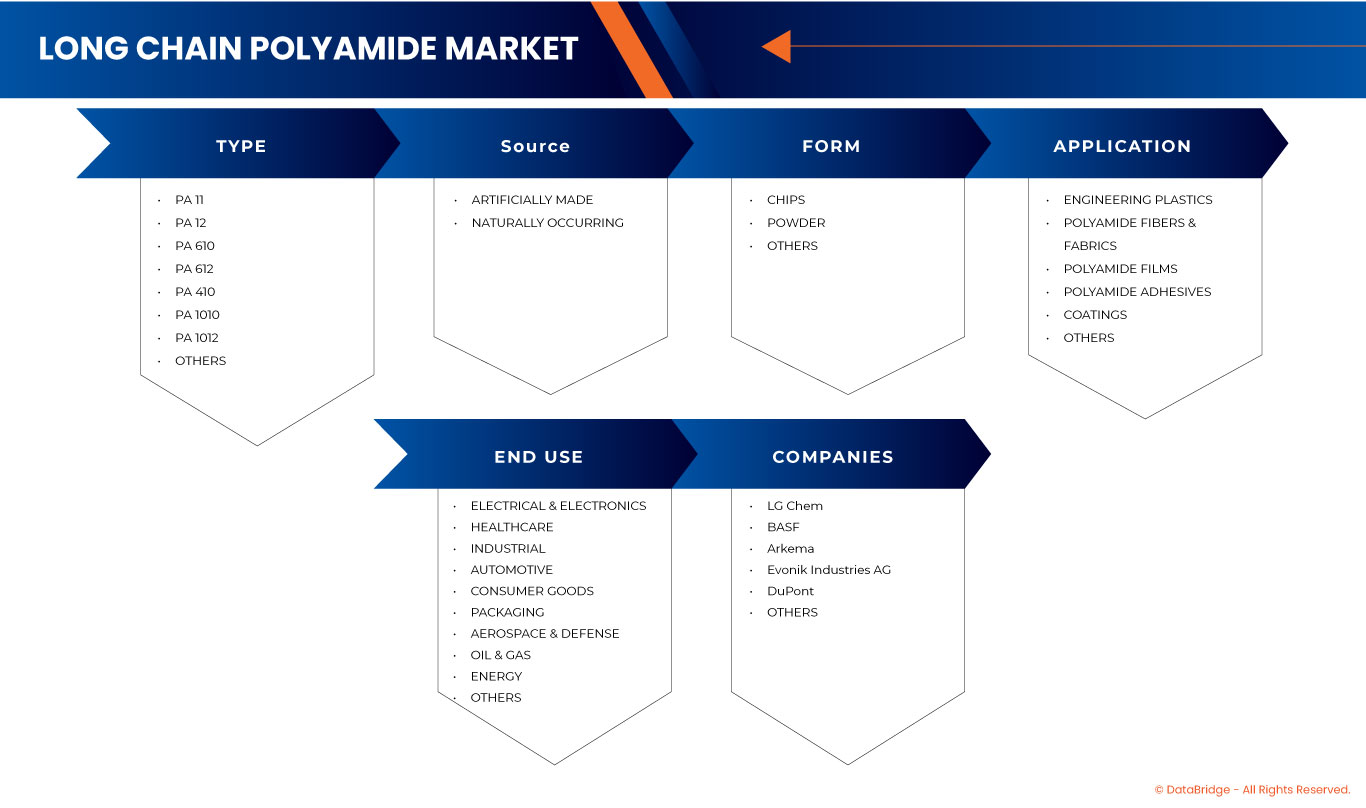
The global long-chain polyamide market is segmented into five notable segments based on type, source, form, application, and end-use. The growth amongst these segments will help you analyze meagre growth segments in the industries and provide the users with a valuable market overview and market insights to help them make strategic decisions for identifying core market applications.
Type
- PA 12
- PA 11
- PA 610
- PA 612
- PA 1010
- PA 1012
- PA 410
- Others
Source
- Artificially Made
- Naturally Occurring
Form
- Chips
- Powder
- Others
Application
- Engineering Plastics
- Polyamide Fibers & Fabrics
- Polyamide Films
- Polyamide Adhesives
- Coatings
- Others
End Use
- Electrical & Electronics
- Healthcare, Industrial
- Automotive, Consumer Goods
- Packaging
- Aerospace & Defense
- Oil & Gas
- Energy
- Others
Global Long Chain Polyamide Market Regional Analysis
The market is analyzed and market size insights and trends are provided on the basis of country, type, source, form, application, and end-use as referenced above
The countries covered in the market are China, India, Japan, South Korea, Thailand, Singapore, Indonesia, Australia & New Zealand, Philippines, Malaysia, Rest of Asia-Pacific, Germany, U.K., France, Italy, Spain, Russia, Switzerland, Turkey, Belgium, Netherlands, Luxemburg, Rest of Europe, U.S., Canada, Mexico, Saudi Arabia, Egypt, U.A.E., South Africa, Israel, Rest of Middle East and Africa, Brazil, Argentina, and Rest of South America
North America is expected to dominate the long chain polyamide market due to advanced technological innovation, strong automotive and electronics industries, a focus on sustainability, and high demand for high-performance materials in various applications.
Europe is expected to be fastest growing in the long chain polyamide market due to its focus on automotive innovation, sustainable manufacturing practices, increasing demand for high-performance materials, and strong presence in industrial and electronic sectors.
The country section of the report also provides individual market impacting factors and changes in regulation in the market domestically that impacts the current and future trends of the market. Data points like down-stream and upstream value chain analysis, technical trends and porter's five forces analysis, case studies are some of the pointers used to forecast the market scenario for individual countries. Also, the presence and availability of global brands and their challenges faced due to large or scarce competition from local and domestic brands, impact of domestic tariffs and trade routes are considered while providing forecast analysis of the country data.
Global Long Chain Polyamide Market Share
The market competitive landscape provides details by competitors. Details included are company overview, company financials, revenue generated, market potential, investment in research and development, new market initiatives, global presence, production sites and facilities, production capacities, company strengths and weaknesses, product launch, product width and breadth, application dominance. The above data points provided are only related to the companies' focus related to market.
Global Long Chain Polyamide Market Leaders Operating in the Market Are:
- LG Chem (South Korea)
- BASF (Germany)
- Arkema (France)
- Evonik Industries AG (Germany)
- DuPont (U.S.)
- Asahi Kasei Corporation (Japan)
- TORAY INDUSTRIES INC. (Japan)
- MITSUI CHEMICALS AMERICA INC. (Japan)
- KURARAY CO. LTD (Japan)
- Huntsman International LLC. (U.S.)
- Ascend Performance Materials (U.S.)
- Envalior (Germany)
- Domo Chemicals (Belgium)
- NYCOA (New York Chemicals) (U.S.)
- Radici Partecipazioni SpA (Italy)
Latest Developments in Global Long Chain Polyamide Market
- In November 2024, BASF’s Polyamide 6 (PA6) plant in Shanghai received the ISCC PLUS certification, enabling it to produce biomass-balanced and Ccycled PA6. This certification supports BASF’s commitment to sustainability, offering lower carbon footprint and circular product alternatives in the PA6 value chain
- In December 2024, Arkema completed the acquisition of Dow’s flexible packaging laminating adhesives business, a leading global producer. This move expanded Arkema's portfolio in flexible packaging, positioning the company as a key player in the market
- In November 2024, Asahi Kasei has announced its decision to absorb its wholly owned subsidiary, Asahi Kasei NS Energy, through a simplified absorption-type merger, effective April 1, 2025. This move aims to streamline operations after Asahi Kasei NS Energy became a fully owned subsidiary in April 2023
- In April 2024, Domo Chemicals has inaugurated a new factory in China with a USD 15.12 million investment, enhancing production capacity. The facility, located south of Shanghai, will double output in the short term and potentially triple it in the future.
- In September 2022, NYCOA announced the launch of NXTamid-L, a new family of specialty performance nylons designed as alternatives to Nylon 12 and 11. NXTamid-L offers comparable or superior properties, including flexibility, lower moisture absorption, higher glass transition temperatures, and enhanced chemical resistance. This innovative nylon family can also be customized to meet specific performance requirements, reinforcing NYCOA’s position as a leader in the nylon industry
SKU-
Получите онлайн-доступ к отчету на первой в мире облачной платформе рыночной аналитики

- Интерактивная панель анализа данных
- Панель анализа компании для возможностей с высоким потенциалом роста
- Доступ аналитика-исследователя для настройки и запросов
- Анализ конкурентов с помощью интерактивной панели
- Последние новости, обновления и анализ тенденций
- Используйте возможности сравнительного анализа для комплексного отслеживания конкурентов
Методология исследования
Сбор данных и анализ базового года выполняются с использованием модулей сбора данных с большими размерами выборки. Этап включает получение рыночной информации или связанных данных из различных источников и стратегий. Он включает изучение и планирование всех данных, полученных из прошлого заранее. Он также охватывает изучение несоответствий информации, наблюдаемых в различных источниках информации. Рыночные данные анализируются и оцениваются с использованием статистических и последовательных моделей рынка. Кроме того, анализ доли рынка и анализ ключевых тенденций являются основными факторами успеха в отчете о рынке. Чтобы узнать больше, пожалуйста, запросите звонок аналитика или оставьте свой запрос.
Ключевой методологией исследования, используемой исследовательской группой DBMR, является триангуляция данных, которая включает в себя интеллектуальный анализ данных, анализ влияния переменных данных на рынок и первичную (отраслевую экспертную) проверку. Модели данных включают сетку позиционирования поставщиков, анализ временной линии рынка, обзор рынка и руководство, сетку позиционирования компании, патентный анализ, анализ цен, анализ доли рынка компании, стандарты измерения, глобальный и региональный анализ и анализ доли поставщика. Чтобы узнать больше о методологии исследования, отправьте запрос, чтобы поговорить с нашими отраслевыми экспертами.
Доступна настройка
Data Bridge Market Research является лидером в области передовых формативных исследований. Мы гордимся тем, что предоставляем нашим существующим и новым клиентам данные и анализ, которые соответствуют и подходят их целям. Отчет можно настроить, включив в него анализ ценовых тенденций целевых брендов, понимание рынка для дополнительных стран (запросите список стран), данные о результатах клинических испытаний, обзор литературы, обновленный анализ рынка и продуктовой базы. Анализ рынка целевых конкурентов можно проанализировать от анализа на основе технологий до стратегий портфеля рынка. Мы можем добавить столько конкурентов, о которых вам нужны данные в нужном вам формате и стиле данных. Наша команда аналитиков также может предоставить вам данные в сырых файлах Excel, сводных таблицах (книга фактов) или помочь вам в создании презентаций из наборов данных, доступных в отчете.











