Global Lysosomal Enzymes Market Segmentation, By Drugs (Velaglucerase, Imiglucerase, Alglucosidase, and Others), Indication (Gaucher Disease, Mucopolysaccharidosis, Pompe Disease, and Others), End-Users (Hospitals, Homecare, Specialty Clinics, and Others), Distribution Channel (Hospital Pharmacy, Online Pharmacy, and Retail Pharmacy)- Industry Trends and Forecast to 2033
Каковы размеры рынка лизосомальных ферментов и темпы роста
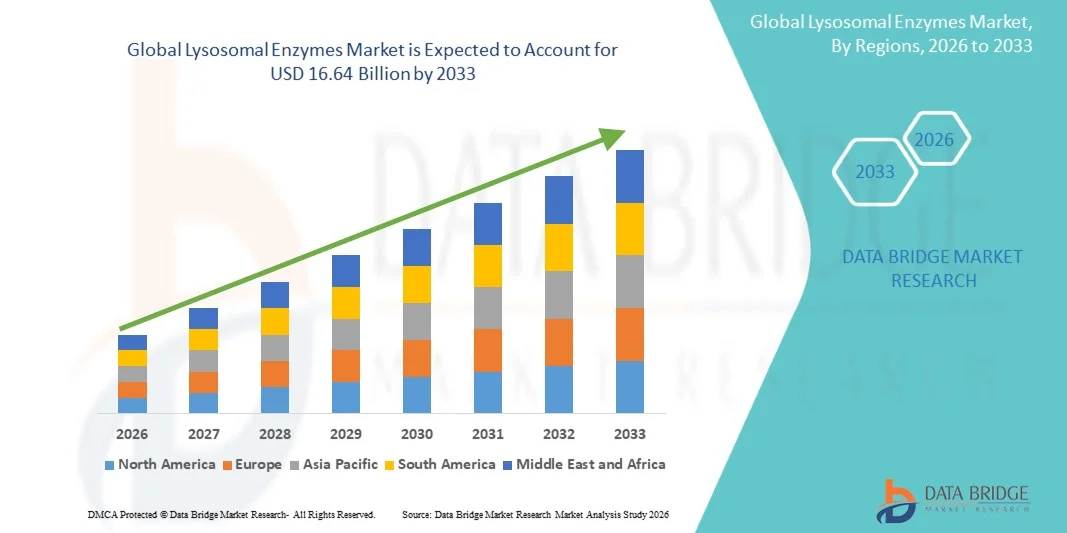
- Согласно анализу Data Bridge Market Research, глобальный размер рынка лизосомальных ферментов был оценен как9,69 млрд долларов в 2025 годуОжидается, что он достигнет16,64 млрд долларов к 2033 году, вCAGR 7.00%в течение прогнозируемого периода
- Рост рынка в значительной степени подпитывается растущей распространенностью редких генетических расстройств, таких как лизосомальные болезни хранения (ЛСД), наряду с достижениями в области здравоохранения.заместительная ферментная терапия(ERT) и улучшенные диагностические возможности, что приводит к более высоким показателям внедрения лечения в развитых и новых системах здравоохранения.
- Кроме того, растущие инвестиции в исследования в области биотехнологий, повышение осведомленности о раннем выявлении заболеваний и сильная поддержка со стороны регулирующих органов для орфанных препаратов создают лизосомальные ферменты в качестве критического терапевтического решения. Эти сходящиеся факторы ускоряют поглощение лизосомальных ферментных терапий, тем самым значительно повышая рост отрасли.
Размер рынка и прогноз
- Глобальная рыночная стоимость (2025):9,69 млрд долларов
- Ожидаемая рыночная стоимость (2033):$16,64 млрд.
- Прогноз CAGR (2026-2033):7.00%
Каковы основные выводы рынка лизосомальных ферментов
- Лизосомальные ферменты, используемые в основном в заместительной терапии ферментов для лечения нарушений лизосомального хранения, становятся все более важными в современных системах здравоохранения из-за их способности решать редкие генетические условия, улучшать результаты лечения пациентов и поддерживать долгосрочное лечение заболеваний по нескольким терапевтическим показаниям.
- Растущий спрос на лизосомальные ферменты в первую очередь подпитывается растущей распространенностью заболеваний, связанных с хранением лизосом, повышением осведомленности и ранней диагностикой, а также растущим предпочтением целевых биологических методов лечения, которые предлагают улучшенную эффективность по сравнению с обычными методами лечения.
- Северная Америка доминировала на рынке лизосомальных ферментов с самой большой долей дохода в 41,08% в 2025 году, характеризующейся передовой инфраструктурой здравоохранения, сильными структурами возмещения и значительным присутствием ведущих биофармацевтических компаний, причем США испытывают значительный рост в принятии лечения, обусловленный расширением одобрения ферментных методов лечения редких заболеваний.
- Ожидается, что Азиатско-Тихоокеанский регион станет самым быстрорастущим регионом на рынке лизосомальных ферментов в течение прогнозируемого периода из-за улучшения инфраструктуры здравоохранения, увеличения показателей диагностики и растущей государственной поддержки лечения редких заболеваний.
- Сегмент имиглюцеразы доминировал на рынке лизосомальных ферментов с долей рынка 39,7% в 2025 году, что обусловлено его широким использованием в лечении лизосомальных ферментов.Болезнь ГошеСильная клиническая эффективность и установленное присутствие в протоколах заместительной терапии ферментами
Сфера охвата и сегментация рынка лизосомальных ферментов
|
Атрибуты |
Лизосомальные ферменты Ключевые идеи рынка |
|
Сегменты покрыты |
|
|
Страны, охваченные |
Северная Америка
Европа
Азиатско-Тихоокеанский регион
Ближний Восток и Африка
Южная Америка
|
|
Ключевые игроки рынка |
|
|
Рыночные возможности |
|
|
Информационные наборы данных с добавленной стоимостью |
В дополнение к информации о рыночных сценариях, таких как рыночная стоимость, темпы роста, сегментация, географический охват и основные игроки, рыночные отчеты, курируемые Data Bridge Market Research, также включают углубленный экспертный анализ, эпидемиологию пациентов, анализ трубопроводов, анализ цен и нормативную базу. |
Каковы основные тенденции на рынке лизосомальных ферментов
«Достижения в области замены ферментов и целевой биологической терапии»
- Значительной и ускоряющейся тенденцией на мировом рынке лизосомальных ферментов является постоянное продвижение в заместительной терапии ферментами (ERT) и разработка биопрепаратов следующего поколения, предназначенных для повышения эффективности лечения и результатов лечения при множественных лизосомальных нарушениях хранения. Этот прогресс значительно улучшает лечение заболеваний и долгосрочный прогноз пациента.
- Например, такие методы лечения, как имиглуцераза и альглюкозидаза альфа, продемонстрировали сильные клинические результаты при лечении заболеваний Гоше и Помпе, что позволило улучшить качество жизни и увеличить выживаемость среди пациентов. Аналогичным образом, велаглуцераза альфа предлагает альтернативное лечение с улучшенными профилями переносимости.
- Технологические достижения в лизосомальной ферментной терапии позволяют улучшить таргетинг пораженных клеток, снизить иммуногенность и оптимизировать схемы дозирования. Например, новые составы предназначены для повышения стабильности ферментов и биодоступности, тем самым повышая терапевтическую эффективность и минимизируя побочные реакции. Кроме того, инновации в системах доставки лекарств способствуют лучшему соблюдению требований пациентов и доступности лечения.
- Интеграция лизосомальной ферментной терапии с передовыми диагностическими методами облегчает раннее выявление и своевременное вмешательство при редких генетических нарушениях. Благодаря улучшенным программам скрининга и генетическому тестированию медицинские работники могут начать лечение на более ранних стадиях, тем самым улучшая терапевтические результаты и уменьшая прогрессирование заболевания.
- Эта тенденция к более эффективной, точной и ориентированной на пациента терапии коренным образом меняет стандарты лечения лизосомных нарушений хранения. Следовательно, такие компании, как Sanofi и Takeda Pharmaceutical, инвестируют в ферментную терапию следующего поколения с улучшенными механизмами доставки и расширенными показаниями.
- Спрос на лизосомальные ферментные терапии, которые обеспечивают повышенную эффективность и улучшенное соответствие пациентов, быстро растет в глобальных системах здравоохранения, поскольку поставщики все чаще отдают приоритет передовым биологическим методам лечения редких заболеваний.
- Растущее сотрудничество между биотехнологическими фирмами и академическими учреждениями ускоряет инновации в развитии лизосомальных ферментов, что приводит к более быстрым клиническим достижениям и более широким терапевтическим применениям.
Лизосомальные ферменты Динамика рынка
водитель
«Увеличение распространенности редких генетических расстройств и увеличение приема лекарств»
- Растущая распространенность расстройств лизосомального хранения в сочетании с растущей осведомленностью и улучшенными диагностическими возможностями является значительным фактором повышенного спроса на терапию лизосомными ферментами.
- Например, в марте 2025 года Sanofi объявила о продолжении инвестиций в исследования редких заболеваний, уделяя особое внимание расширению портфеля ферментозаместительной терапии лизосомальных расстройств. Ожидается, что такие стратегии ключевых компаний будут стимулировать рост отрасли лизосомальных ферментов в прогнозируемый период.
- Поскольку системы здравоохранения становятся более способными выявлять редкие генетические состояния на ранней стадии, лизосомные ферментные терапии предлагают целевые варианты лечения, которые устраняют основные недостатки ферментов, обеспечивая убедительную альтернативу симптоматическому лечению.
- Кроме того, растущее внимание к разработке орфанных лекарств и поддерживающих нормативных рамок делает лизосомные ферментные терапии неотъемлемым компонентом стратегий лечения редких заболеваний, предлагая стимулы для инноваций и коммерциализации.
- Доступность передовых биологических методов лечения, улучшенная политика возмещения расходов и расширение доступа пациентов к специализированным лечебным центрам являются ключевыми факторами, способствующими внедрению лизосомальных ферментов на развитых и развивающихся рынках. Расширение программ скрининга новорожденных и увеличение расходов на здравоохранение также способствуют росту рынка.
- Увеличение инвестиций государственного и частного секторов в исследования редких заболеваний еще больше ускоряет разработку и коммерциализацию лизосомальных ферментных терапий.
- Растущие инициативы групп поддержки пациентов повышают осведомленность, показатели диагностики и охвата лечением, тем самым усиливая рыночный спрос.
Сдержанность/вызов
«Высокая стоимость лечения и ограниченная доступность в развивающихся странах»
- Высокая стоимость, связанная с лизосомальной ферментной терапией, включая заместительную терапию ферментами, представляет собой серьезную проблему для более широкого проникновения на рынок. Поскольку эти методы лечения включают сложное производство и долгосрочное администрирование, они создают значительные финансовые нагрузки для пациентов и систем здравоохранения.
- Например, ежегодная стоимость заместительной терапии ферментами при таких заболеваниях, как болезнь Гоше или Помпе, может быть чрезвычайно высокой, что ограничивает доступность для пациентов в странах с низким и средним уровнем дохода.
- Решение этих проблем, связанных с затратами, с помощью стратегий ценообразования, расширения возмещения и программ государственной поддержки имеет решающее значение для улучшения доступа пациентов. Такие компании, как BioMarin и Sanofi, уделяют особое внимание программам помощи пациентам и партнерским отношениям с поставщиками медицинских услуг. Кроме того, ограниченная осведомленность и неадекватная инфраструктура здравоохранения в некоторых регионах могут задержать начало диагностики и лечения, что еще больше ограничивает рост рынка.
- В то время как осведомленность и доступ постепенно улучшаются, неравенство в системах здравоохранения и наличие специализированных лечебных центров все еще могут препятствовать широкому распространению, особенно в развивающихся странах или недостаточно обслуживаемом населении.
- Преодоление этих проблем за счет оптимизации затрат, расширения диагностических возможностей и расширения сотрудничества между заинтересованными сторонами будет иметь жизненно важное значение для устойчивого роста рынка.
- Сложные процессы одобрения биопрепаратов и орфанных препаратов могут задержать запуск продукта и ограничить своевременный доступ пациентов к новым методам лечения.
- Ограниченная доступность квалифицированных медицинских работников и специализированных лечебных центров в определенных регионах может еще больше ограничить эффективное применение лизосомальных ферментных терапий.
Как сегментируется рынок лизосомальных ферментов
Рынок сегментирован на основе лекарств, индикации, конечных пользователей и канала распространения.
- С помощью наркотиков
На основе лекарственных препаратов рынок лизосомальных ферментов сегментирован на велаглуцеразу, имиглуцеразу, альглюкозидазу и другие. Сегмент имиглуцеразы доминировал на рынке с самой большой долей рынка в 39,7% в 2025 году, что обусловлено его многолетним клиническим использованием и высокой эффективностью в лечении болезни Гоше. Он остается предпочтительной терапией из-за его устоявшегося профиля безопасности и широкого распространения на основных рынках здравоохранения. Наличие сильных клинических данных и знакомство с врачом дополнительно поддерживают его доминирование в протоколах заместительной терапии ферментами. Кроме того, поддержка возмещения и включение в руководящие принципы лечения укрепили позиции компании на мировом рынке. Непрерывные улучшения в цепочке поставок и программы доступа пациентов также способствовали устойчивому спросу.
Ожидается, что в сегменте альглюкозидазы будет наблюдаться самый быстрый темп роста в 9,4% с 2026 по 2033 год, чему способствует растущая распространенность и диагностика болезни Помпе во всем мире. Растущая осведомленность и расширение программ скрининга новорожденных позволяют проводить раннее выявление, тем самым повышая показатели начала лечения. Достижения в разработке и стратегиях дозирования улучшают результаты лечения пациентов и их соблюдение. Кроме того, ожидается, что продолжающиеся исследования и разработки, направленные на повышение стабильности ферментов и эффективности доставки, усилят рост сегмента. Увеличение инвестиций в лечение редких заболеваний и расширение доступа на развивающихся рынках также способствуют быстрому внедрению.
- По показаниям
На основании показаний рынок лизосомальных ферментов сегментирован на болезнь Гоше, мукополисахаридоз, болезнь Помпе и другие. Сегмент болезни Гоше доминировал на рынке с самой большой долей дохода на рынке в 42,3% в 2025 году, что обусловлено его относительно высокой распространенностью среди лизосомальных нарушений хранения и наличием нескольких одобренных ферментных терапий. Установленные протоколы лечения и ранняя диагностика в развитых регионах вносят значительный вклад в его доминирование. Сильная осведомленность среди медицинских работников и пациентов привела к последовательному принятию лечения. Кроме того, благоприятная политика возмещения и долгосрочный клинический успех ферментной терапии способствовали устойчивому росту рынка. Наличие нескольких терапевтических вариантов еще больше укрепляет лидирующие позиции этого сегмента.
Ожидается, что в сегменте болезни Помпе будет наблюдаться самый быстрый рост на 10,1% с 2026 по 2033 год, что обусловлено увеличением показателей диагностики и достижений в области заместительной терапии ферментами. Повышение осведомленности и улучшение скрининговых инициатив приводят к более ранней идентификации пациентов. Непрерывные инновации в подходах к лечению улучшают терапевтические результаты и расширяют права пациентов. Кроме того, увеличение внимания к исследованиям болезни Помпе с поздним началом открывает новые возможности для лечения. Расширение доступа к здравоохранению и поддерживающие правительственные инициативы на развивающихся рынках также способствуют быстрому росту сегмента.
- конечными пользователями
На основе конечных пользователей рынок лизосомальных ферментов сегментирован на больницы, домашнюю помощь, специализированные клиники и другие. Сегмент больниц доминировал на рынке с самой большой долей рынка в 45,6% в 2025 году, что обусловлено наличием передовой медицинской инфраструктуры и специализированных медицинских работников, необходимых для введения ферментной терапии. Больницы служат основными центрами для диагностики, начала лечения и мониторинга лизосомальных нарушений хранения. Наличие многопрофильных команд обеспечивает комплексный уход за пациентами и управление ими. Кроме того, надежные механизмы возмещения расходов и доступ к дорогостоящим биологическим методам лечения поддерживают лечение в больницах. Увеличение предпочтений пациентов в отношении клинически контролируемого введения еще больше усиливает этот сегмент.
Ожидается, что в сегменте услуг по уходу на дому будет наблюдаться самый быстрый рост на 8,7% с 2026 по 2033 год, чему способствует растущая тенденция к ориентированному на пациента уходу и удобству. Достижения в системах доставки лекарств и учебных программах позволяют безопасно применять ферментную терапию дома. Такой подход снижает нагрузку на медицинские учреждения и улучшает качество жизни пациентов. Растущее признание домашнего лечения среди пациентов с хроническими заболеваниями вызывает спрос. Кроме того, экономическая эффективность и сокращение посещений больниц способствуют усыновлению. Поддержка со стороны поставщиков медицинских услуг и страховщиков также способствует расширению сегмента.
- Дистрибьюторский канал
На основе канала распределения рынок лизосомальных ферментов сегментирован в больничную аптеку, онлайн-аптеку и розничную аптеку. Сегмент больничных аптек доминировал на рынке с самой большой долей рынка в 51,2% в 2025 году, что обусловлено контролируемым распределением дорогостоящих ферментных терапий через институциональные настройки. Больничные аптеки обеспечивают надлежащее хранение, обработку и введение биологических препаратов, что имеет решающее значение для поддержания эффективности препарата. Они также играют ключевую роль в управлении запасами и обеспечении своевременной доступности лечения. Сильная интеграция с протоколами лечения в больницах также поддерживает их доминирование. Кроме того, программы возмещения расходов и помощи пациентам часто облегчаются через больничные аптеки.
Сегмент онлайн-аптек, как ожидается, продемонстрирует самый быстрый рост на 11,3% с 2026 по 2033 год, что обусловлено растущей цифровизацией в здравоохранении и растущим предпочтением пациентов удобному доступу к лекарствам. Расширение платформ электронной аптеки и улучшение логистики повышают доступность лекарств, особенно в отдаленных районах. Регулятивная поддержка цифровых медицинских услуг также способствует принятию. Пациенты получают выгоду от простоты заказа и услуг по доставке на дом. Более того, растущее проникновение в Интернет и осведомленность об онлайн-решениях в области здравоохранения ускоряют рост. Стратегическое партнерство между фармацевтическими компаниями и электронными агентствами также укрепляет траекторию расширения этого сегмента.
В каком регионе находится наибольшая доля рынка лизосомальных ферментов
- Северная Америка доминировала на рынке лизосомальных ферментов с самой большой долей дохода в 41,08% в 2025 году, характеризующейся развитой инфраструктурой здравоохранения, сильными структурами возмещения и значительным присутствием ведущих биофармацевтических компаний.
- Пациенты и поставщики медицинских услуг в регионе высоко ценят клиническую эффективность, долгосрочные преимущества лечения заболеваний и наличие одобренных биологических методов лечения редких генетических заболеваний, таких как болезнь Гоше и Помпе.
- Это широкое внедрение дополнительно поддерживается передовой инфраструктурой здравоохранения, благоприятной политикой возмещения, сильным присутствием ведущих биофармацевтических компаний и увеличением инвестиций в исследования редких заболеваний, установление лизосомальных ферментных терапий в качестве предпочтительного подхода к лечению в специализированных медицинских учреждениях.
Американский рынок лизосомальных ферментов Insight
Американский рынок лизосомальных ферментов занял самую большую долю дохода в 82% в 2025 году в Северной Америке, чему способствовало сильное присутствие ведущих биофармацевтических компаний и растущее внедрение заместительной терапии ферментами. Пациенты и медицинские работники все чаще отдают приоритет эффективному лечению редких генетических заболеваний с помощью передовых биологических методов лечения. Растущая распространенность заболеваний, связанных с хранением лизосом, в сочетании с надежными механизмами возмещения и ранней диагностикой способствуют дальнейшему развитию рынка. Кроме того, непрерывные исследования и одобрение регулирующих органов для орфанных препаратов вносят значительный вклад в расширение рынка.
Европейский рынок лизосомальных ферментов Insight
Европейский рынок лизосомальных ферментов, по прогнозам, будет расширяться при существенном CAGR в течение прогнозируемого периода, в основном за счет поддерживающей регуляторной политики в отношении орфанных препаратов и растущего внимания к лечению редких заболеваний. Увеличение инвестиций в здравоохранение в сочетании с улучшенными диагностическими возможностями способствует внедрению ферментной терапии. Европейские пациенты и системы здравоохранения также привлекаются к долгосрочным терапевтическим преимуществам этих методов лечения. Регион переживает значительный рост в специализированных лечебных центрах, при этом ферментная терапия включена в стандартные протоколы ухода.
Британский рынок лизосомальных ферментов Insight
Ожидается, что рынок лизосомальных ферментов в Великобритании в течение прогнозируемого периода будет расти с заметным CAGR, что обусловлено растущей осведомленностью о редких генетических нарушениях и спросом на передовые варианты лечения. Кроме того, сильная государственная поддержка и инициативы в области здравоохранения поощряют раннюю диагностику и лечение. Ожидается, что хорошо налаженная инфраструктура здравоохранения страны, наряду с акцентом на инновационные методы лечения, продолжит стимулировать рост рынка.
Немецкий рынок лизосомальных ферментов
Ожидается, что в течение прогнозируемого периода рынок лизосомальных ферментов в Германии будет расширяться на значительном CAGR, чему будет способствовать увеличение инвестиций в биотехнологии и уделение особого внимания передовым терапевтическим решениям. Хорошо развитая система здравоохранения Германии в сочетании с ее акцентом на исследования и инновации способствует внедрению ферментной терапии, особенно в специализированных медицинских учреждениях. Интеграция современной диагностики с протоколами лечения также становится все более распространенной, что согласуется с акцентом страны на точную медицину.
Азиатско-Тихоокеанский рынок лизосомальных ферментов
Азиатско-тихоокеанский рынок лизосомальных ферментов будет расти на 9,2% в течение прогнозируемого периода с 2026 по 2033 год, что обусловлено улучшением инфраструктуры здравоохранения, повышением осведомленности о редких заболеваниях и ростом расходов на здравоохранение в таких странах, как Китай, Япония и Индия. Растущее внимание региона к ранней диагностике и лечению, поддерживаемое правительственными инициативами, стимулирует внедрение ферментной терапии. Кроме того, поскольку APAC укрепляет свое присутствие в биофармацевтическом производстве, доступность лечения лизосомными ферментами расширяется до более широкой базы пациентов.
Японский рынок лизосомальных ферментов
Японский рынок лизосомальных ферментов набирает обороты благодаря передовой системе здравоохранения страны, старению населения и увеличению внимания к лечению редких заболеваний. Японский рынок уделяет большое внимание ранней диагностике и эффективному лечению, а внедрение ферментной терапии обусловлено растущим уровнем осведомленности и программами скрининга. Интеграция передовых биологических препаратов со специализированной медицинской помощью способствует росту. Кроме того, сильная фармацевтическая исследовательская экосистема Японии, вероятно, будет стимулировать спрос на инновационные решения для лечения как в клинических, так и в исследовательских условиях.
Рынок лизосомальных ферментов Индии Insight
На индийский рынок лизосомальных ферментов приходится наибольшая доля доходов рынка в Азиатско-Тихоокеанском регионе в 2025 году, что связано с улучшением инфраструктуры здравоохранения страны, повышением осведомленности о редких заболеваниях и расширением доступа к диагностическим услугам. Индия выступает в качестве развивающегося рынка для ферментной терапии, с ростом внедрения в больницах и специализированных клиниках. Стремление к улучшению управления редкими заболеваниями и правительственные инициативы, наряду с расширением доступа к доступным вариантам лечения, являются ключевыми факторами, стимулирующими рынок в Индии.
Какие компании являются ведущими на рынке лизосомальных ферментов
Индустрия лизосомальных ферментов в основном возглавляется хорошо известными компаниями, в том числе:
- Санофи (Франция)
- Takeda Pharmaceutical Company Limited (Япония)
- Pfizer Inc. (США)
- BioMarin Pharmaceutical Inc. (США)
- Amicus Therapeutics, Inc. (США)
- Protalix BioTherapeutics Inc.
- Chiesi Farmaceutici S.p.A. (Италия)
- Orchard Therapeutics plc (Великобритания)
- Sangamo Therapeutics, Inc. (США)
- Denali Therapeutics Inc. (США)
- AVROBIO, Inc. (США)
- REGENXBIO Inc. (США)
- Greenovation Biotech GmbH (Германия)
- JCR Pharmaceuticals Co., Ltd. (Япония)
- ISU Abxis Co., Ltd. (Южная Корея)
- GC Biopharma Corp. (Южная Корея)
- Esteve Pharmaceuticals, S.A. (Испания)
- Idorsia Ltd (Швейцария)
- Homology Medicines, Inc. (США)
- Freeline Therapeutics Holdings plc (Великобритания)
Каковы последние события на мировом рынке лизосомальных ферментов
- В мае 2025 года продолжающиеся клинические и терапевтические разработки подчеркнули продолжающееся использование и клиническую важность имиглуцеразы в качестве краеугольной ферментозаместительной терапии для болезни Гоше, укрепляя ее долгосрочную эффективность и устойчивый спрос на протоколы лечения лизосомальными ферментами.
- В мае 2025 года несколько биотехнологических компаний продвинули исследовательские трубопроводы, направленные на замену ферментов и генную терапию для лизосомальных нарушений хранения, таких как болезнь Тея-Сакса, что отражает растущий сдвиг отрасли в сторону инновационных и потенциально модифицирующих заболевания подходов к лечению.
- В марте 2026 года Санофи получил назначение «Прорывная терапия» от FDA для венглустата при болезни Гоше 3 типа, ускорив его разработку и нормативный обзор в качестве перспективного лечения, направленного на неврологические проявления лизосомальных нарушений хранения.
- В феврале 2026 года Sanofi объявила о положительных результатах фазы 3 для своей исследуемой терапии венглустатом при болезни Гоше 3 типа, демонстрируя значительные улучшения неврологических симптомов и сигнализируя о потенциальном расширении за пределы традиционной заместительной терапии ферментами.
- В январе 2026 года FDA США расширило одобрение имиглуцеразы (Cerezyme), чтобы включить лечение нецентральных проявлений болезни Гоше 3 типа, отметив значительный прогресс в удовлетворении неудовлетворенных потребностей в этом редком лизосомальном расстройстве хранения и укреплении роли заместительной терапии ферментами в более широких группах пациентов.
SKU-
Получите онлайн-доступ к отчету на первой в мире облачной платформе рыночной аналитики
- Интерактивная панель анализа данных
- Панель анализа компании для возможностей с высоким потенциалом роста
- Доступ аналитика-исследователя для настройки и запросов
- Анализ конкурентов с помощью интерактивной панели
- Последние новости, обновления и анализ тенденций
- Используйте возможности сравнительного анализа для комплексного отслеживания конкурентов
Методология исследования
Сбор данных и анализ базового года выполняются с использованием модулей сбора данных с большими размерами выборки. Этап включает получение рыночной информации или связанных данных из различных источников и стратегий. Он включает изучение и планирование всех данных, полученных из прошлого заранее. Он также охватывает изучение несоответствий информации, наблюдаемых в различных источниках информации. Рыночные данные анализируются и оцениваются с использованием статистических и последовательных моделей рынка. Кроме того, анализ доли рынка и анализ ключевых тенденций являются основными факторами успеха в отчете о рынке. Чтобы узнать больше, пожалуйста, запросите звонок аналитика или оставьте свой запрос.
Ключевой методологией исследования, используемой исследовательской группой DBMR, является триангуляция данных, которая включает в себя интеллектуальный анализ данных, анализ влияния переменных данных на рынок и первичную (отраслевую экспертную) проверку. Модели данных включают сетку позиционирования поставщиков, анализ временной линии рынка, обзор рынка и руководство, сетку позиционирования компании, патентный анализ, анализ цен, анализ доли рынка компании, стандарты измерения, глобальный и региональный анализ и анализ доли поставщика. Чтобы узнать больше о методологии исследования, отправьте запрос, чтобы поговорить с нашими отраслевыми экспертами.
Доступна настройка
Data Bridge Market Research является лидером в области передовых формативных исследований. Мы гордимся тем, что предоставляем нашим существующим и новым клиентам данные и анализ, которые соответствуют и подходят их целям. Отчет можно настроить, включив в него анализ ценовых тенденций целевых брендов, понимание рынка для дополнительных стран (запросите список стран), данные о результатах клинических испытаний, обзор литературы, обновленный анализ рынка и продуктовой базы. Анализ рынка целевых конкурентов можно проанализировать от анализа на основе технологий до стратегий портфеля рынка. Мы можем добавить столько конкурентов, о которых вам нужны данные в нужном вам формате и стиле данных. Наша команда аналитиков также может предоставить вам данные в сырых файлах Excel, сводных таблицах (книга фактов) или помочь вам в создании презентаций из наборов данных, доступных в отчете.