


Global Manufacturing Execution System (MES) Market Segmentation, By Organization Size (Small and Medium Size Enterprise and Large Enterprise), Component Type (On-Premises, On-Demand and Hybrid), Process Industry (Food and Beverages, Oil and Gas, Water and Wastewater Treatment, Energy and Power Market, Pharmaceutical, Pulp and Paper), Offering (Software and Services), End-User Industry (Medical Devices, Automotive, Electronics and Electrical, and Aerospace and Defense) - Industry Trends and Forecast to 2033
Что такое глобальная система управления производством (MES) Размер рынка и темпы роста
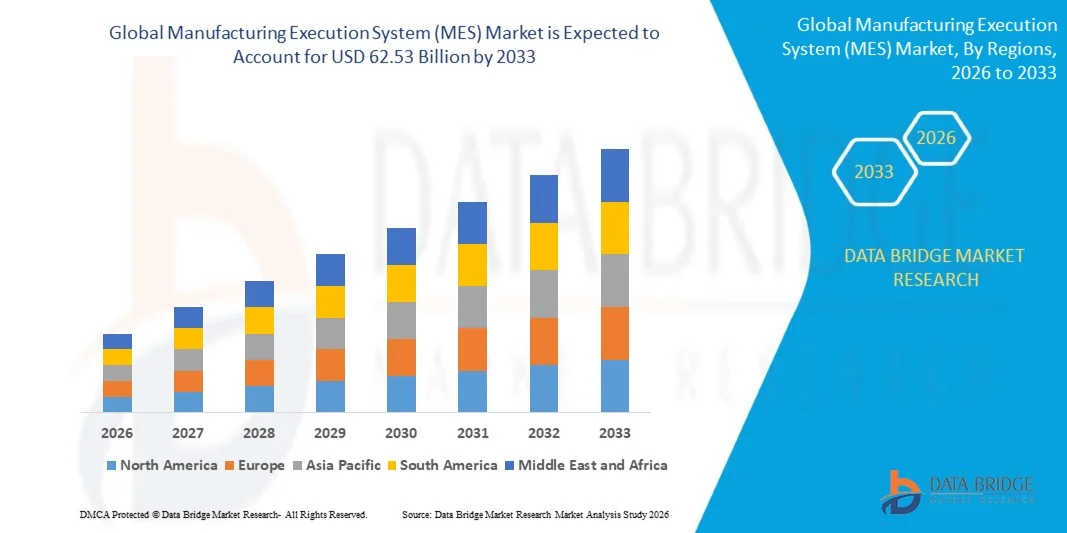
- Согласно анализу рынка Data Bridge Market Research, размер рынка глобальной системы исполнения производственных операций (MES) был оценен как25,16 млрд долларов в 2025 годуОжидается, что он достигнет$62,53 млрд к 2033 году, вCAGR 12,05%в течение прогнозируемого периода
- Растущий спрос со стороны целлюлозно-бумажной промышленности и рост внимания к разработке дизайна производства и необходимости достижения эффективности производства станут основными факторами роста рынка.
- Растущий спрос на автоматизацию в нефтяной и газовой промышленности, растущая потребность в видимости в реальном времени, растущие инициативы правительства по повышению осведомленности и внедрению благоприятной политики, а также широкомасштабная индустриализация еще больше усугубят рыночную стоимость.
Размер рынка и прогноз
- Глобальная рыночная стоимость (2025):25,16 млрд. долларов США
- Ожидаемая рыночная стоимость (2033):$ 62,53 млрд.
- Прогноз CAGR (2026–2033):12.05%
Каковы основные факторы рынка производственной системы исполнения (MES)
- Растущие расходы на проведение исследований и опытно-конструкторских работ, легкая доступность ресурсов и низкая стоимость, необходимая для производственных целей в странах с развивающейся экономикой, а также растущий спрос на оптимальное использование ресурсов еще больше проложат путь для роста рынка.
- Тем не менее, высокие затраты, связанные с НИОКР и растущее искажение из-за высокой стоимости создания будет выступать в качестве сдерживающего фактора роста для рынка. Кроме того, жесткая нормативно-правовая база и отсутствие понимания преимуществ еще больше ослабят темпы роста рынка.
- Азиатско-Тихоокеанский регион доминировал на рынке производственной системы исполнения (MES) с долей дохода 46,0% в 2025 году, что обусловлено быстрой индустриализацией, сильными инвестициями в интеллектуальные заводы и крупномасштабным расширением производства в Китае, Японии, Индии, Южной Корее и Юго-Восточной Азии.
- Согласно прогнозам, Северная Америка зарегистрирует самый быстрый CAGR в 11,4% с 2026 по 2033 год, что обусловлено быстрым внедрением новых технологий.Умное производствоСистемы, растущее развертывание облачных MES и растущие инициативы цифровой трансформации в США и Канаде
- Сегмент крупного предприятия доминировал на рынке с долей 61,4% в 2025 году, поскольку крупные производители продолжают уделять приоритетное внимание видимости производства, отслеживанию соответствия и оптимизации многосайтовых процессов.
Сегментация рынка по объему отчетов и системе исполнения производства (MES)
|
Атрибуты |
Система управления производством (MES) Key Market Insights |
|
Сегменты покрыты |
|
|
Страны, охваченные |
Северная Америка
Европа
Азиатско-Тихоокеанский регион
Ближний Восток и Африка
Южная Америка
|
|
Ключевые игроки рынка |
|
|
Рыночные возможности |
|
|
Информационные наборы данных с добавленной стоимостью |
В дополнение к информации о рыночных сценариях, таких как рыночная стоимость, темпы роста, сегментация, географическое покрытие и основные игроки, рыночные отчеты, курируемые Data Bridge Market Research, также включают углубленный экспертный анализ, анализ цен, анализ доли бренда, опрос потребителей, анализ демографии, анализ цепочки поставок, анализ цепочки создания стоимости, обзор сырья / расходных материалов, критерии выбора поставщиков, анализ PESTLE, анализ Porter и нормативную базу. |
Каковы основные тенденции на рынке производственной системы исполнения (MES)
"Увеличение перехода к облачным, интегрированным в ИИ и интеллектуальным производственным платформам MES"
- Рынок производственной системы исполнения (MES) демонстрирует сильное внедрениеоблачныйМодульные платформы и платформы с поддержкой ИИ, предназначенные для поддержки мониторинга производства в режиме реального времени, контроля качества и видимости на рынке в разных отраслях
- Производители все чаще внедряют IoT-интегрированные, низкокодовые и аналитические решения MES, которые предлагают прогнозное обслуживание, цифровые рабочие инструкции и бесшовную интеграцию ERP / SCADA.
- Растущий спрос на экономически эффективные, масштабируемые и удаленно доступные системы управления производством стимулирует использование в автомобильной, электронной, фармацевтической и пищевой промышленности.
- Например, такие компании, как Siemens, ABB, Schneider Electric, SAP и Rockwell Automation, модернизируют свои портфели MES с помощью облачного развертывания, приборных панелей на основе ИИ и функций отслеживания в реальном времени.
- Растущая потребность в безбумажных рабочих процессах, отслеживаемости производства и быстром принятии решений ускоряет переход к интеллектуальным облачным платформам MES.
- По мере того, как заводы станут более автоматизированными и управляемыми данными, решения MES будут оставаться жизненно важными для выполнения в режиме реального времени, обеспечения качества и оптимизации интеллектуального производства.
Каковы основные драйверы рынка производственной системы исполнения (MES)
- Рост спроса на видимость производства в режиме реального времени, улучшение OEE и сокращение простоев является основным фактором, поддерживающим внедрение MES на промышленных объектах.
- Например, в 2025–2026 годах ведущие компании, такие как Siemens, Honeywell и AVEVA, расширили свои предложения MES с помощью прогнозного обслуживания на основе искусственного интеллекта, расширенного планирования и возможностей облачной интеграции.
- Растущее внедрение Индустрии 4.0, умных фабрик, устройств IoT, робототехники и автоматизированных производственных линий повышает спрос в США, Европе и Азиатско-Тихоокеанском регионе.
- Достижения в области периферийных вычислений, машинного обучения, цифровых двойников и гибридных облачных архитектур укрепили масштабируемость, эффективность и отзывчивость системы.
- Растущая потребность в управлении соответствием требованиям, отслеживаемости продукции и видимости цепочки поставок создает высокий спрос на передовые решения MES.
- Ожидается, что рынок MES, поддерживаемый устойчивыми инвестициями в промышленную автоматизацию, цифровую трансформацию и интеллектуальную производственную инфраструктуру, станет свидетелем сильного долгосрочного роста.
Какой фактор влияет на рост рынка производственной системы исполнения (MES)
- Высокие затраты, связанные с внедрением программного обеспечения, интеграцией и обучением персонала, ограничивают внедрение среди МСП и производителей, чувствительных к затратам.
- Например, в течение 2024–2026 годов сложности интеграции с устаревшими системами ERP, SCADA и заводским полом увеличили сроки развертывания и затраты на проекты для нескольких предприятий.
- Сложность в обработке многосайтовых производственных данных, риски кибербезопасности и пользовательские конфигурации рабочих процессов увеличивают потребность в квалифицированных ИТ-специалистах и операционных командах.
- Ограниченная осведомленность и бюджетные ограничения на развивающихся рынках продолжают замедлять внедрение в масштабе предприятия.
- Конкуренция со стороны пакетов ERP и платформ SCADA со встроенными производственными модулями создает ценовое давление и снижает дифференциацию продукции.
- Для решения этих проблем компании сосредотачиваются на модульных облачных MES, моделях развертывания с низким кодом и гибком ценообразовании подписки для увеличения глобального внедрения.
Как сегментируется рынок производственной системы исполнения (MES)
Рынок сегментирован на основеразмер организации, тип компонентов, процессная промышленность, предложение и индустрия конечных пользователей.
• По размеру организации
Исходя из размера организации, рынок производственно-исполнительной системы (МЭС) сегментирован на малые и средние предприятия и крупные предприятия. Сегмент крупного предприятия доминировал на рынке с долей 61,4% в 2025 году, поскольку крупные производители продолжают уделять приоритетное внимание видимости производства, отслеживанию соответствия и оптимизации многосайтовых процессов. Эти предприятия широко используют платформы MES для интеграции операций на заводе с системами ERP, SCADA и цепочками поставок, что позволяет осуществлять мониторинг в режиме реального времени, прогнозное обслуживание и обеспечение качества. Сильные инвестиции в интеллектуальные заводы, автоматизацию и инициативы цифровой трансформации еще больше поддерживают лидерство в сегменте автомобилей, электроники и фармацевтики.
Ожидается, что сегмент малого и среднего бизнеса будет расти самыми быстрыми темпами с 2026 по 2033 год, что обусловлено растущим внедрением облачных и подписных решений MES. Снижение затрат на развертывание, модульная архитектура и растущая осведомленность о преимуществах операционной эффективности ускоряют проникновение среди МСП во всем мире.
• Тип компонента
На основе типа компонентов рынок сегментирован на On-Premises, On-Demand и Hybrid. Сегмент On-Premieses доминировал на рынке с долей 43,7% в 2025 году, чему способствовал высокий спрос со стороны крупных промышленных объектов, требующих полного контроля над производственными данными, кибербезопасности и настройки системы. Такие отрасли, как аэрокосмическая, оборонная, фармацевтическая и автомобильная, предпочитают локальное развертывание из-за строгих требований соответствия и необходимости бесшовной интеграции с устаревшей производственной инфраструктурой.
Ожидается, что сегмент Hybrid будет расти самыми быстрыми темпами с 2026 по 2033 год, что обусловлено растущим спросом на масштабируемые модели развертывания, которые сочетают операционное управление на месте с облачной аналитикой и удаленным доступом. Повышение внимания к гибкости данных, аварийному восстановлению и видимости производства на нескольких площадках значительно ускоряет внедрение гибридных MES.
• Процессная промышленность
На основе перерабатывающей промышленности рынок сегментирован на продукты питания и напитки, нефть и газ, очистку воды и сточных вод, энергетический и энергетический рынок, фармацевтический и целлюлозно-бумажный. Сегмент продуктов питания и напитков доминировал на рынке с долей 28,9% в 2025 году, что обусловлено растущей потребностью в отслеживаемости партий, соблюдении качества, синхронизации запасов и планировании производства. Решения MES широко используются в этом сегменте для мониторинга производственных линий в режиме реального времени, предотвращения загрязнения и нормативной отчетности. Рост спроса на упакованные продукты питания и автоматизированные перерабатывающие заводы продолжает поддерживать сильный рост.
Ожидается, что фармацевтический сегмент будет расти самыми быстрыми темпами с 2026 по 2033 год, чему способствуют растущие требования к соблюдению, электронные партийные записи и строгие стандарты качества в производстве лекарств и медицинском производстве.
• Предлагая
На основе предложения рынок сегментирован на Программное обеспечение и Услуги. Сегмент программного обеспечения доминировал на рынке с долей 67,2% в 2025 году, поскольку программные платформы MES остаются ядром цифрового производства, обеспечивая автоматизацию рабочих процессов, мониторинг качества, отслеживание активов и принятие решений на основе аналитики. Растущая интеграция с ИИ, IoT и технологиями цифровых двойников продолжает укреплять спрос во всех отраслях.
Ожидается, что сегмент услуг будет расти самыми быстрыми темпами с 2026 по 2033 год, что обусловлено растущей потребностью в системной интеграции, консалтинге, настройке, поддержке кибербезопасности и управляемых услугах. Растущая сложность среды развертывания ускоряет спрос на профессиональные и вспомогательные услуги.
• Отрасль конечных пользователей
На основе индустрии конечных пользователей рынок MES сегментирован на автомобильную и транспортную, аэрокосмическую и оборонную, IT и телекоммуникации, образование и правительство, электронику и полупроводник, промышленность и здравоохранение. Промышленный сегмент доминировал на рынке с долей 31,8% в 2025 году, чему способствовало широкое внедрение автоматизации заводов, машинного мониторинга и оптимизации процессов на производственных предприятиях. Сильный спрос на прогнозное техническое обслуживание, сокращение времени простоя и аналитику в реальном времени продолжает стимулировать лидерство в сегменте.
Сегмент электроники и полупроводников, по прогнозам, будет расти самыми быстрыми темпами с 2026 по 2033 год, что обусловлено увеличением производства полупроводников, точной сборки электроники и необходимостью прослеживаемости производства в производстве высокоценных компонентов.
В каком регионе находится наибольшая доля рынка производственно-исполнительной системы
- Азиатско-Тихоокеанский регион доминировал на рынке производственной системы исполнения (MES) с долей дохода 46,0% в 2025 году, что обусловлено быстрой индустриализацией, сильными инвестициями в интеллектуальные заводы и крупномасштабным расширением производства в Китае, Японии, Индии, Южной Корее и Юго-Восточной Азии. В регионе по-прежнему наблюдается активное внедрение платформ MES на автомобильных, электронных, фармацевтических, пищевых и полупроводниковых производственных объектах. Растущее внимание к мониторингу производства в режиме реального времени, отслеживаемости качества и автоматизации рабочих процессов продолжает укреплять спрос на крупных промышленных предприятиях.
- Ведущие компании Азиатско-Тихоокеанского региона все чаще внедряют облачные, гибридные и интегрированные с ИИ платформы MES с прогнозной аналитикой, подключением к IoT и интеграцией цифровых двойников, укрепляя технологическое преимущество региона.
- Сильные правительственные инициативы, такие как Made in China 2025, Make in India и интеллектуальные производственные программы в Японии и Южной Корее, продолжают укреплять лидерство на региональном рынке.
Китайская производственная система исполнения (MES) Market Insight
Китай является крупнейшим донором в Азиатско-Тихоокеанском регионе, поддерживаемым крупными инвестициями в промышленную автоматизацию, сильным производством электроники и автомобилей и поддерживаемыми правительством инициативами в области интеллектуального производства. Растущее внедрение технологий Индустрии 4.0, робототехники и систем управления качеством на основе ИИ продолжает стимулировать внедрение MES на производственных объектах.
Японская система управления производством (MES) Market Insight
Япония вносит значительный вклад в региональный рост, обусловленный передовой промышленной автоматизацией, точным производством и растущим спросом на системы мониторинга в режиме реального времени в автомобильной, полупроводниковой и электронной промышленности. Сильное внимание к бережливому производству и операционному совершенству поддерживает долгосрочное расширение MES
Система управления производством Индии (MES) Market Insight
Индия становится крупным центром роста, что обусловлено расширением инициатив «умных» заводов, поддерживаемыми правительством программами промышленной цифровизации и увеличением инвестиций в автомобильный, фармацевтический и пищевой секторы. Рост внедрения облачных MES среди МСП еще больше ускоряет проникновение на рынок
Система управления производством в Южной Корее (MES) Market Insight
Южная Корея вносит значительный вклад благодаря своей мощной полупроводниковой, электронной и автомобильной производственной базе. Растущее развертывание систем мониторинга производства с поддержкой ИИ, решений прослеживаемости и платформ прогнозного обслуживания продолжает поддерживать высокий спрос на MES.
Североамериканский рынок производственных систем исполнения (MES)
По прогнозам, в Северной Америке будет зарегистрирован самый быстрый CAGR в 11,4% с 2026 по 2033 год, что обусловлено быстрым внедрением интеллектуальных производственных систем, ростом развертывания облачных MES и растущими инициативами цифровой трансформации в США и Канаде. Увеличение инвестиций в аэрокосмическую, фармацевтическую, автомобильную и промышленную автоматизацию продолжает ускорять расширение регионального рынка.
Система управления производством США (MES) Market Insight
Соединенные Штаты являются крупнейшим поставщиком в Северной Америке, чему способствует сильное внедрение Индустрии 4.0, обширная модернизация интеллектуальных заводов и высокие инвестиции в решения для ИИ, IoT и прогностического обслуживания. Растущий спрос со стороны автомобильного, медицинского, аэрокосмического и полупроводникового секторов продолжает укреплять рост рынка.
Канадская система управления производством (MES) Market Insight
Канада вносит значительный вклад в региональный рост, обусловленный растущими инвестициями в промышленную автоматизацию, пищевую промышленность, здравоохранение и экологически чистую энергию. Повышение внимания к управлению соблюдением, наглядности производства и оптимизации процессов также поддерживает внедрение MES по всей стране.
Каковы основные компании на рынке систем управления производством (MES)
Отрасль производственной системы исполнения (MES) в основном возглавляется хорошо зарекомендовавшими себя компаниями, в том числе:
- АББ(Швейцария)
- Schneider Electric(Франция)
- Emerson Electric Co.(США)
- General Electric(США)
- Honeywell International Inc.(США)
- Rockwell Automation, Inc. (США)
- Körber AG (Германия)
- Yokogawa India Ltd. (Индия)
- AVEVA Group plc (Великобритания)
- thyssenkrupp System Engineering GmbH (Германия)
- Siemens(Германия)
- Plex (США)
- Oracle (США)
- Lighthouse Systems (Великобритания)
- Dassault Systèmes (Франция)
- Cogiscan (Канада)
- Yokogawa Electric Corporation (Япония)
- Accenture (Ирландия)
- SAP SE(Германия)
Каковы последние события на рынке глобальной системы управления производством (MES)
- В июле 2024 года компания Critical Manufacturing, ведущий поставщик производственных систем исполнения, вступила в стратегическое партнерство с Loftware, известной облачной компанией по маркировке и управлению произведениями искусства. Сотрудничество направлено на объединение опыта для создания нового эталона для интеграции MES и маркировки, обеспечивая при этом улучшенную производительность, улучшенный контроль качества и снижение эксплуатационных ошибок на производственных объектах. В заключение, это партнерство подчеркивает растущий интерес отрасли к интегрированным цифровым рабочим процессам и точности процессов на платформах MES.
- В июне 2024 года Critical Manufacturing, подразделение ASMPT, объявило о расширении своего стратегического альянса с RoviSys для укрепления своего присутствия в Юго-Восточной Азии, Тайване и Японии. Компания определила RoviSys как высокопроизводительного системного интегратора с проверенным опытом успешного развертывания решений MES для клиентов в сложных промышленных условиях. Это расширение отражает растущий региональный спрос на передовые развертывания МЭС и услуги системной интеграции в Азиатско-Тихоокеанском регионе.
- В октябре 2023 года AVEVA, крупный лидер на промышленном рынке MES, объявила о стратегическом сотрудничестве с Microsoft для укрепления своих платформ интеграции данных с помощью возможностей искусственного интеллекта. Партнерство фокусируется на организации и интеграции данных из нескольких операционных областей для расширения приложений на основе искусственного интеллекта и поддержки инициатив в области зеленого программного обеспечения. В заключение, это сотрудничество подчеркивает растущую роль ИИ и интеллектуального анализа данных в эволюции решений MES следующего поколения.
- В сентябре 2023 года Rockwell Automation Inc. объявила об успешном развертывании своей платформы Plex MES на производственном объекте BIC в Бизерте. BIC, ведущий производитель бритв, зажигалок и канцелярских товаров, внедрил систему для повышения операционной эффективности и инноваций, обеспечивая 360-градусный обзор деятельности завода. Компания также планирует расширить это партнерство, чтобы оцифровать свои дополнительные заводы с использованием Plex MES. В заключение, эта реализация демонстрирует растущее внедрение решений MES для преобразования интеллектуальных заводов в масштабах всего предприятия.
- В январе 2023 года Schneider Electric завершила приобретение AVEVA, ведущего поставщика программных решений, для укрепления своих возможностей цифровой трансформации и повышения качества обслуживания клиентов. Благодаря этому приобретению Schneider Electric стремится ускорить свое видение стать лидером в области программного обеспечения как услуги (SaaS) и поставщиком корпоративных моделей только для подписки на рынке. В заключение, это приобретение отражает продолжающуюся тенденцию консолидации и облачной трансформации в отрасли MES.
SKU-
Получите онлайн-доступ к отчету на первой в мире облачной платформе рыночной аналитики

- Интерактивная панель анализа данных
- Панель анализа компании для возможностей с высоким потенциалом роста
- Доступ аналитика-исследователя для настройки и запросов
- Анализ конкурентов с помощью интерактивной панели
- Последние новости, обновления и анализ тенденций
- Используйте возможности сравнительного анализа для комплексного отслеживания конкурентов
Методология исследования
Сбор данных и анализ базового года выполняются с использованием модулей сбора данных с большими размерами выборки. Этап включает получение рыночной информации или связанных данных из различных источников и стратегий. Он включает изучение и планирование всех данных, полученных из прошлого заранее. Он также охватывает изучение несоответствий информации, наблюдаемых в различных источниках информации. Рыночные данные анализируются и оцениваются с использованием статистических и последовательных моделей рынка. Кроме того, анализ доли рынка и анализ ключевых тенденций являются основными факторами успеха в отчете о рынке. Чтобы узнать больше, пожалуйста, запросите звонок аналитика или оставьте свой запрос.
Ключевой методологией исследования, используемой исследовательской группой DBMR, является триангуляция данных, которая включает в себя интеллектуальный анализ данных, анализ влияния переменных данных на рынок и первичную (отраслевую экспертную) проверку. Модели данных включают сетку позиционирования поставщиков, анализ временной линии рынка, обзор рынка и руководство, сетку позиционирования компании, патентный анализ, анализ цен, анализ доли рынка компании, стандарты измерения, глобальный и региональный анализ и анализ доли поставщика. Чтобы узнать больше о методологии исследования, отправьте запрос, чтобы поговорить с нашими отраслевыми экспертами.
Доступна настройка
Data Bridge Market Research является лидером в области передовых формативных исследований. Мы гордимся тем, что предоставляем нашим существующим и новым клиентам данные и анализ, которые соответствуют и подходят их целям. Отчет можно настроить, включив в него анализ ценовых тенденций целевых брендов, понимание рынка для дополнительных стран (запросите список стран), данные о результатах клинических испытаний, обзор литературы, обновленный анализ рынка и продуктовой базы. Анализ рынка целевых конкурентов можно проанализировать от анализа на основе технологий до стратегий портфеля рынка. Мы можем добавить столько конкурентов, о которых вам нужны данные в нужном вам формате и стиле данных. Наша команда аналитиков также может предоставить вам данные в сырых файлах Excel, сводных таблицах (книга фактов) или помочь вам в создании презентаций из наборов данных, доступных в отчете.











