


Global Massive Multiple-Input, Multiple-Output (MIMO) Market Segmentation, By Antennas (8T8R, 16T16R and 32T32R, 64T64R and 128T and 128R, and Above), Spectrum (TDD, FDD, and Others), Technology (LTE Advanced, LTE Advanced Pro, and 5G)- Industry Trends and Forecast to 2033
Каков размер рынка с множественным входом, множественным выходом (MIMO) и темпы роста
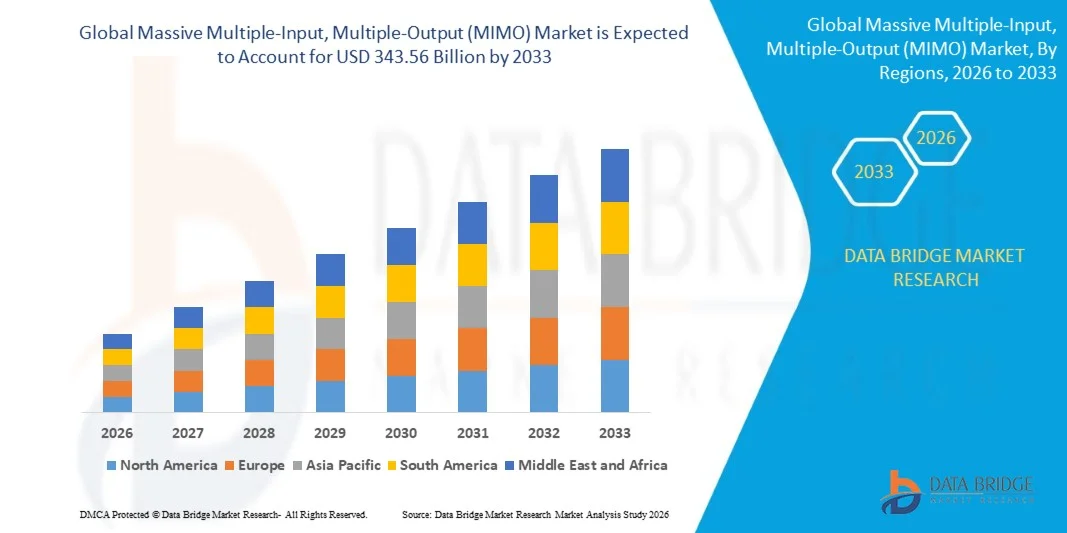
- По данным Data Bridge Market Research Analysis Глобальный масштабный рынок с множественным входом и множественным выходом (MIMO) был оценен как19,76 млрд долларов в 2025 годуОжидается, что он достигнет343,56 млрд долларов к 2033 году, вCAGR 42,90%в течение прогнозируемого периода
- Рост рынка в значительной степени обусловлен быстрым развертыванием сетей 5G, растущим спросом на высокоскоростное подключение данных и растущим внедрением передовых технологий беспроводной связи в различных отраслях промышленности.
- Рост инвестиций в телекоммуникационную инфраструктуру, расширениеУмные городаи увеличение трафика данных за счетIoT устройстваоблачные сервисы еще больше ускоряют спрос на массивные решения MIMO
Размер рынка и прогноз
- Глобальная рыночная стоимость (2025):19,76 млрд. долларов США
- Ожидаемая рыночная стоимость (2033):$343,56 млрд.
- Прогноз CAGR (2026–2033):42.90%
Массивный анализ рынка с несколькими входами и несколькими выходами (MIMO)
- Масштабный рынок MIMO демонстрирует сильный рост благодаря своей способности увеличивать пропускную способность сети, повышать спектральную эффективность и поддерживать высокую плотность пользователей, что делает его критически важным компонентом в системах беспроводной связи следующего поколения.
- Растущее внедрение телекоммуникационных, оборонных и корпоративных приложений в сочетании с растущей потребностью в надежной связи с низкой задержкой стимулирует инновации и конкурентные разработки на мировом рынке.
- Северная Америка доминировала на огромном рынке с несколькими входами и несколькими выходами (MIMO) с самой большой долей дохода в 2025 году, что обусловлено быстрым развертыванием передовой инфраструктуры беспроводной связи и сильными инвестициями в технологии 5G.
- Ожидается, что в Азиатско-Тихоокеанском регионе будут наблюдаться самые высокие темпы роста на глобальном массовом рынке множественных входов, множественных выходов (MIMO), обусловленные крупномасштабным развертыванием 5G, расширением телекоммуникационной инфраструктуры и растущим спросом на высокоскоростные услуги мобильной передачи данных в основных экономиках, таких как Китай, Япония и Индия.
- Сегмент 64T64R и 128T и 128R занимал самую большую долю рынка в 2025 году благодаря своей способности значительно увеличить пропускную способность сети, спектральную эффективность и охват в плотных городских условиях. Эти усовершенствованные конфигурации антенн позволяют операторам связи обслуживать большее количество пользователей одновременно, улучшая качество сигнала и общую производительность сети.
Сфера охвата и массовая сегментация рынка с несколькими входами и несколькими выходами (MIMO)
|
Атрибуты |
Массивный многократный вход, многократный выход (MIMO) Ключевые идеи рынка |
|
Сегменты покрыты |
|
|
Страны, охваченные |
Северная Америка
Европа
Азиатско-Тихоокеанский регион
Ближний Восток и Африка
Южная Америка
|
|
Ключевые игроки рынка |
|
|
Рыночные возможности |
|
|
Информационные наборы данных с добавленной стоимостью |
|
Какова ключевая тенденция на массовом рынке множественных входов и множественных выходов (MIMO)
Растущее развертывание сетей 5G и высокоскоростной беспроводной связи
Быстрое расширение беспроводных сетей следующего поколения значительно формирует массовый рынок MIMO, поскольку операторы связи все чаще используют передовые антенные технологии для повышения пропускной способности сети и спектральной эффективности. Массивные системы MIMO позволяют нескольким антеннам передавать и принимать сигналы одновременно, повышая пропускную способность и надежность данных. Эта возможность становится необходимой для поддержки высокоскоростной связи в густонаселенных городских средах и приложениях с интенсивным использованием данных.
Растущий спрос на услуги с высокой пропускной способностью, такие как потоковое видео, облачные вычисления, дополненная реальность и онлайн-игры, ускоряет принятие массивных решений MIMO. Поставщики услуг связи вкладывают значительные средства в модернизацию сетевой инфраструктуры для обработки растущего трафика данных и обеспечения бесперебойной связи. Эта тенденция побуждает производителей оборудования разрабатывать передовые технологии базовых станций, которые поддерживают эффективное использование спектра и улучшенную производительность сети.
Расширение интеграции массивных технологий MIMO с передовыми сетевыми архитектурами влияет на стратегии закупок и развертывания среди операторов связи. Продавцы сосредоточены на разработке энергоэффективных, компактных и масштабируемых антенных систем для снижения эксплуатационных расходов и упрощения установки. Эти разработки помогают операторам расширять охват и улучшать качество сети, поддерживая растущую экосистему подключенных устройств и интеллектуальных приложений.
Например, в 2024 году Ericsson в Швеции и Nokia в Финляндии расширили свои массивные портфели MIMO с помощью передовых радиорешений 5G, предназначенных для повышения пропускной способности сети и энергоэффективности. Эти системы были развернуты несколькими операторами связи для усиления покрытия 5G в городских и пригородных районах. Решения также продвигались в качестве экономически эффективного обновления существующей инфраструктуры, повышения производительности сети и пользовательского опыта в средах с высоким спросом.
В то время как внедрение массивных MIMO растет, устойчивое расширение рынка зависит от постоянных инвестиций в сетевую инфраструктуру, доступность спектра и технологические достижения в проектировании антенн. Компании сосредоточены на исследованиях и разработках для улучшения обработки сигналов, снижения энергопотребления и повышения совместимости с развивающимися беспроводными стандартами для поддержки долгосрочного роста отрасли.
Динамика рынка с множественным входом, множественным выходом (MIMO)
водитель
«Рост спроса на высокопроизводительную и эффективную беспроводную связь»
Рост глобального потребления данных и увеличение числа подключенных устройств являются основными драйверами для огромного рынка MIMO. Телекоммуникационные операторы развертывают массивные системы MIMO для значительного повышения пропускной способности сети и спектральной эффективности, позволяя нескольким пользователям одновременно получать доступ к высокоскоростным данным. Эта возможность поддерживает растущий спрос на надежные и высокопроизводительные сети беспроводной связи.
Расширение приложений в телекоммуникациях, корпоративных сетях и умной инфраструктуре влияет на рост рынка. Массивная технология MIMO обеспечивает улучшенную мощность сигнала, снижение задержки и более высокую пропускную способность данных, которые необходимы для новых технологий, таких как умные города, подключенные транспортные средства и промышленная автоматизация. Эти преимущества побуждают операторов сетей интегрировать массивные MIMO в свои инфраструктурные стратегии следующего поколения.
Производители телекоммуникационного оборудования активно продвигают масштабные решения MIMO посредством технологических инноваций, стратегических партнерств и крупномасштабного развертывания сетей. Эти инициативы поддерживаются увеличением инвестиций в инфраструктуру 5G и глобальным переходом к передовым системам беспроводной связи. Сотрудничество между сетевыми провайдерами и поставщиками технологий также ускоряет разработку продуктов и повышает эффективность развертывания.
Например, в 2023 году Huawei в Китае и Samsung в Южной Корее расширили развертывание массивных базовых станций MIMO в нескольких сетях 5G. Эти развертывания были направлены на улучшение охвата и повышение пропускной способности сети в городских условиях высокой плотности. Обе компании отметили повышение спектральной эффективности и снижение эксплуатационных расходов в качестве ключевых преимуществ, укрепив свои конкурентные позиции на рынке телекоммуникационного оборудования.
Хотя спрос на беспроводные сети с высокой пропускной способностью продолжает расти, успешное внедрение массивных систем MIMO требует значительных инвестиций в инфраструктуру, передовые технологии обработки сигналов и квалифицированный технический опыт. Непрерывные инновации и сотрудничество в телекоммуникационной экосистеме будут иметь важное значение для поддержки крупномасштабного развертывания и поддержания роста рынка.
Сдержанность/вызов
«Высокие затраты на инфраструктуру и сложные требования к развертыванию»
Относительно высокая стоимость, связанная с развертыванием массивной инфраструктуры MIMO, остается ключевой проблемой для расширения рынка. Установка больших антенных решеток, передовых базовых станций и вспомогательного сетевого оборудования требует значительных капиталовложений. Эти расходы могут быть особенно сложными для операторов связи на развивающихся рынках, где бюджетные ограничения ограничивают масштабную модернизацию инфраструктуры.
Техническая сложность и проблемы интеграции также ограничивают принятие в определенных регионах. Массивные системы MIMO требуют сложной обработки сигналов, точного выравнивания антенн и расширенных возможностей управления сетью. Ограниченные технические знания и потребность в специализированном оборудовании могут замедлить развертывание и увеличить эксплуатационные расходы сетевых провайдеров.
Проблемы управления спектром и регулирования также влияют на рост рынка, поскольку эффективная работа массивных систем MIMO зависит от доступа к достаточному радиочастотному спектру. Различия в политике распределения спектра в разных странах могут создать барьеры для операторов связи, стремящихся расширить охват и пропускную способность сети. Регулятивные утверждения и требования к соблюдению могут еще больше задержать крупномасштабное развертывание.
Например, в 2024 году операторы связи в Индонезии и Вьетнаме сообщили о проблемах в расширении масштабных развертываний MIMO из-за высоких затрат на инфраструктуру и ограничений спектра. Сетевые провайдеры, работающие с поставщиками оборудования, такими как ZTE и NEC, подчеркнули необходимость дополнительного распределения спектра и инвестиционных стимулов для ускорения внедрения. Эти барьеры также повлияли на темпы расширения сети 5G на некоторых развивающихся рынках.
Преодоление этих проблем потребует экономически эффективной разработки оборудования, улучшения стратегий управления спектром и расширения сотрудничества между операторами связи, поставщиками технологий и регулирующими органами. Инвестиции в передовые инструменты сетевого планирования и инновационные модели развертывания также будут играть решающую роль в поддержке долгосрочного роста глобального рынка MIMO.
Масштабный рынок с несколькими входами и несколькими выходами (MIMO)
Массивный рынок с несколькими входами и несколькими выходами (MIMO) разделен на три заметных сегмента на основе антенн, спектра и технологий.
• Антенны
На основе антенн массивный рынок с несколькими входами, несколькими выходами (MIMO) сегментирован на 8T8R, 16T16R и 32T32R, 64T64R и 128T и 128R и выше. Сегмент 64T64R и 128T и 128R занимал самую большую долю рынка в 2025 году благодаря своей способности значительно увеличить пропускную способность сети, спектральную эффективность и охват в плотных городских условиях. Эти усовершенствованные конфигурации антенн позволяют операторам связи обслуживать большее количество пользователей одновременно, улучшая качество сигнала и общую производительность сети.
Ожидается, что в сегменте выше 128T и 128R будут наблюдаться самые быстрые темпы роста с 2026 по 2033 год, обусловленные растущим развертыванием беспроводной инфраструктуры следующего поколения и растущей потребностью в сетях сверхвысокой емкости. Эти антенные системы высокого порядка набирают обороты благодаря своей способности поддерживать чрезвычайно высокую пропускную способность данных и повышенную эффективность формирования луча, что делает их идеальными для передовых развертываний 5G и будущих технологий беспроводной связи.
• Спектр
На основе спектра массовый рынок с несколькими входами, несколькими выходами (MIMO) сегментирован на TDD, FDD и другие. Сегмент TDD занимал самую большую долю рынка в 2025 году благодаря своей гибкости в распределении пропускной способности восходящей и нисходящей линии связи в соответствии со спросом на трафик. Массивные MIMO-системы на основе TDD широко используются в развертывании 5G, поскольку они обеспечивают эффективное использование спектра и улучшенную производительность сети в средах с высоким трафиком данных.
Ожидается, что в сегменте FDD будут наблюдаться самые быстрые темпы роста с 2026 по 2033 год, обусловленные его широким использованием в существующих LTE и передовых беспроводных сетях. Спектр FDD обеспечивает стабильную и надежную связь, используя отдельные полосы частот для передачи восходящей и нисходящей линии связи, что делает его подходящим для операторов, обновляющих устаревшую инфраструктуру с помощью массивной технологии MIMO.
• Технология
Основываясь на технологии, огромный рынок с несколькими входами и несколькими выходами (MIMO) сегментирован на LTE Advanced, LTE Advanced Pro и 5G. Сегмент 5G занимал самую большую долю рынка в 2025 году благодаря быстрому глобальному развертыванию сетей 5G и растущему спросу на сверхбыструю связь с данными. Массивный MIMO является критически важным компонентом инфраструктуры 5G, обеспечивая более высокую спектральную эффективность, улучшенную задержку и увеличенную пропускную способность сети.
Ожидается, что сегмент LTE Advanced Pro будет наблюдать самые быстрые темпы роста с 2026 по 2033 год, обусловленные непрерывной эволюцией сетей LTE и переходом к полномасштабному развертыванию 5G. LTE Advanced Pro объединяет передовые возможности агрегирования несущих и массивные возможности MIMO, позволяя операторам связи повышать производительность сети и преодолевать технологический разрыв между LTE и беспроводными системами следующего поколения.
Масштабный региональный анализ рынка с несколькими входами и несколькими выходами (MIMO)
Северная Америка доминировала на огромном рынке с несколькими входами и несколькими выходами (MIMO) с самой большой долей дохода в 2025 году, что обусловлено быстрым развертыванием передовой инфраструктуры беспроводной связи и сильными инвестициями в технологии 5G.
Операторы связи в регионе уделяют первоочередное внимание высокопроизводительным сетевым решениям, которые могут эффективно обрабатывать растущий трафик мобильных данных и поддерживать крупномасштабные требования к подключению.
Это широкое распространение также поддерживается присутствием ведущих поставщиков телекоммуникационного оборудования, инвестициями в высокие технологии и растущим спросом на надежную высокоскоростную связь между предприятиями и потребителями.
Массивный многопрофильный, многопрофильный (MIMO) рынок США
Массивный рынок США с несколькими входами и несколькими выходами (MIMO) занял самую большую долю дохода в 2025 году в Северной Америке, чему способствовало быстрое расширение инфраструктуры 5G и постоянные инвестиции в передовые беспроводные технологии. Операторы связи все чаще используют массивные базовые станции MIMO для повышения спектральной эффективности и расширения пропускной способности сети. Растущий спрос на высокоскоростные мобильные данные, облачные приложения и подключенные устройства также поддерживает рост рынка. Кроме того, тесное сотрудничество между телекоммуникационными компаниями и поставщиками технологий ускоряет разработку и развертывание систем связи следующего поколения.
Европейское массовое многопользовательское, многопользовательское (MIMO) понимание рынка
Ожидается, что в Европе будет наблюдаться самый быстрый рост с 2026 по 2033 год, в основном за счет увеличения развертывания сетей 5G и растущего спроса на улучшенную беспроводную связь. Растущие инициативы по цифровой трансформации в различных отраслях промышленности стимулируют операторов связи инвестировать в передовую сетевую инфраструктуру. В регионе наблюдается расширение внедрения масштабных решений MIMO в городских и промышленных сетях связи, что способствует улучшению покрытия и производительности сети.
Массивный многопользовательский, многопользовательский (MIMO) анализ рынка
Ожидается, что в Великобритании будет наблюдаться самый быстрый рост с 2026 по 2033 год, обусловленный ростом инвестиций в инфраструктуру 5G и растущим спросом на высокоскоростные услуги беспроводной связи. Все более широкое внедрение интеллектуальных технологий и подключенных устройств побуждает операторов связи модернизировать свои сети с помощью современных антенных систем. Сильная цифровая экосистема страны и растущее внимание к улучшению мобильной связи еще больше способствуют росту рынка.
Немецкая компания Multiple-Input, Multiple-Output (MIMO)
Ожидается, что в Германии будет наблюдаться самый быстрый рост с 2026 по 2033 год, вызванный сильными технологическими инновациями и увеличением инвестиций в инфраструктуру связи следующего поколения. Хорошо развитая телекоммуникационная промышленность Германии и сосредоточенность на промышленной цифровизации способствуют внедрению передовых сетевых технологий. Массивные решения MIMO все чаще используются для поддержки высокопроизводительной беспроводной связи в корпоративных сетях, интеллектуальных производственных средах и подключенной инфраструктуре.
Азиатско-тихоокеанский массовый многофункциональный, многофункциональный (MIMO) анализ рынка
Ожидается, что на Азиатско-Тихоокеанском рынке будет наблюдаться самый быстрый рост с 2026 по 2033 год, обусловленный быстрой урбанизацией, расширением телекоммуникационных сетей и крупномасштабным развертыванием инфраструктуры 5G в крупных экономиках, таких как Китай, Япония и Индия. Растущее проникновение смартфонов в регионе и растущий спрос на высокоскоростное подключение к данным ускоряют внедрение передовых беспроводных технологий. Кроме того, присутствие крупных производителей телекоммуникационного оборудования в регионе усиливает расширение рынка.
Японский массовый многопользовательский и многопользовательский рынок (MIMO)
Ожидается, что в Японии будет наблюдаться самый быстрый рост с 2026 по 2033 год из-за передовой технологической экосистемы страны и сильного внимания к цифровой связи. Операторы связи вкладывают значительные средства в сетевую инфраструктуру следующего поколения для поддержки новых приложений, таких как умные города, автономная мобильность и передовые системы IoT. Интеграция массивной технологии MIMO в сети 5G позволяет повысить пропускную способность сети и повысить эффективность связи по всей стране.
Китайский массовый многофункциональный, многофункциональный (MIMO) анализ рынка
Крупный китайский рынок с несколькими входами и несколькими выходами (MIMO) составил самую большую долю рынка в Азиатско-Тихоокеанском регионе в 2025 году, что объясняется агрессивным развертыванием в стране инфраструктуры 5G и сильной государственной поддержкой инициатив цифровой трансформации. Китай остается одним из крупнейших рынков современного телекоммуникационного оборудования, операторы связи быстро развертывают массивные базовые станции MIMO для поддержки увеличения мобильного трафика данных. Присутствие крупных отечественных телекоммуникационных компаний и постоянное расширение проектов «умного города» являются ключевыми факторами, стимулирующими развитие рынка в Китае.
Какие компании являются ведущими на массовом рынке с несколькими входами и несколькими выходами (MIMO)
Индустрия MIMO в основном возглавляется хорошо зарекомендовавшими себя компаниями, в том числе:
•China Mobile Limited (Китай)
China Unicom (Гонконг) Limited (Китай)
Telefonaktiebolaget LM Ericsson (Швеция)
Deutsche Telekom AG (Германия)
Comba Telecom Systems Holdings Ltd. (Гонконг)
CommScope, Inc. (США)
•Huawei Technologies Co., Ltd. (Китай)
• Nokia (Финляндия)
Самсунг (Южная Корея)
T-Mobile USA, Inc. (США)
Verizon (США)
• Тельстра (Австралия)
•Vodafone Group (Великобритания)
• ZTE Corporation (Китай)
Reliance Jio Infocomm Ltd. (Индия)
• Singtel Optus Pty., Ltd. (Австралия)
SmarTone Mobile Communications Limited (Гонконг)
Telefonica SA (Испания)
Telstra Corporation Ltd. (Австралия)
•Airtel India (Индия)
Последние события на глобальном массовом рынке множественных входов и множественных выходов (MIMO)
- В июне 2025 года Inseego представила первую платформу фиксированного беспроводного доступа (FWA) 5G-Advanced для T-Mobile Business с возможностями сетевого среза, специально предназначенную для малых и средних предприятий, не имеющих специализированных ИТ-команд. Платформа обеспечивает упрощенное управление сетью, улучшенную производительность подключения и эффективное распределение полосы пропускания в нескольких приложениях. Ожидается, что эта разработка ускорит внедрение предприятиями передовых решений беспроводной связи. Это также усиливает роль инфраструктуры 5G-Advanced в поддержке масштабируемых, надежных и высокопроизводительных сетей бизнес-коммуникаций.
- В мае 2025 года CommScope, финансовые показатели и расширение инфраструктуры, сообщили о чистых продажах в 1 квартале 2025 года в размере 1,11 миллиарда долларов США, что представляет собой увеличение на 23,5% в годовом исчислении, обусловленное сильным ростом инфраструктуры центров обработки данных и поставок решений для сетей малых сот Ruckus. Производительность компании отражает растущий мировой спрос на высокопроизводительную беспроводную инфраструктуру и передовые системы подключения. Расширение развертывания сетей малой сотовой связи помогает операторам связи расширять охват сети и емкость данных. Этот рост подчеркивает расширение инвестиций в телекоммуникационную инфраструктуру следующего поколения и поддерживает более широкое развитие высокопроизводительных сетей беспроводной связи.
- В марте 2025 года Ericsson, стратегическое сотрудничество и развитие технологий, в партнерстве с NBN Co и Qualcomm успешно расширили диапазон подключения 5G миллиметровой волны примерно до 14 километров, обеспечивая многогигабитную пропускную способность данных для сельских сетей фиксированного беспроводного доступа в Австралии. Эта инициатива направлена на улучшение высокоскоростной связи в отдаленных и недостаточно обслуживаемых регионах, где развертывание волокон ограничено. Проект демонстрирует потенциал передовых беспроводных технологий для преодоления разрывов в цифровых соединениях. Ожидается также, что это будет способствовать более широкому внедрению высокопроизводительной инфраструктуры 5G для сельских и региональных широкополосных услуг.
- В марте 2025 года Qualcomm, инновационный продукт и разработка сетевых технологий, представила систему X85 5G Modem-RF, оснащенную интегрированными возможностями искусственного интеллекта и поддерживающую пиковые скорости загрузки до 12,5 Гбит/с. Расширенный чипсет позволяет улучшить обработку сигналов, повысить эффективность сети и оптимизировать подключение устройств для беспроводных приложений следующего поколения. Кроме того, Viettel активировал крупный сетевой сайт Open RAN с использованием чипсета, демонстрируя возможности производительности системы в реальном мире. Ожидается, что этот прогресс укрепит развитие открытых, гибких и высокопроизводительных телекоммуникационных сетей во всем мире.
SKU-
Получите онлайн-доступ к отчету на первой в мире облачной платформе рыночной аналитики

- Интерактивная панель анализа данных
- Панель анализа компании для возможностей с высоким потенциалом роста
- Доступ аналитика-исследователя для настройки и запросов
- Анализ конкурентов с помощью интерактивной панели
- Последние новости, обновления и анализ тенденций
- Используйте возможности сравнительного анализа для комплексного отслеживания конкурентов
Методология исследования
Сбор данных и анализ базового года выполняются с использованием модулей сбора данных с большими размерами выборки. Этап включает получение рыночной информации или связанных данных из различных источников и стратегий. Он включает изучение и планирование всех данных, полученных из прошлого заранее. Он также охватывает изучение несоответствий информации, наблюдаемых в различных источниках информации. Рыночные данные анализируются и оцениваются с использованием статистических и последовательных моделей рынка. Кроме того, анализ доли рынка и анализ ключевых тенденций являются основными факторами успеха в отчете о рынке. Чтобы узнать больше, пожалуйста, запросите звонок аналитика или оставьте свой запрос.
Ключевой методологией исследования, используемой исследовательской группой DBMR, является триангуляция данных, которая включает в себя интеллектуальный анализ данных, анализ влияния переменных данных на рынок и первичную (отраслевую экспертную) проверку. Модели данных включают сетку позиционирования поставщиков, анализ временной линии рынка, обзор рынка и руководство, сетку позиционирования компании, патентный анализ, анализ цен, анализ доли рынка компании, стандарты измерения, глобальный и региональный анализ и анализ доли поставщика. Чтобы узнать больше о методологии исследования, отправьте запрос, чтобы поговорить с нашими отраслевыми экспертами.
Доступна настройка
Data Bridge Market Research является лидером в области передовых формативных исследований. Мы гордимся тем, что предоставляем нашим существующим и новым клиентам данные и анализ, которые соответствуют и подходят их целям. Отчет можно настроить, включив в него анализ ценовых тенденций целевых брендов, понимание рынка для дополнительных стран (запросите список стран), данные о результатах клинических испытаний, обзор литературы, обновленный анализ рынка и продуктовой базы. Анализ рынка целевых конкурентов можно проанализировать от анализа на основе технологий до стратегий портфеля рынка. Мы можем добавить столько конкурентов, о которых вам нужны данные в нужном вам формате и стиле данных. Наша команда аналитиков также может предоставить вам данные в сырых файлах Excel, сводных таблицах (книга фактов) или помочь вам в создании презентаций из наборов данных, доступных в отчете.











