


Global Medical Tubing Market Segmentation, By Product (Silicone, Polyolefin, Polyvinyl Chloride, Polycarbonates, Fluoropolymers, and Others), Structure (Single-Lumen, Multi-Lumen, Co-Extruded, Tapered or Bump Tubing, Braided Tubing, Balloon Tubing, and Heat Shrink Tubing), End-User (Hospitals and Clinics, Ambulatory Surgical Centers, Medical Labs, and Others), Application (Bulk Disposable Tubing, Drug Delivery Systems, Catheters, Biopharmaceutical Laboratory Equipment, and Others) - Industry Trends and Forecast to 2033
Каков размер рынка медицинских труб и темпы роста
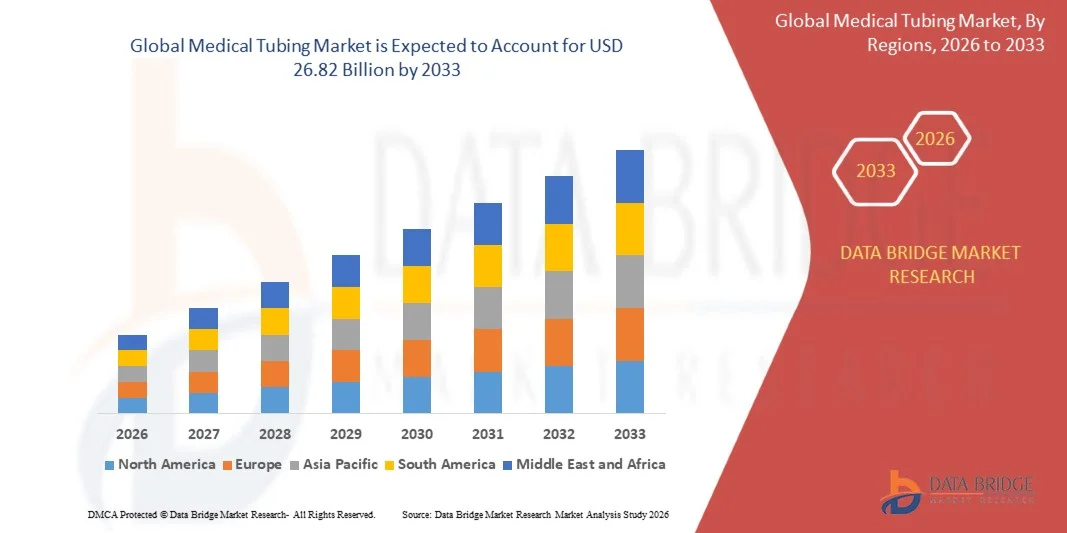
- Согласно анализу Data Bridge Market Research, размер мирового рынка медицинских труб был оценен как13,17 млрд долларов в 2025 годуОжидается, что он достигнет$26,82 млрд к 2033 году, вCAGR 9,30%в течение прогнозируемого периода
- Рост рынка в значительной степени подпитывается растущим внедрением минимально инвазивных процедур, передовых систем доставки лекарств и биофармацевтической обработки, что приводит к более высокому спросу на биосовместимые, гибкие и стерилизуемые медицинские трубки в больницах, клиниках и лабораториях.
- Кроме того, растущий спрос на одноразовые, одноразовые и высокопроизводительные трубные решения устанавливает силиконовые, полиолефиновые и специальные полимерные трубки в качестве предпочтительного выбора для управления жидкостью, применения катетера и лабораторного оборудования. Эти факторы ускоряют внедрение решений для медицинских трубок, тем самым значительно повышая рост отрасли.
Размер рынка и прогноз
Глобальная рыночная стоимость (2025):$13,17 млрд.
Ожидаемая рыночная стоимость (2033):$26,82 млрд.
Прогноз CAGR (2026–2033):9.30%
Каковы основные выводы рынка медицинских труб
- Медицинская трубка включает биосовместимые, гибкие и прочные трубки, используемые в системах доставки лекарств, катетерах, лабораторном оборудовании и биофармацевтической обработке. Эти трубы должны соответствовать строгим нормативным стандартам, обеспечивать химическую стойкость и обеспечивать безопасность и надежность для критически важных медицинских приложений.
- Растущий спрос на медицинские трубы в первую очередь подпитывается растущим числом хирургических процедур, увеличением амбулаторных учреждений и ростом инвестиций в инфраструктуру здравоохранения. Кроме того, предпочтение точной обработки жидкости, стерилизуемых материалов и интеграции с передовыми медицинскими устройствами продолжает стимулировать расширение рынка в глобальном секторе здравоохранения и лабораторий.
- Северная Америка доминирует на рынке медицинских труб с долей 35,8%В 2025 году благодаря наличию развитой инфраструктуры здравоохранения, высокому внедрению минимально инвазивных процедур и растущему спросу на одноразовые и биосовместимые трубные решения
- Ожидается, что Азиатско-Тихоокеанский регион станет самым быстрорастущим регионом на рынке медицинских труб в течение прогнозируемого периода из-за роста расходов на здравоохранение, урбанизации и расширения современных больниц в таких странах, как Китай, Япония и Индия.
- Силиконовый сегмент доминировал на рынке с долей рынка 43% в 2025 году из-за его биосовместимости, гибкости и химической инертности, что делает его пригодным для широкого спектра медицинских применений. Больницы и лаборатории часто предпочитают силиконовые трубки для систем доставки лекарств и сборок катетера из-за их долговечности и совместимости стерилизации. Широкое распространение сегмента также поддерживается наличием различных диаметров и толщин стен, что позволяет точно настраивать различные процедуры.
Сфера охвата и сегментация рынка медицинских труб
|
Атрибуты |
Медицинские трубки ключевые рыночные идеи |
|
Сегменты покрыты |
|
|
Страны, охваченные |
Северная Америка
Европа
Азиатско-Тихоокеанский регион
Ближний Восток и Африка
Южная Америка
|
|
Ключевые игроки рынка |
|
|
Рыночные возможности |
|
|
Информационные наборы данных с добавленной стоимостью |
В дополнение к информации о рыночных сценариях, таких как рыночная стоимость, темпы роста, сегментация, географическое покрытие и основные игроки, рыночные отчеты, курируемые Data Bridge Market Research, также включают анализ экспорта импорта, обзор производственных мощностей, анализ потребления продукции, анализ ценового тренда, сценарий изменения климата, анализ цепочки поставок, анализ цепочки создания стоимости, обзор сырья / расходных материалов, критерии выбора поставщиков, анализ PESTLE, анализ Porter и нормативную базу. |
Каковы основные тенденции на рынке медицинских труб
«Растущее внедрение биосовместимых и современных полимерных медицинских труб»
- Заметной тенденцией на рынке медицинских труб является растущее внедрение биосовместимых и современных полимерных трубок, обусловленное растущим акцентом на безопасность пациентов и минимально инвазивные процедуры. Эти материалы повышают производительность, гибкость и долговечность трубок, используемых в больницах, клиниках и биофармацевтических приложениях.
- Например, такие компании, как Saint-Gobain и Becton Dickinson, производят передовые полимерные медицинские трубки, которые широко используются в системах внутривенной доставки и катетерах. Это внедрение улучшает управление жидкостью, снижает риски загрязнения и поддерживает широкий спектр терапевтических процедур.
- Тенденция к миниатюрным и высокоточным медицинским устройствам увеличивает спрос на трубки с жесткими допусками и специализированные покрытия, которые позволяют лучше контролировать хирургические и диагностические процедуры. Это позиционирует медицинские трубы как критически важный компонент в медицинском оборудовании следующего поколения.
- Больницы и клинические учреждения все чаще внедряют одноразовые трубки для минимизации рисков заражения, оптимизации операционной эффективности и соблюдения строгих гигиенических протоколов. Это усиливает предпочтение полимерных, одноразовых трубных продуктов.
- Биофармацевтические производственные процессы используют передовые трубки для передачи стерильной жидкости и доставки лекарств, где важна химическая устойчивость и гибкость. Эта тенденция стимулирует инновации в конструкциях трубок, которые отвечают строгим нормативным требованиям и требованиям к производительности.
- На рынке наблюдается рост индивидуальных решений для медицинских трубок, где материалы, диаметры и длины адаптированы к конкретным процедурам. Этот растущий спрос на трубы для конкретных приложений формирует общее расширение рынка и технологическое развитие.
Динамика рынка медицинских труб
водитель
Растущий спрос со стороны больниц, клиник и биофармацевтических приложений
- Растущая потребность в надежных и высокопроизводительных трубах в больницах, клиниках и биофармацевтическом производстве стимулирует рост рынка. Эти приложения требуют биосовместимых, химически устойчивых и гибких труб для обеспечения безопасности пациента и эффективности процесса.
- Например, такие компании, как Tygon (Saint-Gobain), поставляют трубчатые растворы, специально разработанные для внутривенной терапии и переноса фармацевтической жидкости. Их продукты помогают поддерживать стерильность, уменьшают загрязнение и улучшают процедурные результаты в медицинских и лабораторных условиях.
- Расширение минимально инвазивных операций и амбулаторных процедур подпитывает спрос на прецизионные трубки, которые поддерживают катетеризацию, эндоскопию и инфузионные устройства. Этот спрос побуждает производителей к инновациям труб с улучшенными механическими и химическими свойствами.
- Рост производства биофармацевтических препаратов увеличивает потребность в стерильных трубках, способных обрабатывать сложные жидкости при производстве и доставке лекарств. Эти требования влияют на выбор материалов и разработку инноваций на рынке медицинских труб.
- Производители медицинских устройств инвестируют в передовые трубки для повышения безопасности и эффективности медицинских инструментов. Эти инвестиции укрепляют интеграцию высокопроизводительных трубок в различных приложениях здравоохранения.
Сдержанность/вызов
«Высокие производственные затраты и строгое соблюдение нормативных требований»
- Рынок медицинских труб сталкивается с проблемами из-за высоких производственных затрат, связанных с передовыми полимерными материалами, специализированными методами экструзии и точным производством. Эти факторы увеличивают капитальные вложения и эксплуатационные расходы производителей.
- Например, Becton Dickinson придерживается строгих стандартов соответствия FDA и ISO 13485 во время производства трубок, что требует обширного тестирования качества, проверки и документации. Эти нормативные требования увеличивают сложность и стоимость производственного процесса.
- Сохранение стерильности и биосовместимости в процессе производства требует наличия современных производственных мощностей и жесткого экологического контроля. Эти требования увеличивают время свинца и увеличивают общие производственные расходы на медицинские трубы.
- Зависимость от высококачественного сырья, включая силиконовые и полиуретановые полимеры, способствует волатильности затрат и зависимости от цепочки поставок. Производители должны сбалансировать материальные показатели с экономической целесообразностью, чтобы оставаться конкурентоспособными.
- Масштабирование производства при обеспечении соответствия нормативным требованиям, последовательности продукции и долговечности остается критической проблемой. Эти факторы в совокупности сдерживают рост рынка и требуют непрерывной оптимизации процессов игроками отрасли.
Как сегментируется рынок медицинских труб
Рынок сегментируется на основе продукта, структуры, конечного пользователя и применения.
• По продукту
На основе продукта рынок медицинских труб сегментирован на силикон, полиолефин, поливинилхлорид, поликарбонаты, фторполимеры и другие. Сегмент силикона доминировал на 43% рынка в 2025 году, что обусловлено его биосовместимостью, гибкостью и химической инертностью. Больницы и лаборатории часто предпочитают силиконовые трубки для систем доставки лекарств и сборок катетера из-за их долговечности и совместимости стерилизации. Широкое распространение сегмента также поддерживается наличием различных диаметров и толщин стен, что позволяет точно настраивать различные процедуры. Термическая стабильность и устойчивость силикона к кинкингу также повышают эксплуатационную надежность, увеличивая его предпочтение перед другими материалами.
Ожидается, что в сегменте полиолефинов будут наблюдаться самые быстрые темпы роста с 2026 по 2033 год, чему способствует растущий спрос на одноразовые медицинские устройства и лабораторные приложения. Полиолефиновые трубки предлагают экономически эффективное производство, химическую стойкость и легкие свойства, что делает их привлекательными для одноразовых установок. Его растущее внедрение также обусловлено совместимостью с автоматизированными производственными линиями и простотой интеграции в системы доставки лекарств и биофармацевтические системы. Производители все чаще предпочитают полиолефиновые трубки для удовлетворения всплеска амбулаторных процедур и минимально инвазивных вмешательств. Восстановимость и устойчивость материала также способствуют его быстрой траектории роста.
• Структура
На основе структуры рынок медицинских труб сегментирован на однолюменные, многолюменные, соэкструдированные, конические или бугорчатые трубы, плетеные трубы, баллонные трубы и термоусадочные трубы. Сегмент с одним просветом доминировал на крупнейшей доле рынка в 2025 году, что объясняется его простотой, надежностью и широким применением в медицинских устройствах. Однопросветные трубки широко используются в системах доставки лекарств, управлении жидкостью и лабораторных установках из-за их простой конструкции и простоты стерилизации. Его совместимость с различными соединителями и фитингами делает его предпочтительным выбором как в больницах, так и в исследовательских лабораториях.
Ожидается, что в сегменте с несколькими просветами будет наблюдаться самый быстрый CAGR с 2026 по 2033 год, что обусловлено необходимостью одновременной доставки нескольких жидкостей или лекарств через одну трубку. Многопросветные трубки повышают процедурную эффективность в критической помощи, катетеризации и инфузионной терапии. Например, такие производители, как B. Braun, расширили линейку продуктов с несколькими просветами для передовых внутривенных применений. Его внедрение растет в амбулаторных хирургических центрах и специализированных клиниках, требующих компактных, высокофункциональных решений.
• Конечный пользователь
На базе конечного пользователя рынок медицинских труб разделен на больницы и клиники, амбулаторные хирургические центры, медицинские лаборатории и другие. Больницы и клиники доминировали на рынке в 2025 году, что обусловлено их обширными процедурными объемами и разнообразными медицинскими потребностями. Больницы требуют медицинских трубок для систем доставки лекарств, управления жидкостью, катетеров и лабораторных операций, создавая устойчивый спрос. Предпочтение высококачественной стерилизуемой трубки в больницах поддерживает принятие широкого спектра приложений.
Ожидается, что в амбулаторных хирургических центрах будут наблюдаться самые быстрые темпы роста с 2026 по 2033 год, чему способствует растущая тенденция амбулаторных процедур и минимально инвазивных операций. Эти центры предпочитают легкие, гибкие и одноразовые трубки для повышения операционной эффективности и снижения риска заражения. Например, Smiths Medical разработала специализированные наборы трубок для амбулаторного ухода. Рост также ускоряется за счет повышения доступности здравоохранения и экономически эффективных процедурных моделей.
• Подача заявки
На основе применения рынок медицинских труб разделен на объемные одноразовые трубы, системы доставки лекарств, катетеры, биофармацевтическое лабораторное оборудование и другие. Сегмент систем доставки лекарств доминировал на крупнейшей доле рынка в 2025 году, что объясняется растущим использованием внутривенной терапии, инфузионных насосов и контролируемого введения лекарств. Трубы для доставки лекарств требуют высокой точности, биосовместимости и химической стойкости, отдавая предпочтение таким материалам, как силикон и полиолефин. Больницы и клиники полагаются на этот сегмент для обеспечения безопасности пациентов и эффективного управления жидкостью, способствуя доминированию на рынке.
Ожидается, что в сегменте катетеров будет наблюдаться самый быстрый CAGR с 2026 по 2033 год, что обусловлено растущей распространенностью сердечно-сосудистых заболеваний, минимально инвазивными вмешательствами и процедурами критической помощи. Катетерная трубка требует гибких, устойчивых к изломам и биосовместимых материалов, способствуя инновациям в дизайне и выборе материалов. Например, Medtronic представила передовые решения для катетерных трубок для сложных вмешательств. Усыновление растет в больницах, хирургических центрах и специализированных клиниках, поддерживая устойчивый рост в этом сегменте приложений.
В каком регионе находится наибольшая доля рынка медицинских труб
- Северная Америка доминировала на рынке медицинских труб с самой большой долей дохода в 35,8% в 2025 году, что обусловлено наличием передовой инфраструктуры здравоохранения, высоким внедрением минимально инвазивных процедур и растущим спросом на одноразовые и биосовместимые решения для труб.
- Поставщики медицинских услуг в регионе отдают приоритет безопасности, надежности и соответствующей нормативным требованиям трубам для больниц, клиник и лабораторий.
- Это широкое внедрение дополнительно поддерживается высокими расходами на здравоохранение, технологически продвинутыми больницами и растущим предпочтением инновационных систем доставки лекарств и управления жидкостью, устанавливая медицинские трубки в качестве критического компонента в доставке медицинских услуг.
Американский рынок медицинских труб Insight
Рынок медицинских трубок в США занял самую большую долю доходов в 2025 году в Северной Америке, чему способствовали растущие объемы процедур в больницах, увеличение амбулаторных операций и внедрение передовых систем доставки лекарств. Поставщики медицинских услуг подчеркивают точность, биосовместимость и стерилизационные трубчатые материалы, такие как силикон и полиолефин. Рост также обусловлен спросом на одноразовые трубки в амбулаторных хирургических центрах и лабораториях, а также технологическими достижениями в области катетерных и инфузионных трубок.
Европейское исследование рынка медицинских труб
В течение прогнозируемого периода европейский рынок медицинских труб будет расширяться при существенном CAGR, в основном за счет хорошо зарекомендовавших себя систем здравоохранения, строгих нормативных стандартов и растущего спроса на передовые медицинские устройства. Растущее внедрение лабораторной автоматизации, минимально инвазивных процедур и систем точной доставки жидкости способствует росту рынка. Европейские поставщики медицинских услуг все чаще выбирают трубные решения, которые обеспечивают безопасность пациентов, снижают риски загрязнения и повышают эффективность процедур, поддерживая устойчивое внедрение в больницах и клиниках.
Британский рынок медицинских трубок Insight
Ожидается, что в течение прогнозируемого периода рынок медицинских трубок в Великобритании будет расти с заметным CAGR, что обусловлено увеличением внимания к амбулаторной помощи, хирургической эффективности и модернизации больниц. Спрос на гибкие, устойчивые к изломам и стерилизуемые трубки растет в больницах и хирургических центрах. Акцент Великобритании на инновации в области здравоохранения и сильное присутствие производителей медицинских устройств, как ожидается, продолжит стимулировать расширение рынка.
Немецкий рынок медицинских труб
Ожидается, что в течение прогнозируемого периода рынок медицинских труб в Германии будет расширяться на значительном CAGR, чему будет способствовать развитая больничная инфраструктура, акцент на прецизионную медицину и широкое внедрение биофармацевтического и лабораторного оборудования. Немецкие медицинские учреждения отдают приоритет надежным и долговечным трубным решениям, которые соответствуют строгим нормативным стандартам. Интеграция трубок в автоматизированные системы доставки лекарств и приложения критической помощи растет, поддерживая устойчивое внедрение в больницах и лабораториях.
Азиатско-Тихоокеанский рынок медицинских труб
Рынок медицинских трубок в Азиатско-Тихоокеанском регионе будет расти самыми быстрыми темпами в период с 2026 по 2033 год, что обусловлено ростом расходов на здравоохранение, урбанизацией и расширением современных больниц в таких странах, как Китай, Япония и Индия. Повышение осведомленности о качественном здравоохранении, увеличение объема хирургических операций и принятие минимально инвазивных процедур подпитывают спрос. Появление APAC в качестве центра производства медицинских устройств в сочетании с доступными и доступными решениями для трубок еще больше стимулирует рынок.
Японский рынок медицинских труб
Японский рынок медицинских труб набирает обороты благодаря старению населения страны, высоким стандартам здравоохранения и технологическому внедрению в больницах и клиниках. Растет спрос на простые в использовании, безопасные и биосовместимые трубки для доставки лекарств и катетера. Интеграция с передовыми медицинскими устройствами и лабораторными системами стимулирует рост как в больницах, так и в исследовательских приложениях.
Китайский рынок медицинских труб
На китайском рынке медицинских труб приходится наибольшая доля доходов в Азиатско-Тихоокеанском регионе в 2025 году, что объясняется быстрым расширением больниц, растущим спросом на здравоохранение среднего класса и ростом хирургических процедур. Больницы и клиники все чаще используют силиконовые, полиолефиновые и ПВХ трубки для доставки лекарств, катетеров и лабораторного использования. Стремление к модернизации здравоохранения, отечественному производству медицинских трубок и правительственным инициативам, поддерживающим внедрение медицинских устройств, являются ключевыми факторами роста рынка в Китае.
Какие компании являются лучшими на рынке медицинских труб
Индустрия медицинских трубок в основном возглавляется хорошо зарекомендовавшими себя компаниями, в том числе:
- Группа Saint-Gobain(Франция)
- Lubrizol Corporation(США)
- Оптинова (Швеция)
- Tekni-Plex (США)
- Zeus Industrial Products, Inc. (США)
- Nordson Corporation (США)
- Putnam Plastics (США)
- W. L. Gore & Associates, Inc.(США)
- RAUMEDIC AG (Германия)
- Teknor Apex (США)
- Teleflex Incorporated (США)
- Фрейденберг медицинский(Германия)
- Dow (США)
- Avient Corporation (США)
- Coloplast Corp. (Дания)
- ConvaTec Group PLC (Великобритания)
- Бостонская научная корпорация (США)
- LVD Biotech (США)
- A.P. Extrusion Incorporated (США)
- Elkem ASA (Норвегия)
Каковы последние события на рынке медицинских труб
- В сентябре 2025 года Junkosha объявила на выставке Medical Technology Ireland 2025 о расширении своего портфеля медицинских трубок, в котором будут представлены новые оптически прозрачные трубы для очистки от тепла, предназначенные для производства катетера. Этот продукт обеспечивает превосходную оптическую четкость, снижает риски сборки и оптимизирует производственные процессы. Увеличивая производственные мощности на 300% с 2021 по 2025 год, в том числе удвоив объемы производства для трубопроводов Peelable Heat Shrink Tubing и Etched PTFE Liners, Junkosha укрепляет свои позиции на рынке и обеспечивает надежные поставки инновационных решений для труб. Это расширение поддерживает растущий спрос на производство интервенционных устройств и повышает способность компании обслуживать громоздкие, высокоточные приложения.
- В апреле 2025 года DuPont запустила свою Liveo Pharma TPE Ultra-Low Temp Tubing для биофармацевтической обработки, предназначенную для выдерживания экстремальных температур до -86 ° C при обеспечении устойчивости к изгибу, дроблению, удару, давлению разрыва и химическим веществам. Трубы без фталата стерилизуемы, свариваемы, герметичны и соответствуют стандартам USP Class VI, USP <665>, USP <232> и ISO 10993. Этот запуск укрепляет лидерство DuPont в решениях для транспортировки жидкостей одноразового использования, дополняет портфель Liveo Pharma на основе силикона и удовлетворяет растущий рыночный спрос на высокоэффективные, соответствующие нормативным требованиям трубки в биофарме и лабораторных приложениях.
- В апреле 2024 года Cobalt Polymers заключила партнерское соглашение с HnG Medical о распространении в Азии продуктов для термоусадочных труб. Это сотрудничество расширяет региональное присутствие компании на рынке и повышает доступность высококачественных медицинских трубок для растущей индустрии медицинских устройств в Азиатско-Тихоокеанском регионе. Партнерство поддерживает более широкое внедрение специализированных трубок в сборках катетеров, системах доставки лекарств и лабораторных приложениях, способствуя проникновению на рынок и росту доходов на развивающихся рынках здравоохранения.
- В июне 2023 года TekniPlex объявила о крупных инвестициях в новые линии экструзии медицинских труб, а также оборудование для переработки в рамках расширения своего предприятия в Коста-Рике. Эти инвестиции повышают производственные мощности и операционную эффективность, позволяя TekniPlex удовлетворить растущий мировой спрос на биосовместимые и специализированные трубки, используемые в больницах, хирургических центрах и лабораториях. Расширение позволяет компании захватить повышенную долю рынка в Северной и Латинской Америке и реагировать на растущий спрос как на стандартные, так и на заказные медицинские трубки.
- В апреле 2023 года Qosina сотрудничала с DuPont, чтобы представить пять новых биофармацевтических трубок Liveo. Эта разработка укрепляет предложение Qosina высокопроизводительных трубок для одноразовых биофармовых процессов, поддерживающих такие приложения, как доставка лекарств, управление жидкостью и лабораторное оборудование. Сотрудничество повышает способность компании соответствовать строгим нормативным требованиям и растущим потребностям рынка в безопасных, долговечных и гибких решениях для медицинских труб, укрепляя свои позиции на конкурентном рынке биофармацевтических труб.
SKU-
Получите онлайн-доступ к отчету на первой в мире облачной платформе рыночной аналитики

- Интерактивная панель анализа данных
- Панель анализа компании для возможностей с высоким потенциалом роста
- Доступ аналитика-исследователя для настройки и запросов
- Анализ конкурентов с помощью интерактивной панели
- Последние новости, обновления и анализ тенденций
- Используйте возможности сравнительного анализа для комплексного отслеживания конкурентов
Методология исследования
Сбор данных и анализ базового года выполняются с использованием модулей сбора данных с большими размерами выборки. Этап включает получение рыночной информации или связанных данных из различных источников и стратегий. Он включает изучение и планирование всех данных, полученных из прошлого заранее. Он также охватывает изучение несоответствий информации, наблюдаемых в различных источниках информации. Рыночные данные анализируются и оцениваются с использованием статистических и последовательных моделей рынка. Кроме того, анализ доли рынка и анализ ключевых тенденций являются основными факторами успеха в отчете о рынке. Чтобы узнать больше, пожалуйста, запросите звонок аналитика или оставьте свой запрос.
Ключевой методологией исследования, используемой исследовательской группой DBMR, является триангуляция данных, которая включает в себя интеллектуальный анализ данных, анализ влияния переменных данных на рынок и первичную (отраслевую экспертную) проверку. Модели данных включают сетку позиционирования поставщиков, анализ временной линии рынка, обзор рынка и руководство, сетку позиционирования компании, патентный анализ, анализ цен, анализ доли рынка компании, стандарты измерения, глобальный и региональный анализ и анализ доли поставщика. Чтобы узнать больше о методологии исследования, отправьте запрос, чтобы поговорить с нашими отраслевыми экспертами.
Доступна настройка
Data Bridge Market Research является лидером в области передовых формативных исследований. Мы гордимся тем, что предоставляем нашим существующим и новым клиентам данные и анализ, которые соответствуют и подходят их целям. Отчет можно настроить, включив в него анализ ценовых тенденций целевых брендов, понимание рынка для дополнительных стран (запросите список стран), данные о результатах клинических испытаний, обзор литературы, обновленный анализ рынка и продуктовой базы. Анализ рынка целевых конкурентов можно проанализировать от анализа на основе технологий до стратегий портфеля рынка. Мы можем добавить столько конкурентов, о которых вам нужны данные в нужном вам формате и стиле данных. Наша команда аналитиков также может предоставить вам данные в сырых файлах Excel, сводных таблицах (книга фактов) или помочь вам в создании презентаций из наборов данных, доступных в отчете.











