


Global Membrane Filtration Market Segmentation, By Membrane Material (Polymeric and Ceramic), Module Design (Spiral Wound, Tubular Systems, Plate and Frame, and Hollow Fibre), Type (Reverse Osmosis, Ultrafiltration, Microfiltration, and Nano filtration), Application (Water and Wastewater and Food and Beverage) - Industry Trends and Forecast to 2033
Каков размер и темпы роста глобального рынка мембранной фильтрации
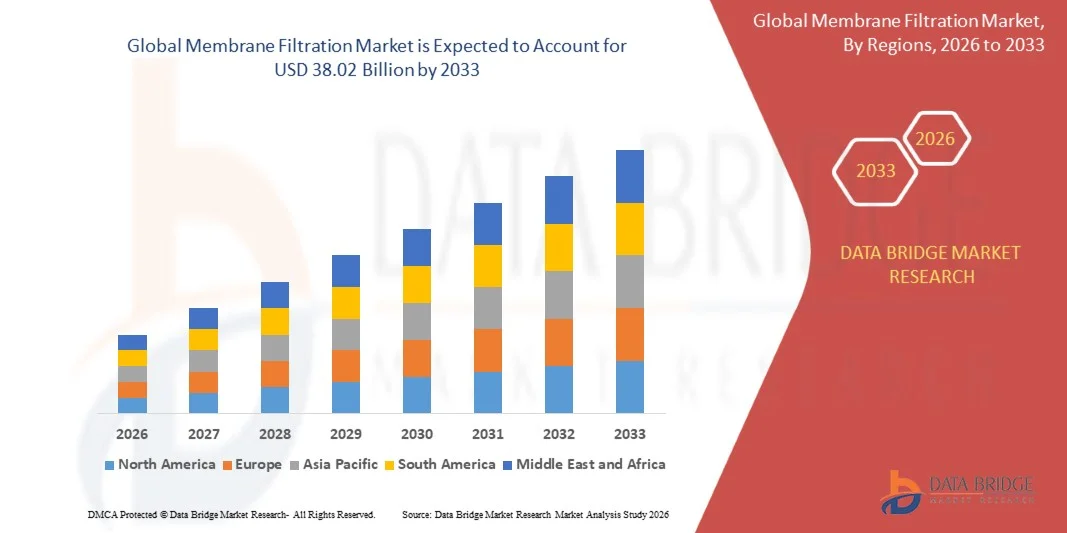
- Согласно анализу Data Bridge Market Research, размер мирового рынка мембранной фильтрации был оценен как21,48 млрд долларов в 2025 годуОжидается, что он достигнет38,02 млрд долларов к 2033 году, вCAGR 7,40%в течение прогнозируемого периода
- Применение фильтрации молочных мембран в молочной промышленности обусловлено как экономическими, так и техническими факторами. Ведущие производители оборудования для очистки воды постоянно разрабатывают новые технологии и бизнес-модели для удовлетворения постоянно растущих глобальных потребностей в воде.
- Некоторые из основных достижений в области водоочистного оборудования в последние годы стимулируют рост рынка. Быстро растущая молочная промышленность, а также правила безопасности воды и фильтрации значительно подпитывают рынок мембранной фильтрации.
Размер рынка и прогноз
Глобальная рыночная стоимость (2025):$21,48 млрд.
Ожидаемая рыночная стоимость (2033):$38,02 млрд.
Прогноз CAGR (2026–2033):7.40%
Каковы основные выводы рынка мембранной фильтрации
- Отталкивание происходит, когда осажденные материалы собираются вдоль поверхности мембраны, что приводит к снижению общей эффективности и увеличению потребления энергии. Мембранное загрязнение является одной из наиболее распространенных проблем, с которыми сталкиваются конечные пользователи мембранной фильтрации.
- В последние годы наблюдается рост общественного и экологического давления на движение очистки сточных вод. Отходы воды из домашних хозяйств и промышленности создают значительную нагрузку на окружающую среду, оказывая огромное давление на правительство для улучшения очистки воды.
- Азиатско-Тихоокеанский регион доминировал на рынке мембранной фильтрации с долей дохода 40,95% в 2025 году, что обусловлено быстрой индустриализацией, увеличением инвестиций в муниципальную очистку воды, расширением переработки пищевых продуктов и ростом спроса на переработку сточных вод в Китае, Японии, Индии, Южной Корее и Юго-Восточной Азии.
- По прогнозам, в Северной Америке будет зарегистрирован самый быстрый CAGR в 8,58% с 2026 по 2033 год, что обусловлено увеличением инвестиций в передовые системы очистки воды, промышленные технологии разделения жидкости и строгие экологические правила в США и Канаде.
- Сегмент полимеров доминировал на рынке с долей 68,4% в 2025 году, поскольку он остается наиболее широко используемым материалом в области очистки воды, пищевой промышленности, молочных продуктов и фармацевтической фильтрации.
Область охвата и сегментация рынка мембранной фильтрации
|
Атрибуты |
Мембранная фильтрация - ключевые идеи рынка |
|
Сегменты покрыты |
|
|
Страны, охваченные |
Северная Америка
Европа
Азиатско-Тихоокеанский регион
Ближний Восток и Африка
Южная Америка
|
|
Ключевые игроки рынка |
|
|
Рыночные возможности |
|
|
Информационные наборы данных с добавленной стоимостью |
В дополнение к информации о рыночных сценариях, таких как рыночная стоимость, темпы роста, сегментация, географическое покрытие и основные игроки, рыночные отчеты, курируемые Data Bridge Market Research, также включают углубленный экспертный анализ, анализ цен, анализ доли бренда, опрос потребителей, анализ демографии, анализ цепочки поставок, анализ цепочки создания стоимости, обзор сырья / расходных материалов, критерии выбора поставщиков, анализ PESTLE, анализ Porter и нормативную базу. |
Каковы основные тенденции на рынке мембранной фильтрации
"Увеличение перехода к высокоэффективным, устойчивым и передовым технологиям разделения"
- Рынок мембранной фильтрации демонстрирует сильное внедрение высокоэффективных систем фильтрации, предназначенных для поддержки очистки воды, обработки пищевых продуктов и напитков, фармацевтических препаратов, молочных продуктов и биотехнологий.
- Производители все чаще внедряют передовые системы микрофильтрации, ультрафильтрации, нанофильтрации и обратного осмоса, которые обеспечивают улучшенное удаление загрязняющих веществ, энергоэффективность и надежность работы.
- Растущий спрос на экономически эффективные, компактные и экологически устойчивые технологии очистки стимулирует использование промышленных перерабатывающих заводов, муниципальных водоочистных сооружений и приложений здравоохранения.
- Например, такие компании, как Pall Corporation, Alfa Laval, Veolia Water Technologies, Asahi Kasei Corporation и Koch Membrane Systems обновили свои портфели мембранной фильтрации с более высокими скоростями потока, улучшенной селективностью и возможностями автоматического мониторинга.
- Увеличение потребности в повторном использовании воды, очистке сточных вод, безопасности пищевых продуктов и стерильной фильтрации ускоряет переход к передовым мембранным системам.
- По мере того, как нормативы устойчивости и потребности в промышленной очистке продолжают расти, технологии мембранной фильтрации будут оставаться жизненно важными для эффективного разделения, сохранения воды и высокочистой обработки.
Каковы основные драйверы рынка мембранной фильтрации
- Растущий спрос на безопасную питьевую воду, переработку сточных вод и промышленные решения для разделения жидкостей является основным фактором, поддерживающим рост рынка.
- Например, в 2025 году ведущие компании, такие как Veolia, Alfa Laval и Pall Corporation, расширили свои портфели фильтрации для поддержки более высокой пропускной способности, лучшего удаления микробов и снижения потребления энергии.
- Растущее внедрение продуктов питания и напитков, фармацевтических препаратов, химических веществ, биотехнологий и муниципальной очистки воды повышает спрос в США, Европе и Азиатско-Тихоокеанском регионе.
- Достижения в мембранных материалах, конструкции пор, противообрастающих покрытиях и автоматизированных системах управления повысили производительность, долговечность и экономическую эффективность
- Растущее использование фильтрации в опреснительных установках, переработке молочных продуктов, уточнении напитков и фармацевтической стерилизации создает сильный спрос на рынке.
- Ожидается, что благодаря устойчивым инвестициям в промышленную инфраструктуру, инициативам в области чистой воды и экологической устойчивости рынок Мембранной фильтрации станет свидетелем сильного долгосрочного роста.
Какой фактор влияет на рост рынка мембранной фильтрации
- Высокие затраты, связанные с передовыми мембранными материалами, циклами замены и крупномасштабными установочными системами, ограничивают внедрение малых промышленных установок и развивающихся рынков.
- Например, в течение 2024-2025 годов колебания цен на полимерные материалы, затраты на энергию и сбои в цепочке поставок увеличили производственные и эксплуатационные расходы для нескольких глобальных поставщиков.
- Сложность в управлении мембранным загрязнением, масштабированием и регулярными требованиями к техническому обслуживанию увеличивает потребность в технической экспертизе и эксплуатационных расходах.
- Ограниченная осведомленность в развивающихся регионах о передовых мембранных технологиях и методах утилизации воды замедляет принятие решений.
- Конкуренция со стороны традиционных технологий фильтрации, химической обработки и центрифугирования создает ценовое давление и снижает дифференциацию продукции.
- Для решения этих проблем компании сосредотачиваются на оптимизированных по стоимости конструкциях мембран, технологиях борьбы с загрязнением и автоматизированных системах очистки для увеличения глобального внедрения систем мембранной фильтрации.
Как сегментируется рынок мембранной фильтрации
Рынок сегментирован на основемембранный материал, дизайн модуля, тип и применение.
• Мембранный материал
На основе мембранного материала рынок мембранной фильтрации сегментирован на полимерный и керамический. Сегмент полимеров доминировал на рынке с долей 68,4% в 2025 году, поскольку он остается наиболее широко используемым материалом в области очистки воды, пищевой промышленности, молочных продуктов и фармацевтической фильтрации. Полимерные мембраны предлагают такие преимущества, как экономичность, простота изготовления, гибкость и совместимость с микрофильтрацией, ультрафильтрацией, нанофильтрацией и системами обратного осмоса. Их широкое использование в коммунальной водоочистке и разделении промышленных жидкостей продолжает поддерживать сильное лидерство на рынке. Растущий спрос на доступные крупномасштабные решения для фильтрации еще больше ускоряет внедрение в развитых и развивающихся странах.
Ожидается, что сегмент керамики будет расти самыми быстрыми темпами с 2026 по 2033 год, что обусловлено растущим спросом на высокотемпературную стабильность, превосходную химическую стойкость и более длительный срок службы в промышленных и фармацевтических приложениях.
• Модульный дизайн
На основе дизайна модулей рынок сегментирован на спиральную рану, трубчатые системы, пластины и раму и полые волокна. Сегмент Spiral Wound доминировал на рынке с долей 37,9% в 2025 году, чему способствовало его широкое использование в системах обратного осмоса и нанофильтрации для опреснения, очистки сточных вод и промышленной очистки жидкости. Модули спиральной раны предлагают высокую площадь мембранной поверхности, компактную конструкцию и экономичную установку, что делает их очень предпочтительными для муниципальных и промышленных применений. Их активное внедрение на крупномасштабных водоочистных сооружениях продолжает укреплять доминирование сегмента.
Сегмент Hollow Fibre, по прогнозам, будет расти самыми быстрыми темпами CAGR с 2026 по 2033 год, что обусловлено увеличением использования в области ультрафильтрации, медицинской фильтрации и биообработки из-за высокой плотности упаковки и превосходной эффективности фильтрации.
• По типу
На основе типа рынок мембранной фильтрации сегментирован на обратный осмос, ультрафильтрацию, микрофильтрацию и нанофильтрацию. Сегмент Reverse Osmosis доминировал на рынке с долей 34,6% в 2025 году, благодаря его широкому использованию в опреснении, коммунальной очистке воды, промышленной технологической воде и переработке сточных вод. Системы обратного осмоса обеспечивают высокоэффективное удаление загрязняющих веществ, включая соли, микроорганизмы и растворенные твердые вещества, что делает их необходимыми для глобальной инфраструктуры чистой воды.
Ожидается, что сегмент нанофильтрации будет расти самыми быстрыми темпами с 2026 по 2033 год, что обусловлено растущим спросом на селективное разделение, смягчение воды и передовые промышленные процессы очистки жидкости.
• Подача заявки
На основе применения рынок сегментирован на Водные и Сточные воды и Продукты питания и Напитки. Сегмент воды и сточных вод доминировал на рынке с долей 61,8% в 2025 году, что обусловлено растущим спросом на муниципальную очистку воды, опреснение, переработку сточных вод и промышленную очистку стоков. Увеличение инвестиций в устойчивое управление водными ресурсами и соблюдение нормативных требований продолжает поддерживать лидерство сегмента.
Сегмент продуктов питания и напитков, как ожидается, будет расти самыми быстрыми темпами с 2026 по 2033 год, чему способствует увеличение использования в переработке молочных продуктов, уточнении напитков, концентрации сока и стерильной фильтрации.
В каком регионе находится наибольшая доля рынка мембранной фильтрации
- Азиатско-Тихоокеанский регион доминировал на рынке мембранной фильтрации с долей дохода 40,95% в 2025 году, что обусловлено быстрой индустриализацией, увеличением инвестиций в муниципальную очистку воды, расширением переработки пищевых продуктов и ростом спроса на переработку сточных вод в Китае, Японии, Индии, Южной Корее и Юго-Восточной Азии. Высокое внедрение систем обратного осмоса, ультрафильтрации и микрофильтрации на опреснительных установках, промышленных объектах и установках по переработке продуктов питания и напитков продолжает стимулировать региональный спрос.
- Ведущие компании Азиатско-Тихоокеанского региона все чаще внедряют передовые полимерные и керамические мембранные решения, укрепляя технологическое и производственное преимущество региона. Постоянные инвестиции в водную инфраструктуру, промышленную очистку и устойчивое управление водными ресурсами способствуют долгосрочному расширению рынка.
- Сильные производственные мощности, растущие экологические нормы и устойчивые инвестиции в промышленное производство и муниципальные очистные сооружения еще больше укрепляют лидерство на региональном рынке.
Китайский рынок мембранной фильтрации
Китай является крупнейшим поставщиком в Азиатско-Тихоокеанском регионе, чему способствуют крупномасштабные инвестиции в очистку муниципальных сточных вод, повторное использование промышленных вод и опреснительную инфраструктуру. Растущее развитие пищевой промышленности, фармацевтического производства и химической промышленности усиливает спрос на системы мембранной фильтрации в промышленных и муниципальных приложениях. Сильные внутренние производственные возможности и поддерживаемые правительством экологические инициативы способствуют дальнейшему росту рынка.
Японский рынок мембранной фильтрации Insight
Япония вносит значительный вклад в региональный рост, обусловленный передовыми промышленными технологиями очистки воды, сильным фармацевтическим производством и высоким спросом на ультрачистые системы водоснабжения в электронике и секторах здравоохранения. Расширение использования премиальных мембранных решений в пищевой промышленности и биотехнологии способствует долгосрочному расширению рынка.
Рынок мембранной фильтрации Индии Insight
Индия становится крупным центром роста, что обусловлено расширением городской водной инфраструктуры, увеличением проектов очистки сточных вод и увеличением спроса со стороны молочного, питьевого и фармацевтического секторов. Правительственные инициативы, направленные на обеспечение доступа к чистой воде и промышленной устойчивости, продолжают ускорять внедрение мембранной фильтрации.
Южнокорейский рынок мембранной фильтрации
Южная Корея вносит значительный вклад благодаря высокому спросу на производство полупроводников, фармацевтическую обработку и очистку промышленных сточных вод. Быстрые промышленные инновации и мощный производственный потенциал продолжают поддерживать устойчивый рост рынка.
Рынок мембранной фильтрации Северной Америки
По прогнозам, в Северной Америке будет зарегистрирован самый быстрый CAGR в 8,58% с 2026 по 2033 год, что обусловлено увеличением инвестиций в передовые системы очистки воды, промышленные технологии разделения жидкости и строгие экологические правила в США и Канаде. Растущий спрос на опреснение на основе мембран, фармацевтическую стерильную фильтрацию и безопасность пищевых продуктов продолжает ускорять региональный рост. Ведущие компании Северной Америки все чаще запускают высокоэффективные системы обратного осмоса и ультрафильтрации, укрепляя технологическое преимущество региона. Постоянные инвестиции в инфраструктуру чистой воды, инициативы в области устойчивого развития и передовые системы промышленной переработки также способствуют долгосрочному расширению рынка.
Американский рынок мембранной фильтрации Insight
США являются крупнейшим донором в Северной Америке, чему способствуют сильные инвестиции в муниципальную очистку воды, фильтрацию продуктов питания и напитков, биотехнологии и фармацевтическое производство. Все более широкое внедрение передовых систем фильтрации при переработке сточных вод и промышленной переработке продолжает увеличивать спрос.
Какие компании занимают лидирующие позиции на рынке мембранной фильтрации
Индустрия мембранной фильтрации в основном возглавляется хорошо зарекомендовавшими себя компаниями, в том числе:
- Pall Corporation (США)
- Fileder Prominent (Великобритания)
- Aquatech International LLC (США)
- Synder Filtration, Inc. (США)
- Альфа Лаваль (Швеция)
- Veolia Water Technologies (Франция)
- Acwa Services (Саудовская Аравия)
- Koch Industries, Inc. (США)
- Asahi Kasei Corporation (Япония)
- Синдерная фильтрация (США)
- Микродын-Надир (Германия)
- MACHEREY-NAGEL GmbH & Co. KG (Германия)
- AMD Manufacturing, Inc. (США)
- Koch Membrane Systems (США)
- Коул-Пармер (США)
- AQUAPORIN A/S (Дания)
- МИКРОДИН-НАДИР (Германия)
- GEA Group Aktiengesellschaft (Германия)
- Veolia TOYOBO CO., LTD (Япония)
- Sterlitech Corporation (США)
Каковы последние события на мировом рынке мембранной фильтрации
- В марте 2025 года Alfa Laval заключила один из крупнейших в истории контрактов на мембранную фильтрацию стоимостью около 9,38 млн долларов США для строительства передовой установки нано- и ультрафильтрации для установки ферментации в Азии. В этом проекте система планируется к поставке осенью 2025 года и подчеркивает сильную способность компании разрабатывать высоко настраиваемые и крупномасштабные решения для мембранной фильтрации для промышленного применения. В заключение, этот заказ отражает растущий глобальный спрос на передовые мембранные системы большой емкости в промышленной обработке и очистке воды.
- В марте 2025 года DuPont Water Solutions представила WAVE PRO, передовой инструмент онлайн-моделирования, разработанный для поддержки применения ультрафильтрации (UF) в питьевой воде, промышленной воде, очистке сточных вод и опреснении морской воды. В дополнение к повышению точности проектирования системы, платформа помогает оптимизировать операционную эффективность и улучшить планирование проектов для инфраструктуры фильтрации. В заключение, этот запуск подчеркивает растущую интеграцию цифровых инструментов и технологий интеллектуального моделирования на рынке мембранной фильтрации.
- В феврале 2025 года Pall Corporation и MTR Carbon Capture заключили стратегическое партнерство для предоставления модульных, масштабируемых и экономически эффективных решений по улавливанию углерода. В этом сотрудничестве мембранная система MTR Polaris сочетается с передовыми технологиями фильтрации и предварительной обработки Pall для обеспечения эффективной обработки дымовых газов и защиты важнейших промышленных активов в секторах декарбонизации. В заключение, это партнерство подчеркивает растущую роль технологий мембранной фильтрации в устойчивом улавливании углерода и промышленных применениях, ориентированных на климат.
- В январе 2025 года Toray Industries разработала высокоэффективный мембранный модуль для биофармацевтических применений. В этом новом модуле производительность фильтрации, как сообщается, более чем в два раза выше, чем в обычных системах, при одновременном снижении засорения и повышении эффективности очистки. Кроме того, ожидается, что система повысит урожайность более чем на 90%, укрепив ее использование в современной обработке биофармы. В заключение, это нововведение отражает растущий спрос на высокоэффективные мембранные решения в фармацевтическом производстве.
- В июле 2023 года DuPont выпустила свои первые продукты нанофильтрации, специально предназначенные для очистки рассола лития, а именно мембраны DuPont FilmTec LiNE-XD и LiNE-XD HP. В этих новых элементах поддерживается высокое восстановление лития из богатых хлоридом рассольных потоков при сохранении сильной селективности против двухвалентных металлов, таких как магний. В заключение, запуск этого продукта подчеркивает растущее применение мембранной фильтрации в критически важных отраслях добычи полезных ископаемых и цепочки поставок аккумуляторов.
SKU-
Получите онлайн-доступ к отчету на первой в мире облачной платформе рыночной аналитики

- Интерактивная панель анализа данных
- Панель анализа компании для возможностей с высоким потенциалом роста
- Доступ аналитика-исследователя для настройки и запросов
- Анализ конкурентов с помощью интерактивной панели
- Последние новости, обновления и анализ тенденций
- Используйте возможности сравнительного анализа для комплексного отслеживания конкурентов
Методология исследования
Сбор данных и анализ базового года выполняются с использованием модулей сбора данных с большими размерами выборки. Этап включает получение рыночной информации или связанных данных из различных источников и стратегий. Он включает изучение и планирование всех данных, полученных из прошлого заранее. Он также охватывает изучение несоответствий информации, наблюдаемых в различных источниках информации. Рыночные данные анализируются и оцениваются с использованием статистических и последовательных моделей рынка. Кроме того, анализ доли рынка и анализ ключевых тенденций являются основными факторами успеха в отчете о рынке. Чтобы узнать больше, пожалуйста, запросите звонок аналитика или оставьте свой запрос.
Ключевой методологией исследования, используемой исследовательской группой DBMR, является триангуляция данных, которая включает в себя интеллектуальный анализ данных, анализ влияния переменных данных на рынок и первичную (отраслевую экспертную) проверку. Модели данных включают сетку позиционирования поставщиков, анализ временной линии рынка, обзор рынка и руководство, сетку позиционирования компании, патентный анализ, анализ цен, анализ доли рынка компании, стандарты измерения, глобальный и региональный анализ и анализ доли поставщика. Чтобы узнать больше о методологии исследования, отправьте запрос, чтобы поговорить с нашими отраслевыми экспертами.
Доступна настройка
Data Bridge Market Research является лидером в области передовых формативных исследований. Мы гордимся тем, что предоставляем нашим существующим и новым клиентам данные и анализ, которые соответствуют и подходят их целям. Отчет можно настроить, включив в него анализ ценовых тенденций целевых брендов, понимание рынка для дополнительных стран (запросите список стран), данные о результатах клинических испытаний, обзор литературы, обновленный анализ рынка и продуктовой базы. Анализ рынка целевых конкурентов можно проанализировать от анализа на основе технологий до стратегий портфеля рынка. Мы можем добавить столько конкурентов, о которых вам нужны данные в нужном вам формате и стиле данных. Наша команда аналитиков также может предоставить вам данные в сырых файлах Excel, сводных таблицах (книга фактов) или помочь вам в создании презентаций из наборов данных, доступных в отчете.











