Global Methylxanthines Market Segmentation, By Source (Natural, Animals, and Others), Product (Theophylline, Caffeine, Theobromine, and Others), Indication (Asthma, Chronic Bronchitis, Emphysema, Chronic Obstructive Pulmonary Disease, and Others), Activity (Immunomodulatory, Anti-inflammatory, Bronchoprotective, Bronchodilator, Stimulants, and Others), Route of Administration (Oral, Parenteral, and Others), End-Users (Hospitals, Homecare, Specialty Clinics, and Others), Distribution Channel (Hospital Pharmacy, Online Pharmacy, and Retail Pharmacy) - Industry Trends and Forecast to 2033
Methylxanthines Market Size
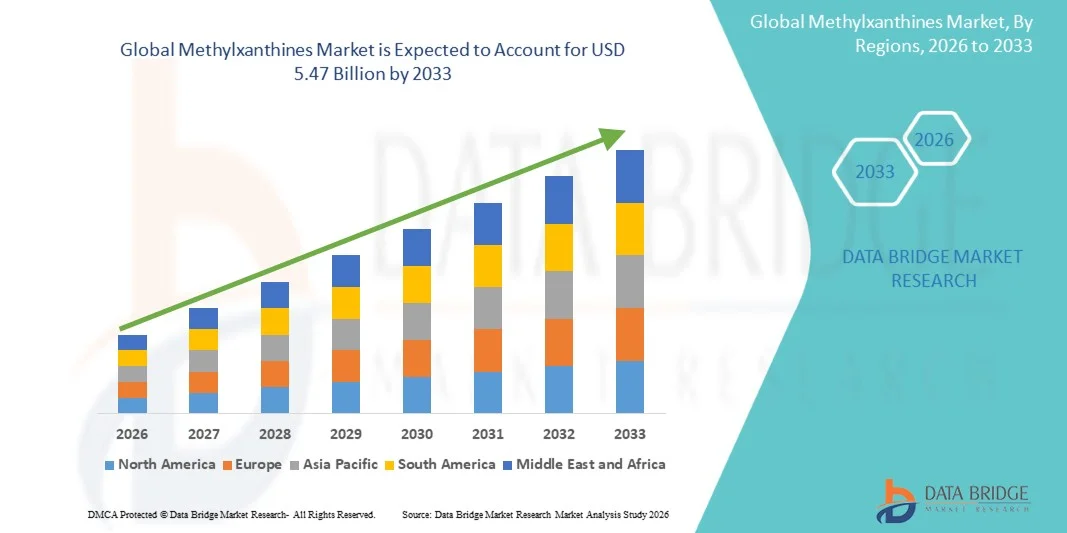
- The global Methylxanthines market size was valued at USD 2.85 billion in 2025 and is expected to reach USD 5.47 billion by 2033, at a CAGR of 8.50% during the forecast period
- The market growth is largely fueled by the increasing prevalence of respiratory disorders such as asthma and chronic obstructive pulmonary disease (COPD), along with growing clinical use of methylxanthines for bronchodilation and central nervous system stimulation, leading to wider adoption in therapeutic applications
- Furthermore, rising demand for effective long-term management of respiratory diseases, continuous availability of oral and injectable formulations, and ongoing research into improved drug delivery and combination therapies are establishing methylxanthines as important agents in respiratory care. These converging factors are accelerating the uptake of Methylxanthines solutions, thereby significantly boosting the industry’s growth
Methylxanthines Market Analysis
- Methylxanthines, a class of bronchodilator drugs including theophylline and aminophylline, are increasingly important in the management of respiratory disorders due to their ability to relax airway muscles, improve airflow, and support long-term asthma and COPD control
- The escalating demand for methylxanthines is primarily fueled by the rising prevalence of chronic respiratory diseases such as asthma and COPD, growing exposure to environmental pollutants, and continued use of cost-effective bronchodilator therapies in both acute and chronic care settings
- North America dominated the Methylxanthines market with the largest revenue share of approximately 38.6% in 2025, characterized by advanced healthcare infrastructure, high diagnosis rates of respiratory diseases, and strong presence of pharmaceutical manufacturers, with the U.S. leading due to widespread clinical adoption and established treatment protocols
- Asia-Pacific is expected to be the fastest growing region in the Methylxanthines market during the forecast period due to increasing air pollution levels, rising respiratory disease burden, expanding healthcare access, and growing awareness of asthma and COPD management
- The oral segment held the largest market revenue share of 61.5% in 2025, driven by ease of administration, patient compliance, and widespread availability of tablet and capsule formulations
Report Scope and Methylxanthines Market Segmentation
|
Attributes |
Methylxanthines Key Market Insights |
|
Segments Covered |
|
|
Countries Covered |
North America
Europe
Asia-Pacific
Middle East and Africa
South America
|
|
Key Market Players |
|
|
Market Opportunities |
|
|
Value Added Data Infosets |
In addition to the insights on market scenarios such as market value, growth rate, segmentation, geographical coverage, and major players, the market reports curated by the Data Bridge Market Research also include in-depth expert analysis, patient epidemiology, pipeline analysis, pricing analysis, and regulatory framework. |
Methylxanthines Market Trends
“Enhanced Focus on Therapeutic Applications and Personalized Medicine Approaches”
- A significant and accelerating trend in the global Methylxanthines market is the increasing emphasis on targeted therapeutic applications and personalized treatment approaches driven by advances in pharmacology and clinical research. Methylxanthines such as caffeine, theophylline, and theobromine are being further studied for their role in respiratory, neurological, and cardiovascular conditions
- For instance, theophylline continues to be widely used in the management of asthma and chronic obstructive pulmonary disease (COPD), particularly in cases where patients require bronchodilator support and alternative treatment pathways
- Ongoing research into dose optimization, sustained-release formulations, and combination therapies is improving the safety and efficacy profile of methylxanthine-based treatments
- The expanding use of precision medicine approaches is helping clinicians tailor methylxanthine therapy based on patient-specific factors such as age, metabolism, and disease severity
- This trend toward more individualized and mechanism-based treatment strategies is reshaping clinical prescribing patterns and improving long-term disease management outcomes
- The demand for methylxanthine-based therapeutics is growing steadily across hospitals, specialty clinics, and respiratory care centers due to rising awareness of chronic respiratory disorders
Methylxanthines Market Dynamics
Driver
“Growing Need Due to Rising Prevalence of Respiratory and Neurological Disorders”
- The increasing global burden of chronic respiratory diseases such as asthma, chronic obstructive pulmonary disease (COPD), and sleep-related breathing disorders is a major factor driving the growth of the methylxanthines market, as these conditions continue to rise due to pollution, smoking habits, and changing lifestyles
- For instance, theophylline remains a clinically important bronchodilator in many healthcare systems, particularly in regions where access to advanced biologics or high-cost therapies is limited, thereby sustaining its role in standard respiratory treatment protocols
- In addition, rising exposure to environmental pollutants, industrial emissions, and occupational hazards is contributing to a growing patient population requiring long-term respiratory management and supportive pharmacological therapies
- Methylxanthines are also gaining attention for their potential neurological applications, including fatigue reduction, cognitive stimulation, and adjunct use in certain central nervous system-related conditions, which is gradually expanding their therapeutic relevance
- Furthermore, improved diagnostic capabilities, increasing healthcare access, and growing awareness of chronic disease management are enabling earlier detection and treatment, thereby boosting the overall demand for methylxanthine-based therapies across both developed and emerging markets
Restraint/Challenge
“Narrow Therapeutic Window and Safety Concerns”
- A key limiting factor in the methylxanthines market is their narrow therapeutic index, which means that even small variations in dosage or patient metabolism can lead to sub-therapeutic effects or significant toxicity, making careful clinical monitoring essential
- For instance, drugs such as theophylline require regular serum concentration monitoring in many patients because improper dosing can result in adverse reactions including nausea, vomiting, cardiac arrhythmias, tremors, and central nervous system overstimulation
- The presence of multiple drug–drug interactions with commonly prescribed medications, along with variability in patient factors such as age, liver function, and smoking status, further complicates safe and effective treatment management
- In addition, side effects such as insomnia, restlessness, palpitations, and gastrointestinal discomfort can reduce patient adherence, particularly in long-term treatment scenarios where sustained compliance is necessary
- Addressing these challenges through improved drug formulations, extended-release delivery systems, enhanced therapeutic monitoring technologies, and increased clinician awareness will be essential to optimize safety and support continued market growth
Methylxanthines Market Scope
The market is segmented on the basis of source, product, indication, activity, route of administration, end-users, and distribution channel.
• By Source
On the basis of source, the Methylxanthines market is segmented into natural, animals, and others. The natural segment dominated the largest market revenue share of 52.6% in 2025, driven by the widespread availability of plant-derived methylxanthines such as caffeine from coffee, tea, and cocoa sources. Natural extraction processes are widely preferred due to lower production costs and established supply chains. Strong consumer preference for naturally derived pharmaceutical and nutraceutical ingredients further supports segment dominance. Increasing use of botanical raw materials in drug formulation is also contributing to demand. Pharmaceutical companies rely heavily on plant-based sourcing for bulk production of caffeine and theophylline. Expanding agricultural production of coffee and tea globally strengthens supply stability. Regulatory acceptance of natural sources in therapeutic applications is another key factor. Demand from both pharmaceutical and food industries continues to remain high. Natural methylxanthines are widely used in respiratory and CNS stimulant formulations. This segment continues to maintain strong dominance due to cost-effectiveness and scalability.
The others segment is expected to witness the fastest CAGR of 11.8% from 2026 to 2033, driven by advancements in synthetic and biotechnological production methods. Increasing R&D investments in lab-based synthesis of methylxanthine derivatives are supporting growth. Manufacturers are focusing on high-purity, controlled-dose formulations for advanced therapeutic applications. Synthetic pathways allow better consistency and scalability in drug manufacturing. Rising demand for specialized pharmaceutical-grade compounds is accelerating adoption. Innovations in fermentation-based production are also emerging. Regulatory approvals for synthetic variants are expanding. Pharmaceutical companies are increasingly diversifying sourcing strategies. Growing demand for precision medicine is further supporting expansion.
• By Product
On the basis of product, the Methylxanthines market is segmented into theophylline, caffeine, theobromine, and others. The caffeine segment accounted for the largest market revenue share of 44.9% in 2025, driven by its extensive use in respiratory stimulation, CNS activation, and pharmaceutical formulations. Caffeine is widely utilized in both over-the-counter and prescription-based therapies due to its strong safety profile and well-established efficacy. Increasing prevalence of respiratory disorders and fatigue-related conditions supports demand. Strong presence in both pharmaceutical and nutraceutical industries further strengthens dominance. High global consumption through food, beverage, and medical applications ensures steady supply chain demand. Cost-effectiveness and wide availability make caffeine a preferred therapeutic methylxanthine. Pharmaceutical companies also use caffeine as an adjunct therapy in neonatal apnea treatment. Expanding clinical applications continue to reinforce its leading position.
The theophylline segment is expected to witness the fastest CAGR of 10.9% from 2026 to 2033, driven by its strong bronchodilator properties used in asthma and COPD management. Increasing prevalence of chronic respiratory diseases is a major growth driver. Theophylline remains an important treatment option in cases where inhaled therapies are insufficient. Rising geriatric population is further boosting demand. Continuous formulation improvements are enhancing safety and efficacy profiles. Adoption in hospital-based treatment protocols is increasing globally. Growing awareness of long-term respiratory care supports expansion.
• By Indication
On the basis of indication, the Methylxanthines market is segmented into asthma, chronic bronchitis, emphysema, chronic obstructive pulmonary disease (COPD), and others. The COPD segment held the largest market revenue share of 41.3% in 2025, driven by the rising global burden of chronic respiratory diseases and high smoking prevalence. Methylxanthines are widely used as bronchodilators to improve airflow and reduce symptoms in COPD patients. Increasing hospital admissions related to respiratory distress is supporting demand. Aging populations and environmental pollution are further accelerating disease incidence. Combination therapies involving methylxanthines are commonly prescribed in moderate to severe cases. Strong clinical usage in long-term disease management supports dominance. Expanding diagnostic rates are improving treatment penetration. Healthcare systems are increasingly prioritizing chronic respiratory care programs. Growing awareness about COPD management is boosting pharmaceutical utilization.
The asthma segment is expected to witness the fastest CAGR of 11.2% from 2026 to 2033, driven by increasing prevalence of allergic and respiratory conditions globally. Rising air pollution and urbanization are key contributing factors. Pediatric asthma cases are also increasing worldwide. Methylxanthines remain an important adjunct therapy in uncontrolled asthma cases. Expanding access to healthcare in emerging economies is supporting treatment adoption.
• By Activity
On the basis of activity, the Methylxanthines market is segmented into immunomodulatory, anti-inflammatory, bronchoprotective, bronchodilator, stimulants, and others. The bronchodilator segment dominated the largest market revenue share of 39.7% in 2025, driven by its primary role in managing respiratory disorders such as asthma and COPD. Methylxanthines help relax airway muscles and improve breathing efficiency. High clinical reliance on bronchodilator therapy supports strong demand. Widespread use in emergency and chronic care settings further strengthens the segment. Increasing prevalence of respiratory conditions globally continues to drive usage. Combination therapies enhance therapeutic effectiveness. Hospital protocols frequently include bronchodilators as standard care. Growing awareness of respiratory health supports sustained adoption. Pharmaceutical innovation in inhalation and oral formulations also contributes. The segment remains central to methylxanthine therapeutic applications.
The immunomodulatory segment is expected to witness the fastest CAGR of 12.1% from 2026 to 2033, driven by increasing research into anti-inflammatory and immune-regulating effects of methylxanthines. Expanding studies in chronic inflammatory diseases are supporting adoption. Pharmaceutical R&D is focusing on broader therapeutic applications beyond respiratory use. Growing clinical interest in targeting immune pathways is further accelerating innovation in this segment. Rising collaborations between biotech firms and research institutes are also strengthening pipeline development. In addition, favorable funding support for immunology-based drug discovery is expected to boost long-term growth prospects.
• By Route of Administration
On the basis of route of administration, the Methylxanthines market is segmented into oral, parenteral, and others. The oral segment held the largest market revenue share of 61.5% in 2025, driven by ease of administration, patient compliance, and widespread availability of tablet and capsule formulations. Oral methylxanthines are commonly prescribed for long-term respiratory disease management. High affordability and convenience support strong adoption rates. Chronic disease patients prefer oral dosage forms for home-based treatment. Pharmaceutical companies focus heavily on oral extended-release formulations. Hospitals also prescribe oral therapies for maintenance treatment. Expanding generic availability further supports demand. Strong distribution through retail pharmacies ensures accessibility. The segment benefits from established prescribing practices globally.
The parenteral segment is expected to witness the fastest CAGR of 10.7% from 2026 to 2033, driven by increasing use in emergency and critical care settings. Injectable formulations are used in severe respiratory distress cases requiring rapid action. Rising hospital admissions for acute respiratory conditions are supporting demand. Growing preference for fast-onset drug delivery in ICU environments is further strengthening adoption. Increased availability of advanced injectable formulations with improved safety profiles is also contributing to growth. In addition, expanding use in hospital-based emergency protocols is expected to further accelerate segment expansion.
• By End-Users
On the basis of end-users, the Methylxanthines market is segmented into hospitals, homecare, specialty clinics, and others. The hospitals segment accounted for the largest market revenue share of 49.8% in 2025, driven by high patient inflow for respiratory disease management and acute care treatment. Hospitals are primary centers for diagnosis, prescription, and administration of methylxanthine-based therapies. Availability of skilled healthcare professionals supports optimal treatment outcomes. Increasing hospitalization rates for COPD and asthma exacerbations further drive demand. Strong pharmaceutical procurement systems ensure continuous drug availability. Advanced monitoring facilities support safe administration of theophylline and related drugs. Hospitals also serve as key points for emergency bronchodilator therapy. Expanding healthcare infrastructure globally supports segment dominance. The segment benefits from integrated care pathways and treatment protocols.
The homecare segment is expected to witness the fastest CAGR of 12.4% from 2026 to 2033, driven by increasing preference for home-based chronic disease management. Growing use of oral formulations enables outpatient treatment. Rising elderly population and long-term respiratory care needs are major drivers. Improved patient monitoring technologies are supporting safe home use.
• By Distribution Channel
On the basis of distribution channel, the Methylxanthines market is segmented into hospital pharmacy, online pharmacy, and retail pharmacy. The hospital pharmacy segment dominated the largest market revenue share of 45.6% in 2025, driven by high inpatient treatment volumes and strong integration with hospital-based prescribing systems. Hospital pharmacies ensure immediate availability of critical respiratory medications. Centralized procurement and bulk dispensing support cost efficiency. High dependency on physician-prescribed therapies strengthens demand. Emergency care requirements also contribute significantly. Strong regulatory oversight ensures safe drug distribution. Hospitals remain the primary source for severe case treatment. Established supply chains reinforce segment leadership. Continuous demand from inpatient departments supports stability.
The online pharmacy segment is expected to witness the fastest CAGR of 13.1% from 2026 to 2033, driven by rapid digital healthcare adoption and increasing consumer preference for home delivery services. E-pharmacy platforms offer convenience, discounts, and subscription refill options. Telemedicine integration is further boosting online prescriptions. Growing smartphone penetration is accelerating adoption. Improved logistics networks support timely delivery of medicines. Elderly and chronic disease patients increasingly rely on online channels. Regulatory expansion of licensed digital pharmacies is supporting growth. Competitive pricing strategies enhance consumer uptake. The segment continues to expand rapidly with healthcare digitization trends.
Methylxanthines Market Regional Analysis
- North America dominated the Methylxanthines market with the largest revenue share of approximately 38.6% in 2025
- Characterized by advanced healthcare infrastructure, high diagnosis rates of respiratory diseases, and a strong presence of pharmaceutical manufacturers
- The U.S. leading due to widespread clinical adoption and established treatment protocols
U.S. Methylxanthines Market Insight
The U.S. Methylxanthines market captured the largest revenue share within North America in 2025, supported by strong clinical adoption of respiratory therapies, well-established healthcare infrastructure, and high rates of diagnosis for asthma, COPD, and other chronic respiratory conditions. The presence of leading pharmaceutical companies and continuous research in bronchodilator therapies further strengthens market growth. In addition, standardized treatment guidelines and improved patient access to prescription medications contribute to sustained demand.
Europe Methylxanthines Market Insight
The Europe Methylxanthines market is projected to expand at a substantial CAGR throughout the forecast period, driven by rising prevalence of chronic respiratory diseases, increasing smoking-related complications, and strong public healthcare systems. Growing emphasis on early diagnosis and long-term disease management is supporting the adoption of methylxanthine-based therapies. Regulatory support for respiratory treatment accessibility further contributes to market expansion across major European economies.
U.K. Methylxanthines Market Insight
The U.K. Methylxanthines market is anticipated to grow at a noteworthy CAGR during the forecast period, driven by increasing asthma prevalence, strong NHS-led respiratory care programs, and growing awareness of long-term disease management. The availability of standardized treatment pathways and expanding use of combination therapies are supporting market growth. Public health initiatives focused on reducing respiratory disease burden are also contributing to demand.
Germany Methylxanthines Market Insight
The Germany Methylxanthines market is expected to expand at a considerable CAGR during the forecast period, supported by advanced hospital infrastructure, high healthcare spending, and strong focus on chronic disease management. The country’s emphasis on evidence-based treatment protocols and widespread access to respiratory medications are key growth drivers. Increasing prevalence of COPD among the aging population further supports market expansion.
Asia-Pacific Methylxanthines Market Insight
The Asia-Pacific Methylxanthines market is poised to grow at the fastest CAGR during the forecast period of 2026 to 2033, driven by rising air pollution levels, increasing prevalence of asthma and COPD, and improving access to healthcare services. Expanding pharmaceutical distribution networks and growing awareness of respiratory health are further accelerating adoption. Government initiatives aimed at improving respiratory disease management are also contributing to regional growth.
Japan Methylxanthines Market Insight
The Japan Methylxanthines market is witnessing steady growth due to a high aging population, advanced healthcare infrastructure, and strong focus on chronic disease management. Increasing cases of respiratory disorders and well-established clinical treatment protocols support sustained demand. The country’s emphasis on pharmaceutical innovation and patient-centered care further strengthens market development.
China Methylxanthines Market Insight
The China Methylxanthines market accounted for the largest revenue share in Asia Pacific in 2025, driven by high air pollution exposure, a large patient population with respiratory diseases, and rapid expansion of healthcare infrastructure. Growing access to hospitals and pharmacies, along with increasing awareness of asthma and COPD treatment options, is supporting strong market penetration. Domestic pharmaceutical production capabilities also play a key role in market growth.
Methylxanthines Market Share
The Methylxanthines industry is primarily led by well-established companies, including:
- Pfizer Inc. (U.S.)
- Teva Pharmaceutical Industries Ltd. (Israel)
- Novartis AG (Switzerland)
- Sanofi S.A. (France)
- GlaxoSmithKline plc (U.K.)
- Boehringer Ingelheim International GmbH (Germany)
- AstraZeneca plc (U.K.)
- Merck & Co., Inc. (U.S.)
- Bayer AG (Germany)
- Sun Pharmaceutical Industries Ltd. (India)
- Cipla Ltd. (India)
- Dr. Reddy’s Laboratories Ltd. (India)
- Hikma Pharmaceuticals PLC (U.K.)
- Lupin Pharmaceuticals, Inc. (India)
- Aurobindo Pharma Ltd. (India)
- Mylan N.V. (Viatris) (U.S.)
- Abbott Laboratories (U.S.)
- Johnson & Johnson (U.S.)
- Takeda Pharmaceutical Company Limited (Japan)
- Zydus Lifesciences Ltd. (India)
Latest Developments in Global Methylxanthines Market
- In June 2021, the U.S. Food and Drug Administration (FDA) approved theophylline extended-release formulations (generic approvals by multiple manufacturers including Glenmark) for the treatment of asthma and chronic obstructive pulmonary disease (COPD), supporting continued clinical use of methylxanthines as bronchodilators despite declining preference versus newer therapies
- In January 2023, AstraZeneca’s AirSupra (albuterol/budesonide) received FDA approval as an as-needed rescue inhaler for asthma, marking a major shift in respiratory treatment paradigms that indirectly impacted methylxanthine usage by reducing reliance on older bronchodilator classes such as theophylline
- In June 2024, the U.S. FDA granted approval for Zydus Lifesciences’ Theophylline Extended-Release Tablets (300 mg and 450 mg), expanding affordable generic access to methylxanthine therapy for asthma and COPD management
- In November 2024, global pharmaceutical demand trends for caffeine (a key methylxanthine) increased significantly due to rising consumption in energy drinks, dietary supplements, and functional beverages, supporting broader methylxanthine derivative market expansion across North America and Asia-Pacific regions
- In September 2025, new research studies highlighted the anti-proliferative and cAMP-mediated cellular effects of theophylline, reinforcing renewed scientific interest in methylxanthines for oncology-adjacent research and cellular modulation beyond respiratory diseases
SKU-
Получите онлайн-доступ к отчету на первой в мире облачной платформе рыночной аналитики
- Интерактивная панель анализа данных
- Панель анализа компании для возможностей с высоким потенциалом роста
- Доступ аналитика-исследователя для настройки и запросов
- Анализ конкурентов с помощью интерактивной панели
- Последние новости, обновления и анализ тенденций
- Используйте возможности сравнительного анализа для комплексного отслеживания конкурентов
Методология исследования
Сбор данных и анализ базового года выполняются с использованием модулей сбора данных с большими размерами выборки. Этап включает получение рыночной информации или связанных данных из различных источников и стратегий. Он включает изучение и планирование всех данных, полученных из прошлого заранее. Он также охватывает изучение несоответствий информации, наблюдаемых в различных источниках информации. Рыночные данные анализируются и оцениваются с использованием статистических и последовательных моделей рынка. Кроме того, анализ доли рынка и анализ ключевых тенденций являются основными факторами успеха в отчете о рынке. Чтобы узнать больше, пожалуйста, запросите звонок аналитика или оставьте свой запрос.
Ключевой методологией исследования, используемой исследовательской группой DBMR, является триангуляция данных, которая включает в себя интеллектуальный анализ данных, анализ влияния переменных данных на рынок и первичную (отраслевую экспертную) проверку. Модели данных включают сетку позиционирования поставщиков, анализ временной линии рынка, обзор рынка и руководство, сетку позиционирования компании, патентный анализ, анализ цен, анализ доли рынка компании, стандарты измерения, глобальный и региональный анализ и анализ доли поставщика. Чтобы узнать больше о методологии исследования, отправьте запрос, чтобы поговорить с нашими отраслевыми экспертами.
Доступна настройка
Data Bridge Market Research является лидером в области передовых формативных исследований. Мы гордимся тем, что предоставляем нашим существующим и новым клиентам данные и анализ, которые соответствуют и подходят их целям. Отчет можно настроить, включив в него анализ ценовых тенденций целевых брендов, понимание рынка для дополнительных стран (запросите список стран), данные о результатах клинических испытаний, обзор литературы, обновленный анализ рынка и продуктовой базы. Анализ рынка целевых конкурентов можно проанализировать от анализа на основе технологий до стратегий портфеля рынка. Мы можем добавить столько конкурентов, о которых вам нужны данные в нужном вам формате и стиле данных. Наша команда аналитиков также может предоставить вам данные в сырых файлах Excel, сводных таблицах (книга фактов) или помочь вам в создании презентаций из наборов данных, доступных в отчете.