Global Pachydermoperiostosis Market Segmentation, By Drug Class (Nonsteroidal Anti-Inflammatory Drugs (NSAIDs), Corticosteroids, and Others), Symptoms (Coarse Facial Features, Oily, Thick, Grooving Skin On The Face, Joint Pain, Clubbing, and Others), Treatment (Surgery, Drugs, and Others), Mode of Administration (Injectable, Oral, and Others), Distribution Channel (Hospital Pharmacies, Retail Pharmacies, and Online Pharmacies), End User (Hospitals, Homecare, Specialty Clinics, and Others) – Industry Trends and Forecast to 2032
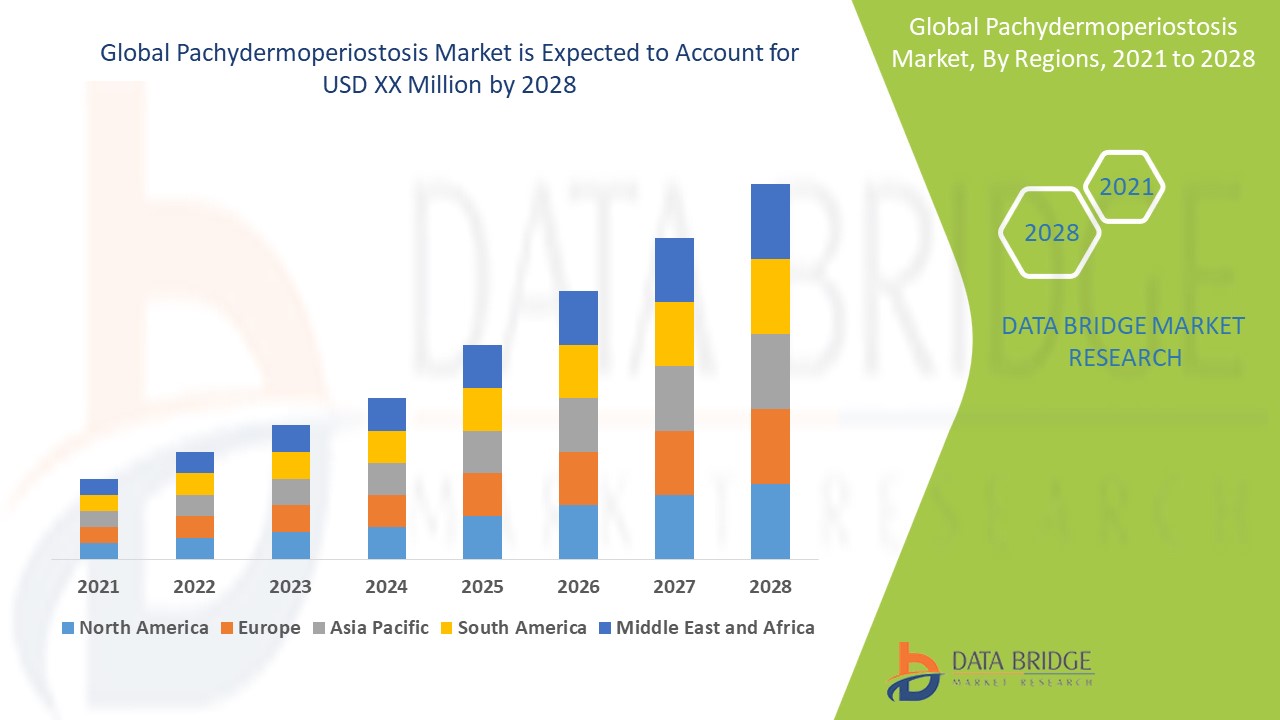
Pachydermoperiostosis Market Analysis
The market analysis reveals a slow yet significant growth, driven by increasing awareness and advancements in genetic research. Recent developments include efforts in gene therapy and supportive medications to target underlying symptoms more effectively. Several biopharmaceutical companies are engaged in research, hoping to uncover new treatment pathways. Despite its rarity, the growing understanding of pachydermoperiostosis genetic basis has spurred investment, especially in regions with strong genetic research infrastructure. As awareness rises and diagnostic capabilities improve, the market is expected to evolve, offering new potential for treatment options and expanding therapeutic interventions for those affected.
Pachydermoperiostosis Market Size
The global pachydermoperiostosis market size was valued at USD 28.43 billion in 2024 and is projected to reach USD 64.30 billion by 2032, with a CAGR of 10.74% during the forecast period of 2025 to 2032. In addition to the insights on market scenarios such as market value, growth rate, segmentation, geographical coverage, and major players, the market reports curated by the Data Bridge Market Research also include depth expert analysis, patient epidemiology, pipeline analysis, pricing analysis, and regulatory framework.
Pachydermoperiostosis Market Trends
“Innovations in Genetic Testing”
The pachydermoperiostosis market is influenced by ongoing research into the genetic factors driving this rare disorder, characterized by skin thickening, joint pain, and finger clubbing. Innovations in genetic testing and personalized medicine are shaping new possibilities, enabling more precise diagnoses and tailored treatment approaches. One key trend is the integration of gene therapy and regenerative medicine, with research focused on targeting specific genetic mutations linked to pachydermoperiostosis. Additionally, advancements in anti-inflammatory and immune-modulating therapies are emerging to help manage the condition’s symptoms effectively. As healthcare providers and researchers gain insights into its genetic origins, the market is expected to grow, with new therapies offering improved patient outcomes and an expanded range of treatment options.
Report Scope and Pachydermoperiostosis Market Segmentation
|
Attributes |
Pachydermoperiostosis Key Market Insights |
|
Segments Covered |
|
|
Countries Covered |
U.S., Canada and Mexico in North America, Germany, France, U.K., Netherlands, Switzerland, Belgium, Russia, Italy, Spain, Turkey, Rest of Europe in Europe, China, Japan, India, South Korea, Singapore, Malaysia, Australia, Thailand, Indonesia, Philippines, Rest of Asia-Pacific (APAC) in the Asia-Pacific (APAC), Saudi Arabia, U.A.E., South Africa, Egypt, Israel, Rest of Middle East and Africa (MEA) as a part of Middle East and Africa (MEA), Brazil, Argentina and Rest of South America as part of South America |
|
Key Market Players |
Sanofi (France), Mitsubishi Tanabe Pharma Corporation (Japan), BrainStorm Cell Limited (U.S.), Ionis Pharmaceuticals (U.S.), Genervon Biopharmaceuticals, LLC (U.S.), Biogen (U.S.), ORPHAZYME A/S (Denmark), Orion Systems Integrators, LLC. (Finland), KRINGLE PHARMA, INC. (U.S.), Aquestive Therapeutics, Inc. (U.S.), Apotex Inc. (Canada), Bausch Health Companies Inc. (Canada), Implicit Bioscience (Australia), F. Hoffmann-La Roche Ltd (Switzerland), Treeway B.V. (Netherlands), CYTOKINETICS, INC. (U.S.), AB Science (France), ADVANZ PHARMA (U.K.) |
|
Market Opportunities |
|
|
Value Added Data Infosets |
In addition to the insights on market scenarios such as market value, growth rate, segmentation, geographical coverage, and major players, the market reports curated by the Data Bridge Market Research also include depth expert analysis, patient epidemiology, pipeline analysis, pricing analysis, and regulatory framework. |
Pachydermoperiostosis Market Definition
Pachydermoperiostosis, also known as primary hypertrophic osteoarthropathy, is a rare genetic disorder that primarily affects the skin and bones. It is characterized by symptoms such as thickening of the skin (pachyderma), clubbing of the fingers and toes, and joint pain. The condition usually presents in adolescence or early adulthood and progresses gradually, with symptoms including enlarged bones, swollen joints, and coarsening of facial features. Pachydermoperiostosis can vary in severity, with some cases involving only skin changes, while others also affect bone growth and joint function.
Pachydermoperiostosis Market Dynamics
Drivers
- Demand for Early Detection in Pachydermoperiostosis
Growing awareness and a deeper understanding of pachydermoperiostosis have become pivotal drivers in the market, as they contribute to the demand for early detection and specialized treatment options. With more healthcare professionals and patients recognizing symptoms like skin thickening, joint pain, and finger clubbing, diagnosis rates have improved, allowing for timely intervention. Awareness campaigns and research publications have also highlighted the importance of distinguishing pachydermoperiostosis from other joint or skin-related conditions, further supporting accurate diagnosis. This increased awareness among healthcare providers and patients alike has led to expanded healthcare services, fostering the need for specialized care tailored to managing this complex disorder.
- Improved Genetic Testing
The increasing availability of genetic testing plays a crucial role in advancing the pachydermoperiostosis market by enabling early and accurate diagnosis. Through genetic testing, healthcare providers can identify specific gene mutations associated with pachydermoperiostosis, distinguishing it from other similar conditions. This early diagnosis allows for more effective treatment planning, helping to manage symptoms sooner and improving patients' quality of life. Genetic testing also aids in guiding personalized treatment strategies, which may include anti-inflammatory or immune-modulating therapies tailored to individual genetic profiles. As genetic testing becomes more accessible and affordable, its role in treatment planning significantly drives market growth and adoption.
Opportunities
- Adoption of Digital Health and Telemedicine
The adoption of digital health platforms and telemedicine presents a significant opportunity for the pachydermoperiostosis market by enhancing patient monitoring and access to specialized care. These technologies allow healthcare providers to track patients' symptoms remotely, facilitating timely interventions and personalized treatment adjustments. Additionally, telemedicine bridges geographical barriers, enabling patients in rural or underserved areas to consult specialists without the need for extensive travel. This increased accessibility not only improves patient engagement but also expands the market reach for healthcare providers and pharmaceutical companies. As more patients utilize digital health solutions, the demand for innovative therapies and services tailored to pachydermoperiostosis is expected to grow.
- Drug Discovery Initiatives
Enhanced collaboration among pharmaceutical companies, research institutions, and healthcare providers is creating substantial opportunities for drug discovery and the development of specialized treatment options for pachydermoperiostosis. By pooling resources, knowledge, and expertise, these stakeholders can accelerate research efforts aimed at understanding the underlying mechanisms of this rare condition. Collaborative initiatives often lead to innovative therapeutic approaches, such as targeted therapies and combination treatments tailored to individual patient needs. Furthermore, partnerships with academic institutions can facilitate clinical trials, bringing new therapies to market more quickly. This collaborative environment not only boosts the potential for effective treatments but also encourages investment and interest in the pachydermoperiostosis market.
Restraints/Challenges
- Lack of Research and Development
Minimal investment in research for rare diseases, such as pachydermoperiostosis, presents a significant market challenge, leading to a scarcity of effective therapies and clinical trials. The high costs and low potential returns on investment deter pharmaceutical companies from developing treatments for conditions that affect only a small patient population. Consequently, this lack of financial support hampers innovation and slows the progress of clinical trials, resulting in limited treatment options for patients. As a result, the medical community is often left with outdated or ineffective therapies, exacerbating patient suffering and reducing the overall market viability for potential new treatments.
- High Costs of Treatment
The prohibitive cost of treatment for pachydermoperiostosis serves as a significant market restraint, particularly when effective therapies are not covered by insurance. Patients may face substantial out-of-pocket expenses for medications and therapies, creating a financial burden that can deter them from seeking necessary care. This situation is compounded for those who rely on limited insurance plans, which may exclude specialized treatments for rare diseases. As a result, many patients may opt for inadequate management strategies or forego treatment altogether, leading to worsened health outcomes. The high costs associated with care limit access and contribute to the overall challenge of managing this rare condition effectively.
This market report provides details of new recent developments, trade regulations, import-export analysis, production analysis, value chain optimization, market share, impact of domestic and localized market players, analyses opportunities in terms of emerging revenue pockets, changes in market regulations, strategic market growth analysis, market size, category market growths, application niches and dominance, product approvals, product launches, geographic expansions, technological innovations in the market. To gain more info on the market contact Data Bridge Market Research for an Analyst Brief, our team will help you take an informed market decision to achieve market growth.
Pachydermoperiostosis Market Scope
The market is segmented on the basis of drug class, symptoms, treatment, mode of administration, distribution channel, and end user. The growth amongst these segments will help you analyse meagre growth segments in the industries and provide the users with a valuable market overview and market insights to help them make strategic decisions for identifying core market applications.
Drug Class
- Nonsteroidal Anti-Inflammatory Drugs (NSAIDs)
- Corticosteroids
- Others
Symptoms
- Coarse Facial Features
- Oily Skin
- Thick Skin with Grooving on the Face
- Joint Pain
- Clubbing
- Others
Treatment
- Surgery
- Drugs
- Others
Mode of Administration
- Injectable
- Oral
- Others
Distribution Channel
- Hospital Pharmacies
- Retail Pharmacies
- Online Pharmacies
End User
- Hospitals
- Homecare
- Specialty Clinics
- Others
Pachydermoperiostosis Market Regional Analysis
The market is analysed and market size insights and trends are provided by country, drug class, symptoms, treatment, mode of administration, distribution channel, and end user as referenced above.
The countries covered in the market report are U.S., Canada and Mexico in North America, Germany, France, U.K., Netherlands, Switzerland, Belgium, Russia, Italy, Spain, Turkey, Rest of Europe in Europe, China, Japan, India, South Korea, Singapore, Malaysia, Australia, Thailand, Indonesia, Philippines, Rest of Asia-Pacific (APAC) in the Asia-Pacific (APAC), Saudi Arabia, U.A.E., South Africa, Egypt, Israel, Rest of Middle East and Africa (MEA) as a part of Middle East and Africa (MEA), Brazil, Argentina and Rest of South America as part of South America.
North America leads the pachydermoperiostosis market, primarily due to its robust healthcare infrastructure and a rising number of drug approvals in the region. The advanced medical facilities and access to cutting-edge treatments enhance patient care and management of rare diseases. Additionally, favorable regulatory environments facilitate the development and availability of new therapies, further solidifying North America's dominant position in this market.
The Asia-Pacific region is projected to experience significant growth in the pachydermoperiostosis market from 2025 to 2032, driven by the ongoing development of healthcare infrastructure. Improvements in medical facilities and increased investment in healthcare services are enhancing access to treatments for rare diseases. Furthermore, the rising awareness of rare conditions among healthcare professionals and patients is expected to propel market expansion during this period.
The country section of the report also provides individual market impacting factors and changes in regulation in the market domestically that impacts the current and future trends of the market. Data points such as down-stream and upstream value chain analysis, technical trends and porter's five forces analysis, case studies are some of the pointers used to forecast the market scenario for individual countries. Also, the presence and availability of global brands and their challenges faced due to large or scarce competition from local and domestic brands, impact of domestic tariffs and trade routes are considered while providing forecast analysis of the country data.
Pachydermoperiostosis Market Share
The market competitive landscape provides details by competitor. Details included are company overview, company financials, revenue generated, market potential, investment in research and development, new market initiatives, global presence, production sites and facilities, production capacities, company strengths and weaknesses, product launch, product width and breadth, application dominance. The above data points provided are only related to the companies' focus related to market.
Pachydermoperiostosis Market Leaders Operating in the Market Are:
- Sanofi (France)
- Mitsubishi Tanabe Pharma Corporation (Japan)
- BrainStorm Cell Limited (U.S.)
- Ionis Pharmaceuticals (U.S.)
- Genervon Biopharmaceuticals, LLC (U.S.)
- Biogen (U.S.)
- ORPHAZYME A/S (Denmark)
- Orion Systems Integrators, LLC. (Finland)
- KRINGLE PHARMA, INC. (U.S.)
- Aquestive Therapeutics, Inc. (U.S.)
- Apotex Inc. (Canada)
- Bausch Health Companies Inc. (Canada)
- Implicit Bioscience (Australia)
- F. Hoffmann-La Roche Ltd (Switzerland)
- Treeway B.V. (Netherlands)
- CYTOKINETICS, INC. (U.S.)
- AB Science (France)
- ADVANZ PHARMA (U.K.)
SKU-
Получите онлайн-доступ к отчету на первой в мире облачной платформе рыночной аналитики
- Интерактивная панель анализа данных
- Панель анализа компании для возможностей с высоким потенциалом роста
- Доступ аналитика-исследователя для настройки и запросов
- Анализ конкурентов с помощью интерактивной панели
- Последние новости, обновления и анализ тенденций
- Используйте возможности сравнительного анализа для комплексного отслеживания конкурентов
Методология исследования
Сбор данных и анализ базового года выполняются с использованием модулей сбора данных с большими размерами выборки. Этап включает получение рыночной информации или связанных данных из различных источников и стратегий. Он включает изучение и планирование всех данных, полученных из прошлого заранее. Он также охватывает изучение несоответствий информации, наблюдаемых в различных источниках информации. Рыночные данные анализируются и оцениваются с использованием статистических и последовательных моделей рынка. Кроме того, анализ доли рынка и анализ ключевых тенденций являются основными факторами успеха в отчете о рынке. Чтобы узнать больше, пожалуйста, запросите звонок аналитика или оставьте свой запрос.
Ключевой методологией исследования, используемой исследовательской группой DBMR, является триангуляция данных, которая включает в себя интеллектуальный анализ данных, анализ влияния переменных данных на рынок и первичную (отраслевую экспертную) проверку. Модели данных включают сетку позиционирования поставщиков, анализ временной линии рынка, обзор рынка и руководство, сетку позиционирования компании, патентный анализ, анализ цен, анализ доли рынка компании, стандарты измерения, глобальный и региональный анализ и анализ доли поставщика. Чтобы узнать больше о методологии исследования, отправьте запрос, чтобы поговорить с нашими отраслевыми экспертами.
Доступна настройка
Data Bridge Market Research является лидером в области передовых формативных исследований. Мы гордимся тем, что предоставляем нашим существующим и новым клиентам данные и анализ, которые соответствуют и подходят их целям. Отчет можно настроить, включив в него анализ ценовых тенденций целевых брендов, понимание рынка для дополнительных стран (запросите список стран), данные о результатах клинических испытаний, обзор литературы, обновленный анализ рынка и продуктовой базы. Анализ рынка целевых конкурентов можно проанализировать от анализа на основе технологий до стратегий портфеля рынка. Мы можем добавить столько конкурентов, о которых вам нужны данные в нужном вам формате и стиле данных. Наша команда аналитиков также может предоставить вам данные в сырых файлах Excel, сводных таблицах (книга фактов) или помочь вам в создании презентаций из наборов данных, доступных в отчете.