



Global Patient Lift Pendant Market Segmentation, By Type (Ceiling/ Overhead Lift, Stair Lift, Mobile/ Floor Lift, Sit to Stand Lift, Bath and Pool Lift, Lifting Slings, and Lifting Accessories), Application (Intensive Care Unit, and Operating rooms), End User (Hospitals, Home Care, and Elderly Care Facility)- Industry Trends and Forecast to 2033
Каков размер рынка подвесок для пациентов и темпы роста
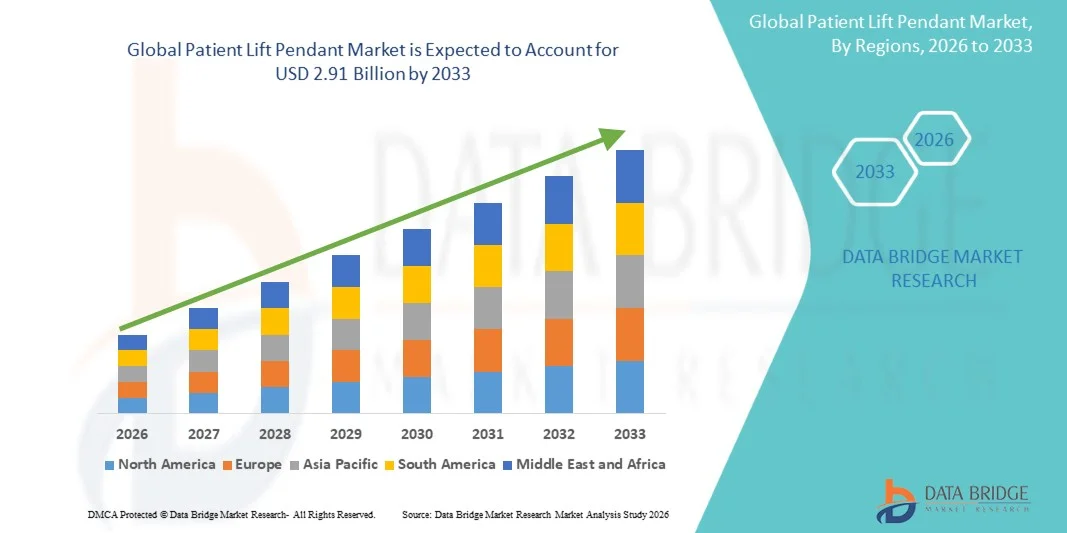
- Согласно анализу Data Bridge Market Research, глобальный размер рынка подвесных кулонов для пациентов был оценен как$1,80 млрд в 2025 годуОжидается, что он достигнет2,91 млрд долларов к 2033 году, вCAGR 6,20%в течение прогнозируемого периода
- Рост рынка в значительной степени обусловлен растущим спросом на безопасные решения для пациентов в больницах, учреждениях по уходу за пожилыми людьми и домашних учреждениях здравоохранения, а также растущим вниманием к снижению травм лиц, осуществляющих уход, и улучшению результатов мобильности пациентов.
- Кроме того, растущее старение населения и более высокая распространенность нарушений мобильности в сочетании с достижениями в области вспомогательной инфраструктуры здравоохранения и увеличением внедрения эргономичных и электрически управляемых лифтовых систем значительно ускоряют внедрение систем подвески для лифтов пациентов, тем самым поддерживая общее расширение рынка.
Размер рынка и прогноз
- Глобальная рыночная стоимость (2025):$1,80 млрд.
- Ожидаемая рыночная стоимость (2033):$2,91 млрд.
- Прогноз CAGR (2026–2033):6.20%
Каковы основные выводы рынка подвесок для пациентов
- Подвески для поднятия пациентов, разработанные как потолочные или настенные вспомогательные системы, обеспечивающие безопасную вертикальную и горизонтальную передачу и позиционирование пациентов, становятся важными компонентами современной инфраструктуры здравоохранения в больницах, учреждениях долгосрочного ухода и реабилитационных центрах благодаря их способности повышать безопасность пациентов, уменьшать нагрузку на опекуна и повышать операционную эффективность.
- Растущий спрос на системы подвески для лифтов пациентов в первую очередь обусловлен растущей распространенностью инвалидов по подвижности и пожилых людей, растущим акцентом на предотвращение травм опорно-двигательного аппарата и расширением внедрения передового оборудования для обработки пациентов в условиях острой и послеострой помощи.
- Северная Америка доминировала на рынке подвесок для подъема пациентов с самой большой долей дохода в 38,6% в 2025 году, чему способствовали хорошо налаженная инфраструктура здравоохранения, строгие правила безопасности на рабочем месте, широкое внедрение передовых систем медицинского подъема и значительные инвестиции в модернизацию больниц и учреждений долгосрочного ухода.
- Ожидается, что Азиатско-Тихоокеанский регион станет самым быстрорастущим регионом на рынке подвесок для пациентов в течение прогнозируемого периода из-за роста расходов на здравоохранение, расширения гериатрического населения, быстрого развития инфраструктуры больниц и повышения осведомленности о безопасности пациентов и эргономике опекунов.
- Сегмент потолков доминировал на рынке подвесок для подъема пациентов с самой высокой долей 52,4% в 2025 году благодаря их превосходной безопасности, эффективности использования пространства и способности предоставлять бесшовные, неинтрузивные решения для передачи пациентов как в условиях критической помощи, так и в условиях долгосрочного ухода.
Сфера охвата и сегментация рынка подвесок для пациентов
|
Атрибуты |
Подъемный кулон пациента Key Market Insights |
|
Сегменты покрыты |
|
|
Страны, охваченные |
Северная Америка
Европа
Азиатско-Тихоокеанский регион
Ближний Восток и Африка
Южная Америка
|
|
Ключевые игроки рынка |
|
|
Рыночные возможности |
|
|
Информационные наборы данных с добавленной стоимостью |
В дополнение к информации о рыночных сценариях, таких как рыночная стоимость, темпы роста, сегментация, географический охват и основные игроки, рыночные отчеты, курируемые Data Bridge Market Research, также включают углубленный экспертный анализ, эпидемиологию пациентов, анализ трубопроводов, анализ цен и нормативную базу. |
Какова ключевая тенденция на рынке подвесных подвесок для пациентов
Растущая интеграция интеллектуальных сенсорных и эргономичных потолочных систем
- Значительной и ускоряющейся тенденцией на мировом рынке подвесок для подтяжки пациентов является растущая интеграция интеллектуальных сенсорных технологий и эргономически спроектированных потолочных систем, которые улучшают безопасность обращения с пациентами и снижают физическую нагрузку в медицинских учреждениях.
- Например, современные системы подвески для подъема пациентов от таких компаний, как Arjo и Hillrom, включают в себя цифровой мониторинг нагрузки и плавное моторизованное управление, чтобы обеспечить более безопасную и точную передачу пациентов в больницах и учреждениях долгосрочного ухода.
- Интеграция интеллектуальных датчиков в подвески для подъема пациентов обеспечивает такие функции, как обнаружение веса в реальном времени, защита от перегрузки и интеллектуальный контроль движения, помогая уменьшить травмы, связанные с переносом, и повысить комфорт пациента во время процедур перепозиционирования.
- Кроме того, интеграция потолочных лифтовых систем с больничной инфраструктурой и планировками комнат позволяет централизованно контролировать и оптимизировать эффективность рабочего процесса в отделениях интенсивной терапии, реабилитационных центрах и палатах престарелых.
- Эта тенденция к более интеллектуальным, автоматизированным и экономичным решениям для подъема в космосе коренным образом меняет ожидания в области мобильности пациентов, а такие компании, как Guldmann, разрабатывают передовые модульные лифтовые системы с улучшенными возможностями безопасности и цифрового мониторинга.
- Спрос на интеллектуальные, эргономичные и сенсорные системы подвески для пациентов быстро растет в медицинских учреждениях, поскольку поставщики все чаще отдают приоритет безопасности пациентов, эргономике персонала и операционной эффективности.
- Кроме того, интеграция систем лифтинга пациентов с цифровыми медицинскими записями больниц (EHR) и платформами автоматизации умных комнат позволяет лучше отслеживать историю движения пациентов и улучшать координацию ухода.
Динамика рынка подвесок для пациентов
водитель
«Рост потребностей в связи с ростом гериатрического населения и требований безопасности пациентов»
- Растущая распространенность пожилых пациентов и пациентов с ограниченными возможностями передвижения в сочетании с более строгими правилами безопасности в области здравоохранения является значительным фактором роста спроса на системы подвески для пациентов в больницах и учреждениях по уходу.
- Например, в апреле 2025 года Arjo представила модернизированные решения для подтяжки потолков, направленные на улучшение безопасного обращения с пациентами и снижение травм лиц, осуществляющих уход, в условиях неотложной помощи, поддерживая более широкое внедрение в системах здравоохранения.
- Поскольку медицинские работники стремятся свести к минимуму падения пациентов и нарушения опорно-двигательного аппарата, подвески для подъема пациентов предлагают расширенные преимущества, такие как контролируемые переводы, снижение ручного подъема и улучшение результатов реабилитации.
- Кроме того, расширение учреждений долгосрочного ухода и реабилитационных центров увеличивает потребность в эффективной инфраструктуре обслуживания пациентов, что делает подъемные кулоны неотъемлемой частью современных систем оказания медицинской помощи.
- Удобство безопасного движения пациента без помощи рук, снижение зависимости от ручного подъема и повышение эффективности клинического рабочего процесса являются ключевыми факторами, способствующими внедрению как на развитых, так и на развивающихся рынках здравоохранения.
- Тенденция к модернизации больниц и модели ухода, ориентированные на пациента, также способствует расширению развертывания потолочных подъемных кулонов во всем мире.
- Кроме того, растущие правительственные инициативы и правила безопасности труда, направленные на снижение травм лиц, осуществляющих уход, еще больше ускоряют внедрение современного оборудования для обработки пациентов.
- Кроме того, растущие инвестиции в развитие инфраструктуры здравоохранения, особенно в странах с развивающейся экономикой, расширяют монтажную базу систем подвески для пациентов в новых больницах и специализированных центрах ухода.
Сдержанность/вызов
«Ограничения высокой стоимости установки и совместимости инфраструктуры»
- Опасения, связанные с высокой начальной стоимостью установки подвесных систем для пациентов и их зависимостью от структурных изменений, представляют собой серьезную проблему для более широкого проникновения на рынок в медицинских учреждениях.
- Например, модернизация старых больниц с помощью потолочных подъемных систем часто требует структурного усиления и редизайна помещений, что увеличивает общее время внедрения и стоимость для поставщиков медицинских услуг.
- Устранение ограничений на стоимость и инфраструктуру с помощью модульных конструкций, гибких систем монтажа и поэтапных подходов к установке имеет решающее значение для более широкого внедрения как в государственном, так и в частном секторах здравоохранения.
- Кроме того, относительно высокие требования к техническому обслуживанию и потребность в обученном персонале для эксплуатации передовых подъемных систем могут ограничить внедрение в небольших или ограниченных ресурсами медицинских учреждениях.
- В то время как появляются варианты финансирования и модели лизинга, предполагаемые высокие первоначальные инвестиции по сравнению с традиционными ручными или мобильными системами подъема все еще могут сдерживать чувствительные к бюджету учреждения.
- Преодоление этих проблем с помощью экономически эффективных систем, упрощенных процессов установки и улучшенной поддержки обучения будет иметь жизненно важное значение для устойчивого роста рынка.
- Кроме того, ограниченная совместимость со старыми архитектурами зданий и медицинскими учреждениями с ограниченным пространством ограничивает крупномасштабное развертывание в существующей инфраструктуре.
- Кроме того, отсутствие стандартизированных протоколов установки в разных регионах создает дополнительную сложность для поставщиков медицинских услуг и замедляет принятие решений о закупках.
Как сегментируется рынок подвесок для пациентов
Рынок сегментирован на основе типа, приложения и конечного пользователя.
- По типу
В зависимости от типа, глобальный рынок подвесных кулонов для пациентов сегментирован на подъемник для потолков / накладных, подъемник для лестниц, лифт для мобильных / пола, подъемник для сидения, подъемник для ванн и бассейна, подъемные стропы и подъемные аксессуары. Сегмент потолочных/накладных лифтов доминировал на рынке с самой большой долей выручки в 52,4% в 2025 году, что обусловлено его превосходной безопасностью, эффективностью пространства и способностью обеспечить бесперебойную передачу пациентов без ручного подъема. Больницы и учреждения долгосрочного ухода предпочитают потолочные подъемники из-за снижения риска травм, повышения эффективности рабочего процесса и пригодности для пациентов с высокой степенью зависимости в условиях интенсивной терапии и реабилитации. Сегмент также выигрывает от модернизации инфраструктуры больниц и интеграции автоматизированных систем обработки пациентов в палатах пациентов. Кроме того, потолочные подъемники широко используются в новых проектах строительства здравоохранения из-за их долгосрочной эксплуатационной эффективности и эргономических преимуществ. Растущий акцент на стандарты безопасности пациентов и соответствие нормативным требованиям в развитых системах здравоохранения еще больше укрепляет их доминирующее положение на рынке.
Ожидается, что в течение прогнозируемого периода темпы роста будут самыми высокими, что обусловлено растущим спросом на вспомогательные мобильные решения для частично зависимых и пожилых пациентов. Эти системы все чаще используются в реабилитационных центрах и учреждениях по уходу за пожилыми людьми, где пациенты сохраняют некоторую способность выдерживать вес, но нуждаются в поддержке для безопасной передачи. Подъемные лифты снижают нагрузку на воспитателя, способствуя независимости пациента и раннему восстановлению мобильности, что делает их очень подходящими для долгосрочных программ реабилитации. Кроме того, растет осведомленность о профилактике падения и помощи в мобильности в учреждениях по уходу на дому. Их компактный дизайн и простота использования также делают их все более популярными в условиях ограниченного пространства. Кроме того, технологические улучшения в эффективности батареи и эргономичном дизайне улучшают их удобство использования в различных условиях ухода.
- С помощью приложения
На основе применения рынок сегментирован в отделение интенсивной терапии (ОИТ) и операционные. Сегмент отделения интенсивной терапии (ICU) доминировал на рынке с самой большой долей дохода в 61,3% в 2025 году, что обусловлено высокой зависимостью пациентов, нуждающихся в постоянной помощи в мобильности и безопасном перепозиционировании. Пациенты с ОИТ часто нуждаются в частых переводах на лечение, гигиену и реабилитацию, что делает системы подвески потолка необходимыми для снижения рисков ручной работы. Сегмент также выигрывает от строгих протоколов безопасности в больницах, направленных на предотвращение травм и улучшение результатов лечения пациентов. Кроме того, отделения интенсивной терапии все чаще внедряют передовые лифтовые системы, интегрированные с цифровым мониторингом, чтобы обеспечить безопасное обращение с критически больными пациентами. Растущие поступления в отделение интенсивной терапии из-за хронических заболеваний, операций и старения населения дополнительно поддерживают высокий спрос. Больницы также отдают приоритет модернизации ICU, которая ускоряет установку стационарных систем подъема.
Ожидается, что в сегменте операционных залов будут наблюдаться самые быстрые темпы роста в течение прогнозируемого периода, обусловленные увеличением объемов операций и спросом на точное позиционирование пациентов. Подвески для лифтинга пациентов все чаще используются в предоперационном и послеоперационном уходе для безопасной передачи пациентов при минимизации физической нагрузки на медицинский персонал. Эти системы помогают поддерживать стерильную среду, уменьшая ручной контакт и улучшая контролируемое движение пациентов. Кроме того, передовые хирургические процедуры, требующие специализированного позиционирования, способствуют внедрению моторизованных лифтовых систем в операционных. Растущие инвестиции в расширение инфраструктуры больниц и модульных операционных систем способствуют росту сегмента. Кроме того, интеграция лифтовых систем с оптимизацией хирургического рабочего процесса повышает эффективность и стандарты безопасности в современных операционных комплектах.
- Конечный пользователь
На основе конечного пользователя рынок сегментирован на больницы, домашнюю помощь и учреждения по уходу за престарелыми. Сегмент больниц доминировал на рынке с самой большой долей дохода в 66,8% в 2025 году, что обусловлено высоким притоком пациентов, развитой инфраструктурой и сильным нормативным акцентом на безопасное обращение с пациентами. Больницы широко развертывают потолочные системы подъемных кулонов в отделениях интенсивной терапии, отделениях и реабилитационных подразделениях для уменьшения травм лиц, осуществляющих уход, и повышения операционной эффективности. Сегмент также выигрывает от масштабных бюджетов закупок и продолжающейся модернизации инфраструктуры здравоохранения. Кроме того, больницы уделяют приоритетное внимание передовым системам мобильности для улучшения результатов безопасности пациентов и снижения зависимости от ручной передачи. Расширение внедрения интегрированных цифровых систем здравоохранения также поддерживает централизованный контроль операций подвески лифта. Кроме того, больницы служат основными центрами внедрения технологически продвинутых и высокопроизводительных подъемных систем.
Ожидается, что в сегменте учреждений по уходу за престарелыми будут наблюдаться самые быстрые темпы роста в течение прогнозируемого периода, обусловленные быстро стареющим глобальным населением и растущим спросом на услуги по долгосрочному уходу. Эти учреждения все больше полагаются на подвески для поднятия пациентов для управления жителями с ограниченной подвижностью и хроническими заболеваниями. Системы значительно снижают рабочую нагрузку, обеспечивая безопасную и достойную передачу пациентов. Кроме того, растущие инвестиции в инфраструктуру вспомогательного жилья и дома престарелых ускоряют установку потолочных лифтовых систем. Акцент на улучшение качества жизни и снижение травм, связанных с падением, также поддерживает усыновление. Кроме того, увеличение государственной поддержки развития инфраструктуры ухода за престарелыми способствует расширению сегмента во всем мире.
В каком регионе находится самая большая доля рынка подвесных подвесок для пациентов
- Северная Америка доминировала на рынке подвесок для подъема пациентов с самой большой долей дохода в 38,6% в 2025 году, чему способствовали хорошо налаженная инфраструктура здравоохранения, строгие правила безопасности на рабочем месте, широкое внедрение передовых систем медицинского подъема и значительные инвестиции в модернизацию больниц и учреждений долгосрочного ухода.
- Поставщики медицинских услуг в регионе уделяют первоочередное внимание сокращению травм лиц, осуществляющих уход, и улучшению результатов мобильности пациентов, что приводит к повсеместной интеграции потолочных и интеллектуальных систем подъемных кулонов на основе датчиков в критических условиях ухода и реабилитации.
- Это сильное внедрение дополнительно поддерживается высокими расходами на здравоохранение, быстрыми программами модернизации больниц и растущим спросом на долгосрочные услуги по уходу за пожилыми людьми, устанавливая системы подвески для подъема пациентов в качестве стандартного решения в условиях расширенного ухода.
Американский пациент поднимает подвеску рыночного зрения
Американский рынок подвесных кулонов для пациентов занял самую большую долю дохода в 79% в 2025 году в Северной Америке, чему способствовало сильное внедрение передовой инфраструктуры здравоохранения и повышение внимания к стандартам безопасного обращения с пациентами в больницах и учреждениях долгосрочного ухода. Медицинские работники все чаще уделяют первоочередное внимание сокращению травм лиц, осуществляющих уход, и улучшению результатов мобильности, что приводит к широкому внедрению потолочных систем подъемных кулонов в отделениях интенсивной терапии, реабилитационных центрах и отделениях по уходу за престарелыми. Растущее внимание к модернизации больниц и соблюдению требований безопасности пациентов еще больше ускоряет установку систем. Кроме того, интеграция интеллектуальных сенсорных лифтовых систем и решений для передачи пациентов с цифровым управлением значительно способствует расширению рынка как в условиях острой, так и послеострой помощи.
Европейский рынок подвесных подвесок для пациентов
Согласно прогнозам, европейский рынок подвесных кулонов для пациентов будет расширяться при существенном CAGR в течение прогнозируемого периода, в первую очередь благодаря строгим правилам безопасности в области здравоохранения и растущему спросу на передовые решения для мобильности пациентов в больницах и медицинских учреждениях. Увеличение пожилого населения и растущая распространенность нарушений, связанных с мобильностью, способствуют внедрению систем потолочного подъема как в государственных, так и в частных медицинских учреждениях. Европейские поставщики медицинских услуг также сосредоточены на снижении рисков ручного управления и улучшении эргономики лиц, осуществляющих уход, что способствует дальнейшему росту рынка. Кроме того, текущие проекты реконструкции больниц и интеграция автоматизированных систем обращения с пациентами способствуют развертыванию в условиях интенсивной терапии и реабилитации.
Британский пациент поднимает подвеску рыночного зрения
Ожидается, что в течение прогнозируемого периода рынок подвесных подвесок для пациентов в Великобритании будет расти с заметным CAGR, что обусловлено увеличением инвестиций в инфраструктуру ухода за пожилыми людьми и сильным акцентом на правила безопасности пациентов. Растущие опасения относительно травм опорно-двигательного аппарата побуждают медицинские учреждения внедрять потолочные подъемные системы для более безопасной передачи пациентов. Кроме того, расширение домов долгосрочного ухода и реабилитационных центров значительно поддерживает спрос на рынке. Акцент Великобритании на модернизацию медицинских учреждений и повышение операционной эффективности еще больше ускоряет внедрение передовых технологий подъема пациентов.
Немецкая компания Patient Lift Pendant Market Insight
Ожидается, что в течение прогнозируемого периода рынок подвесных подвесок для пациентов в Германии будет расширяться на значительном CAGR, чему будет способствовать растущее понимание стандартов безопасности пациентов и спрос на технологически развитую инфраструктуру здравоохранения. Сильная система здравоохранения Германии и акцент на точной инженерии способствуют внедрению автоматизированных и сенсорно-интегрированных лифтовых систем в больницах и реабилитационных центрах. Увеличение инвестиций в модернизацию больниц и учреждений по уходу за престарелыми еще больше стимулирует установку подвесок для потолочных подъемников. Кроме того, акцент на снижение физической нагрузки на работников здравоохранения соответствует приоритетам страны в области безопасности труда, поддерживая долгосрочный рост рынка.
Азиатско-тихоокеанский рынок подвесных кулонов
Азиатско-тихоокеанский рынок подвесных подвесок для пациентов будет расти на самом быстром CAGR 23% в течение прогнозируемого периода с 2026 по 2033 год, что обусловлено быстрым развитием инфраструктуры здравоохранения, ростом гериатрического населения и повышением осведомленности о решениях по безопасности пациентов в таких странах, как Китай, Япония и Индия. Растущая склонность региона к современному строительству больниц и расширению услуг по уходу за пожилыми людьми значительно ускоряет внедрение систем подъемных кулонов. Правительственные инициативы, поддерживающие цифровизацию здравоохранения и модернизацию учреждений, еще больше ускоряют проникновение на рынок. Кроме того, повышение доступности оборудования для обработки пациентов за счет местного производства расширяет доступ в странах с развивающейся экономикой.
Японский рынок подвесных кулонов для пациентов
Японский рынок подвесок для пациентов набирает обороты благодаря быстрому старению населения, высокотехнологичной экосистеме здравоохранения и сильному акценту на комфорт и безопасность пациентов. Больницы и учреждения по уходу за престарелыми все чаще используют потолочные подъемные системы для поддержки безопасной мобильности и снижения нагрузки на сиделку. Интеграция систем подъема пациентов с умной инфраструктурой больницы и технологиями автоматизации еще больше стимулирует спрос. Кроме того, акцент Японии на снижение физической нагрузки в условиях ухода поощряет принятие передовых эргономичных решений для подъема как в условиях проживания, так и в клинических условиях.
Индийский пациент поднимает подвесной рынок
На индийский рынок подвесных кулонов для пациентов приходится наибольшая доля доходов рынка в Азиатско-Тихоокеанском регионе в 2025 году, что объясняется быстрым расширением инфраструктуры здравоохранения, ростом пожилого населения и повышением осведомленности о безопасной практике обращения с пациентами. Больницы и новые учреждения долгосрочного ухода все чаще внедряют системы подвески для подъема, чтобы улучшить мобильность пациентов и снизить риски травматизма. Правительственные инициативы, поддерживающие модернизацию здравоохранения и развитие умных больниц, еще больше стимулируют спрос. Кроме того, растущие инвестиции в частное здравоохранение и доступность экономически эффективных подъемных решений делают их более доступными в городских медицинских центрах.
Каковы основные компании на рынке подвесных подвесок для пациентов
Индустрия подвесок для пациентов в основном возглавляется хорошо зарекомендовавшими себя компаниями, в том числе:
- Arjo AB (Швеция)
- Invacare Corporation (США)
- Корпорация Savaria (Канада)
- Handicare Group AB (Швеция)
- Guldmann Inc. (Дания)
- Etac AB (Швеция)
- Joerns Healthcare LLC (США)
- GF Health Products, Inc. (США)
- Medline Industries, LP (США)
- Prism Medical Ltd. (Канада)
- Drive DeVilbiss Healthcare LLC (США)
- Hill-Rom Holdings, Inc. (США)
- Бакстер (США)
- Страйкер (США)
- Human Care Group AB (Швеция)
- HoverTech International (США)
- Stiegelmeyer GmbH & Co. KG (Германия)
- LINET spol. s r.o. (Чешская Республика)
- Mangar Health (Великобритания)
- Группа компаний Amico (Канада)
Каковы последние события на мировом рынке подвесных подвесок для пациентов
- В июне 2025 года Winncare объявила о расширении своих систем потолочного подъема следующего поколения, направленных на улучшение безопасной передачи пациентов и снижение травм в больницах и учреждениях по уходу за пожилыми людьми. Новые решения ориентированы на эргономичные улучшения дизайна, более плавные подъемные характеристики и лучшую интеграцию в современные условия ухода.
- В апреле 2025 года Arjo представила Maxi Move 5, потолок нового поколения и мобильную систему обработки пациентов, предназначенную для повышения безопасности и эффективности передачи. Система включает в себя расширенный контроль позиционирования и повышенную стабильность подъема для использования в больницах и при длительном уходе.
- В апреле 2025 года Arjo объявила о расширении линейки продуктов для обработки пациентов, ориентированных на более безопасную мобильность и эргономичные подъемные решения. Разработка включает модернизацию потолочных и напольных подъемных систем, используемых при острой и послеострой помощи.
- В марте 2025 года Invacare выделила достижения в своей потолочной системе подъемников Robin EVO для более безопасной мобильности. Invacare продолжает расширять и продвигать свою систему потолочных подъемников Robin EVO, предназначенную для повышения безопасности передачи пациентов в медицинских учреждениях. Система улучшает точность подъема, комфорт пациента и эргономику воспитателя во время рутинных задач мобильности.
- В мае 2024 года Etac объявила о расширении своих решений Molift Transfer, улучшив безопасность и эргономику при подъеме и перемещении пациентов. Портфель включает в себя обновленные подъемные системы и аксессуары для больниц и реабилитационных сред.
SKU-
Получите онлайн-доступ к отчету на первой в мире облачной платформе рыночной аналитики

- Интерактивная панель анализа данных
- Панель анализа компании для возможностей с высоким потенциалом роста
- Доступ аналитика-исследователя для настройки и запросов
- Анализ конкурентов с помощью интерактивной панели
- Последние новости, обновления и анализ тенденций
- Используйте возможности сравнительного анализа для комплексного отслеживания конкурентов
Методология исследования
Сбор данных и анализ базового года выполняются с использованием модулей сбора данных с большими размерами выборки. Этап включает получение рыночной информации или связанных данных из различных источников и стратегий. Он включает изучение и планирование всех данных, полученных из прошлого заранее. Он также охватывает изучение несоответствий информации, наблюдаемых в различных источниках информации. Рыночные данные анализируются и оцениваются с использованием статистических и последовательных моделей рынка. Кроме того, анализ доли рынка и анализ ключевых тенденций являются основными факторами успеха в отчете о рынке. Чтобы узнать больше, пожалуйста, запросите звонок аналитика или оставьте свой запрос.
Ключевой методологией исследования, используемой исследовательской группой DBMR, является триангуляция данных, которая включает в себя интеллектуальный анализ данных, анализ влияния переменных данных на рынок и первичную (отраслевую экспертную) проверку. Модели данных включают сетку позиционирования поставщиков, анализ временной линии рынка, обзор рынка и руководство, сетку позиционирования компании, патентный анализ, анализ цен, анализ доли рынка компании, стандарты измерения, глобальный и региональный анализ и анализ доли поставщика. Чтобы узнать больше о методологии исследования, отправьте запрос, чтобы поговорить с нашими отраслевыми экспертами.
Доступна настройка
Data Bridge Market Research является лидером в области передовых формативных исследований. Мы гордимся тем, что предоставляем нашим существующим и новым клиентам данные и анализ, которые соответствуют и подходят их целям. Отчет можно настроить, включив в него анализ ценовых тенденций целевых брендов, понимание рынка для дополнительных стран (запросите список стран), данные о результатах клинических испытаний, обзор литературы, обновленный анализ рынка и продуктовой базы. Анализ рынка целевых конкурентов можно проанализировать от анализа на основе технологий до стратегий портфеля рынка. Мы можем добавить столько конкурентов, о которых вам нужны данные в нужном вам формате и стиле данных. Наша команда аналитиков также может предоставить вам данные в сырых файлах Excel, сводных таблицах (книга фактов) или помочь вам в создании презентаций из наборов данных, доступных в отчете.











