


Global Perinatal Infections Market Segmentation, By Infection Type (Cytomegalovirus Infection, Enterovirus Infection, Genital Herpes, Gonorrhoea, Human Immunodeficiency Virus, Listeriosis Lymphocytic Choriomeningitis Virus, Rubella, Syphilis, Varicella, and Others), Diagnosis (Maternal Test, Neonatal Test, and Others), Treatment (Antibiotics, Antiviral, Antiretroviral, and Others), Route of Administration (Oral, Parenteral, and Others), End-Users (Hospitals, Homecare, Specialty Clinics, Others), Distribution Channel (Hospital Pharmacy, Online Pharmacy, and Retail Pharmacy) - Industry Trends and Forecast to 2033
Размер рынка перинатальных инфекций и темпы роста
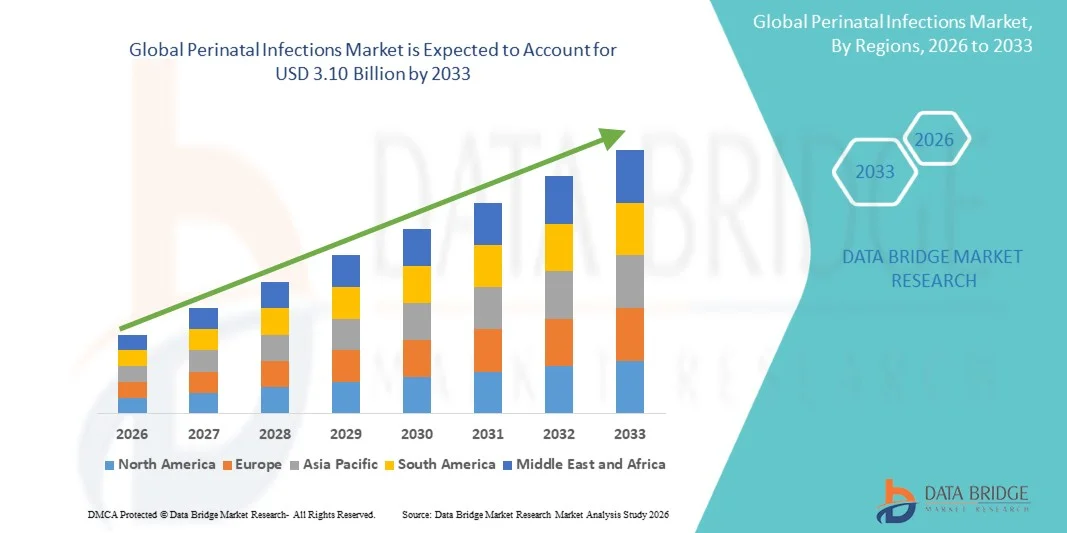
- Согласно анализу Data Bridge Market Research, размер глобального рынка перинатальных инфекций был оценен как2,07 млрд долларов в 2025 годуОжидается, что он достигнет3,10 млрд долларов к 2033 году, вCAGR 5,20%в течение прогнозируемого периода
- Рост рынка в значительной степени обусловлен ростом распространенности материнских инфекций во время беременности, повышением осведомленности о рисках для здоровья новорожденных и растущим внедрением раннего скрининга и диагностического тестирования, что приводит к увеличению спроса на эффективное управление перинатальными инфекциями в медицинских учреждениях.
- Кроме того, все большее внимание уделяется охране здоровья матерей и новорожденных, расширению программ дородового ухода и достижениям в области методов быстрой диагностики и противомикробной терапии, что делает управление перинатальной инфекцией важнейшим компонентом современной акушерской помощи. Эти факторы ускоряют внедрение решений для перинатальных инфекций, тем самым значительно повышая рост отрасли.
Размер рынка и прогноз:
- Глобальная рыночная стоимость (2025):2,07 млрд долларов
- Ожидаемая рыночная стоимость (2033):$3,10 млрд.
- Прогноз CAGR (2026–2033):5.20%
Анализ рынка перинатальных инфекций
- Перинатальные инфекции, которые включают материнские и неонатальные инфекции, возникающие во время беременности, родов или вскоре после рождения, являются критическими проблемами здравоохранения из-за их влияния на младенческую смертность, неонатальные осложнения и долгосрочные результаты развития, что приводит к повышенному акценту на ранние стратегии диагностики, профилактики и лечения.
- Растущий спрос на управление перинатальной инфекцией в первую очередь подпитывается ростом показателей материнской инфекции, повышением осведомленности о рисках для здоровья новорожденных, расширением программ пренатального скрининга и растущим внедрением передовых диагностических и противомикробных методов лечения в акушерской помощи.
- Северная Америка доминировала на рынке перинатальных инфекций с самой большой долей дохода в 41,6% в 2025 году, характеризующейся передовой инфраструктурой материнского здравоохранения, высоким внедрением программ пренатального скрининга и сильным присутствием диагностических и фармацевтических компаний, причем США лидируют из-за широкого внедрения руководящих принципов скрининга инфекций.
- Ожидается, что Азиатско-Тихоокеанский регион станет самым быстрорастущим регионом на рынке перинатальных инфекций в течение прогнозируемого периода из-за улучшения доступа к материнскому здравоохранению, роста рождаемости, увеличения правительственных инициатив в области охраны здоровья матери и ребенка и растущей осведомленности о профилактике перинатальных заболеваний.
- Оральный сегмент занимал самую большую долю рынка в 62,7% в 2025 году, что обусловлено простотой администрирования и сильным соблюдением требований пациентов во время беременности.
Сфера охвата и сегментация рынка перинатальных инфекций
|
Атрибуты |
Перинатальные инфекции ключевые рыночные идеи |
|
Сегменты покрыты |
|
|
Страны, охваченные |
Северная Америка
Европа
Азиатско-Тихоокеанский регион
Ближний Восток и Африка
Южная Америка
|
|
Ключевые игроки рынка |
|
|
Рыночные возможности |
|
|
Информационные наборы данных с добавленной стоимостью |
В дополнение к информации о рыночных сценариях, таких как рыночная стоимость, темпы роста, сегментация, географическое покрытие и основные игроки, рыночные отчеты, курируемые Data Bridge Market Research, также включают углубленный экспертный анализ, эпидемиологию пациентов, анализ трубопроводов, анализ цен и нормативную базу. |
Тенденции рынка перинатальных инфекций
"Повышение клинической эффективности с помощью мониторинга материнского и неонатального риска на основе ИИ"
- Значительной и ускоряющейся тенденцией на мировом рынке перинатальных инфекций является растущее внедрение систем клинического наблюдения с поддержкой ИИ, которые поддерживают раннее выявление материнских и неонатальных инфекций. Эти технологии улучшают скорость и точность диагностики, анализируя большие объемы данных о пациентах, включая жизненно важные признаки, лабораторные отчеты и акушерскую историю.
- Например, в передовых отделениях интенсивной терапии материнства и новорожденных платформы мониторинга на основе ИИ используются для непрерывного отслеживания моделей материнской лихорадки, аномалий сердечного ритма плода и маркеров неонатальной инфекции, что позволяет ранее подозревать такие состояния, как сепсис или внутриамниотическая инфекция.
- Инструменты на основе искусственного интеллекта все чаще способны выявлять тонкие клинические модели ухудшения, которые могут быть не сразу видны медицинским работникам. Эти системы могут генерировать ранние предупреждения о риске сепсиса, рекомендовать дальнейшее диагностическое тестирование и отдавать приоритет пациентам с высоким риском для немедленного клинического внимания.
- Интеграция больничных информационных систем с цифровыми медицинскими платформами обеспечивает более плавную координацию между акушерами, неонатологами и лабораториями микробиологии. Это повышает скорость принятия решений и обеспечивает более быстрое начало целенаправленной противомикробной терапии.
- Этот переход к прогностической перинатальной помощи, основанной на данных, переопределяет клинические ожидания, при этом поставщики медицинских услуг все чаще полагаются на интеллектуальные системы для снижения связанных с инфекцией осложнений и улучшения результатов материнской и неонатальной выживаемости.
- Спрос на передовые цифровые решения в области управления перинатальной инфекцией неуклонно растет, поскольку больницы сосредоточены на улучшении ранней диагностики, снижении смертности и повышении качества ухода за матерями и младенцами.
Динамика рынка перинатальных инфекций
водитель
Растущее бремя материнских и неонатальных инфекций и достижений в области ранних диагностических технологий
- Растущая заболеваемость материнскими и неонатальными инфекциями, включая такие состояния, как неонатальный сепсис, половые инфекции и внутриутробные инфекции, является ключевым фактором, стимулирующим рост рынка перинатальных инфекций. Эти инфекции остаются основным фактором неонатальной заболеваемости и смертности во всем мире, создавая высокий спрос на улучшенные диагностические и лечебные решения.
- Например, системы здравоохранения во всем мире все больше укрепляют программы материнского ухода, интегрируя расширенный диагностический скрининг во время дородового обследования и родовспоможения. Больницы внедряют инструменты быстрого молекулярного тестирования и обнаружения инфекций на основе биомаркеров, чтобы обеспечить раннее выявление инфекционных осложнений как у матерей, так и у новорожденных.
- Ожидается, что эти инициативы медицинских учреждений значительно улучшат клинические результаты и поддержат расширение рынка в течение прогнозируемого периода.
- Растущий клинический акцент на ранней и точной диагностике стимулирует внедрение передовых технологий, таких как обнаружение патогенов на основе ПЦР, анализы воспалительных биомаркеров и автоматизированные лабораторные системы. Эти инструменты помогают клиницистам выявлять инфекции на более ранней стадии, что позволяет ускорить вмешательство и повысить точность лечения.
- Кроме того, увеличение инвестиций в инфраструктуру материнского здравоохранения, особенно в странах с развивающейся экономикой, наряду с расширением доступа к услугам дородового и послеродового ухода улучшают выявление и лечение перинатальных инфекций.
- Ожидается, что совокупный эффект растущего бремени болезней и постоянного улучшения диагностических возможностей останется сильным драйвером роста рынка перинатальных инфекций во всем мире.
Сдержанность/вызов
"Ограниченный доступ к своевременной диагностике и изменчивости инфраструктуры здравоохранения в разных регионах"
- Ключевой проблемой на рынке перинатальных инфекций является неравномерная доступность передовой диагностической инфраструктуры, особенно в условиях ограниченных ресурсов и сельского здравоохранения.
- Ограниченный доступ к лабораторным и специализированным диагностическим средствам часто приводит к задержке выявления инфекций у беременных женщин и новорожденных.
- Например, во многих развивающихся системах здравоохранения врачи по-прежнему в значительной степени полагаются на базовые лабораторные тесты и клинические наблюдения из-за отсутствия быстрой молекулярной диагностики или продвинутого тестирования биомаркеров. Это может привести к задержке подтверждения инфекции и увеличить риск осложнений, таких как неонатальный сепсис или дисфункция материнских органов.
- Укрепление инфраструктуры здравоохранения, расширение доступа к тестированию в пунктах оказания медицинской помощи и увеличение инвестиций в доступные диагностические технологии имеют важное значение для устранения этих пробелов. Обучение медицинских работников раннему распознаванию симптомов инфекции также имеет решающее значение для улучшения своевременного вмешательства.
- В то время как регионы с высоким уровнем дохода пользуются преимуществами передовых систем перинатального мониторинга, различия в доступе к здравоохранению в разных регионах по-прежнему ограничивают единообразное внедрение современных методов диагностики. Этот дисбаланс влияет на раннее начало лечения и общие результаты лечения пациентов.
- Преодоление этих проблем путем улучшения доступности здравоохранения, экономически эффективных диагностических инноваций и укрепления программ охраны здоровья матери будет иметь важное значение для долгосрочного роста рынка и улучшения результатов перинатальной помощи во всем мире.
Рынок перинатальных инфекций
Рынок сегментирован на основе типа инфекции, диагностики, лечения, пути введения, конечных пользователей и канала распространения.
• По типу инфекции
На основе типа инфекции рынок перинатальных инфекций сегментирован на цитомегаловирусную инфекцию, энтеровирусную инфекцию, генитальный герпес, гонорею, вирус иммунодефицита человека (ВИЧ), листериоз, вирус лимфоцитарного хориоменингита, краснуху, сифилис, варичеллу и другие. Сегмент цитомегаловирусной инфекции доминировал на крупнейшей доле рынка в 28,4% в 2025 году, что обусловлено его высокой глобальной распространенностью и сильной ассоциацией с врожденными нарушениями у новорожденных. Это одна из наиболее распространенных вирусных инфекций, передаваемых от матери к плоду, что делает ранний скрининг очень важным. Повышение осведомленности среди медицинских работников улучшает показатели обнаружения. Расширение программ дородового скрининга в развитых и развивающихся странах еще больше способствует росту. Растущие инвестиции в инфраструктуру материнского здравоохранения усиливают охват диагностикой. Достижения в методах ПЦР и молекулярной диагностики улучшают точность и раннюю идентификацию. Наличие лучших больничных испытательных центров повышает показатели диагностики. Значительный вклад вносят также правительственные инициативы по сокращению неонатальной смертности. Растущий акцент на рутинном дородовом скрининге еще больше поддерживает доминирование сегмента.
Ожидается, что в сегменте ВИЧ будет наблюдаться самый быстрый CAGR в 11,9% с 2026 по 2033 год, что обусловлено глобальными инициативами, направленными на ликвидацию передачи инфекции от матери ребенку. Расширение доступа к антиретровирусной терапии во время беременности значительно улучшает результаты. Расширение программ информирования в развивающихся регионах способствует ранней диагностике. Укрепление политики дородового скрининга поддерживает раннее вмешательство. Растущее финансирование здравоохранения со стороны глобальных организаций улучшает доступ к лечению. Постоянные инновации в комбинации антиретровирусных препаратов повышают эффективность. Улучшенная инфраструктура здравоохранения в странах с низким уровнем дохода расширяет охват. Растущее внедрение рутинного тестирования на ВИЧ во время беременности еще больше повышает спрос. Интеграция помощи в связи с ВИЧ в программы охраны материнства способствует улучшению результатов.
• Диагностика
На основе диагностики рынок перинатальных инфекций сегментирован на материнский тест, неонатальный тест и другие. Сегмент материнских тестов занимал самую большую долю рынка в 55,1% в 2025 году, чему способствовали стандартные протоколы дородового скрининга, принятые во всем мире. Материнское тестирование позволяет раннее выявление инфекций до родов, снижая риск плода. Увеличение посещений больниц во время беременности поддерживает широкое распространение. Растущая осведомленность о пренатальных инфекциях улучшает показатели скрининга. Достижения в области молекулярной диагностики повышают точность и надежность. Наличие панелей многоинфекционного скрининга повышает эффективность. Правительственные мандаты на дородовой скрининг усиливают использование. Рост институциональных поставок еще больше способствует росту спроса. Расширение доступа к дородовой помощи в странах с развивающейся экономикой способствует росту. Медицинские работники предпочитают тестирование матерей в качестве профилактической стратегии.
Ожидается, что сегмент неонатальных тестов будет наблюдать самый быстрый CAGR в 10,8% с 2026 по 2033 год, что обусловлено растущим вниманием к ранней диагностике после родов. Растущие поступления в NICU поддерживают спрос на решения для быстрого тестирования. Растущие случаи врожденных инфекций увеличивают потребности в тестировании. Технологические достижения в диагностике в пунктах обслуживания улучшают время обращения. Повышение осведомленности среди педиатров поддерживает раннее принятие скрининга. Расширение инфраструктуры здравоохранения новорожденных повышает доступность. Государственные программы, ориентированные на здоровье младенцев, повышают показатели тестирования. Растущая доступность быстрых наборов для молекулярного тестирования поддерживает рост. Повышение внимания к стратегиям раннего вмешательства еще больше ускоряет спрос.
• Лечение
На основе лечения рынок перинатальных инфекций сегментирован на антибиотики, противовирусные препараты, антиретровирусные и другие. Сегмент антибиотиков доминировал на рынке с самой большой долей выручки в 49,6% в 2025 году, что обусловлено их широким использованием при бактериальных перинатальных инфекциях. Такие состояния, как листериоз, сифилис и бактериальные осложнения обычно лечатся с использованием антибиотиков. Сильные клинические рекомендации поддерживают их использование в качестве терапии первой линии. Увеличение пренатального скрининга позволяет своевременно начать лечение. Высокая доступность препаратов антибиотиков поддерживает доступность. Больницы в значительной степени полагаются на антибиотики для инфекционного контроля у беременных женщин. Рост материнской инфекции поддерживает спрос. Экономическая эффективность антибиотиков еще больше усиливает их применение. Растущая осведомленность среди врачей улучшает показатели рецептур.
Ожидается, что в антиретровирусном сегменте будет наблюдаться самый быстрый CAGR в 12,3% с 2026 по 2033 год, что обусловлено увеличением глобальных усилий по ликвидации перинатальной передачи ВИЧ. Расширение использования комбинированной терапии улучшает результаты лечения. Государственные программы по борьбе с ВИЧ повышают доступность. Достижения в формулах длительного действия улучшают соблюдение. Растущий пренатальный скрининг на ВИЧ поддерживает раннее начало лечения. Расширение финансирования со стороны глобальных организаций здравоохранения способствует расширению доступа в регионы с низким уровнем дохода. Интеграция помощи в связи с ВИЧ в программы охраны материнства повышает эффективность. Повышение осведомленности среди беременных женщин способствует усыновлению. Непрерывные фармацевтические инновации еще больше ускоряют рост сегмента.
• По маршруту администрации
На основе пути введения рынок перинатальных инфекций сегментирован на оральный, парентеральный и другие. Оральный сегмент занимал самую большую долю рынка в 62,7% в 2025 году, что обусловлено простотой администрирования и соблюдением требований пациентов во время беременности. Оральные препараты широко предпочтительны в амбулаторных условиях из-за удобства. Высокая доступность пероральных антибиотиков и противовирусных препаратов поддерживает усыновление. Более низкая стоимость лечения по сравнению с инъекционными вариантами повышает спрос. Врачи предпочитают пероральную терапию для легких и умеренных инфекций. Расширение сетей дистрибуции аптек улучшает доступ. Расширение практики лечения на дому способствует дальнейшему использованию. Сильные профили безопасности пероральных препаратов усиливают предпочтения. Растущая осведомленность о пренатальной помощи также способствует доминированию сегмента.
Ожидается, что в парентеральном сегменте самый быстрый CAGR составит 10,9% с 2026 по 2033 год, что обусловлено ростом использования при тяжелых и больничных инфекциях. Инъекционная терапия имеет решающее значение в острых перинатальных условиях, требующих быстрого действия. Увеличение числа госпитализаций для беременных с высоким риском поддерживает спрос. Достижения в системах внутривенной доставки лекарств повышают безопасность. Больницы предпочитают парентеральное введение для контролируемого дозирования. Растущие случаи сложных материнских инфекций увеличивают использование. Расширение учреждений неотложной акушерской помощи усиливает усыновление. Улучшение инфраструктуры больниц в развивающихся регионах способствует росту. Более быстрый терапевтический ответ является ключевым преимуществом вождения.
• Конечными пользователями
На базе конечных пользователей рынок перинатальных инфекций сегментирован на больницы, домашнюю помощь, специализированные клиники и другие. Сегмент больниц составил наибольшую долю рынка в 58,9% в 2025 году, что обусловлено развитой диагностической и лечебной инфраструктурой. Больницы управляют большинством случаев беременности и инфекции высокого риска. Наличие специализированных подразделений по уходу за новорожденными и матерями способствует доминированию. Наличие квалифицированных медицинских работников улучшает результаты. Увеличение институциональных поставок стимулирует приток пациентов. Наличие диагностических лабораторий повышает эффективность. Государственные инвестиции в инфраструктуру больниц способствуют росту. Больницы являются основными центрами неотложной акушерской помощи. Повышение осведомленности о перинатальных инфекциях увеличивает количество посещений больниц.
Ожидается, что в сегменте специализированных клиник самый быстрый CAGR составит 11,6% с 2026 по 2033 год, что обусловлено растущим предпочтением целенаправленной материнской и неонатальной помощи. Клиники предлагают персонализированный уход и услуги ранней диагностики. Растущая городская инфраструктура здравоохранения поддерживает расширение. Повышение осведомленности о профилактическом скрининге способствует увеличению посещений. Наличие передовых диагностических инструментов улучшает принятие. Растущее предпочтение пациентов амбулаторной помощи поддерживает рост. Более короткое время ожидания по сравнению с больницами повышает привлекательность. Расширение частных сетей здравоохранения способствует расширению доступа. Постоянное улучшение услуг на базе клиник еще больше ускоряет спрос.
• Распределительный канал
На основе канала распространения рынок перинатальных инфекций сегментирован в больничную аптеку, онлайн-аптеку и розничную аптеку. Сегмент больничных аптек занимал самую большую долю рынка в 46,3% в 2025 году, чему способствовали высокие объемы стационарного лечения. Прямое распространение лекарств в больницах обеспечивает своевременный доступ к лекарствам. Сильная интеграция с протоколами лечения в больницах поддерживает доминирование. Наличие критических антибиотиков и противовирусных препаратов улучшает их использование. Контролируемое врачом дозирование улучшает точность лечения. Растущая госпитализация при перинатальных инфекциях поддерживает спрос. Больничные аптеки обеспечивают лучший мониторинг и безопасность лекарств. Растущие институциональные поставки еще больше усиливают процесс принятия.
Ожидается, что сегмент онлайн-аптек будет наблюдать самый быстрый CAGR в 13,1% с 2026 по 2033 год, что обусловлено быстрым внедрением цифрового здравоохранения. Расширение использования платформ электронной аптеки улучшает доступность. Удобство доставки на дом повышает спрос среди пациентов. Растущие консультации по телемедицине поддерживают онлайн-рецепты. Конкурентные цены и скидки стимулируют использование. Растущее проникновение смартфонов улучшает доступ. Расширение цифровых платежных систем облегчает транзакции. Повышение осведомленности об онлайн-сервисах здравоохранения способствует росту. Интеграция с цифровыми платформами здравоохранения еще больше ускоряет расширение.
Региональный анализ рынка перинатальных инфекций
- Северная Америка доминировала на рынке перинатальных инфекций с самой большой долей выручки около 41,6% в 2025 году.
- Характеризуется развитой инфраструктурой материнского здравоохранения, высоким внедрением программ пренатального скрининга и сильным присутствием диагностических и фармацевтических компаний.
- США лидируют благодаря широкому внедрению рекомендаций по скринингу инфекций
Американский рынок перинатальных инфекций Insight
Рынок перинатальных инфекций в США занял самую большую долю доходов в Северной Америке в 2025 году, чему способствовало внедрение протоколов пренатального скрининга, расширенные диагностические возможности и высокая осведомленность о рисках для здоровья матерей и новорожденных. Страна извлекает выгоду из хорошо зарекомендовавших себя услуг по охране здоровья матерей, регулярного тестирования на инфекционные заболевания во время беременности и сильной интеграции лабораторной диагностики в акушерскую помощь. Постоянные улучшения в области раннего выявления и профилактической помощи способствуют дальнейшему росту рынка.
Европейский рынок перинатальных инфекций Insight
Европейский рынок перинатальных инфекций, по прогнозам, будет расширяться при существенном CAGR в течение прогнозируемого периода, поддерживаемом надежными системами общественного здравоохранения, повышением осведомленности о материнском здоровье и стандартизированными программами пренатального скрининга. Поддерживаемые правительством инициативы, направленные на снижение заболеваемости новорожденных и улучшение результатов беременности, укрепляют принятие диагностических препаратов. Растущие инвестиции в инфраструктуру материнского здравоохранения также способствуют устойчивому расширению рынка по всему региону.
Британский рынок перинатальных инфекций Insight
Ожидается, что в течение прогнозируемого периода рынок перинатальных инфекций в Великобритании будет расти с заметным CAGR, что обусловлено сильным охватом пренатальным скринингом NHS, повышением осведомленности о рисках инфекции матери и плода и устоявшимися путями дородового ухода. Упор на раннее выявление и профилактику таких состояний, как инфекции TORCH, поддерживает постоянный спрос на услуги диагностического тестирования и мониторинга.
Рынок перинатальных инфекций Германии
Ожидается, что в течение прогнозируемого периода рынок перинатальных инфекций в Германии будет расширяться на значительном CAGR, чему способствуют передовая инфраструктура здравоохранения, высококачественные услуги по уходу за матерью и растущий акцент на профилактическую диагностику. Широкое внедрение стандартизированного пренатального тестирования и растущее осознание связанных с инфекцией осложнений беременности являются ключевыми факторами, способствующими росту рынка.
Азиатско-Тихоокеанский рынок перинатальных инфекций
Рынок перинатальных инфекций в Азиатско-Тихоокеанском регионе будет расти самыми быстрыми темпами в течение прогнозируемого периода с 2026 по 2033 год, что обусловлено улучшением доступа к материнскому здравоохранению, ростом рождаемости в нескольких странах, увеличением правительственных инициатив по охране здоровья матери и ребенка и растущей осведомленностью о профилактике перинатальных заболеваний. Расширение диагностических учреждений и улучшение медицинского обслуживания способствуют дальнейшему региональному росту.
Японский рынок перинатальных инфекций
Японский рынок перинатальных инфекций переживает устойчивый рост из-за высокоразвитых услуг по охране здоровья матери, сильных практик пренатального скрининга и растущего внимания к ранней диагностике инфекционных осложнений во время беременности. Старение населения страны и акцент на безопасных методах родов способствуют принятию передовых диагностических и мониторинговых решений.
Китайский рынок перинатальных инфекций
Китайский рынок перинатальных инфекций составил самую большую долю доходов в Азиатско-Тихоокеанском регионе в 2025 году, что обусловлено большой базой материнского населения, расширением инфраструктуры здравоохранения и увеличением принятия программ пренатального скрининга. Усилия правительства по улучшению показателей здоровья матери и ребенка, наряду с повышением осведомленности о рисках беременности, связанных с инфекциями, поддерживают сильное расширение рынка в городских и полугородских регионах.
Лучшие компании на рынке перинатальных инфекций
Индустрия перинатальных инфекций в основном возглавляется хорошо известными компаниями, в том числе:
- Pfizer Inc.(США)
- Merck & Co., Inc.(США)
- GlaxoSmithKline plc(Великобритания)
- Санофи С.А.(Франция)
- Roche Holding AG(Швейцария)
- Abbott Laboratories (США)
- Johnson & Johnson (США)
- Novartis AG (Швейцария)
- AstraZeneca plc (Великобритания)
- Bayer AG (Германия)
- Teva Pharmaceutical Industries Ltd. (Израиль)
- Cipla Ltd. (Индия)
- Sun Pharmaceutical Industries Ltd. (Индия)
- Dr. Reddy's Laboratories Ltd. (Индия)
- Hologic, Inc. (США)
- Danaher Corporation (США)
- BD (США)
- BioMérieux SA (Франция)
- Siemens Healthineers AG (Германия)
- Thermo Fisher Scientific Inc. (США)
Последние события на мировом рынке перинатальных инфекций
- В мае 2021 года Всемирная организация здравоохранения (ВОЗ) обновила свои глобальные руководящие принципы по профилактике передачи ВИЧ от матери ребенку, усилив рекомендации по всеобщему дородовому скринингу на ВИЧ и немедленному началу антиретровирусной терапии у беременных женщин для снижения показателей перинатальной передачи. Это усилило глобальные усилия по ликвидации перинатальных ВИЧ-инфекций.
- В июне 2021 года Центры по контролю и профилактике заболеваний США (CDC) сообщили о значительном росте случаев врожденного сифилиса в Соединенных Штатах, что побудило возобновить мероприятия в области общественного здравоохранения, ориентированные на ранний пренатальный скрининг и протоколы лечения на основе пенициллина для предотвращения осложнений плода и неонатальной смертности.
- В марте 2022 года обновленные клинические рекомендации подчеркнули улучшение управления инфекциями цитомегаловируса матери (ЦМВ) и токсоплазмоза, подчеркнув раннюю диагностику и противовирусные вмешательства для снижения риска выкидыша, врожденных пороков развития и неврологических расстройств новорожденных.
- В июле 2023 года были обновлены руководящие принципы NIH/CDC/IDSA «Оппортунистические инфекции у взрослых и подростков с ВИЧ», укрепив стандартизированные протоколы лечения связанных с беременностью оппортунистических инфекций, включая герпесвирус, токсоплазмоз и бактериальные инфекции, которые могут способствовать перинатальным рискам передачи.
- В декабре 2024 года в публикациях по акушерским исследованиям были отмечены улучшенные результаты в стратегиях вакцинации во время беременности, включая программы вакцинации против гриппа и COVID-19, которые косвенно снижали бремя материнской инфекции и улучшали неонатальные результаты в группах риска перинатальной инфекции.
- В январе 2025 года глобальные инициативы в области материнского здоровья расширили программы скрининга гепатита В, гепатита С и ВИЧ в учреждениях дородового ухода, поддерживая раннее выявление и лечение для предотвращения вертикальной передачи и долгосрочных неонатальных осложнений.
SKU-
Получите онлайн-доступ к отчету на первой в мире облачной платформе рыночной аналитики
- Интерактивная панель анализа данных
- Панель анализа компании для возможностей с высоким потенциалом роста
- Доступ аналитика-исследователя для настройки и запросов
- Анализ конкурентов с помощью интерактивной панели
- Последние новости, обновления и анализ тенденций
- Используйте возможности сравнительного анализа для комплексного отслеживания конкурентов
Методология исследования
Сбор данных и анализ базового года выполняются с использованием модулей сбора данных с большими размерами выборки. Этап включает получение рыночной информации или связанных данных из различных источников и стратегий. Он включает изучение и планирование всех данных, полученных из прошлого заранее. Он также охватывает изучение несоответствий информации, наблюдаемых в различных источниках информации. Рыночные данные анализируются и оцениваются с использованием статистических и последовательных моделей рынка. Кроме того, анализ доли рынка и анализ ключевых тенденций являются основными факторами успеха в отчете о рынке. Чтобы узнать больше, пожалуйста, запросите звонок аналитика или оставьте свой запрос.
Ключевой методологией исследования, используемой исследовательской группой DBMR, является триангуляция данных, которая включает в себя интеллектуальный анализ данных, анализ влияния переменных данных на рынок и первичную (отраслевую экспертную) проверку. Модели данных включают сетку позиционирования поставщиков, анализ временной линии рынка, обзор рынка и руководство, сетку позиционирования компании, патентный анализ, анализ цен, анализ доли рынка компании, стандарты измерения, глобальный и региональный анализ и анализ доли поставщика. Чтобы узнать больше о методологии исследования, отправьте запрос, чтобы поговорить с нашими отраслевыми экспертами.
Доступна настройка
Data Bridge Market Research является лидером в области передовых формативных исследований. Мы гордимся тем, что предоставляем нашим существующим и новым клиентам данные и анализ, которые соответствуют и подходят их целям. Отчет можно настроить, включив в него анализ ценовых тенденций целевых брендов, понимание рынка для дополнительных стран (запросите список стран), данные о результатах клинических испытаний, обзор литературы, обновленный анализ рынка и продуктовой базы. Анализ рынка целевых конкурентов можно проанализировать от анализа на основе технологий до стратегий портфеля рынка. Мы можем добавить столько конкурентов, о которых вам нужны данные в нужном вам формате и стиле данных. Наша команда аналитиков также может предоставить вам данные в сырых файлах Excel, сводных таблицах (книга фактов) или помочь вам в создании презентаций из наборов данных, доступных в отчете.











