Plaque psoriasis market Segmentation, By Treatment (Topical Therapy, Phototherapy, Systemic Agents, Biologic Therapies, and Others), Route of Administration (Oral and Injectable), End Users (Hospitals, homecare, Speciality Centres, and Others), Distribution Channel (Hospital Pharmacy, Online Pharmacy, and Retail Pharmacy) - Industry Trends and Forecast to 2033
Каков размер рынка псориаза и темпы роста
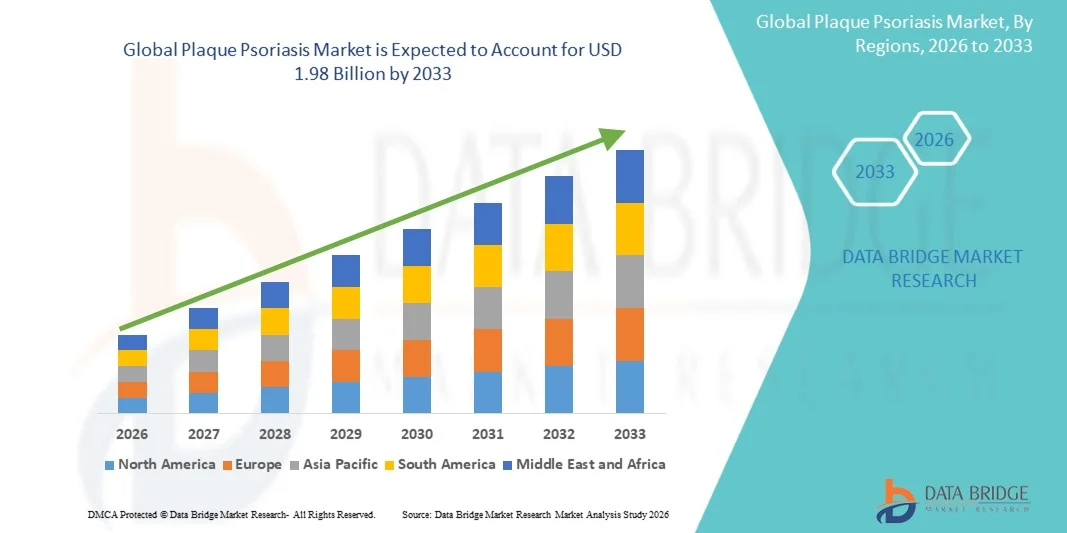
- Согласно анализу Data Bridge Market Research, глобальный размер рынка псориаза бляшек был оценен как$1,20 млрд в 2025 годуОжидается, что он достигнет$1,98 млрд к 2033 году, вCAGR 6,50%в течение прогнозируемого периода
- Рост рынка в значительной степени подпитывается растущей распространенностью бляшечного псориаза, повышением осведомленности о здоровье кожи и постоянными достижениями в дерматологическом лечении, что приводит к улучшению диагностики и управления как в клинических, так и в домашних условиях.
- Кроме того, растущий спрос пациентов на эффективные, безопасные и долгосрочные варианты лечения, наряду с растущим внедрением биологических препаратов, таргетной терапии и передовых актуальных рецептур, устанавливает современные методы лечения псориаза в качестве стандарта ухода. Эти сходящиеся факторы ускоряют принятие решений для лечения псориаза бляшек, тем самым значительно повышая рост отрасли.
Размер рынка и прогноз
Глобальная рыночная стоимость (2025):$1,20 млрд.
Ожидаемая рыночная стоимость (2033):$1,98 млрд.
Прогноз CAGR (2026–2033):6.50%
Каковы основные выводы рынка Plaque Psoriasis
- Бляшечный псориаз, хроническое аутоиммунное расстройство кожи, все чаще фокусируется на современной дерматологии из-за его растущей распространенности, влияния на качество жизни и спроса на эффективные и безопасные варианты лечения. Рынок обусловлен внедрением биопрепаратов, таргетной терапии и передовых актуальных формулировок, которые улучшают результаты лечения пациентов и приверженность.
- Растущий спрос на терапию псориаза бляшек в первую очередь подпитывается повышением осведомленности о здоровье кожи, расширением доступа к дерматологическим клиникам и увеличением инвестиций в клинические испытания и исследования новых методов лечения. Рынок также извлекает выгоду из цифровых платформ, которые улучшают мониторинг пациентов и образование.
- Северная Америка доминировала на рынке псориаза бляшек с самой большой долей дохода примерно 41,3% в 2025 году, чему способствовало присутствие крупных фармацевтических компаний, развитая исследовательская инфраструктура и высокие расходы на здравоохранение в США.
- Ожидается, что Азиатско-Тихоокеанский регион станет самым быстрорастущим регионом на рынке псориаза бляшек с прогнозируемым CAGR в 9,5%, что обусловлено растущей урбанизацией, повышением осведомленности в области здравоохранения, расширением доступа к услугам дерматологии и растущими инвестициями в клинические исследования в таких странах, как Китай и Индия.
- Сегмент инъекций доминировал на рынке с наибольшей долей выручки в 52,3% в 2025 году, в основном из-за распространенности биологических методов лечения, применяемых через подкожные или внутривенные инъекции.
Сфера охвата и сегментация рынка псориаза
|
Атрибуты |
Налет псориаза ключевые рыночные идеи |
|
Сегменты покрыты |
|
|
Страны, охваченные |
Северная Америка
Европа
Азиатско-Тихоокеанский регион
Ближний Восток и Африка
Южная Америка
|
|
Ключевые игроки рынка |
|
|
Рыночные возможности |
|
|
Информационные наборы данных с добавленной стоимостью |
В дополнение к информации о рыночных сценариях, таких как рыночная стоимость, темпы роста, сегментация, географическое покрытие и основные игроки, рыночные отчеты, курируемые Data Bridge Market Research, также включают углубленный экспертный анализ, эпидемиологию пациентов, анализ трубопроводов, анализ цен и нормативную базу. |
Каковы основные тенденции на рынке псориаза
Рост распространенности аутоиммунных и хронических заболеваний кожи
- Бляшечный псориаз все чаще признается хроническим аутоиммунным расстройством, влияющим на кожу и общее качество жизни, что стимулирует спрос на мировом рынке на эффективные методы лечения.
- Например, в 2024 году AbbVie сообщила о всплеске рецептов Хумиры во всем мире, что отражает рост показателей диагностики и лечения псориаза от умеренного до тяжелого налета.
- Распространенность псориаза выше в Северной Америке и Европе, примерно 2-3% населения страдают, что указывает на постоянную рыночную возможность.
- Достижения в области биологии, оральной системной терапии и фототерапии позволяют персонализировать подходы к лечению, улучшая приверженность пациентов.
- Системы здравоохранения делают упор на раннюю диагностику и комплексную дерматологическую помощь, включая консультирование пациентов и образование.
- Повышение осведомленности групп по защите интересов пациентов способствует повышению показателей диагностики и улучшению соблюдения режима лечения.
- Технологические достижения в диагностических инструментах, таких как цифровая визуализация кожи и мониторинг заболеваний с помощью ИИ, поддерживают своевременную и точную оценку заболеваний
- Расширение телемедицинских платформ улучшило доступ к дерматологическим консультациям, особенно в отдаленных или недостаточно обслуживаемых регионах.
- Хронический характер заболевания стимулирует приверженность длительной терапии, обеспечивая постоянный спрос на биологические и небиологические методы лечения.
- Глобальные исследования, направленные на понимание генетических и иммунологических механизмов псориаза, поддерживают разработку трубопроводов и инновационные методы лечения.
Рыночная динамика псориаза
водитель
Расширение применения биологической и целевой терапии
- Быстрое внедрение биопрепаратов и таргетных методов лечения с лучшим профилем эффективности и безопасности является основным фактором роста рынка.
- Например, в 2025 году Janssen Pharmaceuticals расширила дистрибуцию Tremfya (guselkumab) в США после одобрения FDA псориаза от умеренного до тяжелого налета, улучшив доступ пациентов.
- Наличие программ страхования и возмещения в развитых странах способствует более широкому внедрению дорогостоящих методов лечения.
- Появление биоаналогов как на развитых, так и на развивающихся рынках повышает доступность и расширяет доступ пациентов.
- Повышение осведомленности врачей о преимуществах таргетной терапии приводит к увеличению количества рецептов по сравнению с обычными системными методами лечения.
- Расширение деятельности клинических испытаний во всем мире ускоряет одобрение новых методов лечения и способствует принятию новых методов лечения.
- Фармацевтические компании инвестируют средства в программы поддержки пациентов, включая финансовую помощь и инициативы по соблюдению обязательств.
- Растущая распространенность случаев умеренного и тяжелого псориаза меняет схемы лечения в сторону передовых методов лечения
- Сотрудничество между биотехнологическими компаниями и поставщиками медицинских услуг расширяет доступ к передовым методам лечения и способствует проникновению на рынок.
- Растущее предпочтение пациентов терапии с меньшим количеством побочных эффектов и удобных методов введения положительно влияет на рост рынка.
Сдержанность/вызов
Высокая стоимость лечения и ограниченный доступ в развивающихся регионах
- Высокая стоимость биологических препаратов и передовых методов лечения является основным сдерживающим фактором, ограничивающим доступ для чувствительных к цене пациентов в странах с низким и средним уровнем дохода.
- Например, среднегодовая стоимость биологического лечения в США превышает 50 000 долларов США, что ограничивает усыновление для незастрахованных или недостаточно застрахованных групп населения.
- Непоследовательная инфраструктура здравоохранения в развивающихся регионах снижает доступность передовых методов лечения
- Ограниченное количество специалистов по дерматологии в отдельных регионах задерживает начало диагностики и лечения.
- Регулирующие препятствия на развивающихся рынках замедляют одобрение и доступность новых методов лечения.
- Проблемы с приверженностью пациентов из-за побочных эффектов или сложных графиков дозирования могут ограничить эффективность лечения и рост рынка.
- Высокие затраты на комбинированную терапию создают дополнительные проблемы для пациентов, нуждающихся в нескольких методах лечения.
- Отсутствие осведомленности о современных методах лечения среди пациентов и поставщиков медицинских услуг в некоторых регионах ограничивает проникновение на рынок.
- Ограничения в распределении и цепочке поставок влияют на доступность биологических препаратов в отдаленных или сельских районах.
- Решение этих проблем требует расширения страхового покрытия, разработки экономически эффективных биоаналогов, обучения пациентов и стратегических мер политики для улучшения доступа и доступности.
Как сегментируется рынок псориаза
Рынок сегментирован на основе лечения, пути введения, конечных пользователей и канала распространения.
- Лечение
На основе лечения рынок Plaque Psoriasis сегментирован на местную терапию, фототерапию, системные агенты, биологическую терапию и другие. Сегмент биологической терапии доминировал на крупнейшей доле рынка в 44,5% в 2025 году, что обусловлено его высокой эффективностью в случаях псориаза от умеренного до тяжелого налета и целенаправленными действиями на определенные иммунные пути. Пациенты и дерматологи предпочитают биологические препараты из-за их устойчивого клинического ответа и снижения системных побочных эффектов. Быстрое внедрение в больницах и специализированных центрах еще больше увеличивает долю сегмента. Непрерывные исследования и разработки и одобрение биопрепаратов следующего поколения способствуют проникновению на рынок. Фармацевтические компании сосредоточены на разработке биоаналогов, повышении доступности. Растущая осведомленность об управлении болезнями и программах поддержки пациентов ускоряет их принятие. Биологические препараты пользуются преимуществами страхования на развитых рынках. Интеграция с цифровым мониторингом пациентов и программами присоединения усиливает поглощение. Высокая распространенность хронического псориаза бляшек во всем мире поддерживает спрос. Расширение трубопроводов в Северной Америке и Европе поддерживает доминирование доходов. Технологические достижения в разработке лекарств повышают безопасность и удобство для пациентов. Государственные стимулы для инновационных методов лечения еще больше усиливают рост.
Сегмент системных агентов, как ожидается, станет свидетелем самого быстрого CAGR в 19,2% с 2026 по 2033 год, что обусловлено растущим внедрением в случаях с умеренной до тяжелой степени, когда местная терапия недостаточна. Рост поддерживается растущей распространенностью псориаза и необходимостью комбинированной терапии. Разработка новых малых молекул с улучшенными профилями безопасности ускоряет их внедрение. Расширение сети больничных и специализированных центров обеспечивает более широкий доступ пациентов. Фармацевтические исследования сосредоточены на персонализированной терапии и целенаправленном лечении. Повышение осведомленности пациентов и образовательные программы повышают охват. Системные агенты предлагают гибкие варианты дозирования и маршрута, способствуя соблюдению. Политика страхования и возмещения в развитых регионах способствует проникновению на рынок. Клинические рекомендации, рекомендующие системную терапию в тяжелых случаях, поддерживают рост. Развивающиеся рынки в Азиатско-Тихоокеанском регионе демонстрируют быстрое внедрение благодаря улучшению инфраструктуры здравоохранения. Непрерывные инновации в пероральных и инъекционных системных рецептурах стимулируют рыночную динамику. Сотрудничество между производителями и поставщиками медицинских услуг ускоряет распространение.
- По маршруту администрации
На основе пути введения рынок Plaque Psoriasis сегментирован на пероральный и инъекционный. Сегмент инъекционных препаратов доминировал на рынке с наибольшей долей выручки в 52,3% в 2025 году, в основном из-за распространенности биологических методов лечения, применяемых через подкожные или внутривенные инъекции. Инъекционные методы лечения предпочтительны для их точности, эффективности и длительных интервалов дозирования, улучшая приверженность пациента. Больницы и специализированные центры часто рекомендуют инъекции для умеренных и тяжелых случаев. Технологические достижения в автоинжекторах и предварительно заполненных шприцах повышают удобство пациента. Биологическая терапия, проводимая с помощью инъекций, поддерживает более высокие клинические результаты, стимулируя принятие. Расширение страхового покрытия для инъекционных методов лечения поддерживает доминирование на рынке. Врачи отдают приоритет инъекциям из-за предсказуемой фармакокинетики и профилей безопасности. Глобальные просветительские кампании по борьбе с псориазом поощряют инъекционное использование. Трубопроводы НИОКР, ориентированные на инновационные инъекционные составы, поддерживают рост. Интеграция с программами поддержки и мониторинга пациентов повышает приверженность. Регулятивные одобрения новых инъекционных биопрепаратов увеличивают доходы. Расширение сетей дистрибуции на развитых и развивающихся рынках еще больше усиливает их внедрение.
Ожидается, что в сегменте ротовой полости будет наблюдаться самый быстрый CAGR в 17,8% с 2026 по 2033 год, обусловленный разработкой новых маломолекулярных препаратов и ингибиторов JAK, подходящих для перорального введения. Оральная терапия предлагает удобство, улучшенное соответствие пациентов и снижение потребности в посещениях клиники. Растущее внедрение на развивающихся рынках с растущей инфраструктурой здравоохранения поддерживает рост. Фармацевтические компании инвестируют в исследования для улучшения биодоступности полости рта и минимизации побочных эффектов. Увеличение распространенности хронического псориаза бляшек во всем мире способствует расширению рынка. Сотрудничество между производителями и специализированными аптеками повышает доступность. Пероральное введение особенно предпочтительно для пациентов, не склонных к инъекциям. Полисы медицинского страхования и возмещения расходов на пероральные наркотики облегчают усыновление. Клинические испытания, изучающие комбинированную пероральную терапию, ускоряют инновации. Обучение пациентов оральной терапии улучшает приверженность и принятие. Расширение онлайн-аптек и телемедицинских каналов повышает охват оральной терапии. Новые технологии в системах доставки лекарств улучшают терапевтические результаты.
- Конечными пользователями
На базе конечных пользователей рынок сегментирован на больницы, домашнюю помощь, специализированные центры и другие. Сегмент больниц доминировал на рынке с наибольшей долей выручки в 48,7% в 2025 году, что обусловлено широким доступом к дерматологическим отделениям, опытному медицинскому персоналу и современным лечебным учреждениям. Больницы обеспечивают как биологическую, так и системную терапию с надлежащим мониторингом и поддержкой. Усыновление подпитывается растущей распространенностью псориаза от умеренного до тяжелого налета и доверием пациентов к клиническому опыту. Интеграция с программами помощи пациентам и страховым покрытием усиливает использование больниц. Постоянное научное сотрудничество и клинические испытания в больницах улучшают варианты лечения. Больницы обеспечивают комплексный уход, включая комбинированную терапию и долгосрочное управление. Технологические достижения в области применения биопрепаратов в больницах поддерживают соблюдение требований пациентов. Государственные и частные инициативы в области здравоохранения увеличивают приток пациентов. Больницы являются предпочтительными для мониторинга неблагоприятных событий и терапевтических результатов. Партнерство с фармацевтическими компаниями открывает доступ к инновационным методам лечения. Расширение больничных сетей на развивающихся рынках способствует их дальнейшему внедрению. Постоянное обучение и клинические обновления для дерматологов улучшают качество обслуживания.
Ожидается, что в сегменте домашнего ухода будет наблюдаться самый быстрый CAGR в 16,9% с 2026 по 2033 год, что обусловлено растущим предпочтением самостоятельного применения биологических препаратов и оральной терапии в домашних условиях. Рост поддерживается программами информирования пациентов и инструментами цифрового мониторинга здоровья. Телемедицина и услуги по уходу на дому обеспечивают руководство по дозировке, соблюдению и управлению побочными эффектами. Растущее предпочтение пациентов удобству и сокращение посещений больниц ускоряет усыновление. Медицинские работники поощряют домашнюю терапию для легких и умеренных случаев. Развивающиеся рынки демонстрируют растущее внедрение решений по уходу на дому из-за ограниченного доступа к больницам. Сотрудничество между фармацевтическими компаниями и поставщиками услуг по уходу на дому расширяет охват рынка. Инновационные устройства, такие как автоинжекторы, повышают уверенность и безопасность пациента. Страховое покрытие для администрации по уходу на дому поддерживает рост. Непрерывное обучение пациентов самостоятельному управлению повышает уровень соблюдения. Принятие на дому снижает нагрузку на систему здравоохранения, одновременно повышая удовлетворенность пациентов. Цифровые приложения и платформы удаленного мониторинга усиливают быстрое поглощение. Расширение специализированных аптек позволяет расширить распространение методов лечения на дому.
- Дистрибьюторский канал
На основе канала дистрибуции рынок сегментирован в больничную аптеку, онлайн-аптеку и розничную аптеку. Сегмент больничных аптек доминировал на рынке с наибольшей долей выручки в 54,2% в 2025 году, что обусловлено прямой доступностью биопрепаратов и системных агентов в больницах. Больницы обеспечивают надлежащее хранение, обработку и введение сложных методов лечения. Прямое взаимодействие с пациентами улучшает приверженность и клинические результаты. Фармацевтические компании сотрудничают с больничными аптеками для интеграции клинических испытаний и программ поддержки пациентов. Больничные аптеки получают страховое покрытие и компенсацию за дорогостоящие методы лечения. Установленные сети больниц облегчают доступность и непрерывное снабжение. Профессиональное руководство и мониторинг повышают доверие пациентов к лекарствам. Интеграция с больничными электронными медицинскими записями улучшает отслеживание лечения. Программы обучения и консультирования пациентов укрепляют принятие сегментов. Расширение больничных аптек в развивающихся регионах способствует проникновению на рынок. Наличие продвинутых составов, таких как предварительно заполненные шприцы, увеличивает предпочтение. Больничные аптеки предоставляют комплексные методы лечения и услуги мониторинга для улучшения результатов. Непрерывный рост инфраструктуры больниц во всем мире усиливает доминирование доходов.
Ожидается, что в сегменте онлайн-аптек будет наблюдаться самый быстрый CAGR в 18,5% с 2026 по 2033 год, что обусловлено ростом платформ электронной коммерции и телемедицинских услуг, обеспечивающих удаленный доступ к терапии. Онлайн-аптеки предлагают удобство, конфиденциальность и доставку на порог для пациентов с хронической терапией. Цифровые платформы облегчают проверку рецептов и консультирование пациентов. Принятие подпитывается растущим проникновением интернета и использованием смартфонов, особенно на развивающихся рынках. Партнерские отношения с фармацевтическими компаниями и поставщиками логистических услуг повышают доступность и надежность. Онлайн-каналы уменьшают географические барьеры для доступа к терапии. Просветительские и образовательные кампании по повышению осведомленности пациентов способствуют приему онлайн-аптек. Передовые системы управления запасами и отслеживания обеспечивают своевременное снабжение. Интеграция с мобильными приложениями позволяет проводить напоминания о терапии и мониторинг. Увеличение страхового покрытия для онлайн-заказов способствует росту. Телемедицинские услуги дополняют онлайн-принятие аптек для постоянного ухода. Расширение онлайн-аптек повышает глобальный охват и доступность.
В каком регионе находится самая большая доля рынка налетного псориаза
- Северная Америка доминировала на рынке псориаза бляшек с самой большой долей доходов примерно 41,3% в 2025 году, поддерживаемой присутствием крупных фармацевтических компаний, передовой исследовательской инфраструктурой и сильными расходами на здравоохранение в США Например, в 2024 году AbbVie сообщила о значительном увеличении рецептов Хумиры и Скиризи в США, что отражает широкое внедрение биологических методов лечения псориаза с умеренным и тяжелым бляшками.
- Высокая осведомленность пациентов и сильные сети дерматологов в регионе способствуют ранней диагностике и лечению. Надежное страхование и политика возмещения поощряют использование передовых методов лечения. Северная Америка извлекает выгоду из обширной деятельности клинических испытаний, поддерживая запуск инновационных методов лечения и рост трубопровода.
- Растущая распространенность аутоиммунных расстройств и хронических кожных заболеваний стимулирует устойчивый спрос на эффективное лечение псориаза бляшек. Фармацевтические компании все чаще внедряют программы поддержки пациентов для улучшения приверженности терапии. Образовательные кампании и цифровые медицинские платформы повышают осведомленность и облегчают дистанционный мониторинг результатов лечения пациентов. Сильные правительственные инициативы и частные инвестиции в исследования в области дерматологии способствуют дальнейшему расширению рынка. Предпочтение комбинированной терапии и новых биологических препаратов с улучшенными профилями безопасности продолжает стимулировать рост регионального рынка.
Американский Plaque Psoriasis Market Insight
Рынок псориаза в США занял самую большую долю доходов в 2025 году в Северной Америке, чему способствовали передовые исследования и разработки, раннее внедрение биологических препаратов и сильная инфраструктура здравоохранения. Например, Janssen Pharmaceuticals расширила дистрибуцию Tremfya (guselkumab) в 2025 году после одобрения FDA, что отражает высокий спрос пациентов на таргетную терапию. Высокие расходы на здравоохранение и хорошо зарекомендовавшие себя дерматологические клиники обеспечивают доступность передовых методов лечения. Распространенность случаев псориаза от умеренной до тяжелой степени способствует принятию биологических препаратов вместо традиционных системных методов лечения. Повышение осведомленности пациентов о долгосрочных преимуществах лечения способствует соблюдению и росту рецептов. Биоподобные введения постепенно улучшают доступность при сохранении стандартов эффективности. Активные программы поддержки пациентов и соплатежная помощь способствуют непрерывности терапии. Сильное участие врача и соблюдение руководящих принципов лечения улучшают поглощение терапии. Растущее использование цифровых платформ и теледерматологии поддерживает дистанционное лечение и мониторинг хронических заболеваний. Расширение сетей клинических испытаний в США продолжает внедрять инновационные варианты лечения, стимулируя рост рынка.
Европейское исследование рынка псориаза
Европейский рынок бляшек псориаза, по прогнозам, будет расширяться при существенном CAGR в течение прогнозируемого периода, в основном за счет нормативной поддержки, передовой инфраструктуры здравоохранения и повышения осведомленности пациентов. Например, в 2024 году Novartis запустила кампании Cosentyx по всей Германии и Франции, повысив доступность биологических методов лечения пациентов с тяжелым бляшечным псориазом. Растущая урбанизация и стареющее население способствуют росту распространенности. Рост инвестиций в исследования в области дерматологии и здравоохранения поддерживает раннюю диагностику. Расширение применения биологических препаратов и комбинированной терапии улучшает результаты лечения пациентов. Политика возмещения расходов на здравоохранение и государственное финансирование способствуют доступности терапии. Расширение клинических центров и специализированных дерматологических клиник улучшает охват лечением. Инициативы по обучению пациентов укрепляют приверженность терапии. Высокая распространенность умеренно-тяжелого псориаза способствует долгосрочному лечению. Развитие национальных реестров псориаза поддерживает эпидемиологические исследования и рост рынка.
Великобритания Plaque Psoriasis Market Insight
Ожидается, что рынок псориаза бляшек в Великобритании будет расти в течение прогнозируемого периода, что обусловлено повышением осведомленности пациентов и доступа к дерматологическим услугам. Например, в 2023 году Сандоз широко внедрил биоаналогичный адалимумаб в больницах NHS, улучшив доступность и доступ. Растущий спрос на биологические препараты в умеренных и тяжелых случаях стимулирует расширение рынка. Надежная инфраструктура здравоохранения обеспечивает доступность терапии и приверженность пациентов. Растущее внедрение цифровых систем мониторинга пациентов улучшает управление хроническим лечением. Программы финансирования здравоохранения поддерживают внедрение биологической терапии. Сети электронной коммерции и аптеки улучшают распределение местного лечения. Клинические исследования поощряют раннее внедрение инновационных методов лечения. Растущая распространенность сопутствующих заболеваний, таких как псориатический артрит, увеличивает спрос на лечение. Программы обучения врачей способствуют выбору терапии на основе руководящих принципов.
Немецкий рынок псориаза
Рынок псориаза бляшек в Германии расширяется при значительном CAGR, подпитываемом передовой инфраструктурой здравоохранения и высокими инвестициями в исследования и разработки. Например, в 2024 году компания «Берингер Ингельхайм» провела обширную информационно-пропагандистскую работу в области биологии Cosentyx, улучшив доступ пациентов к таргетной терапии. Повышение осведомленности пациентов и профилактические дерматологические программы поддерживают раннее вмешательство. Растущая распространенность хронических кожных заболеваний увеличивает спрос на терапию. Государственная политика возмещения обеспечивает доступ к биологическим препаратам. Высокая вовлеченность врача улучшает принятие передовых методов лечения. Клинические исследования поддерживают запуск новых методов лечения. Программы поддержки пациентов повышают приверженность и долгосрочные результаты лечения. Интеграция цифровых медицинских решений улучшает дистанционный мониторинг пациентов. Сосредоточение внимания на устойчивом здравоохранении и производстве экологически чистых лекарств соответствует тенденциям рынка.
Азиатско-тихоокеанский рынок псориаза
Ожидается, что рынок псориаза бляшек в Азиатско-Тихоокеанском регионе будет самым быстрорастущим регионом на рынке псориаза бляшек с прогнозируемым CAGR 9,5%, что обусловлено растущей урбанизацией, повышением осведомленности в области здравоохранения и расширением услуг дерматологии. Например, в 2025 году Novartis и Pfizer расширили доступ к биологической терапии в Китае и Индии, улучшив варианты лечения умеренного и тяжелого псориаза. Увеличение инвестиций в инфраструктуру здравоохранения способствует расширению доступа к терапии. Рост располагаемых доходов позволяет пациентам позволить себе продвинутые методы лечения. Растущая клиническая исследовательская деятельность способствует внедрению инновационных методов лечения. Расширение биотехнологической и CRO инфраструктуры ускоряет внедрение терапии. Повышение осведомленности врачей поощряет назначение на основе руководящих принципов. Принятие теледерматологии улучшает доступ в сельские районы. Национальные кампании по информированию о псориазе поддерживают раннюю диагностику и лечение. Появление городских больниц и специализированных клиник улучшает охват пациентов.
Японский рынок Plaque Psoriasis
Рынок псориаза в Японии растет из-за растущей осведомленности в области здравоохранения, урбанизации и спроса на передовые методы лечения. Например, в 2024 году Eli Lilly расширила биологический доступ к Taltz в японских дерматологических центрах. Старение населения увеличивает потребность в удобных методах лечения. Высокое страховое покрытие повышает доступность для пациентов. Сильные сети врачей обеспечивают раннее вмешательство. Растущее применение комбинированной терапии поддерживает эффективность лечения. Расширение программ клинических испытаний вводит новые биологические препараты. Телемедицинские платформы поддерживают удаленное управление пациентами. Увеличение цифрового мониторинга улучшает соблюдение. Правительственные инициативы поддерживают лечение хронических заболеваний.
Китайский рынок Plaque Psoriasis
Китайский рынок бляшек псориаза составил самую большую долю рынка в Азиатско-Тихоокеанском регионе в 2025 году, чему способствовали растущий доступ к здравоохранению, урбанизация и осведомленность пациентов. Например, в 2024 году Janssen и Novartis запустили образовательные программы, повышая осведомленность о вариантах биологического лечения в крупных городах Китая. Растущее население среднего класса увеличивает доступность передовых методов лечения. Государственная поддержка лечения хронических заболеваний улучшает доступ к лечению. Расширение специализированных больниц дерматологии улучшает уход за пациентами. Растущая активность клинических испытаний поддерживает введение новых лекарств. Расширение использования цифровых медицинских решений позволяет осуществлять удаленный мониторинг. Программы обучения врачей улучшают принятие терапии на основе руководящих принципов. Доступность биологической и биоаналоговой терапии увеличивает проникновение лечения. Урбанизация и повышение осведомленности пациентов способствуют долгосрочному росту рынка.
Каковы основные компании на рынке Plaque Psoriasis
Индустрия Plaque Psoriasis в основном возглавляется хорошо зарекомендовавшими себя компаниями, в том числе:
- AbbVie (США)
- Johnson & Johnson (США)
- Novartis (Швейцария)
- Амген (США)
- Pfizer (США)
- Boehringer Ingelheim (Германия)
- Эли Лилли (США)
- Sun Pharma (Индия)
- Valeant Pharmaceuticals (Канада)
- Celgene (США)
- GSK (Великобритания)
- Дермира (США)
- Лео Фарма (Дания)
- Санофи (Франция)
- Horizon Therapeutics (США)
- Майлан (США)
- Ferring Pharmaceuticals (Швейцария)
- Bristol-Myers Squibb (США)
- UCB Pharma (Бельгия)
- Лундбек (Дания)
Каковы последние события на рынке Plaque Psoriasis
- В октябре 2023 года Биологическая терапия BIMZELX была одобрена Управлением по контролю за продуктами и лекарствами США для лечения псориаза с умеренной или тяжелой бляшкой, предлагая новый вариант двойного ингибитора IL-17A и IL-17F с сильной клинической эффективностью, продемонстрированной в нескольких исследованиях III фазы.
- В июле 2023 года Janssen Pharmaceuticals объявила о положительных результатах клинического исследования фазы IIb FRONTIER 1, в котором оценивался новый антагонист рецептора интерлейкина-23 у взрослых пациентов с псориазом от умеренной до тяжелой бляшки, что ознаменовало продвижение к оральному биологическому подходу.
- В марте 2025 года Johnson & Johnson сообщила о всеобъемлющих данных III фазы для икотрокинры (JNJ-2113), показывающих, что пептид, блокирующий рецепторы IL-23, достиг первичных конечных точек и превосходил деукравацитиниб при псориазе от умеренной до тяжелой бляшки, усиливая потенциальный будущий переход к эффективной пероральной терапии псориаза.
- В июле 2025 года Johnson & Johnson подала новую заявку на лекарственные средства (NDA) в Управление по контролю за продуктами и лекарствами США, требуя одобрения икотрокинры, первого в своем классе целевого перорального пептида антагониста рецептора IL-23 как для взрослых, так и для подростков с умеренно-тяжелым бляшковым псориазом на основе убедительных доказательств III фазы.
- В феврале 2025 года Teva Pharmaceuticals в партнерстве с Alvotech запустила SELARSDI (ustekinumab-aekn) в Соединенных Штатах, биоаналог Stelara, для лечения псориаза бляшек, псориатического артрита, болезни Крона и язвенного колита, предлагая более доступный доступ к установленной биологической терапии для пациентов.
- В мае 2025 года актуальный крем ZORYVE (0,3%) был одобрен Управлением по контролю за продуктами и лекарствами США для лечения псориаза бляшек у пациентов в возрасте 6 лет и старше, расширяя возможности для детской и взрослой местной терапии.
- В сентябре 2025 года ингибитор TREMFYA IL-23 получил одобрение FDA на лечение детского умеренно-тяжелого бляшечного псориаза и активного псориатического артрита у детей в возрасте 6 лет и старше, что ознаменовало собой первое биологическое исследование IL-23, одобренное для этой молодой популяции пациентов.
- В декабре 2025 года Sun Pharmaceutical Industries запустила ILUMYA (tildrakizumab) в Индии для лечения псориаза от умеренного до тяжелого налета, в результате чего на индийский рынок вышел всемирно известный ингибитор IL-23 после успешного международного внедрения и сильных клинических результатов.
SKU-
Получите онлайн-доступ к отчету на первой в мире облачной платформе рыночной аналитики
- Интерактивная панель анализа данных
- Панель анализа компании для возможностей с высоким потенциалом роста
- Доступ аналитика-исследователя для настройки и запросов
- Анализ конкурентов с помощью интерактивной панели
- Последние новости, обновления и анализ тенденций
- Используйте возможности сравнительного анализа для комплексного отслеживания конкурентов
Методология исследования
Сбор данных и анализ базового года выполняются с использованием модулей сбора данных с большими размерами выборки. Этап включает получение рыночной информации или связанных данных из различных источников и стратегий. Он включает изучение и планирование всех данных, полученных из прошлого заранее. Он также охватывает изучение несоответствий информации, наблюдаемых в различных источниках информации. Рыночные данные анализируются и оцениваются с использованием статистических и последовательных моделей рынка. Кроме того, анализ доли рынка и анализ ключевых тенденций являются основными факторами успеха в отчете о рынке. Чтобы узнать больше, пожалуйста, запросите звонок аналитика или оставьте свой запрос.
Ключевой методологией исследования, используемой исследовательской группой DBMR, является триангуляция данных, которая включает в себя интеллектуальный анализ данных, анализ влияния переменных данных на рынок и первичную (отраслевую экспертную) проверку. Модели данных включают сетку позиционирования поставщиков, анализ временной линии рынка, обзор рынка и руководство, сетку позиционирования компании, патентный анализ, анализ цен, анализ доли рынка компании, стандарты измерения, глобальный и региональный анализ и анализ доли поставщика. Чтобы узнать больше о методологии исследования, отправьте запрос, чтобы поговорить с нашими отраслевыми экспертами.
Доступна настройка
Data Bridge Market Research является лидером в области передовых формативных исследований. Мы гордимся тем, что предоставляем нашим существующим и новым клиентам данные и анализ, которые соответствуют и подходят их целям. Отчет можно настроить, включив в него анализ ценовых тенденций целевых брендов, понимание рынка для дополнительных стран (запросите список стран), данные о результатах клинических испытаний, обзор литературы, обновленный анализ рынка и продуктовой базы. Анализ рынка целевых конкурентов можно проанализировать от анализа на основе технологий до стратегий портфеля рынка. Мы можем добавить столько конкурентов, о которых вам нужны данные в нужном вам формате и стиле данных. Наша команда аналитиков также может предоставить вам данные в сырых файлах Excel, сводных таблицах (книга фактов) или помочь вам в создании презентаций из наборов данных, доступных в отчете.