Global Poliomyelitis Market Segmentation, By Type (Nonparalytic Polio, Nonparalytic Polio, and Post-Polio Syndrome), Treatment (Medication, Vaccination, Supportive Treatments, and Others), Route of Administration (Oral, Parenteral, and Others), End-Users (Hospitals, Homecare, Specialty Clinics, and Others), Distribution Channel (Hospital Pharmacy, Online Pharmacy, and Retail Pharmacy) - Industry Trends and Forecast to 2033
Каков размер рынка полиомиелита и темпы роста
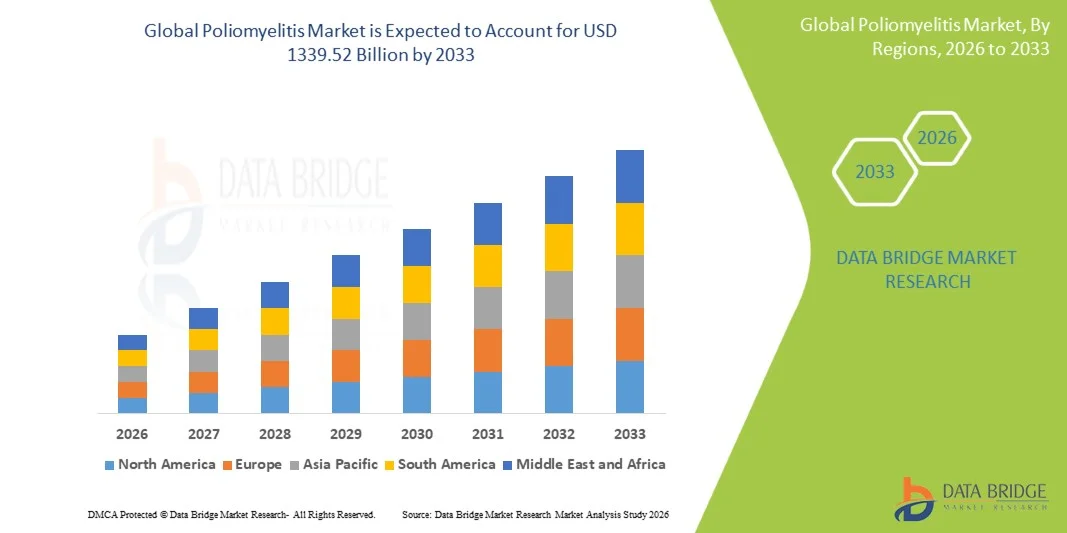
- Согласно анализу рынка Data Bridge Market Research, размер мирового рынка полиомиелита был оценен как904,57 млрд долларов США в 2025 годуОжидается, что он достигнет1339,52 млрд долларов США к 2033 году, вCAGR 5,03%в течение прогнозируемого периода
- Рост рынка в значительной степени подпитывается продолжающимися глобальными усилиями по искоренению полиомиелита, поддерживаемыми обширными кампаниями иммунизации и инициативами, возглавляемыми правительствами и международными организациями здравоохранения, что приводит к более широкому внедрению вакцин против полиомиелита как в развитых, так и в развивающихся регионах.
- Кроме того, растущее внимание к программам регулярной и дополнительной вакцинации наряду с растущим спросом на эффективные и доступные решения для иммунизации делает вакцины против полиомиелита важнейшим компонентом глобальных стратегий общественного здравоохранения. Эти сходящиеся факторы ускоряют принятие решений по полиомиелиту, тем самым значительно повышая рост отрасли.
Размер рынка и прогноз
Глобальная рыночная стоимость (2025):$ 904,57 млрд.
Ожидаемая рыночная стоимость (2033):1339,52 млрд. долларов США
Прогноз CAGR (2026–2033):5.03%
Каковы основные выводы рынка полиомиелита
- Полиомиелит, высокоинфекционное вирусное заболевание, в первую очередь затрагивающее детей, остается ключевым направлением глобальных программ иммунизации и искоренения из-за его потенциала вызывать постоянный паралич и его постоянное присутствие в отдельных регионах.
- Растущий спрос на вакцины против полиомиелита в первую очередь подпитывается продолжающимися инициативами по искоренению полиомиелита, рутинными программами иммунизации и необходимостью поддержания высокого охвата вакцинацией для предотвращения возрождения болезни.
- Северная Америка доминировала на рынке полиомиелита с самой большой долей доходов в 37,9% в 2025 году, характеризующейся сильной инфраструктурой иммунизации, высоким уровнем осведомленности и последовательной государственной поддержкой, при этом США поддерживали устойчивый спрос посредством рутинных графиков вакцинации и стратегий накопления запасов.
- Ожидается, что Азиатско-Тихоокеанский регион станет самым быстрорастущим регионом на рынке полиомиелита в течение прогнозируемого периода из-за большой базы населения, увеличения инвестиций в здравоохранение и активизации вакцинации в таких странах, как Индия и Пакистан.
- Сегмент вакцинации доминировал на рынке с наибольшей долей доходов в 61,8% в 2025 году, чему способствовали глобальные программы иммунизации, возглавляемые ВОЗ и национальными учреждениями здравоохранения. Вакцинация остается наиболее эффективной профилактической мерой против передачи полиовируса
Сфера охвата и сегментация рынка полиомиелита
|
Атрибуты |
Полиомиелит Ключевое понимание рынка |
|
Сегменты покрыты |
|
|
Страны, охваченные |
Северная Америка
Европа
Азиатско-Тихоокеанский регион
Ближний Восток и Африка
Южная Америка
|
|
Ключевые игроки рынка |
|
|
Рыночные возможности |
|
|
Информационные наборы данных с добавленной стоимостью |
В дополнение к информации о рыночных сценариях, таких как рыночная стоимость, темпы роста, сегментация, географическое покрытие и основные игроки, рыночные отчеты, курируемые Data Bridge Market Research, также включают углубленный экспертный анализ, эпидемиологию пациентов, анализ трубопроводов, анализ цен и нормативную базу. |
Каковы основные тенденции на рынке полиомиелита
"Укрепление глобальных инициатив по искоренению и программ вакцинации"
- Значительной и ускоряющейся тенденцией на мировом рынке полиомиелита является активизация глобальных усилий по искоренению полиомиелита и широкомасштабных программ иммунизации, направленных на ликвидацию полиомиелита во всем мире.
- Международное сотрудничество, возглавляемое такими организациями, как Всемирная организация здравоохранения и Глобальная инициатива по искоренению полиомиелита, играет решающую роль в снижении заболеваемости полиомиелитом посредством кампаний массовой вакцинации.
- Увеличение использования пероральных вакцин против полиомиелита (ОПВ) и инактивированных вакцин против полиомиелита (ИПВ) в рутинных графиках иммунизации значительно способствовало борьбе с распространением заболевания.
- Например, широкомасштабные усилия по иммунизации в эндемичных и подверженных высокому риску регионах привели к значительному сокращению случаев полиомиелита в мире за последние десятилетия.
- Кроме того, достижения в разработке вакцин, включая разработку новых OPV (nOPV), помогают решать такие проблемы, как штаммы полиовируса вакцинного происхождения.
- Растущий акцент на системах эпиднадзора и стратегиях быстрого реагирования способствует раннему выявлению и сдерживанию вспышек.
- Увеличение финансирования и поддержки со стороны глобальных организаций здравоохранения и правительств способствует дальнейшему укреплению инициатив по искоренению.
- Эта тенденция к всеобъемлющему охвату иммунизацией и скоординированным глобальным усилиям в значительной степени определяет рост и направление рынка полиомиелита.
Динамика рынка полиомиелита
водитель
Растущая потребность из-за растущих проблем безопасности и принятия умного дома
- Растущее внимание к иммунизации и реализации крупномасштабных программ общественного здравоохранения являются основными факторами рынка полиомиелита.
- Правительства во всем мире отдают приоритет программам плановой вакцинации для обеспечения высокого охвата иммунизацией, особенно среди младенцев и детей.
- Например, национальные кампании по иммунизации в развивающихся регионах продолжают играть решающую роль в предотвращении повторного возникновения случаев полиомиелита.
- Поддержка со стороны международных организаций, таких как ЮНИСЕФ, содействует распространению вакцин и проведению информационно-просветительских кампаний в недостаточно обслуживаемых районах.
- Повышение осведомленности населения о важности вакцинации способствует более широкому участию в иммунизации.
- Расширение инфраструктуры здравоохранения и информационно-пропагандистские программы улучшают доступ к вакцинам в отдаленных и сельских районах.
- Растущее государственное финансирование и стратегические партнерские отношения с неправительственными организациями еще больше способствуют усилиям по искоренению нищеты.
- Интеграция вакцинации против полиомиелита в обычные графики иммунизации обеспечивает устойчивый спрос на вакцины.
- В совокупности эти факторы стимулируют непрерывный рост рынка полиомиелита во всем мире.
Сдержанность/вызов
"Нерешительность прививок, проблемы доступности и появление цепей, полученных из вакцин"
- Одной из основных проблем на рынке полиомиелита является нерешительность в отношении вакцин в некоторых регионах, вызванная дезинформацией, культурными убеждениями и отсутствием осведомленности о безопасности и эффективности вакцин.
- В некоторых районах сопротивление кампаниям вакцинации препятствует усилиям по достижению полного охвата иммунизацией.
- Кроме того, логистические проблемы, такие как поддержание систем холодовой цепи и обеспечение доставки вакцин в отдаленные или затронутые конфликтом регионы, ограничивают эффективное осуществление программ иммунизации.
- Возникновение циркулирующего полиовируса вакцинного происхождения (cVDPV) у малоиммунизированных групп населения вызывает дополнительную озабоченность в связи с усилиями по искоренению полиомиелита.
- Например, недостаточный охват вакцинацией может привести к распространению мутированных штаммов вируса, что требует усиленных ответов на иммунизацию.
- Ограниченная инфраструктура здравоохранения в странах с низким уровнем дохода еще больше ограничивает доступ к своевременной вакцинации и эпиднадзору за болезнями.
- Политическая нестабильность и географические барьеры в некоторых эндемичных регионах также осложняют инициативы по искоренению.
- Кроме того, пробелы в финансировании и зависимость от международной помощи могут повлиять на устойчивость программ вакцинации.
- Решение этих проблем посредством укрепления систем здравоохранения, повышения осведомленности общественности и усиления глобальной координации будет иметь решающее значение для достижения долгосрочных целей искоренения.
Как сегментируется рынок полиомиелита
Рынок сегментирован на основе типа, лечения, пути введения, конечных пользователей и канала распределения.
• По типу
По типу рынок полиомиелита подразделяется на непаралитический полиомиелит, паралитический полиомиелит и постполиомиелитный синдром. Сегмент паралитического полиомиелита доминировал на рынке с наибольшей долей выручки в 52,4% в 2025 году, что обусловлено тяжелым клиническим воздействием заболевания и высокой потребностью в интенсивном медицинском лечении. Паралитический полиомиелит требует немедленной госпитализации и долгосрочного поддерживающего ухода, увеличивая его спрос на ресурсы здравоохранения. Доминирование этого сегмента также поддерживается более высокими показателями диагностики в регионах с более низким охватом иммунизацией. Расширение информационно-пропагандистских программ и мероприятий по эпиднадзору со стороны глобальных организаций здравоохранения также способствуют выявлению случаев заболевания. Кроме того, долгосрочные осложнения, связанные с параличом, стимулируют устойчивый спрос на лечение. Правительства и НПО, уделяющие особое внимание усилиям по искоренению, также выделяют значительные ресурсы на управление делами, связанными с анализом.
Ожидается, что в сегменте постполиомиелитного синдрома будет наблюдаться самый быстрый CAGR в 8,6% с 2026 по 2033 год, что обусловлено ростом числа выживших после полиомиелита, испытывающих долгосрочные неврологические осложнения. Это состояние обычно появляется спустя годы после первоначальной инфекции, что приводит к прогрессирующей мышечной слабости и усталости. Повышение осведомленности среди медицинских работников и пациентов улучшает показатели диагностики. Растущая стареющая популяция людей, переживших полиомиелит, является ключевым фактором, стимулирующим спрос на решения для долгосрочного ухода. Кроме того, достижения в области реабилитационной терапии и поддерживающей терапии улучшают варианты лечения. Растущие инвестиции в неврологические исследования также способствуют улучшению стратегий лечения заболеваний. Ожидается, что этот сегмент будет неуклонно расти по мере улучшения показателей выживаемости во всем мире.
• Лечение
На основе лечения рынок полиомиелита сегментирован на лекарства, вакцинацию, поддерживающее лечение и другие. Сегмент вакцинации доминировал на рынке с наибольшей долей доходов в 61,8% в 2025 году, чему способствовали глобальные программы иммунизации, возглавляемые ВОЗ и национальными учреждениями здравоохранения. Вакцинация остается наиболее эффективной профилактической мерой против передачи полиовируса. Высокий охват оральной полиовакциной (ОПВ) и инактивированной полиовакциной (ИПВ) значительно снизил заболеваемость во всем мире. Активное государственное финансирование и массовые кампании по иммунизации продолжают поддерживать доминирование сегмента. Кроме того, политика обязательной вакцинации детей во многих странах еще более усиливает спрос. Фармацевтические достижения в разработке вакцин также способствуют повышению эффективности и безопасности. Глобальный толчок к искоренению полиомиелита продолжает поддерживать высокие показатели вакцинации.
Ожидается, что в сегменте поддерживающего лечения самый быстрый CAGR составит 9,2% с 2026 по 2033 год, что обусловлено растущей потребностью в реабилитации и долгосрочном уходе за пациентами. Пациенты с паралитическим полиомиелитом часто нуждаются в физиотерапии, средствах передвижения и дыхательной поддержке. Повышение осведомленности об осложнениях после заражения повышает спрос на поддерживающую терапию. Кроме того, достижения в области реабилитационных технологий и вспомогательных устройств улучшают результаты лечения пациентов. Растущая инфраструктура здравоохранения в странах с развивающейся экономикой также расширяет доступ к поддерживающей медицинской помощи. Повышенные показатели выживаемости среди пациентов с полиомиелитом также способствуют долгосрочному спросу на лечение. Ожидается, что этот сегмент значительно расширится в связи с потребностями в управлении хронической инвалидностью.
• По маршруту администрации
На основе пути введения рынок полиомиелита сегментирован на оральный, парентеральный и другие. Оральный сегмент доминировал на рынке с долей выручки 57,6% в 2025 году, в первую очередь из-за широкого использования оральной полиовакцины (ОПВ) в глобальных программах иммунизации. ОПВ легко вводить, экономически эффективно и очень подходит для массовых кампаний вакцинации. Его способность вызывать кишечный иммунитет делает его очень эффективным в предотвращении передачи. Устойчивое внедрение в развивающихся странах также способствует доминированию сегмента. Государственные кампании вакцинации и кампании иммунизации «от двери до двери» также вносят значительный вклад. Простота перорального введения делает его идеальным для крупномасштабных инициатив в области общественного здравоохранения.
Ожидается, что в парентеральном сегменте будет зарегистрирован самый быстрый CAGR в 8,9% с 2026 по 2033 год, что обусловлено увеличением внедрения инактивированной вакцины против полиомиелита (ИПВ). IPV обеспечивает более сильный индивидуальный иммунитет и устраняет риски, связанные с полиовирусом вакцинного происхождения. Растущее предпочтение более безопасных составов вакцин повышает спрос на инъекционные пути. Кроме того, многие развитые страны полностью перешли на графики иммунизации на основе ИПВ. Расширение инфраструктуры здравоохранения и улучшение систем холодильных цепей поддерживают внедрение. Повышение осведомленности о безопасности вакцин еще больше ускоряет рост. Ожидается, что этот сегмент будет неуклонно расти в связи с глобальными изменениями в политике иммунизации.
• Конечными пользователями
На базе конечных пользователей рынок полиомиелита сегментирован на больницы, домашнюю помощь, специализированные клиники и другие. Сегмент больниц доминировал на рынке с долей 48,9% в 2025 году, поскольку больницы служат основными центрами диагностики, лечения и вакцинации. Они обеспечивают передовую медицинскую инфраструктуру и многопрофильную помощь при тяжелых случаях полиомиелита. Больницы также необходимы для лечения пациентов, нуждающихся в интенсивной реабилитации. Увеличение числа госпитализаций и финансирование государственного здравоохранения способствуют дальнейшему росту сегмента. Кроме того, прививочные мероприятия часто проводятся в больницах, усиливая их роль. Наличие квалифицированных медицинских работников способствует улучшению результатов лечения пациентов.
Сегмент услуг по уходу за домом, как ожидается, будет наблюдать самый быстрый CAGR в 9,5% с 2026 по 2033 год, что обусловлено растущим спросом на долгосрочную реабилитацию дома. Пациенты, выздоравливающие от полиомиелита, часто нуждаются в длительной физиотерапии и поддерживающем уходе. Услуги по уходу на дому предлагают удобство, экономическую эффективность и персонализированное лечение. Растущее внедрение инструментов телереабилитации и удаленного мониторинга способствует дальнейшему росту. Кроме того, улучшенный доступ к вспомогательным устройствам обеспечивает лучшую поддержку мобильности дома. Растущая осведомленность о хроническом управлении инвалидностью также способствует спросу. Ожидается, что сегмент будет расширяться по мере перехода здравоохранения к децентрализованным моделям ухода.
• Распределительный канал
На основе канала распространения рынок полиомиелита сегментирован в больничную аптеку, онлайн-аптеку и розничную аптеку. Сегмент больничных аптек доминировал на рынке с долей выручки 46,7% в 2025 году, что обусловлено высоким распространением вакцин и лечением в больницах. Больничные аптеки обеспечивают своевременную доступность вакцин, лекарств и вспомогательных препаратов. Они играют важную роль в программах иммунизации и инициативах по борьбе со вспышками. Сильные системы закупок и государственные цепочки поставок еще больше поддерживают доминирование. Кроме того, больницы остаются основной точкой доступа для лечения тяжелых случаев заболевания.
Ожидается, что в сегменте онлайн-аптек самый быстрый CAGR составит 11,4% с 2026 по 2033 год, что обусловлено быстрой цифровизацией медицинских услуг. Онлайн-аптеки обеспечивают удобный доступ к лекарствам, поддерживающему лечению и реабилитационным продуктам. Увеличение проникновения в Интернет и использование смартфонов являются ключевыми факторами роста. Спрос на услуги по доставке на дом и конфиденциальность в закупках медицинских услуг еще больше стимулирует принятие. Расширение цифрового здравоохранения после пандемии значительно ускорило этот сдвиг. Улучшение нормативно-правовой базы и логистической инфраструктуры также способствуют росту. Ожидается, что сегмент значительно расширится с ростом потребительских предпочтений в области цифровых медицинских решений.
В каком регионе находится наибольшая доля рынка полиомиелита
- Северная Америка доминировала на рынке полиомиелита с самой большой долей дохода 37,9% в 2025 году, характеризующейся сильной инфраструктурой иммунизации, высоким уровнем осведомленности и последовательной государственной поддержкой.
- Регион выигрывает от хорошо зарекомендовавших себя программ вакцинации, передовых систем здравоохранения и эффективных механизмов эпиднадзора за болезнями, которые обеспечивают высокий охват иммунизацией и быстрое реагирование на вспышки.
- Кроме того, постоянное государственное финансирование и глобальное сотрудничество в области здравоохранения поддерживают долгосрочные усилия по искоренению. США играют ключевую роль в поддержании стабильного спроса на вакцины посредством плановой иммунизации и стратегических программ накопления запасов вакцин.
Рынок полиомиелита США Insight
Рынок полиомиелита в США занял значительную долю в Северной Америке в 2025 году, чему способствовало строгое соблюдение планов регулярной иммунизации и надежная инфраструктура общественного здравоохранения. Спрос поддерживается постоянными рекомендациями по вакцинации, выпущенными Центрами по контролю и профилактике заболеваний, обеспечивая широкую иммунизацию младенцев, детей и групп высокого риска. Страна также сохраняет высокую степень готовности благодаря накоплению запасов вакцин и системам эпиднадзора, которые помогают предотвратить возрождение болезней. Инициативы по информированию общественности и доступность здравоохранения еще больше усиливают охват иммунизацией населения.
Европейское исследование рынка полиомиелита
Согласно прогнозам, европейский рынок полиомиелита будет неуклонно расти в течение прогнозируемого периода при поддержке сильных систем здравоохранения и скоординированных программ иммунизации в разных странах. Такие организации, как Европейский центр по профилактике и контролю заболеваний, играют ключевую роль в мониторинге тенденций заболеваний и руководстве стратегиями вакцинации. Повышение осведомленности о профилактике инфекционных заболеваний наряду со структурированными национальными графиками иммунизации способствует последовательному внедрению вакцин. Кроме того, сильная нормативная база обеспечивает безопасность, доступность и справедливое распределение вакцин по всему региону.
Великобритания Poliomyelitis Market Insight
Ожидается, что в течение прогнозируемого периода рынок полиомиелита в Великобритании будет расширяться на стабильном уровне, что обусловлено сильными национальными программами иммунизации и устойчивой осведомленностью общественности о здоровье. Система здравоохранения обеспечивает эффективную доставку вакцин через структурированные графики иммунизации, особенно для младенцев и уязвимых групп. Постоянный мониторинг и кампании общественного здравоохранения поддерживают высокий охват вакцинацией и помогают поддерживать низкую заболеваемость по всей стране.
Германия Poliomyelitis Market Insight
Ожидается, что в течение прогнозируемого периода рынок полиомиелита в Германии будет расти на умеренном CAGR, что будет поддерживаться высокими стандартами здравоохранения и строгим соблюдением вакцинации. Хорошо зарекомендовавшие себя программы иммунизации в сочетании с сильным общественным доверием к учреждениям здравоохранения обеспечивают последовательное внедрение вакцин. Кроме того, внимание Германии к профилактическому здравоохранению и борьбе с болезнями продолжает поддерживать стабильный рост рынка.
Азиатско-Тихоокеанский рынок полиомиелита
Ожидается, что Азиатско-Тихоокеанский рынок полиомиелита станет самым быстрорастущим регионом, что обусловлено большой базой населения, увеличением инвестиций в здравоохранение и активизацией вакцинации в таких странах, как Индия и Пакистан. Расширение программ иммунизации, улучшение инфраструктуры здравоохранения и повышение осведомленности общественности значительно способствуют внедрению вакцин во всем регионе. Кроме того, международное сотрудничество и осуществляемые под руководством правительств инициативы по искоренению болезней способствуют расширению охвата иммунизацией в сельских районах и районах с недостаточным уровнем обслуживания.
Японский рынок полиомиелита
Японский рынок полиомиелита обусловлен высокоразвитой системой здравоохранения, сильной культурой профилактической помощи и высокой осведомленностью о вакцинации. Структурированные программы иммунизации обеспечивают постоянный охват населения. Кроме того, растущее внимание к иммунизации взрослых и старению населения еще больше поддерживают стабильный спрос на вакцины в стране.
Китайский рынок полиомиелита
Китайский рынок полиомиелита составил основную долю в Азиатско-Тихоокеанском регионе в 2025 году, чему способствовали масштабные программы иммунизации и сильные правительственные инициативы. Быстрая урбанизация, расширение доступа к здравоохранению и повышение осведомленности о предотвратимых вакцинами заболеваниях стимулируют постоянный спрос на вакцины. Сильные внутренние производственные возможности и кампании общественного здравоохранения еще больше укрепляют долгосрочный рост рынка.
Каковы основные компании на рынке полиомиелита
Индустрию полиомиелита в первую очередь возглавляют хорошо зарекомендовавшие себя компании, в том числе:
- GlaxoSmithKline PLC (Великобритания)
- Санофи С.А. (Франция)
- Pfizer Inc. (США)
- Merck & Co., Inc. (США)
- Johnson & Johnson (США)
- Serum Institute of India Pvt. Ltd. (Индия)
- Bharat Biotech International Ltd. (Индия)
- Biological E. Limited (Индия)
- Panacea Biotec Ltd. (Индия)
- CSL Limited (Австралия)
- Emergent BioSolutions Inc. (США)
- Valneva SE (Франция)
- Баварский скандинавский A/S (Дания)
- Sinovac Biotech Ltd. (Китай)
- Sinopharm Group Co., Ltd. (Китай)
- Astellas Pharma Inc. (Япония)
- Daiichi Sankyo Company, Limited (Япония)
- Mitsubishi Tanabe Pharma Corporation (Япония)
- Zydus Lifesciences Ltd. (Индия)
- Takeda Pharmaceutical Company Limited (Япония)
Каковы последние события на рынке полиомиелита
- В июле 2022 года глобальные усилия по искоренению полиомиелита ускорили исследования и внедрение новой пероральной полиовакцины типа 2 (nOPV2), чтобы снизить риск вспышек полиовируса, вызванного вакциной, поскольку эта вакцина следующего поколения спроектирована так, чтобы быть более генетически стабильной, чем традиционные OPV, и с меньшей вероятностью вернуться к вредной форме.
- В марте 2024 года Индия продолжила свою национальную стратегию иммунизации против полиомиелита, проводя ежегодные национальные дни иммунизации (НИД) и субнациональные дни иммунизации (СНИД) для поддержания высокого иммунитета населения против полиовируса, отражая продолжающиеся крупномасштабные кампании вакцинации для предотвращения вспышек.
- В апреле 2025 года страны, участвующие в Глобальной инициативе по искоренению полиомиелита (GPEI), расширили использование новой пероральной полиовакцины типа 2 (nOPV2) для безопасного и быстрого прекращения вспышек варианта полиовируса, а также изучили новые инструменты доставки, такие как микроигловые пластыри и инъекторы без игл для упрощения вакцинации.
- В июле 2025 года данные глобального наблюдения показали, что охват третьей дозой вакцины против полиомиелита (POL3) улучшился примерно до 84% в 2024 году по сравнению с 83% в 2023 году, что указывает на постепенный прогресс в достижении плановой иммунизации во всем мире.
- В августе 2025 года Всемирная организация здравоохранения сообщила, что Израиль прекратил рутинное использование бивалентной пероральной полиовакцины (bOPV) в марте 2025 года, но продолжил введение инактивированной полиовакцины (IPV) в рамках своего графика иммунизации, поддерживая высокий уровень иммунитета и мониторинг полиовируса, полученного из вакцин.
- В декабре 2025 года Министерство здравоохранения и семейного благосостояния Индии провело целенаправленные кампании по вакцинации против полиомиелита, призвав родителей и опекунов привести подходящих детей в кабины для полиомиелита, усилив усилия по охвату пропущенных детей и поддержанию иммунитета.
- В феврале 2026 года ВОЗ провела предварительную квалификацию дополнительного нового продукта пероральной полиовакцины типа 2 (nOPV2), значительно укрепив глобальный потенциал по поставкам вакцин и реагированию на вспышки путем предоставления более широкого доступа к важнейшему инструменту для борьбы со вспышками полиовируса типа 2.
- В марте 2026 года Комитет ВОЗ по чрезвычайным ситуациям в области полиомиелита сообщил, что случаи дикого полиовируса типа 1 (WPV1) продолжались в эндемичных регионах (Афганистан и Пакистан) в 2025 году, что подчеркивает текущие проблемы в достижении глобальной ликвидации, несмотря на сокращение по сравнению с предыдущими годами.
SKU-
Получите онлайн-доступ к отчету на первой в мире облачной платформе рыночной аналитики
- Интерактивная панель анализа данных
- Панель анализа компании для возможностей с высоким потенциалом роста
- Доступ аналитика-исследователя для настройки и запросов
- Анализ конкурентов с помощью интерактивной панели
- Последние новости, обновления и анализ тенденций
- Используйте возможности сравнительного анализа для комплексного отслеживания конкурентов
Методология исследования
Сбор данных и анализ базового года выполняются с использованием модулей сбора данных с большими размерами выборки. Этап включает получение рыночной информации или связанных данных из различных источников и стратегий. Он включает изучение и планирование всех данных, полученных из прошлого заранее. Он также охватывает изучение несоответствий информации, наблюдаемых в различных источниках информации. Рыночные данные анализируются и оцениваются с использованием статистических и последовательных моделей рынка. Кроме того, анализ доли рынка и анализ ключевых тенденций являются основными факторами успеха в отчете о рынке. Чтобы узнать больше, пожалуйста, запросите звонок аналитика или оставьте свой запрос.
Ключевой методологией исследования, используемой исследовательской группой DBMR, является триангуляция данных, которая включает в себя интеллектуальный анализ данных, анализ влияния переменных данных на рынок и первичную (отраслевую экспертную) проверку. Модели данных включают сетку позиционирования поставщиков, анализ временной линии рынка, обзор рынка и руководство, сетку позиционирования компании, патентный анализ, анализ цен, анализ доли рынка компании, стандарты измерения, глобальный и региональный анализ и анализ доли поставщика. Чтобы узнать больше о методологии исследования, отправьте запрос, чтобы поговорить с нашими отраслевыми экспертами.
Доступна настройка
Data Bridge Market Research является лидером в области передовых формативных исследований. Мы гордимся тем, что предоставляем нашим существующим и новым клиентам данные и анализ, которые соответствуют и подходят их целям. Отчет можно настроить, включив в него анализ ценовых тенденций целевых брендов, понимание рынка для дополнительных стран (запросите список стран), данные о результатах клинических испытаний, обзор литературы, обновленный анализ рынка и продуктовой базы. Анализ рынка целевых конкурентов можно проанализировать от анализа на основе технологий до стратегий портфеля рынка. Мы можем добавить столько конкурентов, о которых вам нужны данные в нужном вам формате и стиле данных. Наша команда аналитиков также может предоставить вам данные в сырых файлах Excel, сводных таблицах (книга фактов) или помочь вам в создании презентаций из наборов данных, доступных в отчете.