


Global Polyamide Market Segmentation, By Type (PA 6, PA 66, Bio Polyamides, and Specialty Polyamides), Class (Aliphatic Polyamides, Semi-Aromatic, and Aromatic Polyamides), Application (Fibers, Wire and Cables, 3D Printing, Sports Equipment, Engine Components, Brakes and Transmission Parts, and Household Goods and Appliances), End User (Automotive, Electrical and Electronics, Textile, Aerospace and Defence, Packaging, and Consumer Goods) - Industry Trends and Forecast to 2033
Каков размер и обзор рынка полиамида
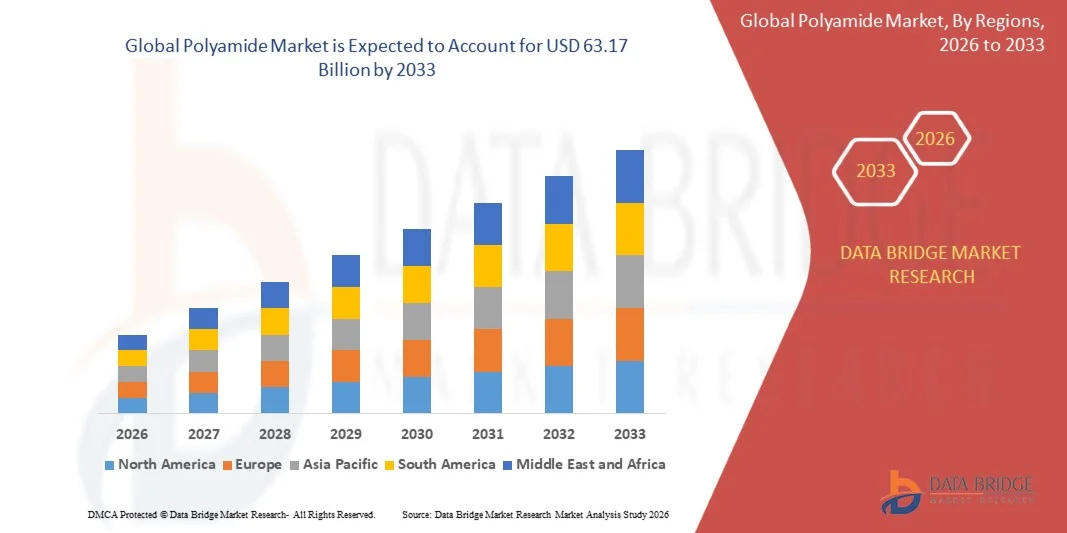
- По данным Data Bridge Market Research Analysis Мировой рынок полиамида оценивается в42,60 млрд долларов в 2025 годуОжидается, что он достигнет$63,17 млрд. к 2033 году, вCAGR 5,05%в течение прогнозируемого периода
- Рост рынка в значительной степени обусловлен растущим спросом на легкие и высокопроизводительные инженерные пластмассы для автомобильных, электрических и промышленных применений, что приводит к переходу от традиционных металлических компонентов к современным полимерным материалам.
- Кроме того, растущее внимание к топливной эффективности, снижению веса транспортных средств и энергоэффективности в промышленном оборудовании побуждает производителей использовать полиамидные материалы для прочных и термостойких компонентов. Эти факторы ускоряют спрос на полиамидные смолы, тем самым значительно поддерживая расширение мирового рынка.
Размер рынка и прогноз
- Глобальная рыночная стоимость (2025):42,60 млрд. долларов США
- Ожидаемая рыночная стоимость (2033):$63,17 млрд.
- Прогноз CAGR (2025–2033):5.05%
полиамидАнализ рынка
- Полиамиды, широко используемые в качестве инженерных термопластов и высокопрочных волокон, становятся важными материалами в таких отраслях, как автомобилестроение, электроника, текстиль и потребительские товары из-за их превосходной механической прочности, химической стойкости и термостойкости.
- Растущий спрос на полиамиды в первую очередь обусловлен растущим производством автомобилей, расширением производства электроники и электроники и растущим внедрением высокоэффективных полимеров для легких и долговечных промышленных компонентов.
- Азиатско-Тихоокеанский регион доминирует на рынке полиамидов с долей 43,85%В 2025 году из-за высокого спроса со стороны автомобильной, текстильной и электротехнической промышленности, а также крупномасштабных мощностей по производству полимеров в регионе.
- Ожидается, что Северная Америка станет самым быстрорастущим регионом на рынке полиамидов в течение прогнозируемого периода из-за растущего спроса на легкие материалы в автомобильном производстве и расширения применения в электрических и электронных компонентах.
- Сегмент PA 6 доминировал на рынке с долей рынка 51,70% в 2025 году благодаря отличному балансу механической прочности, долговечности и экономической эффективности. PA 6 широко используется в автомобильных компонентах, промышленном оборудовании и текстильных волокнах из-за его превосходной износостойкости и перерабатываемости с помощью методов литья под давлением и экструзии. Производители предпочитают PA 6 для массового производства из-за его высокой доступности сырья и хорошо налаженной производственной инфраструктуры.
Сфера охвата и сегментация рынка полиамида
|
Атрибуты |
Полиамид ключевые рыночные идеи |
|
Сегменты покрыты |
|
|
Страны, охваченные |
Северная Америка
Европа
Азиатско-Тихоокеанский регион
Ближний Восток и Африка
Южная Америка
|
|
Ключевые игроки рынка |
|
|
Рыночные возможности |
|
|
Информационные наборы данных с добавленной стоимостью |
|
Каковы основные тенденции на рынке полиамидов
«Растущее внедрение био- и устойчивых полиамидных материалов»
- Значительной тенденцией на рынке полиамида является растущее внедрение био- и устойчивых полиамидных материалов, поскольку отрасли стремятся сократить выбросы углерода и зависимость от сырья на основе нефти. Этот сдвиг усиливает роль передовых полиамидов в поддержке целей устойчивого развития в автомобилестроении, электронике и производстве потребительских товаров.
- Например, Arkema производит полиамид 11 на биологической основе под брендом Rilsan, полученный из возобновляемого сырья касторового масла, широко используемого в автомобильных топливных линиях, электронике и спортивном оборудовании. Такие устойчивые материалы помогают производителям уменьшить воздействие на окружающую среду при сохранении высокой механической прочности и долговечности.
- Автопроизводители все чаще интегрируют устойчивые полиамиды в компоненты транспортных средств, чтобы соответствовать более строгим экологическим нормам и улучшить перерабатываемость. Эти материалы поддерживают легкую конструкцию и способствуют повышению эффективности использования топлива и сокращению выбросов транспортных средств.
- Производители электроники также внедряют экологически ответственные сорта полиамида для соединителей, корпусов и электрических компонентов, где термическая стабильность и изоляционные свойства остаются критическими. Это ускоряет переход к более экологичным инженерным пластмассам в высокопроизводительных электронных системах.
- Производители промышленного оборудования и потребительских товаров расширяют использование перерабатываемых и био-полиамидных материалов в ответ на растущие нормативные требования и обязательства в области устойчивого развития. Этот сдвиг побуждает производителей полимеров разрабатывать инновационные составы, которые поддерживают производительность при одновременном снижении углеродного следа.
- Растущее внимание промышленности к принципам круговой экономики и ответственному поиску материалов укрепляет внедрение устойчивых полиамидных технологий. Эта тенденция усиливает долгосрочное расширение рынка, поскольку производители все чаще отдают приоритет экологически чистым инженерным материалам для будущего развития продукта.
Динамика рынка полиамида
водитель
«Рост спроса на легкие инженерные пластмассы»
- Растущий спрос на легкие инженерные пластмассы в автомобильном, электрическом и промышленном секторах обуславливает внедрение полиамидных материалов во всем мире. Полиамиды предлагают сильное сочетание высокой механической прочности, термостойкости и долговечности, что делает их подходящей заменой металлическим компонентам в сложных промышленных применениях.
- Например, BASF SE производит полиамидные материалы Ultramid, которые широко используются в автомобильных коллекторах воздухозаборника, крышках двигателей и конструктивных компонентах для снижения веса автомобиля при сохранении высокой производительности. Такие приложения демонстрируют, как передовые полиамиды поддерживают повышенную топливную экономичность и надежность конструкции современных транспортных средств.
- Автопроизводители все чаще используют полиамидные материалы в компонентах двигателя, системах охлаждения и электрических разъемах для повышения термостойкости и коррозионной стойкости. Эти материалы позволяют производителям проектировать более легкие транспортные средства, сохраняя при этом долговечность и механическую прочность.
- Электрический и электронный сектор также наблюдается растущее использование полиамидов в разъемах, выключателях и изоляции кабеля из-за их превосходных свойств электрической изоляции и термостойкости. Это расширяет роль инженерных пластмасс в современных электронных системах и промышленном оборудовании.
- Растущая потребность в высокопроизводительных и легких материалах в ключевых отраслях продолжает укреплять этот драйвер. Переход от традиционных металлов к передовым инженерным пластмассам усиливает спрос на полиамидные материалы в современных производственных приложениях.
Сдержанность/вызов
«Волатильность в ценах на сырье»
- Рынок полиамида сталкивается с проблемами из-за колебаний цен на ключевые нефтехимические сырьевые материалы, используемые в производстве полиамида, такие как адипиновая кислота и капролактам. Эти колебания цен на сырье могут существенно повлиять на производственные затраты и создать неопределенность для производителей и отраслей, расположенных ниже по течению.
- Например, Ascend Performance Materials, крупный производитель полиамидных 66 смол, полагается на адипонитрил и другие нефтехимические промежуточные продукты, на цены которых влияют глобальные энергетические и нефтехимические рыночные условия. Изменения в этих затратах на сырье могут повлиять на экономику производства и стратегии ценообразования в полиамидной промышленности.
- Производители часто сталкиваются с проблемами в поддержании стабильных производственных затрат, когда цены на сырье зависят от колебаний цен на сырую нефть и сбоев в цепочке поставок. Эти изменения могут привести к нестабильности цен на инженерные пластиковые материалы, используемые в промышленных секторах.
- Глобальная цепочка поставок нефтехимических промежуточных продуктов чувствительна к геополитическим условиям, торговой политике и транспортным расходам, что еще больше увеличивает неопределенность в доступности сырья. Такие нарушения могут повлиять на планирование производства и управление запасами для производителей полиамида.
- Продолжающаяся волатильность на рынках нефтехимического сырья продолжает создавать финансовое и операционное давление в отрасли полиамида. Эти проблемы требуют от производителей оптимизации цепочек поставок и изучения альтернативного устойчивого сырья для поддержания долгосрочной стабильности рынка.
Объем рынка полиамида
Рынок сегментируется на основе типа, класса, приложения и конечного пользователя.
• По типу
По типу рынок полиамидов подразделяется на PA 6, PA 66, биополимиды и специализированные полиамиды. Сегмент Polyamide 6 (PA 6) доминировал на рынке с самой большой долей рынка в 51,70% в 2025 году, что обусловлено отличным балансом механической прочности, долговечности и экономической эффективности. PA 6 широко используется в автомобильных компонентах, промышленном оборудовании и текстильных волокнах из-за его превосходной износостойкости и перерабатываемости с помощью методов литья под давлением и экструзии. Производители предпочитают PA 6 для массового производства из-за его высокой доступности сырья и хорошо налаженной производственной инфраструктуры. Кроме того, его способность усиливаться стеклянными волокнами повышает жесткость и термостойкость, расширяя его использование в структурных компонентах. Универсальность материала в различных отраслях продолжает укреплять его доминирование на мировом рынке полиамида.
Ожидается, что в течение прогнозируемого периода в сегменте полиамидов на биооснове будут наблюдаться самые быстрые темпы роста, обусловленные растущим спросом на устойчивые и экологически чистые инженерные материалы. Эти полиамиды частично или полностью получены из возобновляемых источников сырья, что помогает производителям снизить зависимость от химических веществ на основе нефти и достичь целей нормативной устойчивости. Такие отрасли, как автомобилестроение и потребительские товары, все чаще используют полиамиды на биооснове для снижения выбросов углекислого газа при сохранении высоких механических характеристик. Кроме того, достижения в технологиях обработки биополимеров улучшают прочность материала, термостойкость и долговечность. Растущие корпоративные обязательства в отношении инициатив в области циркулярной экономики еще больше ускоряют принятие решений.полиамиды на биологической основеглобально.
• По классу
На основе класса рынок полиамидов подразделяется на алифатические полиамиды, полуароматические полиамиды и ароматические полиамиды. Сегмент алифатических полиамидов доминировал на рынке в 2025 году благодаря их широкому применению в автомобильных деталях, промышленном оборудовании и текстильном производстве. Такие материалы, как PA 6 и PA 66, подпадают под эту категорию и широко используются из-за их превосходной прочности, гибкости и устойчивости к истиранию. Их относительно низкая себестоимость производства и простота обработки с помощью общих методов производства полимеров способствуют их широкому промышленному внедрению. Кроме того, алифатические полиамиды обеспечивают надежную производительность при механическом напряжении и умеренных тепловых условиях. Спрос на инженерные пластмассы в транспортном и промышленном секторах продолжает удерживать лидирующие позиции на рынке полиамида.
Сегмент полуароматических полиамидов, по прогнозам, зафиксирует самый быстрый рост в течение прогнозируемого периода, обусловленный растущим спросом на высокоэффективные материалы, способные выдерживать повышенные температуры и суровые химические среды. Полуароматические полиамиды обеспечивают повышенную термическую стабильность, стабильность размеров и улучшенные барьерные свойства по сравнению с обычными алифатическими классами. Эти материалы все чаще используются в электронике, автомобильных компонентов под капотом и промышленного оборудования, где надежность производительности имеет решающее значение. Кроме того, для быстрой миниатюризации электронных устройств требуются инженерные пластмассы с высокой термостойкостью и структурной целостностью. Такие преимущества производительности ускоряют внедрение полуароматических полиамидов в передовых производственных отраслях.
• Подача заявки
На основе применения рынок полиамида сегментирован на волокна, провода и кабели, 3D-печать, спортивное оборудование, компоненты двигателя, тормоза и части трансмиссии, а также бытовые товары и приборы. Сегмент полиамидных волокон доминировал на рынке с самой большой долей дохода в 2025 году, обусловленной их широким использованием в текстиле, коврах и промышленных тканях. Полиамидные волокна обеспечивают исключительную прочность на растяжение, эластичность и устойчивость к истиранию, что делает их пригодными для высокопроизводительных тканей и долговечных потребительских товаров. Текстильная промышленность в значительной степени полагается на полиамидные волокна для производства одежды, спортивной одежды и технического текстиля из-за их легкого характера и долговечности. Кроме того, быстрое расширение глобального сектора одежды и мебели для дома продолжает поддерживать высокий спрос на волокна на основе полиамида. Их универсальность в области моды, промышленного и технического текстиля сохраняет доминирующее положение на рынке полиамидов.
Ожидается, что в сегменте 3D-печати будут наблюдаться самые быстрые темпы роста в течение прогнозируемого периода из-за растущего внедрения технологий аддитивного производства в нескольких отраслях. Полиамидные материалы широко используются в 3D-печати из-за их превосходной адгезии слоя, механической прочности и устойчивости к ударам и износу. Такие отрасли, как аэрокосмическая, автомобильная и медицинская, используют полиамидные порошки и нити для производства легких прототипов и функциональных компонентов. Кроме того, растущий спрос на быстрое прототипирование и индивидуальные производственные решения ускоряет использование полиамидных материалов в процессах аддитивного производства. Непрерывные технологические достижения в селективном лазерном спекании и изготовлении сплавленной нити еще больше расширяют применение полиамида в3D печать.
• Конечный пользователь
На базе конечного потребителя рынок полиамида сегментирован на автомобильные, электрические и электронные, текстильные, аэрокосмические и оборонные, упаковочные и потребительские товары. Сегмент автомобильной промышленности доминировал на рынке в 2025 году за счет увеличения использования легких инженерных пластмасс для повышения топливной эффективности и производительности транспортных средств. Полиамиды широко используются в автомобильных компонентах, таких как крышки двигателя, коллекторы воздухозаборника, топливные системы и конструктивные детали из-за их высокого соотношения прочности к весу и термостойкости. Автопроизводители все чаще заменяют металлические компоненты полиамидными материалами, чтобы уменьшить вес автомобиля при сохранении долговечности и производительности. Кроме того, быстрое расширение производства электромобилей еще больше увеличивает спрос на высокоэффективные полимерные компоненты в корпусах батарей и электрических системах. Такие факторы продолжают укреплять автомобильный сектор как ведущего потребителя полиамидов во всем мире.
Ожидается, что сегмент электротехнической и электронной промышленности зафиксирует самый быстрый рост в течение прогнозируемого периода, вызванный растущим спросом на высокопроизводительные изоляционные и термостойкие материалы в электронных устройствах. Полиамиды обеспечивают отличные электрические изоляционные свойства, термическую стабильность и огнестойкость, которые делают их пригодными для соединителей, выключателей, переключателей и изоляции кабеля. Быстрое расширение потребительской электроники, интеллектуальных устройств и телекоммуникационной инфраструктуры значительно увеличивает потребление инженерных полимеров в электронных компонентах. Кроме того, растущее внедрение электромобилей и систем возобновляемой энергии еще больше повышает спрос на современные полимерные материалы в электрических сборках. Эти факторы в совокупности поддерживают сильный рост потребления полиамида в электротехнической и электронной промышленности.
Региональный анализ рынка полиамида
- Азиатско-Тихоокеанский регион доминировал на рынке полиамида с самой большой долей выручки в 43,85% в 2025 году, что обусловлено высоким спросом со стороны автомобильной, текстильной и электротехнической промышленности наряду с крупномасштабными производственными мощностями региона по производству полимеров.
- Быстрая индустриализация, расширение производства автомобилей и увеличение инвестиций в производство инженерных пластмасс ускоряют спрос на полиамидные материалы в странах с развивающейся экономикой.
- Присутствие крупных производителей химической продукции, экономически эффективная производственная инфраструктура и растущее потребление легких материалов в автомобильной и электронной промышленности укрепляют рост регионального рынка.
Китайский рынок полиамида
Китай занимал самую большую долю на рынке полиамида в Азиатско-Тихоокеанском регионе в 2025 году благодаря своей сильной производственной базе в автомобильной, электронной и промышленной технике. Страна обладает обширными возможностями производства полимеров, поддерживаемыми крупномасштабными нефтехимическими предприятиями и интегрированными цепочками поставок для инженерных пластмасс. Растущий спрос на легкие автомобильные компоненты и высокопроизводительные материалы, используемые в производстве электроники, еще больше увеличивает потребление полиамида. Кроме того, увеличение инвестиций в производство электромобилей и промышленную автоматизацию расширяет использование передовых полимерных материалов в стране.
Индийский рынок полиамида
Индия является свидетелем самого быстрого роста в Азиатско-Тихоокеанском регионе за счет расширения автомобильного производства, увеличения текстильного производства и роста электротехнической и электронной промышленности. Правительственные инициативы, такие как «Make in India», поощряют отечественное производство инженерных пластмасс и автомобильных компонентов, повышая спрос на полиамид. Растущие инвестиции в развитие инфраструктуры и промышленное производство еще больше увеличивают использование полиамидных материалов в кабелях, потребительских товарах и автомобильных приложениях. Расширение отечественной индустрии упаковки и потребительских товаров также способствует устойчивому росту рынка.
Европейское исследование рынка полиамида
Европейский рынок полиамида неуклонно расширяется благодаря высокому спросу на высокопроизводительные инженерные пластмассы в автомобильном, аэрокосмическом и промышленном секторах. В регионе особое внимание уделяется передовым материальным инновациям, устойчивости и нормативному соблюдению в производстве полимеров. Увеличение использования легких материалов для повышения эффективности использования топлива и сокращения выбросов приводит к использованию полиамида в автомобильных компонентах. Кроме того, сильные возможности НИОКР и присутствие ведущих производителей химических веществ поддерживают разработку специальных сортов полиамида для высококачественных применений.
Немецкий рынок полиамида
Рынок полиамида в Германии обусловлен его лидерством в автомобильной технике, передовыми производственными технологиями и высокопроизводительными исследованиями полимеров. В стране хорошо развита автомобильная промышленность, которая все чаще использует полиамидные материалы для замены металлических компонентов и повышения эффективности транспортных средств. Сильное сотрудничество между производителями химических веществ, автопроизводителями и научно-исследовательскими институтами поддерживает инновации в передовых технических пластмассах. Растущее производство электромобилей и промышленного оборудования еще больше расширяет спрос на прочные и термостойкие полиамидные компоненты.
Британский рынок полиамида
Рынок полиамида в Великобритании поддерживается растущим спросом на передовые полимерные материалы в аэрокосмической, автомобильной и потребительской промышленности. Страна сосредоточена на производстве и материальных инновациях, поддерживаемых сильными академическими исследовательскими сетями и промышленными партнерствами. Растущие инвестиции в устойчивые материалы и передовые полимерные технологии способствуют развитию специализированных полиамидных продуктов. Рост аэрокосмического производства и высокопроизводительных инженерных приложений также способствует увеличению спроса на полиамидные материалы.
Рынок полиамида в Северной Америке
Ожидается, что Северная Америка будет расти самыми быстрыми темпами с 2026 по 2033 год, что обусловлено растущим спросом на легкие материалы в автомобильной промышленности и расширением применения в электрических и электронных компонентах. Регион обладает мощными возможностями в области передовых исследований материалов, полимерных инноваций и высокопроизводительных технологий производства. Рост производства электромобилей и растущее использование инженерных пластмасс в промышленном оборудовании способствуют расширению рынка. Кроме того, увеличение инвестиций в устойчивые полимерные материалы на биооснове способствует долгосрочному росту рынка.
Американский рынок полиамида Insight
На долю США приходится наибольшая доля на рынке полиамида в Северной Америке в 2025 году, чему способствовал высокий спрос со стороны автомобильной, аэрокосмической и электротехнической промышленности. Страна имеет хорошо развитый сектор производства полимеров, поддерживаемый передовой инфраструктурой НИОКР и значительными инвестициями в производство инженерных пластмасс. Растущее внедрение легких полимерных компонентов в автомобильной и аэрокосмической промышленности стимулирует потребление полиамида. Кроме того, сильное присутствие ведущих производителей химической продукции и постоянные инновации в высокопроизводительных материалах укрепляют лидирующие позиции страны на региональном рынке.
Какие компании являются ведущими на рынке полиамида
Индустрия полиамида в основном возглавляется хорошо зарекомендовавшими себя компаниями, в том числе:
- BASF SE (Германия)
- LEALEA ENTERPRISE CO., LTD.
- DSM (Нидерланды)
- Ascend Performance Materials (США)
- Invista (США)
- Аркема (Франция)
- Эвоник (Германия)
- RTP Company (США)
- KRAIBURG TPE GMBH & CO. KG (Германия)
- KURARAY CO., LTD (Япония)
- SABIC (Южная Аравия)
- LG Chem (Южная Корея)
- Huntsman International LLC (США)
- KRATON CORPORATION (США)
- Любризол (США)
- Celanese Corporation (США)
- Asahi Kasei Corporation (Япония)
- TSRC (Тайвань)
Последние события на мировом рынке полиамида
- В феврале 2026 года DuPont расширила свой передовой портфель полиамидов, представив новые высокотемпературные нейлоновые материалы, предназначенные для силовых агрегатов электромобилей и аккумуляторов. Запуск укрепляет рынок полиамидов, поддерживая растущий спрос на легкие, термостойкие полимеры, которые могут заменить металлические компоненты в системах электромобилей, что позволяет повысить эффективность и долговечность транспортных средств, ускоряя внедрение инженерных пластмасс в технологии мобильности следующего поколения.
- В январе 2026 года Arkema объявила о расширении мощностей по производству полиамида 11 на биооснове для удовлетворения растущего глобального спроса на устойчивые высокоэффективные полимеры в секторах автомобилестроения, электроники и потребительских товаров. Ожидается, что эта разработка укрепит рынок полиамидов за счет увеличения доступности возобновляемых полиамидных материалов и поддержки производителей, которые переходят к низкоуглеродным и экологически ответственным полимерным решениям.
- В октябре 2025 года BASF представила в Северной Америке два новых устойчивых нейлоновых 6-класса, Ultramid LowPCF и Ultramid BMB, со значительно уменьшенными углеродными следами от колыбели до шлюза примерно на 30% и 50%. Разработка расширяет рынок полиамида, позволяя производителям использовать инженерные пластмассы с низким уровнем выбросов при сохранении механических характеристик, необходимых для автомобильного, электронного и промышленного применения.
- В апреле 2025 года TE Connectivity заключила партнерское соглашение с BASF для производства автомобильных разъемов с использованием полиамида Ultramid Ccycled, полученного из пластиковых отходов. Это сотрудничество укрепляет рынок полиамида, демонстрируя коммерческую жизнеспособность круглых полимерных материалов и поощряя более широкое внедрение переработанных полиамидных решений в автомобильных электрических системах и устойчивый дизайн продукта.
- В марте 2025 года компания DSM Engineering Materials запустила новую линейку высокопроизводительных полиамидных соединений, разработанных для легких структурных автомобильных компонентов. Внедрение улучшает рынок полиамида, поддерживая стратегии снижения веса транспортных средств, повышая топливную экономичность и диапазон электромобилей, одновременно увеличивая использование прочных инженерных пластмасс в сложных автомобильных условиях.
SKU-
Получите онлайн-доступ к отчету на первой в мире облачной платформе рыночной аналитики

- Интерактивная панель анализа данных
- Панель анализа компании для возможностей с высоким потенциалом роста
- Доступ аналитика-исследователя для настройки и запросов
- Анализ конкурентов с помощью интерактивной панели
- Последние новости, обновления и анализ тенденций
- Используйте возможности сравнительного анализа для комплексного отслеживания конкурентов
Методология исследования
Сбор данных и анализ базового года выполняются с использованием модулей сбора данных с большими размерами выборки. Этап включает получение рыночной информации или связанных данных из различных источников и стратегий. Он включает изучение и планирование всех данных, полученных из прошлого заранее. Он также охватывает изучение несоответствий информации, наблюдаемых в различных источниках информации. Рыночные данные анализируются и оцениваются с использованием статистических и последовательных моделей рынка. Кроме того, анализ доли рынка и анализ ключевых тенденций являются основными факторами успеха в отчете о рынке. Чтобы узнать больше, пожалуйста, запросите звонок аналитика или оставьте свой запрос.
Ключевой методологией исследования, используемой исследовательской группой DBMR, является триангуляция данных, которая включает в себя интеллектуальный анализ данных, анализ влияния переменных данных на рынок и первичную (отраслевую экспертную) проверку. Модели данных включают сетку позиционирования поставщиков, анализ временной линии рынка, обзор рынка и руководство, сетку позиционирования компании, патентный анализ, анализ цен, анализ доли рынка компании, стандарты измерения, глобальный и региональный анализ и анализ доли поставщика. Чтобы узнать больше о методологии исследования, отправьте запрос, чтобы поговорить с нашими отраслевыми экспертами.
Доступна настройка
Data Bridge Market Research является лидером в области передовых формативных исследований. Мы гордимся тем, что предоставляем нашим существующим и новым клиентам данные и анализ, которые соответствуют и подходят их целям. Отчет можно настроить, включив в него анализ ценовых тенденций целевых брендов, понимание рынка для дополнительных стран (запросите список стран), данные о результатах клинических испытаний, обзор литературы, обновленный анализ рынка и продуктовой базы. Анализ рынка целевых конкурентов можно проанализировать от анализа на основе технологий до стратегий портфеля рынка. Мы можем добавить столько конкурентов, о которых вам нужны данные в нужном вам формате и стиле данных. Наша команда аналитиков также может предоставить вам данные в сырых файлах Excel, сводных таблицах (книга фактов) или помочь вам в создании презентаций из наборов данных, доступных в отчете.











