


Сегментация мирового рынка полиуретана по типу материала (полиол, MDI, TDI и другие), типу продукции (гибкая пена, жесткая пена, покрытия, клеи и герметики, эластомеры и другие), конечному пользователю (строительство, автомобилестроение и транспорт, постельные принадлежности и мебель, обувь, бытовая техника и другие) — тенденции отрасли и прогноз до 2033 года.
Каков размер рынка полиуретана и темпы роста
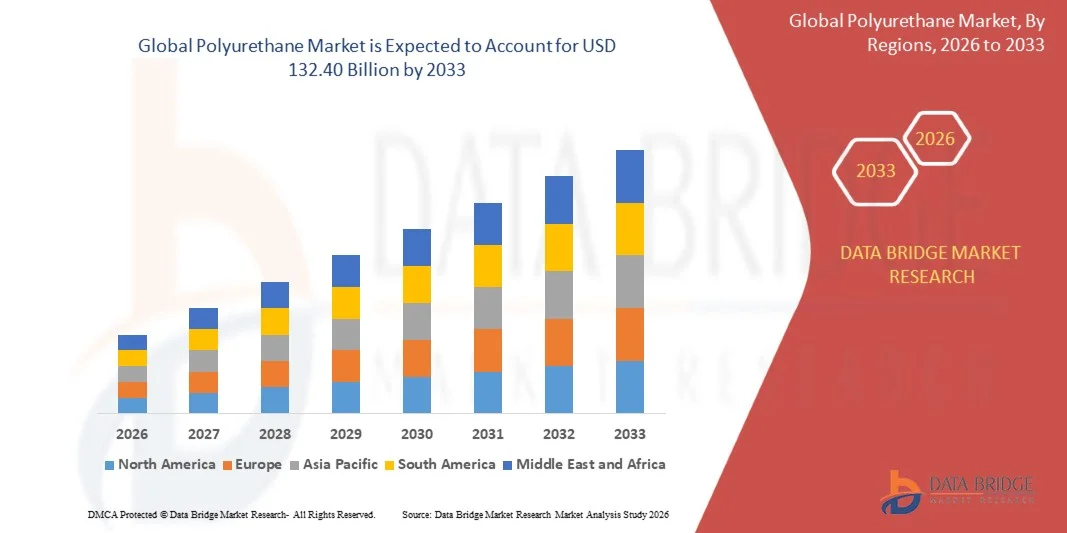
- Согласно анализу Data Bridge Market Research, глобальный объем рынка полиуретана был оценен как78,65 млрд долларов США в 2025 годуОжидается, что он достигнет$132,40 млрд к 2033 годув aCAGR 6,72%в течение прогнозируемого периода.
- Рынок в первую очередь обусловлен растущим спросом со стороны строительной, автомобильной и мебельной промышленности, где полиуретановые материалы широко используются из-за их долговечности, изоляционных свойств и универсальности. Растущая урбанизация и развитие инфраструктуры во всем мире значительно повышают спрос на продукцию на основе полиуретана.
- Кроме того, растущее внедрение энергоэффективных строительных материалов, легких автомобильных компонентов и передовых изоляционных решений ускоряет рост рынка. Увеличение инвестиций в устойчивые материалы и био-полиуретан также способствует расширению рынка.
Размер рынка и прогноз
- Глобальная рыночная стоимость (2025):$78,65 млрд.
- Ожидаемая рыночная стоимость (2033):$132,40 млрд.
- Прогноз CAGR (2026–2033): 6.72%
Каковы основные выводы рынка полиуретана
- Полиуретан является универсальным полимером, используемым в широком спектре применений, включая пены, покрытия, клеи, герметики и эластомеры. Он известен своей гибкостью, долговечностью и устойчивостью к истиранию, что делает его пригодным как для промышленных, так и для потребительских применений.
- Рынок демонстрирует устойчивый рост из-за растущего спроса на легкие и высокопроизводительные материалы в различных отраслях. Расширение использования полиуретана в области теплоизоляции, автомобильных сидений и амортизации способствует расширению рынка.
- Азиатско-Тихоокеанский регион доминировал на рынке полиуретана с самой большой долей выручки 46,5% в 2025 году, чему способствовала быстрая индустриализация, сильная строительная деятельность и растущий производственный сектор.
- Ожидается, что в Северной Америке будет наблюдаться значительный рост CAGR на 7,1% из-за растущего внедрения энергоэффективных материалов и достижений в автомобильных и строительных технологиях.
- Сегмент гибкой пены составил самую большую долю рынка 31,1% в 2025 году из-за его широкого использования в мебели, постельных принадлежностях и автомобильных сидениях.
Сфера охвата и сегментация рынка полиуретана
|
Атрибуты |
Полиуретан Key Market Insights |
|
Сегменты покрыты |
|
|
Страны, охваченные |
Северная Америка
Европа
Азиатско-Тихоокеанский регион
Ближний Восток и Африка
Южная Америка
|
|
Ключевые игроки рынка |
|
|
Рыночные возможности |
|
|
Информационные наборы данных с добавленной стоимостью |
В дополнение к информации о рыночных сценариях, таких как рыночная стоимость, темпы роста, сегментация, географическое покрытие и основные игроки, рыночные отчеты, курируемые Data Bridge Market Research, также включают анализ экспорта импорта, обзор производственных мощностей, анализ потребления продукции, анализ ценового тренда, сценарий изменения климата, анализ цепочки поставок, анализ цепочки создания стоимости, обзор сырья / расходных материалов, критерии выбора поставщиков, анализ PESTLE, анализ Porter и нормативную базу. |
Каковы основные тенденции на рынке полиуретана
Растущее использование аммиака в качестве носителя водорода и чистого топлива
- Основной тенденцией на рынке полиуретана является растущее внедрение аммиака в качестве безуглеродного энергоносителя для хранения и транспортировки водорода. Чистый аммиак обеспечивает эффективную торговлю энергией на большие расстояния и поддерживает крупномасштабную декарбонизацию в таких отраслях, как производство электроэнергии, судоходство и химические вещества. Более высокая плотность энергии и развитая инфраструктура обработки делают его предпочтительным решением в развивающейся водородной экономике.
- Еще одной новой тенденцией является развитие интегрированных цепочек создания стоимости аммиака, включая производственные, складские и экспортно-импортные терминалы. Эти интегрированные системы предназначены для повышения эффективности цепочки поставок, снижения потерь энергии и поддержки глобальных инициатив по энергетическому переходу. Ожидается, что спрос на зеленый аммиак, производимый с использованием возобновляемых источников энергии, значительно возрастет, поскольку страны сосредоточены на достижении чистых нулевых выбросов.
- Интеграция цифровых технологий в управление инфраструктурой аммиака также набирает обороты. Передовые системы мониторинга, инструменты прогнозного обслуживания и платформы с поддержкой IoT используются для повышения операционной безопасности, оптимизации логистики и повышения эффективности в производственных и распределительных сетях. Эти технологии играют решающую роль в расширении инфраструктуры аммиака во всем мире.
Динамика рынка полиуретана
Водитель.
«Рост спроса со стороны строительной, автомобильной и потребительской промышленности»
- Растущий спрос на полиуретан в строительной отрасли является основным фактором роста рынка. Полиуретановые материалы широко используются для изоляции, кровли, герметиков и покрытий из-за их превосходных теплоизоляционных свойств, влагостойкости и долговечности. Быстрая урбанизация, развитие инфраструктуры и увеличение инвестиций в энергоэффективные здания значительно повышают спрос на полиуретановые продукты во всем мире.
- В автомобильном секторе полиуретан широко используется в сидениях, внутренних компонентах, изоляции и покрытиях. Растущее внимание к легким материалам для повышения топливной эффективности и увеличение производства электромобилей еще больше стимулируют спрос. Способность полиуретана обеспечивать комфорт, долговечность и снижение шума делает его важным материалом в современном дизайне автомобиля.
- Кроме того, растущий спрос со стороны отраслей потребительских товаров, таких как мебель, постельные принадлежности, обувь и электроника, способствует расширению рынка. Гибкая пена из полиуретана широко используется в матрасах и подушках, а покрытия и клеи используются в электронных устройствах и приборах, поддерживая устойчивый рост рынка.
Сдержанность/вызов
«Волатильность в ценах на сырье и экологические проблемы»
- Несмотря на сильный потенциал роста, рынок полиуретана сталкивается с проблемами, связанными с колебаниями цен на сырье. Ключевые факторы, такие как полиолы и изоцианаты, получены из нефтехимических продуктов, что делает их цены сильно зависимыми от волатильности рынка сырой нефти. Это может повлиять на производственные затраты и рентабельность для производителей.
- Экологические и нормативные проблемы также создают проблемы для роста рынка. Производство и утилизация полиуретановых материалов могут оказывать воздействие на окружающую среду, что приводит к ужесточению правил, касающихся выбросов и управления отходами. Производители должны инвестировать в устойчивые производственные процессы и технологии переработки, которые могут увеличить эксплуатационные расходы.
- Кроме того, отсутствие эффективной инфраструктуры переработки полиуретановых материалов остается серьезной проблемой. Несмотря на прогресс, достигнутый в области химической переработки и решений для круговой экономики, масштабное внедрение все еще ограничено, что влияет на усилия по обеспечению устойчивости на рынке.
Как сегментируется рынок полиуретана
Рынок сегментирован на основе типа, приложения и конечного пользователя..
По типу:
Рынок сегментирован на гибкую пену, жесткую пену, покрытия, клеи и герметики и эластомеры. Гибкая пена занимает самую большую долю рынка 31,1% в 2025 году из-за ее широкого использования в мебели, постельных принадлежностях и автомобильных сиденьях. Жесткая пена широко используется в изоляции, особенно в строительстве и охлаждении. Покрытия, клеи и эластомеры также набирают силу благодаря своей долговечности, химической стойкости и универсальности в промышленных применениях.
С помощью приложения:
Рынок сегментирован на строительство, автомобилестроение, мебель и постельные принадлежности, электронику, обувь и другие. На строительный сегмент приходится значительная доля 32,4% в 2025 году за счет увеличения спроса на теплоизоляционные материалы и энергоэффективные здания. Автомобильный сегмент также является основным фактором, обусловленным потребностью в легких и прочных материалах. Мебель и постельные принадлежности продолжают расти из-за растущего потребительского спроса на комфорт и высококачественные продукты.
Конечный пользователь:
Рынок сегментирован на строительство и строительство, автомобилестроение, потребительские товары, электронику, упаковку и другие. Строительный сектор доминирует на рынке с долей 35,8% в 2025 году за счет масштабного развития инфраструктуры и все более широкого внедрения изоляционных материалов. Автомобильная промышленность является еще одним ключевым конечным пользователем, поддерживаемым ростом производства автомобилей и инновациями в легких материалах. Сектор потребительских товаров и электроники также демонстрирует устойчивый рост из-за растущего спроса на долговечные и высокопроизводительные материалы.
В каком регионе находится наибольшая доля рынка полиуретана
- Азиатско-Тихоокеанский регион доминировал на рынке полиуретана с самой большой долей дохода 46,5% в 2025 году, чему способствовала быстрая индустриализация, сильный рост строительной деятельности и расширение производственных секторов в таких странах, как Китай, Индия и Япония. Регион выигрывает от экономически эффективного производства, доступности сырья и растущего спроса на полиуретан в таких областях, как изоляция, мебель, автомобильные компоненты и обувь.
- Азиатско-Тихоокеанский рынок обусловлен растущей урбанизацией, растущим развитием инфраструктуры и растущим спросом на потребительские товары. Кроме того, расширение производства автомобилей и увеличение инвестиций в энергоэффективные строительные материалы еще больше ускоряют спрос на полиуретан в различных областях применения.
Полиуретановый рынок США Insight
В 2025 году на рынок полиуретана в США пришлась самая большая доля выручки в Северной Америке, в основном за счет сильного спроса со стороны строительной, автомобильной и мебельной промышленности. Растущее внедрение энергоэффективных изоляционных материалов в жилых и коммерческих зданиях способствует росту рынка. Кроме того, достижения в области легких автомобильных компонентов и растущий спрос на высокопроизводительные материалы способствуют увеличению потребления полиуретана. Присутствие крупных производителей, таких как Dow Inc. и Huntsman Corporation, еще больше укрепляет рынок.
Европейский рынок полиуретана
По прогнозам, европейский рынок полиуретана будет расширяться при существенном CAGR в течение прогнозируемого периода, что обусловлено сильным акцентом на устойчивость, практику круговой экономики и соблюдение нормативных требований. В регионе наблюдается все более широкое внедрение экологически чистых и био-полиуретановых материалов для снижения воздействия на окружающую среду. Кроме того, строгие правила, введенные такими организациями, как Европейская комиссия, поощряют производителей разрабатывать устойчивые решения. Растущий спрос со стороны автомобильного, строительного и изоляционного секторов еще больше поддерживает рост рынка в европейских странах.
Британский рынок полиуретана
Великобритания. Ожидается, что в течение прогнозируемого периода рынок полиуретана будет расти с заметным CAGR, что обусловлено увеличением инвестиций в развитие инфраструктуры и устойчивой практики строительства. Растущий спрос на изоляционные материалы для повышения энергоэффективности зданий создает сильные рыночные возможности. Кроме того, растущее внедрение полиуретана в мебель, постельные принадлежности и автомобильные приложения ускоряет расширение рынка в жилом и коммерческом секторах.
Немецкий рынок полиуретана
Ожидается, что рынок полиуретана в Германии будет расширяться при значительном CAGR, поддерживаемом сильной промышленной базой страны и лидерством в производственных технологиях. Германия является ключевым центром автомобильного производства, где полиуретан широко используется в сидениях, интерьерах и изоляционных компонентах. Кроме того, растущее внедрение передовых материалов в строительстве и промышленности способствует дальнейшему росту рынка. Акцент на устойчивость и энергоэффективность стимулирует разработку высокоэффективных полиуретановых решений.
Азиатско-Тихоокеанский рынок полиуретана
Ожидается, что рынок полиуретана в Азиатско-Тихоокеанском регионе будет расти самыми быстрыми темпами в течение прогнозируемого периода, что обусловлено расширением строительной деятельности, ростом располагаемых доходов и увеличением спроса на потребительские товары. Регион извлекает выгоду из хорошо налаженной производственной экосистемы и прочных цепочек поставок. В таких странах, как Южная Корея и Индонезия, также наблюдается растущее внедрение полиуретана в электронике, автомобилестроении и обуви, что способствует общему расширению рынка.
Японский рынок полиуретана
Японский рынок полиуретана переживает устойчивый рост благодаря своим передовым производственным возможностям и сильному акценту на инновации. Страна является лидером в автомобильной и электронной промышленности, где полиуретановые материалы широко используются для изоляции, покрытий и легких компонентов. Увеличение инвестиций в исследования и разработки и внедрение высокопроизводительных материалов способствуют дальнейшему расширению рынка.
Китайский рынок полиуретана
Китайский рынок полиуретана обеспечил значительную долю доходов в Азиатско-Тихоокеанском регионе в 2025 году, чему способствовала быстрая индустриализация и крупномасштабная строительная деятельность. Сильная производственная база страны и растущий спрос на мебель, бытовую технику и автомобильную продукцию увеличивают потребление полиуретана. Кроме того, усиление внимания к энергоэффективным строительным материалам и расширение инфраструктурных проектов укрепляют позиции Китая как ключевого рынка полиуретана.
Какие компании занимают лидирующие позиции на рынке полиуретана
Полиуретановая промышленность в основном возглавляется хорошо зарекомендовавшими себя компаниями, в том числе:
- BASF SE (Германия)
- Covestro AG (Германия)
- Dow Inc. (США)
- Huntsman Corporation (США)
- Wanhua Chemical Group (Китай)
- Recticel (Бельгия)
- Woodbridge Foam Corporation (Канада)
- INOAC Corporation (Япония)
- RAMPF Group (Германия)
- Tosoh Corporation (Япония)
Каковы последние тенденции на рынке полиуретана
- В марте 2025 года BASF SE расширила производственные мощности по производству полиуретана для поддержки растущего спроса со стороны строительной и автомобильной промышленности, сосредоточившись на устойчивых и энергоэффективных решениях для материалов.
- В апреле 2025 года Covestro AG представила новые полиуретановые продукты на биооснове, направленные на сокращение выбросов углерода и повышение устойчивости в различных областях применения.
- В июне 2025 года Dow Inc. запустила передовые полиуретановые системы, предназначенные для повышения производительности изоляции и долговечности в строительстве.
- В августе 2025 года Huntsman Corporation разработала инновационные полиуретановые клеи и покрытия, предназначенные для автомобильного и промышленного секторов для повышения производительности и эффективности.
- В сентябре 2025 года Wanhua Chemical Group расширила свою глобальную сеть поставок и представила высокоэффективные полиуретановые материалы для электроники и потребительских товаров.
SKU-
Получите онлайн-доступ к отчету на первой в мире облачной платформе рыночной аналитики

- Интерактивная панель анализа данных
- Панель анализа компании для возможностей с высоким потенциалом роста
- Доступ аналитика-исследователя для настройки и запросов
- Анализ конкурентов с помощью интерактивной панели
- Последние новости, обновления и анализ тенденций
- Используйте возможности сравнительного анализа для комплексного отслеживания конкурентов
Методология исследования
Сбор данных и анализ базового года выполняются с использованием модулей сбора данных с большими размерами выборки. Этап включает получение рыночной информации или связанных данных из различных источников и стратегий. Он включает изучение и планирование всех данных, полученных из прошлого заранее. Он также охватывает изучение несоответствий информации, наблюдаемых в различных источниках информации. Рыночные данные анализируются и оцениваются с использованием статистических и последовательных моделей рынка. Кроме того, анализ доли рынка и анализ ключевых тенденций являются основными факторами успеха в отчете о рынке. Чтобы узнать больше, пожалуйста, запросите звонок аналитика или оставьте свой запрос.
Ключевой методологией исследования, используемой исследовательской группой DBMR, является триангуляция данных, которая включает в себя интеллектуальный анализ данных, анализ влияния переменных данных на рынок и первичную (отраслевую экспертную) проверку. Модели данных включают сетку позиционирования поставщиков, анализ временной линии рынка, обзор рынка и руководство, сетку позиционирования компании, патентный анализ, анализ цен, анализ доли рынка компании, стандарты измерения, глобальный и региональный анализ и анализ доли поставщика. Чтобы узнать больше о методологии исследования, отправьте запрос, чтобы поговорить с нашими отраслевыми экспертами.
Доступна настройка
Data Bridge Market Research является лидером в области передовых формативных исследований. Мы гордимся тем, что предоставляем нашим существующим и новым клиентам данные и анализ, которые соответствуют и подходят их целям. Отчет можно настроить, включив в него анализ ценовых тенденций целевых брендов, понимание рынка для дополнительных стран (запросите список стран), данные о результатах клинических испытаний, обзор литературы, обновленный анализ рынка и продуктовой базы. Анализ рынка целевых конкурентов можно проанализировать от анализа на основе технологий до стратегий портфеля рынка. Мы можем добавить столько конкурентов, о которых вам нужны данные в нужном вам формате и стиле данных. Наша команда аналитиков также может предоставить вам данные в сырых файлах Excel, сводных таблицах (книга фактов) или помочь вам в создании презентаций из наборов данных, доступных в отчете.











