Global Pouchitis Treatment Market Segmentation, By Treatment (Antibiotics, Probiotics, and Others), Route of Administration (Oral, Parenteral and Others), End-Users (Hospitals, Specialty Clinics, and Others), Distribution Channel (Hospital Pharmacy, Retail Pharmacy, and Others) - Industry Trends and Forecast to 2033
Каков размер рынка лечения Пухита и темпы роста
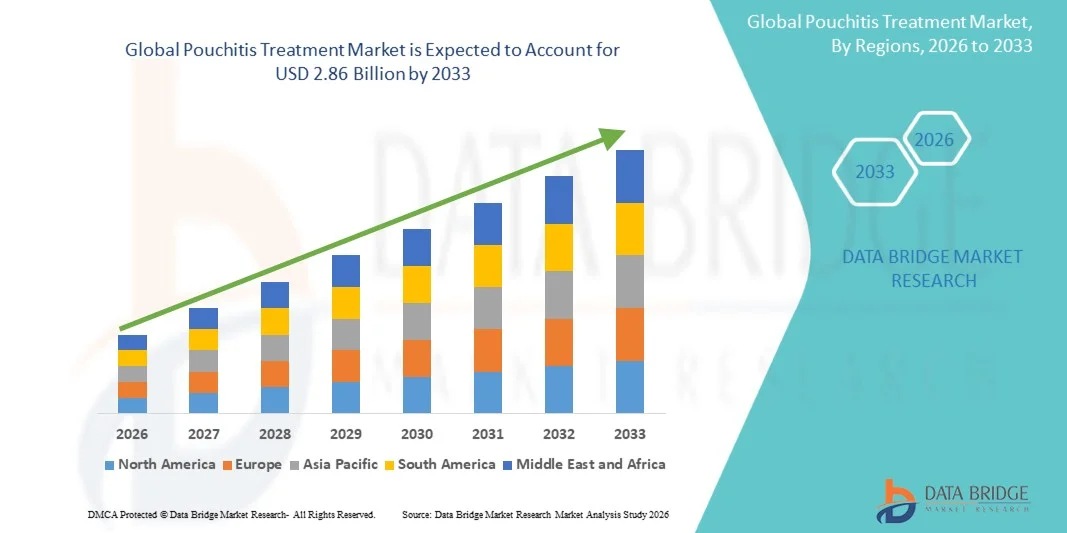
- Размер мирового рынка лечения пухита был оценен$1,20 млрд в 2025 годуОжидается, что он достигнет2,86 млрд долларов к 2033 году, вCAGR 11,50%в течение прогнозируемого периода
- Рост рынка в значительной степени подпитывается растущей распространенностью воспалительных заболеваний кишечника и послеоперационных осложнений, а также достижениями в вариантах лечения желудочно-кишечного тракта, что приводит к более широкому принятию решений для лечения пухита в клинической практике.
- Кроме того, растущая осведомленность о здоровье пищеварительной системы, улучшение диагностических возможностей и растущий спрос на эффективные противовоспалительные и антибактериальные методы лечения устанавливают лечение пухита как важный компонент современной желудочно-кишечной помощи. Эти сходящиеся факторы ускоряют внедрение решений для лечения пухита, тем самым значительно повышая рост отрасли.
Каковы основные выводы рынка лечения Пухита
- Лечение пухита, включающее антибиотики, пробиотики и противовоспалительные методы лечения, становится все более важным в современной желудочно-кишечной помощи из-за растущей частоты воспалительных заболеваний кишечника и послеоперационных осложнений у пациентов, проходящих подвздошный анастомоз.
- Растущий спрос на лечение пухита в первую очередь подпитывается увеличением распространенности язвенного колита, растущим внедрением передовых биологических методов лечения и улучшенными диагностическими возможностями, позволяющими раннее и точное лечение заболеваний.
- Северная Америка доминировала на рынке лечения пухита с самой большой долей доходов примерно 38,6% в 2025 году, характеризующейся передовой инфраструктурой здравоохранения, высоким внедрением биологических методов лечения и сильным присутствием ведущих фармацевтических компаний, причем в США наблюдался значительный рост, обусловленный увеличением случаев воспалительных заболеваний кишечника и улучшением доступности лечения.
- Ожидается, что Азиатско-Тихоокеанский регион станет самым быстрорастущим регионом на рынке лечения пухита в течение прогнозируемого периода с прогнозируемым CAGR около 9,3% из-за роста расходов на здравоохранение, повышения осведомленности о желудочно-кишечных расстройствах и расширения доступа к расширенным вариантам лечения.
- В оральном сегменте в 2025 году доля выручки на рынке составила 61,3%, что обусловлено удобством и эффективностью пероральных антибиотиков и пробиотиков.
Сфера охвата и сегментация рынка лечения пухита
|
Атрибуты |
Лечение Пушита Ключевые рыночные идеи |
|
Сегменты покрыты |
|
|
Страны, охваченные |
Северная Америка
Европа
Азиатско-Тихоокеанский регион
Ближний Восток и Африка
Южная Америка
|
|
Ключевые игроки рынка |
|
|
Рыночные возможности |
|
|
Информационные наборы данных с добавленной стоимостью |
В дополнение к информации о рыночных сценариях, таких как рыночная стоимость, темпы роста, сегментация, географическое покрытие и основные игроки, рыночные отчеты, курируемые Data Bridge Market Research, также включают углубленный экспертный анализ, эпидемиологию пациентов, анализ трубопроводов, анализ цен и нормативную базу. |
Каковы основные тенденции на рынке лечения пухита
"Достижения в целевой терапии микробиома кишечника и точной гастроэнтерологии"
- Значительной и ускоряющейся тенденцией на мировом рынке лечения пухита является растущее внимание к целевым методам лечения кишечного микробиома и точным гастроэнтерологическим подходам для улучшения результатов лечения.
- Например, ведущие организации здравоохранения, такие как клиника Майо и клиника Кливленда, активно участвуют в продвижении клинических протоколов для лечения хронического и антибиотикорезистентного пухита.
- Растущее использование целевых антибиотиков, таких как ципрофлоксацин и метронидазол, остается краеугольным камнем лечения, в то время как биологические методы лечения приобретают все большее значение в хронических и рецидивирующих случаях.
- Кроме того, новые исследования роли кишечного микробиома поддерживают развитие пробиотиков, вмешательств на основе фекальной микробиоты и новых противовоспалительных методов лечения.
- Улучшения в эндоскопической визуализации и диагностических методах позволяют более раннее и точное обнаружение воспаления в илеальных мешочках, что позволяет своевременно вмешаться.
- Эта тенденция к более персонализированным, информированным о микробиоме и основанным на фактических данных стратегиям лечения меняет рынок лечения Пухита и улучшает долгосрочные результаты лечения пациентов.
Динамика рынка лечения пухита
водитель
«Повышение распространенности воспалительных заболеваний кишечника и послеоперационных осложнений»
- Растущая глобальная распространенность воспалительных заболеваний кишечника (ВЗК), особенно язвенного колита, является основным фактором, стимулирующим рост рынка лечения пухита.
- Например, данные Всемирной организации здравоохранения указывают на растущее бремя хронических желудочно-кишечных расстройств во всем мире, что способствует увеличению хирургических вмешательств, таких как анастомоз подвздошной сумки (IPAA)
- Все большее число пациентов, перенесших колэктомию с реконструкцией мешочка, подвергаются риску развития острого или хронического пухита, что значительно увеличивает спрос на лечение.
- Кроме того, улучшенные показатели хирургического успеха и более длительная послеоперационная выживаемость увеличили население, требующее долгосрочного ухода за мешочками и управления ими.
- Повышение осведомленности медицинских работников о ранней диагностике и стандартизированных протоколах лечения способствует дальнейшему росту рынка.
- Кроме того, повышение доступности эффективных антибиотиков и биологических методов лечения улучшает результаты лечения заболеваний и способствует их принятию.
Сдержанность/вызов
"Рецидив заболевания, устойчивость к антибиотикам и ограниченная стандартизация лечения"
- Одной из основных проблем на рынке лечения пухита является высокий уровень рецидивов заболевания, особенно в случаях хронического пухита, требующих повторной или долгосрочной терапии.
- Растущая озабоченность устойчивостью к антибиотикам среди широко используемых методов лечения, таких как ципрофлоксацин и метронидазол, может снизить эффективность лечения с течением времени.
- Кроме того, существует ограниченная стандартизация в руководящих принципах лечения хронического и антибиотикорезистентного пухита, что приводит к вариабельности в клинической практике.
- Задержка диагноза или неправильный диагноз пухита может еще больше осложнить лечение заболеваний и ухудшить результаты лечения пациентов.
- Высокая стоимость передовых биологических методов лечения и ограниченный доступ в условиях с низкими ресурсами также ограничивают более широкое применение лечения.
- Решение этих проблем с помощью улучшенных клинических рекомендаций, разработки новых методов лечения на основе микробиома и повышения точности диагностики будет иметь важное значение для поддержания роста на рынке лечения пухита.
Как сегментируется рынок лечения Пухита
Рынок сегментирован на основе лечения, пути введения, конечных пользователей и канала распределения.
• Лечение
На основе лечения рынок лечения Пухита сегментирован на антибиотики, пробиотики и другие. Сегмент антибиотиков доминировал на крупнейшей доле рынка в 54,6% в 2025 году, что обусловлено его статусом первой линии лечения острого и хронического пухита. Антибиотики, такие как метронидазол и ципрофлоксацин, широко назначаются из-за их эффективности в снижении бактериального разрастания и воспаления. Высокая частота рецидивов пухита значительно способствует устойчивому спросу на антибиотики. Клиницисты предпочитают антибиотики для быстрого облегчения симптомов и инфекционного контроля. Сегмент выигрывает от сильных клинических рекомендаций, поддерживающих их использование. Увеличение распространенности воспалительных заболеваний кишечника (ВЗК) еще больше повышает спрос. Доступность и доступность лекарств также поддерживают принятие. Постоянное использование в больничных условиях усиливает доминирование на рынке. Текущие исследования оптимизированных схем антибиотиков улучшают результаты лечения. Эти факторы в совокупности обеспечивают доминирование сегмента антибиотиков.
Сегмент пробиотиков, как ожидается, будет наблюдать самый быстрый CAGR в 9,8% с 2026 по 2033 год, что обусловлено растущим интересом к терапии восстановления микробиома. Пробиотики помогают восстановить баланс кишечной флоры, уменьшая воспаление и рецидив пухита. Повышение осведомленности о здоровье кишечника значительно поддерживает рост сегмента. Пациенты все чаще ищут естественные и долгосрочные варианты лечения. Сегмент выигрывает от растущего принятия в послеоперационной помощи для пациентов с язвенным колитом. Достижения в пробиотических препаратах повышают эффективность и выживаемость полезных бактерий. Расширение клинических исследований подтверждает их терапевтические преимущества. Растущая тенденция к профилактическому здравоохранению еще больше повышает спрос. Увеличение доступности пробиотических добавок повышает доступность. Растущее предпочтение неантибиотических методов лечения поддерживает принятие. Эти факторы позиционируют пробиотики как наиболее быстро растущий сегмент лечения.
• По маршруту администрации
На основе пути введения рынок лечения Пухита сегментирован на оральный, парентеральный и другие. В оральном сегменте доля выручки на рынке в 2025 году составила 61,3%, что обусловлено удобством и эффективностью пероральных антибиотиков и пробиотиков. Оральная терапия широко предпочтительна как для острого, так и для поддерживающего лечения пухита. Они обеспечивают простоту администрирования и высокое соответствие пациентов. Сегмент выигрывает от высоких ставок рецептов в амбулаторных условиях. Увеличение доступности пероральных составов способствует росту рынка. Врачи предпочитают пероральный путь для легких и умеренных случаев. Повышение осведомленности о раннем лечении способствует усыновлению. Экономическая эффективность по сравнению с инъекционной терапией еще больше стимулирует спрос. Расширение фармацевтических трубопроводов расширяет возможности пероральных препаратов. Постоянные инновации в доставке лекарств улучшают биодоступность. Эти факторы обеспечивают доминирование орального сегмента.
По прогнозам, в парентеральном сегменте будет наблюдаться самый быстрый CAGR в 8,6% с 2026 по 2033 год, что обусловлено его использованием в тяжелых или тугоплавких случаях, требующих быстрого терапевтического действия. Парентеральное введение обеспечивает более высокую биодоступность препарата и более быструю реакцию. Увеличение госпитализации тяжелых случаев пухита поддерживает спрос. Сегмент выигрывает от передовых инфузионных терапий в клинических условиях. Рост распространенности сложных случаев ВЗК еще больше стимулирует рост. Технологические достижения в инъекционных препаратах повышают безопасность и эффективность. Растущая инфраструктура здравоохранения поддерживает внедрение в развивающихся регионах. Врачи все чаще рекомендуют парентеральную терапию при резистентных инфекциях. Сегмент также выигрывает от улучшения стандартов медицинского обслуживания в больницах. Постоянные исследования инъекционных антибиотиков улучшают варианты лечения. Эти факторы позиционируют парентеральное администрирование как наиболее быстро растущий сегмент.
• Конечными пользователями
На базе конечных пользователей рынок лечения Пухита сегментирован на больницы, специализированные клиники и другие. Сегмент больниц составил самую большую долю выручки на рынке в 48,9% в 2025 году, что обусловлено большим объемом сложных и тяжелых случаев пухита, которые лечатся в стационарах. Больницы обеспечивают передовую диагностическую и терапевтическую инфраструктуру для эффективного лечения заболеваний. Наличие специалистов по гастроэнтерологии поддерживает точные решения о лечении. Увеличение госпитализации для осложнений, связанных с ВЗК, еще больше повышает спрос. Больницы получают доступ к широкому спектру антибиотиков и поддерживающей терапии. Сильная политика возмещения увеличивает доступность пациентов. Интеграция передовых систем мониторинга улучшает результаты. Растущие инвестиции в здравоохранение укрепляют возможности больниц. Рост распространенности желудочно-кишечных расстройств способствует росту сегмента. Постоянное расширение сети больниц поддерживает доступность. Эти факторы обеспечивают доминирование сегмента больниц.
Ожидается, что в сегменте специализированных клиник самый быстрый CAGR составит 9,2% с 2026 по 2033 год, что обусловлено растущим предпочтением специализированной желудочно-кишечной помощи. Специализированные клиники предлагают целенаправленное лечение пациентов с ВЗК и пухитом. Они предоставляют персонализированные и долгосрочные решения для лечения заболеваний. Растущая осведомленность о ранней диагностике поддерживает посещение клиники. Сегмент выигрывает от сокращения времени ожидания и улучшения взаимодействия с пациентами. Увеличение числа гастроэнтерологических клиник повышает доступность. Улучшения в моделях амбулаторной помощи поддерживают принятие. Пациенты предпочитают клиники для регулярного наблюдения и поддерживающей терапии. Растущая доступность здравоохранения в городских районах стимулирует рост. Интеграция современных диагностических средств повышает эффективность лечения. Эти факторы позиционируют специализированные клиники как наиболее быстро растущий сегмент конечных пользователей.
• Распределительный канал
На основе канала распространения рынок лечения Пухита сегментирован в больничную аптеку, розничную аптеку и другие. Сегмент больничных аптек доминировал на рынке с наибольшей долей выручки в 52,7% в 2025 году, что обусловлено прямым распространением рецептурных лекарств в больницах. Больничные аптеки обеспечивают немедленную доступность антибиотиков и поддерживающих препаратов. Сегмент выигрывает от высоких объемов стационарного лечения. Сильная интеграция с путями лечения в больницах поддерживает спрос. Увеличение частоты госпитализации при тяжелом пухите еще больше увеличивает использование. Больничные аптеки обеспечивают надлежащее хранение и регулируемое распределение. Сегмент поддерживается протоколами лечения, ориентированными на врача. Растущая инфраструктура здравоохранения укрепляет распределительные сети. Растущая распространенность желудочно-кишечных расстройств повышает спрос. Эти факторы обеспечивают доминирование сегмента больничных аптек.
Сегмент розничных аптек, по прогнозам, будет наблюдать самый быстрый CAGR в 8,9% с 2026 по 2033 год, что обусловлено увеличением потребностей в амбулаторном лечении и выполнении рецептов. Розничные аптеки обеспечивают легкий доступ к поддерживающим лекарствам для пациентов с пухитом. Сегмент выигрывает от расширения аптечных сетей по всему миру. Растущее предпочтение удобного доступа к лекарствам поддерживает рост. Повышение осведомленности о долгосрочном лечении заболеваний повышает спрос. Сегмент поддерживается увеличением рецептов для пероральной терапии. Технологическая интеграция, такая как электронные рецепты, повышает эффективность. Расширение городской инфраструктуры здравоохранения способствует дальнейшему внедрению. Пациенты предпочитают розничные аптеки для быстрого заполнения и доступности. Непрерывный рост в лечении хронических заболеваний поддерживает расширение. Эти факторы позиционируют розничные аптеки как наиболее быстро растущий канал распространения.
В каком регионе находится наибольшая доля рынка лечения пухита
- Северная Америка доминировала на рынке лечения пухита с самой большой долей доходов примерно 38,6% в 2025 году, характеризующейся развитой инфраструктурой здравоохранения, высоким внедрением биологических методов лечения и сильным присутствием ведущих фармацевтических компаний.
- Регион выигрывает от широкой доступности передовых вариантов лечения, сильного клинического опыта в гастроэнтерологии и растущего использования биологических препаратов для лечения хронического и рефрактерного пухита.
- Это доминирование дополнительно поддерживается растущей распространенностью воспалительных заболеваний кишечника, устоявшимися системами возмещения расходов на здравоохранение и постоянными достижениями в протоколах лечения желудочно-кишечного тракта, устанавливая лечение пухита в качестве ключевого сегмента в управлении пищеварительными заболеваниями.
Американский рынок лечения пухита Insight
Рынок лечения пухита в США занял самую большую долю доходов в 2025 году в Северной Америке, чему способствовало увеличение случаев воспалительных заболеваний кишечника и улучшение доступности лечения. Передовая инфраструктура здравоохранения страны и присутствие ведущих фармацевтических и биотехнологических компаний способствуют росту рынка. Кроме того, растущее внедрение биологических методов лечения и улучшение диагностических возможностей в значительной степени способствуют расширению рынка в США.
Европейский рынок лечения пухита Insight
Европейский рынок лечения пухита, по прогнозам, будет расширяться при существенном CAGR в течение прогнозируемого периода, в первую очередь благодаря сильным системам здравоохранения и растущему внедрению передовых методов лечения желудочно-кишечного тракта. В регионе наблюдается растущее использование биологических препаратов и улучшение клинического лечения осложнений, связанных с воспалительными заболеваниями кишечника. Кроме того, повышение осведомленности и ранняя диагностика пухита поддерживают устойчивый рост рынка по всей Европе.
Великобритания Pouchitis Treatment Market Insight
Ожидается, что рынок лечения пухита в Великобритании вырастет в течение прогнозируемого периода, что обусловлено увеличением распространенности воспалительных заболеваний кишечника и сильными системами поддержки здравоохранения. Страна извлекает выгоду из практики ранней диагностики и расширения доступа к передовым вариантам лечения. Кроме того, продолжающиеся клинические исследования и инициативы в области общественного здравоохранения способствуют расширению рынка в Великобритании.
Германия Pouchitis Treatment Market Insight
Ожидается, что в течение прогнозируемого периода рынок лечения пухита в Германии будет расширяться на значительном CAGR, чему будет способствовать сильная инфраструктура здравоохранения и широкое внедрение инновационных биологических методов лечения. Акцент Германии на доказательном лечении и передовой гастроэнтерологической помощи поддерживает рост рынка. Кроме того, все большее внимание к лечению хронических заболеваний способствует спросу на лечение пухита.
Азиатско-Тихоокеанский рынок лечения пухита
Ожидается, что Азиатско-Тихоокеанский рынок лечения пухита будет самым быстрорастущим регионом в течение прогнозируемого периода, с прогнозируемым CAGR около 9,3%, что обусловлено ростом расходов на здравоохранение, повышением осведомленности о желудочно-кишечных расстройствах и расширением доступа к передовым вариантам лечения. В регионе наблюдается сильный рост из-за увеличения случаев воспалительных заболеваний кишечника и улучшения инфраструктуры здравоохранения. Кроме того, расширение медицинских инвестиций и инициатив по модернизации здравоохранения в таких странах, как Китай, Индия и Япония, ускоряют внедрение передовых методов лечения пухита.
Японский рынок лечения пухита
Японский рынок лечения пухита набирает обороты из-за старения населения страны и сильного внимания к передовой медицинской помощи. Растущая распространенность желудочно-кишечных расстройств и растущий спрос на эффективные варианты лечения стимулируют рост рынка. Кроме того, достижения в области биологической терапии и улучшение доступности здравоохранения поддерживают расширение в Японии.
Китайский рынок лечения пухита
Китайский рынок лечения пухита составил самую большую долю доходов рынка в Азиатско-Тихоокеанском регионе в 2025 году, что объясняется большим количеством пациентов, ростом инвестиций в здравоохранение и повышением осведомленности о желудочно-кишечных заболеваниях. В стране наблюдается растущее внедрение передовых биологических методов лечения и улучшение доступа к специализированной помощи. Расширение инфраструктуры здравоохранения и государственная поддержка лечения хронических заболеваний являются ключевыми факторами, способствующими росту рынка в Китае.
Доля рынка лечения Пушита
Индустрия лечения Пухита в основном возглавляется хорошо зарекомендовавшими себя компаниями, в том числе:
- AbbVie Inc.(США)
- Pfizer Inc. (США)
- F. Hoffmann-La Roche Ltd.(Швейцария)
- Merck & Co., Inc. (США)
- Johnson & JohnsonСША)
- Takeda Pharmaceutical Company Limited (Япония)
- Janssen Pharmaceuticals(США)
- Bristol-Myers Squibb Company (США)
- AbbVie Allergan (США)
- Eli Lilly & Company (США)
- Teva Pharmaceutical Industries Ltd. (Израиль)
- Sun Pharmaceutical Industries Ltd. (Индия)
- Dr. Falk Pharma GmbH (Германия)
- Tillotts Pharma AG (Швейцария)
- Bausch Health Companies Inc. (Канада)
- Cipla Ltd. (Индия)
- Lupin Pharmaceuticals Inc. (Индия)
- Salix Pharmaceuticals (США)
- Ferring Pharmaceuticals (Швейцария)
- Сандоз (Швейцария)
Каковы последние события на мировом рынке лечения пухита
- В ноябре 2022 года Управление по санитарному надзору за качеством пищевых продуктов и медикаментов США (FDA) предоставило обозначение Orphan Drug AMT-101 для лечения пухита, состояния, которое может возникнуть после операции по анастомозу подвздошной кишки у пациентов с язвенным колитом. Это обозначение поддерживает стимулы развития и подчеркивает неудовлетворенные медицинские потребности в терапии пухита.
- В апреле 2023 года исследователи сообщили, что ведолизумаб стал первым лечением в Европе, лицензированным специально для пухита, который не реагирует на антибиотикотерапию, что ознаменовало собой значительную веху в вариантах лечения хронического антибиотикорезистентного пухита. Это развитие было описано как «изменитель игры» для пациентов с постоянными заболеваниями.
- В июне 2023 года ключевое клиническое исследование, опубликованное в The New England Journal of Medicine, показало, что ведолизумаб был более эффективным, чем плацебо, в индуцировании ремиссии у пациентов с хроническим пухитом после анастомоза подвздошной кишки. Это обеспечило убедительные клинические доказательства, подтверждающие использование ведолизумаба в рефрактерных случаях.
- В декабре 2023 года Американская гастроэнтерологическая ассоциация (AGA) выпустила комплексное клиническое руководство по лечению пухита, рекомендуя передовые иммуносупрессивные методы лечения, такие как ведолизумаб, устекинумаб и другие для рецидивирующего или рефрактерного пухита. Это руководство помогло стандартизировать уход и расширить терапевтические стратегии.
- В январе 2025 года реальные клинические данные показали, что ведолизумаб эффективен и хорошо переносится у пациентов с рефрактерным хроническим пухитом, при этом устойчивые клинические ответы сообщаются у 60-70% пациентов, получавших лечение. Это усилило роль антиинтегранной терапии в долгосрочном лечении пухита.
- В марте 2025 года экспериментальное клиническое исследование показало, что ингибитор киназы Януса (JAK) тофацитиниб достиг клинической ремиссии примерно у 31% пациентов с хроническим пухитом после 8 недель лечения, что указывает на потенциал для новых маломолекулярных методов лечения в этом показании.
SKU-
Получите онлайн-доступ к отчету на первой в мире облачной платформе рыночной аналитики
- Интерактивная панель анализа данных
- Панель анализа компании для возможностей с высоким потенциалом роста
- Доступ аналитика-исследователя для настройки и запросов
- Анализ конкурентов с помощью интерактивной панели
- Последние новости, обновления и анализ тенденций
- Используйте возможности сравнительного анализа для комплексного отслеживания конкурентов
Методология исследования
Сбор данных и анализ базового года выполняются с использованием модулей сбора данных с большими размерами выборки. Этап включает получение рыночной информации или связанных данных из различных источников и стратегий. Он включает изучение и планирование всех данных, полученных из прошлого заранее. Он также охватывает изучение несоответствий информации, наблюдаемых в различных источниках информации. Рыночные данные анализируются и оцениваются с использованием статистических и последовательных моделей рынка. Кроме того, анализ доли рынка и анализ ключевых тенденций являются основными факторами успеха в отчете о рынке. Чтобы узнать больше, пожалуйста, запросите звонок аналитика или оставьте свой запрос.
Ключевой методологией исследования, используемой исследовательской группой DBMR, является триангуляция данных, которая включает в себя интеллектуальный анализ данных, анализ влияния переменных данных на рынок и первичную (отраслевую экспертную) проверку. Модели данных включают сетку позиционирования поставщиков, анализ временной линии рынка, обзор рынка и руководство, сетку позиционирования компании, патентный анализ, анализ цен, анализ доли рынка компании, стандарты измерения, глобальный и региональный анализ и анализ доли поставщика. Чтобы узнать больше о методологии исследования, отправьте запрос, чтобы поговорить с нашими отраслевыми экспертами.
Доступна настройка
Data Bridge Market Research является лидером в области передовых формативных исследований. Мы гордимся тем, что предоставляем нашим существующим и новым клиентам данные и анализ, которые соответствуют и подходят их целям. Отчет можно настроить, включив в него анализ ценовых тенденций целевых брендов, понимание рынка для дополнительных стран (запросите список стран), данные о результатах клинических испытаний, обзор литературы, обновленный анализ рынка и продуктовой базы. Анализ рынка целевых конкурентов можно проанализировать от анализа на основе технологий до стратегий портфеля рынка. Мы можем добавить столько конкурентов, о которых вам нужны данные в нужном вам формате и стиле данных. Наша команда аналитиков также может предоставить вам данные в сырых файлах Excel, сводных таблицах (книга фактов) или помочь вам в создании презентаций из наборов данных, доступных в отчете.