


Global Rail Brake Frame Market Segmentation, By Material Type (Steel Plate Brake Frame, Cast Steel Brake Frame, and Aluminum Brake Frame), Rail Type (Passenger Rail and Transit Rail) - Industry Trends and Forecast to 2033
Rail Brake Frame Размер рынка и темпы роста
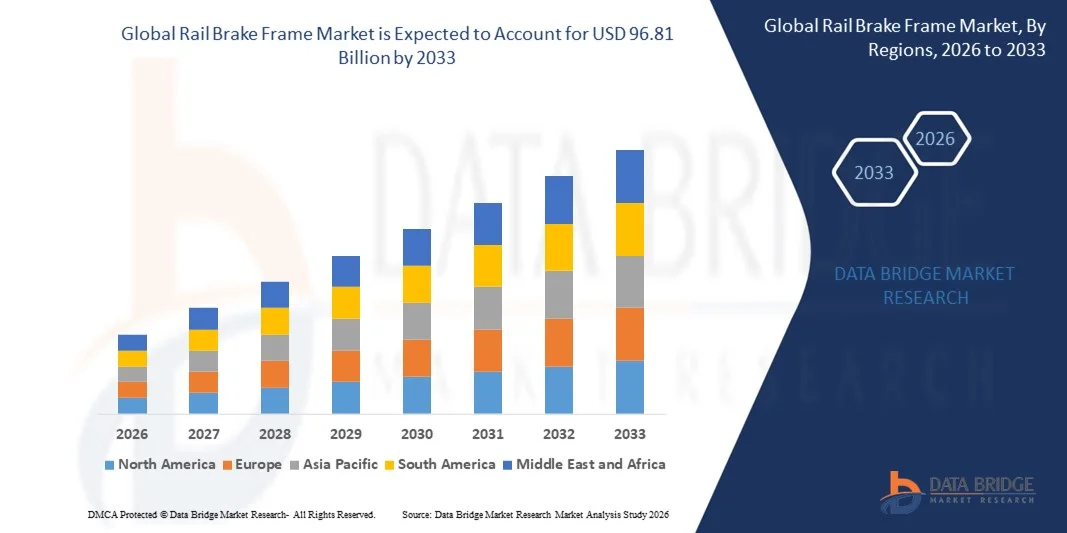
- Согласно анализу Data Bridge Market Research, объем рынка рельсовых тормозных рам был оценен как75,25 млрд долларов в 2025 годуОжидается, что он достигнет$96,81 млрд к 2033 году, вCAGR 3,2%в течение прогнозируемого периода
- Рост рынка в значительной степени обусловлен растущим расширением пассажирских и транзитных железнодорожных сетей, что стимулирует спрос на прочные и надежные тормозные рамы, способные выдерживать высокие эксплуатационные нагрузки и частые циклы запуска-остановки.
- Кроме того, растущие инвестиции в модернизацию железнодорожной инфраструктуры, включая высокоскоростные железнодорожные проекты и системы городского метро, создают потребность в передовых тормозных решениях. Эти факторы ускоряют внедрение современных рельсовых тормозных рам, тем самым значительно повышая рост отрасли.
Размер рынка и прогноз:
- Глобальная рыночная стоимость (2025):75,25 млрд. долларов США
- Ожидаемая рыночная стоимость (2033):$96,81 млрд.
- Прогноз CAGR (2026–2033):3.2%
Анализ рынка рамы железнодорожного тормоза
- Рельсовые тормозные рамы, обеспечивающие структурную поддержку и корпус для тормозных компонентов, становятся все более важными для обеспечения безопасных и эффективных железнодорожных операций в пассажирских и транзитных системах из-за их прочности, долговечности и совместимости с передовыми технологиями торможения.
- Растущий спрос на железнодорожные тормозные рамы в первую очередь подпитывается быстрой урбанизацией, правительственными инициативами, поддерживающими общественный транспорт, и растущим акцентом на безопасность и оптимизацию производительности. Кроме того, переход к легким, энергоэффективным и малообслуживаемым материалам способствует росту рынка.
- Азиатско-Тихоокеанский регион доминирует на рынке железнодорожных тормозных рам В 2025 году в связи с быстрым расширением пассажирских и транзитных железнодорожных сетей, увеличением инвестиций в инфраструктуру городской мобильности и растущим присутствием производителей железнодорожных компонентов.
- Ожидается, что Северная Америка станет самым быстрорастущим регионом на рынке железнодорожных тормозных рам в течение прогнозируемого периода из-за увеличения инвестиций в городскую железнодорожную инфраструктуру, высокоскоростные железнодорожные проекты и замену стареющих парков.
- Сегмент пассажирских железных дорог доминировал на рынке с долей рынка 61,8% в 2025 году, благодаря широкому расширению высокоскоростных и междугородних железнодорожных сетей во всем мире. Пассажирские железнодорожные операторы отдают приоритет тормозным рамам с высокой надежностью, производительностью и функциями безопасности, чтобы обеспечить плавное и безопасное путешествие для пассажиров. Растущая модернизация железнодорожного парка и замена старых тормозных систем также способствуют доминированию сегмента. Передовые тормозные технологии, интегрированные в пассажирские поезда, такие как рекуперативное торможение, также полагаются на прочные тормозные рамы для максимизации эксплуатационной эффективности и долговечности.
Область охвата и сегментация рынка раллийных тормозов
|
Атрибуты |
Rail Brake Frame - ключевые идеи рынка |
|
Сегменты покрыты |
|
|
Страны, охваченные |
Северная Америка
Европа
Азиатско-Тихоокеанский регион
Ближний Восток и Африка
Южная Америка
|
|
Ключевые игроки рынка |
|
|
Рыночные возможности |
|
|
Информационные наборы данных с добавленной стоимостью |
В дополнение к рыночным идеям, таким как рыночная стоимость, темпы роста, сегменты рынка, географический охват, игроки рынка и рыночный сценарий, отчет о рынке, курируемый командой Data Bridge Market Research, включает углубленный экспертный анализ, анализ импорта / экспорта, анализ цен, анализ потребления продукции и анализ пестле. |
Тенденции рынка раллийных тормозов
Растущее использование передовых и легких материалов тормозной рамы
- Значительной тенденцией на рынке рельсовых тормозных рам является увеличение использования передовых и легких материалов, включая высокопрочные стальные сплавы и алюминий, для повышения производительности, снижения общего веса поезда и повышения энергоэффективности. Эти материалы позволяют производителям проектировать тормозные рамы, которые отвечают строгим требованиям безопасности и долговечности современных пассажирских и транзитных железнодорожных систем.
- Например, Knorr-Bremse и Wabtec поставляют высокоэффективные легкие тормозные рамы для метро и высокоскоростных поездов, которые повышают эффективность торможения при одновременном снижении потребления энергии и потребностей в обслуживании. Такие инновации позиционируют эти компании как лидеров в современных решениях железнодорожных компонентов.
- Принятие легких тормозных рам быстро растет в высокоскоростных и городских транзитных системах, где снижение веса непосредственно способствует более быстрому ускорению, снижению затрат на энергию и увеличению срока службы оборудования. Это усиливает роль передовых материалов в качестве критических факторов для железнодорожной мобильности следующего поколения.
- Операторы железных дорог все чаще интегрируют эти материалы для достижения целей устойчивого развития и операционной эффективности, обеспечивая соблюдение новых правил охраны окружающей среды и безопасности. Тенденция также стимулирует исследования коррозионностойких сплавов и модульных конструкций рамы, которые упрощают установку и обслуживание.
- Производители используют эти инновации для повышения производительности как грузовых, так и пассажирских железнодорожных перевозок, улучшения торможения и безопасности в условиях большой нагрузки. Этот акцент на оптимизации материалов формирует стратегии закупок и влияет на долгосрочные инвестиции в железнодорожную инфраструктуру.
- На рынке наблюдается значительный рост внедрения легких и высокопрочных тормозных рам, поскольку железнодорожные операторы стремятся модернизировать стареющие парки и внедрять энергоэффективные решения. Это растущее включение передовых материалов усиливает общее расширение рынка и создает конкурентную дифференциацию среди глобальных поставщиков железнодорожных компонентов.
Рыночная динамика Rail Brake Frame
водитель
Расширение пассажирских и транзитных железнодорожных сетей
- Растущее строительство и расширение пассажирских и транзитных железнодорожных сетей во всем мире стимулирует спрос на надежные и надежные тормозные рамы, которые обеспечивают эксплуатационную безопасность и эффективность. Эти инфраструктурные проекты создают возможности для производителей поставлять передовые тормозные компоненты, адаптированные к различным рельсовым приложениям.
- Например, Wabtec Corporation поставляет тормозные системы и рамы для расширяющихся высокоскоростных и грузовых железнодорожных проектов Индии, поддерживая модернизацию и модернизацию парка. Эти контракты подтверждают важность прочных тормозных рам для поддержания производительности в интенсивных эксплуатационных условиях.
- Быстрая урбанизация и растущее внедрение общественного транспорта стимулируют инвестиции в метро, легкорельсовые и региональные железнодорожные системы, тем самым повышая спрос на высокопроизводительные тормозные рамы, которые отвечают строгим стандартам безопасности и обслуживания.
- Акцент железнодорожных операторов на сокращении времени простоя, повышении безопасности пассажиров и оптимизации эффективности торможения еще больше способствует внедрению передовых железнодорожных тормозных рам. Спрос на модульные и легко обслуживаемые кадры растет параллельно с расширением инфраструктуры.
- Продолжающаяся модернизация стареющих автопарков в развитых и развивающихся странах усиливает этот драйвер, поскольку операторы стремятся интегрировать легкие, энергоэффективные и долговечные тормозные рамы. Эти факторы в совокупности ускоряют рост рынка и устанавливают рельсовые тормозные рамы в качестве основных компонентов современных железнодорожных систем.
Сдержанность/вызов
Высокие затраты на производство и обслуживание
- Рынок рельсовых тормозных рам сталкивается с проблемами из-за высоких затрат, связанных с производством передовых, высокопрочных и легких компонентов. Эти рамы требуют специализированных материалов, точного проектирования и строгого контроля качества для обеспечения безопасности и надежности, что увеличивает сложность производства и общие расходы.
- Например, такие компании, как Knorr-Bremse, используют передовые методы ковки и обработки для производства легких, коррозионно-стойких тормозных рам. Эти процессы требуют квалифицированной рабочей силы, высококачественного оборудования и строгого тестирования, что способствует повышению затрат по всей цепочке поставок.
- Техническое обслуживание усовершенствованных тормозных рам также сопряжено со значительными расходами, особенно на высокоскоростные и сверхмощные рельсы, которые испытывают значительный износ и эксплуатационные нагрузки. Это ограничивает гибкость затрат для операторов и может замедлить темпы внедрения.
- Опора на редкие или специализированные сплавы еще больше увеличивает производственные затраты и создает уязвимости на стороне предложения, влияя на стабильность цен и доступность. Производители должны сбалансировать требования к производительности с экономической целесообразностью, чтобы оставаться конкурентоспособными.
- Рынок продолжает сталкиваться с ограничениями в масштабировании производства, сохраняя высокое качество и соответствие стандартам безопасности. Эти проблемы коллективно оказывают давление на производителей и железнодорожных операторов, чтобы оптимизировать процессы, снизить затраты и поддерживать долгосрочный рост в секторе железнодорожных тормозных рам.
Сфера охвата рынка рамы железнодорожного тормоза
Рынок сегментирован на основе типа материала и типа рельса.
- Тип материала
На основе типа материала рынок рельсовых тормозных рам сегментирован на стальную пластинчатую тормозную раму, литую стальную тормозную раму и алюминиевую тормозную раму. Сегмент стальных пластинных тормозных рам доминировал на рынке с самой большой долей выручки 55,1% в 2025 году, что обусловлено его высокой прочностью, долговечностью и устойчивостью к тяжелым нагрузкам и ударам. Железнодорожные операторы предпочитают стальные пластинчатые рамы за их проверенные характеристики в высокоскоростных пассажирских поездах и грузовых локомотивах, предлагая надежность и долговечность в строгих условиях эксплуатации. Наличие передовых стальных сплавов и усовершенствованные технологии производства еще больше укрепляют позиции сегмента на рынке, поскольку эти рамы обеспечивают безопасность и минимальные требования к техническому обслуживанию. Кроме того, стальные пластинчатые тормозные рамы совместимы с большинством существующих тормозных систем, что позволяет беспрепятственно интегрироваться в обычную железнодорожную инфраструктуру.
Ожидается, что в сегменте алюминиевых тормозных рам будут наблюдаться самые быстрые темпы роста с 2026 по 2033 год, чему способствует растущий спрос на легкие компоненты для повышения эффективности использования топлива и снижения общего веса поезда. Алюминиевые рамы обеспечивают коррозионную стойкость, простоту изготовления и более низкие затраты на техническое обслуживание, что делает их особенно привлекательными для современных пассажирских и транзитных железнодорожных систем. Переход к устойчивым и энергоэффективным железнодорожным решениям способствует внедрению алюминиевых материалов в новые железнодорожные проекты. Производители железных дорог инвестируют в передовые алюминиевые сплавы и конструкции, чтобы сбалансировать прочность с уменьшением веса, что еще больше ускоряет освоение рынка. Растущее внимание к снижению эксплуатационных расходов и повышению производительности поездов поддерживает быстрый рост сегмента.
- Тип железной дороги
Исходя из типа рельса, рынок рельсовых тормозных рам сегментирован на пассажирские и транзитные рельсы. Сегмент пассажирских железных дорог занимал самую большую долю рынка в 61,8% в 2025 году, чему способствовало широкое расширение высокоскоростных и междугородних железнодорожных сетей во всем мире. Пассажирские железнодорожные операторы отдают приоритет тормозным рамам с высокой надежностью, производительностью и функциями безопасности, чтобы обеспечить плавное и безопасное путешествие для пассажиров. Растущая модернизация железнодорожного парка и замена старых тормозных систем также способствуют доминированию сегмента. Передовые технологии торможения, интегрированные в пассажирские поезда, такие как рекуперативное торможение, также полагаются на прочные тормозные рамы для максимизации эксплуатационной эффективности и долговечности.
Ожидается, что в сегменте транзитных железных дорог будет самый быстрый CAGR с 2026 по 2033 год, чему способствует быстрая урбанизация и расширение сетей метро и легких железных дорог в странах с развивающейся экономикой. Транзитные железнодорожные системы требуют легких, экономичных и простых в обслуживании тормозных рам для поддержки частых остановок и высокого пассажирооборота. В этом сегменте все чаще используются алюминиевые и модульные тормозные рамы из-за их эффективности и снижения энергопотребления. Инвестиции в проекты городской транспортной инфраструктуры и интеллектуальные транзитные системы ускоряют спрос на модернизированные тормозные рамы. Кроме того, градостроители и операторы сосредоточены на повышении безопасности пассажиров и эксплуатационной надежности, стимулируя рост в сегменте транзитных железных дорог.
Региональный анализ рынка железнодорожных тормозных рамы
- Азиатско-Тихоокеанский регион доминировал на рынке железнодорожных тормозных рам с самой большой долей выручки в 2025 году, чему способствовало быстрое расширение пассажирских и транзитных железнодорожных сетей, увеличение инвестиций в инфраструктуру городской мобильности и растущее присутствие производителей железнодорожных компонентов.
- Экономически эффективный производственный ландшафт региона, растущие инвестиции в проекты высокоскоростных железных дорог и поддерживающая государственная политика развития общественного транспорта ускоряют расширение рынка.
- Наличие квалифицированной рабочей силы, быстрая индустриализация в развивающихся странах и растущее внимание к модернизации железнодорожных парков способствуют более широкому внедрению передовых технологий тормозных рам.
Китайская железная дорога Brake Frame Market Insight
Китай занимал самую большую долю на рынке железнодорожных тормозных рам в Азиатско-Тихоокеанском регионе в 2025 году, благодаря своему статусу мирового лидера в производстве железных дорог и расширению высокоскоростной железнодорожной сети. Сильная промышленная база страны, правительственные инициативы по развитию железнодорожной инфраструктуры и активный экспорт железнодорожных компонентов являются основными факторами роста. Спрос также подкрепляется постоянными инвестициями в проекты городского транзита и модернизацией существующих железнодорожных парков.
Индия Rail Brake Frame Market Insight
Индия является свидетелем самого быстрого роста в Азиатско-Тихоокеанском регионе, чему способствуют быстрая урбанизация, расширение систем метро и легких железных дорог и увеличение государственных инвестиций в устойчивую транспортную инфраструктуру. Такие инициативы, как «Умные города» и программы модернизации существующих железнодорожных сетей, усиливают спрос на железнодорожные тормозные рамы. Кроме того, растущие возможности отечественного производства и внедрение легких и энергоэффективных тормозных рам способствуют устойчивому расширению рынка.
Европа Rail Brake Frame Market Insight
Европейский рынок рельсовых тормозных рам постоянно расширяется благодаря строгим правилам безопасности, высокому спросу на прочные и надежные тормозные системы и растущим инвестициям в высокоскоростные и региональные проекты модернизации железных дорог. В регионе особое внимание уделяется устойчивости, энергоэффективности и передовым железнодорожным технологиям, особенно в пассажирских и транзитных системах. Увеличение циклов замены и модернизации старых железнодорожных парков способствует дальнейшему росту рынка.
Германия Rail Brake Frame Market Insight
Рынок железнодорожных тормозных рам в Германии обусловлен его лидерством в области точного производства железных дорог, сильным инженерным опытом и экспортно-ориентированной железнодорожной промышленностью. Хорошо зарекомендовавшие себя научно-исследовательские сети страны и сосредоточенность на инновациях в области безопасности и производительности железных дорог способствуют постоянному развитию передовых тормозных рам. Особенно высок спрос на высокоскоростные пассажирские поезда и современные региональные железнодорожные системы.
Великобритания Rail Brake Frame Market Insight
Рынок Великобритании поддерживается инвестициями в городской транспорт, продолжающейся модернизацией железнодорожных парков и растущим вниманием к безопасности пассажиров и надежности системы. Инициативы по улучшению пригородных железнодорожных и метрополитеновых систем в сочетании с сотрудничеством между производителями железных дорог и научно-исследовательскими институтами стимулируют спрос на высококачественные тормозные рамы. Акцент на легких и энергоэффективных материалах способствует дальнейшему внедрению в регионе.
Северная Америка Rail Brake Frame Market Insight
Прогнозируется, что Северная Америка будет расти самыми быстрыми темпами с 2026 по 2033 год, что обусловлено увеличением инвестиций в городскую железнодорожную инфраструктуру, высокоскоростные железнодорожные проекты и замену стареющих автопарков. Растущий акцент на энергоэффективность, стандарты безопасности и внедрение передовых технологий торможения повышают спрос. Кроме того, реконструкция железнодорожного производства и расширение внутренних производственных мощностей способствуют росту рынка.
Обзор рынка железнодорожных тормозов США
На долю США приходится наибольшая доля на рынке железнодорожных тормозных рам в Северной Америке в 2025 году, чему способствуют обширные пассажирские и транзитные железнодорожные сети, сильная инфраструктура исследований и разработок и инвестиции в современные железнодорожные технологии. Ориентация страны на безопасность железнодорожного транспорта, оптимизацию производительности и устойчивые материалы способствует внедрению передовых тормозных рам. Присутствие ведущих производителей железнодорожных компонентов и зрелая цепочка поставок еще больше укрепляют доминирующее положение США в регионе.
Доля рынка рамы Rail Brake Frame
Индустрия рельсовых тормозных рам в основном возглавляется хорошо зарекомендовавшими себя компаниями, в том числе:
- CRRC Corporation Limited(Китай)
- Алтом(Франция)
- Wabtec Corporation(США)
- Simplex Engineering & Foundry Works Pvt. Ltd. (Индия)
- Fundiciones Del Estanda, S.A. (Испания)
- Knorr-Bremse AG(Германия)
- Rane Holdings Limited (Индия)
- Гусеница(США)
- Miner Enterprises Inc. (США)
- Л.Б. Фостер (США)
- AKEBONO BRAKE INDUSTRY CO., LTD.
- Japan Brake Industrial Co., Ltd. (Япония)
Последние события на мировом рынке раллийных тормозов
- В июне 2025 года Knorr-Bremse выиграла новые контракты от CRRC на поставку тормозных систем для более чем 1000 вагонов метро в нескольких китайских городах. Это расширение значительно укрепляет присутствие Knorr-Bremse на крупнейшем в мире железнодорожном рынке и отражает растущий спрос на современные тормозные рамы и системы в плотных городских транзитных сетях. Сделка подчеркивает растущее предпочтение надежных высокопроизводительных тормозных решений при эксплуатации метро и поддерживает дальнейшее технологическое внедрение в инфраструктуру городских железных дорог Азиатско-Тихоокеанского региона.
- В мае 2025 года Knorr-Bremse заключила сделку на поставку до 30 поездов римского метрополитена с усовершенствованными тормозными, соединительными и входными системами. Эта разработка подчеркивает растущий спрос на интегрированные тормозные системы в работе метро и демонстрирует, как современные тормозные рамы внедряются в комплексные обновления железнодорожной системы. Ожидается, что проект будет стимулировать инновации в легких, энергоэффективных тормозных рамах, которые отвечают строгим стандартам безопасности и производительности.
- В апреле 2024 года Knorr-Bremse завершила сделку по приобретению компании Alstom Signaling в Северной Америке. Это стратегическое расширение расширяет портфель Knorr-Bremse, помимо торможения, до систем сигнализации и управления, что позволяет использовать интегрированные железнодорожные решения. Ожидается, что приобретение создаст синергию с сегментом тормозных рам, будет способствовать внедрению передовых железнодорожных компонентов системного уровня и укрепит присутствие компании на рынке в Северной Америке и во всем мире.
- В январе 2024 года корпорация Wabtec получила от Siemens India Private Limited контракт на 157 миллионов долларов на поставку тормозных систем для 1200 новых электровозов мощностью 9000 л.с. для индийских железных дорог. Этот крупномасштабный заказ отражает высокий рыночный спрос на высокопроизводительные тормозные рамы и сигнализирует о значительной замене и модернизации железнодорожной сети Индии. Проект ускоряет внедрение передовых тормозных компонентов и устанавливает эталон прочности, надежности и эффективности в грузовых и пассажирских операциях.
- В сентябре 2023 года компания Knorr-Bremse представила систему управления тормозами нового поколения CubeControl для высокоскоростных поездов по заказу Alstom. Эта модернизация технологии повышает точность торможения, надежность и отзывчивость, непосредственно влияя на спрос на современные тормозные рамы, совместимые с передовыми системами управления. Он устанавливает новый стандарт безопасности и эффективности высокоскоростных железных дорог, поощряя производителей внедрять интегрированные интеллектуальные тормозные решения.
SKU-
Получите онлайн-доступ к отчету на первой в мире облачной платформе рыночной аналитики

- Интерактивная панель анализа данных
- Панель анализа компании для возможностей с высоким потенциалом роста
- Доступ аналитика-исследователя для настройки и запросов
- Анализ конкурентов с помощью интерактивной панели
- Последние новости, обновления и анализ тенденций
- Используйте возможности сравнительного анализа для комплексного отслеживания конкурентов
Методология исследования
Сбор данных и анализ базового года выполняются с использованием модулей сбора данных с большими размерами выборки. Этап включает получение рыночной информации или связанных данных из различных источников и стратегий. Он включает изучение и планирование всех данных, полученных из прошлого заранее. Он также охватывает изучение несоответствий информации, наблюдаемых в различных источниках информации. Рыночные данные анализируются и оцениваются с использованием статистических и последовательных моделей рынка. Кроме того, анализ доли рынка и анализ ключевых тенденций являются основными факторами успеха в отчете о рынке. Чтобы узнать больше, пожалуйста, запросите звонок аналитика или оставьте свой запрос.
Ключевой методологией исследования, используемой исследовательской группой DBMR, является триангуляция данных, которая включает в себя интеллектуальный анализ данных, анализ влияния переменных данных на рынок и первичную (отраслевую экспертную) проверку. Модели данных включают сетку позиционирования поставщиков, анализ временной линии рынка, обзор рынка и руководство, сетку позиционирования компании, патентный анализ, анализ цен, анализ доли рынка компании, стандарты измерения, глобальный и региональный анализ и анализ доли поставщика. Чтобы узнать больше о методологии исследования, отправьте запрос, чтобы поговорить с нашими отраслевыми экспертами.
Доступна настройка
Data Bridge Market Research является лидером в области передовых формативных исследований. Мы гордимся тем, что предоставляем нашим существующим и новым клиентам данные и анализ, которые соответствуют и подходят их целям. Отчет можно настроить, включив в него анализ ценовых тенденций целевых брендов, понимание рынка для дополнительных стран (запросите список стран), данные о результатах клинических испытаний, обзор литературы, обновленный анализ рынка и продуктовой базы. Анализ рынка целевых конкурентов можно проанализировать от анализа на основе технологий до стратегий портфеля рынка. Мы можем добавить столько конкурентов, о которых вам нужны данные в нужном вам формате и стиле данных. Наша команда аналитиков также может предоставить вам данные в сырых файлах Excel, сводных таблицах (книга фактов) или помочь вам в создании презентаций из наборов данных, доступных в отчете.











