Global Recombinant Plasma Proteins Therapeutics Market Segmentation, By Drug Class (Recombinant Coagulation Factors, and Human C1 Esterase Inhibitor), Cell Line (Chinese Hamster Ovary (CHO) Cell Line, Baby Hamster Kidney (BHK) Cell Line, Human Embryonic Kidney (HEK) Cell Line, and Others), Indication (Hemophilia A, Hemophilia B, Von Willebrand Disease, and Others), Route of Administration Type (Intramuscular, Subcutaneous, and Intravenous), End Users (Hospitals, Specialty Clinics, and Others) - Industry Trends and Forecast to 2033
Recombinant Plasma Proteins Therapeutics Market Size
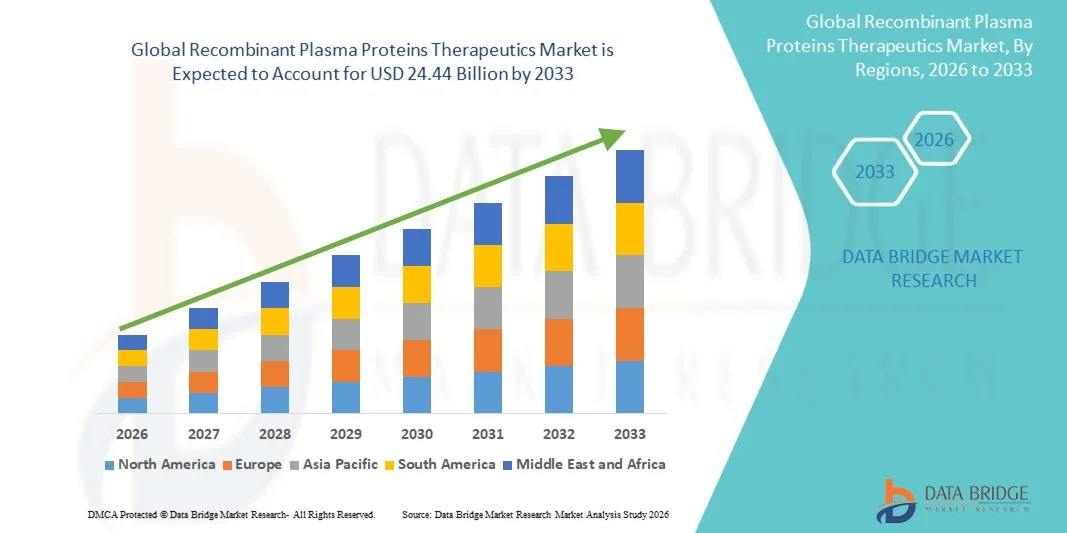
- The global recombinant plasma proteins therapeutics market size was valued at USD 16.42 billion in 2025 and is expected to reach USD 24.44 billion by 2033, at a CAGR of 5.10% during the forecast period
- The market growth is largely fueled by the increasing prevalence of rare and chronic disorders such as hemophilia and immunodeficiency diseases, along with growing advancements in recombinant DNA technology, leading to enhanced development and adoption of recombinant plasma protein therapeutics across healthcare settings
- Furthermore, rising demand for safe, effective, and pathogen-free therapeutic alternatives, along with increasing preference for recombinant products over plasma-derived therapies, is establishing recombinant plasma proteins as a preferred treatment option. These converging factors are accelerating the uptake of Recombinant Plasma Proteins Therapeutics solutions, thereby significantly boosting the industry's growth
Recombinant Plasma Proteins Therapeutics Market Analysis
- Recombinant plasma proteins therapeutics, offering advanced biologic treatment options for conditions such as hemophilia, immune deficiencies, and other rare disorders, are increasingly vital components of modern healthcare systems across both developed and emerging regions due to their high efficacy, safety profile, and reduced risk of pathogen transmission compared to plasma-derived products
- The escalating demand for recombinant plasma proteins therapeutics is primarily fueled by the rising prevalence of rare genetic disorders, increasing adoption of recombinant technologies, growing focus on targeted therapies, and a strong preference for safer and more effective biologic treatment alternatives
- North America dominated the recombinant plasma proteins therapeutics market with the largest revenue share of 45.0% in 2025, characterized by advanced healthcare infrastructure, high healthcare expenditure, strong presence of key biopharmaceutical companies, and significant adoption of recombinant therapies, with the U.S. experiencing substantial growth driven by continuous innovation and increasing diagnosis rates of rare disorders
- Asia-Pacific is expected to be the fastest growing region in the recombinant plasma proteins therapeutics market during the forecast period due to improving healthcare infrastructure, rising awareness of rare diseases, increasing healthcare spending, and expanding access to advanced biologic treatments
- The intravenous segment dominated the largest market revenue share of 61.8% in 2025, driven by its effectiveness in delivering rapid therapeutic action. Intravenous administration is widely used in acute bleeding episodes
Report Scope and Recombinant Plasma Proteins Therapeutics Market Segmentation
|
Attributes |
Recombinant Plasma Proteins Therapeutics Key Market Insights |
|
Segments Covered |
|
|
Countries Covered |
North America
Europe
Asia-Pacific
Middle East and Africa
South America
|
|
Key Market Players |
|
|
Market Opportunities |
|
|
Value Added Data Infosets |
In addition to the insights on market scenarios such as market value, growth rate, segmentation, geographical coverage, and major players, the market reports curated by the Data Bridge Market Research also include in-depth expert analysis, patient epidemiology, pipeline analysis, pricing analysis, and regulatory framework. |
Recombinant Plasma Proteins Therapeutics Market Trends
“Rising Adoption of Biologic Therapies and Advanced Protein Engineering”
- A significant and accelerating trend in the global recombinant plasma proteins therapeutics market is the increasing adoption of biologic therapies and advancements in recombinant DNA technology, enabling the development of safer and more effective plasma-derived protein alternatives
- For instance, recombinant clotting factors and albumin products are being widely adopted to treat conditions such as hemophilia and immune deficiencies, reducing reliance on human plasma donations and minimizing risks associated with blood-borne infections
- Continuous innovations in protein engineering and expression systems are improving product efficacy, stability, and half-life, thereby enhancing patient outcomes and reducing dosing frequency
- In addition, growing research in next-generation therapeutics, including long-acting recombinant proteins and personalized medicine approaches, is further transforming treatment paradigms
- The increasing focus on rare disease management and orphan drug development is also driving demand for recombinant plasma proteins globally
- This trend towards technologically advanced, safe, and scalable therapeutic solutions is significantly reshaping the global treatment landscape and expanding the market potential
Recombinant Plasma Proteins Therapeutics Market Dynamics
Driver
“Increasing Prevalence of Rare Diseases and Demand for Safer Therapeutics”
- The rising prevalence of rare genetic disorders such as hemophilia, alpha-1 antitrypsin deficiency, and primary immunodeficiency diseases is a major driver for the recombinant plasma proteins therapeutics market
- For instance, increasing global diagnosis rates of hemophilia have led to higher adoption of recombinant clotting factors, as they offer improved safety profiles compared to plasma-derived alternatives
- Growing awareness among healthcare professionals and patients regarding the benefits of recombinant therapies, including reduced risk of pathogen transmission, is further accelerating market growth
- Moreover, strong investments in biotechnology research and supportive regulatory frameworks for orphan drugs are encouraging the development and commercialization of innovative recombinant protein therapies
- The expansion of healthcare infrastructure and improved access to advanced biologics in emerging economies are also contributing to the increased adoption of these treatments
Restraint/Challenge
“High Production Costs and Limited Accessibility in Developing Regions”
- The high cost associated with the development and manufacturing of recombinant plasma proteins remains a significant challenge for market growth
- For instance, recombinant therapies for hemophilia are often expensive due to complex biotechnological processes, limiting their affordability and accessibility in low- and middle-income countries
- In addition, stringent regulatory requirements and lengthy approval processes can delay product launches and increase overall development costs for manufacturers
- Limited reimbursement coverage in certain regions and disparities in healthcare infrastructure further restrict patient access to these advanced therapies
- Furthermore, competition from plasma-derived products in cost-sensitive markets continues to pose a barrier to widespread adoption
- Addressing these challenges through cost optimization, biosimilar development, and improved healthcare access will be critical for sustaining long-term market growth
Recombinant Plasma Proteins Therapeutics Market Scope
The market is segmented on the basis of drug class, cell line, indication, route of administration, and end users.
• By Drug Class
On the basis of drug class, the Global Recombinant Plasma Proteins Therapeutics market is segmented into recombinant coagulation factors and human C1 esterase inhibitor. The recombinant coagulation factors segment dominated the largest market revenue share of 58.4% in 2025, driven by their widespread use in the treatment of bleeding disorders such as hemophilia. Increasing prevalence of hemophilia A and B globally significantly supports demand. These therapies offer improved safety profiles compared to plasma-derived alternatives. Growing awareness regarding early diagnosis of bleeding disorders enhances treatment adoption. Technological advancements in recombinant DNA technology improve product efficacy. Increasing government support for rare disease treatment boosts accessibility. Expansion of prophylactic treatment approaches further strengthens demand. Rising healthcare expenditure supports availability in developed regions. Strong pipeline of next-generation coagulation therapies drives innovation. Increasing patient preference for safer biologics enhances adoption. These factors collectively ensure dominance of recombinant coagulation factors segment.
The human C1 esterase inhibitor segment is expected to witness the fastest CAGR of 9.7% from 2026 to 2033, driven by increasing cases of hereditary angioedema (HAE). Rising awareness about rare genetic disorders supports diagnosis rates. Growing availability of targeted biologic therapies boosts adoption. Increasing investment in rare disease research strengthens market growth. Advancements in recombinant production technologies improve treatment outcomes. Expansion of clinical trials for novel inhibitors enhances pipeline strength. Rising healthcare infrastructure in emerging markets supports accessibility. Favorable regulatory approvals accelerate product launches. Increasing patient support programs improve treatment adherence. Growing focus on precision medicine further boosts demand. These factors position human C1 esterase inhibitor as the fastest-growing segment.
• By Cell Line
On the basis of cell line, the market is segmented into Chinese hamster ovary (CHO) cell line, baby hamster kidney (BHK) cell line, human embryonic kidney (HEK) cell line, and others. The Chinese hamster ovary (CHO) cell line segment held the largest market revenue share of 49.6% in 2025, driven by its extensive use in biopharmaceutical manufacturing. CHO cells provide high protein yield and scalability advantages. Increasing demand for biologics supports widespread adoption. Strong regulatory acceptance of CHO-based products enhances market confidence. Technological advancements in cell engineering improve efficiency. Growing investment in biologics production facilities boosts demand. CHO systems offer consistent quality and stability in protein expression. Expansion of contract manufacturing organizations supports usage. Increasing global demand for recombinant therapies strengthens growth. Continuous innovation in cell culture technologies enhances productivity. These factors ensure dominance of CHO cell line segment.
The human embryonic kidney (HEK) cell line segment is expected to witness the fastest CAGR of 10.3% from 2026 to 2033, driven by its ability to produce complex human-like proteins. Increasing demand for advanced biologics supports growth. HEK cells offer superior post-translational modifications enhancing therapeutic efficacy. Rising adoption in gene therapy and protein expression boosts demand. Expansion of precision medicine applications strengthens usage. Growing research activities in cell-based therapies support growth. Increasing investments in advanced biotechnology platforms enhance adoption. HEK systems are gaining traction in clinical-stage production. Technological advancements improve scalability and efficiency. These factors position HEK cell line as the fastest-growing segment.
• By Indication
On the basis of indication, the market is segmented into hemophilia A, hemophilia B, von Willebrand disease, and others. The hemophilia A segment accounted for the largest market revenue share of 45.2% in 2025, driven by its higher prevalence compared to other bleeding disorders. Increasing awareness and early diagnosis support treatment demand. Availability of recombinant factor VIII therapies enhances adoption. Growing government funding for hemophilia care boosts accessibility. Expansion of prophylactic treatment approaches improves patient outcomes. Rising number of specialized treatment centers supports growth. Continuous innovation in extended half-life therapies enhances compliance. Increasing patient support programs strengthen adherence. Rising healthcare expenditure globally supports treatment availability. These factors collectively ensure dominance of hemophilia A segment.
The von Willebrand disease segment is expected to witness the fastest CAGR of 9.5% from 2026 to 2033, driven by increasing diagnosis rates and awareness. Growing prevalence of the disease supports demand for treatment options. Advancements in diagnostic technologies improve detection rates. Increasing availability of targeted recombinant therapies boosts adoption. Rising healthcare access in emerging markets supports growth. Expansion of clinical research enhances treatment options. Increasing physician awareness strengthens diagnosis and treatment rates. Improved patient education programs boost compliance. Growing focus on rare disease management supports market expansion. These factors position von Willebrand disease as the fastest-growing segment.
• By Route of Administration
On the basis of route of administration, the market is segmented into intramuscular, subcutaneous, and intravenous. The intravenous segment dominated the largest market revenue share of 61.8% in 2025, driven by its effectiveness in delivering rapid therapeutic action. Intravenous administration is widely used in acute bleeding episodes. Hospitals prefer IV route for controlled and immediate treatment. Increasing number of hospital-based treatments supports demand. Availability of established IV-based recombinant therapies enhances adoption. Growing use in emergency settings further strengthens growth. High bioavailability of intravenous drugs ensures better outcomes. Increasing clinical preference for IV administration boosts demand. Expansion of infusion therapy centers supports usage. These factors ensure dominance of intravenous segment.
The subcutaneous segment is expected to witness the fastest CAGR of 10.8% from 2026 to 2033, driven by increasing preference for convenient and self-administration options. Subcutaneous therapies reduce hospital visits and improve patient compliance. Growing demand for home-based treatment supports adoption. Technological advancements in drug delivery systems enhance usability. Increasing development of long-acting formulations boosts growth. Rising awareness of patient-centric care supports demand. Expansion of telehealth monitoring improves treatment management. Increasing adoption in chronic therapy further strengthens growth. These factors position subcutaneous route as the fastest-growing segment.
• By End Users
On the basis of end users, the market is segmented into hospitals, specialty clinics, and others. The hospitals segment accounted for the largest market revenue share of 54.1% in 2025, driven by availability of advanced healthcare infrastructure and skilled professionals. Hospitals handle complex cases requiring intensive monitoring and treatment. Increasing number of hospital admissions for bleeding disorders supports demand. Availability of emergency care facilities enhances adoption. Strong presence of multidisciplinary healthcare teams improves outcomes. Rising government investments in hospital infrastructure boost growth. Integration of advanced biologics in hospital settings strengthens demand. Increasing insurance coverage improves affordability. Expansion of specialized treatment units supports adoption. These factors ensure dominance of hospitals segment.
The specialty clinics segment is expected to witness the fastest CAGR of 9.9% from 2026 to 2033, driven by increasing preference for specialized and targeted care. Specialty clinics offer focused treatment for rare bleeding disorders. Growing number of dedicated hemophilia treatment centers supports growth. Increasing patient preference for personalized care enhances adoption. Expansion of outpatient services improves accessibility. Rising awareness about specialized treatment options boosts demand. Technological advancements in diagnostics support clinic-based care. Increasing healthcare decentralization strengthens growth. Improved patient management and follow-up systems enhance outcomes. These factors position specialty clinics as the fastest-growing segment.
Recombinant Plasma Proteins Therapeutics Market Regional Analysis
- North America dominated the recombinant plasma proteins therapeutics market with the largest revenue share of approximately 45.0% in 2025, characterized by advanced healthcare infrastructure, high healthcare expenditure, strong presence of leading biopharmaceutical companies, and widespread adoption of recombinant therapies for rare and chronic disorders
- The region benefits from well-established diagnostic capabilities, favorable reimbursement frameworks, and continuous innovation in biologics, which support the increasing use of recombinant plasma proteins in clinical setting
- This strong market position is further reinforced by rising diagnosis rates of rare diseases, increasing patient awareness, and the growing demand for safer, non-plasma-derived therapeutic alternatives across hospitals and specialty clinics
U.S. Recombinant Plasma Proteins Therapeutics Market Insight
The U.S. recombinant plasma proteins therapeutics market captured the largest revenue share within North America in 2025, driven by a strong biopharmaceutical ecosystem, extensive research and development activities, and high clinical adoption of advanced biologics. The country is witnessing substantial growth due to increasing prevalence and diagnosis of rare genetic disorders such as hemophilia and immunodeficiency diseases. Additionally, continuous innovation in recombinant technologies, presence of major industry players, and favorable regulatory support for orphan drugs are significantly contributing to market expansion.
Europe Recombinant Plasma Proteins Therapeutics Market Insight
The Europe recombinant plasma proteins therapeutics market is projected to expand at a considerable CAGR throughout the forecast period, primarily driven by strong healthcare systems, increasing focus on rare disease management, and growing adoption of advanced biologic therapies. Rising investments in life sciences research and supportive government initiatives are further accelerating the development and accessibility of recombinant plasma protein products across the region.
U.K. Recombinant Plasma Proteins Therapeutics Market Insight
The U.K. recombinant plasma proteins therapeutics market dominated the European region with a significant revenue share of approximately 40.2% in 2025, supported by advanced healthcare infrastructure, strong national screening programs, and high awareness regarding genetic disorders. The country is experiencing steady growth due to expanding access to genetic testing, early diagnosis initiatives, and strong backing from public healthcare systems, which promote the adoption of innovative recombinant therapies.
Germany Recombinant Plasma Proteins Therapeutics Market Insight
The Germany recombinant plasma proteins therapeutics market is expected to grow at the fastest CAGR in Europe, with a projected rate of around 9.1% during the forecast period. This growth is fueled by increasing investments in genomic and biopharmaceutical research, rising adoption of precision medicine, and strong reimbursement policies. Germany’s focus on technological innovation and advanced healthcare delivery systems is also supporting the increased use of recombinant plasma protein therapeutics.
Asia-Pacific Recombinant Plasma Proteins Therapeutics Market Insight
The Asia-Pacific recombinant plasma proteins therapeutics market is expected to register the fastest growth during the forecast period, driven by improving healthcare infrastructure, rising awareness of rare diseases, and increasing healthcare expenditure across emerging economies such as China and India. Expanding access to advanced biologic treatments, coupled with growing government initiatives to strengthen healthcare systems, is significantly boosting market growth in the region.
Japan Recombinant Plasma Proteins Therapeutics Market Insight
The Japan recombinant plasma proteins therapeutics market is gaining traction due to the country’s advanced healthcare system, strong focus on innovation, and increasing aging population. The demand for effective and safe biologic therapies is rising, particularly for chronic and rare diseases, supported by ongoing advancements in biotechnology and favorable regulatory frameworks.
China Recombinant Plasma Proteins Therapeutics Market Insight
The China recombinant plasma proteins therapeutics market accounted for the largest market share in Asia-Pacific in 2025, attributed to rapid expansion of the pharmaceutical and biotechnology sectors, increasing investments in healthcare infrastructure, and strong government support. The country is witnessing substantial growth driven by rising awareness and diagnosis of rare diseases, along with increasing demand for cost-effective and advanced recombinant therapeutic solutions.
Recombinant Plasma Proteins Therapeutics Market Share
The Recombinant Plasma Proteins Therapeutics industry is primarily led by well-established companies, including:
- CSL Limited (Australia)
- Takeda Pharmaceutical Company Limited (Japan)
- Pfizer Inc. (U.S.)
- F. Hoffmann-La Roche Ltd (Switzerland)
- Sanofi S.A. (France)
- Bayer AG (Germany)
- Novo Nordisk A/S (Denmark)
- Octapharma AG (Switzerland)
- Grifols, S.A. (Spain)
- Kedrion S.p.A. (Italy)
- Biogen Inc. (U.S.)
- Amgen Inc. (U.S.)
- Shire (U.K.)
- BioMarin Pharmaceutical Inc. (U.S.)
- Spark Therapeutics, Inc. (U.S.)
- Sobi (Sweden)
- LFB Group (France)
- GC Pharma (South Korea)
- Mitsubishi Tanabe Pharma Corporation (Japan)
- China Biologic Products Holdings, Inc. (China)
Latest Developments in Global Recombinant Plasma Proteins Therapeutics Market
- In February 2021, Sanofi announced that the European Commission approved Cablivi for the treatment of acquired thrombotic thrombocytopenic purpura (aTTP), expanding access to recombinant plasma-derived therapeutic options across Europe. This approval strengthened the role of recombinant biologics in rare blood disorder treatment
- In December 2022, Takeda Pharmaceutical Company received U.S. FDA approval for ADZYNMA, the first recombinant ADAMTS13 protein therapy for congenital thrombotic thrombocytopenic purpura (cTTP). This marked a major advancement in recombinant plasma protein therapeutics targeting rare hematologic condition
- In June 2023, CSL Limited announced progress in its recombinant coagulation factor pipeline, focusing on next-generation therapies for hemophilia and bleeding disorders. This development highlights ongoing innovation in recombinant plasma protein alternatives to plasma-derived products
- In March 2024, Octapharma expanded its recombinant protein portfolio by advancing clinical development of novel coagulation factors and plasma protein therapies aimed at improving safety and reducing reliance on human plasma. This reflects a broader industry shift toward recombinant biologics
- In January 2025, Grifols announced continued investment in recombinant protein research and manufacturing technologies to enhance production efficiency and expand its plasma-derived and recombinant therapeutic portfolio. This move underscores growing industry focus on scalable recombinant alternatives
SKU-
Получите онлайн-доступ к отчету на первой в мире облачной платформе рыночной аналитики
- Интерактивная панель анализа данных
- Панель анализа компании для возможностей с высоким потенциалом роста
- Доступ аналитика-исследователя для настройки и запросов
- Анализ конкурентов с помощью интерактивной панели
- Последние новости, обновления и анализ тенденций
- Используйте возможности сравнительного анализа для комплексного отслеживания конкурентов
Методология исследования
Сбор данных и анализ базового года выполняются с использованием модулей сбора данных с большими размерами выборки. Этап включает получение рыночной информации или связанных данных из различных источников и стратегий. Он включает изучение и планирование всех данных, полученных из прошлого заранее. Он также охватывает изучение несоответствий информации, наблюдаемых в различных источниках информации. Рыночные данные анализируются и оцениваются с использованием статистических и последовательных моделей рынка. Кроме того, анализ доли рынка и анализ ключевых тенденций являются основными факторами успеха в отчете о рынке. Чтобы узнать больше, пожалуйста, запросите звонок аналитика или оставьте свой запрос.
Ключевой методологией исследования, используемой исследовательской группой DBMR, является триангуляция данных, которая включает в себя интеллектуальный анализ данных, анализ влияния переменных данных на рынок и первичную (отраслевую экспертную) проверку. Модели данных включают сетку позиционирования поставщиков, анализ временной линии рынка, обзор рынка и руководство, сетку позиционирования компании, патентный анализ, анализ цен, анализ доли рынка компании, стандарты измерения, глобальный и региональный анализ и анализ доли поставщика. Чтобы узнать больше о методологии исследования, отправьте запрос, чтобы поговорить с нашими отраслевыми экспертами.
Доступна настройка
Data Bridge Market Research является лидером в области передовых формативных исследований. Мы гордимся тем, что предоставляем нашим существующим и новым клиентам данные и анализ, которые соответствуют и подходят их целям. Отчет можно настроить, включив в него анализ ценовых тенденций целевых брендов, понимание рынка для дополнительных стран (запросите список стран), данные о результатах клинических испытаний, обзор литературы, обновленный анализ рынка и продуктовой базы. Анализ рынка целевых конкурентов можно проанализировать от анализа на основе технологий до стратегий портфеля рынка. Мы можем добавить столько конкурентов, о которых вам нужны данные в нужном вам формате и стиле данных. Наша команда аналитиков также может предоставить вам данные в сырых файлах Excel, сводных таблицах (книга фактов) или помочь вам в создании презентаций из наборов данных, доступных в отчете.