Global Sicca Syndrome (Sjogren) Market Segmentation, By Type (Primary Sjogren’s Syndrome, Secondary Sjogren’s Syndrome, and Others), Therapy Type (Biologics & Immunomodulators, Symptomatic Treatments, Small Molecule Drugs, and Others), Diagnostic (Serological Tests & Biomarkers, Imaging & Biopsy-Based Diagnostics, Point-of-Care / Rapid Diagnostics, and Others), End-User (Hospitals & Specialty Clinics, Outpatient / Ambulatory Care Centers, Home Healthcare & Telemedicine, Research & Clinical Trials, and Others)- Industry Trends and Forecast to 2033
Что такое синдром Сикки (Сёгрен) Размер рынка и темпы роста
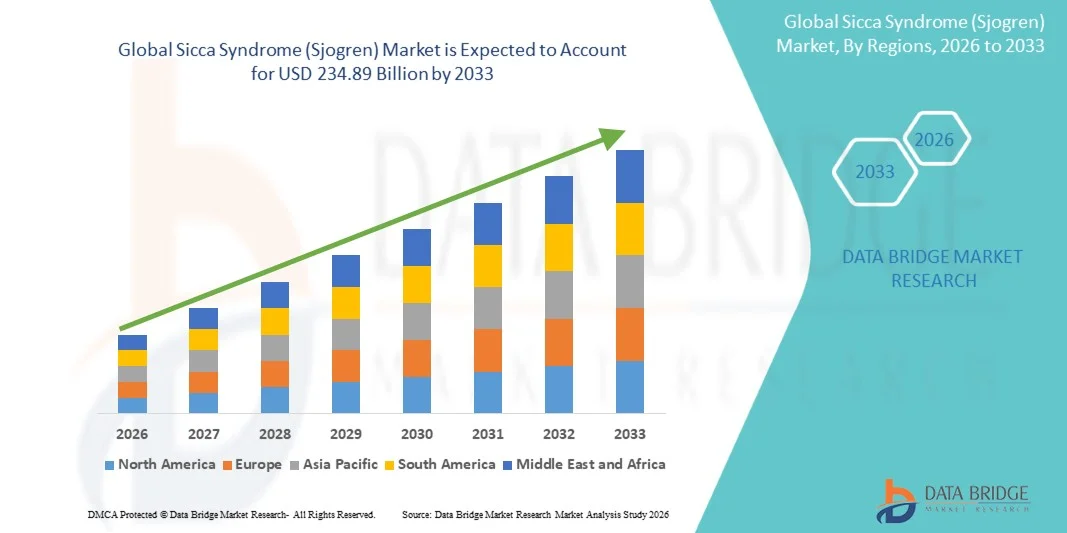
- Согласно анализу рынка Data Bridge Market Research, размер мирового рынка сикка (Sjogren) был оценен как174,30 млрд долларов в 2025 годуОжидается, что он достигнет234,89 млрд долларов к 2033 году, вCAGR 3,80%в течение прогнозируемого периода
- Рост рынка в значительной степени подпитывается увеличением распространенности и улучшением диагностики синдрома Сикки (Sjogren), наряду с технологическими достижениями в диагностических инструментах и подходах к лечению, что приводит к большей клинической осведомленности и более раннему вмешательству как в развитые, так и в новые системы здравоохранения. Растущая осведомленность и доступ к передовой диагностике приводят больше пациентов к путям ухода и расширяют рыночный спрос на решения для лечения заболеваний.
- Кроме того, растущий спрос пациентов на таргетную терапию, иммуномодуляторы и персонализированные варианты лечения, которые улучшают качество жизни и контроль симптомов, создает инновационные биологические и конвейерные методы лечения в качестве предпочтительных решений в аутоиммунной помощи. Эти конвергентные факторы — прогресс в терапевтическом развитии и растущая неудовлетворенная потребность в эффективных вмешательствах — ускоряют принятие решений по синдрому Сикки, тем самым значительно стимулируя рост промышленности.
Размер рынка и прогноз
- Глобальная рыночная стоимость (2025):$174,30 млрд.
- Ожидаемая рыночная стоимость (2033):$234,89 млрд.
- Прогноз CAGR (2026–2033):3.80%
Каковы основные причины синдрома Сикки (Sjogren)
- Фармацевтические и биологические методы лечения, предлагающие расширенные варианты лечения симптомов сухости глаз и сухости во рту, связанных с синдромом Сикки (Sjogren), становятся все более важными компонентами современной аутоиммунной помощи из-за их способности модулировать иммунные реакции, улучшать качество жизни пациентов и решать основные пути заболевания. Этот расширенный терапевтический фокус стимулирует более широкое клиническое внедрение и увеличение инвестиций в разработку новых методов лечения во всем мире.
- Растущий спрос на комплексные решения для лечения синдрома Сикки (Sjogren) в первую очередь подпитывается ростом распространенности аутоиммунных расстройств во всем мире, улучшением осведомленности о заболеваниях и расширением диагностических возможностей, которые поддерживают более раннее выявление и индивидуальные подходы к лечению. Эти факторы способствуют более широкому внедрению передовых терапевтических схем и диагностических услуг в системах здравоохранения.
- Северная Америка доминировала на рынке сикка-синдрома с наибольшей долей дохода примерно 38,50% в 2024-2025 годах, характеризующейся передовой инфраструктурой здравоохранения, высокой осведомленностью о заболеваниях, сильной клинической исследовательской деятельностью и надежным конвейером новых методов лечения, особенно в США. Регион продолжает лидировать в диагностике, доступе к лечению и клинических испытаниях для Шегрена.
- Ожидается, что Азиатско-Тихоокеанский регион станет одним из самых быстрорастущих регионов на рынке сикка-синдрома в течение прогнозируемого периода из-за увеличения инвестиций в здравоохранение, растущей осведомленности об аутоиммунных заболеваниях, расширения диагностических учреждений и роста расходов на здравоохранение на ключевых рынках, таких как Китай, Япония и Индия.
- Сегмент первичного синдрома Шегрена доминировал над крупнейшей долей рынка в 57,6% в 2025 году, что обусловлено более высокой распространенностью среди взрослых с аутоиммунными заболеваниями.
Область охвата и синдром Сикки (Sjogren) сегментация рынка
|
Атрибуты |
Синдром Сикки (Sjogren)Обзор рынка |
|
Сегменты покрыты |
|
|
Страны, охваченные |
Северная Америка
Европа
Азиатско-Тихоокеанский регион
Ближний Восток и Африка
Южная Америка
|
|
Ключевые игроки рынка |
• Аббви(США) |
|
Рыночные возможности |
|
|
Информационные наборы данных с добавленной стоимостью |
В дополнение к информации о рыночных сценариях, таких как рыночная стоимость, темпы роста, сегментация, географическое покрытие и основные игроки, рыночные отчеты, курируемые Data Bridge Market Research, также включают углубленный экспертный анализ, эпидемиологию пациентов, анализ трубопроводов, анализ цен и нормативную базу. |
Какова ключевая тенденция на рынке синдрома Сикки (Сегрен)
"Повышение внимания к ранней диагностике и осведомленности"
- Значительной тенденцией на мировом рынке сикка-синдрома является повышение внимания к ранней диагностике и осведомленности пациентов, поскольку отсроченная идентификация может привести к серьезным осложнениям, включая системное вовлечение органов.
- Например, в 2025 году несколько ведущих больниц в США и Европе инициировали стандартные протоколы скрининга анти-Ro/SSA и анти-La/SSB антител у пациентов с хроническим сухостью глаз и рта, что улучшило показатели раннего выявления.
- Медицинские учреждения внедряют передовые диагностические платформы, включая биопсию слюнных желез и лабораторные панели аутоантител, что позволяет клиницистам диагностировать даже атипичные случаи синдрома Шегрена.
- Кампании по информированию общественности такими организациями, как Фонд синдрома Шегрена и Европейский альянс ассоциаций ревматологов, все чаще информируют пациентов о таких симптомах, как усталость, боль в суставах и сухость, что приводит к более высоким самореференциям и проактивным консультациям.
- Медицинские конференции и программы CME, ориентированные на аутоиммунные заболевания, побуждают врачей распознавать ранние проявления, что способствует своевременной диагностике.
- Кроме того, технологические инновации, такие как методы визуализации для оценки слюнных желез, делают диагностические процедуры менее инвазивными и более удобными для пациентов, усиливая раннее клиническое вмешательство.
Каковы основные драйверы рынка синдрома Сикки (Sjogren)
водитель
«Повышение осведомленности о здоровье и безопасности среди пациентов и лиц, осуществляющих уход».
- Растущая распространенность аутоиммунных расстройств, включая синдром Сикки, продолжает оставаться основным фактором роста рынка, поскольку все больше пациентов нуждаются в специализированной диагностике и лечении.
- Например, популяционные исследования в Северной Америке и Европе показывают, что распространенность синдрома Шегрена колеблется между 0,5-1% взрослого населения, с более высокими показателями среди женщин в возрасте 40-60 лет.
- Увеличение расходов на здравоохранение в сочетании с расширением страхового покрытия в развитых и развивающихся странах позволяет большему количеству пациентов получить доступ к специализированной помощи и передовым методам лечения.
- Инвестиции в исследования и разработки фармацевтических компаний подпитывают инновации в новых вариантах лечения, таких как биологические препараты, нацеленные на B-клетки или ингибиторы малых молекул, расширяя терапевтические альтернативы для пациентов, устойчивых к стандартному уходу.
- Растущее понимание сопутствующих состояний, включая ревматоидный артрит, системную красную волчанку и расстройства щитовидной железы у пациентов Шегрена, стимулирует комплексные подходы к уходу, улучшая результаты и расширяя рыночный потенциал.
- Кроме того, сотрудничество между больницами, академическими учреждениями и группами по защите интересов пациентов увеличивает активность клинических испытаний, что не только генерирует новые данные, но и повышает осведомленность о возможностях лечения.
- Растущее внедрение программ лечения хронических заболеваний в таких регионах, как Северная Америка и Западная Европа, способствует регулярному мониторингу и раннему вмешательству, положительно влияя на рыночный спрос.
Сдержанность/вызов
"Ограниченная осведомленность, задержка диагностики и стоимость лечения"
- Несмотря на повышение осведомленности, отсроченная диагностика остается ключевой проблемой из-за неспецифических симптомов и отсутствия скрининга в первичной медико-санитарной помощи, что приводит к прогрессированию заболевания и системным осложнениям.
- Например, пациенты в Азиатско-Тихоокеанском регионе и Латинской Америке часто имеют прогрессирующие стадии заболевания, поскольку местные системы здравоохранения могут не иметь квалифицированных специалистов или диагностической инфраструктуры.
- Высокая стоимость передовых методов лечения, особенно биопрепаратов, ограничивает доступ к лечению в развивающихся странах или для незастрахованных пациентов, создавая неравенство в результатах лечения пациентов.
- Непоследовательные протоколы лечения и ограниченная стандартизация в разных регионах еще больше усложняют управление пациентами, влияя на доверие врачей и принятие новых методов лечения.
- Пробелы в информированности среди медицинских работников, особенно в сельских районах, способствуют недостаточной диагностике и плохому управлению, подчеркивая необходимость образовательных инициатив.
- Неблагоприятные эффекты длительной иммуносупрессивной терапии и опасения по поводу профилей безопасности также влияют на соответствие пациентов, потенциально ограничивая охват лечением.
- Преодоление этих проблем требует многогранных стратегий, включая повышение уровня образования врачей, программы поддержки пациентов, развитие доступной терапии и более широкий доступ к диагностическим инструментам, которые имеют решающее значение для долгосрочного расширения рынка.
Как сегментируется рынок синдрома Сикки (Sjogren)
Рынок сегментирован на основе типа, терапии, диагностики и конечных пользователей.
• По типу
В зависимости от типа, рынок синдрома Сикки (Sjogren) сегментирован на первичный синдром Шегрена, вторичный синдром Шегрена и другие. Сегмент первичного синдрома Шегрена доминировал на крупнейшей доле рынка в 57,6% в 2025 году, что обусловлено более высокой распространенностью среди взрослых с аутоиммунными заболеваниями. Этот сегмент выигрывает от ранней клинической осведомленности, установленных диагностических критериев и хорошо документированных протоколов лечения. Больницы и специализированные клиники предоставляют комплексную помощь, включая иммуномодулирующее лечение, симптоматическое лечение и долгосрочное наблюдение. Усыновление подкрепляется программами поддержки пациентов, правительственными инициативами в области здравоохранения и страхованием на ключевых рынках. Клинические рекомендации, рекомендующие стандартизированные планы мониторинга и лечения, расширяют использование. Фармацевтические инновации в биопрепаратах и малых молекулах еще больше усиливают спрос. Высокая приверженность пациентов в сочетании с передовой лабораторной диагностикой обеспечивает оптимальные результаты. Амбулаторная помощь и интеграция телемедицины улучшают непрерывность лечения. Инициативы по раннему выявлению, реестры редких заболеваний и образовательные кампании поддерживают проникновение на рынок. Расширение в развитых регионах и постепенное поглощение в развивающихся регионах усиливают доминирование.
Сегмент вторичного синдрома Шегрена, как ожидается, станет свидетелем самого быстрого CAGR в 13,2% с 2026 по 2033 год, что обусловлено растущим признанием синдрома Шегрена как сопутствующей болезни при других аутоиммунных заболеваниях, таких как ревматоидный артрит и волчанка. Повышение осведомленности среди врачей и пациентов облегчает раннее направление и лечение. Рост поддерживается достижениями в области таргетной терапии, иммуномодуляторов и комбинированных схем. Платформы домашнего ухода и телемедицины расширяют доступ пациентов, особенно в недостаточно обслуживаемых районах. Интеграция с электронными медицинскими записями и цифровым мониторингом улучшает управление и соблюдение. Исследования патофизиологии и редких подтипов способствуют более быстрому внедрению новых методов лечения. Государственные стимулы для редких аутоиммунных расстройств поддерживают расширение рынка. Программы страхования и возмещения уменьшают финансовое бремя пациентов. Государственные и частные партнерства финансируют клинические испытания и доступность терапии. Специализированные центры и амбулаторные клиники все чаще оснащены для лечения этих сложных случаев. Пропаганда пациентов и просветительские кампании усиливают охват. Развивающиеся рынки становятся свидетелями более широкого внедрения из-за растущей инфраструктуры здравоохранения.
• По типу терапии
На основе терапии рынок сегментирован на биопрепараты и иммуномодуляторы, бессимптомные методы лечения, маломолекулярные препараты и другие. Сегмент биопрепаратов и иммуномодуляторов занимал самую большую долю рынка в 49,3% в 2025 году, что обусловлено их доказанной эффективностью в борьбе с аутоиммунным повреждением тканей и снижением прогрессирования заболевания. Усыновление поддерживается клиническими рекомендациями, предпочтениями врача и больничными протоколами. Специализированные центры и больницы предоставляют услуги мониторинга, дозирования и инфузии. Страховое покрытие, государственное возмещение и программы помощи пациентам расширяют доступ. Высокий уровень внедрения в развитых странах подкрепляется сильной инфраструктурой здравоохранения. Интеграция с реестрами пациентов обеспечивает долгосрочный мониторинг безопасности. Клинические испытания, демонстрирующие эффективность и безопасность дальнейшего использования. Больничные аптеки поддерживают стабильное снабжение. Обучение пациентов преимуществам терапии обеспечивает соблюдение. Быстрые инновации в моноклональных антителах и иммунных модуляторах усиливают поглощение. Программы информирования об аутоиммунных заболеваниях способствуют раннему началу терапии. Непрерывное обучение медицинских работников способствует достижению оптимальных результатов.
Ожидается, что в сегменте симптоматического лечения будет наблюдаться самый быстрый CAGR 14,1% с 2026 по 2033 год, что обусловлено увеличением внимания к управлению качеством жизни, облегчению симптомов сухости глаз и сухости во рту и внебиржевой доступности. Пациенты предпочитают удобное домашнее лечение. Телемедицинские консультации, доступность онлайн-аптек и образование по самообслуживанию способствуют усыновлению. Расширение программ поддержки пациентов и инициатив по управлению симптомами способствуют росту. Развивающиеся рынки демонстрируют растущую осведомленность и спрос на неинвазивные методы лечения. Страховое покрытие для вспомогательного ухода повышает доступность. Сотрудничество между поставщиками медицинских услуг и фармацевтическими компаниями способствует распространению. Новые составы, мукоадгезивные гели и заменители слюны улучшают приверженность пациента. Интеграция с моделями управления хроническим уходом усиливает использование. Информационные кампании подчеркивают преимущества раннего вмешательства. Исследования комбинированной терапии способствуют более быстрому внедрению. Розничные аптечные каналы расширяют доступность, способствуя быстрому поглощению.
• Диагностика
На основе диагностики рынок сегментирован на серологические тесты и биомаркеры, визуализацию и биопсию, точечную / быструю диагностику и другие. Сегмент Серологических Тестов и Биомаркеров доминировал на рынке с наибольшей долей выручки в 52,8% в 2025 году, благодаря широкому использованию панелей аутоантител (например, анти-Ro/SSA и анти-La/SSB) для точной диагностики и мониторинга. Усыновлению способствуют больницы, специализированные клиники и диагностические лаборатории с передовыми иммунологическими возможностями. Ранняя и надежная диагностика стимулирует начало терапии, улучшая результаты лечения пациентов. Правительственные инициативы и страховые выплаты повышают доступность. Клинические рекомендации рекомендуют регулярное использование серологических биомаркеров для подозреваемых случаев. Интеграция с электронными медицинскими записями улучшает диагностическое отслеживание. Профессиональная подготовка обеспечивает стандартизацию и точность. Лабораторные сети поддерживают постоянное снабжение и качество. Информационные кампании обучают врачей протоколам тестирования. Исследования и инновации в биомаркерах расширяют возможности мониторинга прогрессирования заболеваний. Развивающиеся рынки все чаще используют серологическое тестирование. Пропаганда пациентов поощряет раннюю диагностику.
Ожидается, что сегмент «Точка заботы / быстрая диагностика» зарегистрирует самый быстрый CAGR в 15,3% с 2026 по 2033 год, что обусловлено спросом на удобные, домашние или амбулаторные решения для тестирования. Быстрые наборы для обнаружения антител и анализы слюны снижают зависимость от больницы. Платформы телемедицины и онлайн-аптеки поддерживают внедрение тестирования на дому. Расширение диагностических стартапов и интеграция технологий ускоряет рост. Программы страхования и возмещения улучшают доступность. Усыновление поддерживается учебными программами для врачей и лиц, осуществляющих уход. Развивающиеся рынки демонстрируют растущее признание из-за удобства и снижения затрат. Интеграция с управлением хроническими заболеваниями улучшает мониторинг. Приверженность пациентов и показатели наблюдения увеличиваются с быстрой диагностикой. Регулятивные разрешения на новые устройства для пунктов обслуживания еще больше способствуют принятию. Сотрудничество с поставщиками медицинских услуг обеспечивает охват дистрибуции. Информационные кампании способствуют раннему выявлению и своевременному началу лечения.
• Конечный пользователь
На базе конечных пользователей рынок сегментирован на больницы и специализированные клиники, амбулаторные / амбулаторные центры, домашняя медицина и телемедицина, исследования и клинические испытания и другие. Сегмент Больницы и специализированные клиники составил самую большую долю дохода в 59,4% в 2025 году, что обусловлено доступом к иммуномодулирующей терапии, квалифицированным специалистам и лабораторной инфраструктуре. Больницы предоставляют комплексный мониторинг пациентов, инфузионные услуги и неотложную помощь. Усыновление подкрепляется страховым покрытием, государственными программами и клиническими рекомендациями. Больничные аптеки поддерживают бесперебойное снабжение. Высокая распространенность тяжелых аутоиммунных случаев повышает спрос. Интеграция с телемедициной и амбулаторными наблюдениями улучшает управление пациентами. Профессиональное обучение обеспечивает стандартизированный уход. Государственные инициативы в области здравоохранения и программы защиты пациентов поддерживают рост. Развитая инфраструктура в развитых регионах усиливает доминирование на рынке. Непрерывные клинические исследования обеспечивают принятие основанных на фактических данных протоколов.
Ожидается, что сегмент Home Healthcare & Telemedicine продемонстрирует самый быстрый CAGR в 14,7% с 2026 по 2033 год, что обусловлено растущим спросом на решения для ухода, удобства и удаленного мониторинга. Домашняя инфузионная терапия, носимые устройства мониторинга и телеконсультации улучшают соответствие. Расширение цифровых платформ здравоохранения облегчает управление рецептами и соблюдение терапии. Образовательные и просветительские программы пациентов повышают уровень их принятия. Развивающиеся рынки постепенно внедряют услуги по уходу на дому. Страховое возмещение и государственная поддержка повышают доступность. Интеграция с электронными медицинскими картами повышает непрерывность оказания медицинской помощи. Сотрудничество с поставщиками медицинских услуг обеспечивает своевременную доставку терапии. Технологические инновации в устройствах дистанционного мониторинга усиливают рост. Модели амбулаторного и домашнего ухода снижают зависимость от больницы. Партнерство между поставщиками медицинских услуг и фармацевтическими компаниями расширяет охват услуг. Поддержка клинических испытаний и исследовательские инициативы способствуют усыновлению в учреждениях по уходу на дому.
В каком регионе находится наибольшая доля рынка сикка-синдрома
- Северная Америка доминировала на рынке сикка-синдрома (sjogren) с самой большой долей дохода около 38,50% в 2024-2025 годах, характеризующейся передовой инфраструктурой здравоохранения, высокой осведомленностью о заболеваниях, сильной клинической исследовательской деятельностью и надежным конвейером новых методов лечения.
- Пациенты и поставщики медицинских услуг в регионе пользуются программами ранней диагностики, междисциплинарной помощью и доступом к инновационной биологической терапии.
- Широкое распространение также поддерживается устоявшимися системами здравоохранения, обширными сетями клинических испытаний и акцентом на подходах к лечению, ориентированных на пациента, что делает Северную Америку лидером в диагностике, доступе к лечению и клинических исследованиях Шегрена.
Синдром Сикки в США (Sjogren) Market Insight
Американский рынок сикка-синдрома (sjogren) завоевал самую большую долю доходов в Северной Америке, чему способствовало широкое внедрение передовых диагностических инструментов, инновационных биологических методов лечения и сильных программ защиты пациентов. Пациенты все чаще получают пользу от раннего скрининга, своевременной диагностики и доступа к комплексной помощи. Мультидисциплинарные модели ухода, объединяющие ревматологию, офтальмологию и специальности здоровья полости рта, улучшают общее управление заболеваниями. Кроме того, текущие клинические испытания и инвестиции в новые методы лечения расширяют возможности лечения для умеренных и тяжелых случаев, в то время как подходы точной медицины улучшают индивидуальный уход за пациентами.
Синдром европейской сикки (Sjogren) Market Insight
Прогнозируется, что рынок сикка-синдрома в Европе (sjogren) будет расширяться при существенном CAGR в течение прогнозируемого периода, что обусловлено строгими клиническими рекомендациями, растущей осведомленностью о заболеваниях и улучшением инфраструктуры здравоохранения. Европейские пациенты получают пользу от структурированных путей ухода и программ ранней диагностики, которые способствуют своевременному началу терапии. Растущая урбанизация и обучение пациентов способствуют активному лечению заболеваний. В таких странах, как Германия, Франция и Италия, наблюдается более широкое внедрение биологических и целевых методов лечения из-за надежных систем здравоохранения и страхового покрытия.
Синдром Сикки в Великобритании (Sjogren) Market Insight
Ожидается, что рынок синдрома Сикки в Великобритании будет расти при заметном CAGR, что обусловлено повышением осведомленности о болезни и инициативами по ранней диагностике. Медицинские работники продвигают регулярные программы скрининга и междисциплинарные подходы к лечению. Опасения по поводу аутоиммунных осложнений и нелеченных заболеваний побуждают пациентов обращаться за специализированной помощью. Сильная инфраструктура электронного здравоохранения и телемедицины в стране облегчает наблюдение за пациентами и доступ к передовым методам лечения.
Синдром немецкой сикки (Sjogren) Market Insight
Ожидается, что рынок сикка-синдрома в Германии будет расширяться при значительном CAGR, чему способствует повышение осведомленности об аутоиммунных расстройствах и доступ к передовым решениям в области здравоохранения. Надежная инфраструктура здравоохранения Германии, в сочетании с сильным акцентом на исследования и разработки, поддерживает раннюю диагностику и расширенное внедрение лечения. Пациенты получают пользу от междисциплинарных сетей помощи и доступа к биологической терапии, в то время как точная медицина и ориентированные на пациента подходы улучшают долгосрочные результаты.
Азиатско-тихоокеанский синдром сикки (Sjogren)
Азиатско-тихоокеанский рынок сикка-синдрома (sjogren) будет расти на самом быстром CAGR 24% в течение 2026–2033 годов, что обусловлено увеличением инвестиций в здравоохранение, повышением осведомленности о заболеваниях и расширением доступа к передовым диагностическим и терапевтическим решениям. Такие страны, как Китай, Япония и Индия расширяют инфраструктуру здравоохранения, улучшая доступность диагностических тестов и специализированной помощи. Правительственные инициативы по повышению осведомленности об аутоиммунных заболеваниях способствуют раннему выявлению и лечению. Растущие располагаемые доходы и страховое покрытие на ключевых рынках APAC способствуют внедрению биологических методов лечения, в то время как продолжающиеся клинические испытания ускоряют исследования новых методов лечения.
Синдром японской сикки (Sjogren) Market Insight
Рост рынка сикка в Японии поддерживается передовой системой здравоохранения, высокой осведомленностью о заболеваниях и старением населения. Пациенты все чаще обращаются за специализированной помощью для лечения симптомов, а программы ранней диагностики способствуют своевременному началу лечения. Продолжающиеся исследования в области биологии и иммунотерапии расширяют возможности лечения. Модели профилактической помощи, ориентированные на пациента, улучшают долгосрочные результаты и уменьшают осложнения.
Синдром китайской сикки (Sjogren) Market Insight
Китайский рынок синдрома Сикка (sjogren) составил самую большую долю доходов в Азиатско-Тихоокеанском регионе в 2025 году, что связано с урбанизацией, ростом населения среднего класса и высокой осведомленностью о заболеваниях. Правительство и медицинские учреждения продвигают инициативы по раннему скринингу и обучению пациентов. Увеличение расходов на здравоохранение, улучшение страхового покрытия и расширение доступа к специализированной помощи позволяют быстрее принимать диагностические и терапевтические вмешательства. Крупные отечественные фармацевтические компании и международное сотрудничество стимулируют исследования и разработку целевых методов лечения, делая эффективное лечение более доступным.
Каковы основные компании на рынке синдрома Сикки (Sjogren)
Индустрия синдрома Сикки (Сёгрен) в основном возглавляется хорошо зарекомендовавшими себя компаниями, в том числе:
• AbbVie (США)
•GlaxoSmithKline (Великобритания)
• Санофи (Франция)
Pfizer (США)
•Bristol-Myers Squibb (США)
Эли Лилли (США)
• Novartis (Швейцария)
• AstraZeneca (Великобритания)
Regeneron Pharmaceuticals (США)
•Takeda Pharmaceutical (Япония)
Santen Pharmaceutical (Япония)
• Viatris (США)
• Биоген (США)
Johnson & Johnson (США)
•Teva Pharmaceutical Industries (Израиль)
Otsuka Pharmaceutical (Япония)
Mitsubishi Tanabe Pharma (Япония)
Chugai Pharmaceutical (Япония)
Shionogi & Co. (Япония)
Каковы последние события на рынке синдрома Сикки (Сегрен)
- В январе 2024 года в отчете DelveInsight’s Sjogren’s Syndrome Market Insights подчеркивалось, что глобальный рынок синдрома Сикки (Sjogren’s) укрепляется благодаря новым методам лечения, таким как Dazodalibep (VIB4920), Nipocalimab, VAY736 и другим, разрабатываемым крупными компаниями, включая Novartis, Amgen и Johnson & Johnson.
- В июне 2024 года клинические данные исследования фазы 2 DAHLIAS компании Johnson & Johnson показали, что нипокалимаб продемонстрировал статистически значимое и клинически значимое улучшение симптомов болезни Шегрена на 24 неделе по сравнению с плацебо, что указывает на потенциал для модифицирующей болезни терапии в состоянии с ограниченными вариантами лечения.
- В июле 2025 года ResearchAndMarkets.com опубликовал отчет о клиническом исследовании синдрома Сикки (Sjogren), охватывающий глобальный ландшафт клинических испытаний, включая текущие и предстоящие исследования 2/3 фазы новых биологических препаратов и иммунотерапии такими компаниями, как ICON, AbbVie, Amgen, IQVIA и Parexel при болезни Шегрена.
- В октябре 2025 года данные испытаний фазы 3 NEPTUNUS-1 и NEPTUNUS-2 для ианалумаба Novartis показали клинически значимое снижение активности болезни Шегрена с планами представить эти результаты регулирующим органам во всем мире, позиционируя ианалумаб как одну из первых целевых системных терапий для болезни.
- В октябре 2025 года результаты клинического исследования 3 фазы телотацицепта (RemeGen/Vor Bio) в Китае показали, что телотацицепт достиг своей первичной конечной точки для снижения активности заболевания по сравнению с плацебо у пациентов с первичным синдромом Шегрена, что является важной клинической вехой в поисках эффективных системных методов лечения.
- В ноябре 2025 года было сообщено о нескольких мероприятиях по трубопроводу фазы 3: Novartis инициировал клиническое исследование ианалумаба при синдроме активного Шегрена, Bristol-Myers Squibb начал исследование, оценивающее деукравацитиниб у взрослых пациентов, а Amgen начал исследование фазы 3 дазодалибепа, еще больше укрепив трубопровод поздней стадии для болезни.
- В ноябре 2025 года рыночные прогнозы показали, что глобальный рынок терапии синдрома Шегрена неуклонно расширяется и, по прогнозам, продолжит расти до 2035 года, что обусловлено ростом распространенности заболеваний, внедрением передовой диагностики и инвестициями в биологическую и целевую терапию.
SKU-
Получите онлайн-доступ к отчету на первой в мире облачной платформе рыночной аналитики
- Интерактивная панель анализа данных
- Панель анализа компании для возможностей с высоким потенциалом роста
- Доступ аналитика-исследователя для настройки и запросов
- Анализ конкурентов с помощью интерактивной панели
- Последние новости, обновления и анализ тенденций
- Используйте возможности сравнительного анализа для комплексного отслеживания конкурентов
Методология исследования
Сбор данных и анализ базового года выполняются с использованием модулей сбора данных с большими размерами выборки. Этап включает получение рыночной информации или связанных данных из различных источников и стратегий. Он включает изучение и планирование всех данных, полученных из прошлого заранее. Он также охватывает изучение несоответствий информации, наблюдаемых в различных источниках информации. Рыночные данные анализируются и оцениваются с использованием статистических и последовательных моделей рынка. Кроме того, анализ доли рынка и анализ ключевых тенденций являются основными факторами успеха в отчете о рынке. Чтобы узнать больше, пожалуйста, запросите звонок аналитика или оставьте свой запрос.
Ключевой методологией исследования, используемой исследовательской группой DBMR, является триангуляция данных, которая включает в себя интеллектуальный анализ данных, анализ влияния переменных данных на рынок и первичную (отраслевую экспертную) проверку. Модели данных включают сетку позиционирования поставщиков, анализ временной линии рынка, обзор рынка и руководство, сетку позиционирования компании, патентный анализ, анализ цен, анализ доли рынка компании, стандарты измерения, глобальный и региональный анализ и анализ доли поставщика. Чтобы узнать больше о методологии исследования, отправьте запрос, чтобы поговорить с нашими отраслевыми экспертами.
Доступна настройка
Data Bridge Market Research является лидером в области передовых формативных исследований. Мы гордимся тем, что предоставляем нашим существующим и новым клиентам данные и анализ, которые соответствуют и подходят их целям. Отчет можно настроить, включив в него анализ ценовых тенденций целевых брендов, понимание рынка для дополнительных стран (запросите список стран), данные о результатах клинических испытаний, обзор литературы, обновленный анализ рынка и продуктовой базы. Анализ рынка целевых конкурентов можно проанализировать от анализа на основе технологий до стратегий портфеля рынка. Мы можем добавить столько конкурентов, о которых вам нужны данные в нужном вам формате и стиле данных. Наша команда аналитиков также может предоставить вам данные в сырых файлах Excel, сводных таблицах (книга фактов) или помочь вам в создании презентаций из наборов данных, доступных в отчете.