


Global Silica Analyzer Market Segmentation, By Type (Equipment and Consumables), Industry (Semiconductor and Power Generation) - Industry Trends and Forecast to 2033
Каков размер и темпы роста мирового рынка силика-анализаторов
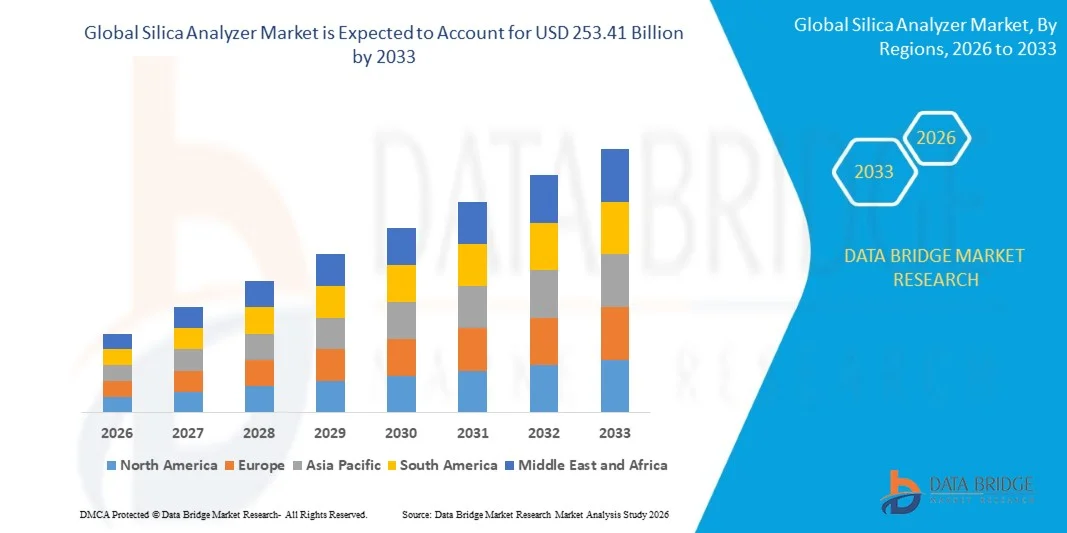
- Согласно анализу Data Bridge Market Research, глобальный размер рынка кремнеземного анализатора был оценен как139,99 млрд долларов в 2025 годуОжидается, что он достигнет253,41 млрд долларов к 2033 году, вCAGR 7,70%в течение прогнозируемого периода
- Рост спроса на электроэнергию станет ключевым элементом расширения рынка. Рынок анализаторов кремнезема также обусловлен такими факторами, как удобный сенсорный интерфейс, надежность и простота. В дополнение к этому анализаторы кремнезема просты в эксплуатации, установке и настройке.
- Другие преимущества анализаторов кремнезема включают автоматическую калибровку оборудования, автоматическое обнуление приборов после каждого испытания, непрерывное отображение концентрации кремнезема и времени измерения. Все эти факторы расширят рынок анализаторов кремнезема
Размер рынка и прогноз
Глобальная рыночная стоимость (2025):139,99 млрд долларов
Ожидаемая рыночная стоимость (2033):253,41 млрд долларов США
Прогноз CAGR (2026–2033):7.70%
Каковы основные выводы рынка анализаторов кремния
- Растущий спрос на оборудование из различных отраслей конечного использования, таких как производство электроэнергии и очистка воды, будет играть важную роль в росте рынка анализаторов кремнезема. Еще одним важным фактором, который смягчит темпы роста рынка анализаторов кремнезема, является растущая важность точного измерения кремнезема в круговороте воды для оптимизации эффективности электростанции.
- Более того, растущее внедрение анализаторов кремнезема из-за растущей потребности в энергии создаст благоприятные возможности для роста рынка. Кроме того, развитие технологий и неиспользованного потенциала на рынке анализаторов кремнезема будет выступать в качестве драйвера рынка и еще больше увеличит новые возможности в указанный выше прогнозный период.
- Азиатско-Тихоокеанский регион доминировал на рынке анализаторов кремнезема с долей выручки 32,34% в 2025 году, что обусловлено быстрым расширением полупроводников, ведущими мировыми экосистемами производства электроники, сильной государственной поддержкой цифровых инноваций и широким внедрением встроенных систем в Китае, Японии, Индии, Южной Корее и Юго-Восточной Азии.
- По прогнозам, Северная Америка зарегистрирует самый быстрый CAGR в 9,67% с 2026 по 2033 год, во главе с США и Канадой. Рост обусловлен расширением дизайна полупроводников, разработкой встроенных систем, производством электроники и все более широким внедрением систем на основе FPGA, микроконтроллеров и высокоскоростных протоколов связи.
- Сегмент оборудования доминировал на рынке с долей 61,2% в 2025 году, чему способствовало широкое внедрение высокоточных анализаторов на промышленных предприятиях, водоочистных сооружениях и полупроводниковых научно-исследовательских лабораториях.
Сфера охвата и сегментация рынка анализатора силика
|
Атрибуты |
Анализатор Silica Key Market Insights |
|
Сегменты покрыты |
|
|
Страны, охваченные |
Северная Америка
Европа
Азиатско-Тихоокеанский регион
Ближний Восток и Африка
Южная Америка
|
|
Ключевые игроки рынка |
|
|
Рыночные возможности |
|
|
Информационные наборы данных с добавленной стоимостью |
В дополнение к информации о рыночных сценариях, таких как рыночная стоимость, темпы роста, сегментация, географическое покрытие и основные игроки, рыночные отчеты, курируемые Data Bridge Market Research, также включают углубленный экспертный анализ, анализ цен, анализ доли бренда, опрос потребителей, анализ демографии, анализ цепочки поставок, анализ цепочки создания стоимости, обзор сырья / расходных материалов, критерии выбора поставщиков, анализ PESTLE, анализ Porter и нормативную базу. |
Каковы основные тенденции на рынке анализаторов кремния
"Увеличение перехода к компактным, в режиме реального времени и автоматизированным анализаторам кремнезема"
- Рынок анализаторов кремнезема демонстрирует сильное внедрение компактных, портативных и цифровых интегрированных анализаторов, предназначенных для поддержки мониторинга очистки воды, контроля промышленных процессов и лабораторных испытаний качества.
- Производители запускают многопараметрические, высокоточные и программные анализаторы, которые обеспечивают автоматическую калибровку, мониторинг в реальном времени, регистрацию облачных данных и совместимость с системами SCADA.
- Растущий спрос на экономически эффективные, развертываемые на местах и простые в эксплуатации анализаторы стимулирует использование в водохозяйственных предприятиях, промышленных объектах, исследовательских лабораториях и агентствах по мониторингу окружающей среды.
- Например, такие компании, как HORIBA, Thermo Fisher Scientific, Hach и Endress+ Hauser обновил свои портфели Silica Analyzer с улучшенной чувствительностью обнаружения, более широкими диапазонами измерений и функциями удаленного мониторинга с поддержкой IoT
- Увеличение потребности в быстром, точном и непрерывном измерении кремнезема ускоряет переход к компактным, сетевым и автоматизированным анализаторам.
- По мере того, как промышленные процессы становятся более автоматизированными, а экологические правила более строгими, анализаторы кремнезема будут оставаться критически важными для соответствия, операционной эффективности и прогнозного обслуживания.
Каковы основные драйверы рынка Silica Analyzer
- Растущий спрос на точные, надежные и автоматизированные решения для измерения кремнезема в водоочистке, производстве электроэнергии, химической обработке и фармацевтической промышленности
- Например, в 2025 году ведущие компании, такие как Thermo Fisher Scientific, ABB и METTLER TOLEDO, расширили свои линейки анализаторов кремнезема, чтобы обеспечить более высокую точность, автоматическую калибровку и возможности удаленного мониторинга.
- Повышение внимания к соблюдению нормативных требований, оптимизации промышленных процессов и устойчивости способствует внедрению в Северной Америке, Европе и Азиатско-Тихоокеанском регионе.
- Достижения в области сенсорных технологий, сбора цифровых данных, автоматизированной отчетности и интеграции IoT повысили производительность, портативность и операционную эффективность.
- Растущее внедрение интеллектуальных систем водоснабжения, промышленной автоматизации и инструментов прогнозного обслуживания создает спрос на решения для непрерывного мониторинга кремнезема в режиме реального времени.
- Ожидается, что благодаря постоянным инвестициям в промышленные исследования и разработки, модернизацию водной инфраструктуры и автоматизацию процессов на рынке Silica Analyzer будет наблюдаться сильный долгосрочный рост.
Какой фактор влияет на рост рынка анализаторов кремния
- Высокие затраты, связанные с премиальными, многопараметрическими и автоматизированными анализаторами, ограничивают внедрение малых предприятий и развивающихся рынков.
- Например, в течение 2024-2025 годов колебания цен на компоненты датчиков, задержки в цепочке поставок и специализированные требования к калибровке увеличили затраты на оборудование для нескольких глобальных поставщиков.
- Сложность в установке, калибровке и интеграции с промышленными системами управления увеличивает потребность в квалифицированных операторах и технической подготовке.
- Ограниченная осведомленность о преимуществах автоматизированного мониторинга кремнезема в реальном времени в развивающихся регионах замедляет проникновение на рынок.
- Конкуренция со стороны недорогих портативных счетчиков, однопараметрических анализаторов и методов химической титрования создает ценовое давление и снижает дифференциацию.
- Для решения этих проблем компании сосредоточены на оптимизированных по стоимости анализаторах, упрощенных протоколах калибровки, облачном мониторинге и расширенной интеграции программного обеспечения для увеличения глобального внедрения анализаторов кремнезема.
Как сегментируется рынок Silica Analyzer
Рынок сегментирован на основеТип и промышленность.
• По типу
На основе типа рынок анализаторов кремнезема сегментирован на оборудование и расходные материалы. Сегмент оборудования доминировал на рынке с долей 61,2% в 2025 году, чему способствовало широкое внедрение высокоточных анализаторов на промышленных предприятиях, водоочистных сооружениях и полупроводниковых научно-исследовательских лабораториях. Эти анализаторы обеспечивают точное измерение кремнезема в режиме реального времени, автоматическую калибровку и совместимость с системами управления процессами, что делает их необходимыми для непрерывного мониторинга, оптимизации процессов и соблюдения нормативных требований. Их надежная конструкция, высокая чувствительность и возможности интеграции поддерживают развертывание в лабораторных и полевых условиях, обеспечивая надежную работу в различных отраслях промышленности.
Ожидается, что сегмент расходных материалов будет расти самыми быстрыми темпами с 2026 по 2033 год, чему способствуют увеличение развертывания анализаторов, увеличение циклов технического обслуживания и спрос на сменные датчики, реагенты и калибровочные комплекты. Непрерывная промышленная экспансия, строгие стандарты качества воды и растущие инициативы по автоматизации еще больше ускоряют внедрение расходных материалов во всем мире.
• Промышленность
На базе промышленности рынок анализаторов кремнезема сегментирован на полупроводниковую и энергетическую генерацию. Сегмент Semiconductor доминировал на рынке с долей 54,7% в 2025 году, что обусловлено необходимостью мониторинга ультрачистой воды в производстве пластин, испытаниях ИС и высокоскоростном производстве электронных компонентов. Высокоточные многопараметрические анализаторы имеют решающее значение для обеспечения надежности процесса, предотвращения загрязнения и поддержания выходного сигнала устройства.
Сегмент производства электроэнергии, по прогнозам, будет расти самыми быстрыми темпами с 2026 по 2033 год, чему будет способствовать увеличение использования мониторинга кремнезема в котельной, системах охлаждения и установках возобновляемой энергии. Рост мирового спроса на электроэнергию, расширение промышленности и ужесточение экологических норм стимулируют инвестиции в эффективные решения для очистки воды и мониторинга. Развертывание передовых автоматизированных анализаторов кремнезема на объектах генерации электроэнергии повышает эффективность работы, снижает масштабирование оборудования и обеспечивает долгосрочную надежность системы.
В каком регионе находится наибольшая доля рынка анализаторов кремния
- Азиатско-Тихоокеанский регион доминировал на рынке анализаторов кремнезема с долей выручки 32,34% в 2025 году, что обусловлено быстрым расширением полупроводников, ведущими мировыми экосистемами производства электроники, сильной государственной поддержкой цифровых инноваций и широким внедрением встроенных систем в Китае, Японии, Индии, Южной Корее и Юго-Восточной Азии. Высокообъемное производство бытовой электроники, автомобильных ECU, печатных плат и устройств IoT продолжает стимулировать спрос на точные и портативные анализаторы кремнезема на производственных, испытательных и научно-исследовательских объектах.
- Ведущие компании региона внедряют многоканальные, высокочастотные и облачные анализаторы, укрепляя технологическое лидерство. Постоянные инвестиции в аппаратное обеспечение ИИ, интеллектуальные устройства, промышленную автоматизацию и цифровую инфраструктуру еще больше поддерживают расширение рынка.
- Обширные производственные мощности, квалифицированные инженерные таланты и растущие экосистемы промышленной автоматизации укрепляют региональное доминирование и долгосрочные перспективы роста.
Китайская Silica Analyzer Market Insight
Китай является крупнейшим донором в Азиатско-Тихоокеанском регионе, поддерживаемым крупными инвестициями в полупроводники, передовым производством электроники и сильными государственными программами цифровых инноваций. Растущая разработка высокоскоростных цифровых схем, чипов искусственного интеллекта и многопротокольных систем стимулирует спрос на анализаторы Silica с более высоким количеством каналов, более глубокой памятью и расширенным декодированием протоколов. Местные производственные возможности и конкурентоспособные цены еще больше способствуют внедрению отечественных и экспортных технологий.
Японский Silica Analyzer Market Insight
Япония демонстрирует устойчивый рост, поддерживаемый передовой телекоммуникационной инфраструктурой, производством точной электроники и продолжающейся модернизацией автомобильных, промышленных и полупроводниковых систем. Сосредоточьтесь на высококачественных, надежных анализаторах, которые способствуют внедрению встроенных систем, электроники с низкой задержкой, робототехники и высокопроизводительных приложений.
Индия Silica Анализатор рынка Insight
Индия становится крупным центром роста, чему способствуют растущие центры дизайна полупроводников, растущая активность стартапов и поддерживаемые правительством инициативы в области электроники. Растущий спрос на устройства IoT, автомобильную электронику и встроенные контроллеры способствует внедрению портативных анализаторов Silica для тестирования, прототипирования и исследований и разработок. Развитие цифровой инфраструктуры ускоряет проникновение на рынок.
Южная Корея Silica Analyzer Market Insight
Южная Корея вносит значительный вклад, поддерживаемый высоким спросом на передовые процессоры, устройства памяти, системы 5G и бытовую электронику. Разработка серверов ИИ, автомобильной электроники и технологий отображения приводит к внедрению высокоточных многоканальных анализаторов Silica. Технологические инновации и мощный производственный потенциал обеспечивают устойчивый рост.
Североамериканский рынок анализаторов силика
По прогнозам, Северная Америка зарегистрирует самый быстрый CAGR в 9,67% с 2026 по 2033 год, во главе с США и Канадой. Рост обусловлен расширением дизайна полупроводников, разработкой встроенных систем, производством электроники и растущим внедрением систем на основе FPGA, микроконтроллеров и высокоскоростных протоколов связи. Инженерные лаборатории, автомобильные испытательные центры, аэрокосмическая электроника и академические исследовательские центры подпитывают спрос на компьютерные интегрированные и облачные анализаторы. Растущие инвестиции в IoT, ИИ и высокопроизводительные вычисления усиливают долгосрочный рост рынка.
Американский аналитический центр Silica Market Insight
США являются крупнейшим поставщиком в Северной Америке, поддерживаемым надежными полупроводниковыми исследованиями и разработками, быстрым внедрением встроенной электроники и широким использованием передовых цифровых инструментов тестирования в автомобильном, аэрокосмическом, оборонном, телекоммуникационном и промышленном секторах.
Канадский анализатор рынка силика
Рост Канады обусловлен расширением кластеров проектирования электроники, увеличением внедрения встроенных систем и инвестициями в телекоммуникационные, автомобильные и оборонные исследования и разработки. Университеты и лаборатории используют Silica Analyzers для разработки FPGA, отладки печатных плат и тестирования устройств IoT, в то время как государственные инновационные программы и доступность квалифицированной рабочей силы усиливают внедрение.
Какие компании находятся на рынке Silica Analyzer
Отрасль анализаторов кремнезема в основном возглавляется хорошо зарекомендовавшими себя компаниями, в том числе:
- HORIBA, Ltd. (Япония)
- Hach (США)
- Thermo Fisher Scientific Inc. (США)
- ABB (Швейцария)
- Меттер Толедо (США)
- DKK TOA CORPORATION (Япония)
- Nikkiso Co., Ltd. (Япония)
- Swan Analytische Instrumente AG (Швейцария)
- SPX FLOW, Inc. (США)
- Waltron Bull & Roberts, LLC (США)
- ELTRA GmbH (Германия)
- Dr. Thiedig GmbH & Co. KG (Германия)
- ECD (США)
- Shanghai BOQU Instrument Co., Ltd. (Китай)
- KNTEC (Китай)
- HKY Technology Co., Ltd. (Китай)
- Omicron Sensing Pvt Ltd (Индия)
- Endress+Hauser Group Services AG (Швейцария)
Каковы последние события на мировом рынке анализаторов кремнезема
- В октябре 2024 года Swan Analytical Instruments продемонстрировала свои новейшие технологии мониторинга воды, включая анализатор мутности AMI Turbiwell и портативные устройства Chematest, на WETEX 2024 в Дубае, подчеркнув увеличение региональных инвестиций в передовую водную и энергетическую инфраструктуру и подчеркнув спрос на точные инструменты с низким уровнем обслуживания, которые обеспечивают операционную стабильность и долгосрочную защиту активов в сложных условиях.
- В феврале 2024 года Thermo Fisher Scientific запустила систему ионной хроматографии Dionex Inuvion, разработанную для упрощения ионного анализа для экологических, промышленных и муниципальных лабораторий, повышения точности и чувствительности при тестировании качества воды, включая критические измерения кремнезема для электростанций и полупроводниковых установок, и удовлетворения растущей глобальной потребности в надежных автоматизированных решениях для тестирования воды и управления процессами.
- В январе 2024 года ABB приобрела компанию Real Tech, канадского разработчика передовых оптических сенсорных технологий для мониторинга качества воды в режиме реального времени, добавив в свой портфель решений для водной промышленности высокоточные приборы, способные мгновенно обнаруживать загрязняющие вещества, и поддерживая глобальный спрос на интеллектуальные решения для управления водой, которые повышают диагностику, соответствие нормативным требованиям и операционную эффективность в автоматизированных системах очистки.
SKU-
Получите онлайн-доступ к отчету на первой в мире облачной платформе рыночной аналитики

- Интерактивная панель анализа данных
- Панель анализа компании для возможностей с высоким потенциалом роста
- Доступ аналитика-исследователя для настройки и запросов
- Анализ конкурентов с помощью интерактивной панели
- Последние новости, обновления и анализ тенденций
- Используйте возможности сравнительного анализа для комплексного отслеживания конкурентов
Методология исследования
Сбор данных и анализ базового года выполняются с использованием модулей сбора данных с большими размерами выборки. Этап включает получение рыночной информации или связанных данных из различных источников и стратегий. Он включает изучение и планирование всех данных, полученных из прошлого заранее. Он также охватывает изучение несоответствий информации, наблюдаемых в различных источниках информации. Рыночные данные анализируются и оцениваются с использованием статистических и последовательных моделей рынка. Кроме того, анализ доли рынка и анализ ключевых тенденций являются основными факторами успеха в отчете о рынке. Чтобы узнать больше, пожалуйста, запросите звонок аналитика или оставьте свой запрос.
Ключевой методологией исследования, используемой исследовательской группой DBMR, является триангуляция данных, которая включает в себя интеллектуальный анализ данных, анализ влияния переменных данных на рынок и первичную (отраслевую экспертную) проверку. Модели данных включают сетку позиционирования поставщиков, анализ временной линии рынка, обзор рынка и руководство, сетку позиционирования компании, патентный анализ, анализ цен, анализ доли рынка компании, стандарты измерения, глобальный и региональный анализ и анализ доли поставщика. Чтобы узнать больше о методологии исследования, отправьте запрос, чтобы поговорить с нашими отраслевыми экспертами.
Доступна настройка
Data Bridge Market Research является лидером в области передовых формативных исследований. Мы гордимся тем, что предоставляем нашим существующим и новым клиентам данные и анализ, которые соответствуют и подходят их целям. Отчет можно настроить, включив в него анализ ценовых тенденций целевых брендов, понимание рынка для дополнительных стран (запросите список стран), данные о результатах клинических испытаний, обзор литературы, обновленный анализ рынка и продуктовой базы. Анализ рынка целевых конкурентов можно проанализировать от анализа на основе технологий до стратегий портфеля рынка. Мы можем добавить столько конкурентов, о которых вам нужны данные в нужном вам формате и стиле данных. Наша команда аналитиков также может предоставить вам данные в сырых файлах Excel, сводных таблицах (книга фактов) или помочь вам в создании презентаций из наборов данных, доступных в отчете.











