



Global Software-Defined Data Center Market Segmentation, By Component (Hardware, Software, and Services), Type (Software-Defined Computing (SDC), Software-Defined Storage (SDS), Software-Defined Data Center Networking (SDDCN), and Automation and Orchestration), Organization Size (Large Enterprises and Small and Medium-sized Enterprises (SMEs)), Vertical (BFSI, IT and Telecom, Government and Defense, Healthcare, Education, Retail, Manufacturing, and Others) - Industry Trends and Forecast to 2033
Что такое рыночный размер и темпы роста дата-центров, определяемых программным обеспечением
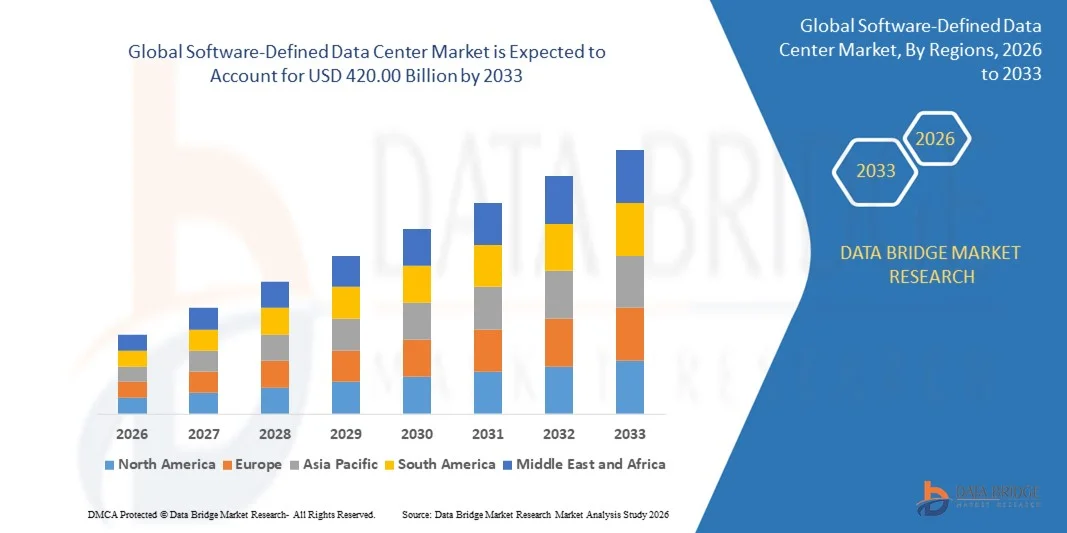
- По данным Data Bridge Market Research Analysis Глобальный размер рынка программно-определяемых центров обработки данных был оценен88,43 млрд долларов США в 2025 годуОжидается, что он достигнет420,00 млрд долларов США к 2033 году, вCAGR 21,50%в течение прогнозируемого периода
- Рост рынка в значительной степени обусловлен растущим внедрением облачных вычислений, виртуализации и гибридных ИТ-инфраструктур на предприятиях, что приводит к повышению спроса на гибкие, масштабируемые и автоматизированные операции центров обработки данных.
- Кроме того, растущие потребности предприятий в централизованном управлении, улучшенном использовании ресурсов и повышенной безопасности создают программно-определяемые решения для центров обработки данных в качестве предпочтительного выбора для современной ИТ-инфраструктуры. Эти факторы ускоряют внедрение технологий SDDC, тем самым значительно повышая рост рынка.
Размер рынка и прогноз
- Глобальная рыночная стоимость (2025)$88,43 млрд.
- Ожидаемая рыночная стоимость (2033)$ 420,00 млрд.
- Прогноз CAGR (2026–2033): 21.50%
Каковы основные выводы рынка программно-определяемых центров обработки данных
- Программно-определяемые центры обработки данных, предлагающие виртуализированные вычислительные, запоминающие и сетевые ресурсы, управляемые с помощью программной оркестровки, становятся необходимыми для современных предприятий для оптимизации производительности, снижения затрат и повышения оперативной гибкости.
- Растущий спрос на решения SDDC в первую очередь обусловлен необходимостью автоматизации, мобильности рабочей нагрузки, интеграции гибридных облаков и расширенной аналитики, поскольку предприятия ищут эффективную и масштабируемую ИТ-инфраструктуру для поддержки инициатив цифровой трансформации.
- Северная Америка доминирует на рынке программно-определяемых центров обработки данных с долей в40,7% в 2025 году из-за растущего внедрения виртуализации, облачных вычислений и гибридной ИТ-инфраструктуры на предприятиях
- Ожидается, что Азиатско-Тихоокеанский регион станет самым быстрорастущим регионом на рынке программно-определяемых центров обработки данных в течение прогнозируемого периода из-за быстрой цифровизации, увеличения инвестиций в корпоративные ИТ и роста стратегий облачных вычислений в таких странах, как Китай, Япония и Индия.
- Сегмент программного обеспечения доминировал на рынке с долей рынка 75,36% в 2025 году из-за критической роли программного обеспечения для виртуализации, управления и оркестровки в оптимизации операций центров обработки данных. Предприятия все больше полагаются на программные решения для автоматизации рабочей нагрузки, распределения ресурсов и централизованного управления в гибридных средах.
Сфера охвата отчетов и сегментация рынка центров обработки данных, определенных программным обеспечением
|
Атрибуты |
Программно-определяемый центр обработки данных Key Market Insights |
|
Сегменты покрыты |
|
|
Страны, охваченные |
Северная Америка
Европа
Азиатско-Тихоокеанский регион
Ближний Восток и Африка
Южная Америка
|
|
Ключевые игроки рынка |
|
|
Рыночные возможности |
|
|
Информационные наборы данных с добавленной стоимостью |
В дополнение к рыночным идеям, таким как рыночная стоимость, темпы роста, сегменты рынка, географический охват, игроки рынка и рыночный сценарий, отчет о рынке, курируемый командой Data Bridge Market Research, включает углубленный экспертный анализ, анализ импорта / экспорта, анализ цен, анализ потребления продукции и анализ пестле. |
Каковы основные тенденции на рынке программно-определяемых центров обработки данных
Использование гибридных и многооблачных архитектур
- Значительной тенденцией на рынке программно-определяемых центров обработки данных (SDDC) является растущее внедрение гибридных и многооблачных архитектур, обусловленное растущей потребностью в гибкой, масштабируемой и устойчивой ИТ-инфраструктуре на предприятиях. Это позволяет организациям балансировать рабочие нагрузки между локальными и общедоступными облачными средами при оптимизации затрат, производительности и безопасности.
- Например, VMware предоставляет решения VMware Cloud Foundation, которые позволяют предприятиям легко интегрировать частные и публичные облака, предлагая последовательное управление инфраструктурой и мобильность рабочей нагрузки. Эти предложения ускоряют инициативы цифровой трансформации и улучшают операционную гибкость в многооблачных средах.
- Предприятия все чаще внедряют SDDC для достижения централизованного управления виртуализированными вычислительными, накопительными и сетевыми ресурсами, снижая зависимость от физического оборудования и ручных операций. Этот сдвиг повышает эффективность и позволяет динамично распределять ресурсы для удовлетворения растущих потребностей бизнеса.
- Спрос на автоматизированное обеспечение и организацию ИТ-ресурсов растет, поскольку организации стремятся повысить операционную эффективность, минимизировать время простоя и уменьшить человеческие ошибки. Платформы SDDC предоставляют унифицированные приборные панели и инструменты автоматизации, которые упрощают управление сложными ИТ-экосистемами.
- Вопросы безопасности и соблюдения оказывают влияние на принятие SDDC, поскольку гибридные и многооблачные развертывания требуют комплексного мониторинга, обеспечения соблюдения политики и возможностей обнаружения угроз. Эти возможности помогают поддерживать целостность данных и соблюдение нормативных требований, поддерживая быстрое развертывание приложений.
- На рынке наблюдается повышенный интерес к интеграции периферийных вычислений в рамках SDDC для поддержки чувствительных к задержкам рабочих нагрузок и аналитики в реальном времени. Эта тенденция усиливает роль программно-определяемой инфраструктуры как основы для гибкой, масштабируемой и безопасной корпоративной ИТ-архитектуры.
Программно-определяемая динамика рынка ЦОД
водитель
Растущий спрос на автоматизированные централизованные центры обработки данных
- Растущая сложность корпоративных ИТ-сред стимулирует спрос на автоматизированные и централизованные решения для управления центрами обработки данных, которые обеспечивают видимость, контроль и оркестровку в виртуальных и гибридных инфраструктурах. Эти решения снижают эксплуатационные расходы и улучшают доставку услуг по распределенным рабочим нагрузкам.
- Например, Nutanix предоставляет корпоративные облачные платформы, которые обеспечивают автоматизированное управление инфраструктурой, оптимизацию ресурсов и унифицированный мониторинг в многооблачных развертываниях. Организации, использующие платформы Nutanix, испытывают снижение административных накладных расходов и более быстрое время обслуживания для критически важных приложений.
- Переход к программно-определяемым сетям и хранилищам повышает способность центров обработки данных динамически распределять ресурсы на основе требований к рабочей нагрузке, поддерживая операционную эффективность и гибкость бизнеса.
- Облачные приложения и контейнерные рабочие нагрузки увеличивают потребность в централизованных платформах оркестровки, которые могут автоматически предоставлять ресурсы и последовательно проводить политику в различных средах.
- Растущее внедрение ИИ и машинного обучения в ИТ-операциях стимулирует развертывание программно-определяемых инструментов управления, которые обеспечивают прогнозную аналитику, обнаружение аномалий и интеллектуальную оптимизацию производительности центров обработки данных.
Сдержанность/вызов
Сложность интеграции с системами наследия
- Рынок программно-определяемых центров обработки данных сталкивается с проблемами из-за сложности интеграции платформ SDDC с существующими устаревшими системами, которые часто включают неоднородное оборудование, проприетарные протоколы и устаревшие системы управления. Эта сложность может замедлить принятие и увеличить затраты на внедрение.
- Например, организации, мигрирующие из традиционных центров обработки данных в решения HPE GreenLake SDDC, часто сталкиваются с проблемами интеграции с устаревшими массивами хранения данных и сетевой инфраструктурой. Эти проблемы требуют дополнительного планирования, тестирования и настройки для обеспечения бесперебойной работы.
- Обеспечение совместимости с существующими приложениями и рабочими процессами требует тщательной оркестровки и может потребовать перепроектирования определенных услуг, увеличения времени развертывания и потребностей в ресурсах.
- У устаревших систем может отсутствовать API или возможности автоматизации, что ограничивает возможности SDDC-платформ для обеспечения полностью автоматизированного централизованного управления всеми ресурсами.
- Рынок продолжает ориентироваться на ограничения, связанные с балансировкой модернизации с непрерывностью работы, поскольку организации стремятся принять передовые программно-определяемые решения, сохраняя доступность услуг и минимизируя сбои в существующих ИТ-операциях.
Сфера рынка программно-определяемых центров обработки данных
Рынок сегментирован на основе компонента, типа, размера организации и вертикали.
- Компонент
На основе компонента рынок SDDC сегментирован на аппаратное обеспечение, программное обеспечение и услуги. Сегмент программного обеспечения доминировал на рынке с самой большой долей дохода в 75,36% в 2025 году, что обусловлено критической ролью программного обеспечения для виртуализации, управления и оркестровки в оптимизации операций центров обработки данных. Предприятия все больше полагаются на программные решения для автоматизации рабочей нагрузки, распределения ресурсов и централизованного управления в гибридных средах. Программные предложения часто обеспечивают интеграцию с облачными платформами и передовой аналитикой, повышая операционную эффективность и снижая общую стоимость владения. Высокий спрос на программные решения поддерживается их способностью обеспечивать масштабируемые, гибкие и безопасные операции центра обработки данных.
Ожидается, что в сегменте услуг будет наблюдаться самый быстрый рост с 2026 по 2033 год, чему способствует растущий спрос на развертывание, консалтинг и управляемые услуги. Например, такие компании, как IBM, предлагают профессиональные услуги, которые помогают организациям внедрять решения SDDC, обеспечивая при этом минимальные сбои. Услуги также обеспечивают постоянный мониторинг, поддержку и оптимизацию, что делает их привлекательными для предприятий, которым требуется экспертное руководство в управлении сложными программно-определяемыми средами. Растущий сдвиг в сторону аутсорсинга ИТ-менеджмента и облачной интеграции еще больше ускоряет внедрение сервисов.
- По типу
В зависимости от типа, рынок SDDC сегментирован на программно-определяемые вычисления (SDC), программно-определяемое хранилище (SDS), программно-определяемые сети центров обработки данных (SDDCN) и автоматизацию и оркестровку. Сегмент Software-Defined Computing доминировал на рынке в 2025 году, чему способствовало широкое внедрение виртуализированных вычислительных ресурсов и необходимость эффективного управления рабочей нагрузкой. Организации отдают приоритет решениям SDC за их способность оптимизировать использование серверов, улучшить масштабируемость и уменьшить зависимость от оборудования. SDC также поддерживает динамическое обеспечение и интеграцию с другими компонентами SDDC, повышая операционную гибкость и производительность. Его присутствие в корпоративной ИТ-инфраструктуре способствует его доминирующей доле на рынке.
Ожидается, что в сегменте автоматизации и оркестровки будет наблюдаться самый быстрый рост с 2026 по 2033 год, чему способствует растущий спрос на автоматизированные рабочие процессы и ИТ-операции самообслуживания. Например, пакет VMware vRealize позволяет предприятиям автоматизировать обеспечение, мониторинг и управление в гибридных облачных средах. Автоматизация уменьшает ручное вмешательство, ускоряет развертывание и обеспечивает последовательность операций, что делает ее очень привлекательной для организаций, проходящих цифровую трансформацию. Растущее внедрение инструментов оркестровки на основе ИИ еще больше укрепляет рост рынка в этом сегменте.
- По размеру организации
Исходя из размера организации, рынок SDDC сегментирован на крупные предприятия и малые и средние предприятия (МСП). Крупные предприятия доминировали на рынке в 2025 году, что обусловлено их обширной ИТ-инфраструктурой и необходимостью оптимизации операционной эффективности в нескольких центрах обработки данных. Предприятия внедряют решения SDDC для снижения сложности, улучшения масштабируемости и поддержки гибридных облачных стратегий. Крупные организации часто инвестируют в комплексные решения виртуализации и оркестровки, которые обеспечивают централизованный контроль и повышенную безопасность. Созданные ИТ-бюджеты и акцент на инновации позволяют быстро внедрять передовые технологии SDDC.
Ожидается, что в сегменте МСП будет наблюдаться самый быстрый рост с 2026 по 2033 год, чему способствует повышение осведомленности о преимуществах программно-определяемой инфраструктуры и доступности экономически эффективных масштабируемых решений. Например, Nutanix предлагает упрощенные платформы SDDC, адаптированные для малого и среднего бизнеса, что обеспечивает гибкость, подобную облачным технологиям, и снижает нагрузку на ИТ-менеджмент. МСП все чаще используют SDDC для достижения гибкости, поддержки удаленных операций и повышения конкурентоспособности без значительных капитальных затрат. Растущее внимание к цифровой трансформации и гибридному внедрению ИТ стимулирует внедрение среди небольших организаций.
- Вертикальный
На основе вертикали рынок SDDC сегментирован на BFSI, IT и Telecom, Government and Defense, Healthcare, Education, Retail, Manufacturing и другие. Вертикаль ИТ и телекоммуникаций доминировала на рынке в 2025 году, что обусловлено необходимостью масштабируемой, гибкой и высокодоступной инфраструктуры центров обработки данных для поддержки облачных услуг, телекоммуникационных операций и управляемых услуг. Организации в этой вертикали отдают приоритет решениям SDDC для быстрого развертывания, поддержки нескольких арендаторов и централизованного управления вычислительными, складскими и сетевыми ресурсами. Высокая степень цифровизации, внедрения облачных технологий и автоматизации услуг в этом секторе усиливает доминирующую долю рынка.
Ожидается, что вертикаль Healthcare будет наблюдать самый быстрый рост с 2026 по 2033 год, чему способствует растущая потребность в безопасных, масштабируемых и совместимых решениях для центров обработки данных для управления записями пациентов и цифровыми медицинскими услугами. Например, Philips Healthcare внедряет программно-определяемую инфраструктуру для повышения доступности данных, улучшения использования ресурсов и поддержки телемедицинских платформ. Принятие SDDC в здравоохранении обеспечивает надежную безопасность, аварийное восстановление и интеграцию с облачными аналитическими инструментами, что способствует быстрому развертыванию в больницах и медицинских исследовательских учреждениях.
Региональный анализ рынка программно-определяемых центров обработки данных
- Северная Америка доминировала на рынке программно-определяемых центров обработки данных с самой большой долей дохода в 40,7% в 2025 году, что обусловлено растущим внедрением виртуализации, облачных вычислений и гибридной ИТ-инфраструктуры на предприятиях.
- Организации в регионе высоко ценят гибкость, масштабируемость и централизованное управление, предлагаемые программно-определяемыми решениями для центров обработки данных, что позволяет беспрепятственно интегрировать вычислительные, запоминающие и сетевые ресурсы.
- Это широкое внедрение дополнительно поддерживается высокими ИТ-бюджетами, технологически продвинутой рабочей силой и растущим спросом на автоматизированные, управляемые программным обеспечением операции центра обработки данных, устанавливая программно-определяемый центр обработки данных в качестве предпочтительного решения для крупных предприятий.
Американский центр обработки данных Software-Defined Data Center Market Insight
Рынок программно-определяемых центров обработки данных в США занял самую большую долю доходов в Северной Америке в 2025 году, чему способствовало быстрое внедрение облаков и растущая потребность в гибкой ИТ-инфраструктуре, управляемой программным обеспечением. Предприятия отдают приоритет программно-определяемым решениям для центров обработки данных, чтобы оптимизировать производительность центров обработки данных, снизить эксплуатационные расходы и повысить безопасность. Растущий акцент на гибридных облачных стратегиях, в дополнение к интеграции инструментов мониторинга и оркестровки на основе ИИ, способствует дальнейшему росту рынка. Более того, растущее внедрение архитектуры контейнеризации и микросервисов поддерживает расширение программно-определяемых центров обработки данных в различных отраслях.
Европейский программно-определяемый центр обработки данных Market Insight
Согласно прогнозам, европейский рынок программно-определяемых центров обработки данных будет расти в течение прогнозируемого периода, в первую очередь благодаря инициативам цифровой трансформации и строгим нормативным требованиям. Рост развертывания корпоративных облаков в сочетании с потребностью в высокопроизводительных вычислениях и энергоэффективных центрах обработки данных способствует внедрению программно-определяемых центров обработки данных. Европейские организации также инвестируют в программно-определяемые решения для хранения данных и сетей для повышения операционной гибкости. В регионе наблюдается значительный рост в секторах BFSI, ИТ, здравоохранения и государственного управления, с программно-определяемыми решениями для центров обработки данных, интегрированными как в новые, так и в существующие инфраструктурные проекты.
Великобритания Software-Defined Data Center Market Insight
Ожидается, что в течение прогнозируемого периода рынок программно-определяемых центров обработки данных в Великобритании будет расти с заметным CAGR, что обусловлено растущим внедрением корпоративного облака и необходимостью безопасной масштабируемой ИТ-инфраструктуры. Организации используют программно-определяемые решения для центров обработки данных для улучшения использования ресурсов и упрощения управления центрами обработки данных. Ожидается, что сильная экосистема ИТ-услуг Великобритании и акцент на цифровых инновациях будут способствовать дальнейшему росту рынка. Правительственные инициативы, поддерживающие цифровую трансформацию и внедрение «умной» инфраструктуры, также способствуют росту спроса на программно-определяемые решения для центров обработки данных.
Германия Software-Defined Data Center Market Insight
Ожидается, что в течение прогнозируемого периода рынок программно-определяемых центров обработки данных в Германии будет расширяться на значительном CAGR, чему будет способствовать растущее понимание программно-определяемой инфраструктуры и сосредоточение внимания на энергоэффективных и устойчивых центрах обработки данных. Предприятия все чаще внедряют программно-определяемые решения для центров обработки данных для повышения автоматизации, управления рабочей нагрузкой и снижения операционной сложности. Надежная ИТ-инфраструктура Германии, в дополнение к ее акценту на инновации и кибербезопасность, способствует интеграции программно-определяемых центров обработки данных в различных отраслях. Предпочтение решений, соответствующих местным стандартам соответствия и целям устойчивого развития, стимулирует рост рынка как в коммерческом, так и в государственном сегментах.
Asia-Pacific Software-Defined Data Center Market Insight (недоступная ссылка)
Рынок программно-определяемых центров обработки данных в Азиатско-Тихоокеанском регионе будет расти самыми быстрыми темпами в течение прогнозируемого периода с 2026 по 2033 год, что обусловлено быстрой цифровизацией, увеличением корпоративных инвестиций в ИТ и ростом облачных стратегий в таких странах, как Китай, Япония и Индия. Растущее внимание региона к инициативам «умного города», технологической инфраструктуре и цифровой трансформации на предприятиях способствует внедрению программно-определяемых центров обработки данных. Более того, по мере того, как APAC становится центром развития инфраструктуры центров обработки данных и программных решений, доступность и доступность программно-определяемых платформ центров обработки данных расширяются по нескольким отраслевым вертикалям.
Японский программно-определяемый центр обработки данных Market Insight
Рынок программно-определяемых центров обработки данных в Японии набирает обороты благодаря передовой ИТ-экосистеме страны, высоким темпам внедрения облачных технологий и растущему спросу на эффективное автоматизированное управление центрами обработки данных. Предприятия инвестируют в программно-определяемые решения для центров обработки данных для повышения производительности, масштабируемости и оперативной гибкости. Интеграция программно-определяемых сетевых, запоминающих и вычислительных ресурсов с аналитикой, основанной на ИИ, стимулирует внедрение. Стареющая рабочая сила Японии и акцент на операционной эффективности еще больше поощряют использование автоматизированных центров обработки данных, управляемых программным обеспечением.
Китайский программно-определяемый центр обработки данных Market Insight
Рынок программно-определяемых центров обработки данных в Китае составил самую большую долю рынка в Азиатско-Тихоокеанском регионе в 2025 году, что объясняется быстрой цифровой трансформацией, растущим внедрением облачных технологий и крупномасштабными инвестициями в ИТ-инфраструктуру предприятий. Китай испытывает сильный спрос на программно-определяемые вычислительные, запоминающие и сетевые решения в BFSI, IT и производственном секторах. Правительственные инициативы по продвижению умных городов в сочетании с присутствием отечественных поставщиков решений для центров обработки данных ускоряют внедрение. Наличие экономически эффективных, масштабируемых решений еще больше укрепляет рынок, что позволяет широко внедрять решения как в корпоративном, так и в государственном сегментах.
Доля рынка программно-определяемых центров обработки данных
Индустрия программно-определяемых центров обработки данных в основном управляется хорошо зарекомендовавшими себя компаниями, в том числе:
- Dell Technologies (США)
- Hewlett Packard Enterprise Development LP (США)
- VMware, Inc. (США)
- Huawei Technologies Co., Ltd. (Китай)
- Microsoft Corporation (США)
- Nokia Corporation (Финляндия)
- Корпорация Oracle (США)
- ARYAKA NETWORKS, INC.
- Citrix Systems, Inc. (США)
- Extreme Networks, Inc. (США)
- Infovista (Франция)
- NEC Corporation (Япония)
- Nutanix, Inc. (США)
- Pluribus Networks, Inc. (США)
- Red Hat, Inc. (США)
- SUSE (Германия)
- Adaptiv Networks, Inc. (США)
- Arista Networks, Inc. (США)
- Bigleaf Networks, Inc. (США)
Последние разработки на мировом рынке программно-определяемых центров обработки данных
- В мае 2025 года Hewlett-Packard Enterprise Development LP расширила портфель сетевых коммутаторов HPE Aruba Networking, представив коммутаторы распределенных сервисов Aruba CX 10K. Благодаря интегрированным DPU AMD Pensando они переключают сетевые задачи и задачи безопасности с серверных процессоров, тем самым освобождая вычислительные ресурсы для ИИ и других интенсивных рабочих нагрузок. Ожидается, что эта разработка значительно повысит операционную эффективность и масштабируемость в современных средах центров обработки данных, укрепив позиции HPE на рынке SDDC и корпоративных сетей. Обеспечивая высокопроизводительное управление сетью наряду с инфраструктурой, готовой к ИИ, HPE удовлетворяет растущий спрос на гибкие, управляемые программным обеспечением центры обработки данных.
- В апреле 2025 года Dell Inc. в рамках стратегического сотрудничества запустила программное решение для хранения данных PowerFlex, интегрированное с облачной платформой Nutanix (NCP) и облачной инфраструктурой Nutanix (NCI). Совместное решение поддерживает собственный гипервизор Nutanix AHV в масштабируемой двухуровневой архитектуре, повышая гибкость, производительность и оптимизацию ресурсов для развертывания гибридных облаков. Этот запуск усиливает роль Dell на рынке SDDC, предоставляя предприятиям унифицированное высокопроизводительное решение для хранения данных и управления облаками, позволяющее беспрепятственно интегрировать локальные и облачные среды, одновременно удовлетворяя растущий спрос на масштабируемую автоматизированную инфраструктуру.
- В апреле 2025 года Last Energy объявила о планах построить 30 микрореакторов в Техасе, рассчитанных на генерацию мощностью около 600 мегаватт, предназначенную для центров обработки данных. Эта инициатива направлена на удовлетворение растущих энергетических потребностей в расширении операций центров обработки данных, что позволяет создавать вычислительные среды высокой плотности без перегрузки существующей энергосистемы. Предоставляя стабильный, локализованный источник энергии, это развитие, как ожидается, положительно повлияет на рынки SDDC и высокопроизводительных вычислений, поддерживая устойчивый и надежный рост центров обработки данных, привлекая предприятия, ориентированные на энергоэффективность и операционную устойчивость.
- В марте 2025 года Rackspace Technology запустила сервис Rackspace SDDC Flex в партнерстве с VMware и Dell, предлагая облачное решение, которое сочетает в себе возможности государственного и частного облака с гибкой инфраструктурой, возможностями самообслуживания и автоматизированным развертыванием. Разработанный по модели ценообразования, основанной на потреблении, сервис повышает оперативность работы предприятий, сокращая время развертывания и упрощая управление гибридными облаками. Этот шаг укрепляет позиции Rackspace на рынке, удовлетворяя растущий спрос на масштабируемые программно-определяемые решения для центров обработки данных, которые интегрируют автоматизацию, гибкость и быстрое обеспечение в гибридных ИТ-средах.
- В январе 2025 года TerraPower и Sabey подписали меморандум о взаимопонимании для изучения развертывания микрореакторов в центрах обработки данных Sabey. Инициатива направлена на повышение энергоэффективности, устойчивости и устойчивости в операциях центров обработки данных при одновременном устранении ограничений мощности на критически важных рынках. Интегрируя передовые низкоуглеродные энергетические решения в инфраструктуру SDDC, эта разработка поддерживает внедрение вычислений высокой плотности и позиционирует обе компании в качестве лидеров на формирующемся пересечении энергетических инноваций и программно-определяемых технологий центров обработки данных.
SKU-
Получите онлайн-доступ к отчету на первой в мире облачной платформе рыночной аналитики

- Интерактивная панель анализа данных
- Панель анализа компании для возможностей с высоким потенциалом роста
- Доступ аналитика-исследователя для настройки и запросов
- Анализ конкурентов с помощью интерактивной панели
- Последние новости, обновления и анализ тенденций
- Используйте возможности сравнительного анализа для комплексного отслеживания конкурентов
Методология исследования
Сбор данных и анализ базового года выполняются с использованием модулей сбора данных с большими размерами выборки. Этап включает получение рыночной информации или связанных данных из различных источников и стратегий. Он включает изучение и планирование всех данных, полученных из прошлого заранее. Он также охватывает изучение несоответствий информации, наблюдаемых в различных источниках информации. Рыночные данные анализируются и оцениваются с использованием статистических и последовательных моделей рынка. Кроме того, анализ доли рынка и анализ ключевых тенденций являются основными факторами успеха в отчете о рынке. Чтобы узнать больше, пожалуйста, запросите звонок аналитика или оставьте свой запрос.
Ключевой методологией исследования, используемой исследовательской группой DBMR, является триангуляция данных, которая включает в себя интеллектуальный анализ данных, анализ влияния переменных данных на рынок и первичную (отраслевую экспертную) проверку. Модели данных включают сетку позиционирования поставщиков, анализ временной линии рынка, обзор рынка и руководство, сетку позиционирования компании, патентный анализ, анализ цен, анализ доли рынка компании, стандарты измерения, глобальный и региональный анализ и анализ доли поставщика. Чтобы узнать больше о методологии исследования, отправьте запрос, чтобы поговорить с нашими отраслевыми экспертами.
Доступна настройка
Data Bridge Market Research является лидером в области передовых формативных исследований. Мы гордимся тем, что предоставляем нашим существующим и новым клиентам данные и анализ, которые соответствуют и подходят их целям. Отчет можно настроить, включив в него анализ ценовых тенденций целевых брендов, понимание рынка для дополнительных стран (запросите список стран), данные о результатах клинических испытаний, обзор литературы, обновленный анализ рынка и продуктовой базы. Анализ рынка целевых конкурентов можно проанализировать от анализа на основе технологий до стратегий портфеля рынка. Мы можем добавить столько конкурентов, о которых вам нужны данные в нужном вам формате и стиле данных. Наша команда аналитиков также может предоставить вам данные в сырых файлах Excel, сводных таблицах (книга фактов) или помочь вам в создании презентаций из наборов данных, доступных в отчете.











