



Global Transmucosal Drug Delivery Devices Market Segmentation, By Type (Passive Transdermal Drug Delivery, and Active Transdermal Drug Delivery), Drug Type (Buccal Tablets, Oral Sprays, Sublingual Films and Wafers, Gels, Medicated Confectionery, and Others), Indication (Pain Management, Addiction Treatment, Hormonal Therapies, and Others), Route of Administration (Buccal, Nasal, Vaginal, and Urethral), End User (Hospitals, Diagnostic Centers, and Others) - Industry Trends and Forecast to 2033
Каков размер рынка трансмукозных устройств доставки лекарств и темпы роста
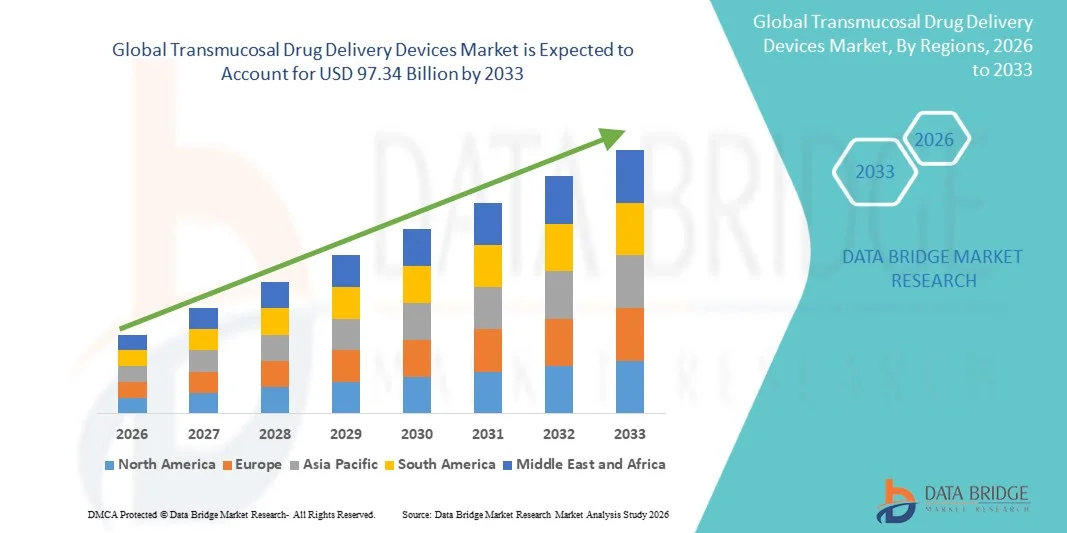
- Объем мирового рынка устройств для доставки трансмукозных лекарственных средств был оценен в$60,16 млрд. в 2025 годуОжидается, что он достигнет97,34 млрд долларов США к 2033 году, вCAGR 6,20%в течение прогнозируемого периода
- Рост рынка в значительной степени подпитывается растущим спросом на передовые и удобные для пациентов системы доставки лекарств, наряду с ростом распространенности хронических заболеваний, что приводит к более широкому принятию трансмукозных маршрутов, таких как буккальные, сублингвальные, носовые, ректальные и вагинальные системы доставки лекарств в клинических и домашних условиях.
- Кроме того, растущее предпочтение неинвазивных, быстродействующих и эффективных методов доставки лекарств, наряду с достижениями в технологиях рецептуры и улучшенной биодоступностью лекарств, создает устройства для доставки трансмукозных лекарств в качестве ключевой инновации в современной терапии. Эти сходящиеся факторы ускоряют внедрение решений для устройств доставки трансмукозных лекарств, тем самым значительно повышая рост отрасли.
Размер рынка и прогноз
- Глобальная рыночная стоимость (2025):$ 60,16 млрд.
- Ожидаемая рыночная стоимость (2033):$97,34 млрд.
- Прогноз CAGR (2026-2033):6.20%
Каковы основные выводы рынка устройств для доставки трансмукозных лекарств
- Трансмукозные устройства доставки лекарств, позволяющие вводить лекарства через ткани слизистой оболочки, такие как буккальные, сублингвальные, носовые, ректальные и вагинальные пути, становятся все более важными компонентами современных систем доставки лекарств из-за их способности улучшать биодоступность, обеспечивать быстрое терапевтическое действие и обходить метаболизм первого прохода как в больницах, так и в домашних условиях.
- Растущий спрос на трансмукозные устройства доставки лекарств в первую очередь подпитывается растущей распространенностью хронических заболеваний, растущей потребностью в неинвазивных и удобных для пациентов решениях для доставки лекарств и продолжающимися достижениями в технологиях разработки лекарств, которые повышают эффективность поглощения и терапевтическую эффективность.
- Северная Америка доминировала на рынке трансмукозных устройств для доставки лекарств с самой большой долей дохода в 38,6% в 2025 году, что обусловлено сильной фармацевтической научно-исследовательской деятельностью, ранним внедрением передовых технологий доставки лекарств, высокими расходами на здравоохранение и сильным присутствием ведущих фармацевтических и биотехнологических компаний.
- Ожидается, что Азиатско-Тихоокеанский регион станет самым быстрорастущим регионом на рынке трансмукозных устройств для доставки лекарств в течение прогнозируемого периода из-за увеличения доступа к здравоохранению, роста населения пациентов, расширения фармацевтической производственной базы и растущего внедрения передовых систем доставки лекарств в развивающихся странах.
- Сегмент пассивной трансдермальной доставки лекарств доминировал на рынке с наибольшей долей дохода 58,4% в 2025 году, что обусловлено его простотой, экономической эффективностью и широким клиническим признанием неинвазивного введения лекарств.
Сфера охвата и сегментация рынка трансмукозных устройств доставки лекарств
|
Атрибуты |
Трансмукозные устройства доставки лекарствОбзор рынка |
|
Сегменты покрыты |
|
|
Страны, охваченные |
Северная Америка
Европа
Азиатско-Тихоокеанский регион
Ближний Восток и Африка
Южная Америка
|
|
Ключевые игроки рынка |
|
|
Рыночные возможности |
|
|
Информационные наборы данных с добавленной стоимостью |
В дополнение к информации о рыночных сценариях, таких как рыночная стоимость, темпы роста, сегментация, географическое покрытие и основные игроки, рыночные отчеты, курируемые Data Bridge Market Research, также включают углубленный экспертный анализ, эпидемиологию пациентов, анализ трубопроводов, анализ цен и нормативную базу. |
Какова ключевая тенденция на рынке устройств для доставки трансмукоза
"Растущая потребность из-за растущих проблем безопасности и принятия умного дома"
- Растущая распространенность проблем безопасности среди домовладельцев и предприятий в сочетании с быстрым внедрением подключенного здравоохранения и интеллектуальных медицинских экосистем является ключевым фактором, ускоряющим спрос на передовые решения для устройств доставки лекарственных средств.
- Например, в апреле 2025 года Onity, Inc. (Honeywell International Inc.) объявила о достижениях в системах самонакопления и подключенной безопасности на основе IoT, подчеркнув более широкое движение отрасли к интегрированным платформам с сенсорной поддержкой, которые улучшают мониторинг, безопасность и операционную эффективность в подключенных средах.
- Повышение осведомленности среди пациентов и поставщиков медицинских услуг о точности лечения, быстрой абсорбции лекарств и улучшенном соблюдении требований пациентов способствует принятию современных форматов доставки трансмукоза по сравнению с традиционными методами введения лекарств.
- Кроме того, переход к ориентированному на пациента здравоохранению, домашним моделям лечения и цифровым экосистемам здравоохранения еще больше способствует интеграции интеллектуальных решений для мониторинга и подключенной доставки на рынке.
- Растущее предпочтение неинвазивных маршрутов введения лекарств, особенно при хроническом лечении, лечении боли и экстренном лечении, продолжает укреплять спрос в больницах, клиниках и учреждениях по уходу на дому.
Динамика рынка трансмукозных устройств доставки лекарств
водитель
«Улучшение удобства за счет расширенной цифровой интеграции и подключенных систем здравоохранения»
- Значительной и ускоряющейся тенденцией на мировом рынке устройств для доставки трансмукозных лекарств является растущая интеграция цифровых технологий здравоохранения, включая платформы мониторинга с поддержкой ИИ, мобильные приложения для здравоохранения и связанные экосистемы здравоохранения, которые улучшают удобство и соответствие лечения.
- Например, передовые системы доставки трансмукозала разрабатываются с цифровыми функциями отслеживания, которые позволяют поставщикам медицинских услуг контролировать время дозировки, приверженность пациентов и терапевтический ответ в режиме реального времени через централизованные платформы здравоохранения.
- Некоторые новые устройства включают интеллектуальные механизмы обратной связи, которые помогают оптимизировать графики дозирования на основе моделей поведения пациентов и клинических требований, улучшая точность лечения и результаты.
- Интеграция решений для доставки трансмукозных лекарственных средств с больничными информационными системами (HIS), электронными медицинскими записями (EHR) и инструментами удаленного мониторинга пациентов позволяет использовать более скоординированный и основанный на данных подход к уходу за пациентами.
- Эта тенденция меняет ожидания в современном здравоохранении, поскольку поставщики все чаще ищут методы лечения, которые сочетают быструю абсорбцию лекарств с возможностями цифрового мониторинга для повышения безопасности, эффективности и опыта пациентов.
- Спрос на такие цифровые системы доставки растет как на развитых, так и на развивающихся рынках здравоохранения, поскольку поставщики медицинских услуг отдают приоритет точной медицине и улучшенному терапевтическому контролю.
Сдержанность/вызов
"Озабоченность по поводу соблюдения нормативных требований, проверки безопасности и высоких затрат на разработку"
- Одной из основных проблем на рынке трансмукозных устройств доставки лекарств является строгий процесс одобрения регулирующих органов, необходимый для новых технологий доставки лекарств, что значительно замедляет коммерциализацию продукта.
- Например, регулирующие органы, такие как FDA США и EMA (Европейское агентство по лекарственным средствам), требуют обширной клинической проверки, исследований биодоступности и долгосрочных оценок безопасности перед утверждением, увеличивая время выхода на рынок для производителей.
- Кроме того, обеспечение согласованных показателей всасывания лекарственных средств и поддержание точности дозирования в различных группах пациентов остается технической проблемой, особенно для сложных составов.
- Высокие затраты на исследования и разработки, связанные с разработкой рецептур, проектированием устройств и клиническими испытаниями, еще больше ограничивают доступ для небольших игроков, ограничивая масштабируемость инноваций в определенных регионах.
- Кроме того, вариабельность физиологии пациента и потенциальные риски неправильного введения могут повлиять на результаты лечения, что требует постоянного улучшения в конструкции устройства и удобстве использования.
- Решение этих проблем с помощью упорядоченных механизмов регулирования, передовых технологий разработки и экономически эффективных производственных процессов будет иметь важное значение для устойчивого расширения рынка.
Как сегментируется рынок трансмукозных устройств для доставки лекарств
Рынок сегментирован на основе типа, типа лекарственного средства, индикации, пути введения и конечного пользователя.
• По типу
По типу рынок трансмукозных устройств доставки лекарственных средств сегментирован на пассивную трансдермальную доставку лекарственных средств и активную трансдермальную доставку лекарственных средств. Сегмент пассивных трансдермальных препаратов доминировал на рынке с наибольшей долей выручки в 58,4% в 2025 году, что обусловлено его простотой, экономической эффективностью и широким клиническим признанием неинвазивного введения лекарств. Пассивные системы позволяют лекарствам диффундировать естественным образом через слизистые оболочки без внешних источников энергии, что делает их очень удобными как для пациентов, так и для медицинских работников. Растущий спрос на лечение боли и лечение хронических заболеваний поддерживает принятие. Растущее предпочтение неинвазивных методов доставки лекарств еще больше усиливает рост. Расширение использования в гормональном и сердечно-сосудистом лечении усиливает проникновение сегмента. Кроме того, простота производства и снижение производственных затрат способствуют доминированию. Растущая гериатрическая популяция, нуждающаяся в долгосрочных лекарствах, увеличивает использование. Непрерывные инновации в технологиях рецептуры повышают эффективность всасывания лекарств. Повышение осведомленности в области здравоохранения о методах лечения пациентов способствует расширению рынка. Эти факторы в совокупности обеспечивают доминирование пассивного трансдермального сегмента.
Ожидается, что в сегменте активной трансдермальной доставки лекарств будет наблюдаться самый быстрый CAGR в 11,3% с 2026 по 2033 год, что обусловлено технологическими достижениями, которые повышают проницаемость лекарств и контролируемое высвобождение. Активные системы используют внешние стимулы, такие как электрическая, механическая или тепловая энергия, для повышения эффективности поглощения лекарств. Растущий спрос на более быстрые терапевтические действия поддерживает принятие. Увеличение распространенности хронических и тяжелых заболеваний, требующих точного дозирования, способствует росту. Достижения в технологиях микроигл, ионофореза и электропорации повышают эффективность. Растущие инвестиции в исследования в области доставки лекарств ускоряют инновации. Расширение применения в онкологии и управлении болью способствует росту сегмента. Кроме того, увеличение клинических испытаний для передовых систем доставки поддерживает принятие. Растущий спрос на персонализированную медицину еще больше усиливает расширение. Эти факторы позиционируют активную трансдермальную доставку лекарств как наиболее быстро растущий сегмент.
• По типу наркотиков
На основе типа лекарственного средства рынок Трансмукосальных устройств доставки лекарственных средств подразделяется на буккальные таблетки, пероральные спреи, сублингвальные пленки и пластины, гели, кондитерские изделия с лекарственными средствами и другие. Сегмент сублингвальных пленок и пластин доминировал на рынке с наибольшей долей дохода 34,7% в 2025 году, что обусловлено их быстрым поглощением, простотой администрирования и высоким уровнем соблюдения требований пациентов. Эти составы быстро растворяются под языком, что позволяет непосредственно входить в системную циркуляцию и обходить метаболизм первого прохода. Растущий спрос на быстродействующие методы лечения боли и неотложных состояний поддерживает принятие. Растущая распространенность хронических заболеваний усиливает использование. Кроме того, улучшенная биодоступность по сравнению с традиционными пероральными лекарственными формами усиливает предпочтение. Растущее усыновление в педиатрических и гериатрических популяциях еще больше повышает спрос. Расширение фармацевтических инноваций в системах доставки лекарств на основе пленки поддерживает рост. Повышение внимания к форматам лекарственных средств, удобных для пациентов, способствует проникновению на рынок. Удобство и переносимость лекарственных форм способствуют дальнейшему принятию. Эти факторы в совокупности обеспечивают доминирование сублингвальных фильмов и пластин.
Ожидается, что сегмент пероральных спреев будет наблюдать самый быстрый CAGR в 10,9% с 2026 по 2033 год, что обусловлено растущим спросом на неинвазивные, простые в использовании системы доставки лекарств. Оральные спреи обеспечивают быстрое начало действия и улучшенную гибкость дозирования. Растущая распространенность неврологических и респираторных расстройств поддерживает усыновление. Технологические достижения в разработке спрея повышают стабильность и абсорбцию препарата. Увеличение использования в облегчении боли и лечении зависимости еще больше подпитывает рост. Растущее предпочтение пациентов к самоуправлению способствует расширению рынка. Кроме того, растущая доступность безрецептурных трансмукосальных спреев поддерживает доступность. Расширение фармацевтических трубопроводов, ориентированных на опрыскивающую терапию, способствует развитию. Повышение осведомленности о системах доставки лекарств быстрого действия усиливает спрос. Эти факторы позиционируют пероральные спреи как наиболее быстро растущий сегмент лекарственного типа.
• По показаниям
Исходя из показаний, рынок устройств для доставки лекарственных средств сегментирован на управление болью, лечение зависимости, гормональную терапию и другие. Сегмент управления болью доминировал на крупнейшей доле рынка в 46,2% в 2025 году, что обусловлено высоким глобальным бременем хронических болевых состояний, таких как артрит, боль при раке и нейропатическая боль. Системы доставки трансмукоза обеспечивают быстрое облегчение боли с улучшенной биодоступностью по сравнению с обычными пероральными препаратами. Увеличение стареющего населения в значительной степени способствует спросу. Рост частоты послеоперационных болей также поддерживает усыновление. Растущее предпочтение неинвазивных и быстродействующих анальгетиков усиливает использование. Кроме того, достижения в опиоидных и неопиоидных препаратах улучшают варианты лечения. Расширение доступа к здравоохранению и тарифы на рецепты стимулируют рост рынка. Повышение осведомленности о методах лечения боли поддерживает принятие. Постоянные инновации в технологиях доставки лекарств улучшают результаты лечения пациентов. Эти факторы в совокупности обеспечивают доминирование сегмента управления болью.
Ожидается, что сегмент лечения наркомании будет наблюдать самый быстрый CAGR в 11,7% с 2026 по 2033 год, что обусловлено увеличением глобальной распространенности расстройств, связанных с употреблением психоактивных веществ. Трансмукозные системы доставки широко используются в лечении опиоидной зависимости, таких как бупренорфиновые составы. Растущие инициативы правительства по борьбе с наркоманией поддерживают усыновление. Растущая осведомленность о реабилитационных методах лечения еще больше повышает спрос. Увеличение доступности рецептурных методов лечения повышает доступность. Достижения в препаратах с контролируемым высвобождением повышают эффективность лечения. Расширение инфраструктуры здравоохранения для управления наркоманией поддерживает рост. Кроме того, увеличение внимания к амбулаторным программам лечения ускоряет использование. Растущая интеграция поведенческой терапии с фармакологическим лечением усиливает результаты. Эти факторы позиционируют лечение зависимости как наиболее быстро растущий сегмент показаний.
• По маршруту администрации
На основе маршрута введения рынок устройств доставки лекарственных средств трансмукоза разделен на буккальный, носовой, вагинальный и уретральный. Сегмент буккальных маршрутов доминировал на крупнейшей доле рынка в 51,5% в 2025 году, что обусловлено простотой введения, высоким уровнем соблюдения требований пациентов и быстрым поглощением лекарств через слизистую оболочку полости рта. Вакцинальная доставка обходит желудочно-кишечную деградацию и метаболизм первого прохода, улучшая биодоступность. Увеличение использования в управлении болью и системной доставке лекарств поддерживает принятие. Растущее предпочтение неинвазивных методов лечения еще больше усиливает спрос. Расширение фармацевтических препаратов, предназначенных для доставки буккаля, повышает эффективность. Растущая распространенность хронических заболеваний стимулирует использование. Кроме того, пригодность для педиатрических и гериатрических пациентов поддерживает рост. Увеличение инноваций в системах мукоадгезивных препаратов улучшает удержание и всасывание. Простота самоуправления повышает удобство пациента. Эти факторы в совокупности обеспечивают доминирование сегмента буккального маршрута.
Ожидается, что сегмент носового маршрута будет наблюдать самый быстрый CAGR в 10,6% с 2026 по 2033 год, что обусловлено растущим спросом на быструю системную доставку лекарств и таргетирование центральной нервной системы. Назальная доставка обеспечивает быстрое всасывание через богатые сосудистые сети. Растущее использование в экстренных процедурах и облегчении боли поддерживает рост. Технологические достижения в препаратах назального спрея повышают эффективность. Расширение исследований в области доставки лекарств, ориентированных на мозг, еще больше способствует принятию. Растущая распространенность неврологических расстройств поддерживает спрос. Кроме того, рост доступности назальных вакцин и биологических препаратов ускоряет расширение. Расширение применения в доставке гормонов и пептидов усиливает рост рынка. Предпочтение пациента неинвазивному и безболезненному введению поддерживает использование. Эти факторы позиционируют носовой маршрут как наиболее быстро растущий сегмент.
• Конечный пользователь
На базе конечного пользователя рынок устройств доставки лекарственных средств сегментирован на больницы, диагностические центры, клиники и другие. Сегмент больниц доминировал на рынке с наибольшей долей выручки в 48,9% в 2025 году, что обусловлено высоким притоком пациентов, развитой инфраструктурой лечения и сильным внедрением инновационных систем доставки лекарств. Больницы являются основными центрами для лечения хронических заболеваний, боли и наркомании. Увеличение хирургических процедур и спроса на неотложную помощь поддерживает использование. Растущая доступность специализированных медицинских работников способствует усыновлению. Расширение сети больниц во всем мире способствует доминированию на рынке. Кроме того, интеграция передовых фармакологических методов лечения поддерживает рост. Государственные инвестиции в здравоохранение укрепляют инфраструктуру больниц. Расширение использования больничных систем администрирования лекарств улучшает результаты лечения пациентов. Растущее предпочтение контролируемых клинических сред еще больше повышает спрос. Эти факторы в совокупности обеспечивают доминирование больничного сегмента.
Ожидается, что в сегменте клиник будет наблюдаться самый быстрый CAGR в 10,8% с 2026 по 2033 год, что обусловлено растущим предпочтением амбулаторных и экономически эффективных методов лечения. Клиники предоставляют доступные и удобные медицинские услуги для администрирования лекарств. Растущий спрос на децентрализованную систему здравоохранения поддерживает ее внедрение. Увеличение распространенности хронических заболеваний, требующих регулярного приема лекарств, увеличивает использование. Технологические достижения в портативных системах доставки лекарств способствуют клиническому внедрению. Растущая осведомленность о раннем лечении и последующем уходе способствует росту. Расширение сети частных клиник в городских и полугородских районах еще больше усиливает расширение рынка. Кроме того, более короткое время ожидания и доступность привлекают пациентов. Расширение интеграции аптечных и клинических услуг способствует повышению эффективности. Эти факторы позиционируют клиники как наиболее быстро растущий сегмент конечных пользователей.
Трансмукозные устройства доставки лекарств Региональный анализ рынка
- Северная Америка доминировала на рынке трансмукозных устройств для доставки лекарств с самой большой долей доходов примерно 38,6% в 2025 году, что обусловлено сильной фармацевтической научно-исследовательской деятельностью, ранним внедрением передовых технологий доставки лекарств, высокими расходами на здравоохранение и хорошо зарекомендовавшим себя присутствием ведущих фармацевтических и биотехнологических компаний.
- Регион извлекает выгоду из высокоразвитой регуляторной и клинической исследовательской экосистемы, которая поддерживает быстрые инновации, эффективные пути утверждения лекарств и раннюю коммерциализацию новых систем доставки трансмукоза.
- Растущее внимание к точной медицине, ориентированным на пациента подходам к доставке лекарств и постоянным инвестициям в передовые технологии рецептуры еще больше укрепляет рост рынка в Северной Америке, поскольку поставщики медицинских услуг отдают приоритет более быстрому началу действия, улучшенной биодоступности и улучшенным терапевтическим результатам.
США Transmucosal Drug Delivery Devices Market Insight
Рынок трансмукозных устройств для доставки лекарств в США занял самую большую долю доходов в Северной Америке в 2025 году, чему способствовали надежные фармацевтические инновации, сильное присутствие глобальных биотехнологических фирм и обширная клиническая исследовательская деятельность. В стране наблюдается растущее внедрение передовых платформ доставки лекарств для лечения боли, онкологической поддерживающей терапии и прорывных методов лечения, обусловленных спросом на более быстрые и неинвазивные пути введения. Кроме того, сотрудничество между фармацевтическими компаниями и научно-исследовательскими институтами ускоряет разработку и коммерциализацию трансмукозных технологий следующего поколения.
Европа Трансмукозные устройства доставки лекарств Market Insight
Прогнозируется, что рынок трансмукозных устройств для доставки лекарств в Европе будет расширяться при существенном CAGR в течение прогнозируемого периода, что обусловлено растущим спросом на передовые системы терапевтической доставки, сильной нормативной поддержкой инновационных лекарственных препаратов и растущим вниманием к улучшению соответствия пациентов. В регионе наблюдается растущее внедрение неинвазивных решений по доставке лекарств в больницах и специализированных медицинских центрах, чему способствуют достижения в области фармацевтических исследований и разработок и модернизации инфраструктуры здравоохранения.
Великобритания Transmucosal Drug Delivery Devices Market Insight
Ожидается, что рынок трансмукозных устройств для доставки лекарств в Великобритании вырастет в течение прогнозируемого периода, чему будет способствовать увеличение инвестиций в фармацевтические исследования, рост спроса на удобные для пациентов методы доставки лекарств и сильные возможности системы здравоохранения. Акцент на улучшение приверженности лечению и снижение зависимости от больницы способствует дальнейшему внедрению передовых решений для доставки трансмукоза.
Германия Transmucosal Drug Delivery Devices Market Insight
Ожидается, что в течение прогнозируемого периода рынок трансмукозных устройств для доставки лекарств в Германии будет расширяться на значительном CAGR, чему будет способствовать сильная фармацевтическая производственная база, высокие инвестиции в биомедицинские исследования и растущий акцент на инновационных технологиях доставки лекарств. Акцент Германии на высококачественные стандарты здравоохранения и передовую инфраструктуру клинических исследований способствует внедрению эффективных и точных систем доставки лекарств.
Азиатско-тихоокеанские устройства для доставки трансмукозных лекарств Market Insight
Ожидается, что рынок трансмукозных устройств для доставки лекарств в Азиатско-Тихоокеанском регионе будет самым быстрорастущим регионом в течение прогнозируемого периода, что будет обусловлено расширением доступа к здравоохранению, ростом населения пациентов, расширением возможностей фармацевтического производства и растущим внедрением передовых систем доставки лекарств в развивающихся странах. Быстрое развитие инфраструктуры здравоохранения, увеличение активности клинических испытаний и поддерживающие правительственные инициативы еще больше ускоряют рост регионального рынка.
Японские устройства для доставки трансмукозных лекарств Market Insight
Японский рынок трансмукозных устройств для доставки лекарств набирает обороты благодаря передовой системе здравоохранения страны, сильной фармацевтической исследовательской базе и высокому внедрению инновационных технологий доставки лекарств. Растущее старение населения и растущий спрос на эффективные, простые в использовании методы лечения стимулируют рост в больницах и учреждениях по уходу на дому, особенно для лечения хронических и долгосрочных заболеваний.
China Transmucosal Drug Delivery Devices Market Insight
Китайский рынок трансмукозных устройств для доставки лекарств составил самую большую долю рынка в Азиатско-Тихоокеанском регионе в 2025 году, что объясняется быстрым расширением фармацевтической промышленности, растущими инвестициями в исследования и разработки в области здравоохранения и растущим внедрением передовых технологий доставки лекарств. Большая база пациентов в стране, расширение экосистемы биофармацевтического производства и сильная государственная поддержка инноваций в области здравоохранения являются ключевыми факторами роста рынка.
Какие компании являются ведущими на рынке устройств для доставки наркотиков
Индустрия трансмукозных устройств для доставки лекарств в основном возглавляется хорошо зарекомендовавшими себя компаниями, в том числе:
- Pfizer Inc.(США)
- GlaxoSmithKline plc(Великобритания)
- Johnson & Johnson (США)
- Компания Novartis AG(Швейцария)
- AstraZeneca plc (Великобритания)
- Bayer AG (Германия)
- F. Hoffmann-La Roche Ltd (Швейцария)
- Eli Lilly & Company (США)
- Производитель: Teva Pharmaceutical Industries Ltd(Израиль)
- AbbVie Inc.(США)
- Merck & Co., Inc. (США)
- Becton, Dickinson and Company (США)
- Компания 3M (США)
- Catalent, Inc. (США)
- LTS Lohmann Therapie-Systeme AG (Германия)
- Aveva Drug Delivery Systems (США)
- Meda Pharmaceuticals (Швеция)
- Sunovion Pharmaceuticals (США)
- Zogenix, Inc. (США)
- Aquestive Therapeutics (США)
Каковы последние события на мировом рынке устройств для доставки наркотиков
- В августе 2023 года ResearchAndMarkets опубликовала отчет о трубопроводах доставки трансмукозных лекарств 2023 года, в котором содержится обновленная информация о разрабатываемых продуктах, лицензировании, сотрудничестве и конкурентном ландшафте для устройств доставки трансмукозных лекарств. Это обновление сигнализировало о продолжающейся инновационной и регуляторной деятельности на рынке.
- В сентябре 2023 года итальянские исследователи разработали интеллектуальное устройство для доставки трансмукозных препаратов на основе графена для целенаправленной и контролируемой доставки активных фармацевтических ингредиентов, демонстрируя передовые инновации в технологии доставки трансмукозных препаратов. Эта научная разработка отражает передовые исследования, расширяющие возможности устройств
- В октябре 2025 года The Business Research Company сообщила, что рынок устройств для доставки трансмукозных лекарств, по прогнозам, вырастет с примерно 50,24 млрд долларов США в 2024 году до 54,63 млрд долларов США в 2025 году, что обусловлено увеличением спроса на быстрые, неинвазивные методы доставки лекарств, такие как сублингвальные и буккальные маршруты. Это отражает значительный коммерческий рост и тенденции внедрения на рынке.
SKU-
Получите онлайн-доступ к отчету на первой в мире облачной платформе рыночной аналитики

- Интерактивная панель анализа данных
- Панель анализа компании для возможностей с высоким потенциалом роста
- Доступ аналитика-исследователя для настройки и запросов
- Анализ конкурентов с помощью интерактивной панели
- Последние новости, обновления и анализ тенденций
- Используйте возможности сравнительного анализа для комплексного отслеживания конкурентов
Методология исследования
Сбор данных и анализ базового года выполняются с использованием модулей сбора данных с большими размерами выборки. Этап включает получение рыночной информации или связанных данных из различных источников и стратегий. Он включает изучение и планирование всех данных, полученных из прошлого заранее. Он также охватывает изучение несоответствий информации, наблюдаемых в различных источниках информации. Рыночные данные анализируются и оцениваются с использованием статистических и последовательных моделей рынка. Кроме того, анализ доли рынка и анализ ключевых тенденций являются основными факторами успеха в отчете о рынке. Чтобы узнать больше, пожалуйста, запросите звонок аналитика или оставьте свой запрос.
Ключевой методологией исследования, используемой исследовательской группой DBMR, является триангуляция данных, которая включает в себя интеллектуальный анализ данных, анализ влияния переменных данных на рынок и первичную (отраслевую экспертную) проверку. Модели данных включают сетку позиционирования поставщиков, анализ временной линии рынка, обзор рынка и руководство, сетку позиционирования компании, патентный анализ, анализ цен, анализ доли рынка компании, стандарты измерения, глобальный и региональный анализ и анализ доли поставщика. Чтобы узнать больше о методологии исследования, отправьте запрос, чтобы поговорить с нашими отраслевыми экспертами.
Доступна настройка
Data Bridge Market Research является лидером в области передовых формативных исследований. Мы гордимся тем, что предоставляем нашим существующим и новым клиентам данные и анализ, которые соответствуют и подходят их целям. Отчет можно настроить, включив в него анализ ценовых тенденций целевых брендов, понимание рынка для дополнительных стран (запросите список стран), данные о результатах клинических испытаний, обзор литературы, обновленный анализ рынка и продуктовой базы. Анализ рынка целевых конкурентов можно проанализировать от анализа на основе технологий до стратегий портфеля рынка. Мы можем добавить столько конкурентов, о которых вам нужны данные в нужном вам формате и стиле данных. Наша команда аналитиков также может предоставить вам данные в сырых файлах Excel, сводных таблицах (книга фактов) или помочь вам в создании презентаций из наборов данных, доступных в отчете.











