



Global Veterinary Endoscopy Market Segmentation, By Product Type (Flexible Endoscopes, Capsule Endoscopes, Robot Assisted Endoscopes, Rigid Endoscope, and Other Endoscopes), Procedure (Flexible Endoscopy, Rigid Endoscopy, and Other Procedures), Animal Type (Companion Animals, Large Animals, and Other Animals), End- User (Hospitals and Academic Institutes, Clinics, Veterinary Hospitals, and Research Institutes) - Industry Trends and Forecast to 2033
Каковы размеры и темпы роста рынка ветеринарной эндоскопии
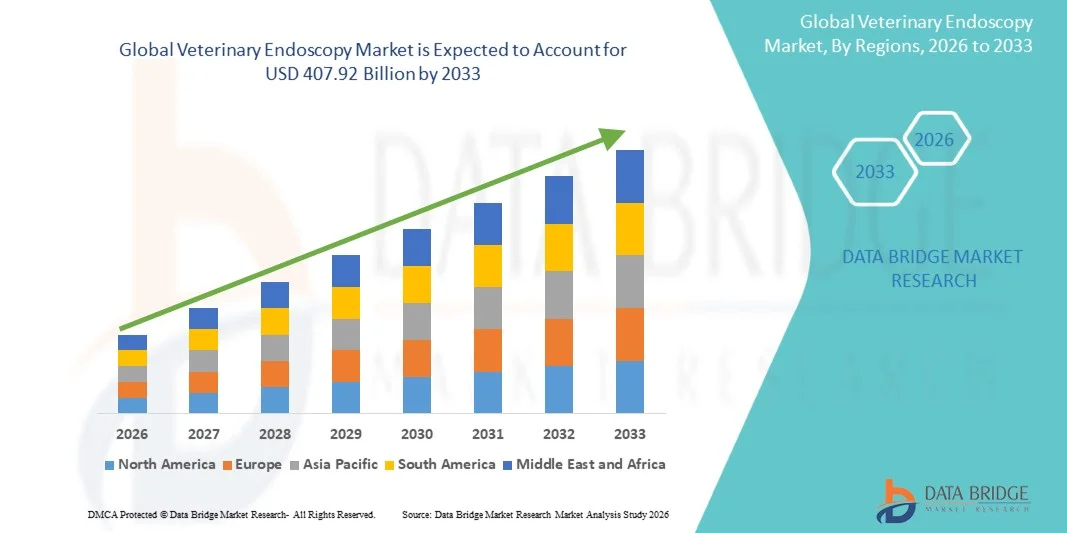
- Согласно анализу Data Bridge Market Research, глобальный объем рынка ветеринарной эндоскопии был оценен как253,06 млрд долларов США в 2025 годуОжидается, что он достигнет407,92 млрд долларов США к 2033 году, вCAGR 6,15%в течение прогнозируемого периода
- Рост рынка в значительной степени обусловлен растущим внедрением передовых диагностических и минимально инвазивных хирургических процедур в ветеринарии, а также технологическими достижениями в эндоскопических системах визуализации. Растущее владение домашними животными, рост расходов на здравоохранение животных и улучшение ветеринарной инфраструктуры способствуют повышению спроса на ветеринарные эндоскопические решения в специализированных клиниках и больницах для животных.
- Кроме того, растущая осведомленность владельцев домашних животных о ранней диагностике заболеваний и минимально инвазивных вариантах лечения делает ветеринарную эндоскопию предпочтительным диагностическим и терапевтическим инструментом в современной ветеринарной практике. Эти факторы ускоряют внедрение ветеринарных эндоскопических решений, тем самым значительно повышая рост отрасли.
Размер рынка и прогноз
Глобальная рыночная стоимость (2025):253,06 млрд. долларов США
Ожидаемая рыночная стоимость (2033):407,92 млрд долларов
Прогноз CAGR (2026–2033):6.15%
Каковы основные выводы рынка ветеринарной эндоскопии
- Ветеринарные эндоскопические системы, включая жесткие и гибкие эндоскопы, становятся все более важными инструментами в современном здравоохранении животных, позволяя проводить минимально инвазивные диагностические и терапевтические процедуры среди домашних животных и домашнего скота. Эти системы улучшают визуализацию внутренних органов, уменьшают хирургическую травму и поддерживают более быстрое время восстановления, что делает их необходимыми в специализированных ветеринарных практиках и передовых больницах для животных.
- Растущий спрос на ветеринарную эндоскопию в первую очередь подпитывается ростом владения домашними животными, увеличением расходов на медицинское обслуживание животных-компаньонов, повышением осведомленности о минимально инвазивных хирургических вариантах и достижениями в технологиях визуализации высокой четкости. Кроме того, расширение ветеринарных специализированных услуг и реферальных центров способствует росту рынка.
- Северная Америка доминировала на рынке ветеринарной эндоскопии с самой большой долей доходов.42,8% в 2025 годуЭто обусловлено развитой ветеринарной инфраструктурой, высокими расходами на здравоохранение домашних животных, сильным присутствием ведущих производителей ветеринарных устройств и растущим внедрением минимально инвазивных процедур в больницах для животных в США и Канаде.
- Ожидается, что Азиатско-Тихоокеанский регион станет самым быстрорастущим регионом на рынке ветеринарной эндоскопии в течение прогнозируемого периода.12.9%Это поддерживается ростом усыновления животных-компаньонов, улучшением ветеринарных медицинских учреждений, повышением осведомленности о ранней диагностике заболеваний и увеличением инвестиций в здоровье животных в таких странах, как Китай, Индия, Япония и Австралия.
- Сегмент домашних животных-компаньонов занимал самую большую долю рынка в 62,4% в 2025 году, чему способствовало увеличение владения домашними животными во всем мире.
Сфера охвата и сегментация рынка ветеринарной эндоскопии
|
Атрибуты |
Ветеринарная эндоскопия: ключевые идеи рынка |
|
Сегменты покрыты |
|
|
Страны, охваченные |
Северная Америка
Европа
Азиатско-Тихоокеанский регион
Ближний Восток и Африка
Южная Америка
|
|
Ключевые игроки рынка |
|
|
Рыночные возможности |
|
|
Информационные наборы данных с добавленной стоимостью |
В дополнение к информации о рыночных сценариях, таких как рыночная стоимость, темпы роста, сегментация, географическое покрытие и основные игроки, рыночные отчеты, курируемые Data Bridge Market Research, также включают углубленный экспертный анализ, эпидемиологию пациентов, анализ трубопроводов, анализ цен и нормативную базу. |
Каковы основные тенденции на рынке ветеринарной эндоскопии
"Технические достижения и минимально инвазивные инновации в ветеринарной диагностике"
- Значительной и ускоряющейся тенденцией на мировом рынке ветеринарной эндоскопии является постоянное развитие минимально инвазивных диагностических и хирургических технологий, разработанных специально для здоровья животных.
- Современные эндоскопические системы все чаще включают в себя визуализацию высокой четкости, улучшенные системы освещения и гибкие области, которые позволяют ветеринарам выполнять точные внутренние обследования с минимальной травмой.
- Например, передовые системы ветеринарной эндоскопии, оснащенные визуализацией HD и повышенной маневренностью, широко используются в специализированных ветеринарных больницах для выполнения таких процедур, как желудочно-кишечные обследования, бронхоскопия и лапароскопия с большей точностью и сокращением времени восстановления для животных. Эти инновации значительно улучшают диагностические возможности и процедурные результаты.
- Интеграция цифровых платформ визуализации и систем видеозаписи еще больше повышает клиническую эффективность, позволяя улучшить документацию случаев, консультации в режиме реального времени и улучшить связь с владельцами домашних животных в отношении планов диагностики и лечения.
- Этот растущий акцент на минимально инвазивных процедурах меняет стандарты ветеринарной практики, поскольку клиники все чаще предпочитают эндоскопические методы традиционным открытым операциям из-за уменьшения послеоперационной боли, более короткой госпитализации и более быстрого выздоровления у домашних животных.
- Следовательно, производители сосредоточены на разработке компактного, экономичного и эндоскопического оборудования для конкретных видов для удовлетворения меняющихся потребностей ветеринарных специалистов.
Динамика рынка ветеринарной эндоскопии
водитель
«Растущее владение домашними животными и растущие расходы на здравоохранение животных»
- Растущая популяция домашних животных, наряду с повышением осведомленности о здоровье животных и профилактической помощи, является основным фактором, стимулирующим рынок ветеринарной эндоскопии. Владельцы домашних животных все чаще ищут передовые диагностические и лечебные решения для обеспечения раннего выявления и эффективного лечения заболеваний у домашних животных.
- Например, растущая распространенность желудочно-кишечных расстройств, респираторных заболеваний и урогенитальных заболеваний у мелких животных привела к тому, что ветеринарные клиники приняли эндоскопические процедуры для точной диагностики и минимально инвазивного лечения. Расширение специализированных ветеринарных больниц и реферальных центров еще больше поддерживает спрос на передовые системы эндоскопии.
- Увеличение располагаемых доходов и гуманизация домашних животных значительно увеличили расходы на высококачественную ветеринарную помощь, включая передовые методы визуализации и хирургические вмешательства. Эта тенденция особенно заметна в развитых регионах, где расширяется страхование домашних животных и доступ к специализированным ветеринарным услугам.
- Кроме того, достижения в области ветеринарного образования и учебных программ оснащают практикующих специалистов навыками, необходимыми для эффективного выполнения эндоскопических процедур, тем самым ускоряя внедрение этих систем в городских и полугородских ветеринарных учреждениях.
Сдержанность/вызов
"Высокая стоимость оборудования и ограниченный доступ в небольших клиниках"
- Первоначальные инвестиции в оборудование для ветеринарной эндоскопии остаются ключевой проблемой, особенно для небольших и независимых ветеринарных клиник с ограниченными финансовыми ресурсами. Передовые эндоскопические башни, процессоры обработки изображений и специализированные инструменты требуют значительных капитальных затрат, что может ограничить широкое распространение.
- Например, комплексные установки эндоскопии с камерами высокой четкости, источниками света и гибкими диапазонами могут представлять собой значительное финансовое бремя для небольших практик, часто требующих дополнительного обслуживания и периодических обновлений, которые еще больше увеличивают эксплуатационные расходы.
- Кроме того, необходимость специализированного обучения для работы эндоскопических систем и точной интерпретации результатов может выступать в качестве барьера, особенно в регионах, где доступ к передовым программам ветеринарной подготовки ограничен.
- Ограниченная осведомленность владельцев домашних животных в развивающихся странах о преимуществах минимально инвазивных диагностических процедур может также замедлить рост рынка.
- Решение этих проблем с помощью экономически эффективных инновационных продуктов, гибких вариантов финансирования, расширенных учебных инициатив и программ повышения осведомленности будет иметь важное значение для обеспечения устойчивого расширения рынка ветеринарной эндоскопии.
Как сегментируется рынок ветеринарной эндоскопии
Рынок сегментируется на основе типа продукта, процедуры, типа животного и конечного пользователя.
• По типу продукции
На основе типа продукта глобальный рынок ветеринарной эндоскопии подразделяется на гибкие эндоскопы, капсульные эндоскопы, роботизированные эндоскопы, жесткие эндоскопы и другие эндоскопы. Сегмент гибких эндоскопов доминировал на крупнейшей доле рынка в 41,6% в 2025 году, в основном благодаря его широкому применению в желудочно-кишечных, дыхательных и урологических исследованиях на животных. Гибкие прицелы обеспечивают превосходную маневренность, позволяя осуществлять глубокую внутреннюю визуализацию с минимальными травмами. Их способность выполнять как диагностические, так и терапевтические вмешательства повышает их клиническую полезность. Увеличение распространенности расстройств пищеварения и проглатывания инородного тела среди животных-компаньонов значительно поддерживает спрос. Ветеринарные врачи предпочитают гибкие системы из-за улучшения комфорта пациента и более быстрого восстановления. Постоянные достижения в области визуализации высокой четкости, волоконной оптики и интеграции видео еще больше усиливают внедрение. Растущие тенденции гуманизации домашних животных и более высокие ветеринарные расходы также способствуют увеличению доходов. Сегмент выигрывает от растущей установки в специализированных ветеринарных больницах и реферальных центрах. Расширение учебных программ для минимально инвазивных процедур поддерживает проникновение оборудования. Наличие многоразовых и экономически эффективных моделей повышает доступность на развивающихся рынках. Кроме того, технологическая совместимость с цифровыми системами записи поддерживает эффективность рабочего процесса.
Ожидается, что сегмент роботизированных эндоскопов будет наблюдать самый быстрый CAGR в 19,8% с 2026 по 2033 год, что обусловлено растущим спросом на точные и минимально инвазивные хирургические процедуры. Роботизированные системы повышают ловкость, стабильность и визуализацию во время сложных вмешательств. Растущие инвестиции в передовую ветеринарную хирургическую инфраструктуру поддерживают внедрение технологий. Эти системы уменьшают процедурные осложнения и улучшают клинические результаты. Повышение осведомленности ветеринарных специалистов о процедурах на основе робототехники ускоряет рост. Расширение сотрудничества между производителями устройств и научно-исследовательскими институтами способствует инновациям. Более высокая точность процедур и сокращение времени восстановления делают роботизированные системы привлекательными в ветеринарных учреждениях премиум-класса. Растущий спрос на специализированные операции на животных еще больше увеличивает этот сегмент. Растущее присутствие корпоративных сетей ветеринарных больниц также способствует приобретению передовых систем. Хотя первоначальные затраты остаются высокими, долгосрочные выгоды от эффективности способствуют поглощению. Ожидается, что постоянные обновления продуктов и интеграция ИИ будут поддерживать сильный импульс роста.
• По процедуре
На основе процедуры рынок сегментирован на гибкую эндоскопию, жесткую эндоскопию и другие процедуры. Сегмент гибкой эндоскопии составил самую большую долю рынка в 47,3% в 2025 году, что объясняется его широким диагностическим и терапевтическим использованием. Гибкие процедуры обычно используются для желудочно-кишечного обследования, взятия проб биопсии и удаления инородного тела. Увеличение частоты расстройств пищеварения и дыхания среди животных приводит к процессуальному объему. Минимально инвазивный характер приводит к уменьшению послеоперационной боли и более короткой продолжительности восстановления. Растущее предпочтение неинвазивных диагностических подходов среди владельцев домашних животных поддерживает доминирование сегмента. Повышение осведомленности о раннем выявлении заболеваний повышает коэффициент использования. Расширенные возможности визуализации улучшают процедурную точность и клиническую достоверность. Ветеринарные специалисты все чаще рекомендуют гибкие методики проведения внутренних обследований. Сегмент выигрывает от благоприятных сценариев возмещения на развитых рынках. Расширение программ обучения и сертификации способствует дальнейшему принятию. Технологические достижения в области гибкости охвата и четкости изображения продолжают укреплять рост сегмента.
Прогнозируется, что сегмент жесткой эндоскопии будет регистрировать самый быстрый CAGR в 18,5% с 2026 по 2033 год, что подтверждается ростом использования в ортопедических, лапароскопических и торакоскопических процедурах. Жесткие области обеспечивают повышенную долговечность и превосходное разрешение изображения. Увеличение спроса на минимально инвазивные хирургические вмешательства способствует расширению сегмента. Ветеринарные хирурги предпочитают жесткие системы для точных оперативных процедур. Растущие инвестиции в хирургическое оборудование в ветеринарных больницах ускоряют внедрение. Рост хирургических вмешательств в животноводстве также поддерживает рост. Технологические усовершенствования в системах линз и освещении улучшают результаты. Расширение специализированных центров по уходу за животными еще больше подпитывает спрос. Повышение осведомленности о передовых хирургических вариантах среди владельцев животных усиливает поглощение. Улучшенная инфраструктура обучения повышает доверие практикующих. В совокупности эти факторы приводят к быстрому CAGR в течение прогнозируемого периода.
• По типу животных
По типу животных рынок подразделяется на животных-компаньонов, крупных животных и других животных. Сегмент домашних животных-компаньонов занимал самую большую долю рынка в 62,4% в 2025 году, чему способствовало увеличение владения домашними животными во всем мире. Собаки и кошки составляют большинство эндоскопических процедур. Растущие тенденции гуманизации домашних животных стимулируют более высокие расходы на передовую диагностику. Растущая осведомленность о профилактическом здравоохранении еще больше повышает спрос. Повышенная распространенность желудочно-кишечных и респираторных расстройств поддерживает процессуальный рост. Урбанизация и повышение уровня доходов среднего класса способствуют расширению использования ветеринарных услуг. Проникновение страхования домашних животных в развитых странах также способствует усыновлению. Животные-компаньоны часто подвергаются минимально инвазивным процедурам, поддерживая спрос на оборудование. Технологическая доступность в городских ветеринарных больницах усиливает доминирование. Растущее внедрение специализированных ветеринарных клиник еще больше увеличивает долю доходов. Непрерывные инновации, разработанные для анатомии мелких животных, поддерживают устойчивый рост.
Ожидается, что в сегменте крупных животных самый быстрый CAGR составит 17,2% с 2026 по 2033 год, что обусловлено растущим вниманием к здоровью и производительности скота. Растущий спрос на эффективную диагностику заболеваний в популяциях крупного рогатого скота и лошадей поддерживает поглощение. Правительства уделяют особое внимание программам управления здоровьем животных, повышая процедурный спрос. Растущая осведомленность владельцев скота о современных диагностических инструментах ускоряет их внедрение. Расширение сельской ветеринарной инфраструктуры повышает доступность. Технологические достижения в портативных эндоскопических системах способствуют дальнейшему росту рынка. Растущие исследования в области охраны здоровья лошадей и крупного рогатого скота способствуют спросу. Рост мирового потребления мяса и молочных продуктов косвенно стимулирует ветеринарные инвестиции. Профилактические инициативы также усиливают объем процедур. Эти факторы в совокупности способствуют сильному прогнозируемому росту.
• Конечный пользователь
На базе конечного пользователя рынок сегментирован на больницы и академические институты, клиники, ветеринарные больницы и научно-исследовательские институты. Сегмент ветеринарных больниц доминировал на рынке с долей выручки 38,9% в 2025 году, что объясняется наличием передовой диагностической и хирургической инфраструктуры. Эти учреждения обрабатывают большие объемы пациентов и сложные случаи направления. Все большее число специализированных ветеринарных больниц поддерживает спрос на оборудование. Квалифицированные специалисты и квалифицированные хирурги способствуют процессуальному усыновлению. Наличие передовых систем визуализации повышает операционную эффективность. Растущее предпочтение центров комплексного ухода среди владельцев домашних животных способствует росту доходов. Корпоративные ветеринарные сети расширяются во всем мире, увеличивая закупки современных эндоскопических устройств. Интеграция цифровых систем улучшает управление рабочими процессами. Больницы часто лидируют в освоении новых технологий, сохраняя лидерство в сегменте. Постоянное расширение объектов в городских районах поддерживает устойчивое доминирование.
Сегмент научно-исследовательских институтов, по прогнозам, будет наблюдать самый быстрый CAGR в 20,1% с 2026 по 2033 год, что обусловлено увеличением исследовательской деятельности, ориентированной на хирургические инновации и диагностику заболеваний. Академическое сотрудничество с компаниями, производящими медицинские устройства, способствует технологическим достижениям. Растущее финансирование исследований в области здоровья животных способствует увеличению закупок оборудования. Исследовательские центры используют эндоскопические инструменты для экспериментальных и учебных целей. Расширение программ ветеринарного образования увеличивает спрос на передовые системы. Инновации в малоинвазивных технологиях еще больше подпитывают внедрение. Растущий акцент на доказательной ветеринарной практике способствует процессуальному росту. Разработка эндоскопических платформ следующего поколения способствует расширению. Увеличение глобальных исследовательских инициатив в области благополучия животных также поддерживает спрос. Эти факторы в совокупности обеспечивают сильный CAGR в течение прогнозируемого периода.
В каком регионе находится наибольшая доля рынка ветеринарной эндоскопии
- Северная Америка доминировала на рынке ветеринарной эндоскопии с самой большой долей дохода в 42,8% в 2025 году, что обусловлено передовой инфраструктурой ветеринарного здравоохранения, высокими расходами на медицинское обслуживание домашних животных и сильным присутствием ведущих производителей ветеринарных устройств. Растущее внедрение минимально инвазивных диагностических и хирургических процедур в больницах и специализированных клиниках животных в США и Канаде значительно способствовало росту регионального рынка.
- Ветеринарные специалисты в регионе все чаще используют эндоскопические процедуры для диагностики и лечения желудочно-кишечных, дыхательных и мочеполовых расстройств у животных-компаньонов. Наличие квалифицированных ветеринаров, хорошо оборудованных больниц для животных и растущее страхование домашних животных также поддерживают широкое внедрение передовых систем эндоскопии.
- Эта сильная рыночная позиция подкрепляется растущими тенденциями гуманизации домашних животных, более высокими располагаемыми доходами и непрерывными технологическими достижениями в области визуализации и минимально инвазивных хирургических инструментов, что делает Северную Америку ключевым регионом, генерирующим доходы на рынке ветеринарной эндоскопии.
Американский рынок ветеринарной эндоскопии Insight
Американский рынок ветеринарной эндоскопии занял самую большую долю дохода в 2025 году в Северной Америке, чему способствовала развитая сеть ветеринарных больниц и специализированных реферальных центров. Растущая распространенность хронических заболеваний у животных-компаньонов, включая желудочно-кишечные расстройства и респираторные заболевания, увеличила спрос на точные и минимально инвазивные методы диагностики. Высокая осведомленность владельцев домашних животных о передовых вариантах лечения и увеличение расходов на здравоохранение животных способствуют дальнейшему расширению рынка. Кроме того, присутствие известных производителей ветеринарных устройств и инвестиции в программы клинического обучения продолжают укреплять рынок США.
Европейский рынок ветеринарной эндоскопии
Европейский рынок ветеринарной эндоскопии, по прогнозам, будет расширяться с существенным CAGR в течение прогнозируемого периода, чему будут способствовать строгие правила защиты животных и повышение внимания к высококачественной ветеринарной помощи. Растущее внедрение минимально инвазивных процедур в таких странах, как Германия, Великобритания и Франция, способствует устойчивому росту рынка. Кроме того, растущая осведомленность о раннем выявлении заболеваний и улучшении послеоперационных результатов побуждает ветеринарные клиники инвестировать в современное эндоскопическое оборудование.
Британский рынок ветеринарной эндоскопии Insight
Ожидается, что в течение прогнозируемого периода рынок ветеринарной эндоскопии в Великобритании будет расти с заметным CAGR, что обусловлено увеличением владения домашними животными и расширением ветеринарных специализированных услуг. Акцент страны на профилактическое медицинское обслуживание животных-компаньонов и наличие структурированных систем ветеринарного образования способствуют внедрению современных диагностических технологий. Растущий спрос на минимально инвазивные процедуры, которые сокращают время восстановления и улучшают комфорт животных, способствует росту рынка.
Немецкий рынок ветеринарной эндоскопии
Ожидается, что в течение прогнозируемого периода рынок ветеринарной эндоскопии в Германии будет расширяться на значительном CAGR, чему будет способствовать сильная ветеринарная инфраструктура и увеличение инвестиций в передовые медицинские технологии для животных. Акцент Германии на высоких клинических стандартах и подходах к точному лечению побуждает ветеринарные больницы принимать эндоскопические системы высокой четкости. Кроме того, растущее проникновение страхования домашних животных и структурированные программы управления заболеваниями способствуют устойчивому расширению рынка.
Азиатско-Тихоокеанский рынок ветеринарной эндоскопии
Рынок ветеринарной эндоскопии в Азиатско-Тихоокеанском регионе будет расти на самом быстром CAGR 12,9% в течение прогнозируемого периода с 2026 по 2033 год, чему будет способствовать рост усыновления животных-компаньонов, улучшение ветеринарных медицинских учреждений и повышение осведомленности о ранней диагностике заболеваний. Расширение урбанизации и рост располагаемых доходов в таких странах, как Китай, Индия, Япония и Австралия, приводят к увеличению расходов на услуги по охране здоровья животных. Кроме того, увеличение инвестиций в ветеринарную инфраструктуру и учебные программы способствуют внедрению в регионе малоинвазивных диагностических и хирургических решений.
Японский рынок ветеринарной эндоскопии
Японский рынок ветеринарной эндоскопии набирает обороты из-за высоких показателей владения домашними животными и растущего спроса на передовые услуги по охране здоровья животных. Ориентация страны на качественную медицинскую помощь и технологическую изощренность способствует использованию минимально инвазивных эндоскопических процедур в ветеринарных клиниках. Кроме того, старение домашних животных в Японии увеличивает потребность в точных диагностических решениях для эффективного управления хроническими и возрастными состояниями.
Китайский рынок ветеринарной эндоскопии
Китайский рынок ветеринарной эндоскопии составил самую большую долю рынка в Азиатско-Тихоокеанском регионе в 2025 году, что объясняется быстрым ростом владения домашними животными, расширением населения среднего класса и повышением осведомленности о здоровье животных. Модернизация ветеринарных больниц и повышение доступности передового диагностического оборудования ускоряют проникновение на рынок. Сильные внутренние производственные возможности и растущие инвестиции в ветеринарное образование и специализированные услуги являются ключевыми факторами, способствующими устойчивому росту рынка ветеринарной эндоскопии в Китае.
Какие компании занимают лидирующие позиции на рынке ветеринарной эндоскопии
Индустрия ветеринарной эндоскопии в основном возглавляется хорошо зарекомендовавшими себя компаниями, в том числе:
- Карл Сторц SE & Co. KG(Германия)
- Olympus Corporation(Япония)
- Корпорация FUJIFILM Holdings(Япония)
- Корпорация Stryker(США)
- Richard Wolf GmbH (Германия)
- Medtronic plc (Ирландия)
- Smith & Nephew plc (Великобритания)
- B. Braun Melsungen AG (Германия)
- Biovision Veterinary Endoscopy, LLC (США)
- Dr. Fritz Endoscopes GmbH (Германия)
- MDS Incorporated (США)
- Endoscope-i Ltd. (Великобритания)
- Optomed Oy (Финляндия)
- Амбу А/С (Дания)
- VetVu (США)
- Jorgensen Laboratories (США)
- Эндоскопия AVS (США)
- XION GmbH (Германия)
- ConMed Corporation (США)
- Hugemed Medical (Китай)
Каковы последние тенденции на рынке ветеринарной эндоскопии
- В ноябре 2024 года Boston Scientific Corporation заключила стратегическое партнерство с Ethicon Animal Health (Johnson & Johnson) для совместной разработки передовых ветеринарных эндоскопических решений для крупных животных, сочетая технологию эндоскопии Boston Scientific с опытом Ethicon в области ветеринарных продуктов.
- В феврале 2025 года Olympus Corporation завершила приобретение EndoTech, американского производителя ветеринарных эндоскопов, укрепив свой портфель продуктов для ветеринарной визуализации и эндоскопии и расширив свое присутствие в сегменте здравоохранения животных.
- В мае 2025 года Управление по контролю за продуктами и лекарствами США (FDA) предоставило 510 (k) клиренс ветеринарному эндоскопу VIDA 1,9 мм от Karl Storz GmbH & Co. KG, что позволило использовать устройство для клинического использования для доступа к труднодоступным областям в небольших процедурах на животных и повышения точности диагностики.
- В июне 2025 года JeetVet представила портативный интеллектуальный ветеринарный отоскоп RAE-500 и переносной USB-эндоскоп RAE-105 на форуме ACVIM в Луисвилле, штат Кентукки. Эти портативные устройства с высоким разрешением отличались улучшенной беспроводной связью и эргономичным дизайном, подчеркивая тенденцию к мобильным, удобным для пользователя эндоскопическим решениям для врачей общей и специальной ветеринарии.
SKU-
Получите онлайн-доступ к отчету на первой в мире облачной платформе рыночной аналитики

- Интерактивная панель анализа данных
- Панель анализа компании для возможностей с высоким потенциалом роста
- Доступ аналитика-исследователя для настройки и запросов
- Анализ конкурентов с помощью интерактивной панели
- Последние новости, обновления и анализ тенденций
- Используйте возможности сравнительного анализа для комплексного отслеживания конкурентов
Методология исследования
Сбор данных и анализ базового года выполняются с использованием модулей сбора данных с большими размерами выборки. Этап включает получение рыночной информации или связанных данных из различных источников и стратегий. Он включает изучение и планирование всех данных, полученных из прошлого заранее. Он также охватывает изучение несоответствий информации, наблюдаемых в различных источниках информации. Рыночные данные анализируются и оцениваются с использованием статистических и последовательных моделей рынка. Кроме того, анализ доли рынка и анализ ключевых тенденций являются основными факторами успеха в отчете о рынке. Чтобы узнать больше, пожалуйста, запросите звонок аналитика или оставьте свой запрос.
Ключевой методологией исследования, используемой исследовательской группой DBMR, является триангуляция данных, которая включает в себя интеллектуальный анализ данных, анализ влияния переменных данных на рынок и первичную (отраслевую экспертную) проверку. Модели данных включают сетку позиционирования поставщиков, анализ временной линии рынка, обзор рынка и руководство, сетку позиционирования компании, патентный анализ, анализ цен, анализ доли рынка компании, стандарты измерения, глобальный и региональный анализ и анализ доли поставщика. Чтобы узнать больше о методологии исследования, отправьте запрос, чтобы поговорить с нашими отраслевыми экспертами.
Доступна настройка
Data Bridge Market Research является лидером в области передовых формативных исследований. Мы гордимся тем, что предоставляем нашим существующим и новым клиентам данные и анализ, которые соответствуют и подходят их целям. Отчет можно настроить, включив в него анализ ценовых тенденций целевых брендов, понимание рынка для дополнительных стран (запросите список стран), данные о результатах клинических испытаний, обзор литературы, обновленный анализ рынка и продуктовой базы. Анализ рынка целевых конкурентов можно проанализировать от анализа на основе технологий до стратегий портфеля рынка. Мы можем добавить столько конкурентов, о которых вам нужны данные в нужном вам формате и стиле данных. Наша команда аналитиков также может предоставить вам данные в сырых файлах Excel, сводных таблицах (книга фактов) или помочь вам в создании презентаций из наборов данных, доступных в отчете.











