


Global Wearable Electronic Devices Market Segmentation, By Component (Networking and Positioning Components, Power Supply Components, Sensing Components, Optoelectronic and Display Component, Controls Components, and Interface Components), Product (Wrist-Wear, Eye-Wear, Body-Wear, Foot-Wear, Neck Wear, and Others), Technology (Display technologies, Computing Technologies, Positioning Technologies, Networking Technologies, Speech Recognition Technology, and Sensor Technologies), Application (Healthcare Application, Consumer Application, Industrial Applications, and Commercial Applications)- Industry Trends and Forecast to 2033
Каков размер рынка носимых электронных устройств и темпы роста
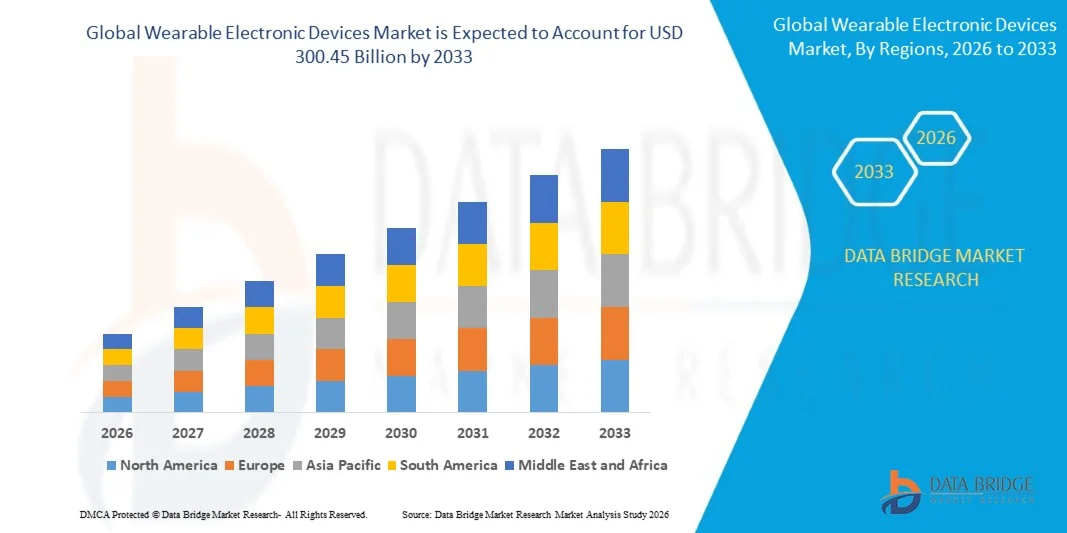
- Согласно анализу Data Bridge Market Research, глобальный размер рынка носимых электронных устройств был оценен как$94,21 млрд в 2025 годуОжидается, что он достигнет300,45 млрд долларов к 2033 году, вCAGR 15,60%в течение прогнозируемого периода
- Рост рынка в значительной степени обусловлен растущим внедрением потребителями умных часов, фитнес-трекеров и устройств мониторинга здоровья.
- Повышение осведомленности о личном здоровье и благополучии в сочетании с интеграцией технологий ИИ и IoT стимулирует спрос на подключенные носимые устройства.
Размер рынка и прогноз
- Глобальная рыночная стоимость (2025):$94,21 млрд.
- Ожидаемая рыночная стоимость (2033):$300,45 млрд.
- Прогноз CAGR (2026-2033):15.60%
Каковы основные тенденции рынка носимых электронных устройств
- Рынок стал свидетелем значительных инноваций в функциональности устройств, включая мониторинг здоровья в режиме реального времени, отслеживание ЭКГ, анализ сна и фитнес-коучинг на основе ИИ.
- Увеличение проникновения смартфонов и улучшение беспроводной связи облегчают бесшовную интеграцию носимых устройств в повседневную жизнь.
- Северная Америка доминировала на рынке носимых электронных устройств с самой большой долей дохода в 38,5% в 2025 году, чему способствовало растущее внедрение фитнес-трекеров, умных часов и устройств для мониторинга здоровья, а также растущее понимание цифровых оздоровительных решений.
- Ожидается, что в Азиатско-Тихоокеанском регионе будут наблюдаться самые высокие темпы роста на мировом рынке носимых электронных устройств, обусловленные быстрой урбанизацией, ростом располагаемых доходов, технологическими достижениями в таких странах, как Китай, Япония и Южная Корея, а также растущим спросом на носимые устройства для фитнеса, образа жизни и здравоохранения.
- Сегмент Sensing Components занимал самую большую долю рынка в 2025 году, что обусловлено растущим спросом на точное отслеживание здоровья, физической формы и активности. Такие датчики, как акселерометры, гироскопы, оптические мониторы сердечного ритма и датчики температуры, имеют решающее значение для мониторинга в реальном времени и персонализированной информации. Растущее внедрение носимых устройств в здравоохранении, фитнесе и промышленных приложениях повышает спрос на надежные и точные чувствительные компоненты. Кроме того, миниатюризация и достижения в сенсорных технологиях улучшают функциональность, сохраняя при этом комфорт и портативность.
Сфера охвата и сегментация рынка носимых электронных устройств
|
Атрибуты |
Носимые электронные устройства ключевые рыночные идеи |
|
Сегменты покрыты |
|
|
Страны, охваченные |
Северная Америка
Европа
Азиатско-Тихоокеанский регион
Ближний Восток и Африка
Южная Америка
|
|
Ключевые игроки рынка |
•Apple Inc.(США) |
|
Рыночные возможности |
• Расширение использования устройств мониторинга здоровья и фитнеса |
|
Информационные наборы данных с добавленной стоимостью |
В дополнение к информации о рыночных сценариях, таких как рыночная стоимость, темпы роста, сегментация, географическое покрытие и основные игроки, рыночные отчеты, курируемые Data Bridge Market Research, также включают углубленный экспертный анализ, географически представленное производство и мощности компании, сетевые схемы дистрибьюторов и партнеров, подробный и обновленный анализ ценового тренда и анализ дефицита цепочки поставок и спроса. |
Каковы основные тенденции на рынке носимых электронных устройств
«Повышенный спрос на здоровье, фитнес и подключенные устройства»
Растущее внимание потребителей к личному здоровью и фитнесу значительно формирует рынок носимых электронных устройств, поскольку пользователи все чаще предпочитают устройства, которые контролируют частоту сердечных сокращений, режим сна, физическую активность и другие показатели здоровья. Носимые устройства набирают обороты благодаря их удобству, отслеживанию данных в реальном времени и бесшовной интеграции со смартфонами и приложениями, побуждая производителей внедрять инновации с помощью многофункциональных устройств.
Повышение осведомленности о здоровье, профилактической помощи и цифровом здоровье ускоряет внедрение носимых устройств в фитнес, здравоохранение и корпоративные оздоровительные программы. Потребители активно ищут устройства с улучшенными датчиками, более длительным временем автономной работы и улучшенным подключением, что побуждает бренды разрабатывать более интеллектуальные и интуитивно понятные устройства.
Интеграция с технологиями IoT и AI влияет на решения потребителей о покупке, при этом производители подчеркивают прогнозную аналитику, персонализированные идеи и интеллектуальные уведомления. Эти факторы помогают брендам дифференцировать продукты, повышать лояльность и предоставлять данные о здоровье и образе жизни конечным пользователям.
Например, в 2024 году Fitbit в США и Garmin в Германии расширили свои продуктовые портфели с помощью умных часов и трекеров здоровья с расширенным мониторингом ЭКГ и анализом активности на основе ИИ. Эти устройства были введены в ответ на растущий потребительский спрос на носимые устройства, ориентированные на здоровье, распространяемые по розничным, онлайн и корпоративным каналам оздоровления.
В то время как спрос на рынке растет, устойчивое расширение зависит от непрерывных исследований и разработок, экономически эффективного производства и поддержания удобных для пользователя конструкций с точной производительностью датчиков. Производители также сосредоточены на масштабируемости, кибербезопасности и интеграции с цифровыми платформами здравоохранения для более широкого внедрения.
Динамика рынка носимых электронных устройств
водитель
«Растущее внедрение здоровья, фитнеса и интеллектуальных подключенных устройств»
Повышение осведомленности потребителей о здоровье, фитнесе и хорошем самочувствии является основным драйвером для рынка носимых электронных устройств. Пользователи все чаще интегрируют умные часы, фитнес-группы и носимые мониторы здоровья в повседневную жизнь для отслеживания в реальном времени и оптимизации образа жизни.
Расширение приложений в области мониторинга здравоохранения, спорта, корпоративных оздоровительных программ и дистанционного управления пациентами способствует росту рынка. Носимые устройства обеспечивают действенную информацию, повышают производительность и поощряют методы профилактического ухода.
Производители устройств активно продвигают носимые устройства на базе ИИ, богатые датчиками, с помощью инноваций в продуктах, маркетинговых кампаний и партнерских отношений с поставщиками медицинских услуг. Эти усилия поддерживаются растущими предпочтениями потребителей в удобстве, подключении и персонализированном опыте.
Например, в 2023 году Apple в США и Xiaomi в Китае сообщили об увеличении продаж умных часов и устройств для отслеживания здоровья, что обусловлено высоким потребительским спросом на многофункциональные подключенные носимые устройства. Обе компании подчеркнули бесшовную интеграцию смартфонов, точный мониторинг состояния здоровья и стильный дизайн для укрепления лояльности бренда.
Хотя растущие тенденции в области здравоохранения и подключенных устройств поддерживают рост, более широкое внедрение зависит от эффективности батареи, доступности и защиты конфиденциальности пользователей. Инвестиции в точность датчиков, кибербезопасность и долговечные конструкции будут иметь решающее значение для удовлетворения глобального спроса и поддержания конкурентного преимущества.
Сдержанность/вызов
«Высокая стоимость и конфиденциальность, ограничивающие усыновление»
Относительно более высокая стоимость современных носимых устройств по сравнению с базовыми фитнес-трекерами остается ключевой проблемой, ограничивая принятие среди потребителей, чувствительных к цене. Высокие затраты на НИОКР и компоненты способствуют повышению цен, особенно на устройства с поддержкой ИИ и медицинского класса.
Проблемы потребителей в отношении конфиденциальности данных, кибербезопасности и сбора конфиденциальной информации о здоровье ограничивают использование в определенных регионах. Отсутствие доверия к обработке данных может замедлить проникновение на рынок, несмотря на расширенные функции.
Проблемы в цепочке поставок, включая нехватку компонентов, ограничения на поставку аккумуляторов и высокотехнологичные производственные требования, также влияют на рост рынка. Компании должны инвестировать в надежные производственные сети и контроль качества для поддержания стабильной производительности устройств.
Например, в 2024 году производители носимых устройств в Индии и Бразилии сообщили о более медленном использовании умных часов премиум-класса для мониторинга здоровья из-за проблем с доступностью и конфиденциальностью. Для преодоления барьеров, препятствующих внедрению, необходимы маркетинговые стратегии, в которых особое внимание уделяется обеспечению безопасности данных и соблюдению требований страхования в отношении здоровья.
Преодоление этих проблем потребует экономически эффективного производства, надежных мер защиты данных и целенаправленных образовательных кампаний для потребителей. Сотрудничество с поставщиками медицинских услуг, страховщиками и технологическими партнерами может помочь раскрыть долгосрочный потенциал роста мирового рынка носимых электронных устройств.
Как сегментируется рынок носимых электронных устройств
Рынок сегментируется на основе компонентов, продуктов, технологий и приложений.
• по компонентам
На основе компонента рынок носимых электронных устройств сегментирован на сетевые и позиционные компоненты, компоненты энергоснабжения, сенсорные компоненты, оптоэлектронные и дисплейные компоненты, компоненты управления и компоненты интерфейса. Сегмент Sensing Components занимал самую большую долю рынка в 2025 году, что обусловлено растущим спросом на точное отслеживание здоровья, физической формы и активности. Такие датчики, как акселерометры, гироскопы, оптические мониторы сердечного ритма и датчики температуры, имеют решающее значение для мониторинга в реальном времени и персонализированной информации. Растущее внедрение носимых устройств в здравоохранении, фитнесе и промышленных приложениях повышает спрос на надежные и точные чувствительные компоненты. Кроме того, миниатюризация и достижения в сенсорных технологиях улучшают функциональность, сохраняя при этом комфорт и портативность.
Ожидается, что в сегменте компонентов для сетей и позиционирования будут наблюдаться самые быстрые темпы роста с 2026 по 2033 год, обусловленные носимыми устройствами с поддержкой IoT, которые требуют подключения GPS, Bluetooth и Wi-Fi для беспрепятственной передачи данных и удаленного мониторинга. Эти компоненты позволяют носимым устройствам общаться со смартфонами, облачными платформами и другими устройствами для отслеживания и уведомлений в режиме реального времени. Промышленные, коммерческие и фитнес-приложения все больше полагаются на передовые сетевые компоненты для повышения операционной эффективности и пользовательского опыта. Растущий спрос на услуги в области спорта, логистики и здравоохранения ускоряет расширение этого сегмента.
• По продукту
На основе продукта рынок сегментирован на Wrist-Wear, Eye-Wear, Body-Wear, Foot-Wear, Neck-Wear и другие. Сегмент Wrist-Wear занимал самую большую долю рынка в 2025 году из-за доминирования умных часов и фитнес-диапазонов, предлагая множество функций, таких как мониторинг сердечного ритма, отслеживание активности, уведомления и интеграция смартфонов. Наручные устройства предпочтительны для их удобства, универсальности и простоты использования в потребительских, медицинских и корпоративных оздоровительных программах. Производители продолжают внедрять инновации с расширенными функциями, такими как мониторинг ЭКГ, анализ сна и фитнес-коучинг на основе ИИ, повышая их привлекательность. Растущая тенденция модных, настраиваемых носимых устройств также поддерживает принятие наручных изделий во всем мире.
Ожидается, что сегмент Eye-Wear продемонстрирует самый быстрый рост с 2026 по 2033 год, чему способствуют очки дополненной реальности, умные очки и промышленные головные устройства. Устройства из глазной одежды набирают обороты в промышленном обучении, удаленном сотрудничестве, играх и диагностике в области здравоохранения. Передовые технологии отображения и легкие конструкции повышают комфорт пользователя и захватывающий опыт. Увеличение внедрения предприятия для производительности труда, безопасности и обучения также способствует быстрому росту. Рост инвестиций в AR и приложения смешанной реальности способствует дальнейшему развитию этого сегмента.
• Технология
На основе технологий рынок сегментирован на Display Technologies, Computing Technologies, Positioning Technologies, Networking Technologies, Speech Recognition Technology и Sensor Technologies. Сенсорные технологии доминировали в 2025 году, благодаря их важной роли в обеспечении точных биометрических показаний, зондирования окружающей среды и отслеживания активности для приложений для здоровья, фитнеса и хорошего самочувствия. Усовершенствованная интеграция датчиков позволяет постоянно контролировать, персонализировать информацию и прогнозировать аналитику здоровья. Текущие инновации в миниатюризации, работе с низким энергопотреблением и высокоточных измерениях улучшают общую функциональность устройства.
Ожидается, что технологии позиционирования станут свидетелями самого быстрого роста с 2026 по 2033 год, чему способствуют GPS, геолокация с поддержкой IoT и навигационные приложения в носимых устройствах. Эти технологии имеют решающее значение для отслеживания фитнеса, спорта на открытом воздухе, промышленного мониторинга и отслеживания активов. Спрос на услуги определения местоположения в режиме реального времени, оптимизацию маршрута и оповещения о чрезвычайных ситуациях стимулирует рост. Интеграция с ИИ и облачными платформами еще больше повышает функциональность и удобство использования. Технологии позиционирования также набирают обороты в здравоохранении и логистике для точного мониторинга и операционной эффективности.
• Подача заявки
На основе применения рынок сегментируется на приложения для здравоохранения, потребительские приложения, промышленные приложения и коммерческие приложения. Сегмент потребительских приложений занимал самую большую долю рынка в 2025 году, чему способствовало растущее внедрение носимых устройств для фитнеса, отслеживания образа жизни и подключенного опыта. Пользователи все чаще предпочитают умные устройства, которые контролируют повседневную деятельность, сон и частоту сердечных сокращений, предлагая уведомления и мобильную интеграцию. Растущая популярность корпоративных оздоровительных программ и подписок на образ жизни также подпитывает спрос. Постоянные инновации, эстетический дизайн и многофункциональные возможности делают потребительские приложения основным источником дохода.
Ожидается, что с 2026 по 2033 год приложения для здравоохранения станут свидетелями самого быстрого роста из-за растущего внедрения носимых медицинских устройств для удаленного мониторинга пациентов, лечения хронических заболеваний и персонализированного здравоохранения. Носимые устройства обеспечивают непрерывное отслеживание состояния здоровья, раннюю диагностику и интеграцию телемедицины, улучшая взаимодействие с пациентами и результаты. Больницы, клиники и программы по уходу на дому все чаще включают носимые решения в планы ухода. Достижения в области анализа данных, искусственного интеллекта и взаимодействия с ИТ-системами здравоохранения повышают их эффективность и надежность. Старение населения и увеличение распространенности заболеваний, связанных с образом жизни, еще больше укрепляют потенциал роста.
В каком регионе находится наибольшая доля рынка носимых электронных устройств
Северная Америка доминировала на рынке носимых электронных устройств с самой большой долей дохода в 38,5% в 2025 году, что обусловлено растущим внедрением фитнес-трекеров, умных часов и устройств для мониторинга здоровья, а также растущей осведомленностью о цифровых оздоровительных решениях.
Потребители в регионе высоко ценят отслеживание состояния здоровья в режиме реального времени, персонализированные идеи и бесшовную интеграцию со смартфонами и другими подключенными устройствами.
Это широкое распространение также поддерживается высокими располагаемыми доходами, технически подкованным населением и корпоративными оздоровительными программами, устанавливающими носимые устройства в качестве основных устройств для личного и профессионального использования.
Американский рынок носимых электронных устройств Insight
Рынок носимых электронных устройств в США занял самую большую долю дохода в 2025 году в Северной Америке, чему способствовало быстрое внедрение умных часов, фитнес-групп и носимых медицинских решений. Потребители все чаще отдают приоритет личному здоровью, мониторингу образа жизни и удобству в подключенных устройствах. Растущее предпочтение носимых устройств с поддержкой ИИ, интеграция мобильных приложений и функции с голосовым управлением способствуют дальнейшему росту рынка. Кроме того, партнерские отношения с поставщиками медицинских услуг и интеграция с цифровыми платформами здравоохранения значительно способствуют расширению носимой экосистемы.
Европейский рынок носимых электронных устройств Insight
Ожидается, что на европейском рынке носимых электронных устройств будут наблюдаться самые быстрые темпы роста с 2026 по 2033 год, в основном за счет повышения осведомленности о здоровье, инициатив в области профилактического здравоохранения и внедрения подключенных устройств в жилом и корпоративном секторах. Растущая урбанизация в сочетании со спросом на интеллектуальные фитнес- и оздоровительные устройства поощряет принятие. Потребителей привлекают удобства, стиль и энергоэффективность носимых устройств, в то время как нормативные рамки, способствующие цифровому здоровью и безопасности, повышают доверие рынка.
Британский рынок носимых электронных устройств Insight
Ожидается, что рынок носимых электронных устройств в Великобритании будет наблюдать самые быстрые темпы роста с 2026 по 2033 год, чему способствует растущий интерес к мониторингу здоровья и фитнеса, а также растущий спрос на интеллектуальные и подключенные устройства. Обеспокоенность по поводу личного здоровья, профилактики хронических заболеваний и цифровых решений в области здравоохранения мотивирует потребителей и предприятия внедрять носимые устройства. Надежная инфраструктура электронной коммерции и розничной торговли в Великобритании также поддерживает расширение распространения и доступности передовых носимых продуктов.
Немецкий рынок носимых электронных устройств Insight
Ожидается, что на рынке носимых электронных устройств в Германии будут наблюдаться самые быстрые темпы роста с 2026 по 2033 год, обусловленные повышением осведомленности о решениях в области здравоохранения, фитнеса и профилактического ухода, а также технологическими инновациями в носимых датчиках и аналитике на основе искусственного интеллекта. Сильная инфраструктура здравоохранения Германии, акцент на устойчивость и склонность к точному здоровью способствуют внедрению как в жилом, так и в корпоративном сегментах. Интеграция носимых устройств с мобильными приложениями и платформами мониторинга здоровья еще больше повышает функциональность и привлекательность для потребителей.
Азиатско-Тихоокеанский рынок носимых электронных устройств
Ожидается, что рынок носимых электронных устройств в Азиатско-Тихоокеанском регионе будет наблюдать самые высокие темпы роста с 2026 по 2033 год, чему способствует рост располагаемых доходов, урбанизация и технологические достижения в таких странах, как Китай, Япония и Индия. Растущий интерес региона к фитнесу, мониторингу образа жизни и профилактическому здравоохранению поддерживает внедрение носимых устройств. Правительственные инициативы по содействию интеграции цифровых технологий ускоряют рост рынка. Кроме того, APAC становится производственным центром для носимой электроники, увеличивая доступность и доступность для более широкой потребительской базы.
Японский рынок носимых электронных устройств Insight
Ожидается, что на рынке носимых электронных устройств в Японии будут наблюдаться самые быстрые темпы роста с 2026 по 2033 год, обусловленные технически подкованным населением страны, высоким внедрением подключенных устройств и акцентом на здоровье и удобство. Потребители все чаще интегрируют носимые устройства в повседневную жизнь для фитнеса, лечения хронических заболеваний и ухода за пожилыми людьми. Интеграция носимых устройств с другими устройствами с поддержкой IoT, мобильными приложениями и платформами мониторинга здоровья еще больше подпитывает рост. Старение населения Японии также, вероятно, будет стимулировать спрос на удобные, безопасные и надежные носимые решения в жилых и медицинских учреждениях.
Китайский рынок носимых электронных устройств Insight
Китайский рынок носимых электронных устройств составил самую большую долю доходов в Азиатско-Тихоокеанском регионе в 2025 году из-за растущего среднего класса, быстрой урбанизации и широкого внедрения интеллектуальных устройств. Китай является крупным центром носимого производства и инноваций, и носимые устройства становятся все более популярными в потребительских, медицинских и корпоративных приложениях. Растущая тенденция к умным городам, доступность устройств и сильные отечественные бренды являются ключевыми факторами, способствующими росту рынка в Китае.
Какие компании занимают лидирующие позиции на рынке носимых электронных устройств
Индустрия носимых электронных устройств в основном возглавляется хорошо зарекомендовавшими себя компаниями, в том числе:
•Apple Inc.(США)
•ADIDAS AG(Германия)
Интеллектуальная собственность AT&T (США)
• Google (США)
•Корпорация Seiko Epson(Япония)
Imprint Energy, Inc. (США)
GlassUp S.r.l. (Италия)
Nike, Inc. (США)
•Компания Infineon Technologies AG(Германия)
•Fitbit LLC(США)
Shimmer (Ирландия)
Xiaomi (Китай)
Самсунг (Южная Корея)
LG Electronics (Южная Корея)
Sony Corporation (Япония)
Epson America, Inc. (США)
• Huawei Technologies Co., Ltd. (Китай)
• Microsoft (США)
• Garmin Ltd. (Швейцария)
SKU-
Получите онлайн-доступ к отчету на первой в мире облачной платформе рыночной аналитики

- Интерактивная панель анализа данных
- Панель анализа компании для возможностей с высоким потенциалом роста
- Доступ аналитика-исследователя для настройки и запросов
- Анализ конкурентов с помощью интерактивной панели
- Последние новости, обновления и анализ тенденций
- Используйте возможности сравнительного анализа для комплексного отслеживания конкурентов
Методология исследования
Сбор данных и анализ базового года выполняются с использованием модулей сбора данных с большими размерами выборки. Этап включает получение рыночной информации или связанных данных из различных источников и стратегий. Он включает изучение и планирование всех данных, полученных из прошлого заранее. Он также охватывает изучение несоответствий информации, наблюдаемых в различных источниках информации. Рыночные данные анализируются и оцениваются с использованием статистических и последовательных моделей рынка. Кроме того, анализ доли рынка и анализ ключевых тенденций являются основными факторами успеха в отчете о рынке. Чтобы узнать больше, пожалуйста, запросите звонок аналитика или оставьте свой запрос.
Ключевой методологией исследования, используемой исследовательской группой DBMR, является триангуляция данных, которая включает в себя интеллектуальный анализ данных, анализ влияния переменных данных на рынок и первичную (отраслевую экспертную) проверку. Модели данных включают сетку позиционирования поставщиков, анализ временной линии рынка, обзор рынка и руководство, сетку позиционирования компании, патентный анализ, анализ цен, анализ доли рынка компании, стандарты измерения, глобальный и региональный анализ и анализ доли поставщика. Чтобы узнать больше о методологии исследования, отправьте запрос, чтобы поговорить с нашими отраслевыми экспертами.
Доступна настройка
Data Bridge Market Research является лидером в области передовых формативных исследований. Мы гордимся тем, что предоставляем нашим существующим и новым клиентам данные и анализ, которые соответствуют и подходят их целям. Отчет можно настроить, включив в него анализ ценовых тенденций целевых брендов, понимание рынка для дополнительных стран (запросите список стран), данные о результатах клинических испытаний, обзор литературы, обновленный анализ рынка и продуктовой базы. Анализ рынка целевых конкурентов можно проанализировать от анализа на основе технологий до стратегий портфеля рынка. Мы можем добавить столько конкурентов, о которых вам нужны данные в нужном вам формате и стиле данных. Наша команда аналитиков также может предоставить вам данные в сырых файлах Excel, сводных таблицах (книга фактов) или помочь вам в создании презентаций из наборов данных, доступных в отчете.











