


Global Wireless Connectivity Market Segmentation, By Connectivity Technology (Wi-Fi, Bluetooth Classic, Bluetooth 4X, Bluetooth 5X, ZigBee, Z-Wave, Thread, NFC, GNSS, EnOcean, Cellular M2M Technologies, UWB, LoRa, SigFox, NB-IoT, LTE CATM1, and Others), Type (WLAN, WPAN, Satellite, LPWAN, and Cellular M2M), End Use (Wearable Devices, Healthcare, Consumer Electronics, Building Automation, Automotive & Transportation, and Others) - Industry Trends and Forecast to 2033
Каков размер и темпы роста мирового рынка беспроводной связи
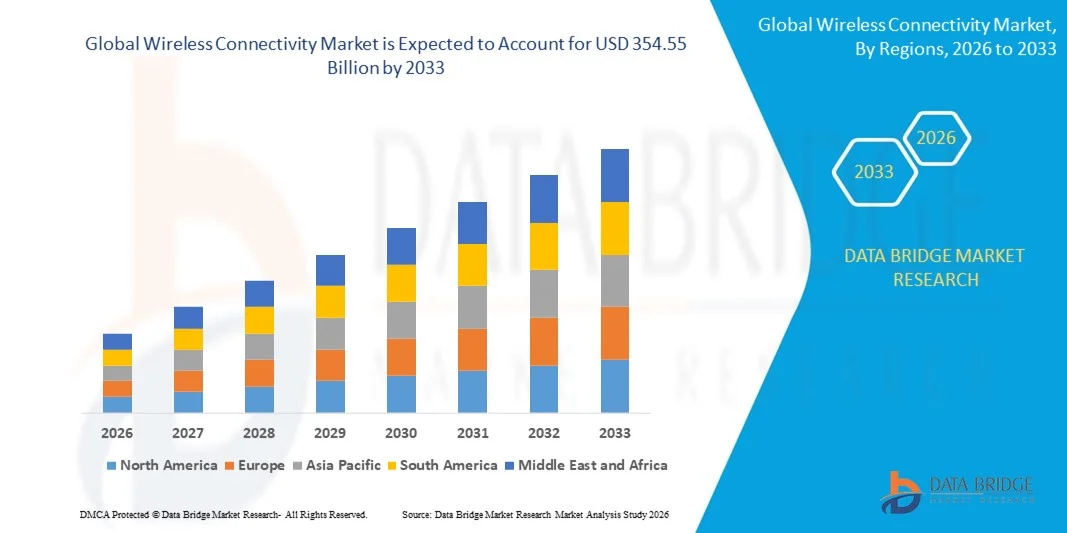
- Согласно анализу Data Bridge Market Research, размер мирового рынка беспроводной связи был оценен как$115,10 млрд в 2025 годуОжидается, что он достигнет354,55 млрд долларов к 2033 году, вCAGR 15.10%в течение прогнозируемого периода
- Увеличение спроса на беспроводные сенсорные сети в развитии умной инфраструктуры выступает одним из основных факторов, стимулирующих рынок беспроводной связи.
- Рост спроса на смартфоны и другие беспроводные устройства, такие как Wi-Fi, Bluetooth и ZigBee, а также увеличение тенденций, таких как работа из дома и виртуальное обучение, относящиеся к пандемии COVID-19 в регионе, стимулируют рост рынка.
Размер рынка и прогноз
- Глобальная рыночная стоимость (2025):$115,10 млрд.
- Ожидаемая рыночная стоимость (2033):354,55 млрд долларов
- Прогноз CAGR (2026–2033):15.10%
Каковы основные выводы рынка беспроводной связи
- Рост спроса на маломощные широкополосные сети (LPWA) в приложениях IoT и рост уровня проникновения в Интернет еще больше влияют на рынок.
- Кроме того, урбанизация и оцифровка, внедрение Интернета вещей (IoT) и быстрое развитие радиочастот положительно влияют на рынок беспроводной связи. Кроме того, развитие сети 5G и поддержка со стороны правительств по всему миру для НИОКР в Интернете вещей расширяют выгодные возможности для игроков рынка.
- Северная Америка доминировала на рынке беспроводной связи с долей дохода 40,8% в 2025 году, чему способствовало сильное развертывание Wi-Fi 6/6E, Bluetooth 5X, инфраструктуры 5G и передовых экосистем IoT в США и Канаде.
- Ожидается, что Азиатско-Тихоокеанский регион зарегистрирует самый быстрый CAGR в 9,36% с 2026 по 2033 год, чему будет способствовать быстрое расширение производства полупроводников, крупномасштабное развертывание 5G и сильное производство потребительской электроники в Китае, Японии, Индии, Южной Корее и Юго-Восточной Азии.
- Сегмент Wi-Fi доминировал на рынке с долей 34,7% в 2025 году, что обусловлено широким распространением смартфонов, ноутбуков, смарт-телевизоров, промышленных шлюзов и корпоративных сетевых систем.
Сфера охвата и сегментация рынка беспроводной связи
|
Атрибуты |
Беспроводное подключение Key Market Insights |
|
Сегменты покрыты |
|
|
Страны, охваченные |
Северная Америка
Европа
Азиатско-Тихоокеанский регион
Ближний Восток и Африка
Южная Америка
|
|
Ключевые игроки рынка |
|
|
Рыночные возможности |
|
|
Информационные наборы данных с добавленной стоимостью |
В дополнение к информации о рыночных сценариях, таких как рыночная стоимость, темпы роста, сегментация, географическое покрытие и основные игроки, рыночные отчеты, курируемые Data Bridge Market Research, также включают углубленный экспертный анализ, анализ цен, анализ доли бренда, опрос потребителей, анализ демографии, анализ цепочки поставок, анализ цепочки создания стоимости, обзор сырья / расходных материалов, критерии выбора поставщиков, анализ PESTLE, анализ Porter и нормативную базу. |
Каковы основные тенденции на рынке беспроводных соединений
Ускорение интеграции высокоскоростных, маломощных и многопротокольных беспроводных технологий
- Рынок беспроводной связи демонстрирует быструю интеграцию Wi-Fi 6/6E, Bluetooth Low Energy (BLE), 5G, Zigbee и UWB в компактные чипсеты, предназначенные для устройств IoT, умных домов, промышленной автоматизации и бытовой электроники.
- Производители сосредоточены на маломощных архитектурах, краевом интеллекте и многопротокольных решениях System-on-Chip (SoC), которые обеспечивают бесшовное подключение, снижение задержки и улучшенную совместимость устройств.
- Растущий спрос на компактные, аккумуляторные и высокопроизводительные беспроводные модули стимулирует внедрение интеллектуальных носимых устройств, подключенных транспортных средств, медицинских устройств и промышленных развертываний IoT.
- Например, такие компании, как Qualcomm Technologies, Inc., MediaTek Inc., NXP Semiconductors и Nordic Semiconductor ASA, представили передовые многостандартные беспроводные SoC, поддерживающие обработку краев с поддержкой AI и безопасную связь.
- Расширение развертывания «умной» инфраструктуры, решений Индустрии 4.0 и подключенных потребительских экосистем ускоряет переход к высокоскоростным и масштабируемым платформам беспроводной связи.
- По мере глобального расширения цифровых экосистем технологии беспроводного подключения будут оставаться критически важными для обеспечения обмена данными в реальном времени, совместимости устройств и интеллектуальных приложений следующего поколения.
Каковы основные драйверы рынка беспроводных соединений
- Растущий спрос на устройства с поддержкой IoT, интеллектуальную потребительскую электронику, подключенное оборудование для здравоохранения и телематические системы EV значительно ускоряет внедрение беспроводных чипсетов и модулей.
- Например, в 2025 году ведущие компании, такие как Broadcom Inc., Texas Instruments Incorporated и Renesas Electronics Corporation, расширили свои портфели подключения с помощью улучшенных решений Wi-Fi, BLE и суб-ГГц для промышленных и автомобильных приложений.
- Растущее развертывание сетей 5G, проектов «умных городов» и промышленных систем с облачным подключением в США, Европе и Азиатско-Тихоокеанском регионе стимулирует крупномасштабное развертывание беспроводной инфраструктуры.
- Достижения в области связи с низкой задержкой, сетчатых сетей, формирования луча и эффективности спектра повысили производительность, надежность и охват
- Растущее внедрение передовых устройств на базе ИИ, высокоскоростных протоколов передачи данных и безопасных технологий беспроводной аутентификации создает спрос на передовые решения для подключения.
- Поддерживаемый устойчивыми инвестициями в полупроводниковые исследования и разработки, телекоммуникационную инфраструктуру и инициативы цифровой трансформации, рынок беспроводных подключений, по прогнозам, будет испытывать устойчивый долгосрочный рост.
Какой фактор препятствует росту рынка беспроводных соединений
- Высокие затраты на разработку и интеграцию, связанные с передовыми 5G, Wi-Fi 6/6E и многопротокольными чипсетами, ограничивают внедрение среди производителей небольших устройств.
- Например, в течение 2024-2025 годов колебания в цепочках поставок полупроводников и ценообразовании компонентов РЧ повлияли на сроки производства и общие затраты на устройства для нескольких глобальных поставщиков.
- Усложнение управления помехами, перегруженностью спектра, угрозами кибербезопасности и соблюдением нормативных требований создает технические и эксплуатационные проблемы.
- Ограниченная сетевая инфраструктура в некоторых странах с развивающейся экономикой ограничивает проникновение высокоскоростных беспроводных технологий.
- Конкуренция между стандартами подключения и быстрое развитие технологий создают короткий жизненный цикл продукта и ценовое давление для производителей чипсетов.
- Чтобы решить эти проблемы, компании инвестируют в оптимизированные по стоимости конструкции микросхем, улучшенные системы безопасности, энергоэффективные архитектуры и кросс-платформенные решения для взаимодействия для укрепления глобального внедрения технологий беспроводного подключения.
Как сегментируется рынок беспроводных подключений
Рынок сегментирован на основеТехнология подключения, тип и конечное использование.
- Технология Connectivity
На основе технологии подключения рынок беспроводной связи сегментирован на Wi-Fi, Bluetooth Classic, Bluetooth 4X, Bluetooth 5X, ZigBee, Z-Wave, Thread, NFC, GNSS, EnOcean, Cellular M2M Technologies, UWB, LoRa, SigFox, NB-IoT, LTE CAT-M1 и другие. Сегмент Wi-Fi доминировал на рынке с долей 34,7% в 2025 году, что обусловлено широким распространением смартфонов, ноутбуков, смарт-телевизоров, промышленных шлюзов и корпоративных сетевых систем. Непрерывные достижения, такие как Wi-Fi 6 и Wi-Fi 6E, увеличили пропускную способность, уменьшили задержку и повысили эффективность спектра, сделав Wi-Fi основой высокоскоростной беспроводной связи. Сильное внедрение в умных домах, офисах и общественной инфраструктуре также поддерживает лидерство в сегменте.
Сегмент Cellular M2M Technologies, по прогнозам, будет расти самыми быстрыми темпами с 2026 по 2033 год, чему способствует растущее развертывание подключенных транспортных средств, интеллектуальных счетчиков, промышленного IoT, отслеживания активов и удаленного мониторинга здравоохранения. Расширение сетей 5G, NB-IoT и LTE CAT-M1 ускоряет крупномасштабную связь между машинами во всем мире.
- По типу
По типу рынок беспроводной связи сегментирован на WLAN, WPAN, Satellite, LPWAN и Cellular M2M. Сегмент WLAN доминировал на рынке с долей 38,9% в 2025 году, в основном из-за сильной зависимости от локальных сетей Wi-Fi в жилых, коммерческих и промышленных средах. Технологии WLAN обеспечивают высокую скорость передачи данных, низкую задержку и бесшовную интеграцию с корпоративной ИТ-инфраструктурой. Растущее внедрение облаков, гибридные рабочие модели и проникновение интеллектуальных устройств продолжают стимулировать спрос на WLAN в развитых и развивающихся странах.
Ожидается, что сегмент LPWAN будет расти самыми быстрыми темпами с 2026 по 2033 год, чему будет способствовать расширение развертываний IoT, требующих связи на большие расстояния с низким энергопотреблением. Такие технологии, как LoRa и SigFox, набирают обороты в умном сельском хозяйстве, умных городах, логистике и мониторинге коммунальных услуг, где большое время автономной работы и широкий охват имеют решающее значение.
- Конечным использованием
На основе конечного использования рынок беспроводной связи сегментирован на носимые устройства, здравоохранение, потребительскую электронику, автоматизацию зданий, автомобильные и транспортные средства и другие. Сегмент потребительской электроники доминировал на рынке с долей 41,3% в 2025 году, что обусловлено высоким проникновением смартфонов, планшетов, устройств умного дома, игровых консолей и беспроводных аудиосистем. Быстрые инновации в продуктах, растущее проникновение в Интернет и растущий спрос на бесшовную совместимость устройств значительно способствуют росту сегмента. Интеграция Wi-Fi, Bluetooth 5X и UWB в устройствах следующего поколения еще больше усиливает внедрение подключения.
Сегмент Automotive & Transportation, по прогнозам, будет расти самыми быстрыми темпами CAGR с 2026 по 2033 год, чему способствует растущая интеграция подключенных автомобильных платформ, связи V2X, телематики EV, систем ADAS и информационно-развлекательной системы в автомобиле. Растущая цифровизация автомобильных архитектур и акцент на подключение транспортных средств ускоряют развертывание беспроводных технологий в автомобильном секторе.
В каком регионе самая большая доля рынка беспроводных соединений
- Северная Америка доминировала на рынке беспроводной связи с долей дохода 40,8% в 2025 году, чему способствовало сильное развертывание Wi-Fi 6/6E, Bluetooth 5X, инфраструктуры 5G и передовых экосистем IoT в США и Канаде. Высокое внедрение подключенных устройств, технологий умного дома, промышленных IoT-платформ и облачных интегрированных систем связи продолжает стимулировать региональный спрос.
- Ведущие компании, такие как Qualcomm Technologies, Inc., Broadcom Inc. и Texas Instruments Incorporated, постоянно внедряют передовые многопротокольные чипсеты, передовые модули RF и безопасные платформы подключения, укрепляя технологическое лидерство.
- Сильная телекоммуникационная инфраструктура, ранний запуск 5G, высокие расходы на НИОКР и быстрая цифровая трансформация на предприятиях еще больше укрепляют доминирующее положение Северной Америки на рынке.
Американский рынок беспроводной связи Insight
США являются крупнейшим поставщиком в Северной Америке, поддерживаемым обширными полупроводниковыми инновациями, крупномасштабным развертыванием 5G и широкой интеграцией беспроводных модулей в автомобильной, медицинской, бытовой электронике и промышленной автоматизации. Растущее развитие периферийных устройств с поддержкой ИИ, систем подключения EV, сетей «умных городов» и корпоративных облачных платформ усиливает спрос на высокоскоростные беспроводные решения с низкой задержкой. Присутствие ведущих производителей чипсетов, сильные экосистемы стартапов и постоянные инвестиции в телекоммуникационную инфраструктуру следующего поколения стимулируют устойчивое расширение рынка.
Канадский рынок беспроводной связи Insight
Канада вносит значительный вклад в региональный рост, стимулируемый расширением внедрения IoT, модернизацией телекоммуникаций и увеличением развертывания интеллектуальных инфраструктурных проектов. Растущее использование беспроводных модулей в системах мониторинга здравоохранения, промышленной автоматизации и управления энергопотреблением поддерживает устойчивый спрос. Поддерживаемые правительством инициативы по цифровой трансформации, сильные исследовательские университеты и растущее покрытие 5G еще больше ускоряют внедрение беспроводной связи в коммерческих и государственных приложениях.
Азиатско-Тихоокеанский рынок беспроводной связи
Ожидается, что Азиатско-Тихоокеанский регион зарегистрирует самый быстрый CAGR в 9,36% с 2026 по 2033 год, чему будет способствовать быстрое расширение производства полупроводников, крупномасштабное развертывание 5G и сильное производство потребительской электроники в Китае, Японии, Индии, Южной Корее и Юго-Восточной Азии. Массовое производство смартфонов, устройств IoT, автомобильной электроники и промышленных датчиков значительно увеличивает спрос на экономичные и масштабируемые беспроводные технологии. Рост инвестиций в аппаратное обеспечение ИИ, интеллектуальное производство и цифровую инфраструктуру еще больше ускоряет рост регионального рынка.
Китайский рынок беспроводной связи Insight
Китай лидирует в Азиатско-Тихоокеанском регионе благодаря доминирующей производственной базе электроники и агрессивному расширению инфраструктуры 5G. Сильная государственная поддержка самообеспечения полупроводников, развития IoT и инициатив «умного города» стимулирует широкое внедрение технологий Wi-Fi, сотовой связи M2M и LPWAN. Конкурентные производственные возможности и большой внутренний спрос укрепляют позиции Китая в глобальной экосистеме беспроводной связи.
Японский рынок беспроводной связи Insight
Япония демонстрирует устойчивый рост, поддерживаемый передовыми телекоммуникационными сетями, автомобильными инновациями и развитием робототехники. Увеличение интеграции беспроводной связи в подключенных транспортных средствах, интеллектуальных заводах и системах здравоохранения стимулирует спрос. Ориентация на надежность, стандарты высокоскоростной связи и точное проектирование поддерживает долгосрочное расширение рынка.
Индийский рынок беспроводной связи Insight
Индия становится быстрорастущим рынком, движимым расширением проникновения смартфонов, поддерживаемыми правительством цифровыми программами и растущим развертыванием IoT. Рост телекоммуникационной инфраструктуры, подключения к электромобилям и промышленной автоматизации усиливает спрос на беспроводные чипсеты и модули. Расширение центров полупроводникового проектирования и экосистем стартапов еще больше ускоряет развитие рынка.
Рынок беспроводной связи Южной Кореи Insight
Южная Корея вносит значительный вклад благодаря сильному лидерству 5G, передовому производству полупроводников и высокому внедрению умной потребительской электроники. Быстрые инновации в процессорах ИИ, устройствах памяти и подключенных автомобильных платформах увеличивают зависимость от высокопроизводительных беспроводных решений. Технологический прогресс и ориентированное на экспорт производство электроники продолжают укреплять региональный рост.
Каковы основные компании на рынке беспроводных соединений
Индустрия беспроводной связи в основном возглавляется хорошо зарекомендовавшими себя компаниями, в том числе:
- Intel Corporation (США)
- Texas Instruments Incorporated (США)
- Qualcomm Technologies, Inc. (США)
- Broadcom Inc. (США)
- STMicroelectronics (Швейцария)
- NXP Semiconductors (Нидерланды)
- Microchip Technology Inc. (США)
- MediaTek Inc. (Тайвань)
- Cypress Semiconductor Corporation (США)
- Renesas Electronics Corporation (Япония)
- EnOcean GmbH (Германия)
- NEXCOM International Co., Ltd. (Тайвань)
- Skyworks Solutions, Inc. (США)
- Murata Manufacturing Co., Ltd. (Япония)
- Marvell Technology, Inc. (США)
- Nordic Semiconductor ASA (Норвегия)
- ESPRESSIF SYSTEMS (SHANGHAI) CO., LTD. (Китай)
- CEVA, Inc. (США)
- Quantenna Communications, Inc. (США)
- PERASO TECHNOLOGIES INC. (Канада)
- Panasonic Corporation (Япония)
Каковы последние события на мировом рынке беспроводных соединений
- В мае 2024 года AST SpaceMobile объявила о планах по развертыванию пяти коммерческих спутников на низкой околоземной орбите, чтобы обеспечить космическую широкополосную сеть, которая подключается непосредственно к мобильным телефонам через сеть AT&T, укрепляя глобальную связь напрямую с устройством и расширяя охват в отдаленных и недостаточно обслуживаемых регионах, тем самым ускоряя эволюцию беспроводной связи со спутниками по всему миру.
- В мае 2024 года Lightstorm заключила стратегическое сотрудничество с Console Connect для обеспечения расширенного сетевого подключения и беспрепятственного облачного доступа в более чем 180 центрах обработки данных по всему миру, улучшения цифровой инфраструктуры корпоративного уровня и предоставления масштабируемых решений для подключения по требованию для предприятий по всему миру.
- В мае 2024 года Elisa обнародовала свой план по внедрению новых автономных сетевых широкополосных подписок 5G для предприятий и потребителей, разблокируя расширенные возможности 5G, такие как сверхнизкая задержка и сетевое нарезка, тем самым создавая более сильные коммерческие возможности и ускоряя внедрение беспроводной связи следующего поколения.
- В мае 2024 года Blues в партнерстве с Arduino запустила модуль расширения Blues Wireless for Arduino Opta в Automate в Чикаго, улучшив возможности подключения для микро-PLC Arduino Opta и обеспечив более эффективную интеграцию промышленного IoT, тем самым укрепив решения автоматизации с беспроводной поддержкой в интеллектуальных производственных средах.
SKU-
Получите онлайн-доступ к отчету на первой в мире облачной платформе рыночной аналитики

- Интерактивная панель анализа данных
- Панель анализа компании для возможностей с высоким потенциалом роста
- Доступ аналитика-исследователя для настройки и запросов
- Анализ конкурентов с помощью интерактивной панели
- Последние новости, обновления и анализ тенденций
- Используйте возможности сравнительного анализа для комплексного отслеживания конкурентов
Методология исследования
Сбор данных и анализ базового года выполняются с использованием модулей сбора данных с большими размерами выборки. Этап включает получение рыночной информации или связанных данных из различных источников и стратегий. Он включает изучение и планирование всех данных, полученных из прошлого заранее. Он также охватывает изучение несоответствий информации, наблюдаемых в различных источниках информации. Рыночные данные анализируются и оцениваются с использованием статистических и последовательных моделей рынка. Кроме того, анализ доли рынка и анализ ключевых тенденций являются основными факторами успеха в отчете о рынке. Чтобы узнать больше, пожалуйста, запросите звонок аналитика или оставьте свой запрос.
Ключевой методологией исследования, используемой исследовательской группой DBMR, является триангуляция данных, которая включает в себя интеллектуальный анализ данных, анализ влияния переменных данных на рынок и первичную (отраслевую экспертную) проверку. Модели данных включают сетку позиционирования поставщиков, анализ временной линии рынка, обзор рынка и руководство, сетку позиционирования компании, патентный анализ, анализ цен, анализ доли рынка компании, стандарты измерения, глобальный и региональный анализ и анализ доли поставщика. Чтобы узнать больше о методологии исследования, отправьте запрос, чтобы поговорить с нашими отраслевыми экспертами.
Доступна настройка
Data Bridge Market Research является лидером в области передовых формативных исследований. Мы гордимся тем, что предоставляем нашим существующим и новым клиентам данные и анализ, которые соответствуют и подходят их целям. Отчет можно настроить, включив в него анализ ценовых тенденций целевых брендов, понимание рынка для дополнительных стран (запросите список стран), данные о результатах клинических испытаний, обзор литературы, обновленный анализ рынка и продуктовой базы. Анализ рынка целевых конкурентов можно проанализировать от анализа на основе технологий до стратегий портфеля рынка. Мы можем добавить столько конкурентов, о которых вам нужны данные в нужном вам формате и стиле данных. Наша команда аналитиков также может предоставить вам данные в сырых файлах Excel, сводных таблицах (книга фактов) или помочь вам в создании презентаций из наборов данных, доступных в отчете.











