


Global Workflow Orchestration Market Segmentation, By Type (Cloud Orchestration, Data Center Orchestration, Network Management, Business Process Orchestration, and Security Orchestration), Organization Size (Small and Medium-Sized Enterprises (SMES) and Large Enterprises), Vertical (IT and Telecommunication, Media and Entertainment, Banking Financial Services and Insurance (BFSI), E-Commerce, Retail and Consumer Goods, Public Sector, Manufacturing and Automotive, Healthcare and Pharmaceutical, Travel and Hospitality, and Others) - Industry Trends and Forecast to 2033
Каков размер рынка оркестровки и темпы роста
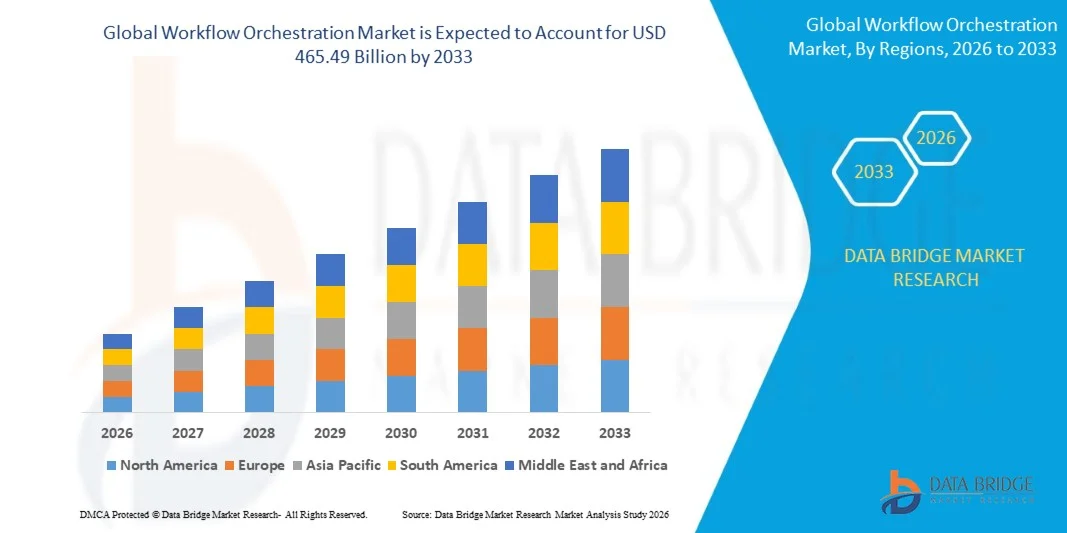
- Согласно анализу Data Bridge Market Research, глобальный объем рынка оркестровки рабочих процессов был оценен как58,67 млрд долларов в 2025 годуОжидается, что он достигнет$465,49 млрд. к 2033 году, вCAGR 29,55%в течение прогнозируемого периода
- Рост рынка в значительной степени обусловлен растущим внедрением облачных вычислений, инициатив цифровой трансформации и автоматизации предприятий, которые побуждают организации внедрять решения для управления рабочим процессом для эффективного управления процессами.
- Кроме того, растущий спрос на операционную информацию в режиме реального времени, автоматизированные бизнес-процессы и интегрированные ИТ-системы создает оркестровку рабочих процессов в качестве важнейшего инструмента для предприятий во всех секторах. Эти факторы ускоряют внедрение платформ оркестровки, тем самым значительно повышая рост отрасли.
Размер рынка и прогноз
- Глобальная рыночная стоимость (2025):58,67 млрд. долларов США
- Ожидаемая рыночная стоимость (2033):$465,49 млрд.
- Прогноз CAGR (2026–2033):29.55%
Каковы основные тенденции рынка оркестровки
- Платформы управления рабочим процессом позволяют организациям автоматизировать, контролировать и управлять сложными ИТ- и бизнес-процессами в приложениях, облачных средах и отделах. Эти решения обеспечивают централизованный контроль, улучшенную эффективность и улучшенную видимость процессов для предприятий всех размеров.
- Растущий спрос на оркестровку рабочих процессов в первую очередь подпитывается потребностью в операционной эффективности, сокращении ручных задач, бесшовной интеграции с облачными и локальными системами и поддержке инициатив автоматизации в масштабах предприятия в таких отраслях, как BFSI, ИТ, производство и здравоохранение.
- Северная Америка доминирует на рынке оркестровки рабочих процессов с долей около 40%в 2025 году, в связи с широким распространением облачной инфраструктуры,цифровая трансформацияинициативы и растущий спрос на автоматизацию в корпоративных ИТ-операциях
- Ожидается, что Азиатско-Тихоокеанский регион станет самым быстрорастущим регионом на рынке оркестровки рабочих процессов в течение прогнозируемого периода из-за быстрой цифровизации, растущего внедрения облачных технологий и технологических инвестиций в таких странах, как Китай, Индия и Япония.
- Сегмент облачной оркестровки доминировал на рынке с долей рынка 39% в 2025 году из-за растущего внедрения облачной инфраструктуры и необходимости бесшовного управления гибридными и многооблачными средами. Организации предпочитают облачную оркестровку за ее способность автоматизировать развертывание, масштабирование и управление приложениями на различных облачных платформах, снижая ручное усилие и операционную сложность.
Сфера охвата и сегментация рынка оркестровки рабочих процессов
|
Атрибуты |
Оркестрация рабочего процесса Key Market Insights |
|
Сегменты покрыты |
|
|
Страны, охваченные |
Северная Америка
Европа
Азиатско-Тихоокеанский регион
Ближний Восток и Африка
Южная Америка
|
|
Ключевые игроки рынка |
|
|
Рыночные возможности |
|
|
Информационные наборы данных с добавленной стоимостью |
В дополнение к информации о рыночных сценариях, таких как рыночная стоимость, темпы роста, сегментация, географическое покрытие и основные игроки, рыночные отчеты, курируемые Data Bridge Market Research, также включают углубленный экспертный анализ, географически представленное производство и мощности компании, сетевые схемы дистрибьюторов и партнеров, подробный и обновленный анализ ценового тренда и анализ дефицита цепочки поставок и спроса. |
Каковы основные тенденции на рынке оркестровок
«Растущее внедрение облачной оркестровки рабочих процессов»
- Значительной тенденцией на рынке оркестровки рабочего процесса является растущее принятиеоблачныйрешения, обусловленные потребностью предприятий в оптимизации сложных бизнес-процессов, расширении сотрудничества и повышении операционной эффективности. Облачные платформы оркестровки позволяют масштабировать управление рабочими процессами в режиме реального времени в распределенных командах и приложениях, поддерживая более быстрое принятие решений и автоматизацию процессов.
- Например, такие компании, как Apache Airflow и Prefect, предоставляют облачные решения для управления рабочим процессом, которые позволяют организациям автоматизировать конвейеры ETL, задачи обработки данных и многоступенчатые бизнес-процессы. Эти платформы улучшают видимость, обработку ошибок и надежность планирования для крупномасштабных операций.
- Предприятия все чаще интегрируют инструменты управления рабочим процессом с платформами искусственного интеллекта и аналитики, чтобы обеспечить интеллектуальную автоматизацию и прогнозное управление процессами. Эта интеграция позиционирует решения оркестровки как центральные для стратегий цифровой трансформации в различных отраслях промышленности.
- Спрос на платформы с низким кодом и без кода растет, позволяя бизнес-пользователям настраивать рабочие процессы без широкого участия ИТ. Эта тенденция способствует более широкому внедрению инструментов автоматизации во всех отделах и поддержке более быстрых бизнес-инициатив.
- Организации используют оркестровку рабочих процессов для управления гибридными ИТ-средами, координации процессов в облаке, локальных и пограничных системах. Такие возможности повышают операционную устойчивость и позволяют предприятиям поддерживать постоянную производительность в сложной инфраструктуре.
- Рынок стал свидетелем более широкого внедрения отраслевых решений для оркестровки, которые удовлетворяют уникальным операционным требованиям в таких секторах, как финансы, здравоохранение и производство. Эта тенденция ускоряет настройку и специализацию предложений по оркестровке рабочих процессов для поддержки соблюдения нормативных требований и оптимизации процессов.
Динамика рынка оркестровки рабочих процессов
водитель
«Увеличение спроса предприятий на автоматизированные бизнес-процессы»
- Растущая потребность в операционной эффективности, уменьшении ошибок и более быстром выполнении процессов побуждает предприятия внедрять автоматизированные решения для управления рабочим процессом. Эти платформы позволяют организациям стандартизировать повторяющиеся задачи, оптимизировать утверждения и повысить общую производительность бизнеса.
- Например, UiPath и IBM предлагают платформы оркестровки рабочих процессов, которые автоматизируют сложные бизнес-операции, такие как обработка счетов, обслуживание клиентов и управление ИТ-задачами. Эти решения позволяют предприятиям сократить ручное вмешательство, оптимизировать распределение ресурсов и улучшить предоставление услуг.
- Стремление к инициативам цифровой трансформации побуждает предприятия внедрять инструменты оркестровки, которые могут объединять процессы в нескольких приложениях, отделах и регионах. Эта централизация поддерживает лучший мониторинг, отчетность и управление соблюдением.
- Предприятия интегрируют оркестровку с роботизированной автоматизацией процессов (RPA), чтобы обеспечить сквозную автоматизацию бизнес-процессов. Эта комбинация повышает эффективность работы за счет устранения разрыва между человеческими и автоматизированными задачами.
- Растущее внимание к принятию решений на основе данных способствует внедрению платформ оркестровки, которые могут выполнять рабочие процессы на основе аналитики в реальном времени и бизнес-правил. Эта способность позволяет организациям оставаться гибкими и реагировать на меняющиеся рыночные условия.
Сдержанность/вызов
«Комплексность в интеграции мультиоблачных систем и систем наследия»
- Рынок оркестровки рабочих процессов сталкивается с проблемами из-за сложных требований интеграции многооблачных сред и существующих устаревших систем. Организации должны управлять различными платформами, API и форматами данных, что увеличивает сложность развертывания и потребности в ресурсах.
- Например, предприятия, внедряющие решения для оркестровки в AWS, Azure и локальных системах, часто полагаются на MuleSoft или TIBCO для интеграции рабочих процессов, но обеспечение бесшовной связи и согласованности остается технически сложным. Эти интеграции требуют обширной конфигурации, тестирования и мониторинга для предотвращения сбоев рабочего процесса.
- Поддержание безопасности и соответствия данных при организации чувствительных рабочих процессов в гетерогенных средах добавляет еще один уровень сложности. Предприятия должны внедрить надежные механизмы управления и контроля доступа для снижения рисков.
- Зависимость от специализированных навыков и знаний для настройки и управления оркестровкой в различных системах ограничивает быстрое внедрение в некоторых организациях. Подготовка и удержание квалифицированного персонала увеличивает эксплуатационные расходы и замедляет сроки развертывания
- Рынок продолжает сталкиваться с ограничениями из-за проблем совместимости, совместимости версий и ограниченной стандартизации протоколов оркестровки. Эти проблемы в совокупности требуют от поставщиков решений внедрять инновационные инструменты интеграции и улучшать простоту развертывания при сохранении надежности.
Как сегментируется рынок оркестровки
Рынок сегментирован по типу, размеру организации и вертикали.
• По типу
В зависимости от типа, рынок оркестровки рабочих процессов сегментирован на Cloud Orchestration, Data Center Orchestration, Network Management, Business Process Orchestration и Security Orchestration. Сегмент Cloud Orchestration доминировал на рынке с наибольшей долей доходов в 39% в 2025 году, что обусловлено растущим внедрением облачной инфраструктуры и необходимостью бесшовного управления гибридными и многооблачными средами. Организации предпочитают облачную оркестровку за ее способность автоматизировать развертывание, масштабирование и управление приложениями на различных облачных платформах, снижая ручное усилие и операционную сложность. На рынке также наблюдается высокий спрос на облачную оркестровку благодаря своим интеграционным возможностям с трубопроводами DevOps и поддержке контейнерных приложений, повышая операционную эффективность и надежность.
Ожидается, что в сегменте оркестровки бизнес-процессов будут наблюдаться самые быстрые темпы роста с 2026 по 2033 год, что обусловлено растущей потребностью в автоматизации рабочих процессов предприятия и повышении оперативной гибкости. Например, такие компании, как IBM, внедряют решения для управления бизнес-процессами для оптимизации межведомственных процессов и повышения скорости принятия решений. Эти решения позволяют предприятиям проектировать, выполнять и контролировать сложные бизнес-процессы в режиме реального времени, обеспечивая эффективность и сокращая операционные узкие места. Растущая ориентация на цифровую трансформацию и необходимость интеграции различных корпоративных приложений также способствуют более широкому внедрению оркестровки бизнес-процессов.
• По размеру организации
Исходя из размера организации, рынок оркестровки рабочих процессов сегментирован на малые и средние предприятия (МСП) и крупные предприятия. Крупные предприятия доминировали на рынке в 2025 году, что обусловлено их значительными ИТ-бюджетами и необходимостью эффективного управления сложными многооблачными и локальными средами. Предприятия получают выгоду от решений для оркестровки рабочих процессов, автоматизируя повторяющиеся задачи, улучшая совместную работу между командами и обеспечивая соблюдение внутренних и нормативных стандартов. Спрос также обусловлен крупными организациями, стремящимися оптимизировать использование ресурсов, снизить эксплуатационные расходы и ускорить выход на рынок критически важных приложений.
Ожидается, что сегмент МСП станет свидетелем самого быстрого CAGR с 2026 по 2033 год, чему способствует повышение осведомленности о экономически эффективных решениях для оркестровки и масштабируемых облачных предложениях. Например, ServiceNow позволяет МСП внедрять инструменты управления рабочими процессами, которые упрощают управление ИТ-услугами и операционные процессы. Эти решения предоставляют МСП возможности автоматизации, которые ранее были доступны только крупным предприятиям, помогая им повышать производительность, оптимизировать рабочие процессы и эффективно конкурировать на своих соответствующих рынках.
• Вертикальный
На основе вертикали рынок оркестровки рабочего процесса сегментирован на ИТ и телекоммуникации, медиа и развлечения, банковское дело, финансовые услуги и страхование (BFSI), электронную торговлю, розничные и потребительские товары, государственный сектор, производство и автомобилестроение, здравоохранение и фармацевтика, путешествия и гостеприимство и другие. Вертикаль ИТ и телекоммуникаций доминировала на рынке в 2025 году, что обусловлено необходимостью управления крупномасштабными, сложными ИТ-операциями и обеспечения высокой доступности услуг. Организации в этой вертикали принимают решения для автоматизации управления сетью, развертывания приложений и процессов реагирования на инциденты, повышая операционную эффективность и сокращая время простоя. Интеграция с облачными платформами и практиками DevOps также поддерживает широкое внедрение оркестровки рабочих процессов в ИТ и телекоммуникациях.
Ожидается, что вертикаль BFSI станет свидетелем самых быстрых темпов роста с 2026 по 2033 год, чему способствуют растущие инициативы по цифровой трансформации и требования к соблюдению нормативных требований. Например, JPMorgan Chase внедряет решения для управления рабочими процессами для автоматизации бэк-офисных операций и обеспечения безопасной и эффективной обработки финансовых транзакций. Эти решения позволяют учреждениям BFSI повышать операционную гибкость, оптимизировать процессы, ориентированные на клиента, и снижать риски, связанные с ручными операциями, что способствует быстрому внедрению во всем секторе.
В каком регионе самая большая доля рынка оркестровок
- Северная Америка доминировала на рынке оркестровки рабочих процессов с самой большой долей доходов около 40% в 2025 году, чему способствовало широкое внедрение облачной инфраструктуры, инициативы цифровой трансформации и растущий спрос на автоматизацию в корпоративных ИТ-операциях.
- Организации в регионе высоко ценят решения, которые оптимизируют многооблачные и гибридные среды, автоматизируют бизнес-процессы и обеспечивают оперативную информацию в режиме реального времени для повышения эффективности.
- Рост рынка также поддерживается высокими расходами на ИТ, технически подкованной рабочей силой и необходимостью более быстрого развертывания корпоративных приложений, устанавливая оркестровку рабочих процессов в качестве важного инструмента для крупных предприятий и МСП.
Американский рынок оркестровок Workflow
Рынок оркестровки рабочих процессов в США занял самую большую долю доходов в 2025 году в Северной Америке, чему способствовало быстрое внедрение облачных вычислений и растущий акцент на автоматизацию предприятий. Компании отдают приоритет решениям оркестровки для сокращения ручных ИТ-задач, оптимизации рабочих процессов и повышения оперативной гибкости. Растущее внедрение методов DevOps и интеграция с платформами искусственного интеллекта и аналитики способствуют дальнейшему развитию рынка. Кроме того, спрос на масштабируемые и безопасные инструменты оркестровки в таких секторах, как BFSI, ИТ и здравоохранение, значительно способствует расширению рынка.
Европейский рынок оркестровок Workflow
В течение прогнозируемого периода рынок оркестровки рабочих процессов в Европе, по прогнозам, будет расти на значительном уровне CAGR, что обусловлено строгими правилами соблюдения ИТ, растущей потребностью в автоматизации предприятий и инициативами цифровой трансформации. Организации внедряют решения оркестровки для эффективного управления гибридными ИТ-средами и улучшения видимости процессов. Рост также поддерживается урбанизацией, внедрением облачных и ИИ-технологий и сильной ИТ-инфраструктурой в ключевых странах, что приводит к широкому внедрению в BFSI, производстве и ИТ-вертикалях.
Великобритания Workflow Orchestration Market Insight
Ожидается, что в течение прогнозируемого периода рынок оркестровки рабочих процессов в Великобритании будет расширяться на примечательном CAGR, чему способствуют усилия по цифровой трансформации и спрос на повышение операционной эффективности. Организации все чаще используют инструменты оркестровки для автоматизации бизнес-процессов, управления ИТ-ресурсами и улучшения сотрудничества между отделами. Ожидается, что передовая ИТ-инфраструктура страны, высокие темпы внедрения облаков и сильная экосистема корпоративного программного обеспечения продолжат поддерживать рост рынка.
Германия Workflow Orchestration Market Insight
Ожидается, что в течение прогнозируемого периода рынок оркестровки рабочих процессов в Германии будет расти на значительном CAGR, что обусловлено внедрением передовых ИТ-решений, инициативами по цифровизации и необходимостью эффективной работы предприятий. Ориентация Германии на инновации, кибербезопасность и автоматизацию в промышленном и ИТ секторах способствует использованию решений для оркестровки. Интеграция с облачными платформами, инструментами управления бизнес-процессами и аналитикой на основе ИИ становится все более распространенной, согласуясь с организационными целями для эффективности и соответствия.
Азиатско-Тихоокеанский рынок оркестровки рабочих процессов
Рынок оркестровки рабочих процессов в Азиатско-Тихоокеанском регионе будет расти самыми быстрыми темпами в период с 2026 по 2033 год, что обусловлено быстрой цифровизацией, растущим внедрением облачных технологий и технологическими инвестициями в таких странах, как Китай, Индия и Япония. Организации внедряют инструменты оркестровки для автоматизации ИТ-операций, управления сложными многооблачными средами и повышения гибкости бизнеса. Правительственные инициативы по продвижению умных предприятий и растущий спрос на экономически эффективные, масштабируемые решения еще больше ускоряют рост рынка.
Японский рынок оркестровок Workflow
Японский рынок оркестровки рабочих процессов набирает обороты благодаря внедрению высоких технологий, инициативам цифровой трансформации и растущему акценту на операционную эффективность. Предприятия внедряют решения оркестровки для оптимизации рабочих процессов, интеграции ИТ и бизнес-процессов и поддержки расширенной аналитики. Растущий спрос на интеллектуальную автоматизацию в ИТ, BFSI и производственных вертикалях в сочетании с технологически продвинутой рабочей силой стимулирует внедрение как на крупных предприятиях, так и на МСП.
Китайский рынок оркестровок Workflow
Рынок оркестровки рабочих процессов в Китае составил самую большую долю рынка в Азиатско-Тихоокеанском регионе в 2025 году, что объясняется быстрой урбанизацией, расширением ИТ-инфраструктуры предприятий и растущим внедрением облачных и гибридных решений. Организации используют инструменты оркестровки для автоматизации процессов, улучшения предоставления ИТ-услуг и повышения операционной эффективности. Наличие сильных отечественных поставщиков программного обеспечения, правительственных инициатив по цифровизации и высокий спрос в секторах BFSI, производства и электронной коммерции являются ключевыми факторами, способствующими росту рынка в Китае.
Какие компании являются лучшими на рынке оркестровок
Индустрия оркестровки рабочих процессов в основном возглавляется хорошо зарекомендовавшими себя компаниями, в том числе:
- Microsoft (США)
- IBM (США)
- Cisco Systems, Inc. (США)
- Oracle (США)
- VMware Inc. (США)
- Broadcom (США)
- Bertelsmann SE & Co. KGaA (Германия)
- BMC Software, Inc. (США)
- ServiceNow (США)
- Micro Focus (Великобритания)
- Далет (Франция)
- Ayehu Software Technologies, Ltd. (Израиль)
- Check Point Software Technologies Ltd. (Израиль)
- SAP SE (Германия)
- TIBCO Software Inc. (США)
- Wipro Ltd. (Индия)
- Фуджитсу (Япония)
Каковы последние достижения на рынке оркестровок
- В марте 2026 года Hamachi.ai объявила об интеграции с Fynancial, включив свой уровень оркестровки ИИ в рабочие процессы управления капиталом. Эта разработка позволяет финансовым консультантам преобразовывать интеллект домохозяйств в автоматизированные действия, коммуникации с клиентами и операции, соответствующие требованиям. Интеграция подчеркивает внедрение оркестровки рабочих процессов в специализированных, регулируемых отраслях, демонстрируя, как оркестровка на основе ИИ может оптимизировать сложные процессы, улучшить принятие решений и повысить операционную эффективность в секторах с высокими ставками, таких как финансы и управление капиталом.
- В феврале 2026 года Salesforce подписала окончательное соглашение о приобретении Momentum, платформы для общения и управления доходами. Это приобретение усиливает способность Salesforce преобразовывать неструктурированные взаимодействия с клиентами, такие как голосовые и видеоданные, в работоспособный интеллект рабочего процесса. Интеграция улучшает управление с помощью ИИ на платформах Salesforce, таких как Agentforce 360 и Slackbot, что позволяет предприятиям более эффективно автоматизировать доходы и операционные процессы. Разработка позволяет Salesforce захватить большую долю растущего рынка интеллектуальных решений для оркестровки рабочих процессов и увеличивает конкуренцию среди поставщиков корпоративного программного обеспечения.
- В ноябре 2025 года ProcessMaker and Decisions завершили слияние, чтобы создать единую платформу для автоматизации бизнеса и оркестровки. Объединив возможности моделирования процессов ProcessMaker с управлением решениями на основе ИИ от Decisions, объединенная организация предлагает комплексные решения для управления корпоративными рабочими процессами. Эта консолидация позволяет организациям оптимизировать сложные процессы в разных отделах, уменьшить операционные узкие места и ускорить внедрение автоматизации. Слияние отражает рыночную тенденцию к интегрированным платформам оркестровки, которые отвечают требованиям предприятия к масштабируемости, интеграции ИИ и видимости процесса.
- В мае 2025 года ServiceNow запустила расширенную платформу на базе искусственного интеллекта для оркестровки рабочих процессов в масштабах всего предприятия. Платформа объединяет ИИ, данные и рабочие процессы для автоматизации принятия решений в реальном времени и подключения изолированных приложений, предоставляя предприятиям централизованный центр оркестровки. Этот запуск поддерживает растущую потребность в операционной эффективности и более быстром развертывании ИТ и бизнес-процессов в разных отраслях. Платформа позиционирует ServiceNow как ключевого игрока в интеллектуальной оркестровке, обслуживая организации, ищущие решения для автоматизации, которые повышают производительность и минимизируют ручное вмешательство.
- В марте 2025 года ServiceNow завершила приобретение Moveworks, помощника ИИ и поисковой компании. Этот стратегический шаг позволяет ServiceNow интегрировать поддержку и автоматизацию сотрудников на основе искусственного интеллекта в свою платформу управления рабочими процессами, что позволяет быстрее реагировать на запросы обслуживания и беспрепятственно автоматизировать задачи во всех отделах. Приобретение усиливает предложения ServiceNow для крупных предприятий, повышает операционную эффективность и демонстрирует растущий спрос на рынке решений для управления рабочими процессами с поддержкой ИИ, которые улучшают опыт сотрудников и производительность.
SKU-
Получите онлайн-доступ к отчету на первой в мире облачной платформе рыночной аналитики

- Интерактивная панель анализа данных
- Панель анализа компании для возможностей с высоким потенциалом роста
- Доступ аналитика-исследователя для настройки и запросов
- Анализ конкурентов с помощью интерактивной панели
- Последние новости, обновления и анализ тенденций
- Используйте возможности сравнительного анализа для комплексного отслеживания конкурентов
Методология исследования
Сбор данных и анализ базового года выполняются с использованием модулей сбора данных с большими размерами выборки. Этап включает получение рыночной информации или связанных данных из различных источников и стратегий. Он включает изучение и планирование всех данных, полученных из прошлого заранее. Он также охватывает изучение несоответствий информации, наблюдаемых в различных источниках информации. Рыночные данные анализируются и оцениваются с использованием статистических и последовательных моделей рынка. Кроме того, анализ доли рынка и анализ ключевых тенденций являются основными факторами успеха в отчете о рынке. Чтобы узнать больше, пожалуйста, запросите звонок аналитика или оставьте свой запрос.
Ключевой методологией исследования, используемой исследовательской группой DBMR, является триангуляция данных, которая включает в себя интеллектуальный анализ данных, анализ влияния переменных данных на рынок и первичную (отраслевую экспертную) проверку. Модели данных включают сетку позиционирования поставщиков, анализ временной линии рынка, обзор рынка и руководство, сетку позиционирования компании, патентный анализ, анализ цен, анализ доли рынка компании, стандарты измерения, глобальный и региональный анализ и анализ доли поставщика. Чтобы узнать больше о методологии исследования, отправьте запрос, чтобы поговорить с нашими отраслевыми экспертами.
Доступна настройка
Data Bridge Market Research является лидером в области передовых формативных исследований. Мы гордимся тем, что предоставляем нашим существующим и новым клиентам данные и анализ, которые соответствуют и подходят их целям. Отчет можно настроить, включив в него анализ ценовых тенденций целевых брендов, понимание рынка для дополнительных стран (запросите список стран), данные о результатах клинических испытаний, обзор литературы, обновленный анализ рынка и продуктовой базы. Анализ рынка целевых конкурентов можно проанализировать от анализа на основе технологий до стратегий портфеля рынка. Мы можем добавить столько конкурентов, о которых вам нужны данные в нужном вам формате и стиле данных. Наша команда аналитиков также может предоставить вам данные в сырых файлах Excel, сводных таблицах (книга фактов) или помочь вам в создании презентаций из наборов данных, доступных в отчете.











