


North America Hazardous Area Equipment Market Segmentation, By Product (Cable Glands and Accessories, Lighting, Barrier Products, Industrial Controls, Display Products, Enclosures, Motors, Strobe Beacons, and Sensor), Connectivity Service (Wireless and Wired), Industry (Oil and Gas, Chemical, Marine and Shipbuilding, Power and Energy, Metals and Mining, Pharmaceutical, Food and Beverage, Rubber and Plastics, Water and Waste Treatment, Military, and Aerospace) - Industry Trends and Forecast to 2033
Каковы размеры и темпы роста рынка опасного оборудования в Северной Америке
- Согласно анализу рынка Data Bridge Market Research, размер рынка оборудования для опасных зон в Северной Америке был оценен как2,90 млрд долларов в 2025 годуОжидается, что он достигнет4,35 млрд долларов к 2033 году, вCAGR 5,20%в течение прогнозируемого периода
- Растущая глобализация и рост мер промышленной безопасности, особенно в обрабатывающей промышленности, станут основными факторами роста рынка.
- Растущая потребность в принятии международных стандартов безопасности и измерений, растущие технологические достижения в полупроводниковом секторе, увеличение строительства и строительной деятельности, особенно в развивающихся странах, и широкомасштабная индустриализация еще больше усугубят рыночную стоимость.
Каковы основные выводы рынка оборудования для опасных районов
- Растущие расходы на проведение исследований и опытно-конструкторских работ, растущие проверки, измерения и контроля качества в различных обрабатывающих отраслях промышленности и растущий спрос на недорогие и высокие светоотдачи на ватт осветительные решения еще больше проложат путь для роста рынка.
- США доминировали на рынке оборудования для опасных зон Северной Америки с самой большой долей доходов в 32,01% в 2025 году, что обусловлено высоким спросом со стороны нефтяной и газовой, химической, горнодобывающей, фармацевтической и энергетической отраслей.
- Канада, по прогнозам, зарегистрирует самый быстрый CAGR в 8,24% с 2026 по 2033 год, что обусловлено увеличением инвестиций в горнодобывающую промышленность, нефтеносные пески, химическую переработку и производство электроэнергии.
- Сегмент освещения доминировал на рынке с долей 28,6% в 2025 году, поскольку он включает взрывозащищенные и огнезащитные системы освещения, широко используемые на нефтеперерабатывающих заводах, морских платформах, химических заводах и горных участках.
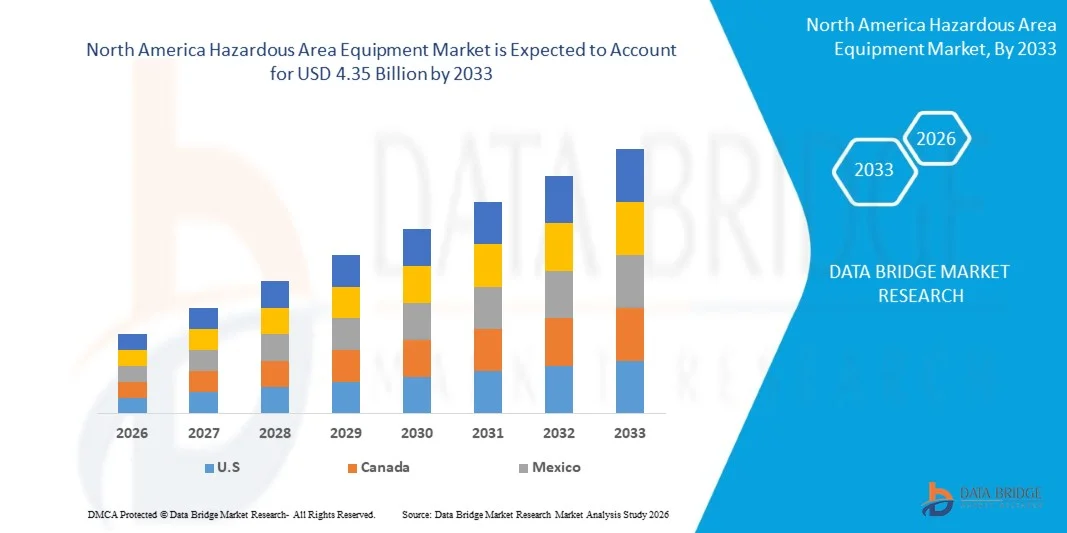
Сегментация рынка оборудования для опасных зон
|
Атрибуты |
Опасное оборудование ключевых рынков |
|
Сегменты покрыты |
|
|
Страны, охваченные |
Северная Америка
|
|
Ключевые игроки рынка |
|
|
Рыночные возможности |
|
|
Информационные наборы данных с добавленной стоимостью |
В дополнение к информации о рыночных сценариях, таких как рыночная стоимость, темпы роста, сегментация, географическое покрытие и основные игроки, рыночные отчеты, курируемые Data Bridge Market Research, также включают углубленный экспертный анализ, анализ цен, анализ доли бренда, опрос потребителей, анализ демографии, анализ цепочки поставок, анализ цепочки создания стоимости, обзор сырья / расходных материалов, критерии выбора поставщиков, анализ PESTLE, анализ Porter и нормативную базу. |
Каковы основные тенденции на рынке оборудования для опасных зон
"Растущее внедрение интеллектуальных, взрывозащищенных и IoT-решений для оборудования опасных районов"
- Рынок оборудования для опасных зон демонстрирует сильное внедрение интеллектуальных, взрывозащищенных и по своей сути безопасных решений для оборудования, предназначенных для поддержки операций в нефтегазовой, химической, горнодобывающей, фармацевтической и промышленной производственных средах.
- Производители внедряют компактные датчики, огнестойкие корпуса, взрывозащищенные системы освещения и беспроводные платформы мониторинга с улучшенной совместимостью в рамках промышленной автоматизации и экосистем IIoT.
- Растущий спрос на безопасность на рабочем месте, соблюдение нормативных требований и удаленный мониторинг в опасных зонах способствует внедрению на нефтеперерабатывающих заводах, морских платформах, перерабатывающих заводах и промышленных объектах.
- Например, такие компании, как Honeywell, Siemens, ABB и Emerson, расширили свои портфели оборудования для опасных зон с помощью передовых решений для мониторинга, контроля и защиты.
- Растущая потребность в оповещениях о безопасности в режиме реального времени, обнаружении газа и постоянном мониторинге оборудования ускоряет переход к подключенным и программным системам опасных зон.
- По мере того, как промышленные экосистемы станут более автоматизированными и ориентированными на безопасность, оборудование для опасных зон будет оставаться критически важным для предотвращения рисков, обеспечения непрерывности работы и обеспечения соответствия.
Каковы основные драйверы рынка оборудования для опасных зон
- Растущий спрос на взрывозащищенные электрические системы, газовые детекторы, огнестойкое освещение и устройства внутренней безопасности связи значительно стимулирует рост рынка.
- Например, в 2025 году ведущие компании, такие как Honeywell, Schneider Electric и ABB, представили передовые решения для опасных зон с улучшенной долговечностью, дистанционной диагностикой и функциями соответствия требованиям безопасности.
- Растущее внедрение в нефтегазовой, нефтехимической, горнодобывающей, фармацевтической и пищевой промышленности повышает спрос в США, Европе и Азиатско-Тихоокеанском регионе.
- Достижения в области датчиков IIoT, беспроводной связи, прогнозного обслуживания и краевой аналитики значительно повысили производительность оборудования, надежность и масштабируемость.
- Повышение внимания к правилам безопасности работников, соблюдению ATEX / IECEx и промышленной цифровой трансформации создает спрос на передовые решения для опасных зон.
- Ожидается, что благодаря увеличению инвестиций в инфраструктуру промышленной безопасности, автоматизацию и интеллектуальное производство рынок оборудования для опасных районов будет наблюдать сильный долгосрочный рост.
Какой фактор препятствует росту рынка оборудования для опасных зон
- Высокие затраты, связанные с передовыми взрывозащищенными системами, безопасными устройствами и оборудованием для мониторинга промышленного уровня, ограничивают внедрение среди малых и средних предприятий.
- Например, в течение 2024-2025 годов колебания цен на сырье, поставки полупроводников и логистика промышленных компонентов увеличили цены на оборудование и время выполнения заказов для нескольких мировых поставщиков.
- Сложность в установке, сертификации и интеграции с устаревшими промышленными системами увеличивает проблемы развертывания и требует квалифицированных специалистов.
- Ограниченная осведомленность и технический опыт на развивающихся рынках в отношении стандартов опасных зон, правил ATEX и конфигурации оборудования замедляет принятие.
- Конкуренция со стороны традиционного промышленного оборудования и недорогих несертифицированных альтернатив создает ценовое давление и ограничивает дифференциацию.
- Для решения этих проблем компании сосредотачиваются на экономически эффективных конструкциях взрывозащищенного оборудования, улучшенной совместимости, возможностях прогнозного обслуживания и облачных платформах мониторинга для увеличения глобального внедрения оборудования для опасных зон.
Как сегментируется рынок опасного оборудования
Рынок сегментирован на основепродукт, услуга подключения и промышленность.
• По продукту
На основе продукта рынок оборудования для опасных зон сегментирован на кабельные железы и аксессуары, освещение, барьерные продукты, промышленные элементы управления, демонстрационные продукты, корпуса, двигатели, маяки и датчики. Сегмент освещения доминировал на рынке с долей 28,6% в 2025 году, поскольку он включает взрывозащищенные и огнезащитные системы освещения, широко используемые на нефтеперерабатывающих заводах, морских платформах, химических заводах и горнодобывающих площадках. Эти системы обеспечивают высокую долговечность, эксплуатационную безопасность и соблюдение правил опасных зон, что способствует активному внедрению на промышленных объектах. Увеличение спроса на энергоэффективное светодиодное освещение, более длительный срок службы и возможности мониторинга в режиме реального времени еще больше укрепляют рост сегмента.
Ожидается, что сегмент датчиков будет расти самыми быстрыми темпами с 2026 по 2033 год, что обусловлено растущим спросом на обнаружение утечек газа, мониторинг окружающей среды, датчик температуры и системы прогнозного обслуживания в опасных промышленных зонах. Рост IIoT и умной инфраструктуры безопасности ускоряет внедрение датчиков.
• Услуги подключения
На основе услуг подключения рынок сегментирован на беспроводные и проводные. Сегмент Wired доминировал на рынке с долей 57,4% в 2025 году, чему способствовали его надежность, низкая задержка и безопасные возможности связи в критически важных промышленных операциях. Решения для оборудования проводных опасных зон широко используются на нефтегазовых заводах, энергетических объектах и оборонных системах, где необходимы бесперебойная связь и соблюдение требований безопасности.
Сегмент беспроводной связи, по прогнозам, будет расти самыми быстрыми темпами с 2026 по 2033 год, что обусловлено растущим внедрением удаленного мониторинга, систем безопасности с поддержкой IoT, мобильной связи рабочей силы и облачного промышленного контроля. Растущее развертывание беспроводных газовых датчиков и средств связи в режиме реального времени еще больше ускоряет рост.
• Промышленность
На основе промышленности рынок сегментирован на нефть и газ, химию, морское и судостроение, энергетику и энергетику, металлы и добычу полезных ископаемых, фармацевтику, продукты питания и напитки, каучук и пластмассы, обработку воды и отходов, военное и аэрокосмическое. Сегмент нефти и газа доминировал на рынке с долей 32,9% в 2025 году, чему способствовало широкое использование взрывозащищенного оборудования на морских платформах, буровых площадках, трубопроводах и НПЗ. Все большее внимание уделяется безопасности работников, защите активов и соблюдению стандартов ATEX и IECEx.
Ожидается, что энергетический сегмент будет расти самыми быстрыми темпами с 2026 по 2033 год, чему способствует увеличение инвестиций в электростанции, объекты возобновляемой энергии, системы хранения аккумуляторов и инфраструктуру безопасности сети. Растущие требования к промышленной автоматизации и мониторингу опасных зон способствуют активному внедрению этого сегмента.
В какой стране находится наибольшая доля рынка оборудования для опасных зон
- США доминировали на рынке оборудования для опасных зон Северной Америки с самой большой долей дохода в 32,01% в 2025 году, что обусловлено высоким спросом со стороны нефтегазовой, химической, горнодобывающей, фармацевтической и энергетической отраслей. Расширение установки взрывозащищенного освещения, кабельных желез, промышленных элементов управления, корпусов, датчиков и систем внутренней безопасности связи в опасных промышленных условиях продолжает ускорять расширение рынка. Строгие правила безопасности на рабочем месте и стандарты соответствия, такие как OSHA, NEC и IECEx, еще больше усиливают внедрение продуктов по всей стране.
- Ведущие компании в Северной Америке постоянно внедряют передовые решения в опасных зонах с повышенной долговечностью, коррозионной стойкостью, беспроводным мониторингом и интеллектуальными возможностями автоматизации, укрепляя технологическое лидерство США. Ожидается, что растущие инвестиции в промышленную автоматизацию, модернизацию НПЗ, разведку морских месторождений и интеллектуальную производственную инфраструктуру будут поддерживать долгосрочный рост рынка.
- Высокая осведомленность о промышленной безопасности, высокие капитальные затраты в обрабатывающей промышленности и надежная модернизация инфраструктуры продолжают укреплять доминирующее положение США на рынке оборудования для опасных зон.
Рынок оборудования для опасных районов Канады
Согласно прогнозам, Канада зарегистрирует самый быстрый CAGR в 8,24% с 2026 по 2033 год, что обусловлено увеличением инвестиций в горнодобывающую промышленность, нефтеносные пески, химическую обработку и производство электроэнергии. Растущее внедрение взрывозащищенных двигателей, систем освещения, барьерных продуктов и промышленного контроля на опасных промышленных объектах способствует развитию рынка. Расширение стандартов промышленной безопасности, повышение автоматизации технологических предприятий и рост инвестиций в инфраструктуру ускоряют спрос. Предприятия все чаще принимают решения по оборудованию опасных зон для обеспечения эксплуатационной безопасности, соответствия требованиям и надежности оборудования. Поддерживаемые правительством инициативы по модернизации промышленности и технологические достижения в системах промышленной безопасности продолжают укреплять рынок оборудования для опасных районов по всей Канаде.
Какие компании занимают лидирующие позиции на рынке оборудования для опасных зон
Индустрия оборудования для опасных зон в основном возглавляется хорошо зарекомендовавшими себя компаниями, в том числе:
- ABB Ltd (Швейцария)
- Eaton Corporation (Ирландия)
- Emerson Electric Co. (США)
- Сигналы предупреждения E2S (Великобритания)
- Honeywell International Inc (США)
- WERMA Signaltechnik GmbH + Co. KG (Германия)
- Patlite Corporation (Япония)
- Rockwell Automation Inc (США)
- R. Stahl AG (Германия)
- Siemens AG (Германия)
Каковы последние события на рынке оборудования для опасных районов Северной Америки
- В марте 2025 года Honeywell запустила серию оборудования SafeGuard, предназначенного для повышения безопасности и эффективности работы во взрывоопасных и токсичных средах. Этот новый ассортимент включает в себя взрывозащищенные двигатели, системы освещения и газовые детекторы, оснащенные передовыми возможностями IoT для мониторинга в режиме реального времени. Продукт призван обеспечить высокий уровень защиты работников нефтегазовой, химической и горнодобывающей промышленности путем обеспечения строгого соблюдения стандартов безопасности и повышения соответствия нормативным требованиям.
- В феврале 2025 года Siemens и ExxonMobil объявили о стратегическом партнерстве для повышения безопасности и эффективности операций в опасных средах. Сотрудничество сосредоточено на развертывании передового оборудования Siemens для опасных зон, включая детекторы газа, системы сигнализации и панели управления, на морских и береговых нефтегазовых объектах ExxonMobil. Это партнерство улучшит мониторинг безопасности в режиме реального времени и повысит соответствие международным правилам безопасности, обеспечивая более безопасные условия труда для работников в условиях высокого риска.
- В январе 2025 года АББ завершила приобретение GE Safety Systems, ведущего поставщика оборудования для опасных зон для таких отраслей, как нефть и газ и химикаты, за 600 миллионов долларов США. Ожидается, что приобретение расширит портфель продуктов ABB, особенно в взрывозащищенном оборудовании и системах безопасности. Интегрируя передовые технологии безопасности GE, ABB стремится предлагать более комплексные решения для опасных зон, повышая безопасность, эффективность и соответствие мировым стандартам безопасности.
- В декабре 2024 года компания Schneider Electric представила новую линейку систем освещения в опасных зонах Ex Safe Series, предназначенных для защиты от экстремальных условий и обеспечения стабильной работы в опасных условиях. Эти системы освещения включают интеллектуальные функции подключения, позволяющие осуществлять удаленный мониторинг и прогнозное обслуживание. Инновация направлена на сокращение простоев на промышленных объектах, минимизацию затрат на техническое обслуживание и повышение безопасности работников путем обеспечения оптимального освещения и видимости во взрывоопасных средах.
- В ноябре 2024 года 3М объявила о слиянии с RAE Systems, ведущим поставщиком портативных и стационарных решений для обнаружения газа. Это стратегическое слияние направлено на укрепление позиций 3M на рынке оборудования для опасных зон путем объединения опыта RAE в области обнаружения газа с обширным портфелем продуктов 3M. Объединенное предприятие будет сосредоточено на разработке газовых детекторов следующего поколения с передовыми технологиями зондирования, направленными на повышение безопасности и соответствия работников в опасных средах в таких отраслях, как химикаты, добыча полезных ископаемых и нефть и газ.
SKU-
Получите онлайн-доступ к отчету на первой в мире облачной платформе рыночной аналитики

- Интерактивная панель анализа данных
- Панель анализа компании для возможностей с высоким потенциалом роста
- Доступ аналитика-исследователя для настройки и запросов
- Анализ конкурентов с помощью интерактивной панели
- Последние новости, обновления и анализ тенденций
- Используйте возможности сравнительного анализа для комплексного отслеживания конкурентов
Методология исследования
Сбор данных и анализ базового года выполняются с использованием модулей сбора данных с большими размерами выборки. Этап включает получение рыночной информации или связанных данных из различных источников и стратегий. Он включает изучение и планирование всех данных, полученных из прошлого заранее. Он также охватывает изучение несоответствий информации, наблюдаемых в различных источниках информации. Рыночные данные анализируются и оцениваются с использованием статистических и последовательных моделей рынка. Кроме того, анализ доли рынка и анализ ключевых тенденций являются основными факторами успеха в отчете о рынке. Чтобы узнать больше, пожалуйста, запросите звонок аналитика или оставьте свой запрос.
Ключевой методологией исследования, используемой исследовательской группой DBMR, является триангуляция данных, которая включает в себя интеллектуальный анализ данных, анализ влияния переменных данных на рынок и первичную (отраслевую экспертную) проверку. Модели данных включают сетку позиционирования поставщиков, анализ временной линии рынка, обзор рынка и руководство, сетку позиционирования компании, патентный анализ, анализ цен, анализ доли рынка компании, стандарты измерения, глобальный и региональный анализ и анализ доли поставщика. Чтобы узнать больше о методологии исследования, отправьте запрос, чтобы поговорить с нашими отраслевыми экспертами.
Доступна настройка
Data Bridge Market Research является лидером в области передовых формативных исследований. Мы гордимся тем, что предоставляем нашим существующим и новым клиентам данные и анализ, которые соответствуют и подходят их целям. Отчет можно настроить, включив в него анализ ценовых тенденций целевых брендов, понимание рынка для дополнительных стран (запросите список стран), данные о результатах клинических испытаний, обзор литературы, обновленный анализ рынка и продуктовой базы. Анализ рынка целевых конкурентов можно проанализировать от анализа на основе технологий до стратегий портфеля рынка. Мы можем добавить столько конкурентов, о которых вам нужны данные в нужном вам формате и стиле данных. Наша команда аналитиков также может предоставить вам данные в сырых файлах Excel, сводных таблицах (книга фактов) или помочь вам в создании презентаций из наборов данных, доступных в отчете.











