


North America Microgrid Market Segmentation, By Grid Type (Alternate Current Microgrid, Direct Current Microgrid, and Hybrid), Connectivity (Grid Connected and Remote/Island), Offering (Hardware, Software and Services), Vertical (Healthcare, Educational Institutions, Industrial, Military and Electric Utility), Power Source (Natural Gas, Combined Heat and Power, Diesel, Solar, Fuel Cells, and Others)- Industry Trends and Forecast to 2033
Каков размер рынка микросетей в Северной Америке и темпы роста
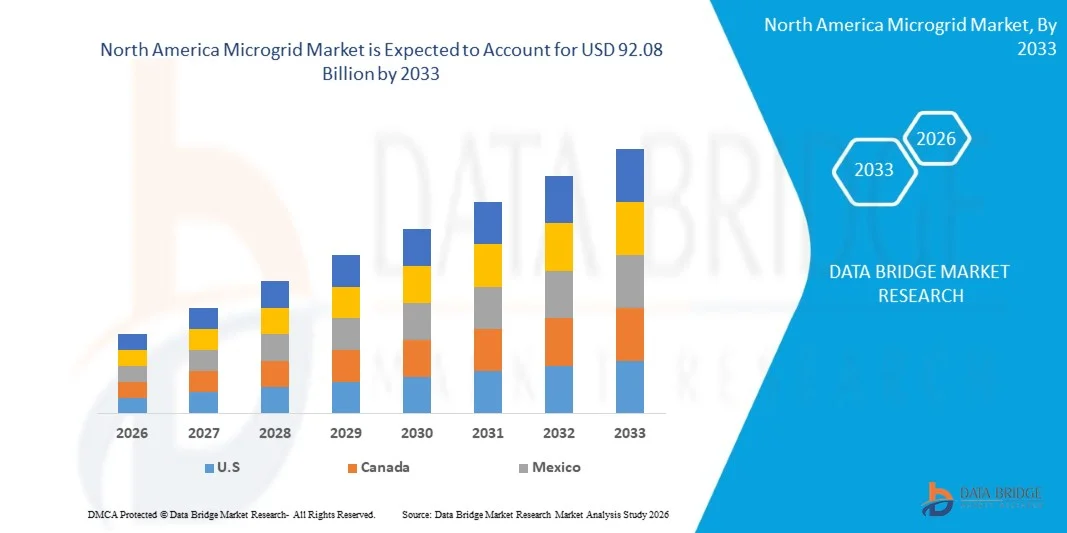
- Согласно анализу рынка Data Bridge Market Research, размер рынка микросетей в Северной Америке был оценен как35,89 млрд долларов в 2025 годуОжидается, что он достигнет$92,08 млрд к 2033 году, вCAGR 12,50%в течение прогнозируемого периода
- Рост рынка в значительной степени обусловлен растущим спросом на децентрализованные энергетические системы, интеграцией возобновляемых источников энергии и потребностью в энергетической безопасности и надежности.
- Растущие инвестиции в интеллектуальные сети, технологии хранения энергии и правительственные инициативы по развитию устойчивой энергетической инфраструктуры также способствуют расширению рынка.
Размер рынка и прогноз:
- Рыночная стоимость (2025):$ 35,89 млрд.
- Ожидаемая рыночная стоимость (2033):$92,08 млрд.
- Прогноз CAGR (2026–2033):12.50%
Каковы основные выводы рынка микросетей Северной Америки
- Растущее внедрение возобновляемых источников энергии, таких как солнечная энергия, ветер и биомасса, стимулирует спрос на решения для микросетей.
- Увеличение частоты отключений электроэнергии и растущая потребность в устойчивой энергетической инфраструктуре в промышленных, коммерческих и отдаленных районах ускоряют рост рынка.
- Американский рынок микросетей занял самую большую долю доходов в 2025 году в Северной Америке, чему способствовали обширные инвестиции в устойчивость сетей, интеграцию возобновляемых источников энергии и защиту критической инфраструктуры. Развертывание микросетей продолжает расширяться в военных объектах, медицинских учреждениях, университетах и муниципальных приложениях для смягчения рисков отключений и повышения энергетической безопасности.
- Ожидается, что в Канаде будут наблюдаться самые высокие ежегодные темпы роста (CAGR) на рынке микросетей Северной Америки из-за растущих инициатив по замене дизельной генерации в отдаленных и коренных общинах гибридными возобновляемыми микросетями. Государственная поддержка, растущий спрос на надежную энергию в промышленном и горнодобывающем секторах, а также достижения в области хранения энергии и технологий распределенной генерации способствуют быстрому расширению рынка в Канаде.
- Сегмент микросетей переменного тока занимал самую большую долю рынка в 2025 году благодаря обширной существующей инфраструктуре, построенной вокруг распределения электроэнергии переменного тока и ее совместимости с обычными электрическими системами. Микросети переменного тока широко используются, поскольку они поддерживают широкий спектр приложений и облегчают интеграцию с коммунальными сетями. Они также предпочтительны для крупномасштабного развертывания на коммерческих и промышленных объектах из-за их способности эффективно справляться с более высокими нагрузками. Кроме того, микросети переменного тока обеспечивают гибкость в обслуживании и операционной масштабируемости.
Сфера охвата и сегментация рынка микросетей Северной Америки
|
Атрибуты |
Северная Америка Microgrid Key Market |
|
Сегменты покрыты |
|
|
Страны, охваченные |
Северная Америка
|
|
Ключевые игроки рынка |
|
|
Рыночные возможности |
|
|
Информационные наборы данных с добавленной стоимостью |
В дополнение к информации о рыночных сценариях, таких как рыночная стоимость, темпы роста, сегментация, географическое покрытие и основные игроки, рыночные отчеты, курируемые Data Bridge Market Research, также включают углубленный экспертный анализ, географически представленное производство и мощности компании, сетевые схемы дистрибьюторов и партнеров, подробный и обновленный анализ ценового тренда и анализ дефицита цепочки поставок и спроса. |
Каковы тенденции рынка микросетей в Северной Америке
«Растущее внедрение возобновляемых источников энергии и систем хранения энергии»
Растущее внимание к интеграции чистой энергии значительно формирует рынок микросетей, поскольку организации и коммунальные службы стремятся повысить надежность, эффективность и устойчивость энергетики. Микросети набирают обороты благодаря своей способности обеспечивать локальное производство энергии, резервное питание во время отключений и интеграцию с возобновляемыми источниками, что делает их идеальными для промышленных, коммерческих и общественных приложений. Эта тенденция побуждает разработчиков к инновациям с гибридными решениями для микросетей, которые сочетают в себе солнечные, ветровые и технологии хранения.
Растущая осведомленность об энергетической устойчивости, оптимизации затрат и экологической ответственности ускорила внедрение микросетей во многих секторах. Корпорации, учебные заведения, больницы и операторы критической инфраструктуры активно внедряют микросетевые решения для обеспечения бесперебойного электроснабжения и снижения углеродного следа. Это также привело к партнерским отношениям между поставщиками технологий, коммунальными компаниями и системными интеграторами для повышения возможностей управления энергопотреблением.
Тенденции децентрализации влияют на стратегии закупок энергии, при этом заинтересованные стороны подчеркивают локализованную генерацию, интеллектуальный контроль и независимость сети. Эти факторы помогают организациям оптимизировать эксплуатационные расходы, смягчить риски сбоев в работе сети и улучшить учетные данные устойчивости. Компании все чаще используют микросети для демонстрации приверженности целям ESG и повышения операционной надежности.
Например, в 2024 году Bloom Energy в США и Schneider Electric запустили передовые решения для микросетей для коммерческих и промышленных объектов, интегрируя возобновляемую генерацию, хранение энергии и интеллектуальные системы управления. Эти развертывания были разработаны для обеспечения высокой надежности, снижения затрат на электроэнергию и поддержки целей корпоративной устойчивости. Решения также продавались как готовые к будущему, масштабируемые и экологически ответственные энергетические системы.
В то время как спрос на микросети растет, долгосрочное расширение рынка зависит от продолжающихся технологических инноваций, оптимизации затрат и поддержки политики. Производители и разработчики сосредоточены на повышении эффективности системы, совместимости с существующей инфраструктурой и разработке стандартизированных модульных решений для более широкого внедрения.
Динамика рынка микросетей Северной Америки
водитель
Повышение потребности в энергетической устойчивости и интеграции возобновляемых источников энергии
Увеличение спроса на надежное и непрерывное электроснабжение является основным драйвером для рынка микросетей. Организации внедряют микросети для обеспечения бесперебойного электроснабжения, особенно в критически важных объектах и регионах, подверженных нестабильности сети. Тенденция также поощряет инвестиции в распределенные энергетические ресурсы (DER) и технологии интеллектуальных сетей для повышения энергетической безопасности.
Расширение приложений в промышленном, коммерческом, институциональном и удаленном секторах способствует росту рынка. Микросети помогают оптимизировать потребление энергии, снизить затраты и обеспечить интеграцию возобновляемой генерации, способствуя достижению целей устойчивого развития и операционной эффективности.
Поставщики технологий и разработчики энергетических решений продвигают внедрение микросетей с помощью инновационных предложений, таких как гибридные микросети, интеграция хранения энергии и платформы управления энергией на основе ИИ. Эти инициативы повышают надежность, предсказуемость и экономическую эффективность, поощряя сотрудничество между заинтересованными сторонами для повышения производительности системы.
Например, в 2023 году Tesla в США и Siemens развернули микросети для хранения энергии для промышленных и коммунальных применений, подчеркнув операционную эффективность и интеграцию с возобновляемыми источниками энергии. Эти развертывания продемонстрировали потенциал для экономии затрат, энергетической независимости и снижения углеродного следа.
Хотя растущий спрос поддерживает рост, более широкое внедрение зависит от финансирования, нормативной поддержки и технологической стандартизации. Инвестиции в масштабируемые, модульные решения, взаимодействие и расширенный мониторинг будут иметь решающее значение для удовлетворения глобального спроса и поддержания конкурентных преимуществ.
Сдержанность/вызов
«Высокие капитальные затраты и сложность интеграции»
Относительно высокая первоначальная стоимость систем микросетей, включая инфраструктуру генерации, хранения и управления, остается ключевой проблемой, ограничивая внедрение среди организаций, чувствительных к затратам. Сложные проектные, монтажные и эксплуатационные требования дополнительно способствуют капитальным и эксплуатационным расходам.
Ограниченная осведомленность и технический опыт ограничивают принятие в определенных секторах, особенно для малых и средних предприятий и отдаленных общин. Пробелы в знаниях в области управления энергопотреблением, соблюдения нормативных требований и финансовых стимулов могут замедлить развертывание.
Интеграция с существующей энергетической инфраструктурой и соблюдение сетевых кодов добавляет сложности и стоимости. Расширенный мониторинг, интеллектуальный контроль и требования к взаимосвязи требуют квалифицированной рабочей силы, специализированного программного обеспечения и долгосрочных планов обслуживания.
Например, в 2024 году развертывание микросетей в образовательных кампусах и медицинских учреждениях ABB и Schneider Electric столкнулось с задержкой внедрения из-за высоких затрат на установку, одобрения регулирующих органов и проблем системной интеграции. Эти факторы повлияли на сроки осуществления проектов и потребовали дополнительных инвестиций в обучение и поддержку.
Преодоление этих проблем потребует экономически эффективного проектирования, стандартизированных решений и поддерживающей политики. Сотрудничество с коммунальными службами, поставщиками технологий и регулирующими органами может раскрыть весь потенциал микросетей, а разработка вариантов финансирования, решений «под ключ» и образовательных инициатив ускорит внедрение на рынок.
Североамериканский рынок микросетей
Рынок сегментирован на основе типа сети, подключения, предложения, вертикального и источника питания.
• По типу сетки
Исходя из типа сети, рынок микросетей Северной Америки сегментирован на альтернативные текущие микросети, микросети прямого тока и гибридные. Сегмент микросетей переменного тока занимал самую большую долю рынка в 2025 году благодаря обширной существующей инфраструктуре, построенной вокруг распределения электроэнергии переменного тока и ее совместимости с обычными электрическими системами. Микросети переменного тока широко используются, поскольку они поддерживают широкий спектр приложений и облегчают интеграцию с коммунальными сетями. Они также предпочтительны для крупномасштабного развертывания на коммерческих и промышленных объектах из-за их способности эффективно справляться с более высокими нагрузками. Кроме того, микросети переменного тока обеспечивают гибкость в обслуживании и операционной масштабируемости.
Ожидается, что в сегменте микросетей постоянного тока будут наблюдаться самые быстрые темпы роста с 2026 по 2033 год, что обусловлено более высокой энергоэффективностью и снижением потерь конверсии, что делает его идеальным для возобновляемых источников энергии и современных нагрузок постоянного тока. Микросети постоянного тока становятся все более предпочтительными для их упрощенной архитектуры, более быстрого времени отклика и более легкой интеграции с солнечными фотоэлектрическими и аккумуляторными батареями. Они особенно подходят для жилых комплексов, кампусов и удаленных промышленных объектов. Растущее внедрение приборов и электроники постоянного тока еще больше усиливает расширение этого сегмента.
• Подключение
На основе подключения рынок микросетей Северной Америки сегментирован на Grid Connected и Remote/Island. Сегмент Grid Connected занимал самую большую долю рынка в 2025 году благодаря широкому внедрению взаимосвязанных систем, которые повышают надежность сети и поддерживают обмен энергией с традиционными коммунальными сетями. Сетевые микросети позволяют оптимизировать управление энергопотреблением и экономить средства за счет программ реагирования на спрос. Они также помогают коммунальным службам сбалансировать пиковые нагрузки и уменьшить потери энергии. Бесшовная интеграция с возобновляемыми источниками энергии, такими как солнечная энергия и ветер, еще больше увеличивает их развертывание в городских и полугородских районах.
Ожидается, что в сегменте удаленных/островных электростанций будут наблюдаться самые высокие темпы роста с 2026 по 2033 год, что обусловлено растущим спросом на внесетевые решения в районах с ограниченным доступом к централизованной энергии. Дистанционные/островные микросети обеспечивают надежную мощность для изолированных сообществ, военных баз и критической инфраструктуры. Они также помогают снизить зависимость от дизель-генераторов и ископаемого топлива, способствуя устойчивому использованию энергии. Технологические достижения в области хранения энергии и гибридных систем делают эти микросети более надежными и экономически эффективными.
• Предлагая
На основе предложения рынок микросетей Северной Америки сегментирован на аппаратное обеспечение, программное обеспечение и услуги. Сегмент аппаратного обеспечения занимал самую большую долю рынка в 2025 году, чему способствовали значительные инвестиции в основные компоненты, такие как инверторы, контроллеры и системы хранения энергии, которые образуют основной физический слой установок микросетей. Надежность оборудования напрямую влияет на производительность, эффективность и долговечность микросетей. Рост крупномасштабных промышленных и институциональных микросетей еще больше повысил спрос на передовые аппаратные решения. Кроме того, интеграция с системами возобновляемых источников энергии сделала надежные аппаратные предложения критически важными для долгосрочной энергетической стабильности.
Ожидается, что в сегменте программного обеспечения будут наблюдаться самые быстрые темпы роста с 2026 по 2033 год, обусловленные растущим внедрением передовых платформ управления энергопотреблением и аналитических инструментов, повышающих операционную эффективность. Программные решения обеспечивают мониторинг в режиме реального времени, прогнозное обслуживание и интеллектуальную балансировку нагрузки. Они также облегчают бесшовную интеграцию с устройствами IoT, облачными платформами и интеллектуальными сетями. Растущий акцент на цифровизацию и удаленное управление микросетями еще больше ускоряет внедрение программного обеспечения.
• Вертикальный
На основе вертикали рынок микросетей Северной Америки сегментирован на медицинские, образовательные учреждения, промышленные, военные и электрические предприятия. Промышленный сегмент занимал самую большую долю рынка в 2025 году, чему способствовал высокий спрос на устойчивое и экономически эффективное электроснабжение в производственных подразделениях и тяжелой промышленности. Промышленные микросети обеспечивают бесперебойную работу, снижают затраты на энергию и повышают производительность. Они также имеют решающее значение для объектов с критическими процессами, которые не могут переносить перебои в подаче электроэнергии. Интеграция возобновляемых источников энергии в промышленные микросети поддерживает инициативы в области устойчивого развития и соблюдения нормативных требований.
Ожидается, что в сегменте здравоохранения будут наблюдаться самые быстрые темпы роста с 2026 по 2033 год, обусловленные критической потребностью в бесперебойной электроэнергии в больницах и медицинских учреждениях. Микросети здравоохранения обеспечивают непрерывную работу жизненно важного оборудования и критически важных ИТ-систем. Повышение осведомленности об энергетической устойчивости и готовности к стихийным бедствиям заставляет больницы внедрять гибридные и резервные решения для микросетей. Кроме того, регуляторная поддержка и стимулы для интеграции возобновляемых источников энергии в медицинских учреждениях поддерживают рост сегмента. Дистанционный мониторинг и интеллектуальные системы управления энергопотреблением еще больше повышают надежность работы.
• Источник энергии
На основе источника энергии рынок микросетей Северной Америки сегментирован на природный газ, комбинированное тепло и энергию, дизельное топливо, солнечную энергию, топливные элементы и другие. Сегмент природного газа занимал самую большую долю рынка в 2025 году благодаря своей надежности, установленному использованию в распределенной генерации и способности обеспечивать стабильную мощность. Микросети природного газа являются экономически эффективными, масштабируемыми и пригодными для промышленного и коммерческого применения. Они обеспечивают более низкие выбросы по сравнению с обычными дизельными системами. Сегмент выигрывает от зрелой инфраструктуры, широкой доступности и высокой операционной эффективности.
Ожидается, что в сегменте солнечной энергии будут наблюдаться самые быстрые темпы роста с 2026 по 2033 год, обусловленные падением затрат на солнечную фотоэлектрическую энергию, политикой поддержки возобновляемых источников энергии и усилением интеграции с системами хранения аккумуляторов. Солнечные микросети обеспечивают чистые, устойчивые энергетические решения, одновременно снижая зависимость от ископаемого топлива. Они особенно подходят для отдаленных районов, кампусов и жилых районов. Достижения в области технологий хранения и интеллектуальных контроллеров еще больше повышают эффективность и надежность солнечных микросетей. Растущая экологическая осведомленность и чистые нулевые энергетические цели ускоряют внедрение солнечной энергии в микросетях.
Региональный анализ рынка микросетей Северной Америки
- Американский рынок микросетей занял самую большую долю доходов в 2025 году в Северной Америке, чему способствовали обширные инвестиции в устойчивость сетей, интеграцию возобновляемых источников энергии и защиту критической инфраструктуры. Развертывание микросетей продолжает расширяться в военных объектах, медицинских учреждениях, университетах и муниципальных приложениях для смягчения рисков отключений и повышения энергетической безопасности.
- Федеральные и государственные программы устойчивости в сочетании с инициативами, основанными на коммунальных услугах, поддерживают передовые системы управления энергопотреблением, крупномасштабное хранение аккумуляторов и проекты распределенной генерации.
- Увеличение частоты экстремальных погодных явлений и старение сетевой инфраструктуры еще больше ускоряет внедрение микросетей в качестве надежных децентрализованных энергетических решений.
Канадский рынок микросетей
Канадский рынок микросетей является самым быстрорастущим в Северной Америке, чему способствуют инициативы по замене дизельной генерации в отдаленных и коренных общинах гибридными возобновляемыми микросетями. Провинциальные программы в Онтарио, Британской Колумбии и Квебеке поддерживают цели удаленной электрификации и устойчивости, увеличивая спрос на автономные и гибридные системы. Промышленные сектора и горнодобывающие предприятия также используют технологии микросетей для повышения надежности энергоснабжения и снижения эксплуатационных расходов. Кроме того, достижения в области интеграции систем хранения энергии и поддерживающие политические меры укрепляют траекторию роста Канады в региональном микросетевом ландшафте.
Какие крупнейшие компании на рынке микросетей в Северной Америке
Индустрия микросетей в Северной Америке в основном управляется хорошо зарекомендовавшими себя компаниями, в том числе:
- Компания S&C Electric(США)
- Компания General Electric(США)
- Honeywell International Inc.(США)
- PowerSecure Inc.(США)
- Ameresco Inc.(США)
- Blue Planet Energy (США)
- Enchanted Rock (США)
- Bloom Energy Corporation (США)
- CleanSpark, Inc. (США)
- Cummins Inc. (США)
- Exergonix, Inc. (США)
- BoxPower Inc. (США)
- Spirae LLC (США)
- One Power Company (США)
- Tigo Energy, Inc. (США)
SKU-
Получите онлайн-доступ к отчету на первой в мире облачной платформе рыночной аналитики

- Интерактивная панель анализа данных
- Панель анализа компании для возможностей с высоким потенциалом роста
- Доступ аналитика-исследователя для настройки и запросов
- Анализ конкурентов с помощью интерактивной панели
- Последние новости, обновления и анализ тенденций
- Используйте возможности сравнительного анализа для комплексного отслеживания конкурентов
Методология исследования
Сбор данных и анализ базового года выполняются с использованием модулей сбора данных с большими размерами выборки. Этап включает получение рыночной информации или связанных данных из различных источников и стратегий. Он включает изучение и планирование всех данных, полученных из прошлого заранее. Он также охватывает изучение несоответствий информации, наблюдаемых в различных источниках информации. Рыночные данные анализируются и оцениваются с использованием статистических и последовательных моделей рынка. Кроме того, анализ доли рынка и анализ ключевых тенденций являются основными факторами успеха в отчете о рынке. Чтобы узнать больше, пожалуйста, запросите звонок аналитика или оставьте свой запрос.
Ключевой методологией исследования, используемой исследовательской группой DBMR, является триангуляция данных, которая включает в себя интеллектуальный анализ данных, анализ влияния переменных данных на рынок и первичную (отраслевую экспертную) проверку. Модели данных включают сетку позиционирования поставщиков, анализ временной линии рынка, обзор рынка и руководство, сетку позиционирования компании, патентный анализ, анализ цен, анализ доли рынка компании, стандарты измерения, глобальный и региональный анализ и анализ доли поставщика. Чтобы узнать больше о методологии исследования, отправьте запрос, чтобы поговорить с нашими отраслевыми экспертами.
Доступна настройка
Data Bridge Market Research является лидером в области передовых формативных исследований. Мы гордимся тем, что предоставляем нашим существующим и новым клиентам данные и анализ, которые соответствуют и подходят их целям. Отчет можно настроить, включив в него анализ ценовых тенденций целевых брендов, понимание рынка для дополнительных стран (запросите список стран), данные о результатах клинических испытаний, обзор литературы, обновленный анализ рынка и продуктовой базы. Анализ рынка целевых конкурентов можно проанализировать от анализа на основе технологий до стратегий портфеля рынка. Мы можем добавить столько конкурентов, о которых вам нужны данные в нужном вам формате и стиле данных. Наша команда аналитиков также может предоставить вам данные в сырых файлах Excel, сводных таблицах (книга фактов) или помочь вам в создании презентаций из наборов данных, доступных в отчете.











