



亚太矫形用品市场,按产品类型(可移动矫形器械、固定矫形器械、粘合剂和辅料)、病人类型(儿童和少年及成人)、材料类型(Brackets、Archwire、以及Aligner和保留者)、应用(Maloclusion处理、矫正矫形和预防性矫形剂)、终端用户(牙科诊所、医院和学术和研究所)、分销渠道(Direct Tenders、零售销售等) -- -- 2032年行业趋势和预测
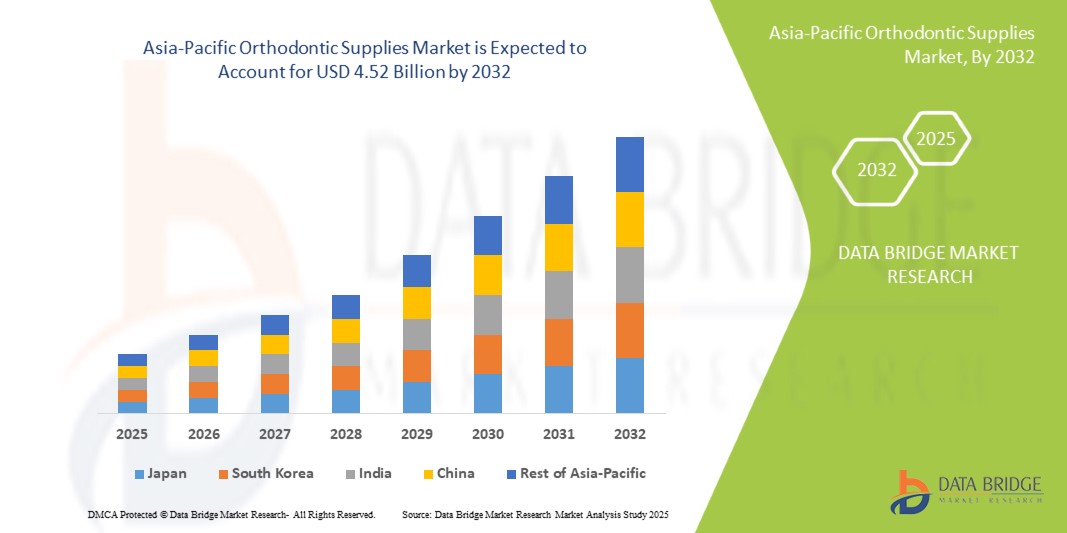
Asia-Pacific Orthodontic Supplies Market Analysis
Asia-Pacific orthodontic supplies market is a rapidly growing sector within the dental industry, focused on products used to correct teeth misalignments and jaw issues. Key products in this market include traditional braces, clear aligners, brackets, wires, bands, and adhesives. Growth is driven by factors like increased awareness of dental health, rising demand for aesthetic treatments, and advancements in orthodontic technology, such as 3D printing and custom-made aligners. North America and Europe dominate the market due to high disposable incomes and widespread access to orthodontic care. However, emerging markets in Asia-Pacific and Latin America are seeing significant growth, fueled by rising dental care accessibility and a growing middle class. The increasing preference for less visible treatments, such as clear aligners, is reshaping the market dynamics. As dental aesthetics and health become a priority Asia-Pacificly, the orthodontic supplies market is poised for continued expansion with ongoing technological innovations.
Asia-Pacific Orthodontic Supplies Market Size
Asia-Pacific orthodontic supplies market size was valued at USD 1.98 billion 2024 and is projected to reach USD 4.52 billion by 2032, with a CAGR of 10.9% during the forecast period of 2025 to 2032. In addition to the insights on market scenarios such as market value, growth rate, segmentation, geographical coverage, and major players, the market reports curated by the Data Bridge Market Research also include import export analysis, production capacity overview, production consumption analysis, price trend analysis, climate change scenario, supply chain analysis, value chain analysis, raw material/consumables overview, vendor selection criteria, PESTLE Analysis, Porter Analysis, and regulatory framework.
Asia-Pacific Orthodontic Supplies Market Trends
“Rising Demand for Aesthetic Treatments”
The Asia-Pacific orthodontics supply market is experiencing robust growth, driven by technological advancements, increasing demand for aesthetic dental solutions, and expanding awareness of oral health. The market is projected to grow at a significant rate, with innovations such as clear aligners, self-ligating braces, and AI-driven treatment planning gaining popularity. These advancements are improving treatment outcomes and enhancing patient satisfaction, particularly among adults seeking discreet options. Regionally, Asia-Pacific is witnessing strong growth, with policy changes in countries like China boosting market demand. In addition, North America continues to be a key player, benefiting from a steady increase in patient traffic and advancements in orthodontic materials. However, challenges like high treatment costs, unfavorable reimbursement policies, and the need for continuous innovation remain. Despite these hurdles, the market’s overall outlook remains positive as more consumers and practitioners embrace modern orthodontic solutions.
Report Scope and Asia-Pacific Orthodontic Supplies Market Segmentation
|
Attributes |
Asia-Pacific Orthodontic Supplies MarketInsights |
|
Segments Covered |
|
|
Region Covered |
Japan, China, India, South Korea, Australia, Singapore, Thailand, Malaysia, Indonesia, Vietnam, Philippines, Taiwan, New Zealand, and Rest of Asia-Pacific |
|
Key Market Players |
Ormco Corporation (U.S.), 3M (U.S.), American Orthodontics (U.S.), Dentsply Sirona (U.S.), Institut Straumann AG (Switzerland), Aditek do Brasil S.A. (Brazil), DENTAURUM GmbH & Co. KG (Germany), FORESTADENT - Bernhard Foerster GmbH (Germany), G&H Orthodontics (U.S.), Gestenco International AB (Sweden), Great Lakes Dental Technologies (U.S.), Henry Schein, Inc. (U.S.), Leone S.p.A. (Italy), LightForce (U.S.), Modern Orthodontics (India), OrthoAmerica Holdings LLC. (U.S.), Shinye Orthodontic Products Co., Ltd. (China), and TP Orthodontics, Inc (U.S.) |
|
Market Opportunities |
|
|
Value Added Data Infosets |
In addition to the insights on market scenarios such as market value, growth rate, segmentation, geographical coverage, and major players, the market reports curated by the Data Bridge Market Research also include import export analysis, production capacity overview, production consumption analysis, price trend analysis, climate change scenario, supply chain analysis, value chain analysis, raw material/consumables overview, vendor selection criteria, PESTLE Analysis, Porter Analysis, and regulatory framework. |
Asia-Pacific Orthodontic Supplies Market Definition
The Asia-Pacific orthodontic supplies refer to the range of dental products and equipment specifically designed for orthodontic treatments in the Asia-Pacific region. These supplies include braces, aligners, retainers, wires, brackets, elastics, and other related materials used by orthodontists to correct dental misalignments and improve patients' oral health. The region, which includes countries like Japan, China, India, and Australia, has seen significant demand for advanced orthodontic products due to increasing awareness of dental health, rising disposable incomes, and technological advancements in orthodontics. Market trends focus on innovation, comfort, aesthetics, and cost-effective solutions for both patients and practitioners.
Asia-Pacific Orthodontic Supplies MarketDynamics
Drivers
- Rising Incidence of Malocclusion
The Asia-Pacific rise in malocclusion, a dental condition where teeth are misaligned, is significantly driving the demand for orthodontic treatments, including dental braces and clear aligners. According to a recent report from Fact.MR, the increasing prevalence of malocclusion is one of the primary factors fueling the growth of the orthodontics market.
As more people, especially children and young adults, are diagnosed with malocclusion, there is a growing awareness of its impact on both oral health and aesthetic appearance. The condition, which can cause difficulty in biting, chewing, and speaking, also leads to long-term dental issues like tooth decay and gum disease if untreated. These complications, along with the increasing importance placed on a perfect smile, are propelling more individuals toward seeking orthodontic treatments.
In recent years, there has been a significant shift in consumer preferences, with a growing inclination toward more discreet orthodontic solutions such as clear aligners and ceramic braces. As technological advancements have made treatments faster, more effective, and less visible, the accessibility of orthodontic care has increased, further fueling the demand.
Furthermore, rising disposable incomes, particularly in emerging economies, have made orthodontic treatments more accessible to a broader demographic. This has been accompanied by an increase in oral health awareness campaigns across various countries, emphasizing the importance of early diagnosis and treatment of malocclusion.
Industry experts also point to innovations in orthodontic technology, such as 3D printing and AI-powered diagnostic tools, as factors enhancing the efficiency and affordability of orthodontic treatments. As orthodontic care becomes increasingly accessible and appealing, the demand for braces and aligners is set to continue its upward trajectory.
For instance,
- In July 2022, according to the article published by BioSpace, a rising incidence of malocclusion, contributing to higher demand for dental braces. As more individuals seek treatments to address misaligned teeth, this trend drives the orthodontic market, boosting the need for innovative dental braces and related products. Increased awareness and demand for corrective treatments support market growth
- In December 2024, according to the article published by MDPI, advancements in orthodontic treatments, particularly focusing on innovative approaches to improving patient care and outcomes. It highlights the role of new materials, technologies like 3D printing, and digital tools in enhancing the effectiveness of treatments. These innovations are expected to drive growth in the orthodontic market
The rising incidence of malocclusion is shaping the orthodontic market, driving demand for corrective treatments such as braces and clear aligners. With a growing focus on both health and aesthetics, this trend highlights a substantial opportunity for the Asia-Pacific dental industry, making orthodontic care more accessible to a wider population.
- Increasing Aesthetic Preferences
The growing focus on aesthetics, particularly among adults and adolescents, has significantly boosted the demand for orthodontic products. As societal norms continue to emphasize appearance, more individuals are seeking orthodontic treatments to achieve a more aesthetically pleasing smile. This heightened awareness has led to a surge in popularity for clear aligners, lingual braces, and ceramic options, all of which offer discreet and effective alternatives to traditional metal braces. Consumers are increasingly prioritizing treatments that are less visible and more aligned with their aesthetic preferences, prompting orthodontic manufacturers to innovate and expand their product offerings. This shift towards more visually appealing orthodontic solutions is reshaping the market, with greater emphasis on customization, comfort, and aesthetics. As a result, the demand for clear aligners and other cosmetic orthodontic products has escalated, creating new growth opportunities within the dental industry. Furthermore, the increasing availability of these options, alongside their effectiveness in providing optimal dental alignment, continues to drive the market forward, making orthodontic care more accessible and desirable for a broader range of individuals. This transformation is not only benefiting orthodontic practices but also accelerating the development of new technologies and materials, contributing to the overall expansion of the orthodontic products market.
For instance,
- In January 2023, according to the article published by BDJ, the growing awareness of aesthetics, especially among adults and adolescents, has led to an increased demand for orthodontic treatments. This shift is driving innovation in orthodontic supplies, particularly clear aligners and cosmetic braces, resulting in greater market diversification and expanding opportunities for dental professionals worldwide
- In August 2024, according to the article published by MDPI, the use of artificial intelligence (AI) to automate the aesthetic component (AC) of the Index of Orthodontic Treatment Need (IOTN). Analyzing 1,009 pre-treatment intraoral photos, the AI demonstrated 77% sensitivity and 82% accuracy in predicting treatment needs, indicating its potential to support clinical evaluations of dental aesthetics
The growing emphasis on aesthetics, particularly among adults and adolescents, has significantly influenced the demand for orthodontic treatments. As consumers prioritize appearance and seek more discreet and effective solutions, innovations in orthodontic products like clear aligners and cosmetic braces are becoming increasingly popular. This shift in consumer preferences not only shapes the development of new orthodontic technologies but also opens up opportunities for dental professionals to offer a wider range of personalized, aesthetically appealing treatments. The trend towards more visually acceptable options is expected to continue driving advancements in the orthodontic field
- Technological Advancements in Orthodontic Care
Recent innovations in orthodontic technologies are significantly reshaping the landscape of dental care, especially in the orthodontic sector. Technologies such as 3D printing, digital scanning, and improved materials have not only enhanced the accuracy and customization of treatments but also streamlined the entire process, making it more efficient. 3D printing allows for the precise creation of orthodontic appliances tailored to individual needs, reducing the time and cost involved in the production of traditional braces and aligners. Digital scanning has largely replaced traditional impressions, making the process more comfortable and accurate, while also providing faster results for treatment planning. Moreover, the development of advanced materials, such as high-performance ceramic brackets and more durable, flexible wires, has made treatments less visible, more comfortable, and quicker, ultimately improving the patient experience. These technological advancements are driving a surge in the demand for orthodontic care, as patients are increasingly attracted to the benefits of faster treatments, reduced discomfort, and more aesthetically pleasing options. The growing reliance on these innovations is not only attracting a wider audience, particularly among adults seeking cosmetic improvements, but also encouraging orthodontic professionals to adopt these technologies to remain competitive and provide optimal patient outcomes.
For instance,
- In February 2024, according to the article published by Momentum, article highlights five key advancements in dental technology for 2024, including AI-powered diagnostics, 3D printing, and innovative smart dental tools. It also discusses new product launches, such as advanced intraoral scanners and AI-based treatment planning systems, which are enhancing patient care by improving accuracy and overall dental experiences
- In January 2024, according to the article published by MDPI, 3D printing has become a key driver in clear aligner fabrication by enabling faster production, enhanced customization, and reduced costs. It allows for precise patient-specific aligners, improving comfort and treatment efficiency. This technology’s ability to streamline manufacturing and reduce material waste accelerates the growth of the orthodontics market
Technological innovations are playing a pivotal role in the evolution of orthodontic care. From enhanced treatment precision to reduced treatment time, advancements like 3D printing, digital scanning, and superior materials are elevating the quality and accessibility of orthodontic treatments. As these technologies continue to evolve, they are expected to further drive the demand for orthodontic services, making them more efficient, personalized, and appealing to a broader range of patients. This trend highlights the increasing importance of staying at the forefront of technological developments in the orthodontic industry.
Opportunity
- Growing Demand for Clear Aligners
The growing demand for clear aligners presents a substantial opportunity in the Asia-Pacific orthodontic supplies market, as these innovative devices continue to reshape the way orthodontic treatments are approached. Clear aligners, such as Invisalign, have witnessed a significant surge in popularity due to their aesthetic, comfort, and convenience advantages over traditional metal braces. The shift toward clear aligners is driven largely by patient preference for discreet, nearly invisible orthodontic solutions, particularly among adults and image-conscious teenagers who wish to undergo treatment without the visibility of metal brackets and wires. As a result, the market for clear aligners has expanded rapidly, creating a lucrative opportunity for manufacturers, suppliers, and orthodontic professionals to meet the increasing demand for these customized, transparent devices. Advancements in technology, particularly 3D scanning and digital treatment planning, have further fueled this growth, allowing for the creation of highly precise, personalized aligners that improve the overall treatment experience. The ability of clear aligners to be removed for eating, drinking, and oral hygiene is another key factor driving their popularity, as it provides patients with greater flexibility and convenience compared to traditional braces. In addition, as clear aligner technology evolves, it is becoming increasingly effective in treating a broader range of orthodontic issues, from mild to complex misalignments, which has expanded the target demographic and opened new avenues for growth. Clear aligners also offer the appeal of faster treatment times compared to traditional methods, another selling point for patients looking for quicker results. As the market for clear aligners continues to grow, there is a corresponding surge in demand for the supporting products and services that enable their successful use—such as 3D scanning devices, aligner production materials, treatment management software, and patient monitoring tools. This creates a robust market opportunity for orthodontic suppliers to not only focus on the aligners themselves but also develop and distribute complementary technologies and accessories that support clear aligner treatments. The rising popularity of direct-to-consumer clear aligner brands, alongside increasing awareness of the benefits of clear aligners, further strengthens the market, pushing for more investment in research, development, and distribution channels. The growing Asia-Pacific preference for clear aligners marks a dynamic shift in the orthodontic industry, positioning it for sustained growth, where innovative product offerings and advancements in treatment technology present substantial opportunities for key stakeholders in the Asia-Pacific orthodontic supplies market.
For instance,
- In April 2023, according to the article published by science direct the growing demand for clear aligners (CAT) in orthodontics stems from advancements in biomaterials, CAD/CAM technologies, and aggressive marketing strategies. Direct-to-consumer advertising and social media have raised awareness, particularly among adult patients seeking aesthetic alternatives to traditional fixed appliances, contributing to CAT's increasing popularity over the past decade
- In June 2020, according to the article published by ResearchGate, the growing demand for clear aligners is driven by advancements that enhance comfort and aesthetics in orthodontic treatment. As more manufacturers enter the market, patient interest in clear aligners rises. Success depends on clinicians' expertise, proper case selection, and patient adherence, creating an expanding opportunity in orthodontics
In conclusion, the growing demand for clear aligners presents a significant opportunity in the Asia-Pacific orthodontic supplies market. As patients seek discreet, comfortable, and effective treatments, clear aligners are increasingly favored over traditional braces. Technological advancements have expanded their applicability and appeal, driving further market growth. This trend creates opportunities for orthodontic suppliers to innovate and offer complementary products, positioning them to meet the rising Asia-Pacific demand for clear aligners and related technologies.
Increased Insurance Coverage for Orthodontics
Increased insurance coverage for orthodontics represents a significant opportunity for the Asia-Pacific orthodontic supplies market, as it opens the door to a larger, more diverse patient base who can now access orthodontic treatments they may have otherwise been unable to afford. In recent years, there has been a growing trend among insurance providers to expand their coverage for orthodontic treatments, including both traditional braces and newer options like clear aligners. This shift is largely driven by an increased awareness of the long-term health benefits of orthodontics, such as improved oral hygiene, prevention of tooth decay, and better overall dental function. As a result, more patients are now able to seek treatment, leading to a surge in demand for orthodontic appliances, tools, and products. The expanded insurance coverage not only lowers the financial barrier for patients but also boosts the number of people willing to undergo orthodontic care, creating a broader market for orthodontic suppliers. This trend is especially prominent in regions where orthodontic treatments were previously considered a luxury or were out of reach for many. With insurance providers increasingly covering a portion or even the full cost of orthodontic treatments, more people are likely to opt for advanced solutions like clear aligners, ceramic braces, and other innovative orthodontic technologies. This growing accessibility is a prime opportunity for manufacturers and suppliers to expand their product offerings and cater to a broader, more diverse consumer demographic. In addition, as the demand for orthodontic treatments rises, orthodontic practices and suppliers will need to adapt by offering more affordable, insurance-compatible solutions to meet the needs of insured patients. The expansion of insurance coverage for orthodontics, therefore, represents a key factor driving growth in the Asia-Pacific orthodontic supplies market, making it a critical area for investment and innovation.
For instance,
- In August 2022, according to the article published by NCBI, facilitating access and encouraging higher expenditure. Studies reveal that insurance, such as Medicaid, enhances the likelihood of dental visits, particularly among low-income individuals. Expanding coverage could lead to greater utilization of orthodontic services and improved oral health outcomes
- In May 2021, according to the article published by NCBI, the for orthodontics presents an opportunity to improve accessibility to care. While private insurance plans vary, offering higher coverage can encourage more visits and higher expenditures. Plans like Delta Dental, with options ranging from co-pays to partial coverage, provide flexibility, enhancing treatment opportunities for individuals seeking orthodontic services
In conclusion, increased insurance coverage for orthodontics creates significant growth opportunities in the Asia-Pacific orthodontic supplies market. As more patients gain access to affordable treatments, demand for advanced orthodontic solutions, including clear aligners and custom appliances, is rising. This trend encourages innovation and expansion, benefiting both suppliers and patients worldwide.
Restraints/Challenge
- Regulatory Requirements in Orthodontics
Regulatory requirements in orthodontics play a critical role in ensuring patient safety and the effectiveness of treatments, but they also present significant challenges for manufacturers. Compliance with these standards often requires substantial investments in product testing, quality assurance processes, certifications, and regular audits. These compliance measures can be time-consuming and expensive, especially for small and medium-sized companies, as they may need to allocate resources for updating product designs, conducting trials, and meeting specific safety protocols. Moreover, manufacturers must also adapt to changing regulations, which can involve costly adjustments to manufacturing processes and product lines. These stringent standards can also slow down the speed at which new technologies, such as innovative materials or treatment devices, are brought to market. In some cases, regulatory delays can hinder the adoption of cutting-edge treatments, affecting both patients and orthodontic practitioners who seek the latest solutions to meet their needs. As such, while these regulatory requirements are crucial for ensuring the highest standards of care, they also act as a barrier to market growth and innovation in the field.
For instance,
- In June 2024, according to the article published by Scientific Research, Regulatory requirements in orthodontics can delay market growth due to lengthy approval processes, safety assessments, and high compliance costs. Regional variations in regulations also create challenges for manufacturers. These hurdles can slow innovation and limit access to advanced orthodontic products, despite ensuring patient safety and treatment efficacy
- In July 2023, according to the article published by ResearchGate, the study highlights that regulatory requirements in orthodontics often create barriers for orthodontists in adopting innovative technologies. These challenges include time-consuming approval processes, compliance with stringent safety standards, and the complexity of navigating local and international regulations. Such hurdles can delay the availability of new treatments and increase costs for practitioners and patients alike
In conclusion, regulatory compliance, although essential for maintaining safety and efficacy, creates significant challenges for manufacturers in the orthodontic sector. The costs and delays associated with meeting regulatory standards can inhibit innovation, increase the cost of treatment, and ultimately limit accessibility to the latest orthodontic technologies for both patients and providers.
- Lack of Awareness about Orthodontic Supplies
In various regions, the adoption of orthodontic supplies and treatments can be significantly hindered due to a lack of awareness. Many people are unaware of the advantages orthodontic treatments offer, such as enhancing oral health, improving self-esteem, and preventing more severe dental issues in the future. In addition, the understanding of modern orthodontic technologies, such as clear aligners, temporary skeletal anchorage devices (TSADs), and advanced braces, is often limited to only a few professionals and patients who are already involved in orthodontic care. Without widespread knowledge, potential patients may not recognize the need for orthodontic intervention, especially if they don't experience obvious dental problems. This can be compounded by misconceptions or misinformation about the treatment process, costs, or perceived discomfort, leading individuals to overlook orthodontic care altogether.
Furthermore, regions with less access to dental professionals or specialized care are more likely to face this awareness gap. In these areas, dental care may focus more on urgent, immediate needs rather than preventive or elective treatments like orthodontics. In addition, cultural factors and financial constraints can contribute to low demand for such services, as individuals may prioritize other health concerns over orthodontic procedures. The lack of widespread education on the long-term benefits of orthodontics, such as preventing tooth decay, gum disease, and other bite-related issues, also plays a significant role. As a result, potential patients in these areas are less likely to seek out orthodontic consultations or invest in orthodontic products.
The absence of awareness can also affect market growth by limiting the demand for orthodontic products and services. Companies that provide orthodontic supplies may struggle to expand in regions where demand is low, and they may face difficulties in educating both the public and dental professionals about the importance of investing in orthodontic care. This can reduce the overall sales potential of orthodontic supplies, as people may not realize the value these products provide in achieving better oral health and aesthetics. This lack of awareness ultimately hampers the ability of the orthodontic market to grow and thrive, especially in areas where the benefits of orthodontic care are not widely recognized.
For instance,
- In June 2024, according to the article published by ResearchGate, The study highlights that limited awareness of smartphone orthodontic apps among patients acts as a restraint in their adoption. Many individuals are unfamiliar with the availability and benefits of these apps, which can offer convenience and efficiency in orthodontic care. This knowledge gap reduces the potential market and usage
- In September 2024, according to the article published by BDJ, discusses challenges in orthodontic care, emphasizing that limited knowledge of advanced techniques and technologies can act as a restraint. Lack of awareness among patients and practitioners about newer treatment options or benefits can hinder their adoption, ultimately limiting the progress and growth of the orthodontic field
In conclusion, the lack of awareness about the benefits and importance of orthodontic supplies significantly limits the market's growth potential, especially in under-informed regions. By addressing this awareness gap through education, outreach programs, and community-based initiatives, it is possible to increase demand for orthodontic care, thereby boosting both market adoption and growth. Increasing public understanding of the long-term benefits of orthodontics is crucial to driving market expansion and ensuring that individuals in all regions have access to the care they need.
Asia-Pacific Orthodontic Supplies Market Market Scope
Asia-Pacific orthodontic supplies market is segmented into six notable segments based on product type, patient type, material type, application, end user, and distribution channel.The growth amongst these segments will help you analyze meagre growth segments in the industries and provide the users with a valuable market overview and market insights to help them make strategic decisions for identifying core market applications.
Product Type
- Removable Orthodontic Appliances
- Clear Aligners
- Retainers
- Vacuum-Formed Retainers
- Hawley Retainers
- Fixed Orthodontic Appliances
- Brackets
- By Type
- Metal Brackets
- Ceramic Brackets
- Self-Ligating Brackets
- Lingual Brackets
- By Type
- Brackets
- By Type
- Bands And Buccal Tubes
- Miniscrews
- By Type
- Archwires
- Stainless Steel Archwires
- Beta Titanium Archwires
- Nickel Titanium Archwires
- Anchorage Appliances
- Brackets
- Adhesives And Accessories
- Elastomeric Products
- By Product Type
- Elastomeric Ligatures
- Elastomeric Chains
- By Product Type
- Orthodontic Adhesives
- Others
- Elastomeric Products
Patient Type
- Children And Teenagers
- Adults
Material Type
- Brackets
- Metal
- Ceramic
- Plastic
- Composite
- Archwire
- Stainless Steel Archwires
- Beta Titanium Archwires
- Nickel Titanium Archwires
- Aligner And Retainers
- Thermoplastics
- Polyurethane
- Polyethylene Terephthalate Glycol
- Others
Application
- Malocclusion Treatment
- Class I Malocclusion
- Class Ii Malocclusion
- Class Iii Malocclusion
- Corrective Orthodontics
- Preventive Orthodontics
End User
- Dental Clinics
- Hospitals
- Academic And Research Institutes
Distribution Channel
- Direct Tenders
- Retail Sales
- Others
Asia-Pacific Orthodontic Supplies Market Regional Analysis
The market is analyzed and market size insights and trends are provided country, product type, patient type, material type, application, end user, and distribution channel as referenced above.
The countries covered in the market are Japan, China, India, South Korea, Australia, Singapore, Thailand, Malaysia, Indonesia, Vietnam, Philippines, Taiwan, New Zealand, and rest of Asia-Pacific.
China is expected to dominate the orthodontic supplies market due to its large population, growing dental awareness, rising disposable incomes, and expanding healthcare infrastructure, driving demand for orthodontic treatments and products.
India is the fastest-growing country in the Asia-Pacific orthodontic supplies market due to its large youth population, increasing awareness of dental health, rising disposable incomes, and expanding urban healthcare infrastructure.
The country section of the report also provides individual market impacting factors and changes in regulation in the market domestically that impacts the current and future trends of the market. Data points like down-stream and upstream value chain analysis, technical trends and porter's five forces analysis, case studies are some of the pointers used to forecast the market scenario for individual countries. Also, the presence and availability of Asia-Pacific brands and their challenges faced due to large or scarce competition from local and domestic brands, impact of domestic tariffs and trade routes are considered while providing forecast analysis of the country data.
Asia-Pacific Orthodontic Supplies Market Share
The market competitive landscape provides details by competitor. Details included are company overview, company financials, revenue generated, market potential, investment in research and development, new market initiatives, Asia-Pacific presence, production sites and facilities, production capacities, company strengths and weaknesses, product launch, product width and breadth, application dominance. The above data points provided are only related to the companies' focus related to market.
Asia-Pacific Orthodontic Supplies Market Leaders Operating in the Market Are:
- Ormco Corporation (U.S.)
- 3M (U.S.)
- American Orthodontics (U.S.)
- Dentsply Sirona (U.S.)
- Institut Straumann AG (Switzerland)
- Aditek do Brasil S.A. (Brazil)
- DENTAURUM GmbH & Co. KG (Germany)
- FORESTADENT - Bernhard Foerster GmbH (Germany)
- G&H Orthodontics (U.S.)
- Gestenco International AB (Sweden)
- Great Lakes Dental Technologies (U.S.)
Latest Developments Asia-Pacific Orthodontic Supplies Market
- In May 2022, the Straumann Group entered into an agreement to acquire PlusDental, a provider of orthodontic treatment solutions in Europe. This acquisition will enhance the Group's consumer expertise and unlock new growth opportunities. PlusDental has established an extensive network of clinics across Europe, which will help accelerate the Group’s expansion, particularly in the Netherlands, Sweden, and the UK
- In August 2022, Dentsply Sirona introduced the X-Smart Pro+ endodontic motor and Reciproc Blue file in the United States, offering a streamlined one-file endodontic solution. The X-Smart Pro+ motor delivers up to 7.5 N·cm torque and 3,000 rpm speed, featuring an integrated apex locator with Dynamic Accuracy technology for precise length measurement during active shaping. The Reciproc Blue file is designed for universal use, enabling root canal preparation without the need for an initial glide path in most cases. This combination simplifies endodontic procedures, enhancing efficiency and patient outcomes
- In August 2023, Ormco Corporation introduced Spark Clear Aligners Release 14, enhancing flexibility for orthodontists with the launch of Spark Approver Web and seamless DEXIS IOS integration, along with clinical and workflow updates. Spark Approver Web offers increased convenience, allowing orthodontists to access cases at any time, saving valuable time and improving workflow efficiency
- In March 2023, FORESTADENT partnered with Graphy Inc. to distribute their innovative Tera Harz TC-85 resin for direct aligner printing. This collaboration enables the creation of precisely tailored aligners with shape memory properties, improving treatment results with consistent light forces. The partnership also includes UNIZ Technology for compatible 3D printers, advancing digital orthodontics Asia-Pacificly
- In August 2024, Henry Schein Orthodontics launched the Carrierer Motion Pro Bite appliance, designed to enhance orthodontic treatments by improving bite correction and tooth movement efficiency. This innovative device provides more predictable outcomes by delivering optimal force to correct bite misalignments. Its unique design helps shorten treatment time, reduce discomfort, and improve patient compliance. The Carrierer Motion Pro Bite is a valuable tool for orthodontists, offering enhanced precision and effectiveness. It also benefits patients by offering faster, more comfortable treatments, ultimately contributing to better orthodontic care and a higher rate of treatment success
SKU-

目录
1 INTRODUCTION
1.1 OBJECTIVES OF THE STUDY
1.2 MARKET DEFINITION
1.3 OVERVIEW OF THE ASIA-PACIFIC ORTHODONTIC SUPPLIES MARKET
1.4 CURRENCY AND PRICING
1.5 LIMITATIONS
1.6 MARKETS COVERED
2 MARKET SEGMENTATION
2.1 MARKETS COVERED
2.2 GEOGRAPHICAL SCOPE
2.3 YEARS CONSIDERED FOR THE STUDY
2.4 DBMR TRIPOD DATA VALIDATION MODEL
2.5 MULTIVARIATE MODELLING
2.6 LIFELINE CURVE
2.7 PRIMARY INTERVIEWS WITH KEY OPINION LEADERS
2.8 DBMR MARKET POSITION GRID
2.9 DBMR MARKET POSITION END USER COVERAGE
2.1 VENDOR SHARE ANALYSIS
2.11 SECONDARY SOURCES
2.12 ASSUMPTIONS
3 EXECUTIVE SUMMARY
4 PREMIUM INSIGHTS
4.1 PORTER’S FIVE FORCES
4.2 PESTEL ANALYSIS
4.3 VALUE CHAIN ANALYSIS
4.4 COMPANY COMPARATIVE ANALYSIS
4.5 EVALUATION OF RETAIL VS. DISTRIBUTOR SALES MODELS AND DIRECT SALES STRATEGIES
5 ASIA-PACIFIC ORTHODONTIC SUPPLIES MARKET: REGULATIONS
5.1.1 NORTH AMERICA (USA AND CANADA)
5.1.2 EUROPEAN UNION (EU)
5.1.3 ASIA-PACIFIC
5.1.4 LATIN AMERICA
5.1.5 MIDDLE EAST AND AFRICA
5.2 REGULATORY CHALLENGES AND STRATEGIES
6 MARKET OVERVIEW
6.1 DRIVERS
6.1.1 RISING INCIDENCE OF MALOCCLUSION DRIVING SURGE IN DENTAL BRACES DEMAND
6.1.2 INCREASING AESTHETIC PREFERENCES BOOST DEMAND FOR ORTHODONTIC PRODUCTS
6.1.3 TECHNOLOGICAL ADVANCEMENTS FUEL GROWTH IN ORTHODONTIC CARE
6.1.4 INCREASE IN DENTAL CARE EXPENDITURE
6.2 RESTRAINTS
6.2.1 REGULATORY REQUIREMENTS IN ORTHODONTICS
6.2.2 LACK OF AWARENESS ABOUT ORTHODONTIC SUPPLIES
6.3 OPPORTUNITIES
6.3.1 GROWING DEMAND FOR CLEAR ALIGNERS DRIVES GROWTH IN ORTHODONTIC SUPPLIES
6.3.2 INCREASED INSURANCE COVERAGE FOR ORTHODONTICS EXPANDS OPPORTUNITIES IN ORTHODONTIC SUPPLIES
6.3.3 CUSTOMIZATION AND PERSONALIZATION OF TREATMENTS ENHANCE ORTHODONTIC SUPPLIES MARKET DEMAND
6.4 CHALLENGES
6.4.1 ADVERSE EFFECTS FROM POOR TREATMENT HINDER PROGRESS IN ORTHODONTICS
6.4.2 SHORTAGE OF SKILLED PROFESSIONALS LIMITS ADVANCEMENTS IN ORTHODONTIC FIELD
7 ASIA-PACIFIC ORTHODONTIC SUPPLIES MARKET, BY PRODUCT TYPE
7.1 OVERVIEW
7.2 REMOVABLE ORTHODONTIC APPLIANCES
7.2.1 CLEAR ALIGNERS
7.2.2 RETAINERS
7.2.2.1 VACUUM-FORMED RETAINERS AND
7.2.2.2 HAWLEY RETAINERS
7.3 FIXED ORTHODONTIC APPLIANCES
7.3.1 BRACKETS
7.3.1.1 METAL BRACKETS
7.3.1.2 CERAMIC BRACKETS
7.3.1.3 SELF-LIGATING BRACKETS
7.3.1.4 LINGUAL BRACKETS
7.3.1.4.1 BANDS AND BUCCAL TUBES
7.3.1.4.2 MINISCREWS
7.3.2 ARCHWIRES
7.3.2.1 STAINLESS STEEL ARCHWIRES
7.3.2.2 BETA TITANIUM ARCHWIRES
7.3.2.3 NICKEL TITANIUM ARCHWIRES
7.3.3 ANCHORAGE APPLIANCES
7.3.4 OTHERS
7.4 ADHESIVES AND ACCESSORIES
7.4.1 ELASTOMERIC PRODUCTS
7.4.1.1 ELASTOMERIC LIGATURES
7.4.1.2 ELASTOMERIC CHAINS
7.4.2 ORTHODONTIC ADHESIVES
7.4.3 OTHERS
8 ASIA-PACIFIC ORTHODONTIC SUPPLIES MARKET, BY PATIENT TYPE
8.1 OVERVIEW
8.2 CHILDREN AND TEENAGERS
8.3 ADULTS
9 ASIA-PACIFIC ORTHODONTIC SUPPLIES MARKET, BY MATERIAL TYPE
9.1 OVERVIEW
9.2 BRACKETS
9.2.1 METAL
9.2.2 CERAMIC
9.2.3 PLASTIC
9.2.4 COMPOSITE
9.3 ARCHWIRE
9.3.1 STAINLESS STEEL ARCHWIRES
9.3.2 BETA TITANIUM ARCHWIRES
9.3.3 NICKEL TITANIUM ARCHWIRES
9.4 ALIGNER AND RETAINERS
9.4.1 THERMOPLASTICS
9.4.2 POLYURETHANE
9.4.3 POLYETHYLENE TEREPHTHALATE GLYCOL
9.4.4 OTHERS
10 ASIA-PACIFIC ORTHODONTIC SUPPLIES MARKET, BY APPLICATION
10.1 OVERVIEW
10.2 MALOCCLUSION TREATMENT
10.2.1 CLASS I MALOCCLUSION
10.2.2 CLASS II MALOCCLUSION
10.2.3 CLASS III MALOCCLUSION
10.3 CORRECTIVE ORTHODONTICS
10.4 PREVENTIVE ORTHODONTICS
11 ASIA-PACIFIC ORTHODONTIC SUPPLIES MARKET, BY END USER
11.1 OVERVIEW
11.2 DENTAL CLINICS
11.3 HOSPITALS
11.4 ACADEMIC AND RESEARCH INSTITUTES
12 ASIA-PACIFIC ORTHODONTIC SUPPLIES MARKET, BY DISTRIBUTION CHANNEL
12.1 OVERVIEW
12.2 DIRECT TENDERS
12.3 RETAIL SALES
12.4 OTHERS
13 ASIA-PACIFIC ORTHODONTIC SUPPLIES MARKET, BY REGION
13.1 ASIA-PACIFIC
13.1.1 CHINA
13.1.2 JAPAN
13.1.3 INDIA
13.1.4 SOUTH KOREA
13.1.5 AUSTRALIA
13.1.6 TAIWAN
13.1.7 SINGAPORE
13.1.8 THAILAND
13.1.9 MALAYSIA
13.1.10 INDONESIA
13.1.11 PHILIPPINES
13.1.12 NEW ZEALAND
13.1.13 VIETNAM
13.1.14 REST OF ASIA-PACIFIC
14 ASIA-PACIFIC ORTHODONTIC SUPPLIES MARKET: COMPANY LANDSCAPE
14.1 COMPANY SHARE ANALYSIS: ASIA-PACIFIC
15 SWOT ANALYSIS
16 COMPANY PROFILE
16.1 INSTITUT STRAUMANN AG
16.1.1 COMPANY SNAPSHOT
16.1.2 REVENUE ANALYSIS
16.1.3 COMPANY SHARE ANALYSIS
16.1.4 PRODUCT PORTFOLIO
16.1.5 RECENT DEVELOPMENTS
16.2 3M
16.2.1 COMPANY SNAPSHOT
16.2.2 REVENUE ANALYSIS
16.2.3 COMPANY SHARE ANALYSIS
16.2.4 PRODUCT PORTFOLIO
16.2.5 RECENT DEVELOPMENT
16.3 DENTSPLY SIRONA
16.3.1 COMPANY SNAPSHOT
16.3.2 REVENUE ANALYSIS
16.3.3 COMPANY SHARE ANALYSIS
16.3.4 PRODUCT PORTFOLIO
16.3.5 RECENT DEVELOPMENT
16.4 ORMCO CORPORATION
16.4.1 COMPANY SNAPSHOT
16.4.2 COMPANY SHARE ANALYSIS
16.4.3 PRODUCT PORTFOLIO
16.4.4 RECENT DEVELOPMENTS
16.5 AMERICAN ORTHODONTICS
16.5.1 COMPANY SNAPSHOT
16.5.2 COMPANY SHARE ANALYSIS
16.5.3 PRODUCT PORTFOLIO
16.5.4 RECENT DEVELOPMENTS
16.6 ADITEK DO BRASIL S.A.
16.6.1 COMPANY SNAPSHOT
16.6.2 PRODUCT PORTFOLIO
16.6.3 RECENT DEVELOPMENT
16.7 DENTAURUM GMBH & CO. KG
16.7.1 COMPANY SNAPSHOT
16.7.2 PRODUCT PORTFOLIO
16.7.3 RECENT DEVELOPMENT
16.8 FORESTADENT BERNHARD FÖRSTER GM
16.8.1 COMPANY SNAPSHOT
16.8.2 PRODUCT PORTFOLIO
16.8.3 RECENT DEVELOPMENT
16.9 GESTENCO INTERNATIONAL AB
16.9.1 COMPANY SNAPSHOT
16.9.2 PRODUCT PORTFOLIO
16.9.3 RECENT DEVELOPMENT
16.1 G&H ORTHODONTICS
16.10.1 COMPANY SNAPSHOT
16.10.2 PRODUCT PORTFOLIO
16.10.3 RECENT DEVELOPMENT
16.11 GREAT LAKES DENTAL TECHNOLOGIES
16.11.1 COMPANY SNAPSHOT
16.11.2 PRODUCT PORTFOLIO
16.11.3 RECENT DEVELOPMENT
16.12 HENRY SCHEIN, INC
16.12.1 COMPANY SNAPSHOT
16.12.2 REVENUE ANALYSIS
16.12.3 PRODUCT PORTFOLIO
16.12.4 RECENT DEVELOPMENT
16.13 LEONE S.P.A
16.13.1 COMPANY SNAPSHOT
16.13.2 PRODUCT PORTFOLIO
16.13.3 RECENT DEVELOPMENT
16.14 LIGHTFORCE
16.14.1 COMPANY SNAPSHOT
16.14.2 PRODUCT PORTFOLIO
16.14.3 RECENT DEVELOPMENT
16.15 MODERN ORTHODONTICS
16.15.1 COMPANY SNAPSHOT
16.15.2 PRODUCT PORTFOLIO
16.15.3 RECENT DEVELOPMENT
16.16 ORTHOAMERICA HOLDINGS LLC
16.16.1 COMPANY SNAPSHOT
16.16.2 PRODUCT PORTFOLIO
16.16.3 RECENT DEVELOPMENT
16.17 SHINYE ORTHODONTIC PRODUCTS CO.,LTD.
16.17.1 COMPANY SNAPSHOT
16.17.2 PRODUCT PORTFOLIO
16.17.3 RECENT DEVELOPMENT
16.18 TP ORTHODONTICS, INC.
16.18.1 COMPANY SNAPSHOT
16.18.2 PRODUCT PORTFOLIO
16.18.3 RECENT DEVELOPMENT
17 QUESTIONNAIRE
18 RELATED REPORTS
表格列表
表1 技术信息化和计算机化
表2 竞争力和弱点
表3 按公司分列的增长机会
表4 按产品类别分列的价格损失
表5 竞争定价比较(清征V.B.B.
表6 零售商、分销商、直销商、销售商、销售商和销售商的比较
表7 2018-2032年按产品类型分列的亚洲-太平洋矫形产品市场(千美元)
表8 2018-2032年按区域分列的在ORTHONY Supplices市场上的亚洲-PACI 可再生能源应用(美元)
表9 2018-2032年按产品类型分列的半导体市场中可移植性器官应用情况(千美元)
表10 2018-2032年按产品类型分列的有机物市场亚洲-太平洋难民(10万美元)
表11 2018-2032年按区域分列的半导体市场中亚洲半导体应用量 (千美元)
表12 2018-2032年按产品类型分列的半导体市场上的亚洲半导体固态应用(美元)
表13. 2018-2032年按类型分列的ORTHONICY Supplies市场中的亚洲-PACICBLING公司(美元)
表14. 2018-2032年按构成部分分列的半导体市场中的亚洲-太平洋碎片(千美元)
表15 2018-2032年按类型分列的有机物市场中的亚洲-太平洋弹药(千美元)
表16 2018至2032年按区域分列的半导体市场中亚洲-太平洋
表17 2018至2032年按产品分列的半导体市场中亚洲-太平洋的复苏和准入情况(千美元)
表18 2018至2032年按产品分列的半官方产品市场上的亚洲优惠和准入情况(千美元)
表19 2018-2032年按Patient类型分列的亚洲-太平洋矫形产品市场 (千美元)
表20 2018-2032年按区域分列的亚洲-太平洋儿童和青少年在矫形用品市场上的情况(千美元)
表21 2018-2032年按区域分列的有机物市场中的亚洲-太平洋发达国家(千美元)
表22 2018-2032年按材料类型分列的亚洲-太平洋矫形产品市场(千美元)
表23 2018-2032年按区域分列的半径市场中的亚洲-太平洋板块(千美元)
表24 2018-2032年按类型分列的ORTHONATIC SUPLES市场中的亚洲-PACICBLING公司(美元)
表25 2018-2032年按区域分列的有机物市场中的亚洲-太平洋弹药(千美元)
表26 2018-2032年按类型分列的ORTHONICY Supplies市场中的亚洲-PACIARTIRE(美元)
表27. 2018-2032年按区域分列的亚洲-太平洋市场上的
表28 2018-2032年按类型分列的半导体市场中亚洲-太平洋用户和被拘留者(千美元)
表29 2018-2032年按申请分列的亚洲-太平洋矫形产品市场 (千美元)
表30 2018-2032年按区域分列的半透明市场对半透明市场的待遇(千美元)
表31. 2018-2032年按申请分列的半导体市场对半导体市场进行的分析(千美元)
表32 2018-2032年按区域分列的半导体市场中的亚洲-太平洋毒瘤(千美元)
表33 2018-2032年按区域分列的半导体市场中的亚洲预防性肿瘤(千美元)
表34 2018-2032年按终端用户分列的亚洲-太平洋矫形产品市场(千美元)
表35 按区域分列的2018-2032年按区域分列的亚洲-太平洋地区市场中
表36. 2018-2032年按区域分列的半导体市场中的亚洲-太平洋医院(千美元)
表37 2018-2032年按区域分列的亚洲-太平洋半干旱市场研究所和研究机构(千美元)
表38 2018-2032年按分销部门分列的亚洲-太平洋矫形产品市场 (千美元)
表39 2018-2032年按区域分列的半径市场中的亚洲-太平洋直接交易商(美元)
表40 2018-2032年按区域分列的有机物市场中亚洲零售公司销售情况(千美元)
表41 2018-2032年按区域分列的其他资源市场中的亚洲-太平洋其他国家(千美元)
表42 2018-2032年按国家分列的亚洲-太平洋矫形市场(千美元)
表43 2018-2032年按产品类型分列的亚洲-太平洋矫形产品市场(千美元)
表44. 2018-2032年按产品类型分列的半导体市场中可降解性器官应用量(千美元)
表45 2018-2032年按产品类型分列的有机物市场中的亚洲-太平洋难民(千人)
表46 2018-2032年按产品类型分列的半导体市场中半导体固态应用(美元)
表47 2018-2032年按类型分列的ORTHONICY Supplement市场中的亚洲-PACIC Brackets(美元)
表48 2018-2032年按构成部分分列的半导体市场中的亚洲-太平洋碎片(千美元)
表49 2018-2032年按类型分列的ORTHONICA 市场中的亚洲-PACIATION ARCHENGERS(美元)
表50. 2018-2032年按产品分类的ORTHONY Supplic SMAK 市场的亚洲-PALICADENS和获得情况(千美元)
表51. 2018-2032年按产品类型分列的北美市场上的亚洲-大西洋电子产品(千美元)
表52 2018-2032年按Patient类型分列的亚洲-太平洋矫形市场(千美元)
表53 2018-2032年按材料类型分列的亚洲-太平洋矫形产品市场(千美元)
表54 2018-2032年按类型分列的ORTHONICY Supplement市场中的亚洲-PACICBLINCEUT(美元)
表55 2018-2032年按类型分列的有机物市场中的亚洲-太平洋弹药(10万美元)
表56 2018-2032年按类型分列的市场中亚洲-太平洋工业和保留人员(千美元)
表57 2018-2032年按申请分列的亚洲-太平洋矫形产品市场 (千美元)
表58. 2018-2032年按申请分列的半导体市场对半导体市场进行的分析(千美元)
表59 2018-2032年按最终用户分列的亚洲-太平洋矫形产品市场情况(千美元)
表60. 2018-2032年按分销商品分列的亚洲-太平洋矫形产品市场(千美元)
表61 2018-2032年按产品类型分列的中国ORTHONICT市场(美元)
表62. 2018-2032年按产品类型分列的中国在ORTHONY Supplements市场上的可移植性器官应用情况(美元)
表63 2018-2032年按产品类型分列的中国ORTHONICY Supplies市场收留者(千)
表64. 2018-2032年按产品类型分列的中国矫形产品市场上的固形体应用情况(千美元)
表65 2018-2032年按类型分列的中国ORTHONY Supplies市场中出现的情况(美元)
表66 2018-2032年按构成部分分列的中国在ORTHONICY Supplies市场中的破损情况(美元)
表67. 2018-2032年按类型分列的中国ORTHONATION Supplies市场中的库存情况(千美元)
表68. 2018-2032年按产品分列的中国ORTHONY Supplic SMAKT市场中中国的补贴和准入情况(美元)
表69 2018-2032年按产品类型分列的中国ORTHONTHONY Supplic Elastomeric Products Market, (美元)
表70 2018-2032年按Patient类型分列的中国ORTHONTION Supplies市场(美元)
表71 2018-2032年按材料类型分列的中国ORTHONY Supplies市场(美元)
表72 2018-2032年按类型分列的中国ORTHONTHONY Supplies市场中出现的情况(美元)
表73. 2018-2032年按类型分列的中国ORTHONY Supplies市场中的库存情况(千美元)
表74 2018-2032年按类型分列的中国在ORTHONY Supplies市场中的联系人和滞留人(美元)
表75 2018-2032年按申请分列的中国ORTHONICY Supplits市场(美元)
表76 2018-2032年按申请分列的中国矫形产品市场上的马来文处理情况(美元)
表77 中国矫形产品市场,按终端用户分列,2018-2032年(千美元)
表78 2018-2032年按分销部门分列的中国ORTHONICT市场(千分之一)
表79 日本矫形产品市场,按产品类型分列,2018-2032年(美元)
表80. 2018-2032年按产品类型分列的日本矫形市场中可移植器官应用情况(千美元)
表81. 2018-2032年按产品类型分列的日本ORTHONICY Supplies市场滞留者(美元)
表82 2018-2032年按产品类型分列的日本在ORTHONY SUPLES市场中固定的矫形应用(美元)
表83. 按类型分列的2018-2032年日本市场中
表84 按构成部分分列的日本在ORTHONY Supplies市场中的
表85 按类型分列的2018-2032年日本ORTHODON Supplies市场中的库存(美元)
表86 2018-2032年按产品分列的日本ORTHONY Supplic SMAK 市场的补贴和准入情况(美元)
表87. 按产品类型分列的2018-2032年日本ORTHONY Supplic SMK市场中电子产品(美元)
表88 日本矫形产品市场,按Patient类型分列,2018-2032年(美元)
表89. 按材料类型分列的2018-2032年日本ORTHONY Supplies市场(美元)
表90. 按类型分列的2018-2032年日本ORTHONY Supplies市场中的轮廓(千美元)
表91 2018-2032年按类型分列的日本ORTHODON SUPINTIE市场中的库存情况(美元)
表92 2018-2032年按类型分列的日本ORTHONY SUPLINGERS MARKET 公司注册和持有者(美元)
表93 日本矫形产品市场,按申请分列,2018-2032年(美元)
表94. 2018-2032年按申请分列的日本在ORTHONICY SUPLING市场中的治疗(美元)
表95 日本矫形产品市场,按终端用户分列,2018-2032年(美元)
表96 日本矫形产品市场,按分配 CHANNEL,2018-2032年 (千美元)
表97 2018-2032年按产品类型分列的印度ORTHODON SUPIES市场(美元)
表98 2018-2032年按产品类型分列的印度可变性市场应用情况(千美元)
表99 2018-2032年按产品类型分列的印度在ORTHONATIC SUPLES市场中的滞留者(千美元)
表100 2018-2032年按产品类型分列的印度在ORTHONITICS SUPLES市场中已加工的矫形制剂(千分之)
表101 2018-2032年按类型分列的印度在ORTHODON Supplies市场中的碎块(美元)
表102 按构成部分列示的印度在ORTHONTHON Supplies市场中的裂口,2018-2032年(美元)
表103 2018-2032年按类型分列的印度ORTHONATION Supplies市场中的阿瑟克(美元)
表104 2018-2032年按产品分列的印度自来自来自来自来自来自来自来自来自来自来自来自来自来自来自来自来自来自来自来自来自来自来自来自来自来自来自来自来自来自来自来自来自来自来自来自来自来自来自来自来自来自来自
表105 2018-2032年按产品类型分列的印度手工制品市场
表106 2018-2032年印度ORTHODONITIC SUPPINET市场,按Patient类型分列(美元)
表107 按材料类型分列的2018-2032年印度ORTHODONITIC SUPPET市场(美元)
表108 按类型分列的2018至2032年印度在矫形产品市场上的
表109 2018-2032年按类型分列的印度ORTHONTHONY Supplies市场中的阿图克(美元)
表110 2018-2032年按类型分列的印度房地产市场上的伐木者和滞留者(千美元)
表111 按申请分列的2018-2032年印度ORTHODONITIC SUPINE 市场(美元)
表112 按申请分列的2018-2032年印度在ORTHONICLUTION SUPING市场中的治疗情况(美元)
表113 按终端用户分列的2018-2032年印度ORTHODONTIC SUPINE 市场(美元)
表114 2018-2032年印度ORTHODONTION SUPINTY 市场,按分配CHANNEL(美元)
表115 2018-2032年按产品类型分列的韩国南方ORTHODON Supplies市场(美元)
表116 2018-2032年按产品类型分列的韩国南方可变性市场应用量(千分之一)
表117 2018-2032年按产品类型分列的韩国南部出口市场收留者(千)
表118 2018-2032年按产品类型分列的韩国南方在ORTHONITIC SUPLES市场中固定的矫形应用(美元)
表119 2018-2032年按类型分列的韩国南方市场
表120 2018-2032年按构成部分开列的韩国南方市场
表121 2018-2032年按类型分列的韩国南部ORTHONY Supplies市场中的箭头(千分之一)
表122 2018至2032年按产品分列的韩国南方市场出口和进口
表123 2018-2032年按产品类型分列的韩国南方电子产品
表124 2018-2032年按Patient类型分列的韩国南方ORTHODON Supplies市场(美元)
表125 2018-2032年按材料类型分列的韩国南方ORTHODON Supplies市场(美元)
表126 2018-2032年按类型分列的韩国南方市场ORTHONICY Supplies市场(千美元)
表127 2018-2032年按类型分列的韩国南部ORTHONY Supplies市场中的阿瑟尔(美元)
表128 2018-2032年按类型分列的骨骼制品市场上的韩国南部移民和居留者(千美元)
表129 2018-2032年按申请分列的韩国南方ORTHODON SUPINT 市场(千美元)
表130 2018-2032年按申请分列的韩国市场对矫形用品市场进行的分析(千美元)
表131 2018-2032年按终端用户分列的韩国南方ORTHODON公司市场情况(千美元)
表132 2018-2032年韩国南方ORTHODONY Supplements Market,按分销商品分类 (千美元)
表133 2018-2032年按产品类型分列的澳大利亚矫形商品市场(千美元)
表134 2018-2032年按产品类型分列的澳大利亚在ORTHONITICS SUPK市场上的可转移性器官应用(美元)
表135 2018-2032年按产品类型分列的澳大利亚在ORTHONY Supplies市场上的滞留者(千美元)
表136 2018-2032年按产品类型分列的澳大利亚在ORTHONTICS市场中固定的矫形应用(美元)
表137 2018-2032年按类型分列的澳大利亚在ORTHONICY Supplies市场中的裂口(千美元)
表138 2018-2032年按构成部分分列的澳大利亚在ORTHONICY Supplies市场中的碎片(美元)
表139 2018-2032年按类型分列的澳大利亚ORTHONY Supplies市场中的阿瑟克(10万美元)
表140 2018-2032年按产品分列的澳大利亚ORTHONY Supplic SMAKT 市场的补贴和准入情况(千美元)
表141 2018-2032年按产品类型分列的澳大利亚手工制品市场
表142 2018-2032年按Patient类型分列的澳大利亚矫形商品市场(千美元)
表143 2018-2032年按材料类型分列的澳大利亚ORTHODONTHINTION SUPUTIES市场(美元)
表144 按类型分列的2018-2032年澳大利亚在ORTHONY Supplies市场中的
表145 2018-2032年按类型分列的澳大利亚ORTHONICA Supplies市场中的阿图克(美元)
表146 2018-2032年按类型分列的澳大利亚在ORTHONICY Supplies市场中的联系人和居留人(美元)
表147 2018-2032年按申请分列的澳大利亚ORTHODONTION SUPUTIES市场(美元)
表148 2018-2032年按申请分列的澳大利亚在ORTHONICLUTION SUPING市场中的治疗情况(美元)
表149 按终端用户分列的2018-2032年澳大利亚矫形产品市场(千美元)
表150 按分销部门分列的2018-2032年澳大利亚矫形商品市场(千美元)
表151 按产品类型分列的泰国矫形商品市场,2018-2032年(千美元)
表152 2018-2032年按产品类型分列的有机物市场中可转移性器官应用量(千)
表153 按产品类型分列的2018-2032年按器官供应市场收留的泰国人(千)
表154 2018-2032年按产品类型分列的在ORTHONY SUPLET 市场上的泰国固态应用(美元)
表155 按类型分列的2018至2032年手工制品市场上的泰文板块(千美元)
表156 按构成部分分列的2018至2032年在ORTHONY Supplies市场上的泰万公司(美元)
表157 按类型分列的2018-2032年其他资源市场中的泰万弹药(千美元)
表158 2018-2032年按产品分列的其他资源和进口市场
表159 按产品类型分列的2018-2032年手工制品市场上的泰万电子产品(千美元)
表160 台湾矫形产品市场,按Patient类型分列,2018-2032年(千美元)
表161 2018-2032年按材料类型分列的泰国矫形商品市场(千美元)
表162 按类型分列的2018-2032年手工制品市场上的泰文碎块(美元)
表163 按类型分列的2018-2032年直肠杆菌市场(千美元)
表164 2018-2032年按类型分列的在矫形用品市场上的泰国籍移民和被拘留者(千分之一)
表165 按申请分列的2018-2032年泰国矫形市场(千美元)
表166 2018-2032年按申请分列的在ORTHONICATING SUPLING市场中接受的泰能治疗(美元)
表167 按终端用户分列的泰国矫形商品市场,2018-2032年(千美元)
2018-2032年按分销部门分列的泰国矫形商品市场表168
表169 2018-2032年按产品类型分列的新加坡ORTHONY Supplies市场(千美元)
表170 2018-2032年按产品类型分列的在ORTHONTICS市场中可移植的可移植器官应用情况(美元)
表171 2018-2032年按产品类型分列的ORTHONICT SUPLINGARE市场滞留者(美元)
表172 2018-2032年按产品类型分列的在ORTHONY SUPLE市场中固定的矫形应用情况(美元)
表173 2018-2032年按类型分列的骨骼产品市场上的银矿
表174 按构成部分分列的2018-2032年骨骼制品市场上的银花板(10万美元)
表175 2018-2032年按类型分列的骨骼产品市场上的银杏(千分之一)
表176 2018-2032年按产品分列的骨骼制品市场上的锡金购买量和准入量(千美元)
表177 2018-2032年按产品类型分列的手工制品市场上的银杏制品
表178 2018-2032年按Patiente类型分列的新加坡矫形商品市场(千美元)
表179 2018-2032年按材料类型分列的锡金阿波尔ORTHONTHONY Supplies市场(美元)
表180 Singapore市场中按类型分列的2018至2032年锡金供应量(千美元)
表181 2018-2032年按类型分列的ORTHONY Supplies市场中的新阿图克(10万美元)
表182 2018-2032年按类型分列的骨骼供应市场中新加入者和被拘留者(千)
表183 2018-2032年按申请分列的日本ORGONTHONTHOTION SUPUTION SMAKET(美元)
表184 按申请分列的2018至2032年市场对骨骼制品的治疗情况(美元)
表185 按终端用户分列的2018-2032年新加坡矫形商品市场(千分之一)
表186 2018-2032年按分销部门分列的锡金奥托克市场(千分之一)
表187 按产品类型分列的泰国肿瘤市场,2018-2032年(千美元)
表188 按产品类型分列的2018至2032年泰国在ORTHONTICS市场中可回收的
表189 按产品类型分列的2018-2032年泰国出口市场收留者(千美元)
表190 2018-2032年按产品类型分列的泰国在ORTHONITIC SUPLET市场上的固定用途
表191 按类型分列的2018-2032年泰国市场中按类别分列的
表192 按构成部分分列的2018至2032年泰国出口市场
表193 按类型分列的2018-2032年泰国ORTHONATIC SUPLES市场中的弹药(千分之一)
表194 2018-2032年按产品分列的泰国进口和进口
表195 按产品类型分列的2018至2032年泰国出口农产品
表196 按农药类型分列的泰国矫形产品市场,2018-2032年(千美元)
表197 按材料类型分列的泰国矫形产品市场,2018-2032年(千美元)
表198 按类型分列的2018至2032年泰国出口市场
表199 按类型分列的2018-2032年泰国在ORTHONATIC SUPINE市场中的库存(千美元)
表200 按类型分列的2018-2032年泰国房地产市场注册和持有者(千)
表201 按申请分列的2018-2032年泰国矫形商品市场(千美元)
表202 按申请分列的2018-2032年泰国在矫形用品市场上的
表203 按最终用户分列的泰国矫形商品市场,2018-2032年(千美元)
表204 2018-2032年泰国矫形商品市场,按分布情况分列(千美元)
表205 2018-2032年按产品类型分列的马来西亚ORTHONTHONY市场(美元)
表206 2018-2032年按产品类型分列的市场中马来亚可变性应用(千美元)
表207:按产品类型分列的2018-2032年马来西亚在ORTHONICY Supplies市场中的滞留者(美元)
表208 2018-2032年按产品类型分列的马来西亚在ORTHONITICS SUPLET市场上的半导体应用(美元)
表209 2018-2032年按类型划分的马来亚市场
表210 马来西亚在ORTHONY Supplies市场中的交易, 按构成部分分列, 2018-2032年(美元)
表211 2018-2032年按类型分列的马来西亚ORTHONICA Supplies市场中的农业(千美元)
表212 2018-2032年按产品分列的马来西亚ORTHONTION Supplic SMAK市场的复苏和准入情况(美元)
表213 2018-2032年按产品类型列示的马来西亚手工制品市场
表214 2018-2032年按Patient类型分列的马来西亚ORTHONTION SUPINTY 市场(美元)
表215 2018-2032年按材料类型分列的马来西亚ORTHONTHONITY市场(美元)
表216 2018-2032年按类型分列的市场中马来亚市场(千分之一)
表217 2018-2032年按类型分列的日本外科植物市场(千美元)
表218 2018-2032年按类型分列的马来西亚在ORTHONICY Supplies市场中的联系人和扣留人(美元)
表219 2018-2032年按申请分列的马来西亚ORTHONTHONITY市场(美元)
表220 2018-2032年按申请分列的马来西亚在矫形用品市场上的治疗情况(千)
表221 2018-2032年按终端用户分列的马来西亚矫形商品市场(千美元)
表222 2018-2032年按分销部门分列的马来西亚ORTHONTION SUPLINT 市场(美元)
表223 2018-2032年按产品类型分列的印度尼西亚矫形产品市场(千美元)
表224 2018-2032年按产品类型分列的澳大利亚在ORTHONY Supplices市场上的可移植性器官应用(美元)
表225 按产品类型分列的2018-2032年印度在矫形产品市场上的滞留人数(千美元)
表226 2018-2032年按产品类型分列的印度在ORTHONY SUPLES市场中的半导体应用(美元)
表227 按类型分列的2018-2032年印度市场中按类型分列的
表228 按构成部分分列的2018-2032年印度市场中
表229 2018-2032年按类型分列的印度外形产品市场中的亚美尼亚(千美元)
表230 2018至2032年按产品分列的印度在ORTHONY Supplies市场中的
表231 2018-2032年按产品类型分列的印度手工制品市场
表232 2018-2032年按Patient类型分列的印度矫形市场(千分之一)
表233 2018-2032年按材料类型分列的印度矫形市场(千美元)
表234 2018-2032年按类型分列的印度在ORTHONY Supplies市场中的车辆(美元)
表235 2018-2032年按类型分列的澳大利亚在ORTHONATIC SUPINE市场中的亚美尼亚(美元)
表236 2018-2032年按类型分列的印度市场上的手工制品厂商和持有者(千美元)
表237 按申请分列的2018-2032年印度矫形市场(千美元)
表238 2018-2032年按申请分列的印度在矫形产品市场中的待遇(千分之一)
表239 按终端用户分列的2018-2032年印度矫形产品市场(千美元)
表240 2018-2032年按分销部门分列的印度矫形产品市场 (千美元)
表241 2018-2032年按产品类型分列的菲律宾矫形产品市场(千美元)
表242 2018-2032年按产品类型分列的在ORTHONY SUPET市场上的可移植器官应用情况(千美元)
表243 按产品类型分列的2018-2032年菲律宾ORTHONY Supplies市场滞留者(美元)
表244 2018-2032年按产品类型分列的半导体市场中菲律宾半导体固态应用(美元)
表245 按类型分列的2018-2032年菲律宾在ORTHONY Supplies市场中的碎块(美元)
表246 按构成部分分列的2018-2032年菲律宾ORTHONY Supplements市场中的菲律宾银行
表247 按类型分列的2018-2032年菲律宾ORTHONY Supplies市场上的弹药数量(千美元)
表248 2018-2032年按产品分列的ORTHONY Supplines Market的
表249 2018-2032年按产品类型分列的菲律宾矫形产品市场电子产品
表250 菲律宾矫形产品市场,按农药类型分列,2018-2032年(美元)
表251 2018-2032年按材料类型分列的菲律宾矫形产品市场(千美元)
表252 按类型分列的2018-2032年菲律宾ORTHONY Supplines市场中的螺旋桨(美元)
表253 按类型分列的2018-2032年菲律宾ORTHONY Supplies市场中的弹药(美元)
表254 2018-2032年按类型分列的菲律宾在ORTHONY SUPINE市场中的居民和被拘留者(美元)
表255 按申请分列的2018-2032年菲律宾矫形产品市场(千美元)
表256 按申请分列的2018-2032年菲律宾在ORTHONY Supplies市场中的治疗情况(美元)
表257 按最终用户分列的2018-2032年菲律宾矫形产品市场(千美元)
表258 2018-2032年按分销商品分列的菲律宾矫形产品市场 (千美元)
表259 2018-2032年按产品类型分列的新泽西岛整形产品市场(千美元)
表260 2018-2032年按产品类型分列的其他资源市场中新泽西岛可改性器官应用情况(千美元)
表261 2018-2032年按产品类型分列的陆地产品市场中新泽地滞留者(千美元)
表262 2018-2032年按产品类型分列的澳大利亚在ORTHONY SUPLES市场中固定的矫形应用情况(美元)
表263 2018-2032年按类型分列的手术用品市场中的新泽地裂口(千)
表264 2018-2032年按构成部分分列的手术用品市场中新泽西岛碎块(千美元)
表265 2018-2032年按类型分列的半径市场中新泽西岛弹药情况(千美元)
表266 2018-2032年按产品分列的其他资源市场中新泽地补贴和准入情况
表267 2018-2032年按产品类型分列的陆地用品市场中新泽地电子产品(千美元)
表268 2018-2032年按Patient类型分列的新泽西岛整形产品市场(千美元)
表269 2018-2032年按材料类型分列的新泽西岛整形产品市场情况(千美元)
表270 表270 按类型分列的2018-2032年新泽西岛出口市场
表271 2018-2032年按类型分列的手术用品市场中新泽西岛弹药(千美元)
表272 按类型分列的2018-2032年新泽西岛租户和保留者
表273 2018-2032年按申请分列的新泽西岛整形产品市场情况(千美元)
表274 2018-2032年按申请分列的新泽西岛在矫形用品市场中的治疗情况(美元)
表275 2018-2032年按最终用户分列的新泽西岛整形产品市场情况(千美元)
表276 2018-2032年按分销部门分列的新泽西岛整形产品市场(千美元)
表277 按产品类型分列的2018-2032年维也纳矫形市场(千美元)
表278 2018-2032年按产品类型分列的可移植肿瘤市场中可移植肿瘤的应用情况(千美元)
表279 2018-2032年按产品类型分列的矫形产品市场上的VIETNAM人员(10万美元)
表280 2018-2032年按产品类型分列的在ORTHONY SUPLES市场中已加工的矫形制剂(美元)
表281 2018-2032年按类型分列的矫形用品市场上的VIETNAM车辆(美元)
表282 按构成部分分列的2018至2032年按器官供应市场分列的紫外线裂缝(千美元)
表283 2018-2032年按类型分列的矫形产品市场上的紫外线弹药(千)
表284 2018-2032年按产品分列的ORTHONY Supplic SMAK 市场的旅游和准入情况(美元)
表285 2018-2032年按产品类型分列的有机物市场上的阿片
表286 2018-2032年按Patient Type(千美元)分列的维也纳矫形商品市场
表287 2018-2032年按材料类型分列的肿瘤市场(千美元)
表288 按类型分列的2018-2032年肿瘤市场中病毒含量(千美元)
表289:按类型分列的2018-2032年其他资源市场情况(千美元)
表290 按类型分列的2018-2032年在矫形用品市场上的
表291 按申请分列的2018-2032年维也纳矫形市场(千美元)
表292 2018-2032年按申请分列的在ORTHONION SUPLEST市场上的马来克治疗(美元)
表293 按最终用户分列的2018-2032年维也纳矫形产品市场(千美元)
表294 按分销部门分列的2018-2032年谷歌市场
表295 2018-2032年按产品类型分列的亚洲-太平洋矫形产品市场(千美元)
图片列表
图1 亚洲 -- -- 大洋洲市场:部分
图2 亚洲 -- -- 有机化合物市场:数据贸易
图3 亚洲 -- -- 有机化合物市场:DROC分析
图4 亚洲-太平洋地区市场:亚洲-太平洋地区市场分析
图5 亚太矫形产品市场:公司研究分析
图6 亚洲 -- -- 大洋洲市场:中间市场
图7 亚洲 -- -- 太平洋市场市场:DBMR市场态势
图8 亚太矫形产品市场:市场终端使用总额
图9 亚洲 -- -- 有机化合物市场:VENDOR HARE分析
图10 亚洲-大洋洲市场:部分
图11 按产品类型划分的亚洲 -- -- 半导体市场
图12 亚太矫形产品市场执行摘要
图13 战略决定
图14 移动驱动市场需求调查的出现 2025年至2032年
图15. 2025年和2032年亚洲-太平洋
图16 按产品类型分列的2024年亚洲-太平洋地区市场
图17 按产品类型分列的2025-2032年亚洲-太平洋地区市场(千美元)
图18 亚洲-太平洋矫形产品市场:按产品类型分列,CAGR(2025-2032年)
图19 按产品类型、生活线类、
图20 亚太市场:按2024年优先类型分列
图21 亚太市场市场:2025-2032年按优先类型分列的
图22 亚太市场:按Patient Type, Cagr(2025-2032年)
图23 亚太市场:按优先类型、生活线
图24 按材料类型分列的2024年亚洲 -- -- 太平洋市场
图25 按材料类型分列的2025-2032年亚洲-太平洋矫形产品市场(千美元)
图26 按材料类型、CAGR(2025-2032年)分列的亚洲-太平洋
图27 按材料类型、生活线类分列的亚洲-太平洋
图28 亚太矫形产品市场:按申请分列,2024年
图29 按申请分列的2025-2032年亚洲 -- -- 邮政市场
图30 按申请分列的亚洲 -- -- 太平洋地区市场情况(2025-2032年)
图31 按应用、生命线计算
图32 亚太矫形产品市场:按终端用户分列,2024年
图33. 按终端用户分列的2025-2032年亚洲-太平洋矫形产品市场(千美元)
图34 亚洲-太平洋矫形市场:按终端用户分列,Cagr(2025-2032年)
图35 亚太矫形产品市场:按终端用户分列
图36 亚洲 -- -- 有机化合物市场:按销售商品分列,2024年
图37 亚洲 -- -- 邮政市场:2025-2032年按分销部门分列的
图38 亚洲-太平洋矫形产品市场:按销售情况分列,Cagr(2025-2032年)
图39 亚太矫形产品市场:按分销市场、生命线市场分列
图40 亚洲 -- -- 太平洋矫形产品市场:供应商(2024年)
图41 亚洲-太平洋矫形产品市场:2024年公司住房(%)

研究方法
数据收集和基准年分析是使用具有大样本量的数据收集模块完成的。该阶段包括通过各种来源和策略获取市场信息或相关数据。它包括提前检查和规划从过去获得的所有数据。它同样包括检查不同信息源中出现的信息不一致。使用市场统计和连贯模型分析和估计市场数据。此外,市场份额分析和关键趋势分析是市场报告中的主要成功因素。要了解更多信息,请请求分析师致电或下拉您的询问。
DBMR 研究团队使用的关键研究方法是数据三角测量,其中包括数据挖掘、数据变量对市场影响的分析和主要(行业专家)验证。数据模型包括供应商定位网格、市场时间线分析、市场概览和指南、公司定位网格、专利分析、定价分析、公司市场份额分析、测量标准、全球与区域和供应商份额分析。要了解有关研究方法的更多信息,请向我们的行业专家咨询。
可定制
Data Bridge Market Research 是高级形成性研究领域的领导者。我们为向现有和新客户提供符合其目标的数据和分析而感到自豪。报告可定制,包括目标品牌的价格趋势分析、了解其他国家的市场(索取国家列表)、临床试验结果数据、文献综述、翻新市场和产品基础分析。目标竞争对手的市场分析可以从基于技术的分析到市场组合策略进行分析。我们可以按照您所需的格式和数据样式添加您需要的任意数量的竞争对手数据。我们的分析师团队还可以为您提供原始 Excel 文件数据透视表(事实手册)中的数据,或者可以帮助您根据报告中的数据集创建演示文稿。











