全球噬血細胞性淋巴組織細胞增生症治療市場細分,按類型(家族性和獲得性)、治療類型(免疫療法、化療、標靶療法等)、治療(藥物治療和手術)、藥物(Emapalumab、阿崙單抗、英夫利西單抗等)、給藥途徑(口服和腸外)、最終用戶(醫院、家庭護理、英夫利西單抗等)、給藥途徑(口服和腸外)、最終用戶(醫院、家庭護理、英夫利西單抗等)、給藥途徑(口服和腸外)、最終用戶(醫院、家庭護理、專科診所、腫瘤科
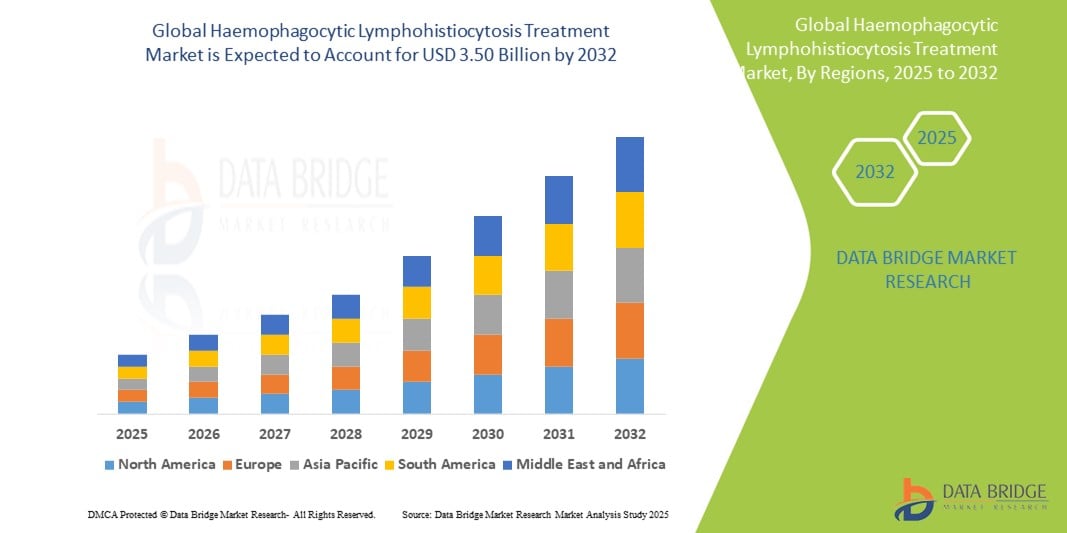
噬血性細胞淋巴組織細胞增生症治療市場規模
- 2024 年全球噬血淋巴組織細胞增生症治療市場規模為23.4 億美元 ,預計 到 2032 年將達到 35 億美元,預測期內 複合年增長率為 5.14%。
- 市場成長主要源自於免疫腫瘤疾病的日益普及、傳染病和自體免疫疾病病例的增加以及愛滋病毒感染率的上升,所有這些都可能引發HLH。此外,全球醫療支出的不斷增長以及診斷方案的進步促進了更早、更準確的診斷,從而推動了噬血淋巴細胞淋巴組織細胞增生症治療市場對有效治療方案的需求。
- 全球 HLH 治療市場正在獲得發展動力,這得益於 emapalumab 等標靶療法的進步、醫療保健支出的增加以及對早期和準確診斷的高度重視,尤其是在專業醫療保健機構和新興市場中。
噬血細胞淋巴組織細胞增生症治療市場分析
- 噬血細胞性淋巴組織細胞增生症 (HLH) 是一種罕見且危及生命的疾病,其特徵是免疫過度活化。隨著免疫療法和標靶療法的進步,HLH 的治療前景正在不斷演變,旨在改善患者的預後和存活率。
- HLH 治療市場的加速成長主要得益於診斷能力的提升、臨床醫生和患者認知度的提高,以及標靶生物製劑和免疫抑制劑等新型療法的開發。此外,全球研究和臨床試驗正在推動 HLH 精準醫療和個人化治療方法的進步。
- 北美在噬血細胞淋巴組織細胞增生症治療市場佔據主導地位,2024 年佔 37.2% 的最大收入份額。這種主導地位歸因於該地區早期採用先進療法、高昂的醫療保健支出以及主要行業參與者的強大影響力。
- 預計亞太地區將成為噬血細胞淋巴組織細胞增生症治療市場成長最快的地區,2025 年至 2032 年的複合年增長率為 14.7%。推動這一強勁成長的因素包括城市化進程加快、可支配收入增加以及醫療設施可近性的改善
- 免疫療法在噬血細胞淋巴組織細胞增生症治療市場中佔據主導地位,2024 年的市場份額為 36.5%,這得益於正在進行的臨床試驗、單克隆抗體開發的進步以及靶向免疫調節劑(如 emapalumab)的日益普及
報告範圍和噬血細胞淋巴組織細胞增生症治療市場細分
|
屬性 |
噬血性細胞淋巴組織細胞增生症治療關鍵市場洞察 |
|
涵蓋的領域 |
|
|
覆蓋國家 |
北美洲
歐洲
亞太
中東和非洲
南美洲
|
|
主要市場參與者 |
|
|
市場機會 |
|
|
加值資料資訊集 |
除了對市場價值、成長率、細分、地理覆蓋範圍和主要參與者等市場情景的洞察之外,Data Bridge Market Research 策劃的市場報告還包括深入的專家分析、定價分析、品牌份額分析、消費者調查、人口統計分析、供應鏈分析、價值鏈分析、原材料/消耗品概述、供應商選擇標準、PESTLE 分析、波特分析和監管框架。 |
噬血性細胞淋巴組織細胞增生症治療市場趨勢
“提高治療和診斷的便利性”
- A significant and accelerating trend in the global haemophagocytic lymphohistiocytosis (HLH) treatment market is the adoption of intelligent technologies that improve diagnostic accuracy, streamline clinical workflows, and enhance patient management
- For instance, advanced clinical decision support tools are being utilized to analyze complex patient data, aiding in the early detection and diagnosis of HLH. These systems process information from electronic health records, laboratory results, and imaging studies to identify patterns indicative of HLH, allowing for timely intervention
- Digital solutions are also assisting healthcare professionals in managing treatment protocols, retrieving patient information, and improving data accuracy. These technologies reduce cognitive load, improve efficiency, and allow for more focused patient care
- The integration of intelligent technologies into HLH treatment protocols is helping to build a more responsive and connected healthcare environment. Real-time data analysis and seamless information sharing among care teams contribute to improved outcomes and better operational coordination
- Companies specializing in rare disease solutions are developing platforms tailored to HLH, featuring automated alerts for abnormal lab results and personalized treatment insights. These innovations signal a broader shift toward precision-driven, technology-supported healthcare
- The demand for smart healthcare systems in HLH treatment is growing across hospitals, specialty clinics, and research centers as providers increasingly seek tools that offer enhanced diagnostic capabilities, optimized workflows, and greater patient engagement
Haemophagocytic Lymphohistiocytosis Treatment Market Dynamics
Driver
“Rising Disease Awareness and Advancements in Diagnostic Capabilities”
- The increasing awareness of rare hematological disorders such as Haemophagocytic Lymphohistiocytosis (HLH), coupled with advancements in diagnostic techniques, is significantly driving the demand for effective HLH treatments
- For instance, in April 2024, Cincinnati Children's Hospital announced a breakthrough in HLH diagnostic protocols, integrating genomic testing to facilitate early detection and precise classification of the disease. Such developments are expected to fuel the growth of the HLH treatment market over the forecast period
- As clinicians and healthcare providers become more aware of the aggressive nature of HLH and the importance of timely intervention, there is a growing reliance on targeted therapies and immunomodulatory regimens to manage the disease effectively
- Furthermore, the increasing availability of genetic screening and next-generation sequencing (NGS) in clinical settings is enabling earlier identification of primary HLH, especially in pediatric populations. Early detection is critical in initiating treatment regimens such as dexamethasone, etoposide, and hematopoietic stem cell transplantation (HSCT)
- The push toward research and development of novel therapies—such as emapalumab-lzsg (a monoclonal antibody targeting interferon gamma)—underscores the expanding treatment landscape. Supportive funding from rare disease programs and pharmaceutical innovation pipelines are additional factors propelling market growth across both developed and emerging healthcare markets
Restraint/Challenge
“High Cost of Treatment and Limited Access to Advanced Therapies”
- The high cost associated with HLH treatment, especially in cases requiring hematopoietic stem cell transplantation or targeted immunotherapies, presents a significant barrier to broader adoption, particularly in low- and middle-income countries
- For instance, treatment regimens involving biologics such as emapalumab or chemotherapy followed by stem cell transplantation can cost several hundred thousand dollars, excluding hospitalization and supportive care costs
- In addition, limited availability of specialized treatment centers with experience in managing HLH can delay diagnosis and compromise patient outcomes. This is particularly true in rural areas and regions with underdeveloped healthcare infrastructure
- Addressing these challenges requires systemic improvements, including expanding healthcare access, increasing clinician education about HLH, and incorporating HLH-related treatments into national rare disease reimbursement programs
- While global initiatives and rare disease alliances have started to improve access to orphan drugs, affordability remains a concern. Partnerships between governments, healthcare organizations, and pharmaceutical companies will be essential to subsidize treatment costs and facilitate early intervention
- Moreover, the complexity of diagnosing HLH due to overlapping symptoms with other conditions such as sepsis or leukemia also contributes to underdiagnosis and misdiagnosis, further hampering timely treatment and negatively affecting market penetration
Haemophagocytic Lymphohistiocytosis Treatment Market Scope
The market is segmented on the basis of type, therapy type, treatment, drug, route of administration, and end user.
- By Type
On the basis of type, the haemophagocytic lymphohistiocytosis treatment market is segmented into familial and acquired. The acquired segment held the largest market revenue share of 64.3% in 2024, attributed to its higher prevalence in adults and association with infections, malignancies, and autoimmune disorders. The increasing diagnosis rate and expanded awareness are contributing to this segment’s growth.
The Familial segment is anticipated to witness the fastest growth rate of 8.6% CAGR from 2025 to 2032, driven by improved genetic screening in newborns, early intervention programs, and increasing research into pediatric rare diseases.
- By Therapy Type
根據治療類型,噬血細胞性淋巴組織細胞增生症治療市場細分為免疫療法、化療、標靶療法和其他療法。免疫療法佔據市場主導地位,2024 年的市佔率為 36.5%,這得益於正在進行的臨床試驗、單株抗體研發的進展以及標靶免疫調節劑(如依帕魯單抗)的日益普及。
預計標靶治療在 2025 年至 2032 年間將以 10.9% 的最快複合年增長率增長,這得益於針對 IFN-γ 和細胞因子信號傳導的 emapalumab 和類似生物製劑的日益普及,可提供精準治療且全身副作用更少。
- 按治療
根據治療方法,市場細分為藥物治療和手術治療。藥物治療佔主導地位,2024年的收入份額為78.5%,這得益於免疫抑制劑、類固醇和單株抗體在HLH治療中的廣泛使用。
預計從 2025 年到 2032 年,手術領域的複合年增長率將達到 7.4%,尤其是對於需要免疫化療後治癒性治療的遺傳性 HLH 兒童。
- 按藥物
根據藥物類型,HLH 市場細分為 Emapalumab、阿崙單抗、英夫利西單抗等。 Emapalumab 在 2024 年佔據了最大的收入份額,為 34.6%,這得益於其 FDA 批准以及對常規療法無效的原發性 HLH 兒科患者的療效。
阿崙單抗預計在 2025 年至 2032 年期間的複合年增長率將達到 9.1%,為最快的成長動力,這得益於其在難治性 HLH 中的超說明書用藥及其在搶救方案中的作用。其他細分市場,包括皮質類固醇和依托泊苷等藥物,由於其在 HLH 方案中的基礎性作用,將繼續保持強大的市場份額。
- 依給藥途徑
根據給藥途徑,市場細分為口服和腸外給藥。腸外給藥領域在2024年佔據了最大的收入份額,達72.3%,這是因為HLH的危急性質,需要在醫院環境中立即靜脈給藥。
隨著支持療法和維持療法越來越多地轉向便捷的家庭治療選擇,口腔治療領域預計在 2025 年至 2032 年期間的複合年增長率為 6.3%。
- 按最終用戶
根據最終用戶,HLH 治療市場可細分為醫院、家庭護理、專科診所、腫瘤科醫生、免疫學家和其他。受重症監護、住院管理和幹細胞移植需求的推動,醫院在 2024 年佔據了最大的市場收入份額,達到 55.8%。
由於專業知識、先進的診斷、個人化護理、不斷增加的患者轉診以及參與針對性 HLH 療法的臨床試驗,從而提高了治療的可及性和治療效果,專科診所部門預計將在 2025 年至 2032 年間經歷最快的增長。
噬血細胞淋巴組織細胞增生症治療市場區域分析
- 北美在噬血細胞淋巴組織細胞增生症治療市場佔據主導地位,2024 年其收入份額最大,為 37.2%,這得益於先進的醫療基礎設施、對罕見疾病的高度認識以及尖端療法的廣泛普及
- 該地區的患者和醫療保健提供者受益於早期診斷計劃、強大的臨床研究活動以及獲得監管機構批准的標靶免疫療法和生物製劑等新型治療方法
- 高昂的醫療支出、完善的罕見疾病網絡以及對個人化醫療不斷增加的投資進一步鞏固了這一主導地位,使北美成為兒童和成人 HLH 治療的關鍵市場
美國噬血細胞淋巴組織細胞增生症治療市場洞察
2024年,美國噬血細胞性淋巴組織細胞增生症(HLH)治療市場佔據北美地區最大收入份額,這得益於先進的醫療基礎設施和創新療法的早期應用。人們對罕見疾病的認識不斷提高,以及免疫療法和生物製劑等尖端標靶治療的普及,推動著市場的成長。美國也受益於強大的臨床試驗管道和完善的罕見疾病網絡,促進了兒童和成人群體快速採用新型HLH療法。
歐洲噬血淋巴組織細胞增生症治療市場洞察
預計歐洲噬血細胞性淋巴組織細胞增生症(HLH)治療市場將在整個預測期內以顯著的複合年增長率擴張,這主要得益於HLH認知度的提高和診斷能力的提升。醫療基礎設施投資的不斷增長以及政府對罕見疾病研究的支持,促進了先進治療方案的採用。該地區的醫院和專科診所數量顯著增長,重點關注個人化醫療以及家族性HLH病例的造血幹細胞移植。
英國噬血淋巴組織細胞增生症治療市場洞察
英國噬血細胞性淋巴組織細胞增生症治療市場預計在預測期內將以顯著的複合年增長率增長,這得益於診斷率的提高和疾病管理方案的改進。對罕見疾病的關注度不斷提高,以及公私醫療機構之間日益加強的合作,正在擴大新療法的可及性。英國完善的醫療保健體系和病患支援計畫有助於提高治療的採用率並改善病患的治療效果。
德國噬血性細胞淋巴組織細胞增生症治療市場洞察
預計在預測期內,德國噬血淋巴組織細胞增生症治療市場將以可觀的複合年增長率擴張,這得益於政府大力推動罕見疾病認知和研究的舉措。德國先進的醫療基礎設施和高額報銷率促進了標靶治療和幹細胞移植的可近性。對個人化和創新治療方案的需求,以及完善的血液學和免疫學診所,正在支撐市場成長。
亞太地區噬血細胞淋巴組織細胞增生症治療市場洞察
在2025年至2032年的預測期內,亞太地區噬血細胞淋巴組織細胞增生症治療市場預計將以14.7%的複合年增長率快速增長,這得益於新興經濟體醫療支出的不斷增長、醫療基礎設施的不斷擴張以及人們對罕見疾病認識的不斷提高。中國、日本和印度等國家正在增加對醫療技術和診斷能力的投資,從而促進了早期發現和治療的普及。政府支持罕見疾病管理的措施以及病患權益組織的不斷壯大,進一步加速了該地區市場的擴張。
日本噬血性細胞淋巴組織細胞增生症治療市場洞察
日本噬血細胞性淋巴組織細胞增生症(HLH)治療市場正因人口老化、先進的醫療體係以及日益增長的便捷治療方案需求而蓬勃發展。日本對免疫療法和標靶藥物等創新療法的重視,加上對罕見疾病研究的大力投入,正推動著市場的成長。創新治療方案與以病人為中心的照護模式的融合,正在提升兒童和成人HLH患者的治療效果。
中國噬血細胞淋巴組織細胞增生症治療市場洞察
2024年,中國噬血細胞性淋巴組織細胞增生症(HLH)治療市場佔據亞太地區最大市場份額,這得益於快速的城市化進程、不斷壯大的中產階級以及醫療資源的日益豐富。中國政府旨在改善罕見病診療可及性的政策,加上專科治療中心數量的不斷增加,正在推動市場成長。專注於HLH療法的實力雄厚的國內製藥商的出現,進一步提升了HLH治療的可負擔性和可及性。
噬血性細胞淋巴組織細胞增生症治療市場份額
噬血細胞性淋巴組織細胞增生症治療產業主要由知名公司主導,包括:
- 輝瑞公司(美國)
- 強生服務公司(美國)
- 賽諾菲(法國)
- 瑞典孤兒生物維生素公司 (Swedish Orphan Biovitrum AB )(瑞典)
- 貝利庫姆製藥公司
- 三星Bioepis(韓國)
- Incyte(美國)
- 梯瓦製藥工業股份有限公司(以色列)
- Takeda Pharmaceutical Company Limited (Japan)
- AstraZeneca (U.K.)
- Bristol-Myers Squibb Company (U.S.)
- GSK plc (UK)
- F. Hoffmann-La Roche Ltd (Switzerland)
- Novartis AG (Switzerland)
- Lilly (U.S.)
- Abbott (U.S.)
- Merck & Co., Inc. (U.S.)
- Lupin (India)
Latest Developments in Global Haemophagocytic Lymphohistiocytosis Treatment Market
- In December 2024, Sanofi presented new data at the American Society of Hematology (ASH) Annual Meeting, highlighting their commitment to innovation in rare blood diseases and cancers, including hemophilia and HLH. These presentations underscore Sanofi's ongoing efforts to advance treatment options in the HLH space
- In December 2024, Sobi announced new data at the ASH Annual Meeting, focusing on real-world treatment patterns and outcomes among patients with primary HLH. This data presentation emphasizes Sobi's dedication to improving treatment strategies and outcomes for HLH patients
- In January 2025, AB2 Bio Ltd. entered into a U.S. option and licensing agreement with Nippon Shinyaku for Tadekinig alfa, a potential treatment for primary monogenic IL-18 driven HLH. This agreement includes early payments and potential milestone payments, reflecting the strategic collaboration to bring this novel therapy to market
- In January 2025, Teva announced the launch of Copaxone (glatiramer acetate injection) for the treatment of secondary HLH in patients with multiple sclerosis. This launch represents Teva's expansion into the HLH treatment market, offering a new therapeutic option for patients with this rare condition
SKU-
研究方法
数据收集和基准年分析是使用具有大样本量的数据收集模块完成的。该阶段包括通过各种来源和策略获取市场信息或相关数据。它包括提前检查和规划从过去获得的所有数据。它同样包括检查不同信息源中出现的信息不一致。使用市场统计和连贯模型分析和估计市场数据。此外,市场份额分析和关键趋势分析是市场报告中的主要成功因素。要了解更多信息,请请求分析师致电或下拉您的询问。
DBMR 研究团队使用的关键研究方法是数据三角测量,其中包括数据挖掘、数据变量对市场影响的分析和主要(行业专家)验证。数据模型包括供应商定位网格、市场时间线分析、市场概览和指南、公司定位网格、专利分析、定价分析、公司市场份额分析、测量标准、全球与区域和供应商份额分析。要了解有关研究方法的更多信息,请向我们的行业专家咨询。
可定制
Data Bridge Market Research 是高级形成性研究领域的领导者。我们为向现有和新客户提供符合其目标的数据和分析而感到自豪。报告可定制,包括目标品牌的价格趋势分析、了解其他国家的市场(索取国家列表)、临床试验结果数据、文献综述、翻新市场和产品基础分析。目标竞争对手的市场分析可以从基于技术的分析到市场组合策略进行分析。我们可以按照您所需的格式和数据样式添加您需要的任意数量的竞争对手数据。我们的分析师团队还可以为您提供原始 Excel 文件数据透视表(事实手册)中的数据,或者可以帮助您根据报告中的数据集创建演示文稿。