


Haemophagocytic Lymphohistiocytosis Treatment Market Size
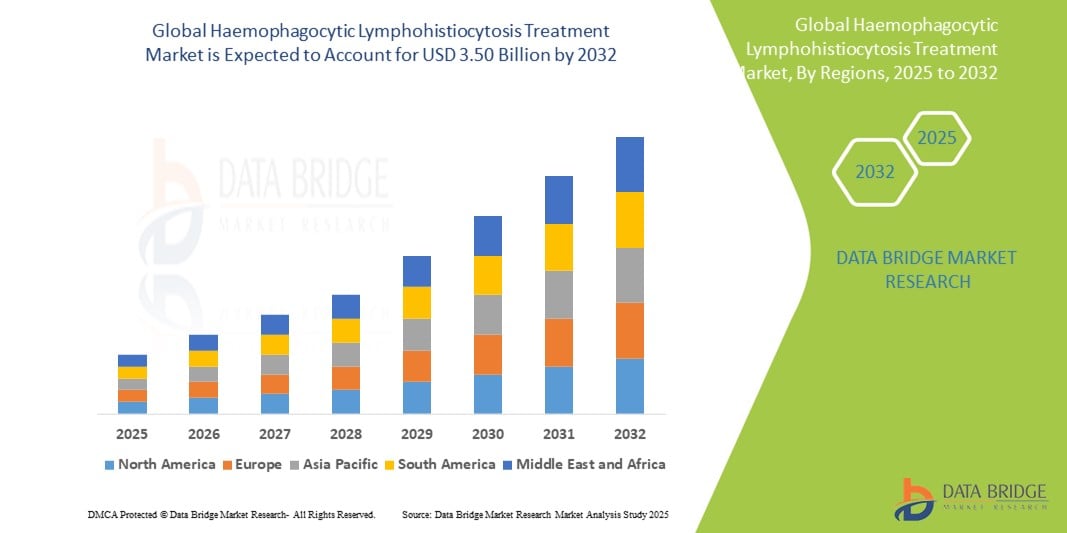
- The global haemophagocytic lymphohistiocytosis treatment market size was valued at USD 2.34 billion in 2024 and is expected to reach USD 3.50 billion by 2032, at a CAGR of 5.14% during the forecast period
- The market growth is largely fueled by the increasing prevalence of immuno-oncology diseases, the rising number of infectious and autoimmune disease cases, and an increase in HIV cases prevalence, all of which can trigger HLH. Furthermore, rising healthcare expenditure globally and advancements in diagnostic protocols are contributing to earlier and more accurate diagnosis, thereby driving demand for effective treatment solutions in the haemophagocytic lymphohistiocytosis treatment market
- The global HLH treatment market is gaining momentum, driven by advancements in targeted therapies such as emapalumab, increasing healthcare expenditure, and a strong focus on early and accurate diagnosis, especially in specialized healthcare settings and emerging markets..
Haemophagocytic Lymphohistiocytosis Treatment Market Analysis
- Haemophagocytic lymphohistiocytosis (HLH) is a rare, life-threatening condition characterized by excessive immune activation. The treatment landscape is evolving with advancements in immunotherapy and targeted therapies, aiming to improve patient outcomes and survival rates
- The accelerating growth of the HLH treatment market is primarily driven by improved diagnostic capabilities, increased awareness among clinicians and patients, and the development of novel therapies such as targeted biologics and immunosuppressive agents. In addition, global research efforts and clinical trials are fostering advancements in precision medicine and personalized treatment approaches for HLH.
- North America dominates the haemophagocytic lymphohistiocytosis treatment market, accounting for the largest revenue share of 37.2% in 2024. This dominance is attributed to the early adoption of advanced therapies, high healthcare expenditure, and the strong presence of key industry players in the region.
- Asia-Pacific is expected to be the fastest-growing region in the haemophagocytic lymphohistiocytosis treatment market, with a CAGR of 14.7% from 2025 to 2032. Factors contributing to this robust growth include increasing urbanization, rising disposable incomes, and improved access to healthcare facilities
- Immunotherapy dominates the haemophagocytic lymphohistiocytosis treatment market, holding a market share of 36.5% in 2024, fueled by ongoing clinical trials, advancements in monoclonal antibody development, and the rising adoption of targeted immunomodulatory agents such as emapalumab
Report Scope and Haemophagocytic Lymphohistiocytosis Treatment Market Segmentation
|
Attributes |
Haemophagocytic Lymphohistiocytosis Treatment Key Market Insights |
|
Segments Covered |
|
|
Countries Covered |
North America
Europe
Asia-Pacific
Middle East and Africa
South America
|
|
Key Market Players |
|
|
Market Opportunities |
|
|
Value Added Data Infosets |
In addition to the insights on market scenarios such as market value, growth rate, segmentation, geographical coverage, and major players, the market reports curated by the Data Bridge Market Research also include in-depth expert analysis, pricing analysis, brand share analysis, consumer survey, demography analysis, supply chain analysis, value chain analysis, raw material/consumables overview, vendor selection criteria, PESTLE Analysis, Porter Analysis, and regulatory framework. |
Haemophagocytic Lymphohistiocytosis Treatment Market Trends
“Enhanced Convenience in Treatment and Diagnosis”
- A significant and accelerating trend in the global haemophagocytic lymphohistiocytosis (HLH) treatment market is the adoption of intelligent technologies that improve diagnostic accuracy, streamline clinical workflows, and enhance patient management
- For instance, advanced clinical decision support tools are being utilized to analyze complex patient data, aiding in the early detection and diagnosis of HLH. These systems process information from electronic health records, laboratory results, and imaging studies to identify patterns indicative of HLH, allowing for timely intervention
- Digital solutions are also assisting healthcare professionals in managing treatment protocols, retrieving patient information, and improving data accuracy. These technologies reduce cognitive load, improve efficiency, and allow for more focused patient care
- The integration of intelligent technologies into HLH treatment protocols is helping to build a more responsive and connected healthcare environment. Real-time data analysis and seamless information sharing among care teams contribute to improved outcomes and better operational coordination
- Companies specializing in rare disease solutions are developing platforms tailored to HLH, featuring automated alerts for abnormal lab results and personalized treatment insights. These innovations signal a broader shift toward precision-driven, technology-supported healthcare
- The demand for smart healthcare systems in HLH treatment is growing across hospitals, specialty clinics, and research centers as providers increasingly seek tools that offer enhanced diagnostic capabilities, optimized workflows, and greater patient engagement
Haemophagocytic Lymphohistiocytosis Treatment Market Dynamics
Driver
“Rising Disease Awareness and Advancements in Diagnostic Capabilities”
- The increasing awareness of rare hematological disorders such as Haemophagocytic Lymphohistiocytosis (HLH), coupled with advancements in diagnostic techniques, is significantly driving the demand for effective HLH treatments
- For instance, in April 2024, Cincinnati Children's Hospital announced a breakthrough in HLH diagnostic protocols, integrating genomic testing to facilitate early detection and precise classification of the disease. Such developments are expected to fuel the growth of the HLH treatment market over the forecast period
- As clinicians and healthcare providers become more aware of the aggressive nature of HLH and the importance of timely intervention, there is a growing reliance on targeted therapies and immunomodulatory regimens to manage the disease effectively
- Furthermore, the increasing availability of genetic screening and next-generation sequencing (NGS) in clinical settings is enabling earlier identification of primary HLH, especially in pediatric populations. Early detection is critical in initiating treatment regimens such as dexamethasone, etoposide, and hematopoietic stem cell transplantation (HSCT)
- The push toward research and development of novel therapies—such as emapalumab-lzsg (a monoclonal antibody targeting interferon gamma)—underscores the expanding treatment landscape. Supportive funding from rare disease programs and pharmaceutical innovation pipelines are additional factors propelling market growth across both developed and emerging healthcare markets
Restraint/Challenge
“High Cost of Treatment and Limited Access to Advanced Therapies”
- The high cost associated with HLH treatment, especially in cases requiring hematopoietic stem cell transplantation or targeted immunotherapies, presents a significant barrier to broader adoption, particularly in low- and middle-income countries
- For instance, treatment regimens involving biologics such as emapalumab or chemotherapy followed by stem cell transplantation can cost several hundred thousand dollars, excluding hospitalization and supportive care costs
- In addition, limited availability of specialized treatment centers with experience in managing HLH can delay diagnosis and compromise patient outcomes. This is particularly true in rural areas and regions with underdeveloped healthcare infrastructure
- Addressing these challenges requires systemic improvements, including expanding healthcare access, increasing clinician education about HLH, and incorporating HLH-related treatments into national rare disease reimbursement programs
- While global initiatives and rare disease alliances have started to improve access to orphan drugs, affordability remains a concern. Partnerships between governments, healthcare organizations, and pharmaceutical companies will be essential to subsidize treatment costs and facilitate early intervention
- Moreover, the complexity of diagnosing HLH due to overlapping symptoms with other conditions such as sepsis or leukemia also contributes to underdiagnosis and misdiagnosis, further hampering timely treatment and negatively affecting market penetration
Haemophagocytic Lymphohistiocytosis Treatment Market Scope
The market is segmented on the basis of type, therapy type, treatment, drug, route of administration, and end user.
- By Type
On the basis of type, the haemophagocytic lymphohistiocytosis treatment market is segmented into familial and acquired. The acquired segment held the largest market revenue share of 64.3% in 2024, attributed to its higher prevalence in adults and association with infections, malignancies, and autoimmune disorders. The increasing diagnosis rate and expanded awareness are contributing to this segment’s growth.
The Familial segment is anticipated to witness the fastest growth rate of 8.6% CAGR from 2025 to 2032, driven by improved genetic screening in newborns, early intervention programs, and increasing research into pediatric rare diseases.
- By Therapy Type
On the basis of therapy type, the haemophagocytic lymphohistiocytosis treatment market is segmented into immunotherapy, chemotherapy, targeted therapy, and others. Immunotherapy dominates the market, holding a market share of 36.5% in 2024, fueled by ongoing clinical trials, advancements in monoclonal antibody development, and the rising adoption of targeted immunomodulatory agents such as emapalumab.
Targeted Therapy is projected to grow at the fastest CAGR of 10.9% from 2025 to 2032, driven by rising adoption of emapalumab and similar biologics targeting IFN-γ and cytokine signaling, offering precision treatment with fewer systemic side effects.
- By Treatment
On the basis of treatment, the market is segmented into medication and Surgery. The medication segment dominated the market with a revenue share of 78.5% in 2024, fueled by widespread use of immunosuppressants, steroids, and monoclonal antibodies in HLH management.
The surgery segment is expected to grow at a CAGR of 7.4% from 2025 to 2032, particularly in children with genetic HLH requiring curative treatment post-immunochemotherapy.
- By Drug
On the basis of drug, the HLH market is segmented into Emapalumab, alemtuzumab, infliximab, and others. Emapalumab held the largest revenue share of 34.6% in 2024, credited to its FDA approval and efficacy in pediatric patients with primary HLH refractory to conventional therapy.
Alemtuzumab is expected to grow at the fastest CAGR of 9.1% from 2025 to 2032, driven by its off-label use in refractory HLH and its role in salvage regimens.The Others segment, including agents such as corticosteroids and etoposide, continues to maintain strong market presence due to their foundational role in HLH protocols.
- By Route of Administration
On the basis of route of administration, the market is segmented into oral and parenteral. The parenteral segment held the largest revenue share of 72.3% in 2024, due to the critical nature of HLH requiring immediate and intravenous administration of drugs in hospital settings.
The oral segment is projected to register a CAGR of 6.3% from 2025 to 2032, as supportive and maintenance therapies increasingly move toward convenient at-home treatment options.
- By End User
On the basis of end user, the HLH treatment market is segmented into hospitals, home care, specialty clinics, oncologists, immunologists, and others. Hospitals accounted for the largest market revenue share of 55.8% in 2024, driven by the need for intensive care, inpatient management, and stem cell transplant capabilities.
Specialty Clinics segment is expected to experience the fastest growth from 2025 to 2032, due to specialized expertise, advanced diagnostics, personalized care, increasing patient referrals, and involvement in clinical trials for targeted HLH therapies, enhancing treatment accessibility and outcomes.
Haemophagocytic Lymphohistiocytosis Treatment Market Regional Analysis
- North America dominates the haemophagocytic lymphohistiocytosis treatment market with the largest revenue share of 37.2% in 2024, driven by advanced healthcare infrastructure, high awareness of rare diseases, and widespread availability of cutting-edge therapies
- Patients and healthcare providers in the region benefit from early diagnosis programs, strong clinical research activities, and access to novel treatments such as targeted immunotherapies and biologics approved by regulatory authorities
- This dominant position is further supported by high healthcare expenditure, well-established rare disease networks, and increasing investments in personalized medicine, making North America a key market for HLH treatment across pediatric and adult populations
U.S. Haemophagocytic Lymphohistiocytosis Treatment Market Insight
The U.S. haemophagocytic lymphohistiocytosis treatment market captured the largest revenue share in 2024 within North America, fueled by advanced healthcare infrastructure and early adoption of innovative therapies. Increasing awareness of rare diseases and the availability of cutting-edge targeted treatments such as immunotherapies and biologics are driving market growth. The U.S. also benefits from a robust pipeline of clinical trials and well-established rare disease networks, encouraging rapid uptake of novel HLH therapies across both pediatric and adult populations.
Europe Haemophagocytic Lymphohistiocytosis Treatment Market Insight
The Europe haemophagocytic lymphohistiocytosis treatment market is projected to expand at a substantial CAGR throughout the forecast period, primarily driven by increased awareness of HLH and improved diagnostic capabilities. Growing investments in healthcare infrastructure and government support for rare disease research foster adoption of advanced treatment options. The region sees significant growth across hospitals and specialty clinics, with an emphasis on personalized medicine and access to hematopoietic stem cell transplantation for familial HLH cases.
U.K. Haemophagocytic Lymphohistiocytosis Treatment Market Insight
The U.K. haemophagocytic lymphohistiocytosis treatment market is anticipated to grow at a noteworthy CAGR during the forecast period, driven by increasing diagnostic rates and better disease management protocols. Enhanced focus on rare diseases and growing collaborations between public and private healthcare providers are expanding access to novel therapies. The U.K.’s well-developed healthcare system and patient support programs contribute to increased treatment adoption and improved patient outcomes.
Germany Haemophagocytic Lymphohistiocytosis Treatment Market Insight
The Germany haemophagocytic lymphohistiocytosis treatment market is expected to expand at a considerable CAGR during the forecast period, fueled by strong government initiatives promoting rare disease awareness and research. Germany’s advanced healthcare infrastructure and high reimbursement rates facilitate access to targeted therapies and stem cell transplantation. The demand for personalized and innovative treatment options, alongside well-established hematology and immunology clinics, is supporting market growth.
Asia-Pacific Haemophagocytic Lymphohistiocytosis Treatment Market Insight
The Asia-Pacific haemophagocytic lymphohistiocytosis treatment market is poised to grow at the fastest CAGR of 14.7% during the forecast period of 2025 to 2032, driven by rising healthcare expenditure, expanding healthcare infrastructure, and increasing awareness of rare diseases in emerging economies. Countries such as China, Japan, and India are witnessing increased investments in healthcare technology and diagnostic capabilities, boosting early detection and treatment adoption. Government initiatives supporting rare disease management and growing patient advocacy groups further accelerate market expansion in the region.
Japan Haemophagocytic Lymphohistiocytosis Treatment Market Insight
The Japan haemophagocytic lymphohistiocytosis treatment market is gaining momentum due to the country’s aging population, advanced healthcare system, and increasing demand for convenient treatment options. Japan’s focus on innovative therapies, including immunotherapies and targeted drugs, coupled with high investment in rare disease research, is propelling market growth. The integration of novel treatment protocols and patient-centric care models is enhancing outcomes for HLH patients in both pediatric and adult segments.
China Haemophagocytic Lymphohistiocytosis Treatment Market Insight
The China haemophagocytic lymphohistiocytosis treatment market accounted for the largest market revenue share in Asia Pacific in 2024, attributed to rapid urbanization, an expanding middle class, and increasing healthcare access. China’s government policies aimed at improving rare disease diagnosis and treatment availability, combined with a growing number of specialized treatment centers, are driving market growth. The presence of strong domestic pharmaceutical manufacturers focusing on HLH therapies is further enhancing the affordability and accessibility of treatments.
Haemophagocytic Lymphohistiocytosis Treatment Market Share
The haemophagocytic lymphohistiocytosis treatment industry is primarily led by well-established companies, including:
- Pfizer Inc. (U.S.)
- Johnson & Johnson Services, Inc. (U.S.)
- Sanofi (France)
- Swedish Orphan Biovitrum AB) (Sweden)
- Bellicum Pharmaceuticals, Inc. (U.S.)
- Samsung Bioepis (South Korea)
- Incyte (U.S.)
- Teva Pharmaceutical Industries Ltd. (Israel)
- Takeda Pharmaceutical Company Limited (Japan)
- AstraZeneca (U.K.)
- Bristol-Myers Squibb Company (U.S.)
- GSK plc (UK)
- F. Hoffmann-La Roche Ltd (Switzerland)
- Novartis AG (Switzerland)
- Lilly (U.S.)
- Abbott (U.S.)
- Merck & Co., Inc. (U.S.)
- Lupin (India)
Latest Developments in Global Haemophagocytic Lymphohistiocytosis Treatment Market
- In December 2024, Sanofi presented new data at the American Society of Hematology (ASH) Annual Meeting, highlighting their commitment to innovation in rare blood diseases and cancers, including hemophilia and HLH. These presentations underscore Sanofi's ongoing efforts to advance treatment options in the HLH space
- In December 2024, Sobi announced new data at the ASH Annual Meeting, focusing on real-world treatment patterns and outcomes among patients with primary HLH. This data presentation emphasizes Sobi's dedication to improving treatment strategies and outcomes for HLH patients
- In January 2025, AB2 Bio Ltd. entered into a U.S. option and licensing agreement with Nippon Shinyaku for Tadekinig alfa, a potential treatment for primary monogenic IL-18 driven HLH. This agreement includes early payments and potential milestone payments, reflecting the strategic collaboration to bring this novel therapy to market
- In January 2025, Teva announced the launch of Copaxone (glatiramer acetate injection) for the treatment of secondary HLH in patients with multiple sclerosis. This launch represents Teva's expansion into the HLH treatment market, offering a new therapeutic option for patients with this rare condition

- Interactive Data Analysis Dashboard
- Company Analysis Dashboard for high growth potential opportunities
- Research Analyst Access for customization & queries
- Competitor Analysis with Interactive dashboard
- Latest News, Updates & Trend analysis
- Harness the Power of Benchmark Analysis for Comprehensive Competitor Tracking
Data collection and base year analysis are done using data collection modules with large sample sizes. The stage includes obtaining market information or related data through various sources and strategies. It includes examining and planning all the data acquired from the past in advance. It likewise envelops the examination of information inconsistencies seen across different information sources. The market data is analysed and estimated using market statistical and coherent models. Also, market share analysis and key trend analysis are the major success factors in the market report. To know more, please request an analyst call or drop down your inquiry.
The key research methodology used by DBMR research team is data triangulation which involves data mining, analysis of the impact of data variables on the market and primary (industry expert) validation. Data models include Vendor Positioning Grid, Market Time Line Analysis, Market Overview and Guide, Company Positioning Grid, Patent Analysis, Pricing Analysis, Company Market Share Analysis, Standards of Measurement, Global versus Regional and Vendor Share Analysis. To know more about the research methodology, drop in an inquiry to speak to our industry experts.
Data Bridge Market Research is a leader in advanced formative research. We take pride in servicing our existing and new customers with data and analysis that match and suits their goal. The report can be customized to include price trend analysis of target brands understanding the market for additional countries (ask for the list of countries), clinical trial results data, literature review, refurbished market and product base analysis. Market analysis of target competitors can be analyzed from technology-based analysis to market portfolio strategies. We can add as many competitors that you require data about in the format and data style you are looking for. Our team of analysts can also provide you data in crude raw excel files pivot tables (Fact book) or can assist you in creating presentations from the data sets available in the report.












