Global Neurogenic Bladder Infections Market, By Type (Overactive, Underactive), Drug Type (Sulphonamides, Azoles and Amphotericin B, Tetracycline, Nitrofurans, Aminoglycoside Antibiotics, Cephalosporin, Quinolones, Penicillin and Combinations), Test Type (Biochemical Urinary Tract Infection, Microscopic Urinary Tract Infection, Flow Cytometric Urinary Tract Infection), Distribution Channel (Hospital Pharmacies, Gynecology and Urology Clinics, Drug Store, Retail Pharmacies, Online Drug Stores) - Industry Trends and Forecast to 2029
市场规模和增长率是多少
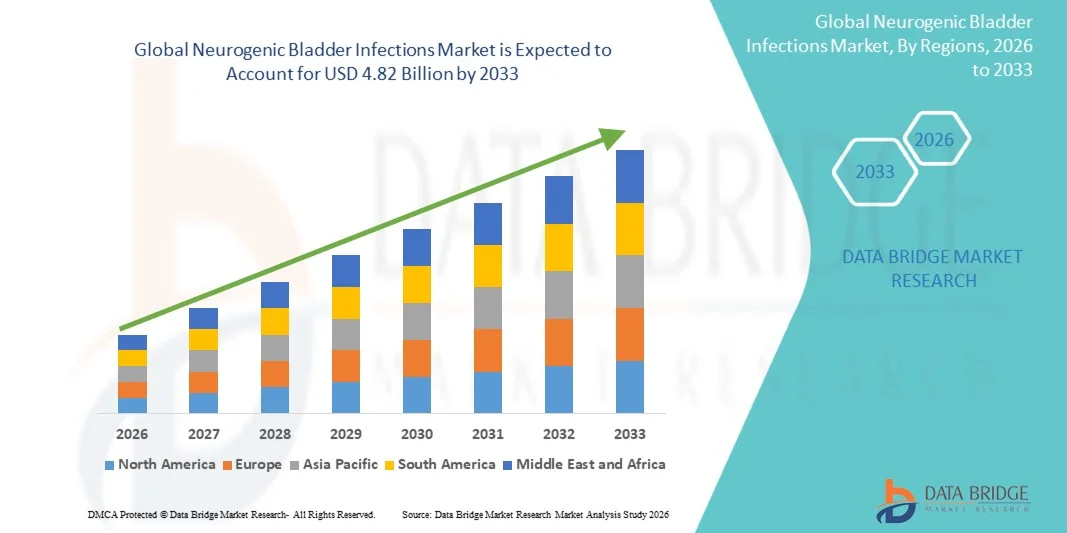
- 根据数据桥市场研究分析,全球神经源膀胱感染的市场规模被估价为:2025年39.0亿美元并可望达到截至2033年48.2亿美元, 以美元计CAGR为2.70%预测期间
- 导致市场增长的主要原因是,神经系统疾病发病率上升,与神经致病性膀胱功能失调有关的泌尿道并发症发病率上升,导管技术、诊断解决方案和有针对性的抗微生物疗法不断得到提高,从而改进了感染管理和病人结果。
- 此外,越来越强调预防护理,越来越多地采用家庭保健来提供长期导管指导,将远程医疗纳入感染监测,以及提高病人和临床医生对预防性膀胱感染管理的认识,这些都加强了对综合神经源膀胱感染解决方案的需求。 这些趋同因素正在加速采用创新的治疗和护理方法,从而大大地促进工业的增长。
神经源性布拉德感染市场的主要外卖是什么
- 由于神经系统紊乱而导致膀胱功能受损而导致的神经性膀胱感染,由于与尿道反复感染、肾脏并发症和生活质量下降有关,日益被确认为医院和家庭保健机构的关键条件
- 由于脊髓损伤、多发性硬化症和帕金森病等神经系统疾病发病率不断上升,人们对预防感染战略的认识不断提高,以及越来越多地采用先进的药物疗法和诊断测试来有效控制感染,因此对神经源性膀胱感染管理的需求不断上升。
- 北美在全球神经源性膀胱感染市场占据了主导地位,2025年收入份额最大,为42.5%,其特点是保健基础设施先进、患者认识高、关键因素多。医疗设备美国在采用专门治疗方法方面,特别是在长期导管化、抗微生物疗法和主动监测感染方面出现大幅增长。
- 由于卫生保健投资增加、神经系统疾病发病率上升、获得现代诊断服务的机会扩大以及对有效抗微生物疗法的需求增加,预计亚太区域在预测期内将成为神经致病性膀胱感染市场增长最快的区域。
- 过度活跃部分在2025年占市场份额55%,其驱动力是临床认知水平提高和症状感染频繁
报告范围和神经诱发性传染病
|
属性 |
主要的市场观察 |
|
覆盖部分 |
|
|
涵盖国家 |
北美
欧洲
亚太
中东和非洲
南美洲
|
|
关键市场玩家 |
|
|
市场机会 |
|
|
添加数据信息集的值 |
除了对市场价值、增长率、分块化、地域覆盖和主要参与者等市场假设的深刻见解外,数据桥市场研究编写的市场报告还包括深入的专家分析、病人流行病学、管道分析、定价分析和监管框架。 |
神经诱发性布拉德感染市场的主要趋势是什么
“诊断检测和个性化治疗方面的改进”
- 全球神经源性膀胱感染市场的一个重要和正在加速的趋势是采用先进的诊断检测,如流动细胞测量和生化泌尿道感染检测,从而能够更准确地检测和监测感染情况。
- 例如,医院越来越多地进行基于流动细胞测量的UTI检测,以迅速识别病原体并减少治疗延误
- 个性化治疗方法,包括基于患者特定感染特征的有针对性抗生素治疗方法,正在得到推动,从而能够更有效地管理再生感染并尽量减少抗微生物抗药性
- 将诊断与电子健康记录和远程医疗平台相结合,使临床医生能够远程跟踪感染史并调整治疗方案,改善患者的合规情况和结果
- 越来越多的对导管涂层和抗微生物材料的研究正在成为防止生物膜形成并降低长期导管患者感染率的趋势。
- 越来越多的移动保健应用软件和远程监测装置的开发,以跟踪泌尿参数和早期感染迹象,从而能够及时干预
- 快速、准确和针对具体病人的感染管理趋势正在改变临床做法并提高对主动泌尿护理的期望。
- 在医院和家庭保健部门,对结合高级检测和个性化抗微生物疗法的解决方案的需求正在迅速增长,因为服务提供者旨在减少并发症并改进生活质量。
市场动态
驱动程序
“神经疾病和UTI风险发病率上升”
- 脊髓损伤、多发性硬化症和帕金森病等神经病的发病率上升,增加了膀胱功能失调和感染的风险,是市场增长的关键驱动力。
- 例如,在2025年,专门泌尿科中心报告说,更多地利用了长期导管和预防性抗微生物疗法来预防再生感染。
- 临床医生和病人对预防感染和预防性膀胱管理的认识得到提高,这鼓励采用先进的诊断和治疗办法
- 此外,扩大家庭保健服务和远程医疗的采用允许持续监测和及时干预,降低神经致病膀胱感染的住院率
- 综合护理计划、远程监测和定向疗法的便利性正在推动医院、门诊诊所和家庭医疗保健环境的采用
- 制药公司对开发新型抗生素和复方疗法的投资不断增加,进一步推动了市场增长
- 泌尿器械制造商和保健提供者之间为智能导管化解决方案而加强合作,正在增强病人的结果并拓展市场机会
限制/挑战
“抗微生物抗药性和治疗遵守问题”
- 神经致病性膀胱感染中抗微生物病原体的出现是一个重大挑战,限制了常用抗生素的疗效并增加了治疗的复杂性.
- 例如,研究表明,E.coli和Klebsiella菌株的抗药性在需要长期导管的病人中不断提高,使选择治疗方法复杂化。
- 通过新的抗生素发展、明智的开处方做法和持续的病人教育解决抗药性问题,对保持治疗效力至关重要
- 此外,患者遵守复杂的多药药和导管卫生规程的情况可能不一致,影响治疗结果并增加复发率
- 虽然改进了药物配方和监测装置,但某些地区缺乏认识和治疗费用高会妨碍广泛采用最佳做法。
- 发展中地区专科泌尿科护理的提供有限可能延误诊断和有效治疗,限制市场渗透
- 新的抗微生物药物和诊断测试的监管挑战和严格的审批程序会减缓产品发布和市场增长
- 通过加强抗微生物管理、病人教育和可获得的保健干预措施来克服这些挑战,对市场持续增长至关重要
神经源性刀锋感染市场如何分割?.
市场按种类,药品种类,检验类型,配送渠道分出.
- 按类型
根据类型,神经致病性膀胱感染市场被分解为活性过强和活性不足. 过度活性神经性膀胱部分在2025年占市场份额最大,为55%,其驱动力在于其临床认知水平较高并经常出现症状性感染。 膀胱活性过强的患者经常发生尿道,急症和失禁等情况,这往往导致尿道反复感染需要持续治疗. 医院和门诊场所过度活性膀胱病例的流行率和可见度都较高,导致对诊断和治疗的强烈需求。 先进的治疗方法,包括有针对性的抗微生物疗法和导管化,被广泛用于管理过度活性膀胱感染. 由于可能损害肾脏并降低生活质量,临床医生倾向于对过度活性病例进行早期干预。 与活动不足的膀胱病例相比,这一部门还得益于病人意识的提高和主动的管理战略。
2026年至2033年,由于人们日益认识到诊断不足的病例,尤其是在老龄人群中,活动不足的神经性膀胱部分预计将增长最快。 膀胱活性不足导致不完全排出和残留尿量增加,增加感染的易感性。 泌尿科医生的认识得到提高,诊断工具得到改进,这推动了有效治疗办法的采用。 此外,发展中区域的老年人口不断增加和神经系统疾病发生率上升正在创造出新的机会。 智能导管监测和远程医疗跟踪等技术创新正在加强控制膀胱不足感染。 这一部分的增长得到进一步的支持,因为越来越多的投资用于病人教育和针对这种不太明显但具有临床意义的情况的预防性护理倡议。
- 按药物类型
根据药物类型,市场被分化为硫酰胺,zo类和氨基乙类,四环素,硝基呋喃,氨基甲酰Coside抗生素,丙二醇,克诺洛内斯,青霉素等多种药物. 克尼诺内斯和脑膜杆菌部分在2025年占据了市场主导地位,其总份额为47%,原因是它们的广谱活性以及临床上偏好治疗与神经性膀胱有关的尿道感染. 这些抗生素对E.coli和Klebsiella等常见病原体具有很高的抗药性,使它们成为医院和门诊场所的一线选择. 既定的临床指南为预防和治疗目的推荐这些课程。 它们的普及和相对可预测的药效动力学有助于临床医生的信心。 克诺洛内斯和脑内酯常被与导管化协议相融合来预防再生感染. 强有力的供应链和发达和新兴市场的接受也支持了它们的支配地位。
由于对常规抗生素的抗药性不断提高,以及需要替代治疗方案,预计硫酰胺部分在预测期间增长最快。 用于轻度至中度感染的患者和混合疗法中的硫化物正在越来越多地被采用,以提高疗效。 在发展中区域,对新配方的研究和低成本的可获取性也支持了这一增长。 由于简化了用药程序,病人的坚持程度正在提高。 保健提供者正在扩大在门诊治疗、长期导管管理和远程医疗指导疗法中使用硫酰胺。 这部分内容得益于对抗微生物管理和定制处理协议的日益重视。
- 按测试类型
根据试验类型,市场被分入生化尿道感染,微缩尿道感染和流体细胞测量尿道感染. 生化UTI测试部分在2025年占了51%的市场份额,原因是其快速的结果、成本效益和常规临床使用的可靠性。 医院、门诊部和诊断实验室广泛提供生化检测。 它们能够及早发现感染,并指导及时启动抗微生物疗法。 临床医生更倾向于对过度活泼和反复发生的膀胱感染病人进行生化检测. 其采用还得到与电子健康记录相结合的支持,以跟踪感染模式。 这一技术在住院和家庭护理环境中的效率强化了其支配地位。
流量细胞测量UTI测试段预计将在2026年至2033年出现最快的增长,其动力是其高灵敏度,快速的病原体识别,以及减少诊断错误的能力. 流体细胞测量法为细菌和白血球提供了自动化和精确的量化,可以更早的临床决定. 先进的医院实验室和专门的泌尿科中心越来越多地采用这种方法。 技术进步正在使流动细胞测量更方便使用。 与远程医疗平台的整合可以对高风险患者进行远程监测。 增加对诊断创新的投资并增强病人对快速检测的认识有助于该部门的强劲增长。
- 按发行频道
以配送渠道为基础,将市场分入医院药房,妇产科诊所,药店,零售药店,网上药店. 2025年,医院药房部分占了48%的市场份额,因为偏好发放处方抗生素和直接接受临床监督的专门疗法。 医院是神经性膀胱病患者的主要护理点,提供综合诊断和治疗服务. 医院药房确保遵守治疗规程,并指导导管卫生和后续护理。 他们的主导地位还受到病人量高、获得先进抗生素和支持复杂护理方法的驱动。 与泌尿科和远程医疗服务部门的合作进一步加强了这一段。
在线药店部分预计将在预测期间增长最快,因为数字化的采用越来越多,需要长期抗微生物疗法的慢性病人也越来越方便。 在线平台提供处方和场外药物、家庭分娩和谨慎的采购选择。 远程医疗的一体化使医生能够远程开具并监测治疗。 互联网渗透率的提高、移动保健软件的采用以及家庭对感染管理的认识推动了增长。 该部分的可扩展性和成本效益使它成为城市和半城市地区迅速扩展的渠道。
哪个地区拥有神经源性布拉德感染市场的最大份额
- 北美在全球神经源性膀胱感染市场上占据了主导地位,2025年收入份额最大,为42.5%,其特点是保健基础设施先进、患者认识高、以及关键医疗器械和制药商众多
- 本区域的病人和临床医生高度重视提供专门的诊断检测、有针对性的抗微生物疗法和综合导管治疗,从而改进感染管理和患者结果
- 这种广泛采用得到了高保健支出、主动提高认识方案以及主要药品和医疗器械公司的支持,将北美确立为跨医院、门诊诊所和家庭保健场所进行神经性膀胱感染治疗的主要区域。
美国神经致病性布拉德感染 市场透视
美国神经致病性膀胱感染市场在2025年收获了北美最大的81%的收入份额,而神经功能失调和先进的保健基础设施的流行程度不断上升也为这一份额所助长. 患者和临床医生正越来越多地优先考虑通过有针对性的抗微生物疗法和专门的导管,及早发现并有效管理膀胱感染。 越来越多的远程医疗、家庭保健服务和远程监测技术的采用进一步推动了市场的增长。 此外,病人对预防感染的认识得到提高,加上积极的泌尿科护理,极大地促进了市场的扩大。
欧洲神经致病性刀锋感染市场透视
预测在预测期间,欧洲神经源性膀胱感染的市场将在一个相当大的CAGR扩展,这主要是由完善的保健制度、严格的感染控制规程以及神经系统患者对尿道并发症的认识提高所驱动的。 日益城市化,加上对高级诊断检测和抗微生物疗法的需求,正在促进市场采用。 欧洲保健提供者正在强调积极的膀胱管理,医院正在整合现代导管和监测解决方案。 整个市场在住院和门诊护理方面都出现了增长。
英国神经致病性布拉德感染
预计在预测期间,英国神经致病膀胱感染市场将在一个值得注意的CAGR增长,其动力是神经病发病率上升、日益重视预防护理以及对方便、方便病人的治疗办法的需求。 此外,对尿道反复感染的关切正在鼓励医院、诊所和家庭保健提供者采用先进的诊断和抗微生物疗法。 英国结构完善的医疗保健系统,加上对早期干预和病人监测的认识不断提高,有望继续刺激市场增长。
德国 神经致病性布拉德感染
在预测期间,由于人们日益认识到尿道感染的预防和技术先进的导管化解决办法的提供,德国的神经源性膀胱感染市场预计将在相当可观的CAGR扩展。 德国强大的保健基础设施,加上注重创新和优质护理,促进采用先进的诊断和抗微生物疗法。 医院和专科泌尿科诊所越来越多地将循证治疗规程结合起来。 对以病人为中心的护理和高质量监测系统的重视与当地对感染管理的期望是一致的。
亚太神经源性斑疹感染市场透视
2026至2033年期间,由于神经紊乱发病率上升、医疗保健投资增加以及中国、日本和印度等国获得现代诊断服务的机会扩大,亚太神经源性膀胱感染市场将增长最快,达到24%。 该区域日益强调预防护理,再加上远程医疗的采用和家庭保健的扩大,正在推动对早期感染检测和治疗的需求。 此外,APAC越来越重视负担得起的保健解决方案,使更多的病人能够获得抗微生物疗法和导管装置。
日本神经致病性刀锋感染市场透视
日本的神经源性膀胱感染市场由于国内先进的医疗保健系统、高患者意识、对方便、安全、有效治疗方法的需求不断增长而呈现出势头。 医院和专门的泌尿科诊所都强调早期感染检测和个性化治疗. 监测技术与远程医疗服务相结合有助于改善病人管理。 此外,日本的老龄化人口有可能刺激对住宅和医院护理场所的易用和可靠的感染管理解决方案的需求。
印度 神经诱发性布拉德感染
2025年,印度神经源性膀胱感染市场占亚太地区最大的市场收入份额,其原因是该国神经系统疾病发病率上升、保健基础设施扩大和病人意识提高。 印度正在越来越多地采用先进的诊断、有针对性的抗微生物疗法和家庭保健服务。 推动远程医疗、政府保健倡议和增加获得负担得起的治疗方案的机会是推动印度市场的关键因素。 城市化和不断增长的中产阶级正在进一步推动医院、诊所和家庭环境对预防性膀胱感染管理的需求。
神经诱发性传染病市场份额
神经诱发性布拉德感染行业主要由历史悠久的公司领导,其中包括:
- 阿斯特拉泽内卡(吴.
- 默克公司(美国).
- 辉瑞公司(英語:Pfizer Inc.(美国).
- 阿博特(签名)(美国).
- 诺华公司(瑞士)
- F. Hoffmann La Roche有限公司(瑞士)
- Johnson & Johnson服务公司(美国)
- GSK plc (英国).
- 武田制药有限公司(日本)
- 西普拉公司(印度)
- 太阳制药工业有限公司(印度)
- 有限公司(日本)
- 吕平 (印度).
- 霍利斯特公司(美国)
- 科洛普拉斯特·阿/西(丹麦)
- 梅德罗尼克(爱尔兰)
- B. Braun SE(德国)
- Teleflex公司(美国)
- 弗雷塞纽斯·卡比(德国)
- AKRON公司(美国)
全球神经诱发性传染病市场的近期动态是什么
- 2025年8月,西班牙国立大学拉菲医院的一项临床研究报告说,在使用个性化无活性细菌菌株防止神经致病膀胱患者反复出现UTI病方面,在自动预防免疫预防方面取得了进展,这表明除了抗生素之外,还有可能进行有针对性的感染预防。
- 2025年3月,科罗拉多大学Anschutz医科校园的研究人员展示了一种很有前途的新型纳米凝胶抗生素送药系统,该系统大大提高了甘地霉素在动物模型中对抗泌尿道感染的功效,建议未来通过将高浓度的药物直接送入膀胱组织,对神经性膀胱患者进行经常性的UTI治疗.
- 2025年3月,膀胱高级研究突出强调了新的成像技术,以更好地研究神经致病和过度活性膀胱状况,目的是改进对导致经常感染和膀胱功能失调的机制的诊断和了解。
- 2023年9月,临床发现建议,早期清洁间歇性导管(CIC)可以显著地减少有神经致病性膀胱儿童中反复出现的外阴UTI,强调改进导管协议以降低感染风险.
- 2023年5月,Uromune疫苗(MV‐140)的临床数据显示了预防尿道再生感染的持续疗效,目前正在调查该疫苗对复杂病例的应用情况,包括导管依赖性或神经诱发性膀胱的个体,凸显出新出现的免疫预防策略.
SKU-
研究方法
数据收集和基准年分析是使用具有大样本量的数据收集模块完成的。该阶段包括通过各种来源和策略获取市场信息或相关数据。它包括提前检查和规划从过去获得的所有数据。它同样包括检查不同信息源中出现的信息不一致。使用市场统计和连贯模型分析和估计市场数据。此外,市场份额分析和关键趋势分析是市场报告中的主要成功因素。要了解更多信息,请请求分析师致电或下拉您的询问。
DBMR 研究团队使用的关键研究方法是数据三角测量,其中包括数据挖掘、数据变量对市场影响的分析和主要(行业专家)验证。数据模型包括供应商定位网格、市场时间线分析、市场概览和指南、公司定位网格、专利分析、定价分析、公司市场份额分析、测量标准、全球与区域和供应商份额分析。要了解有关研究方法的更多信息,请向我们的行业专家咨询。
可定制
Data Bridge Market Research 是高级形成性研究领域的领导者。我们为向现有和新客户提供符合其目标的数据和分析而感到自豪。报告可定制,包括目标品牌的价格趋势分析、了解其他国家的市场(索取国家列表)、临床试验结果数据、文献综述、翻新市场和产品基础分析。目标竞争对手的市场分析可以从基于技术的分析到市场组合策略进行分析。我们可以按照您所需的格式和数据样式添加您需要的任意数量的竞争对手数据。我们的分析师团队还可以为您提供原始 Excel 文件数据透视表(事实手册)中的数据,或者可以帮助您根据报告中的数据集创建演示文稿。