全球Proopiomelanocortin缺乏治疗市场分出、按治疗方式(Hydrocortisone替代疗法、Setmelanotide、遗传咨询等)、Onset年龄(怀孕和新生儿)、诊断(血检、遗传测试等)、剂量(注射、平板等)、行政路线(Oral、家长和其他)、最终用户(Clinic、医院等)、分销渠道(医院药房、零售药房和在线药房) -- -- 2033年行业趋势和预测
Proopiomelanocortin 缺乏治疗市场概况
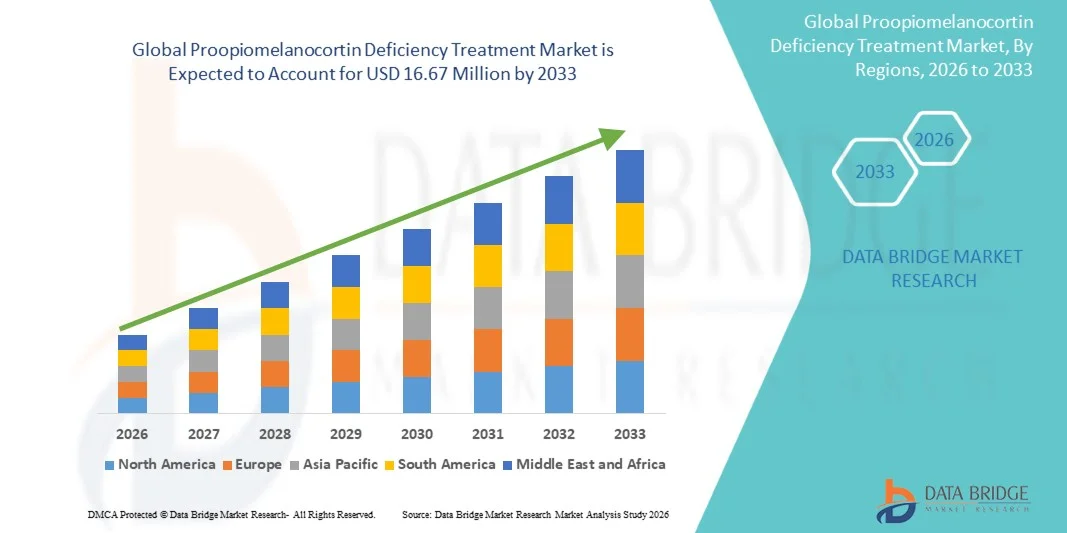
Proopiomelanocortin缺乏治疗市场的价值2025年1,111万美元预计将达到至2033年1,667万美元,生长在一个从2026年到2033年CAGR为5.20%市场正在稳步增长,原因是POMC缺乏症诊断率上升,保健支出增加,以及美兰诺科特受体目标疗法迅速发展。 越来越多的政府资金以及公共和私营组织为宣传这一疾病而提出的越来越多的倡议正在进一步推动扩大。 越来越多地采用早期遗传检测,对有效的高血压和肥胖症管理疗法的需求增加,以及越来越多的研发活动侧重于启动有针对性的治疗,正在创造有益的机会。 此外,当前治疗需要大量得不到满足,精密医学不断发展,预计在预测期间,市场增长会升级。
主要市场趋势和见解
- 北美在2025年主导了Proopiomelanocortin缺乏症治疗市场,得到了先进的稀有疾病诊断基础设施、高保健支出、专业化治疗中心的强大存在以及政府对稀有遗传病研究的有力资助。
- 预计在预测期间,欧洲将成为增长最快的区域市场,其驱动力是改善获得保健服务的机会,提高对罕见遗传病的认识并扩展诊断能力。
- 2025年,由于FDA批准将Setmelanotide部分作为POMC缺陷的首个定点治疗方法,以及该部分在减少高血压和体重方面表现出的功效,该部分在治疗市场上居于领先地位。
- 基因测试部分预计将是增长最快的诊断类别,其动力是越来越多地采用下一代测序和更加重视早期疾病识别。
- 2025年,注射部分在剂量类别中占据了主导地位,辅以先天性地施用苯丙胺作为主要治疗方式。
- 新生儿部分占发病年龄类别的最大份额,其动力是典型的POMC缺陷症状的早期呈现,包括低血糖和低血糖。
- 2025年,父母部分领导了管理类别的路线,原因是可注射的美兰诺科特-4受体激动剂疗法。
- 2025年,由于多学科管理要求和获得专业保健专业人员的帮助,医院部分占最终用户类别的最大份额。
市场大小和预测
- 全球市场价值(2025):1,111万美元
- 预期市场价值(2033年):16.67亿美元
- CAGR(2026-2033年):5.20%
- 2025年主要区域:北美
- 快速增长区域:欧洲
范围和Proopiomelanocortin缺乏治疗市场分裂报告
|
属性 |
Proopiomelanocortin 缺乏治疗钥匙市场透视 |
|
覆盖部分 |
• 妇女治疗: Hydrocortisone 替代疗法、Setmelanotide、基因咨询等 • 妇女按Onset的年龄:婴儿和新生儿 • 妇女通过诊断:血液测试、遗传测试等 • 妇女按剂量 :注射、平板和其他 • 妇女按行政路线分列口腔、父母及其他 • 妇女最终使用者: 诊所、医院等 • 妇女按发行频道医院药房、零售药房和网上药房 |
|
涵盖国家 |
北美 · 美国。 加拿大 墨西哥 欧洲 德国 法国 英国。 荷兰 瑞士 比利时 · 俄罗斯 · 意大利 • 西班牙 土耳其 · 欧洲其他地区 亚太 中国 * 日本 • 印度 韩国 新加坡 马来西亚 澳大利亚 泰国 印度尼西亚 菲律宾 亚太其他地区 中东和非洲 沙特阿拉伯 · 美国 南非 • 埃及 • 以色列 中东其他地区和非洲 南美洲 • 巴西 阿根廷 南美洲其他地区 |
|
关键市场玩家 |
* 韵律制药公司(美国) 诺德·诺德维克(丹麦) Eli Lily和公司(美国) · 辉瑞公司(美国) 伊普森·法尔玛(法国) 记录罕见疾病(意大利) • BioMarin制药公司(美国) Ultragnyx制药公司(美国) 武田制药有限公司(日本) 萨诺菲(法国) Alexion制药公司(美国) 地平线治疗方案(爱尔兰) 阿尔尼拉姆制药公司(美国) Vertex制药公司(美国) · 阿米克斯治疗公司(美国) · Chiesi Farmaceutici S.p.A.(意大利) |
|
市场机会 |
针对罕见遗传肥胖症的甲氨酸受体治疗和精准医学方法的进步 增加对孤儿药物开发和罕见疾病研究方案的投资 |
|
添加数据信息集的值 |
除了对市场价值、增长率、分块化、地域覆盖和主要角色等市场假设的深刻见解外,数据桥市场研究编写的市场报告还包括深度专家分析、病人流行病学、管道分析、定价分析和监管框架。 |
Proopiomelanocortin 缺乏治疗市场趋势
趋势:越来越多地采用Melanocortin-4受体激动剂进行定向肥胖治疗
在Proopiomelanocortin缺乏治疗市场中,正出现一种主要趋势,即越来越多地采用甲菌素-4受体激动剂(MC4R)。 保健提供者正在越来越多地利用有针对性的MC4R激动疗法来解决POMC缺乏的基本病理学问题,从而能够对高血压和严重肥胖进行基于机制的治疗。 苯丙胺的可获性不断增长,输油管的可选性不断提高,这有助于临床医生在受影响病人中实现可持续减重和减少饥饿。
比如说,
2020年11月,韵律制药公司获得了Imcivree(setmelanotide)因POMC,PCSK1或Leptin受体(LEPR)缺乏而治疗肥胖症的FDA批准,这标志着首次针对这些罕见的遗传肥胖症进行定向治疗. 此外,2022年9月,欧洲医药局在全欧盟范围内授予了整瓜氨酸的市场营销授权,使患者有更多机会获得有针对性的治疗.
此外,基于人工智能的基因变异解释,云带动基因组分析,高级测序平台,以及基因咨询服务的结合,正在提高诊断效率,支持包括Proopiomelanocortin缺乏症在内的稀有遗传条件的个性化护理途径. 这些进步正在改进临床决策,加快治疗规划,加强罕见疾病管理总体生态系统.
Proopiomelanocortin 缺乏治疗市场动态
关键市场驱动器:林业发展局批准将Setmelanotide作为第一目标疗法
食品药品管理局批准将固氨酸(Imcivree)作为POMC缺陷肥胖的首个定点疗法,这大大推动了Proopiomelanocortin缺陷治疗市场。 保健提供者正越来越多地利用这种多肽-4受体激动剂,以便能够对受感染病人的高血压和严重早起肥胖症进行基于机制的治疗。 人们对罕见遗传肥胖症的认识不断提高,对基因测试的获取机会不断扩大,对精密医学的投资不断增加,这些都进一步支撑了市场的增长.
比如说,
2020年11月,韵律制药公司获得了Imcivree(setmelanotide)因POMC,PCSK1或LEPR缺陷而治疗肥胖症的FDA批准. 这项核准工作突出表明,全球日益重视针对罕见的单一原因肥胖症制定有针对性的疗法。
关键限制/挑战:患者人数和高治疗费用极其少
Proopiomelanocortin缺乏症治疗市场面临的一个主要挑战是,这种疾病发病率极低,而且为准确诊断和治疗所需的高级遗传检测和定向疗法费用高。 保健提供者对疾病的认识有限,诊断延迟,进一步限制了治疗的采用和市场的增长。
比如说,
2023年3月,全国罕见疾病组织(NORD)强调了诊断POMC缺陷带来的持续挑战,强调需要更广泛地获得负担得起的遗传检测和专门的诊断服务.
键市场机会:罕见疾病基因组学和MC4R-针对治疗方法的进步
越来越多地采用下一代测序、基因咨询、以甲氨基甲氨酸受体为目标的精密医学,为市场提供了重大机会。 增加对罕见疾病研究和基因组诊断的投资,可望改进早期发现、个性化治疗办法和全世界长期病人管理。
比如说,
2025年3月,MyOme扩展了基于全基因组测序的稀有疾病诊断平台,以支持更早地识别遗传性疾病,反映出业界日益重视精密医学和用于稀有疾病管理的高级基因组诊断.
Proopiomelanocortin 缺乏治疗市场范围
Proopiomelanocortin缺乏治疗市场根据治疗、发病年龄、诊断、剂量、管理途径、最终用户和分销渠道进行分化。
- 治疗
在治疗的基础上,Proopiomelanocortin缺乏治疗市场被分入了氢可酮替代疗法,setmelanotide,基因咨询等. 2025年,由于FDA批准将Setmelanotide片段作为首个针对POMC缺乏症的有针对性疗法,并在降低高血压和体重方面表现出了功效,因此该片段占了市场的48.2%。 基于机制的MC4R激动症和有利的临床试验结果支持了保健提供者的广泛采用。
基因咨询部分预计将在2026年到2033年增长最快,其动力是精密医学的采用率不断提高,对遗传性肥胖症的认识不断提高. 更多地利用基因检测服务,扩大专门咨询方案的提供范围,以及日益强调早期诊断和家庭风险评估,进一步支持了部分增长。 保健提供者越来越多地将遗传咨询纳入罕见疾病管理,以改善临床结果和知情决策。
- 按Onset的年龄
根据发病年龄,Proopiomelanocortin缺乏治疗市场被划分为婴儿和新生儿. 2025年,新生儿部分占市场支配地位,占62.3%,原因是典型的POMC缺陷症状的早期呈现,包括低血糖症、低血糖症、高血脂和胆固醇需要立即医疗干预。
婴儿部分预计将从2026年稳步增长到2033年,其动力是,在生命的第一年,人们越来越多地发现高血压和早起肥胖现象。 对患有不明原因的严重肥胖症的婴儿越来越多地进行基因筛查,以及扩大进入专门的代谢治疗中心的机会,进一步支持了部分增长。
- 通过诊断
根据诊断,Proopiomelanocortin缺乏治疗市场被分入血液测试,基因测试等. 血液测试部分在2025年占了市场45.8%的比重,因为它是初步临床评估的主要方法,包括皮层和皮质醇水平的测量。
基因测试部分预计将从2026年增长到2033年最快,其动力是越来越多地利用下一代测序技术并拓宽获得分子诊断的机会. 对稀有遗传病的准确和早期诊断日益增长的需求,基因组研究的进步,测序成本的下降等,正在进一步加速采用. 增加对精密医学的投资和更广泛地提供基因筛选方案,也大大地促进了部分扩展。
- 按剂量
基于剂量,Proopiomelanocortin缺乏治疗市场被分入注射,平板药等. 2025年,注射部分占了市场的58.9%份额,原因是在皮下施用苯丙胺作为POMC缺乏肥胖症的主要治疗方式。 可注射配方可确保始终如一地提供药物并为受影响病人提供最佳治疗结果。
由于继续使用口服水龙骨酮进行肾上腺不足管理,药片部分预计将从2026年稳步增长到2033年. 对方便口服配方的需求不断增加,对替代口服4R激动剂的研究也在进行之中,预计在预测期间将支持分片扩张。
- 按行政路线分列
根据管理路线,Proopiomelanocortin缺乏治疗市场分为口服、亲子式等。 2025年,由于苯丙胺的可注射性质及其作为定向POMC缺陷治疗的基石的作用,母体部分占了市场的55.51%。 下皮注射可确保可靠的药物吸收和持续的治疗效果.
口服部分预计将从2026年稳步增长到2033年,其动力是继续使用口服水解酮来管理肾上腺不足. 病人对非侵入性治疗路线越来越偏好,而且目前正在开发针对口服MC4R的治疗方法,预计将支持局部增长。
- 最终使用者
在最终用户的基础上,Proopiomelanocortin缺乏治疗市场被划分为诊所、医院等。 2025年,由于与该疾病有关的多学科护理要求以及专业保健专业人员的提供,医院部分占市场份额68.4%。 医院通过提供内分泌学家、遗传学家、儿科专家和高级诊断设施,在POMC缺陷的诊断、治疗和长期管理方面发挥关键作用。 她们对复杂而严重的病例提供全面护理的能力,大大地助长了分化的支配地位。
诊所部分预计将在2026至2033年期间增长最快,原因是改善了门诊罕见疾病管理服务。 增加专门的内分泌和遗传咨询诊所,缩短等候时间,采取成本效益高的治疗办法,以及越来越偏好方便的门诊护理,预计在预测期间将支持强有力的分科扩展。
- 按发行频道
在分配渠道的基础上,Proopiomelanocortin缺乏治疗市场分为医院药房、零售药房和在线药房。 2025年,由于专科医生处方治疗集中在医院环境中,医院药房部分占了市场的72.7%。 医院药房是用于管理POMC缺陷的药品的主要分发渠道,特别是对需要专门护理和持续医疗监督的病人。 它们与多学科保健小组的结合以及获得处方疗法的机会,进一步加强了它们的市场地位。
在线药房部分预计将从2026年增长到2033年最快,其动力是扩大数字保健平台和增加患者对方便药物获取的偏好. 互联网普及率不断提高,越来越多地采用电子药剂服务、家庭分娩选择,以及通过在线渠道改善处方药的供应,预计在整个预测期间将支持这一部门的显著增长。
Proopiomelanocortin 缺乏治疗市场区域分析
北美在2025年主导了Proopiomelanocortin缺乏治疗市场,得到了先进的保健基础设施、广泛提供遗传检测服务、强有力的罕见疾病研究活动以及主要制药和生物技术公司的支持。 该区域还受益于对罕见遗传病的高度认识、有利的报销框架以及越来越多地采用精确医学方法。 对基因组研究、基因咨询和专门治疗中心的投资不断增加,这继续加强了北美在全球市场上的领导作用。
美国Proopiomelanocortin 缺乏治疗市场透视
美国的Proopiomelanocortin缺乏症治疗市场由于越来越多地采用遗传检测技术,提高对罕见遗传肥胖症的认识,以及扩大对精密医学的投资而稳步增长. 该国已建立完善的保健制度、强有力的研究生态系统以及提供专门的罕见疾病治疗中心,正在支持扩大市场。 此外,对早期诊断和个性化治疗战略的日益重视正在改善病人的结果并驱动对先进的诊断和治疗解决方案的需求。
欧洲Proopiomelanocortin 缺乏治疗市场透视
欧洲Proopiomelanocortin缺乏治疗市场仍然是全球收入的主要提供者,其驱动力是强有力的保健系统、政府加大对罕见疾病管理的支持和越来越多地采用遗传诊断方法。 专业研究机构和罕见疾病协作网络的存在正在支持诊断和治疗方面的进展。 此外,有利的监管举措和增加对基因组医学的投资继续促进整个区域的市场增长。
英国Proopiomelanocortin 缺乏治疗市场
英国的Proopiomelanocortin缺乏治疗市场正在稳步增长,其支持是提高对罕见遗传肥胖症的认识,扩大获得遗传咨询服务的机会,增加对基因组保健方案的投资。 先进分子诊断与个性化医学方法日益融合,正在完善疾病识别与管理. 此外,正在进行的研究举措和保健组织提供的支助正在推动市场发展。
德国
德国的Proopiomelanocortin缺乏症治疗市场正在稳步扩大,原因是该国拥有先进的保健基础设施,大力注重罕见疾病研究,以及越来越多地采用下一代测序技术。 保健提供者越来越多地利用基因检测和多学科治疗方法来改善病人的护理。 基因组医学的持续进步和对专业保健服务的不断增长的投资进一步支持了德国的市场增长。
亚太Proopiomelanocortin 缺乏治疗市场
亚太的丙烯醇甲醇缺乏症治疗市场预计将迅速增长,其动力是改善保健基础设施,提高对罕见遗传肥胖症的认识,以及扩大中国、印度和日本等国获得诊断服务的机会。 精密医学投资不断增加,基因检测技术日益被采用,政府为改善稀有疾病管理采取了更多举措,这些都支持了区域市场的扩大。
日本 Proopiomelanocortin 缺乏治疗市场
由于对基因组研究、先进保健技术和罕见疾病诊断的投资不断增加,日本的Proopiomelanocortin缺乏治疗市场持续增长。 保健机构越来越多地采用分子测试和个人化治疗方法来改进疾病管理。 此外,政府对罕见疾病研究和创新的有力支持正在进一步促进市场增长。
中国Proopiomelanocortin 缺乏治疗市场透视
中国Proopiomelanocortin缺乏症治疗市场正在迅速发展,其动力是扩大保健基础设施,增加采用遗传检测技术,提高对罕见遗传肥胖症的认识。 对生物技术研究、精密医学举措和先进诊断能力的投资不断增加,大大推动了市场的发展。 此外,支持性保健改革和增加获得专门医疗服务的机会使中国成为发展最快的罕见疾病诊断和治疗市场之一。
Proopiomelanocortin 缺乏治疗市场份额
Proopiomelanocortin缺乏症治疗行业主要由老牌公司领导,包括:
- 韵律制药股份有限公司(美国)
- 新诺季斯克(丹麦)
- Eli Lily and Company (美国).
- 辉瑞股份有限公司(美国)
- 伊普森制药公司(法国)
- 劳斯塔蒂罕见疾病(意大利)
- BioMarin制药公司(美国)
- Ultragnyx制药公司(美国)
- 武田制药有限公司(日本)
- 萨诺菲(法国)
- Alexion制药公司(美国)
- 地平线治疗方案(爱尔兰)
- 阿尔尼拉姆制药公司(美国)
- Vertex制药公司(美国)
- 阿米库斯治疗有限公司(美国)
- Chiesi Farmaceutici S.p.A.(意大利)
Proopiomelanocortin缺乏治疗市场的最新动态
- 2026年3月,Rhythm Pharmatics宣布其第三阶段临床试验的正长期数据,评价了POMC缺乏症患者体内的setmelanotide,表明在52周的治疗中持续减重并减少饥饿. 数据支持继续就扩大标签标识进行监管讨论
- 2026年1月,诺沃·诺迪斯克A/S宣布将它的MC4R-pathway肥胖药物管道推进到第二阶段临床试验,针对的是包括POMC缺乏症在内的罕见的单致肥胖症. 该倡议反映出工业对以美兰诺科特受体为目标的治疗方法的投资不断增加。
- 2025年10月,GeneDx收购了由AI动力基因组解释公司Fabric Genomic,以加强基因数据分析和罕见疾病诊断. 整合提高了变异解释的准确性,加快了诊断,支持对遗传性障碍患者采取更个性化的治疗策略.
- 2025年9月,Rhythm Pharmatics公司将其Setmelanotide全球准入方案扩大到其他欧洲市场,改善了包括POMC缺乏症在内的罕见遗传肥胖症患者的治疗可用性
- 2025年7月,欧洲药品署批准将固氨酸的标签扩展,以包括更多与MC4R路径有关的肥胖症状,加强稀有遗传肥胖管理的治疗环境
- 2025年2月,MedGenome发起了"爱护光线"(#CarefortheRare)运动,通过扩大获得基因检测服务的机会来提高对稀有遗传疾病的认识并进行早期诊断. 该倡议强调全球日益重视通过先进的基因组诊断改进罕见疾病检测和病人结果
SKU-
研究方法
数据收集和基准年分析是使用具有大样本量的数据收集模块完成的。该阶段包括通过各种来源和策略获取市场信息或相关数据。它包括提前检查和规划从过去获得的所有数据。它同样包括检查不同信息源中出现的信息不一致。使用市场统计和连贯模型分析和估计市场数据。此外,市场份额分析和关键趋势分析是市场报告中的主要成功因素。要了解更多信息,请请求分析师致电或下拉您的询问。
DBMR 研究团队使用的关键研究方法是数据三角测量,其中包括数据挖掘、数据变量对市场影响的分析和主要(行业专家)验证。数据模型包括供应商定位网格、市场时间线分析、市场概览和指南、公司定位网格、专利分析、定价分析、公司市场份额分析、测量标准、全球与区域和供应商份额分析。要了解有关研究方法的更多信息,请向我们的行业专家咨询。
可定制
Data Bridge Market Research 是高级形成性研究领域的领导者。我们为向现有和新客户提供符合其目标的数据和分析而感到自豪。报告可定制,包括目标品牌的价格趋势分析、了解其他国家的市场(索取国家列表)、临床试验结果数据、文献综述、翻新市场和产品基础分析。目标竞争对手的市场分析可以从基于技术的分析到市场组合策略进行分析。我们可以按照您所需的格式和数据样式添加您需要的任意数量的竞争对手数据。我们的分析师团队还可以为您提供原始 Excel 文件数据透视表(事实手册)中的数据,或者可以帮助您根据报告中的数据集创建演示文稿。