



تقسيم سوق القلب الاصطناعي العالمي، حسب النوع (خدمات الاختبارات التحليلية الحيوية، وخدمات التوصيف الفيزيائي، وخدمات تطوير الأساليب والتحقق من صحتها، وخدمات اختبار المواد الخام، وخدمات اختبار إطلاق الدفعات، واختبارات الثبات، وخدمات الاختبارات الميكروبية، وخدمات الرصد البيئي)، والمستخدم النهائي (شركات الأدوية والأدوية الحيوية، وشركات الأجهزة الطبية، ومنظمات البحوث التعاقدية) - اتجاهات الصناعة وتوقعاتها حتى عام 2033
ما هو حجم ومعدل النمو في سوق القلب الإصطناعي؟
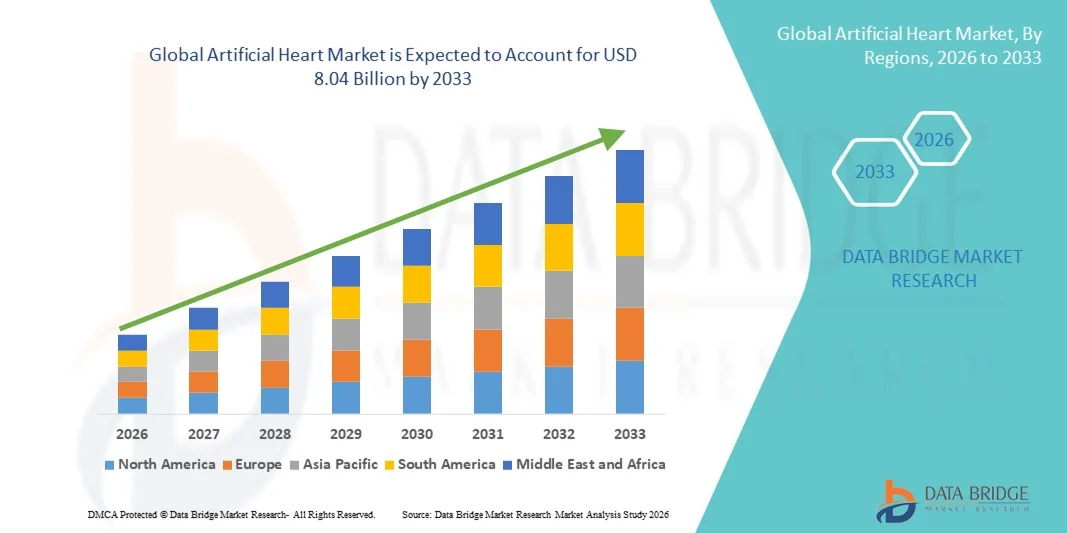
- وفقاً لتحليل البحوث المتعلقة بسوق سوق جسر البيانات، قُيِّر حجم سوق القلب المصطنع العالمي بقيمة2.49 مليار دولار أمريكي في عام 2025ومن المتوقع أن يتم ذلك8-04 مليار دولار من دولارات الولايات المتحدة الأمريكية بحلول عام 2033, ماالنسبة المئوية لنسبة 15.78 في المائةخلال الفترة التي
- ويغذي نمو السوق إلى حد كبير ارتفاع معدل انتشار فشل القلب في المرحلة النهائية، والتقدم في تكنولوجيات القلب والأوعية الدموية، وزيادة الاستثمارات في الأجهزة المبتكرة للمساعدة البطينية والقلوب الاصطناعية الكلية.
- فضلاً عن ذلك، فإن الوعي المتزايد بالعناية القلبية المتقدمة، إلى جانب تزايد عدد عمليات زرع القلب والمبادرات الحكومية الداعمة، يجعل من القلوب الاصطناعية حلاً حيوياً للمرضى الذين يعانون من ظروف قلبية حادة. وهذه العوامل المتقاربة تعجل من اعتماد أجهزة القلب الاصطناعية، وبالتالي تدفع نمو الصناعة إلى حد كبير.
سوق الحجم و توقّر
- قيمة السوق العالمية (25):2-49 مليار
- القيمة السوقية المتوقعة (2033):8.04 مليار
- التنبؤات المتوقعة لـ CAGR (2026-2033):15.78%
تحليل سوق القلب الصناعي
- القلوب الاصطناعية، التي توفر الدعم الدوري الدوري الميكانيكي للمرضى الذين يعانون من قصور القلب في المرحلة النهائية من المرحلة النهائية، أصبحت بصورة متزايدة عناصر حيوية في الرعاية القلبية المتقدمة في المستشفيات ومراكز القلب المتخصصة على السواء، وذلك بسبب قدراتها على إنقاذ الحياة، وتحسين نتائج المرضى، والاندماج مع تكنولوجيات الرصد
- إن الطلب المتزايد على القلوب الاصطناعية يغذيه في المقام الأول تزايد انتشار أمراض القلب والأوعية الدموية، الذي يتزايد- - - - - - - - - - - - - - - - - - - - - - - - - - - - - - - - - - - - - - - - - - - - - - - - - - - - - - - - - - - - - - - - - -من علاجات قصور القلب المتقدمة، وعدد متزايد من المرضى الذين ينتظرون زرع القلب
- هيمنت أمريكا الشمالية على سوق القلب المصطنع بأكبر حصة من الإيرادات بلغت 38.7 في المائة في عام 2025، واتسمت بالهياكل الأساسية المتقدمة للرعاية الصحية، وارتفاع الإنفاق على الرعاية الصحية، ووجود قوي من الأساسياتطراز MASمع وجود شركات مصنعة في الولايات المتحدة تشهد نمواً كبيراً في زرع القلب الاصطناعي ، وخصوصاً في مراكز القلب المتخصصة ، مدفوعة بالابتكارات في مجموع القلوب الاصطناعية والأجهزة المساعدة البطينية
- ومن المتوقع أن تكون منطقة آسيا والمحيط الهادئ أسرع المناطق نمواً في سوق القلب الاصطناعي خلال الفترة المتوقعة بسبب زيادة الاستثمارات في الرعاية الصحية، وارتفاع معدل انتشار أمراض القلب، وتزايد اعتماد علاجات القلب المتقدمة.
- هيمنة قطاع خدمات الاختبار التحليلي البيولوجي على سوق القلب الاصطناعي بحصة في السوق قدرها 42.8 في المائة في عام 2025، مدفوعة بدورها الحاسم في ضمان سلامة أجهزة القلب الاصطنطناعي وفعاليتها وجودتها من خلال بروتوكولات شاملة للتحليل والاختبار
التقرير المتعلق بالنـوع وبسوق
|
الصفات الأولى |
قلب قلب اصطناني مفتاح السوق |
|
المُسَجَّل |
|
|
البلدان |
أمريكا الشمالية
أوروبا
منطقة آسيا والمحيط الهادئ
الشرق الأوسط وأفريقيا
جنوب أمريكا الجنوبية
|
|
& مفتاح |
|
|
ما |
|
|
جاري |
وبالإضافة إلى الرؤى المتعلقة بسيناريوهات السوق مثل القيمة السوقية، ومعدل النمو، والتجزئة، والتغطية الجغرافية، والجهات الفاعلة الرئيسية، فإن تقارير السوق التي تُعدها بحوث سوق جسر البيانات تتضمن أيضاً تحليلاً متعمقاً للخبراء، وعلم الأوبئة للمرضى، وتحليل خطوط الأنابيب، وتحليل الأسعار، والإطار التنظيمي. |
الاتجاهات في سوق قلب القلب
التقدم في القلبين الاصيلين المتوافقين والقابلين للتغيرات
- ومن الاتجاهات الهامة والمتسارعة في سوق القلب المصطنع العالمي تطوير قلوب مصطنعة وأجهزة مساعدة البطينات، التي تحسن بقاء المريض ونوعية حياته، تكون متوافقة بيولوجياً وطويلة الأجل.
- فعلى سبيل المثال، يظهر القلب الاصطناعي الكلي في سينكارديا مواد متقدمة وتحسينات في التصميم تقلل من التعقيدات وتوسع طول عمر الأجهزة، مما يسمح للمرضى بالانتظار بأمان لزرع القلب.
- وتركز الابتكارات أيضاً على تقليص حجم التصغير وتعزيز كفاءة استخدام الطاقة، بما يمكِّن المرضى من تجربة قدر أكبر من التنقل والراحة، بينما توفر أجهزة الاستشعار المتكاملة رصداً آنياً لأداء الأجهزة
- يتيح تكامل نظم الرصد الرقمي مع القلوب الاصطناعية للأطباء أن يتتبعوا عن بعد عن بعد حيوية المرضى ووظيفتهم الجهازية الحيوية للمريض، مما يمكِّن من التدخلات الاستباقية وتحسين النواتج السريرية
- إجراء بحوث في مجال نقل الطاقة اللاسلكية ونظم البطاريات القابلة لإعادة التغذية آخذة في اكتساب القدرة على الحركة، الأمر الذي قد يقلل من الحاجة إلى القيام بزيارات متواترة إلى المستشفيات وتحسين استقلالية المرضى
- وهذا الاتجاه نحو نظم قلب اصطناعي أكثر دواماً وذكاءً ومرضاً ودقة ومرضاً، يعيد بصورة أساسية النظر في التوقعات من الرعاية القلبية المتقدمة، ويشجع على قيام المنتجين الرئيسيين بمزيد من البحث والتطوير.
- الطلب على القلوب الاصطناعية مع تحسين التوافق البيولوجي، وتعزيز القابلية للدوام، والرصد في الوقت الحقيقي يتزايد بسرعة في كل من المستشفيات ومراكز العناية القلبية المتخصصة، حيث يسعى الأطباء إلى تحقيق نتائج أفضل للمرضى الذين يعانون من قصور في القلب في نهاية المرحلة
سوق قلب القلب الصناعي
سائق
ارتفاع معدل انتشار أمراض القلب وأمراض القلب والسرطانات
- ويعد تزايد انتشار قصور القلب في المرحلة النهائية وغيره من أمراض القلب والأوعية الدموية عاملاً رئيسياً في زيادة الطلب على أجهزة القلب الاصطنطناعي في الرعاية القلبية المتقدمة.
- على سبيل المثال، في مارس/آذار 2025، أعلنت أبوت توسيع نطاق برامجها لعلاج قصور القلب، مع التركيز على الأجهزة المساعدة البطينية لتلبية احتياجات المرضى المتزايدة، والتي من المتوقع أن تعزز تبني القلب الاصطناعي.
- مع تزايد وعي المرضى بخيارات العلاج المتقدمة، توفر القلوب الاصطناعية حلولاً لإنقاذ حياة من لا يحق لهم القيام بزرع القلب فوراً، مما يجعلهم أجهزة طبية حاسمة الأهمية
- وبالإضافة إلى ذلك، فإن العدد المتزايد من عمليات زرع القلب وقوائم انتظار زرع الأعضاء في جميع أنحاء العالم يدفع المستشفيات والمراكز القلبية إلى اعتماد القلوب الاصطناعية كحلول مائلة أو طويلة الأجل.
- التقدم التكنولوجي في تصغير الأجهزة،)ب( استخدام الطاقة النووية في الأغراض السلميةوالرصد في الوقت الحقيقي، إلى جانب زيادة الاستثمارات من جانب مقدمي الرعاية الصحية، يزيد من دفع اعتماد القلوب الاصطناعية
- :: تزايد المبادرات الحكومية وتمويل الرعاية الصحية لتحسين الهياكل الأساسية للرعاية القلبية في الاقتصادات الناشئة التي تعمل على توسيع فرص الحصول على علاجات القلب الاصطناعي
- التعاون بين شركات الأجهزة الطبية ومؤسسات البحوث لتطوير الجيل القادم من القلوب المصطنعة يعجل الابتكار، مما يخلق فرصا جديدة للنمو في السوق
التعرّض/التحديي
التكاليف المرتفعة والرسوم التنظيمية
- ويشكل ارتفاع تكلفة أجهزة القلب الاصطناعية، مقرونة بشروط موافقة تنظيمية صارمة، تحدياً كبيراً أمام اعتماد الأسواق على نطاق أوسع، لا سيما في المناطق النامية.
- فعلى سبيل المثال، يمكن أن تؤدي التجارب السريرية المعقدة والتدقيق التنظيمي الذي تقوم به وكالات مثل هيئة التنمية الحرجية وهيئة تقييم الآثار البيئية إلى تأخير إطلاق المنتجات وزيادة تكاليف التنمية، مما يحد من النفاذ إلى الأسواق
- (أ) التصدي لهذه التكاليف والتحديات التنظيمية من خلال نماذج تمويل مبتكرة،حديثاوتُعد عمليات الموافقة المبسطة حاسمة لإتاحة إمكانية الوصول على نطاق أوسع
- وبالإضافة إلى ذلك، فإن المضاعفات المحتملة مثل التسمس، أو العدوى، أو خلل الجهاز، تثير شواغل سريرية تتطلب رصداً مكثفاً للمريض وتدريباً متخصصاً لمقدمي الرعاية الصحية
- وفي الوقت الذي تستمر فيه التطورات التكنولوجية في تحسين النتائج، فإن الجمع بين ارتفاع تكاليف الأجهزة، والعوائق التنظيمية، والمخاطر السريرية، قد يعوق الاعتماد على نطاق واسع، لا سيما في المستشفيات الصغيرة ونظم الرعاية الصحية المقيدة في الميزانية.
- :: يمكن لمحدودية وعي المرضى وقبول تكنولوجيا القلب الاصطنطناعي في بعض المناطق أن يبطئا من اعتماد الأسواق، مما يتطلب برامج تعليمية وتوعوية محددة الأهداف
- ويمكن أن تؤدي التحديات التي تواجه إدماج نظم القلب الاصطناعي في تكنولوجيا المعلومات في المستشفيات والهياكل الأساسية للرصد إلى زيادة التعقيد التشغيلي، مما قد يؤثر على الاعتماد في مراكز الرعاية الصحية الأصغر أو المحدودة الموارد.
سوق قلب قلب
ويتم تقسيم السوق على أساس نوع السوق والمستعمل النهائي.
- نوع
وعلى أساس النوع، فإن سوق القلب الاصطناعي العالمي مقسمة إلى خدمات الاختبار التحليلي الحيوي، وخدمات التوصيف المادي، وخدمات تطوير الطرق والتحقق منها، وخدمات اختبار المواد الخام، وخدمات اختبار إطلاق سراح دفعة، واختبار الاستقرار، وخدمات اختبار الميكروبات، وخدمات الرصد البيئي. وتهيمن شريحة خدمات الاختبارات التحليلية الحيوية على السوق بأكبر حصة من إيرادات السوق تبلغ 42.8 في المائة في عام 2025، وذلك بسبب دورها الحاسم في تقييم الأدوية، وملامح السلامة لمكونات القلب الاصطناعي والعلاجات المرتبطة بها. وتعتمد المستشفيات ومؤسسات البحوث على الاختبارات التحليلية الحيوية لضمان توافق الأجهزة مع علم وظائف الأعضاء البشرية والحد من مضاعفات ما بعد الزراعة. كما أن بروز هذا الجزء من الخدمات تغذيه متطلبات تنظيمية صارمة تطالب ببيانات تحليلية حيوية قوية قبل الاستخدام السريري. وتؤدي زيادة الاستثمارات في البحث والتطوير من جانب شركات الأجهزة الطبية لتعزيز أداء القلب الاصطناعي إلى زيادة المساهمة في هيمنة القطاع. والتركيز المتزايد على الأدوية الشخصية والتحقق من الأجهزة الخاصة بالمريض إلى زيادة الطلب على الخدمات التحليلية الحيوية. كما أن الابتكارات المستمرة في منهجيات التحليل الأحيائي، بما في ذلك الفحص العالي الجودة وتحليل المؤشرات الحيوية، تعزز مركزه السوقي الرئيسي.
ومن المتوقع أن يشهد قطاع خدمات التطوير والتحقق من الأساليب أسرع معدل نمو يبلغ 22.3 في المائة من 2026 إلى 2033، وهو ما يغذيه تزايد الحاجة إلى توحيد بروتوكولات الاختبار وضمان إعادة تناسخ نتائج الأجهزة القلبية الاصطناعية، وتساعد هذه الخدمات في تصنيع إجراءات اختبار الأجهزة على النحو الأمثل، والحد من الجداول الزمنية الإنمائية، والامتثال للأطر التنظيمية العالمية، ويتطلب التعقيد المتزايد لمواد القلب الاصطناعي والتكامل مع نظم الرصد الإلكترونية أساليب تحقق دقيقة، ويستفيد هذا الجزء من زيادة التعاون بين صانعي الأجهزة ومنظمات البحوث التعاقدية المتخصصة للتعجيل بتطوير المنتجات، كما أن التقدم التكنولوجي في تطوير التحليل والتشغيل الآلي والبرمجيات التحليلية يزيد من دعم الاعتماد السريع، وأصبحت خدمات التطوير والتحقق من الطريقة ضرورية للشركات التي تسعى إلى إيجاد حلول أكثر أمانا وفعالية للقلب الاصطناعي للسوق بكفاءة.
- بواسطة مُستخدِم
وعلى أساس المستخدم النهائي، تنقسم سوق القلب الاصطناعي إلى شركات صيدلانية وشركات صيدلانية وصيدلانية أحيائية وشركات أجهزة طبية ومنظمات بحوث تعاقدية (CROs) وقد هيمنة قطاع شركات الأجهزة الطبية على السوق بأكبر حصة من الإيرادات بلغت 48.2 في المائة في عام 2025، مدفوعة بدورها في تصميم وتطوير وتسويق مجموع القلوب الاصطناعية والأجهزة المساعدة البطينية. وتستثمر هذه الشركات بشكل كبير في البحث والتطوير، والتجارب السريرية، والمراقبة بعد السوق، بما يضمن أجهزة عالية الجودة تستوفي معايير السلامة الصارمة. وتتعزز هيمنة الشركات بشبكات التوزيع القائمة والتعاون مع المستشفيات ومراكز القلب. وبالإضافة إلى ذلك، فإن الابتكارات التكنولوجية، مثل الرصد اللاسلكي والنظم المتكاملة، تقودها في المقام الأول شركات الأجهزة الطبية. وتركز قيادات السوق مثل سينكارديا وأبوت على تقديم حلول تركز على المرضى، وبالتالي تعزيز وجودها في السوق. كما أن إدخال الجيل القادم المستمر من القلوب الاصطناعية مع تحسن القدرة على السداد وانخفاض التعقيدات يعمل على زيادة تعزيز مكانتها.
ومن المتوقع أن يشهد الجزء الخاص بمنظمات بحوث العقود أسرع جزء في سجل المعاملات النقدية من عام 2026 إلى عام 2033، مدفوعاً بتزايد مشاركتها في الاختبارات الأولية، وخدمات التحليل الأحيائي، والدعم التنظيمي لمصنعي القلب الاصطناعي. وتوفر هذه المنظمات الخبرة المتخصصة في تطوير الأساليب، والتحقق، وإدارة التجارب السريرية، ومساعدة شركات الأجهزة على تسريع وتيرة تطوير المنتجات مع تقليل المخاطر إلى الحد الأدنى. ويدعم نموها ارتفاع اتجاهات الاستعانة بالمصادر الخارجية لدى المصنعين الساعين إلى إيجاد حلول اختبارية تتسم بفعالية التكلفة والكفاءة. كما تمكن المكاتب الإقليمية للشركات من توسيع نطاق العمليات البحثية لكل من اللاعبين الثابتين والمستجدين. كما أن زيادة الشراكات مع شركات الأجهزة الطبية في الأسواق الناشئة تزيد من دفع اعتماد المكتب المركزي للمنتجات. ذلك أن مرونة القطاع وقدراته التقنية تجعله بمثابة محرك نمو رئيسي لسوق القلب الاصطناعي في الفترة المتوقعة.
السوق الإقليمية للقلب الصناعي
- هيمنت أمريكا الشمالية على سوق القلب المصطنع بأكبر حصة من الإيرادات بلغت 38.7 في المائة في عام 2025، واتسمت بالهياكل الأساسية المتقدمة للرعاية الصحية، وارتفاع نفقات الرعاية الصحية، ووجود قوي لمصنعي الأجهزة الطبية الرئيسيين
- يقدِّر المرضى ومقدمو الرعاية الصحية في المنطقة تقديراً عالياً القدرات على إنقاذ الحياة، وتحسين نتائج المرضى، وإدماج القلوب الاصطناعية في نظم الرصد في الوقت الحقيقي والإدارة عن بعد
- وهذا الاعتماد الواسع النطاق تدعمه أيضا قدرات قوية في مجال البحث والتطوير، ونظام إيكولوجي راسخ جيدا لتصنيع الأجهزة الطبية، وسياسات ملائمة لرد التكاليف، وترسيخ قلوب اصطناعية كحل حاسم لفشل القلب في المرحلة النهائية في المستشفيات ومراكز القلب المتخصصة على حد سواء.
سوق الولايات المتحدة الأمريكية للقلب الصناعي
إن سوق القلب الاصطناعي في الولايات المتحدة استحوذت على أكبر حصة من الإيرادات بلغت 79% في عام 2025 في داخل أمريكا الشمالية، وتغذيها ارتفاع معدل انتشار فشل القلب في المرحلة النهائية والبنية التحتية المتقدمة للرعاية القلبية. وتتبنى المستشفيات ومراكز القلب المتخصصة بشكل متزايد مجموع القلوب الاصطناعية والأجهزة المساعدة البطينية لتجسير المرضى إلى عملية زرع الأعضاء. والتركيز القوي على البحث والتطوير من جانب الشركات الرائدة المصنعة للأجهزة الطبية، إلى جانب سياسات السداد المواتية، يزيد من دفع نمو السوق. وبالإضافة إلى ذلك، يعمل دمج القلوب الاصطناعية مع الرصد عن بعد والمنصات الصحية الرقمية على تعزيز نتائج المرضى. كما يستفيد سوق الولايات المتحدة أيضاً من نظام إيكولوجي تجريبي سريري راسخ، مما ييسر سرعة إدخال أجهزة الجيل المقبل. وعلى العموم، فإن وعي المرضى والتبني التكنولوجي من العوامل الرئيسية التي تدفع إلى التوسع في السوق في البلاد.
أوروبا الأوروبية
ومن المتوقع أن تشهد سوق القلب الاصطناعي لأوروبا توسعاً كبيراً في إطار سجل النمو الكلي في أوروبا طوال الفترة المتوقعة، ويرجع ذلك في المقام الأول إلى زيادة انتشار أمراض القلب والأوعية الدموية والأطر التنظيمية الصارمة للرعاية القلبية. والواقع أن ارتفاع الاستثمارات في البنية الأساسية للرعاية الصحية ومراكز القلب المتقدمة يعمل على تعزيز تبني القلوب الاصطناعية. وتشدد المستشفيات الأوروبية على سلامة المرضى وفعاليتهم، وهو ما يشجع على استخدام الجيل القادم من أجهزة المساعدة البطينية ومجموع القلوب الاصطناعية. ويلاحظ النمو عبر كل من تطبيقات الربط بين الزرع والدعم الطويل الأجل. وبالإضافة إلى ذلك، تعمل زيادة التعاون بين شركات الأجهزة الطبية ومؤسسات البحوث على تعزيز الإبداع. كما تعمل مبادرات الرعاية الصحية الحكومية وسياسات السداد المواتية على زيادة دعم نمو الأسواق في المنطقة.
المملكة المتحدة، سوق القلب الصناعي
ومن المتوقع أن ينمو سوق القلب الاصطناعي في المملكة المتحدة في إطار نظام صحي قوي في المملكة المتحدة واستثمارات المملكة المتحدة في أحدث التكنولوجيات الطبية تشجع التبني المبكر. وبالإضافة إلى ذلك، تساهم حملات توعية المرضى والخبرة السريرية في إدارة القلب في توسع السوق. كما يساهم وجود الشركات المصنعة الرئيسية والأطر التنظيمية الداعمة في زيادة تحفيز النمو. وعلى العموم، فإن الطلب على حلول القلب الاصطناعي المتطورة تكنولوجيا لإنقاذ الحياة في تزايد مطرد في مختلف أنحاء البلاد.
سوق القلب الصناعي
ومن المتوقع أن تتوسع سوق القلب الإصطناعي في ألمانيا في ظل قدر كبير من المشاكل البيئية الخطيرة أثناء الفترة المتوقعة، والتي تغذيها معدلات انتشار أمراض القلب والأوعية الدموية العالية والتركيز على العلاجات الطبية المتقدمة تكنولوجيا. وتركز المستشفيات ومراكز القلب الألمانية على سلامة المرضى، وفعالية الأجهزة، ورصد ما بعد الزرع، واعتماد المحركات. والواقع أن البنية الأساسية المتطورة للرعاية الصحية والتركيز القوي على الإبداع تمكن من دمج القلوب الاصطناعية في أنظمة الرصد وإدارة المرضى عن بعد. فضلاً عن ذلك فإن التمويل الحكومي ودعم التأمين الصحي لعلاجات القلب المتقدمة يزيدان من تعزيز نمو السوق. كما يعمل التزام ألمانيا بالبحث والتطوير على تيسير التجارب السريرية للجيل القادم من القلوب الاصطناعية. والواقع أن زيادة وعي المرضى بشأن إدارة فشل القلب في المرحلة النهائية يدعم التوسع المستمر في المنطقة.
سوق القلب الصناعي
إن سوق القلب الاصطناعي في آسيا والمحيط الهادئ على وشك النمو على أسرع مستوى ممكن، حيث بلغ معدل نمو الناتج المحلي الإجمالي 23.5% خلال الفترة المتوقعة من 2026 إلى 2033، مدفوعاً بزيادة انتشار أمراض القلب والأوعية الدموية، والتوسع الحضري السريع، والاستثمارات المتنامية في الرعاية الصحية في بلدان مثل الصين واليابان والهند. إن التركيز المتزايد في المنطقة على الرعاية القلبية المتقدمة وبرامج زرع الأعضاء يعجل باعتماد إجمالي القلوب الاصطناعية والأجهزة المساعدة البطينية. والواقع أن المبادرات الحكومية الرامية إلى تحسين البنية الأساسية للرعاية الصحية، إلى جانب التوسع في شبكات المستشفيات، تيسر الوصول. فضلاً عن ذلك فإن التعاون بين صناع الأجهزة العالمية ومقدمي الرعاية الصحية المحليين يعمل على تحسين الوعي والتوافر. إن تبني التكنولوجيا والتصنيع الفعال من حيث التكلفة في المنطقة يزيد من دعم توسع الأسواق. والواقع أن نمو سكان الطبقة المتوسطة وزيادة وعي المرضى من العوامل المهمة التي تدفع نمو سوق آسيا والمحيط الهادئ.
سوق القلب الصناعي
إن سوق القلب الاصطناعي في اليابان تكتسب زخماً بسبب ارتفاع معدل الإصابة بأمراض القلب والأوعية الدموية في البلاد، والبنية الأساسية المتقدمة للرعاية الصحية، والتركيز القوي على الرعاية التي تركز على المرضى. وتستخدم المستشفيات ومراكز القلب بشكل متزايد قلوباً اصطناعية للمرضى الذين ينتظرون الزرع ولدعم الدورة الدموية على المدى البعيد. إن التكامل مع أنظمة الصحة الرقمية والرصد عن بعد يعزز إدارة المرضى والنتائج. والواقع أن شيوخة سكان اليابان تزيد من دفع الطلب على حلول القلب الاصطناعية الموثوقة والتي يسهل إدارتها. فضلاً عن ذلك فإن التعاون مع شركات الأجهزة الطبية العالمية ييسر إدخال أجهزة الجيل المقبل. ولا تزال الخبرات السريرية وحملات توعية المرضى تدعم تبني الأسواق.
الهند سوق القلب الصناعي
كانت سوق القلب الاصطناعي في الهند تشكل أكبر حصة من عائدات السوق في آسيا والمحيط الهادئ في عام 2025، ويرجع ذلك إلى ارتفاع معدلات انتشار أمراض القلب والأوعية الدموية، والتحضر السريع، والتوسع في البنية الأساسية في المستشفيات. والواقع أن زيادة الوعي حول علاجات القلب المتقدمة وارتفاع الاستثمارات في مراكز الرعاية القلبية المتخصصة كانت سبباً في تبنيها. وتبزغ الهند كسوق رئيسية لأجهزة المساعدة البطينية ومجموع القلوب الاصطناعية بسبب المبادرات القادرة على تحمل التكاليف والتعاون مع صناع الأجهزة الطبية العالمية. والبرامج الحكومية التي تروج لتكنولوجيات الرعاية الصحية المتقدمة وزرع الأعضاء تدعم المزيد من نمو الوقود. فضلاً عن ذلك فإن زيادة وعي المرضى وارتفاع الدخول المتاحة بين الطبقة المتوسطة يساهمان في توسع السوق. والواقع أن سهولة الوصول والحلول الفعالة من حيث التكلفة والتبني التكنولوجي تشكل عوامل رئيسية في دفع سوق القلب الاصطناعي في الهند.
حصة سوق سوق القلب
وتقود صناعة القلب الاصطناعي في المقام الأول شركات راسخة، من بينها:
- بيفاكور (الولايات المتحدة الأمريكية)
- جورجيا (فرنسا)
- القلب الحقيقي الاسكن الاسكن الاسكن الاسكن الاسكن الاسبان
- جارفيك هارت Inc. (الولايات المتحدة الأمريكية)
- (ألمانيا)
- آببوت (الولايات المتحدة الأمريكية)
- ميدترونيك (أيرلندا)
- (الولايات المتحدة)
- SynCardia Systems (الولايات المتحدة الأمريكية)
- شركة ثورتيكس (الولايات المتحدة الأمريكية)
- القلب (الولايات المتحدة الأمريكية)
- (ألمانيا)
- )ألمانيا(
- (الولايات المتحدة الأمريكية)
- س. أ. (فرنسا)
- تاه غمبه (ألمانيا)
- AQinge AB (السويد)
- ليفا نونوفا PLC (المملكة المتحدة)
- شركة Sun Techt ITCR (اليابان)
- (الولايات المتحدة الأمريكية)
- أوريغون هيرارت، In Inc. (الولايات المتحدة الأمريكية)
ما هي التطورات الأخيرة في سوق القلب الصناعي العالمي؟
- في نوفمبر/تشرين الثاني من عام 2025، أكملت نظم SynCardia بنجاح أول عملية تزرع في إطار عملية غرس في جيلها المقبل من الجيل المقبل من إمبراطورها الذي يمكن زراعته بالكامل، وهو ما يمثل علامة بارزة نحو تكنولوجيا القلب الاصطناعية القادمة. وتشير النتائج الإيجابية التي لوحظت في هذه الزرعتين الأوليين إلى إحراز تقدم نحو وضع بديل قابل تماماً للزرع لمنهاج القلب الصناعي الشامل الذي أثبتت صحته السريرية، والذي يعزز احتمالات رعاية المرضى في المستقبل.
- وفي أيار/مايو 2025، تلقى القلب الاصطناعي الكلي في بيفاكور (BIVVACOR) جهازاً من إدارة الأغذية والعقاقير في الولايات المتحدة (FDA)، مهيئاً هذا الجهاز القائم على التيتانيوم للتعجيل بالتنمية والمشاركة التنظيمية.
- في مارس 2025، تم بنجاح زرع القلب الإصطناعي الكلي لـ بيفاكور في مريض في مستشفى سانت فنسنت في سيدني، ونجو المريض أكثر من 100 يوم مع الجهاز، مما يمثل إنجازاً سريرياً عالمياً أولاً حيث تم تسريح المريض بقلب اصطناعي يعمل كجسر لزرعه.
- وفي شباط/فبراير 2025، حققت CARAAT معلم 100 عملية زرع لقلبها الإصطناعي الكلي من القلب الإصطناعي الشامل في جميع المواقع السريرية الأوروبية المتعددة، مما يدل على الاعتماد المتزايد والزخم الإكلينيكي لهذه التكنولوجيا المتطورة للقلب الإصطناعي للبروتين الحيوي كجزء من الدراسات الجارية في فرنسا وخارجها
- وفي تموز/يوليه 2024، أجرى معهد قلب تكساس أول عملية زرع بشري للقلب الاصطناعي الكلي في بيفاكور كجزء من دراسة جدوى مبكرة أجرتها هيئة تنمية الحراجة، مما يمثل خطوة رئيسية في تقييم نظام قلب اصطناعي دوار جديد متحرك مغنطيسيا في الاستخدام السريري.
SKU-
احصل على إمكانية الوصول عبر الإنترنت إلى التقرير الخاص بأول سحابة استخبارات سوقية في العالم

- لوحة معلومات تحليل البيانات التفاعلية
- لوحة معلومات تحليل الشركة للفرص ذات إمكانات النمو العالية
- إمكانية وصول محلل الأبحاث للتخصيص والاستعلامات
- تحليل المنافسين باستخدام لوحة معلومات تفاعلية
- آخر الأخبار والتحديثات وتحليل الاتجاهات
- استغل قوة تحليل المعايير لتتبع المنافسين بشكل شامل
منهجية البحث
يتم جمع البيانات وتحليل سنة الأساس باستخدام وحدات جمع البيانات ذات أحجام العينات الكبيرة. تتضمن المرحلة الحصول على معلومات السوق أو البيانات ذات الصلة من خلال مصادر واستراتيجيات مختلفة. تتضمن فحص وتخطيط جميع البيانات المكتسبة من الماضي مسبقًا. كما تتضمن فحص التناقضات في المعلومات التي شوهدت عبر مصادر المعلومات المختلفة. يتم تحليل بيانات السوق وتقديرها باستخدام نماذج إحصائية ومتماسكة للسوق. كما أن تحليل حصة السوق وتحليل الاتجاهات الرئيسية هي عوامل النجاح الرئيسية في تقرير السوق. لمعرفة المزيد، يرجى طلب مكالمة محلل أو إرسال استفسارك.
منهجية البحث الرئيسية التي يستخدمها فريق بحث DBMR هي التثليث البيانات والتي تتضمن استخراج البيانات وتحليل تأثير متغيرات البيانات على السوق والتحقق الأولي (من قبل خبراء الصناعة). تتضمن نماذج البيانات شبكة تحديد موقف البائعين، وتحليل خط زمني للسوق، ونظرة عامة على السوق ودليل، وشبكة تحديد موقف الشركة، وتحليل براءات الاختراع، وتحليل التسعير، وتحليل حصة الشركة في السوق، ومعايير القياس، وتحليل حصة البائعين على المستوى العالمي مقابل الإقليمي. لمعرفة المزيد عن منهجية البحث، أرسل استفسارًا للتحدث إلى خبراء الصناعة لدينا.
التخصيص متاح
تعد Data Bridge Market Research رائدة في مجال البحوث التكوينية المتقدمة. ونحن نفخر بخدمة عملائنا الحاليين والجدد بالبيانات والتحليلات التي تتطابق مع هدفهم. ويمكن تخصيص التقرير ليشمل تحليل اتجاه الأسعار للعلامات التجارية المستهدفة وفهم السوق في بلدان إضافية (اطلب قائمة البلدان)، وبيانات نتائج التجارب السريرية، ومراجعة الأدبيات، وتحليل السوق المجدد وقاعدة المنتج. ويمكن تحليل تحليل السوق للمنافسين المستهدفين من التحليل القائم على التكنولوجيا إلى استراتيجيات محفظة السوق. ويمكننا إضافة عدد كبير من المنافسين الذين تحتاج إلى بيانات عنهم بالتنسيق وأسلوب البيانات الذي تبحث عنه. ويمكن لفريق المحللين لدينا أيضًا تزويدك بالبيانات في ملفات Excel الخام أو جداول البيانات المحورية (كتاب الحقائق) أو مساعدتك في إنشاء عروض تقديمية من مجموعات البيانات المتوفرة في التقرير.











