Global Obsessive-Compulsive Disorder (OCD) Drugs Market Segmentation, By Severity (Mild To Moderate and Moderate To Severe), Sub-Type (Contamination Obsessions With Washing/Cleaning Compulsion, Harm Obsessions With Checking Compulsions, Obsessions Without Visible Compulsions, Symmetry Obsessions With Ordering, Arranging and Counting Compulsions, Hoarding, and Others), Drugs (Antidepressants, Antipsychotics, Selective serotonin reuptake inhibitors (SSRIs), NMDA Blocker, and Others), Route Of Administration (Oral and Parenteral), Population Type (Pediatrics and Adults), End User (Hospitals, Specialty Clinics, Home Healthcare, and Others), Distribution Channel (Hospital Pharmacy, Retail Pharmacy, Online Pharmacy, and Others) - Industry Trends and Forecast to 2032
Obsessive-Compulsive Disorder (OCD) Drugs Market Size
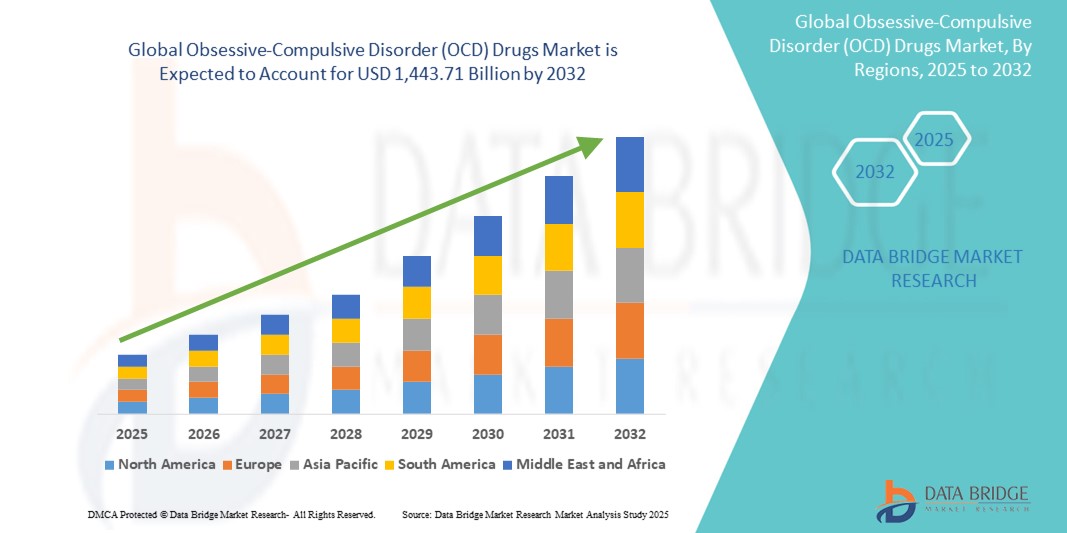
- The global obsessive-compulsive disorder (OCD) drugs market size was valued at USD 688.37 million in 2024 and is expected to reach USD 1,443.71 million by 2032, at a CAGR of 9.7% during the forecast period
- The market growth is largely fueled by the rising prevalence of OCD globally, increasing awareness and diagnosis rates, and the expansion of treatment options. This includes both approved and off-label pharmacological treatments, with Selective Serotonin Reuptake Inhibitors (SSRIs) dominating the market due to their proven efficacy
- Furthermore, increasing research and development activities for novel drug products, along with favorable government initiatives and investments in mental health programs, are accelerating the development of more precise and effective treatments. This collective momentum is significantly boosting the industry's growth by expanding accessibility and promoting early intervention for individuals with OCD
Obsessive-Compulsive Disorder (OCD) Drugs Market Analysis
- The obsessive-compulsive disorder (OCD) drugs market is primarily driven by the increasing prevalence of OCD worldwide, coupled with a growing recognition of mental health issues and improved diagnosis rates. Pharmacological interventions are crucial for managing OCD symptoms and improving patient quality of life.
- The escalating demand for OCD drugs is largely fueled by advancements in drug development, including the exploration of novel mechanisms beyond the serotonergic system, and the increasing acceptance of off-label medications as adjuncts to approved therapies.
- تهيمن أمريكا الشمالية على سوق أدوية اضطراب الوسواس القهري (OCD) بأكبر حصة إيرادات تبلغ 40.5٪ في عام 2024، وتتميز بالانتشار العالي لاضطراب الوسواس القهري، والبنية التحتية للرعاية الصحية الراسخة، والوعي الأكبر بشأن اضطرابات الصحة العقلية، والاستثمارات الكبيرة في البحث والتطوير من قبل اللاعبين الرئيسيين في الصناعة في المنطقة.
- من المتوقع أن تكون منطقة آسيا والمحيط الهادئ أسرع منطقة نموًا في سوق أدوية اضطراب الوسواس القهري (OCD) خلال فترة التنبؤ بسبب زيادة الوعي بالصحة العقلية، وتزايد عدد المرضى، والتنمية الاقتصادية السريعة، وقدرات البحث المتزايدة في البلدان.
- تهيمن شريحة مثبطات إعادة امتصاص السيروتونين الانتقائية (SSRIs) على سوق أدوية اضطراب الوسواس القهري (OCD) بحصة سوقية تبلغ 65.5٪ في عام 2024، مدفوعة بفعاليتها المثبتة كعلاجات من الخط الأول تعمل بشكل مباشر على تعديل السيروتونين، وهو ناقل عصبي رئيسي في اضطراب الوسواس القهري، مما يوفر تخفيفًا فعالًا للأعراض مع ملف آثار جانبية يمكن التحكم فيه.
نطاق التقرير وتجزئة سوق أدوية اضطراب الوسواس القهري
|
صفات |
رؤى رئيسية حول سوق أدوية اضطراب الوسواس القهري |
|
القطاعات المغطاة |
|
|
الدول المغطاة |
أمريكا الشمالية
أوروبا
آسيا والمحيط الهادئ
الشرق الأوسط وأفريقيا
أمريكا الجنوبية
|
|
اللاعبون الرئيسيون في السوق |
|
|
فرص السوق |
|
|
مجموعات معلومات البيانات ذات القيمة المضافة |
بالإضافة إلى الرؤى حول سيناريوهات السوق مثل القيمة السوقية ومعدل النمو والتجزئة والتغطية الجغرافية واللاعبين الرئيسيين، فإن تقارير السوق التي تم تنظيمها بواسطة Data Bridge Market Research تشمل أيضًا تحليلًا متعمقًا من الخبراء، وتحليل التسعير، وتحليل حصة العلامة التجارية، واستطلاع رأي المستهلكين، وتحليل التركيبة السكانية، وتحليل سلسلة التوريد، وتحليل سلسلة القيمة، ونظرة عامة على المواد الخام / المواد الاستهلاكية، ومعايير اختيار البائعين، وتحليل PESTLE، وتحليل Porter، والإطار التنظيمي. |
اتجاهات سوق أدوية اضطراب الوسواس القهري
"التطورات في تطوير الأدوية الجديدة وأساليب العلاج الشخصية"
- من الاتجاهات المهمة والمتسارعة في سوق أدوية اضطراب الوسواس القهري العالمي التركيز المتزايد على تطوير فئات جديدة من الأدوية وأساليب علاجية أكثر استهدافًا وشخصية تتجاوز مثبطات استرداد السيروتونين الانتقائية التقليدية. ويعود هذا التحول إلى الاحتياجات غير الملباة للمرضى المقاومين للعلاج، والفهم العميق للبيولوجيا العصبية لاضطراب الوسواس القهري.
- على سبيل المثال، تُبشّر الأبحاث المتعلقة بحاصرات NMDA بنتائج واعدة في حالات اضطراب الوسواس القهري المقاومة للعلاج، حيث تستهدف الخلل الوظيفي المرتبط بالغلوتامات كطريقة علاجية جديدة. وبالمثل، تُجري شركات مثل Biohaven Pharmaceuticals تجارب سريرية على أدوية مثل الترويلوزول، الذي يُنظّم نشاط الغلوتامات، في المرحلة الثالثة من التجارب السريرية، مما يُشير إلى توجّه نحو أنظمة نواقل عصبية مختلفة.
- رغم أن تكامل الذكاء الاصطناعي لا يُؤثر مباشرةً على فعالية الأدوية، إلا أنه يُؤثر أيضًا على السوق من خلال المساعدة في اكتشاف الأدوية، وربما في تخصيص قرارات العلاج. علاوةً على ذلك ، تكتسب الأساليب غير الدوائية المبتكرة، مثل التحفيز المغناطيسي العميق عبر الجمجمة (DTMS)، زخمًا متزايدًا، مما يعكس توجهًا أوسع نحو خيارات علاجية متنوعة للحالات المعقدة.
- يُحدث تطوير هذه الآليات المبتكرة والسعي إلى الطب الشخصي تغييرًا جذريًا في توقعات علاج اضطراب الوسواس القهري، متجاوزين بذلك النهج الموحد الذي يُناسب الجميع إلى تدخلات أكثر ملاءمةً. كما تستكشف الشركات استراتيجياتٍ مُعززة باستخدام مضادات الذهان إلى جانب مُثبطات استرداد السيروتونين الانتقائية (SSRIs) لتعزيز الفعالية في الحالات الصعبة.
- يتزايد الطلب على خيارات علاج أكثر فعالية وفردية لاضطراب الوسواس القهري بسرعة، حيث يسعى المرضى والأطباء إلى إيجاد حلول لأولئك الذين لا يستجيبون بشكل كافٍ للعلاجات التقليدية، مما يعزز الابتكار والنمو في الصناعة بشكل كبير.
ديناميكيات سوق أدوية اضطراب الوسواس القهري
سائق
"زيادة الوعي، ومعدلات التشخيص، وانخفاض الوصمة"
- إن الوعي العالمي المتزايد بقضايا الصحة العقلية، إلى جانب ارتفاع معدلات تشخيص اضطراب الوسواس القهري (OCD) والانخفاض الكبير في الوصمة الاجتماعية المرتبطة به، هو المحرك الرئيسي للطلب المتزايد على أدوية اضطراب الوسواس القهري.
- مع تطور المواقف المجتمعية تجاه الصحة النفسية، يسعى المزيد من الأفراد بنشاط للحصول على مساعدة ودعم متخصصين. على سبيل المثال، تشير التقارير إلى تزايد عدد حالات تشخيص اضطراب الوسواس القهري سنويًا، مدفوعًا بتزايد معرفة الجمهور بهذا الاضطراب وتحسين أدوات التشخيص والتدريب لمقدمي الرعاية الصحية.
- مع ازدياد مهارة المستهلكين ومقدمي الرعاية الصحية في تحديد أعراض اضطراب الوسواس القهري، يزداد الطلب على التدخلات الدوائية الفعالة، مثل مثبطات استرداد السيروتونين الانتقائية (SSRIs) والعلاجات الجديدة الناشئة، بشكل مطرد. يشجع هذا الوعي المتزايد على التدخل المبكر، وهو أمر بالغ الأهمية لإدارة طبيعة اضطراب الوسواس القهري المزمن.
- علاوة على ذلك، تلعب المبادرات الحكومية وزيادة التمويل لبرامج الصحة العقلية على مستوى العالم دورًا محوريًا في تعزيز الوعي وتحسين الوصول إلى العلاج، وبالتالي خلق بيئة أكثر دعمًا للأفراد المصابين باضطراب الوسواس القهري لطلب المساعدة.
- إن سهولة الوصول إلى المعلومات حول اضطراب الوسواس القهري من خلال المنصات الرقمية والقبول المتزايد لمناقشات الصحة العقلية تساهم في اتباع نهج استباقي في إدارة الحالة، مما يدفع بشكل جماعي إلى تبني وطلب حلول أدوية اضطراب الوسواس القهري.
ضبط النفس/التحدي
تحديات مقاومة العلاج وعبء الآثار الجانبية للعلاجات الحالية
- ينشأ تقييد كبير في سوق أدوية اضطراب الوسواس القهري (OCD) من التحديات المستمرة المتمثلة في مقاومة العلاج والعبء الكبير للآثار الجانبية المرتبطة بالعلاجات الدوائية الحالية، وخاصةً مثبطات استرداد السيروتونين الانتقائية (SSRIs). هذا يحد من اختفاء الأعراض تمامًا لدى العديد من المرضى، وقد يؤدي إلى توقف العلاج.
- على سبيل المثال، في حين أن مثبطات استرداد السيروتونين الانتقائية (SSRIs) تُعدّ علاجات الخط الأول، إلا أن نسبة كبيرة من مرضى اضطراب الوسواس القهري لا يستجيبون بشكل كافٍ للعلاج الأولي، أو لا يشعرون إلا بتحسن جزئي في الأعراض. وتستدعي هذه "المقاومة للعلاج" استكشاف استراتيجيات تعزيز أو تغيير الأدوية، وغالبًا ما يكون ذلك دون نجاح مستمر.
- علاوة على ذلك، يمكن أن تؤثر الآثار الجانبية الشائعة لمثبطات استرداد السيروتونين الانتقائية، مثل الغثيان والأرق والضعف الجنسي وزيادة الوزن ومشاكل الجهاز الهضمي، بشكل كبير على التزام المريض بالعلاج وجودة حياته. غالبًا ما تدفع هذه الآثار الجانبية المرضى إلى التوقف عن العلاج، حتى مع حدوث تحسن طفيف في الأعراض، مما يحد من الفعالية الإجمالية للأدوية المتاحة.
- تُسهم الطبيعة المُعقّدة لتطوير الأدوية النفسية، إلى جانب الإجراءات التنظيمية الصارمة، في بطء طرح مُركّبات جديدة ذات فعالية مُحسّنة وآثار جانبية أقل، مما يُعيق توسّع السوق. كما يُعقّد الفهم المُحدود لاختلاف استجابة المريض للعلاج من فرد لآخر تطوير حلول فعّالة عالميًا.
- Overcoming these challenges through continued research into novel drug targets, personalized medicine approaches, and strategies to mitigate side effects will be vital for improving patient outcomes and driving sustained growth in the OCD drugs market
Obsessive-Compulsive Disorder (OCD) Drugs Market Scope
The market is segmented on the basis of severity, sub-type, drugs, route of administration, population type, end user, and distribution channel.
- By Severity
On the basis of severity, the global obsessive-compulsive disorder (OCD) drug market is segmented into mild to moderate and moderate to severe. The moderate to severe segment is anticipated to dominate the market with 26.72% market share. This dominance is attributed to the higher incidence rate of more severe cases requiring consistent and intensive pharmacological intervention, and the significant impact of these severe symptoms on daily functioning, prompting greater medical attention.
The mild to moderate segment is expected to witness the fastest growth in market from 2025 to 2032, due to increasing public and medical awareness of OCD symptoms, leading to earlier diagnosis before the condition becomes severe. This trend is further fueled by reduced stigma around mental health, alongside expanded access to care through various channels, encouraging more individuals with milder symptoms to seek treatment and prevent progression.
- By Sub-Type
On the basis of sub-type, the global obsessive-compulsive disorder (OCD) drug market is segmented into contamination obsessions with washing/cleaning compulsion, harm obsessions with checking compulsions, obsessions without visible compulsions, symmetry obsessions with ordering, arranging and counting compulsions, hoarding, and others. The contamination obsessions with washing/cleaning compulsion segment is expected to dominate the market with an approximate 67.99% market share. This is attributed to its high prevalence among OCD patients and ongoing developments in treatments and therapies specifically addressing these prominent symptoms.
The obsessions without visible compulsions segment is predicted to grow at the fastest CAGR from 2025 to 2032, owing to the growing recognition of the complexity of OCD presentations, leading to improved diagnostic methods and targeted therapeutic approaches tailored to address underlying patterns.
- By Drugs
On the basis of drugs, the global obsessive-compulsive disorder (OCD) drug market is segmented into antidepressants, antipsychotics, selective serotonin reuptake inhibitors (SSRIs), NMDA blocker, and others. The selective serotonin reuptake inhibitors (SSRIs), is expected to dominate the global OCD drug market with a market share 65.5%. This is due to their established efficacy as first-line pharmacological treatments, advancements in anti-anxiety and antidepressant drugs, and their widespread acceptance in clinical guidelines.
The NMDA blocker segment is predicted to grow at the fastest CAGR from 2025 to 2032. This is fueled by the growing interest in novel treatment mechanisms targeting glutamatergic dysfunction, with NMDA blockers showing promise in addressing treatment-resistant OCD cases and providing new therapeutic avenues
- By Route Of Administration
On the basis of route of administration, the obsessive-compulsive disorder (OCD) drug market is segmented into oral and parenteral. The oral segment is expected to dominate the market with an approximate 89.80% market share. This is primarily driven by the convenience, ease of self-administration, and patient preference for oral medications, alongside continuous advancements in novel oral formulations and therapies.
The parenteral segment is predicted to grow at the fastest CAGR from 2025 to 2032. This is due to the increasing demand for rapid onset of action, improved bioavailability, and the development of innovative parenteral formulations catering to specific patient needs and preferences, particularly for severe or treatment-resistant cases.
- By Population Type
On the basis of population type, the obsessive-compulsive disorder (OCD) drug market is segmented into pediatrics and adults. The adults segment is expected to dominate the market with an approximate 74.00% market share. This dominance is attributed to the higher prevalence of diagnosed OCD in the adult population, coupled with extensive research and development efforts focused on improving the pharmacology, bioavailability, safety, and dosage parameters of drugs for adults
The pediatrics segment is predicted to grow at the fastest CAGR from 2025 to 2032. This is owing to the increasing recognition of OCD in children and adolescents, coupled with efforts to improve early diagnosis and access to treatment, driving the demand for pediatric-specific OCD drugs and therapies.
- By End User
On the basis of end user, the obsessive-compulsive disorder (OCD) drug market is segmented into hospitals, specialty clinics, home healthcare, and others. The hospitals segment is expected to dominate the market with 45.35% market share. This is driven by their critical role in initial diagnosis, acute management of severe cases, and comprehensive psychiatric care, especially given the rising incidence of mental health disorders requiring inpatient or specialized outpatient services.
The home healthcare segment is predicted to grow at the fastest CAGR from 2025 to 2032. This is due to the rising preference for home-based treatment options, advancements in telemedicine, and efforts to increase access to mental health services outside traditional healthcare setting
- By Distribution Channel
On the basis of distribution channel, the obsessive-compulsive disorder (OCD) drug market is segmented into hospital pharmacy, retail pharmacy, online pharmacy, and others. The hospital pharmacy segment is expected to dominate the market with 59.69% market share. This is due to their integral role in dispensing medications for both inpatient and outpatient care within hospital settings, especially for complex or newly initiated treatments, and their immediate availability.
The online pharmacy segment is expected to witness the fastest growth from 2025 to 2032, fueled by increasing internet penetration, changing consumer preferences towards digital healthcare solutions, and the convenience of ordering medications from home.
Obsessive-Compulsive Disorder (OCD) Drugs Market Regional Analysis
- North America dominates the obsessive-compulsive disorder (OCD) drugs market with the largest revenue share of 40.5% in 2024, driven by the high prevalence of OCD, well-established healthcare infrastructure, greater awareness about mental health disorders, and significant R&D investments by key industry players in the region
- Consumers and healthcare providers in the region highly value the wide availability of advanced pharmacological interventions, high awareness about mental health, and significant investment in research and development by key pharmaceutical players
- This widespread adoption is further supported by high healthcare spending, favorable government initiatives, and a strong pipeline of novel drug products, establishing North America as a leading market for OCD treatments
U.S. Obsessive-Compulsive Disorder (OCD) Drugs Market Insight
The U.S. OCD drugs market captured the largest revenue share within North America, with 55.8% of market share in 2024, fueled by the high prevalence of OCD and a strong emphasis on mental health awareness. Consumers and healthcare providers increasingly prioritize effective pharmacological interventions for OCD, supported by favorable insurance coverage and significant investments in novel drug development. The presence of major pharmaceutical companies and a robust regulatory framework further propels the market's expansion.
Europe Obsessive-Compulsive Disorder (OCD) Drugs Market Insight
The Europe OCD drugs market is projected to expand at a substantial CAGR from 2025 to 2032, primarily driven by increasing awareness among people regarding the disorder and the availability of diverse treatment products. The region benefits from increasing societal acceptance of mental health services and a rising number of OCD diagnoses. Countries such as the U.K. and Germany are making substantial contributions to market expansion, bolstered by continuous advancements in anti-anxiety and antidepressant drugs
U.K. Obsessive-Compulsive Disorder (OCD) Drugs Market Insight
The U.K. OCD drugs market is anticipated to grow at a noteworthy CAGR during the forecast period, driven by a growing recognition of OCD symptoms and a desire for effective treatment options. In addition, a rise in mental health awareness initiatives encourages more individuals to seek diagnosis and pharmacological support. The U.K.'s evolving healthcare landscape and a focus on improving patient access to specialized mental health services are expected to continue to stimulate market growth
Germany Obsessive-Compulsive Disorder (OCD) Drugs Market Insight
The Germany OCD drugs market is expected to expand at a considerable CAGR during the forecast period, fueled by increasing awareness of mental health disorders and the demand for effective pharmacological solutions. Germany's well-developed healthcare infrastructure, combined with its emphasis on quality of care and patient access, promotes the adoption of OCD drugs. The increasing prevalence of diagnosed OCD cases and ongoing pharmaceutical research also contribute significantly to the market's expansion in the country
Asia-Pacific Obsessive-Compulsive Disorder (OCD) Drugs Market Insight
The Asia-Pacific OCD drugs market is poised to grow at the fastest CAGR of 10.2% from 2025 to 2032, driven by increasing recognition of mental health issues, rising disposable incomes, and improving access to healthcare across countries such as China, Japan, and India. The region's growing healthcare expenditure, supported by government initiatives promoting mental health awareness and treatment, is driving the adoption of OCD drugs. Furthermore, increasing investments in innovative R&D for novel drug products significantly contribute to its accelerated growth
Japan Obsessive-Compulsive Disorder (OCD) Drugs Market Insight
The Japan OCD drugs market is gaining momentum due to the country's high awareness of mental health, ongoing efforts to reduce stigma, and a demand for advanced treatment options. The Japanese market places a significant emphasis on quality of life, and the adoption of OCD drugs is driven by increasing diagnosis rates and a well-established healthcare system. The integration of pharmaceutical advancements with psychiatric care is fueling growth
India Obsessive-Compulsive Disorder (OCD) Drugs Market Insight
The India OCD drugs market is experiencing significant growth, attributed to the country's expanding healthcare infrastructure, rising awareness about mental health conditions, and increasing access to pharmaceutical treatments. The growing prevalence of OCD in the region, coupled with improving diagnostic capabilities and increasing healthcare spending, is propelling the demand for effective drug therapies. The push towards better mental healthcare accessibility and the availability of generic drug options are key factors driving the market in India
Obsessive-Compulsive Disorder (OCD) Drugs Market Share
The obsessive-compulsive disorder (OCD) Drugs industry is primarily led by well-established companies, including:
- Abbott (U.S.)
- Lilly (U.S.)
- Viatris Inc. (U.S.)
- H. LUNDBECK A/S (Denmark)
- GSK plc (U.K.)
- Pfizer Inc. (U.S.)
- Mallinckrodt (U.K.)
- Sebela Pharmaceuticals (U.S.)
- Zydus Pharmaceuticals, Inc. (India)
- Lupin Pharmaceuticals, Inc. (India)
- Amneal Pharmaceuticals LLC. (U.S.)
- Dr. Reddy’s Laboratories Ltd. (India)
- Teva Pharmaceutical industries Ltd. (Israel)
- Wockhardt (India)
- Alvogen (Iceland)
- Sun Pharmaceutical Industries Ltd. (India)
- Aurobindo Pharma Limited (U.S.)
- Apotex Inc. (Canada)
- Lannett (U.S.)
Latest Developments in Global Obsessive-Compulsive Disorder (OCD) Drugs Market
- In March 2025, Biohaven Pharmaceuticals announced upcoming topline data from two Phase 3 clinical trials for troriluzole (a novel glutamate modulator) in OCD, expected in the first half and second half of 2025, respectively. Troriluzole aims to address the glutamate system, a new avenue for OCD treatment. This highlights ongoing efforts to introduce new mechanisms of action beyond traditional SSRIs.
- In August 2023, Talkiatry partnered with NOCD to integrate psychiatric care with specialized Exposure and Response Prevention (ERP) therapy, revolutionizing OCD treatment through combined services. This collaboration aims to enhance patient outcomes by improving accessibility and streamlining OCD care, particularly for online therapy
- In June 2021, Teva Pharmaceutical Industries Ltd. launched generic SOOLANTRA (ivermectin) Cream for rosacea in the U.S., significantly expanding its dermatology portfolio and global footprint. This strategic move mirrors the diversification and expansion efforts observed within the OCD drugs market, where pharmaceutical companies continuously aim to broaden treatment options and address varied patient needs, thereby influencing market competitiveness and fostering innovation
- In April 2021, Lundbeck and Otsuka Pharmaceutical Co., Ltd. continued their Phase 3 trials for brexpiprazole as an adjunctive treatment for agitation in patients with Alzheimer’s dementia. The successful completion of such trials can lead to the launch of new products, significantly impacting company revenues and market dynamics. This parallels the ongoing pursuit of innovative treatments and expanded indications within the OCD drugs market, which constantly influences therapeutic options and market landscapes.
- In April 2021, Biohaven Pharmaceuticals initiated a pivotal Phase 3 clinical trial for troriluzole as an adjunctive therapy for obsessive-compulsive disorder (OCD). This significant undertaking underscores the pharmaceutical industry's persistent efforts to develop innovative and potentially more effective treatments for OCD, reflecting the dynamic landscape of the OCD drugs market, which is continuously driven by the pursuit of novel therapeutic options and improved patient outcomes, particularly for those with treatment-resistant forms
SKU-
احصل على إمكانية الوصول عبر الإنترنت إلى التقرير الخاص بأول سحابة استخبارات سوقية في العالم
- لوحة معلومات تحليل البيانات التفاعلية
- لوحة معلومات تحليل الشركة للفرص ذات إمكانات النمو العالية
- إمكانية وصول محلل الأبحاث للتخصيص والاستعلامات
- تحليل المنافسين باستخدام لوحة معلومات تفاعلية
- آخر الأخبار والتحديثات وتحليل الاتجاهات
- استغل قوة تحليل المعايير لتتبع المنافسين بشكل شامل
منهجية البحث
يتم جمع البيانات وتحليل سنة الأساس باستخدام وحدات جمع البيانات ذات أحجام العينات الكبيرة. تتضمن المرحلة الحصول على معلومات السوق أو البيانات ذات الصلة من خلال مصادر واستراتيجيات مختلفة. تتضمن فحص وتخطيط جميع البيانات المكتسبة من الماضي مسبقًا. كما تتضمن فحص التناقضات في المعلومات التي شوهدت عبر مصادر المعلومات المختلفة. يتم تحليل بيانات السوق وتقديرها باستخدام نماذج إحصائية ومتماسكة للسوق. كما أن تحليل حصة السوق وتحليل الاتجاهات الرئيسية هي عوامل النجاح الرئيسية في تقرير السوق. لمعرفة المزيد، يرجى طلب مكالمة محلل أو إرسال استفسارك.
منهجية البحث الرئيسية التي يستخدمها فريق بحث DBMR هي التثليث البيانات والتي تتضمن استخراج البيانات وتحليل تأثير متغيرات البيانات على السوق والتحقق الأولي (من قبل خبراء الصناعة). تتضمن نماذج البيانات شبكة تحديد موقف البائعين، وتحليل خط زمني للسوق، ونظرة عامة على السوق ودليل، وشبكة تحديد موقف الشركة، وتحليل براءات الاختراع، وتحليل التسعير، وتحليل حصة الشركة في السوق، ومعايير القياس، وتحليل حصة البائعين على المستوى العالمي مقابل الإقليمي. لمعرفة المزيد عن منهجية البحث، أرسل استفسارًا للتحدث إلى خبراء الصناعة لدينا.
التخصيص متاح
تعد Data Bridge Market Research رائدة في مجال البحوث التكوينية المتقدمة. ونحن نفخر بخدمة عملائنا الحاليين والجدد بالبيانات والتحليلات التي تتطابق مع هدفهم. ويمكن تخصيص التقرير ليشمل تحليل اتجاه الأسعار للعلامات التجارية المستهدفة وفهم السوق في بلدان إضافية (اطلب قائمة البلدان)، وبيانات نتائج التجارب السريرية، ومراجعة الأدبيات، وتحليل السوق المجدد وقاعدة المنتج. ويمكن تحليل تحليل السوق للمنافسين المستهدفين من التحليل القائم على التكنولوجيا إلى استراتيجيات محفظة السوق. ويمكننا إضافة عدد كبير من المنافسين الذين تحتاج إلى بيانات عنهم بالتنسيق وأسلوب البيانات الذي تبحث عنه. ويمكن لفريق المحللين لدينا أيضًا تزويدك بالبيانات في ملفات Excel الخام أو جداول البيانات المحورية (كتاب الحقائق) أو مساعدتك في إنشاء عروض تقديمية من مجموعات البيانات المتوفرة في التقرير.