


Obsessive-Compulsive Disorder (OCD) Drugs Market Size
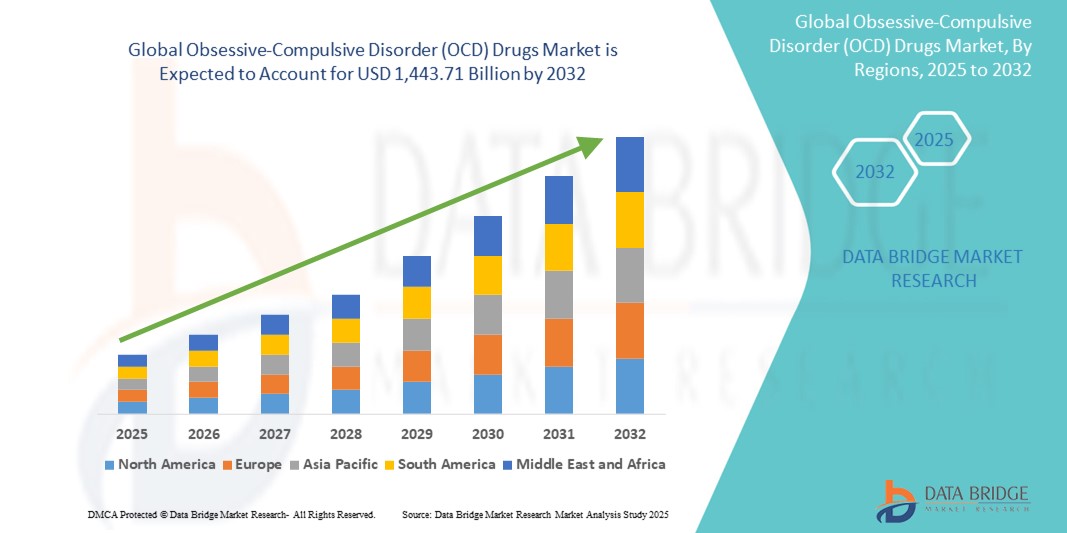
- The global obsessive-compulsive disorder (OCD) drugs market size was valued at USD 688.37 million in 2024 and is expected to reach USD 1,443.71 million by 2032, at a CAGR of 9.7% during the forecast period
- The market growth is largely fueled by the rising prevalence of OCD globally, increasing awareness and diagnosis rates, and the expansion of treatment options. This includes both approved and off-label pharmacological treatments, with Selective Serotonin Reuptake Inhibitors (SSRIs) dominating the market due to their proven efficacy
- Furthermore, increasing research and development activities for novel drug products, along with favorable government initiatives and investments in mental health programs, are accelerating the development of more precise and effective treatments. This collective momentum is significantly boosting the industry's growth by expanding accessibility and promoting early intervention for individuals with OCD
Obsessive-Compulsive Disorder (OCD) Drugs Market Analysis
- The obsessive-compulsive disorder (OCD) drugs market is primarily driven by the increasing prevalence of OCD worldwide, coupled with a growing recognition of mental health issues and improved diagnosis rates. Pharmacological interventions are crucial for managing OCD symptoms and improving patient quality of life.
- The escalating demand for OCD drugs is largely fueled by advancements in drug development, including the exploration of novel mechanisms beyond the serotonergic system, and the increasing acceptance of off-label medications as adjuncts to approved therapies.
- North America dominates the obsessive-compulsive disorder (OCD) drugs market with the largest revenue share of 40.5% in 2024, characterized by the high prevalence of OCD, well-established healthcare infrastructure, greater awareness about mental health disorders, and significant R&D investments by key industry players in the region
- Asia-Pacific is expected to be the fastest growing region in the obsessive-compulsive disorder (OCD) drugs market during the forecast period due to increasing mental health awareness, a burgeoning patient population, rapid economic development, and growing research capabilities in countries
- Selective serotonin reuptake inhibitors (SSRIs) segment dominates the obsessive-compulsive disorder (OCD) drugs market with a market share of 65.5% in 2024, driven by its proven efficacy as first-line treatments that directly modulate serotonin, a key neurotransmitter in OCD, offering effective symptom relief with a manageable side effect profile.
Report Scope and Obsessive-Compulsive Disorder (OCD) Drugs Market Segmentation
|
Attributes |
Obsessive-Compulsive Disorder (OCD) Drugs Key Market Insights |
|
Segments Covered |
|
|
Countries Covered |
North America
Europe
Asia-Pacific
Middle East and Africa
South America
|
|
Key Market Players |
|
|
Market Opportunities |
|
|
Value Added Data Infosets |
In addition to the insights on market scenarios such as market value, growth rate, segmentation, geographical coverage, and major players, the market reports curated by the Data Bridge Market Research also include in-depth expert analysis, pricing analysis, brand share analysis, consumer survey, demography analysis, supply chain analysis, value chain analysis, raw material/consumables overview, vendor selection criteria, PESTLE Analysis, Porter Analysis, and regulatory framework. |
Obsessive-Compulsive Disorder (OCD) Drugs Market Trends
“Advancements in Novel Drug Development and Personalized Treatment Approaches”
- A significant and accelerating trend in the global obsessive-compulsive disorder (OCD) drugs market is the increasing focus on developing novel drug classes and more targeted, personalized treatment approaches beyond traditional Selective Serotonin Reuptake Inhibitors (SSRIs). This shift is driven by the unmet needs of treatment-resistant patients and a deeper understanding of OCD's neurobiology
- For instance, research into NMDA blockers is showing promise for treatment-resistant OCD cases, targeting glutamatergic dysfunction as a new therapeutic avenue. Similarly, companies such as Biohaven Pharmaceuticals are investigating drugs such as troriluzole, which manages glutamate activity, in Phase 3 clinical trials, indicating a move towards different neurotransmitter systems
- AI integration, while not directly for drug action, is also influencing the market by aiding in drug discovery and potentially in personalizing treatment decisions. Furthermore, innovative non-pharmacological approaches such as Deep Transcranial Magnetic Stimulation (DTMS) are gaining traction, reflecting a broader trend towards diverse therapeutic options for complex cases
- The development of these novel mechanisms and the pursuit of personalized medicine are fundamentally reshaping expectations for OCD treatment, moving beyond a one-size-fits-all approach to more tailored interventions. Companies are also exploring augmentation strategies with antipsychotics alongside SSRIs for enhanced efficacy in challenging cases.
- The demand for more effective and individualized treatment options for OCD is growing rapidly, as patients and clinicians seek solutions for those who do not respond adequately to conventional therapies, thereby significantly boosting innovation and growth in the industry
Obsessive-Compulsive Disorder (OCD) Drugs Market Dynamics
Driver
“Growing Awareness, Diagnosis Rates, and Reduced Stigma”
- The increasing global awareness of mental health issues, coupled with rising diagnosis rates for obsessive-compulsive disorder (OCD) and a significant reduction in associated social stigma, is a primary driver for the heightened demand for OCD drugs
- As societal attitudes towards mental health evolve, more individuals are actively seeking professional help and support. For instance, reports indicate a growing number of diagnosed OCD cases annually, driven by greater public familiarity with the disorder and improved diagnostic tools and training for healthcare professionals
- As consumers and healthcare providers become more adept at identifying OCD symptoms, the demand for effective pharmacological interventions such as Selective Serotonin Reuptake Inhibitors (SSRIs) and emerging novel therapies steadily increases. This heightened awareness encourages early intervention, which is crucial for managing the chronic nature of OCD
- Furthermore, governmental initiatives and increased funding for mental health programs globally are playing a pivotal role in promoting awareness and improving access to treatment, thereby creating a more supportive environment for individuals with OCD to seek help
- The ease of accessing information about OCD through digital platforms and the growing acceptance of mental health discussions contribute to a proactive approach in managing the condition, collectively propelling the adoption and demand for OCD drug solutions
Restraint/Challenge
“Challenges of Treatment Resistance and Side Effect Burden of Existing Therapies”
- A significant restraint in the obsessive-compulsive disorder (OCD) drugs market stems from the persistent challenges of treatment resistance and the considerable side effect burden associated with existing pharmacological therapies, particularly Selective Serotonin Reuptake Inhibitors (SSRIs). This limits complete symptom remission for many patients and can lead to treatment discontinuation
- For instance, while SSRIs are first-line treatments, a substantial proportion of OCD patients either do not respond adequately to initial therapy or experience only partial symptom relief. This "treatment resistance" necessitates exploring augmentation strategies or switching medications, often without consistent success
- Furthermore, common side effects of SSRIs, such as nausea, insomnia, sexual dysfunction, weight gain, and gastrointestinal issues, can significantly impact patient adherence and quality of life. These adverse effects often lead patients to discontinue treatment, even if some symptom improvement has occurred, thereby limiting the overall effectiveness of available drugs
- The complex nature of psychiatric drug development, coupled with stringent regulatory processes, also contributes to the slow introduction of novel compounds with improved efficacy and fewer side effects, hindering market expansion. The limited understanding of individual patient variability in treatment response further complicates the development of universally effective solutions
- Overcoming these challenges through continued research into novel drug targets, personalized medicine approaches, and strategies to mitigate side effects will be vital for improving patient outcomes and driving sustained growth in the OCD drugs market
Obsessive-Compulsive Disorder (OCD) Drugs Market Scope
The market is segmented on the basis of severity, sub-type, drugs, route of administration, population type, end user, and distribution channel.
- By Severity
On the basis of severity, the global obsessive-compulsive disorder (OCD) drug market is segmented into mild to moderate and moderate to severe. The moderate to severe segment is anticipated to dominate the market with 26.72% market share. This dominance is attributed to the higher incidence rate of more severe cases requiring consistent and intensive pharmacological intervention, and the significant impact of these severe symptoms on daily functioning, prompting greater medical attention.
The mild to moderate segment is expected to witness the fastest growth in market from 2025 to 2032, due to increasing public and medical awareness of OCD symptoms, leading to earlier diagnosis before the condition becomes severe. This trend is further fueled by reduced stigma around mental health, alongside expanded access to care through various channels, encouraging more individuals with milder symptoms to seek treatment and prevent progression.
- By Sub-Type
On the basis of sub-type, the global obsessive-compulsive disorder (OCD) drug market is segmented into contamination obsessions with washing/cleaning compulsion, harm obsessions with checking compulsions, obsessions without visible compulsions, symmetry obsessions with ordering, arranging and counting compulsions, hoarding, and others. The contamination obsessions with washing/cleaning compulsion segment is expected to dominate the market with an approximate 67.99% market share. This is attributed to its high prevalence among OCD patients and ongoing developments in treatments and therapies specifically addressing these prominent symptoms.
The obsessions without visible compulsions segment is predicted to grow at the fastest CAGR from 2025 to 2032, owing to the growing recognition of the complexity of OCD presentations, leading to improved diagnostic methods and targeted therapeutic approaches tailored to address underlying patterns.
- By Drugs
On the basis of drugs, the global obsessive-compulsive disorder (OCD) drug market is segmented into antidepressants, antipsychotics, selective serotonin reuptake inhibitors (SSRIs), NMDA blocker, and others. The selective serotonin reuptake inhibitors (SSRIs), is expected to dominate the global OCD drug market with a market share 65.5%. This is due to their established efficacy as first-line pharmacological treatments, advancements in anti-anxiety and antidepressant drugs, and their widespread acceptance in clinical guidelines.
The NMDA blocker segment is predicted to grow at the fastest CAGR from 2025 to 2032. This is fueled by the growing interest in novel treatment mechanisms targeting glutamatergic dysfunction, with NMDA blockers showing promise in addressing treatment-resistant OCD cases and providing new therapeutic avenues
- By Route Of Administration
On the basis of route of administration, the obsessive-compulsive disorder (OCD) drug market is segmented into oral and parenteral. The oral segment is expected to dominate the market with an approximate 89.80% market share. This is primarily driven by the convenience, ease of self-administration, and patient preference for oral medications, alongside continuous advancements in novel oral formulations and therapies.
The parenteral segment is predicted to grow at the fastest CAGR from 2025 to 2032. This is due to the increasing demand for rapid onset of action, improved bioavailability, and the development of innovative parenteral formulations catering to specific patient needs and preferences, particularly for severe or treatment-resistant cases.
- By Population Type
On the basis of population type, the obsessive-compulsive disorder (OCD) drug market is segmented into pediatrics and adults. The adults segment is expected to dominate the market with an approximate 74.00% market share. This dominance is attributed to the higher prevalence of diagnosed OCD in the adult population, coupled with extensive research and development efforts focused on improving the pharmacology, bioavailability, safety, and dosage parameters of drugs for adults
The pediatrics segment is predicted to grow at the fastest CAGR from 2025 to 2032. This is owing to the increasing recognition of OCD in children and adolescents, coupled with efforts to improve early diagnosis and access to treatment, driving the demand for pediatric-specific OCD drugs and therapies.
- By End User
On the basis of end user, the obsessive-compulsive disorder (OCD) drug market is segmented into hospitals, specialty clinics, home healthcare, and others. The hospitals segment is expected to dominate the market with 45.35% market share. This is driven by their critical role in initial diagnosis, acute management of severe cases, and comprehensive psychiatric care, especially given the rising incidence of mental health disorders requiring inpatient or specialized outpatient services.
The home healthcare segment is predicted to grow at the fastest CAGR from 2025 to 2032. This is due to the rising preference for home-based treatment options, advancements in telemedicine, and efforts to increase access to mental health services outside traditional healthcare setting
- By Distribution Channel
On the basis of distribution channel, the obsessive-compulsive disorder (OCD) drug market is segmented into hospital pharmacy, retail pharmacy, online pharmacy, and others. The hospital pharmacy segment is expected to dominate the market with 59.69% market share. This is due to their integral role in dispensing medications for both inpatient and outpatient care within hospital settings, especially for complex or newly initiated treatments, and their immediate availability.
The online pharmacy segment is expected to witness the fastest growth from 2025 to 2032, fueled by increasing internet penetration, changing consumer preferences towards digital healthcare solutions, and the convenience of ordering medications from home.
Obsessive-Compulsive Disorder (OCD) Drugs Market Regional Analysis
- North America dominates the obsessive-compulsive disorder (OCD) drugs market with the largest revenue share of 40.5% in 2024, driven by the high prevalence of OCD, well-established healthcare infrastructure, greater awareness about mental health disorders, and significant R&D investments by key industry players in the region
- Consumers and healthcare providers in the region highly value the wide availability of advanced pharmacological interventions, high awareness about mental health, and significant investment in research and development by key pharmaceutical players
- This widespread adoption is further supported by high healthcare spending, favorable government initiatives, and a strong pipeline of novel drug products, establishing North America as a leading market for OCD treatments
U.S. Obsessive-Compulsive Disorder (OCD) Drugs Market Insight
The U.S. OCD drugs market captured the largest revenue share within North America, with 55.8% of market share in 2024, fueled by the high prevalence of OCD and a strong emphasis on mental health awareness. Consumers and healthcare providers increasingly prioritize effective pharmacological interventions for OCD, supported by favorable insurance coverage and significant investments in novel drug development. The presence of major pharmaceutical companies and a robust regulatory framework further propels the market's expansion.
Europe Obsessive-Compulsive Disorder (OCD) Drugs Market Insight
The Europe OCD drugs market is projected to expand at a substantial CAGR from 2025 to 2032, primarily driven by increasing awareness among people regarding the disorder and the availability of diverse treatment products. The region benefits from increasing societal acceptance of mental health services and a rising number of OCD diagnoses. Countries such as the U.K. and Germany are making substantial contributions to market expansion, bolstered by continuous advancements in anti-anxiety and antidepressant drugs
U.K. Obsessive-Compulsive Disorder (OCD) Drugs Market Insight
The U.K. OCD drugs market is anticipated to grow at a noteworthy CAGR during the forecast period, driven by a growing recognition of OCD symptoms and a desire for effective treatment options. In addition, a rise in mental health awareness initiatives encourages more individuals to seek diagnosis and pharmacological support. The U.K.'s evolving healthcare landscape and a focus on improving patient access to specialized mental health services are expected to continue to stimulate market growth
Germany Obsessive-Compulsive Disorder (OCD) Drugs Market Insight
The Germany OCD drugs market is expected to expand at a considerable CAGR during the forecast period, fueled by increasing awareness of mental health disorders and the demand for effective pharmacological solutions. Germany's well-developed healthcare infrastructure, combined with its emphasis on quality of care and patient access, promotes the adoption of OCD drugs. The increasing prevalence of diagnosed OCD cases and ongoing pharmaceutical research also contribute significantly to the market's expansion in the country
Asia-Pacific Obsessive-Compulsive Disorder (OCD) Drugs Market Insight
The Asia-Pacific OCD drugs market is poised to grow at the fastest CAGR of 10.2% from 2025 to 2032, driven by increasing recognition of mental health issues, rising disposable incomes, and improving access to healthcare across countries such as China, Japan, and India. The region's growing healthcare expenditure, supported by government initiatives promoting mental health awareness and treatment, is driving the adoption of OCD drugs. Furthermore, increasing investments in innovative R&D for novel drug products significantly contribute to its accelerated growth
Japan Obsessive-Compulsive Disorder (OCD) Drugs Market Insight
The Japan OCD drugs market is gaining momentum due to the country's high awareness of mental health, ongoing efforts to reduce stigma, and a demand for advanced treatment options. The Japanese market places a significant emphasis on quality of life, and the adoption of OCD drugs is driven by increasing diagnosis rates and a well-established healthcare system. The integration of pharmaceutical advancements with psychiatric care is fueling growth
India Obsessive-Compulsive Disorder (OCD) Drugs Market Insight
The India OCD drugs market is experiencing significant growth, attributed to the country's expanding healthcare infrastructure, rising awareness about mental health conditions, and increasing access to pharmaceutical treatments. The growing prevalence of OCD in the region, coupled with improving diagnostic capabilities and increasing healthcare spending, is propelling the demand for effective drug therapies. The push towards better mental healthcare accessibility and the availability of generic drug options are key factors driving the market in India
Obsessive-Compulsive Disorder (OCD) Drugs Market Share
The obsessive-compulsive disorder (OCD) Drugs industry is primarily led by well-established companies, including:
- Abbott (U.S.)
- Lilly (U.S.)
- Viatris Inc. (U.S.)
- H. LUNDBECK A/S (Denmark)
- GSK plc (U.K.)
- Pfizer Inc. (U.S.)
- Mallinckrodt (U.K.)
- Sebela Pharmaceuticals (U.S.)
- Zydus Pharmaceuticals, Inc. (India)
- Lupin Pharmaceuticals, Inc. (India)
- Amneal Pharmaceuticals LLC. (U.S.)
- Dr. Reddy’s Laboratories Ltd. (India)
- Teva Pharmaceutical industries Ltd. (Israel)
- Wockhardt (India)
- Alvogen (Iceland)
- Sun Pharmaceutical Industries Ltd. (India)
- Aurobindo Pharma Limited (U.S.)
- Apotex Inc. (Canada)
- Lannett (U.S.)
Latest Developments in Global Obsessive-Compulsive Disorder (OCD) Drugs Market
- In March 2025, Biohaven Pharmaceuticals announced upcoming topline data from two Phase 3 clinical trials for troriluzole (a novel glutamate modulator) in OCD, expected in the first half and second half of 2025, respectively. Troriluzole aims to address the glutamate system, a new avenue for OCD treatment. This highlights ongoing efforts to introduce new mechanisms of action beyond traditional SSRIs.
- In August 2023, Talkiatry partnered with NOCD to integrate psychiatric care with specialized Exposure and Response Prevention (ERP) therapy, revolutionizing OCD treatment through combined services. This collaboration aims to enhance patient outcomes by improving accessibility and streamlining OCD care, particularly for online therapy
- In June 2021, Teva Pharmaceutical Industries Ltd. launched generic SOOLANTRA (ivermectin) Cream for rosacea in the U.S., significantly expanding its dermatology portfolio and global footprint. This strategic move mirrors the diversification and expansion efforts observed within the OCD drugs market, where pharmaceutical companies continuously aim to broaden treatment options and address varied patient needs, thereby influencing market competitiveness and fostering innovation
- In April 2021, Lundbeck and Otsuka Pharmaceutical Co., Ltd. continued their Phase 3 trials for brexpiprazole as an adjunctive treatment for agitation in patients with Alzheimer’s dementia. The successful completion of such trials can lead to the launch of new products, significantly impacting company revenues and market dynamics. This parallels the ongoing pursuit of innovative treatments and expanded indications within the OCD drugs market, which constantly influences therapeutic options and market landscapes.
- In April 2021, Biohaven Pharmaceuticals initiated a pivotal Phase 3 clinical trial for troriluzole as an adjunctive therapy for obsessive-compulsive disorder (OCD). This significant undertaking underscores the pharmaceutical industry's persistent efforts to develop innovative and potentially more effective treatments for OCD, reflecting the dynamic landscape of the OCD drugs market, which is continuously driven by the pursuit of novel therapeutic options and improved patient outcomes, particularly for those with treatment-resistant forms

- Interactive Data Analysis Dashboard
- Company Analysis Dashboard for high growth potential opportunities
- Research Analyst Access for customization & queries
- Competitor Analysis with Interactive dashboard
- Latest News, Updates & Trend analysis
- Harness the Power of Benchmark Analysis for Comprehensive Competitor Tracking
Data collection and base year analysis are done using data collection modules with large sample sizes. The stage includes obtaining market information or related data through various sources and strategies. It includes examining and planning all the data acquired from the past in advance. It likewise envelops the examination of information inconsistencies seen across different information sources. The market data is analysed and estimated using market statistical and coherent models. Also, market share analysis and key trend analysis are the major success factors in the market report. To know more, please request an analyst call or drop down your inquiry.
The key research methodology used by DBMR research team is data triangulation which involves data mining, analysis of the impact of data variables on the market and primary (industry expert) validation. Data models include Vendor Positioning Grid, Market Time Line Analysis, Market Overview and Guide, Company Positioning Grid, Patent Analysis, Pricing Analysis, Company Market Share Analysis, Standards of Measurement, Global versus Regional and Vendor Share Analysis. To know more about the research methodology, drop in an inquiry to speak to our industry experts.
Data Bridge Market Research is a leader in advanced formative research. We take pride in servicing our existing and new customers with data and analysis that match and suits their goal. The report can be customized to include price trend analysis of target brands understanding the market for additional countries (ask for the list of countries), clinical trial results data, literature review, refurbished market and product base analysis. Market analysis of target competitors can be analyzed from technology-based analysis to market portfolio strategies. We can add as many competitors that you require data about in the format and data style you are looking for. Our team of analysts can also provide you data in crude raw excel files pivot tables (Fact book) or can assist you in creating presentations from the data sets available in the report.












