



تقسيم سوق أجهزة الراديو التكتيكية العالمية، حسب النوع (مثبتة على المركبات ومحمولة باليد أو محمولة)، ونوع المنصة (منصة أرضية، ومنصة بحرية، ومنصة محمولة جواً)، والتطبيق (الجيش، والبحرية، والقوات الجوية، والقوات البرية، وقوات العمليات الخاصة) - اتجاهات الصناعة وتوقعاتها حتى عام 2033
سوق الإذايات التكتيكية
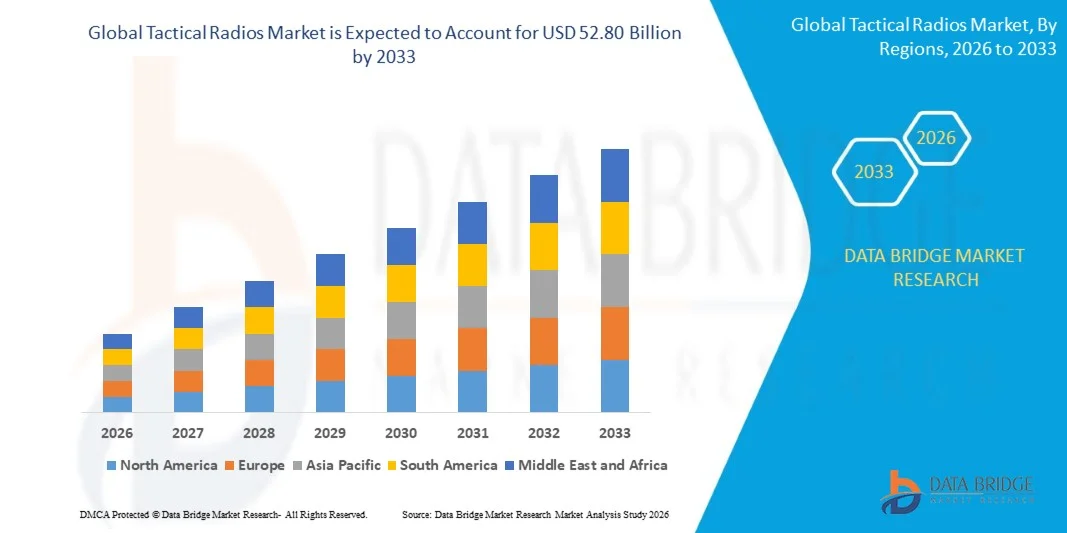
- وفقاً لتحليلات البحوث المتعلقة بسوق سوق جسر البيانات، قُيِّر حجم سوق الإذاعات التكتيكية العالمية بقيمة19.58 مليار دولار في عام 2025ومن المتوقع أن يتم ذلكباء - البلدان التي بلغت من أصل, ما13.20 في المائةخلال الفترة التي
- ويُعزى نمو السوق إلى حد كبير إلى زيادة مبادرات تحديث الدفاع وتزايد الحاجة إلى نظم اتصالات آمنة وموثوقة وآنية في الوقت الحقيقي عبر العمليات العسكرية، تدعم التنسيق المعزز والوعي بالحالة السائدة في بيئات قتالية معقدة
- وبالإضافة إلى ذلك، فإن تزايد التركيز على الحرب المركزة على الشبكات، وقابلية التشغيل المتبادل بين قوات الحلف المشتركة، والتقدم في تكنولوجيات التشفير والإذاعة المحددة بالبرمجيات والبرمجيات، تعجل باعتماد الإذاعات التكتيكية، مما يعزز نمو السوق عموما إلى حد كبير
سوق الحجم و توقّر
- قيمة السوق العالمية (25):19.58 مليار
- القيمة السوقية المتوقعة (2033):52-80 مليار
- التنبؤات المتوقعة لـ CAGR (2026-2033):13.20%
تحليل سوق الإذاعات التكتيكي
- أصبحت أجهزة الإذاعة اللاسلكية التكتيكية، التي تمكِّن من نقل الصوت والبيانات على نحو مأمون عبر منصات برية وجوية وبحرية، عناصر حاسمة الأهمية في الهياكل الأساسية الحديثة للاتصالات العسكرية والدفاعية والعسكرية والدفاعية نظرا لقدراتها على المرونة والتنقل والبث المشفرة
- ويغذي الطلب المتزايد على أجهزة اللاسلكي التكتيكية أساسا زيادة التوترات الجغرافية - السياسية، وتوسيع نطاق العمليات العسكرية، والاستثمارات المستمرة في نظم الاتصالات المتقدمة لتحسين فعالية القيادة والسيطرة والفعالية التشغيلية
- أمريكا الشمالية هيمنت على سوق الراديو التكتيكي مع حصة تزيد عن 40في عام 2025، بسبب ارتفاع الإنفاق الدفاعي، والتحديث المستمر لنظم الاتصالات العسكرية، والتركيز القوي على الحرب التي تدور حول الشبكات
- ومن المتوقع أن تكون منطقة آسيا والمحيط الهادئ أسرع المناطق نموا في سوق الإذاعات التكتيكية خلال الفترة المتوقعة بسبب ارتفاع نفقات الدفاع والشواغل الأمنية الإقليمية وجهود التحديث العسكري
- ويهيمن قطاع المركبات المركبة على السوق بحصة سوقية بلغت 47% في عام 2025، نظراً لاستخدامه المكثف في المركبات المدرعة، ومركبات القيادة، وأساطيل النقل والإمداد من أجل الاتصالات الآمنة والطويلة المدى. وتوفر هذه الأجهزة اللاسلكية قدرة إرسال أعلى، وتعزيز استقرار الإشارات، والقدرة على الاندماج في أنظمة إدارة المعارك على متن السفن، الأمر الذي يجعلها بالغة الأهمية للعمليات العسكرية المنسقة. وتعطي قوات الدفاع الأولوية لأجهزة الراديو التكتيكية بسبب قوتها، وموثوقيتها في التضاريس القاسية، وقدرتها على دعم الاتصالات المستمرة أثناء البعثات المطولة.
التقرير عن النطاق والراديو التكتيكية
|
الصفات الأولى |
دال - الإذاعات التكتيكية |
|
المُسَجَّل |
|
|
البلدان |
أمريكا الشمالية
أوروبا
منطقة آسيا والمحيط الهادئ
الشرق الأوسط وأفريقيا
جنوب أمريكا الجنوبية
|
|
& مفتاح |
|
|
ما |
|
|
جاري |
وبالإضافة إلى الرؤى المتعلقة بسيناريوهات السوق مثل القيمة السوقية، ومعدل النمو، والتجزئة، والتغطية الجغرافية، والجهات الفاعلة الرئيسية، فإن تقارير السوق التي تُعدها بحوث سوق جسر البيانات تشمل أيضاً تحليلاً متعمقاً من جانب الخبراء، والإنتاج والقدرات الممثلة جغرافياً على مستوى الشركات، وتصميمات الشبكات للموزعين والشركاء، وتحليل مفصل ومستكمل لاتجاهات الأسعار، وتحليل العجز في سلسلة العرض والطلب. |
اتجاهات سوق الإذاعات التكتيكية
زيادة اعتماد الإذاعات التكتيكية المبرمجة والمتداخلة
- ومن الاتجاهات الرئيسية التي تشكل سوق الإذاعة التكتيكية تزايد اعتماد نظم إذاعية محددة ومتفاعلة بين البرامج، وذلك بسبب الحاجة المتزايدة إلى حلول مرنة ومتطورة وجاهزة في المستقبل في مجال الاتصالات العسكرية. وتتيح هذه الأجهزة اللاسلكية للقوات المسلحة إعادة تشكيل الترددات، وأشكال الموجات، والوظائف من خلال تحديثات البرمجيات، وتحسين القدرة على التكيف عبر بيئات البعثات المتنوعة.
- فعلى سبيل المثال، تعمل شركات مثل L3Harris وTales بنشاط على توريد أجهزة راديو تكتيكية محددة برامجيا تدعم التشغيل المتبادل بين القوات الحليفة والمجالات العملياتية المتعددة.
- إن التحول نحو العمليات المتعددة المجالات يؤدي إلى تسارع الطلب على أجهزة الراديو التكتيكية التي تعمل بصورة متبادلة والتي يمكنها أن تربط بين الوحدات البرية والجوية والبحرية على نحو سلس. وهذا الاتجاه يعزز دور أجهزة الراديو التكتيكية باعتبارها عناصر مركزية في استراتيجيات الحرب الدائرة حول الشبكات.
- إن قوات الدفاع تعطي الأولوية بشكل متزايد لأجهزة الإذاعة التي تدعم البث الآمن للبيانات والصوت والفيديو لتحسين الوعي بالحالة وتحسين كفاءة القيادة. وهذا يعزز تبني قدرة متقدمة على التشفير وإدارة طيف ديناميكية في إطار النظم الراديوية التكتيكية.
- ويؤدي إدماج الراديو التكتيكية في نظم إدارة ساحات القتال ومنصات القيادة الرقمية إلى زيادة هذا الاتجاه، مما يتيح تبادل البيانات في الوقت الحقيقي واتخاذ قرارات أسرع في سيناريوهات القتال التي تنطوي على مخاطر كبيرة.
- وإجمالاً، فإن التركيز المتزايد على المرونة وقابلية التشغيل المتبادل والربط الرقمي في ساحة ساحة المعركة هو، إجمالاً، الرادعات التكتيكية التي تحدد برامجيات تحديد المواقع بوصفها محركاً حاسماً للنمو في إطار هياكل الاتصالات الدفاعية الحديثة.
سوق سوق
سائق
التحديث والطلب في مجال الاتصالات العسكرية المأمونة
- إن سوق الإذاعة التكتيكية مدفوعة بقوة بزيادة برامج تحديث الدفاع الرامية إلى تحسين البنية الأساسية القديمة للاتصالات عبر القوات المسلحة العالمية. فالعسكريون العصريون يحتاجون إلى أنظمة اتصالات آمنة ومرنة وآنية لدعم البيئات التشغيلية المعقدة والسريعة التطور.
- وعلى سبيل المثال، تستثمر منظمات الدفاع عبر الولايات المتحدة وأوروبا وآسيا والمحيط الهادئ في أجهزة راديو تكتيكية مشفرة لتعزيز أمن الاتصالات في ساحات القتال ومنع اعتراض الإشارات.ضد القذففي مرحلة ما
- وتؤدي التوترات الجيوسياسية المتزايدة التوتر والشواغل الأمنية الحدودية إلى زيادة تعزيز الحاجة إلى نظم اتصالات عسكرية متقدمة.
- ويؤدي التركيز المتزايد على العمليات المشتركة وعمليات التحالف أيضاً إلى زيادة الطلب على حلول موحدة ومتبادلة التشغيل في مجال الاتصالات.
- وبشكل جماعي، فإن الإنفاق الدفاعي المستدام والحاجة الماسة إلى الاتصالات الآمنة يعززان هذا المحرك ويدعمان النمو الطويل الأجل لسوق الإذاعة التكتيكية
التعرّض/التحديي
تكاليف المشتريات الباهة التكاليف العالية وتكامل نظام نظام المُعقد
- وتواجه سوق الإذاعة التكتيكية تحديات تتعلق بارتفاع تكاليف المشتريات المرتبطة بنظم الاتصال المتقدمة التي تشتمل على التشفير، والعمارة المحددة بالبرمجيات، والقدرات المتعددة النطاقات. وقد تحد عوامل التكلفة هذه من الاعتماد، وخاصة بين البلدان ذات الميزانيات الدفاعية المقيدة.
- على سبيل المثال، يتطلب إدماج الجيل القادم من أجهزة الراديو التكتيكية في شبكات الاتصالات العسكرية القائمة في كثير من الأحيان استثمارات إضافية في البنية الأساسية والتدريب وتكييف النظم. وهذا التعقيد يزيد من تكاليف الملكية الإجمالية لمنظمات الدفاع.
- وتنشأ تحديات في مجال تكامل النظام عند مواءمة البرامج الإذاعية الجديدة مع البرامج القديمة،نقلضمان التشغيل المشترك السلس دون تعطيل العمليات القائمة يزيد من صعوبة النشر.
- كما تسهم تكاليف الصيانة وإدارة دورة الحياة المرتبطة بالرادعات التكتيكية المتقدمة في ضغوط الميزانية.
- ونتيجة لذلك، لا يزال تحقيق التوازن بين التقدم التكنولوجي والقدرة على تحمل التكلفة وجدوى التكامل يشكلان تحديا رئيسيا يؤثر في قرارات الشراء داخل سوق الإذاعة التكتيكية
سوق الإذاعات التكتيكية
ويتم تقسيم السوق على أساس النوع، ونوع المنصة، والتطبيق.
• حسب النوع
وعلى أساس النوع، تُقسم سوق الراديو التكتيكي إلى أجهزة لاسلكية مركبة ومتحركة أو محمولة، ويسيطر الجزء المكون من المركبة على السوق بأكبر حصة من الإيرادات بلغت 47 في المائة في عام 2025، مدفوعاً باستخدامه المكثف في المركبات المدرعة، ومركبات القيادة، وأساطيل النقل والإمداد من أجل الاتصالات الآمنة والطويلة المدى. وتوفر هذه الأجهزة اللاسلكية قدرة إرسال أعلى، وتعزيز استقرار الإشارات، والقدرة على الاندماج مع نظم إدارة المعارك على متن المركبات، الأمر الذي يجعلها ذات أهمية حاسمة للعمليات العسكرية المنسقة. وتعطي قوات الدفاع الأولوية للمركبات التي تُعد أجهزة لاسلكية تكتيكية بسبب قوتها وموثوقيتها في الأراضي القاسية وقدرتها على دعم الاتصالات المستمرة أثناء البعثات المطولة. ويزيد توافقها مع نطاقات الترددات المتعددة ومعايير التشفير من تعزيز سيطرتها عبر المنصات العسكرية الحديثة.
ومن المتوقع أن يشهد الجزء اليدوي أو المحمول أسرع نمو من عام 2026 إلى عام 2033، مدفوعاً بزيادة الطلب على نظم الاتصال الخفيفة الوزن والمرنة للجنود المهجورين. وتدعم هذه الأجهزة اللاسلكية بث الصوت والبيانات في الوقت الحقيقي، مع السماح في الوقت نفسه بقدر أكبر من الحركة أثناء الدوريات والاستطلاع والعمليات الخاصة. وتتسارع وتيرة تبني أوجه التقدم في كفاءة البطاريات، والتصغير، والربط الشبكي الآمن، وخاصة بين وحدات المشاة والقوات الخاصة العاملة في بيئات قتالية دينامية.
• حسب المنبر
وعلى أساس نوع المنصة، تُقسم سوق الإذاعة التكتيكية إلى منصة أرضية، ومنصة بحرية، ومنصة محمولة جواً، ويهيمن الجزء الأرضي من المنصة على السوق في عام 2025، نظراً لانتشاره الواسع النطاق على القوات البرية والوحدات المدرعة وعمليات أمن الحدود، وتتيح أجهزة الراديو التكتيكية على المنصات الأرضية الاتصال الآمن بين مراكز القيادة والمركبات والجنود الراجلين، بما يكفل تنسيق العمليات والوعي بالأوضاع السائدة، وتسهم قابليتها للتوسع، وسهولة اندماجها مع الهياكل الأساسية العسكرية القائمة، والتكيف مع التضاريس المختلفة إسهاماً كبيراً في نصيبها الكبير من السوق.
ومن المتوقع أن يسجل قطاع المنصة المحمولة جواً أسرع معدل نمو خلال الفترة المتوقعة، وذلك بسبب ارتفاع الاستثمارات في الطائرات العسكرية والطائرات العمودية والمركبات الجوية غير المأهولة. وتتسم أجهزة اللاسلكي التكتيكية المحمولة جواً بأهمية بالغة للحفاظ على أمن الاتصالات من الجو إلى الأرض ومن الجو إلى الجو، وخاصة أثناء مهام المراقبة والدعم القتالي والاستطلاع. كما أن التركيز المتزايد على الحرب الدائرة على الشبكات وتبادل البيانات في الوقت الحقيقي يؤدي إلى زيادة تسريع الطلب على نظم الاتصالات المتقدمة المحمولة جواً.
• الطلب
على أساس التطبيق، يتم تقسيم سوق الراديو التكتيكي إلى قوة عسكرية، وبحرية، وسلاح جوي، وأرض، وقوة عمليات خاصة (SOP). وكانت حصة الجيش في السوق المهيمنة في عام 2025 بسبب الاستخدام المكثف للراديو التكتيكية عبر وحدات المشاة، والفرق المدرعة، والعمليات الأرضية. وتعتمد الجيوش اعتماداً كبيراً على أنظمة اتصالات آمنة وقادرة على التكيف لتنسيق تحركات القوات، وتقاسم الاستخبارات في ساحة المعركة، والحفاظ على السيطرة على القيادة في البيئات العدائية. وتدعم برامج التحديث المستمر والنشر الواسع النطاق لشبكات الاتصالات التكتيكية موقع قيادة القطاع.
ومن المتوقع أن يشهد قطاع قوة العمليات الخاصة أسرع نمو من 2026 إلى 2033، مدفوعاً بزيادة التركيز على مكافحة الإرهاب، والبعثات الخفية، وعمليات الاستجابة السريعة. وتحتاج وحدات العمليات التشغيلية الخاصة إلى أجهزة لاسلكية مدمجة، ومأمونة إلى حد كبير، وقابلة للتشغيل المتبادل، تعمل على نحو موثوق في سيناريوهات نائية ومعرضة لمخاطر عالية. والواقع أن الحاجة المتزايدة إلى أنظمة اتصال مشفرة منخفضة الاكتشاف تعمل بشكل كبير على تعزيز الاعتماد داخل هذا القطاع التطبيقي.
باء - السوق الإقليمية
- هيمنت أمريكا الشمالية على سوق الراديوات التكتيكية مع أكبر حصة من الإيرادات أكثر من 40٪ أكثر من 40٪ في عام 2025، مدفوعاً بارتفاع الإنفاق الدفاعي، والتحديث المستمر لنظم الاتصالات العسكرية، والتركيز القوي على الحرب التي تركز على الشبكات
- تشدد القوات المسلحة في المنطقة على حلول اتصال آمنة ومشفرة وقابلة للتشغيل المشترك لدعم العمليات المشتركة عبر منصات برية وجوية وبحرية
- وتتعزز هذه الهيمنة بالهياكل الأساسية الدفاعية المتقدمة، والتبكير باعتماد الجيل المقبل من تكنولوجيات الاتصال، والاستثمارات الجارية في تحسين النظم الإذاعية التكتيكية القديمة لتحسين القدرة على الاتصال في ساحة القتال
سوق الإذاعات التكتيكية الأمريكية
كانت سوق الإذاعات التكتيكية في الولايات المتحدة تستأثر بأكبر حصة من الإيرادات داخل أمريكا الشمالية في عام 2025، بدعم من الاستثمارات المستمرة من وزارة الدفاع في نظم الاتصالات والقيادة المتقدمة. والواقع أن سوق الإذاعات التكتيكية في الولايات المتحدة تعطي الأولوية للمرونة، ومقاومة التشويش، والإذاعات التكتيكية المشفرة للتمكين من التنسيق السلس عبر العمليات المتعددة المجالات. وما زال النشر المتزايد لأجهزة الراديو المحددة برامجياً والاندماج مع أنظمة إدارة ساحة المعركة يقودان نمو السوق. فضلاً عن ذلك فإن شركات صناعة الدفاع المحلية القوية والمبادرات المستمرة في مجال البحث والتطوير تساهم بشكل كبير في توسيع سوق الراديو التكتيكي في الولايات المتحدة.
سوق الإذاعات التكتيكية
ومن المتوقع أن تنمو سوق الإذاعة التكتيكية في أوروبا في ظل نظام مستقر للاستشعار عن بعد أثناء الفترة المتوقعة، مدفوعاً بارتفاع برامج تحديث الدفاع وزيادة التعاون العسكري عبر الحدود. وتستثمر الدول الأوروبية في أنظمة الاتصالات الآمنة لتعزيز التشغيل المتبادل بين القوى الحليفة. ومن شأن التركيز المتزايد على التحولات الرقمية في ساحة المعركة وتأمين نقل البيانات أن يشجع على تبني أجهزة راديو تكتيكية متقدمة عبر منصات أرضية وبحرية وجوية.
الولايات المتحدة الأمريكية سوق الإذاعات التكتيكية
ومن المتوقع أن تسجل سوق الإذاعة التكتيكية بالمملكة المتحدة نموا ملحوظا خلال الفترة المتوقعة، مدعومة بمبادرات تحديث الدفاع وزيادة التركيز على الاتصالات العسكرية الآمنة وتقوم القوات المسلحة بالمملكة المتحدة بتطوير شبكات الاتصالات التكتيكية لتحسين الوعي بالأوضاع في الوقت الحقيقي وفعالية البعثة والمشاركة في العمليات التي تقودها منظمة حلف شمال الأطلسي والحاجة إلى نظم قابلة للتشغيل المتبادل تزيد من حفز الطلب على أجهزة الراديو التكتيكية المتقدمة.
(أ) شركة TB
ومن المتوقع أن تتوسع سوق الإذاعة التكتيكية الألمانية في ظل قدر كبير من الكفاءة في استخدام الطاقة المتجددة، وذلك بفضل زيادة ميزانيات الدفاع وتحديث الأراضي ونظم الاتصال المشتركة. وتركز ألمانيا بقوة على تكنولوجيات الاتصال الآمنة والموثوقة والموحدة التي تتماشى مع متطلبات حلف شمال الأطلنطي. والواقع أن دمج أجهزة الراديو التكتيكية مع منصات القيادة والتحكم الرقمية يعجل من وتيرة تبني التطبيقات العسكرية.
:: آسيا والمحيط الهادئ
ومن المتوقع أن تنمو سوق الإذاعة التكتيكية في آسيا والمحيط الهادئ بأسرع ما يمكن خلال الفترة المتوقعة من 2026 إلى 2033، مدفوعة بارتفاع الإنفاق الدفاعي، والشواغل الأمنية الإقليمية، وجهود التحديث العسكري. وتستثمر بلدان المنطقة بشكل كبير في أنظمة الاتصال المتقدمة لتعزيز أمن الحدود والتأهب القتالي. كما أن التوسع في قدرات التصنيع الدفاعي المحلي يزيد من دعم نمو السوق في آسيا والمحيط الهادئ.
منظمة التعاون
إن سوق الإذاعة التكتيكية في اليابان تشهد نمواً مطرداً، مدعوماً بزيادة التركيز على التأهب الدفاعي والبنية الأساسية المتقدمة للاتصالات. وتشدد اليابان على أنظمة الاتصالات التكتيكية الآمنة والموثوقة لتعزيز التنسيق بين قوات الدفاع الأرضية والبحرية والجوية. ولا يزال اعتماد أجهزة الراديو المتقدمة تكنولوجياً والمتوافقة مع استراتيجيات الدفاع الحديثة يغذي توسع السوق.
شركة TCA
الواقع أن سوق الإذاعة التكتيكية الصينية كانت تمتلك أكبر حصة من العائدات داخل آسيا والمحيط الهادئ في عام 2025، وذلك مدفوعاً ببرامج تحديث عسكرية واسعة النطاق واستثمارات كبيرة في تكنولوجيات الدفاع المحلية. إن تركيز الصين على تعزيز شبكات الاتصالات الآمنة عبر كافة الفروع العسكرية يعمل على تعزيز الطلب على أجهزة الراديو التكتيكية المتقدمة. إن وجود شركات تصنيع محلية قوية وزيادة التركيز على أنظمة الدفاع المعتمدة على الذات يزيدان من دفع نمو السوق.
سوق سوق الإذايات التكتيكية
وتقود صناعة الإذاعة التكتيكي أساسا شركات راسخة، منها:
- شركة RTX COR (الولايات المتحدة الأمريكية)
- شركة جنرالات ديناميات شركة (الولايات المتحدة الأمريكية)
- شركة Northrop Grumman Corp (الولايات المتحدة)
- 3 م (الولايات المتحدة الأمريكية)
- نظم BAE Systems Plc (المملكة المتحدة)
- مجموعة ثالث (فرنسا)
- L3 Harris Technops In Inc. (الولايات المتحدة)
- (الولايات المتحدة الأمريكية)
- شركة Elbit Systs Ltd. (إسرائيل)
- شركة BOS Corp (الولايات المتحدة الأمريكية)
- ليوناردو DRS Inc. (الولايات المتحدة)
- مؤسسة Corports-Wren Corport (الولايات المتحدة الأمريكية)
- فياسات Inc. (الولايات المتحدة الأمريكية)
- Rohde & Swarz GmbH KG & Co (ألمانيا)
- (U.K.)
- )تركيا(
- Iriridium Munications Inc. (الولايات المتحدة)
- سيبورا المحدودة (U.K.)
- Codan Limit (أستراليا)
- (فنلندا) Savox Communications Ltd.
- شركة الاتصالات (UAE)
- شركة سيلينكس للاتصالات (الولايات المتحدة الأمريكية)
- رادمور S.A. (بولندا)
- Rolta Indig Limited (الهند)
- شركة Associates Inc. (الولايات المتحدة)
التطورات الأخيرة في السوق العالمية للإذاعات التكتيكية
- في أكتوبر/تشرين الأول من عام 2025، أعلنت شركة BAE Systems (U.K.) عن توسيع نطاق حافظتها الخاصة بالاتصالات التكتيكية من خلال إطلاق برنامج إذاعي متقدم محدد برامجياً ومصمم خصيصاً للعمليات المشتركة والتحالفية. وهذا التطور يعزز موقف شركة BAE Systems في سوق الراديو التكتيكي بمعالجة الطلب المتزايد على حلول الاتصال القابلة للتشغيل المتبادل والتحسين. وهذا التحرك يعزز قدرة الشركة على دعم متطلبات الحرب التي تركز على الشبكات، وتعزيز قدرتها التنافسية بين قوات الدفاع الساعية إلى إيجاد أنظمة اتصال جاهزة في المستقبل.
- وفي أيلول/سبتمبر 2025، أدخلت شركة L3 Harris Technologies (الولايات المتحدة الأمريكية) مجموعة جديدة من الإذاعات التكتيكية التي تم تصميمها لدعم العمليات المتعددة المجالات عبر البر والجو والبحر والفضاء والمجال الإلكتروني. ويؤثر هذا الإطلاق تأثيراً كبيراً على السوق من خلال تلبية الحاجة المتزايدة إلى التشغيل المتبادل السلس بين القوى الحليفة. وبمواءمة استراتيجية منتجاتها مع متطلبات الحرب الحديثة، تعزز الشركة موقفها القيادي وتوسع نطاق وجودها في السوق في الحلول المتقدمة للاتصالات التكتيكية.
- في أغسطس/آب من عام 2025، دخلت مجموعة ثالز في شراكة استراتيجية مع أحد مقدمي خدمات الاتصالات السلكية واللاسلكية الرئيسيين للمشاركة في تطوير الجيل المقبل من نظم الاتصالات التكتيكية. وهذا التعاون يعزز الموقف السوقي لثايلز من خلال التعجيل بالابتكار والتمكين من تقديم حلول أكثر تكاملاً ومرونة في مجال الاتصالات. وتسلط الشراكة الضوء على الأهمية المتزايدة للتعاون بين مختلف الصناعات في تلبية الاحتياجات المتطورة في مجال الاتصالات العسكرية وتوسيع نطاق الوصول إلى الأسواق العالمية.
- في يوليو/تموز 2025، انتهت شركة جنرال دايناميكيز (الولايات المتحدة الأمريكية) من شراء شركة متخصصة للتكنولوجيا متخصصة في نظم الاتصالات التي تقودها الاستخبارات الصناعية. وهذا الاقتناء يعزز موقف جنرال دينايمز التنافسي بتمكينه من دمج قدرات الذكاء النووي بشكل أعمق في أجهزة الراديو التكتيكية. ويعكس هذا التطور تحولاً سوقياً أوسع نحو الحلول الذكية والمكيفة في مجال الاتصالات والتي تعزز الفعالية التشغيلية والتفرقة الطويلة الأمد في سوق الراديو التكتيكي.
- وفي آب/أغسطس 2022، حصلت شركة موتورولا سوبلز (الولايات المتحدة) على خدمات الاتصالات (أستراليا)، وهي شركة تقدم الاتصالات اللاسلكية المتخصصة العالية التردد والعالية التردد جداً، وهذا الاقتناء الاستراتيجي يعزز حافظة شركة موتورولا من خلال دمج نظم الاتصالات المستقلة في الهياكل الأساسية التابعة لـ باريت، والمثالية في مجالات الأمن وحفظ السلام والعمليات الإنسانية.
SKU-
احصل على إمكانية الوصول عبر الإنترنت إلى التقرير الخاص بأول سحابة استخبارات سوقية في العالم

- لوحة معلومات تحليل البيانات التفاعلية
- لوحة معلومات تحليل الشركة للفرص ذات إمكانات النمو العالية
- إمكانية وصول محلل الأبحاث للتخصيص والاستعلامات
- تحليل المنافسين باستخدام لوحة معلومات تفاعلية
- آخر الأخبار والتحديثات وتحليل الاتجاهات
- استغل قوة تحليل المعايير لتتبع المنافسين بشكل شامل
منهجية البحث
يتم جمع البيانات وتحليل سنة الأساس باستخدام وحدات جمع البيانات ذات أحجام العينات الكبيرة. تتضمن المرحلة الحصول على معلومات السوق أو البيانات ذات الصلة من خلال مصادر واستراتيجيات مختلفة. تتضمن فحص وتخطيط جميع البيانات المكتسبة من الماضي مسبقًا. كما تتضمن فحص التناقضات في المعلومات التي شوهدت عبر مصادر المعلومات المختلفة. يتم تحليل بيانات السوق وتقديرها باستخدام نماذج إحصائية ومتماسكة للسوق. كما أن تحليل حصة السوق وتحليل الاتجاهات الرئيسية هي عوامل النجاح الرئيسية في تقرير السوق. لمعرفة المزيد، يرجى طلب مكالمة محلل أو إرسال استفسارك.
منهجية البحث الرئيسية التي يستخدمها فريق بحث DBMR هي التثليث البيانات والتي تتضمن استخراج البيانات وتحليل تأثير متغيرات البيانات على السوق والتحقق الأولي (من قبل خبراء الصناعة). تتضمن نماذج البيانات شبكة تحديد موقف البائعين، وتحليل خط زمني للسوق، ونظرة عامة على السوق ودليل، وشبكة تحديد موقف الشركة، وتحليل براءات الاختراع، وتحليل التسعير، وتحليل حصة الشركة في السوق، ومعايير القياس، وتحليل حصة البائعين على المستوى العالمي مقابل الإقليمي. لمعرفة المزيد عن منهجية البحث، أرسل استفسارًا للتحدث إلى خبراء الصناعة لدينا.
التخصيص متاح
تعد Data Bridge Market Research رائدة في مجال البحوث التكوينية المتقدمة. ونحن نفخر بخدمة عملائنا الحاليين والجدد بالبيانات والتحليلات التي تتطابق مع هدفهم. ويمكن تخصيص التقرير ليشمل تحليل اتجاه الأسعار للعلامات التجارية المستهدفة وفهم السوق في بلدان إضافية (اطلب قائمة البلدان)، وبيانات نتائج التجارب السريرية، ومراجعة الأدبيات، وتحليل السوق المجدد وقاعدة المنتج. ويمكن تحليل تحليل السوق للمنافسين المستهدفين من التحليل القائم على التكنولوجيا إلى استراتيجيات محفظة السوق. ويمكننا إضافة عدد كبير من المنافسين الذين تحتاج إلى بيانات عنهم بالتنسيق وأسلوب البيانات الذي تبحث عنه. ويمكن لفريق المحللين لدينا أيضًا تزويدك بالبيانات في ملفات Excel الخام أو جداول البيانات المحورية (كتاب الحقائق) أو مساعدتك في إنشاء عروض تقديمية من مجموعات البيانات المتوفرة في التقرير.











